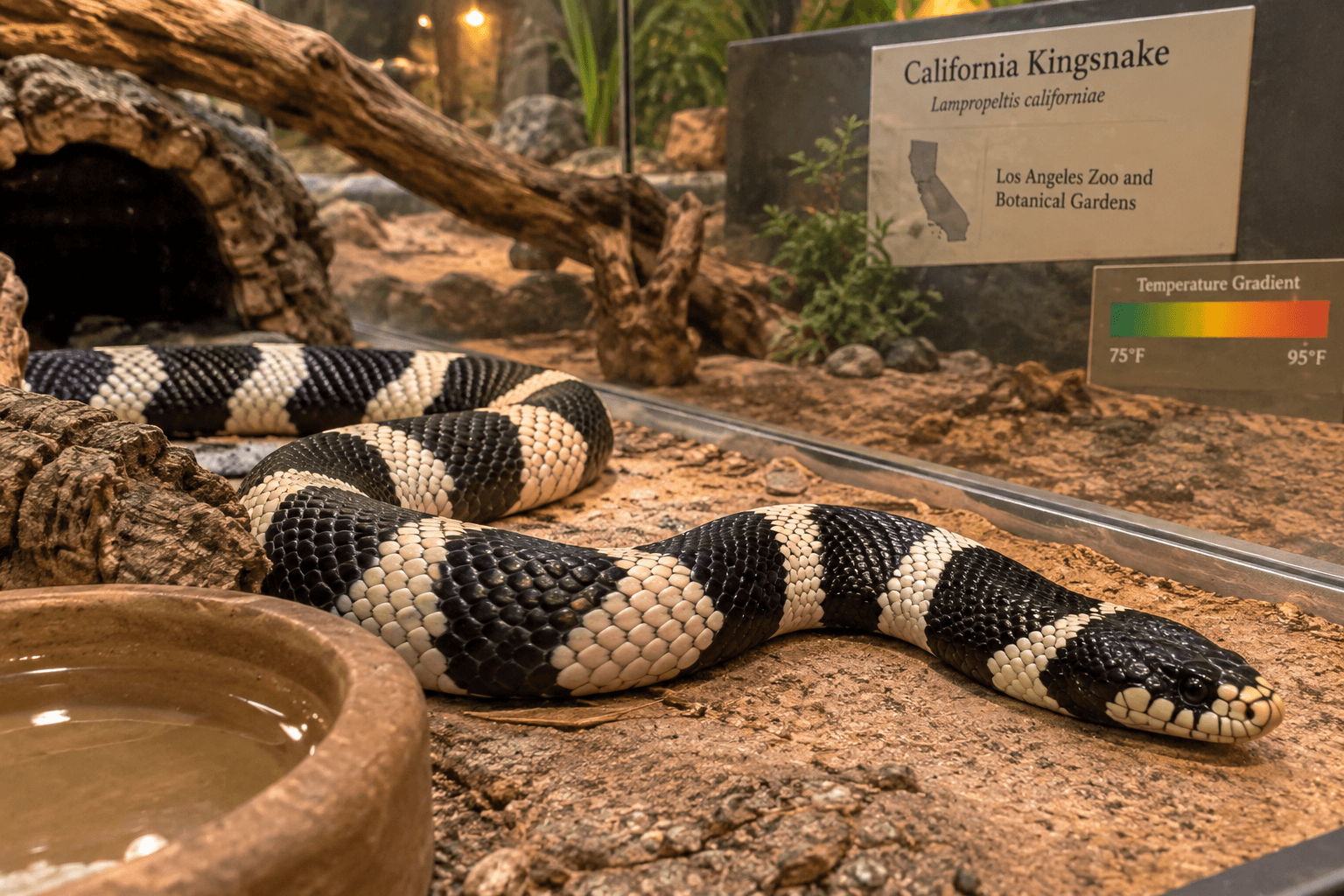
Walk into the reptile house at the Los Angeles Zoo and Botanical Gardens, and there’s a good chance you’ll spot a king snake coiled up under a heat lamp, looking about as relaxed as a snake can look. That calm attitude is exactly why the California kingsnake (Lampropeltis californiae) is one of the most requested pet snakes in the country. It’s also why so many zoo visitors walk away wanting one, without realizing what the “king” in the name actually means for how you house it.
Why the LA Zoo Exhibit Draws So Much Attention
The California kingsnake exhibit sticks with visitors because the snake looks almost hand-painted, with bold black-and-white or black-and-cream bands running down its whole body. It’s a native California species, so for a lot of Los Angeles visitors, this is a wild neighbor they’ve never actually seen in person.
Zoo placards usually mention that kingsnakes eat other snakes, including rattlesnakes, and that’s true. But the real reason this animal earns its name is diet flexibility, not venom immunity in the magical sense people assume. It eats rodents, lizards, birds, eggs, and yes, other snakes, using pure constriction strength rather than any built-in venom resistance.
That eating-other-snakes habit is fascinating in a glass exhibit case with one animal in it. It becomes a serious problem the second a hobbyist tries to recreate a “natural” multi-snake display at home.
What the Zoo Setting Gets Right
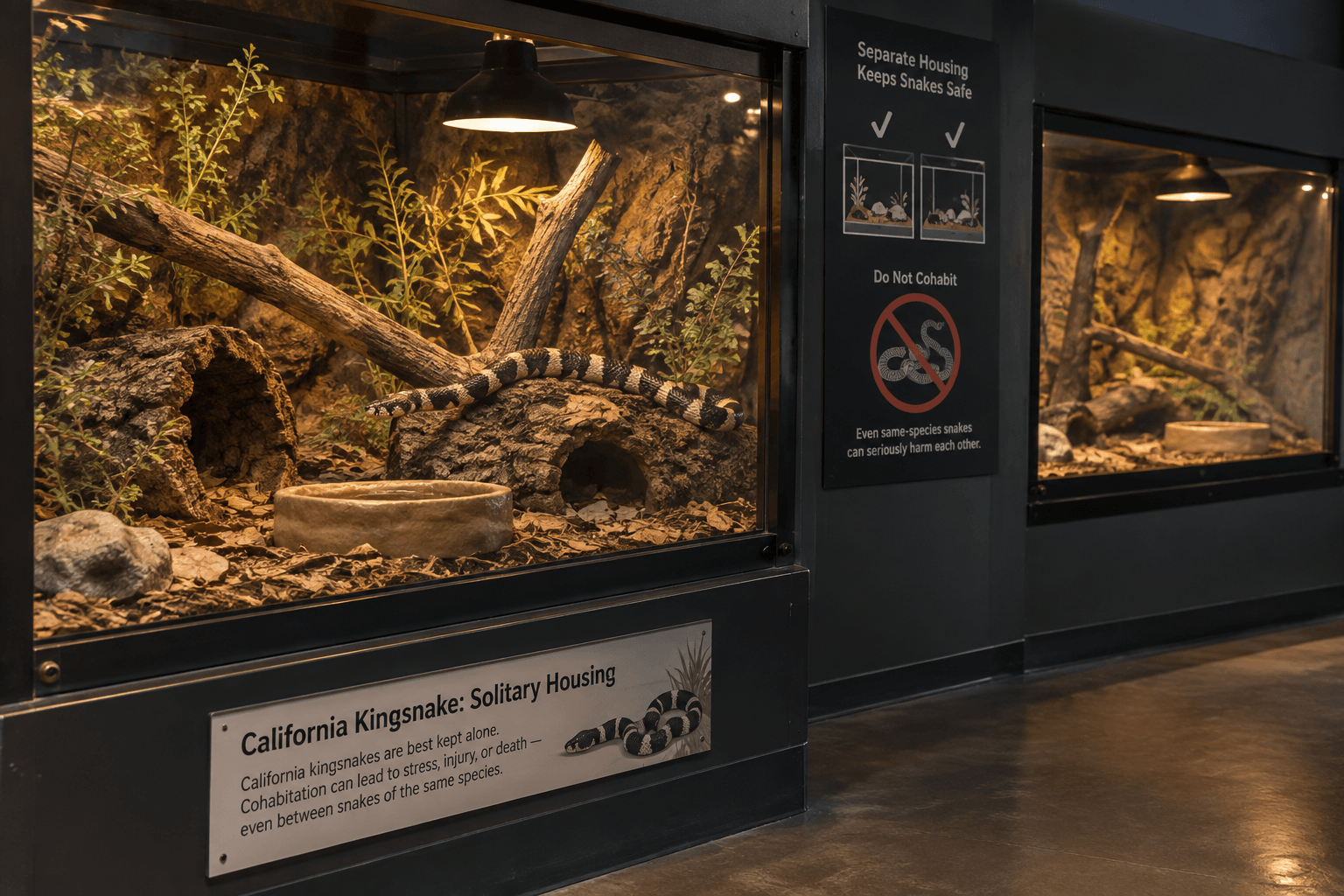
Zoo enclosures give this species room, varied hides, a temperature gradient, and zero cage mates. That single-occupant setup isn’t just for show. It’s the actual model home keepers should copy.
The One Detail Casual Visitors Miss
Most people don’t clock that the snake in the exhibit is alone on purpose. Zookeepers know that housing two kingsnakes together, even a breeding pair outside of supervised pairing, risks one eating the other.
Color Morphs Explained: Same Species, Different Coats
Every banded, striped, or blotched kingsnake you see at a reptile expo is almost certainly still Lampropeltis californiae, just bred for a different look. Morphs like the striped phase, the “high white” pattern, and the classic banded form aren’t separate species. They’re the same animal, selectively bred by hobbyist breeders over the decades.
This matters because pricing and care get confused when people think a morph is rarer or more delicate than it actually is. A standard banded kingsnake might run $40 to $75 from a reputable breeder, while a striking morph like an albino or a lavender can climb to $150 to $300. Care requirements don’t change based on color.
Don’t let a fancy pattern talk you into thinking you need special equipment. A kingsnake is a kingsnake, whatever coat it’s wearing.
Setting Up an Enclosure That Actually Holds a Kingsnake
Here’s the part every prospective owner needs to hear clearly: kingsnakes are notorious escape artists, and a loose lid or a gap the width of a pencil is enough for a grown snake to disappear. A single adult needs at minimum a 36-inch by 18-inch enclosure, with a secure, locking lid — not just a sliding screen top that can be nudged open.
Heat, Humidity, and Hides
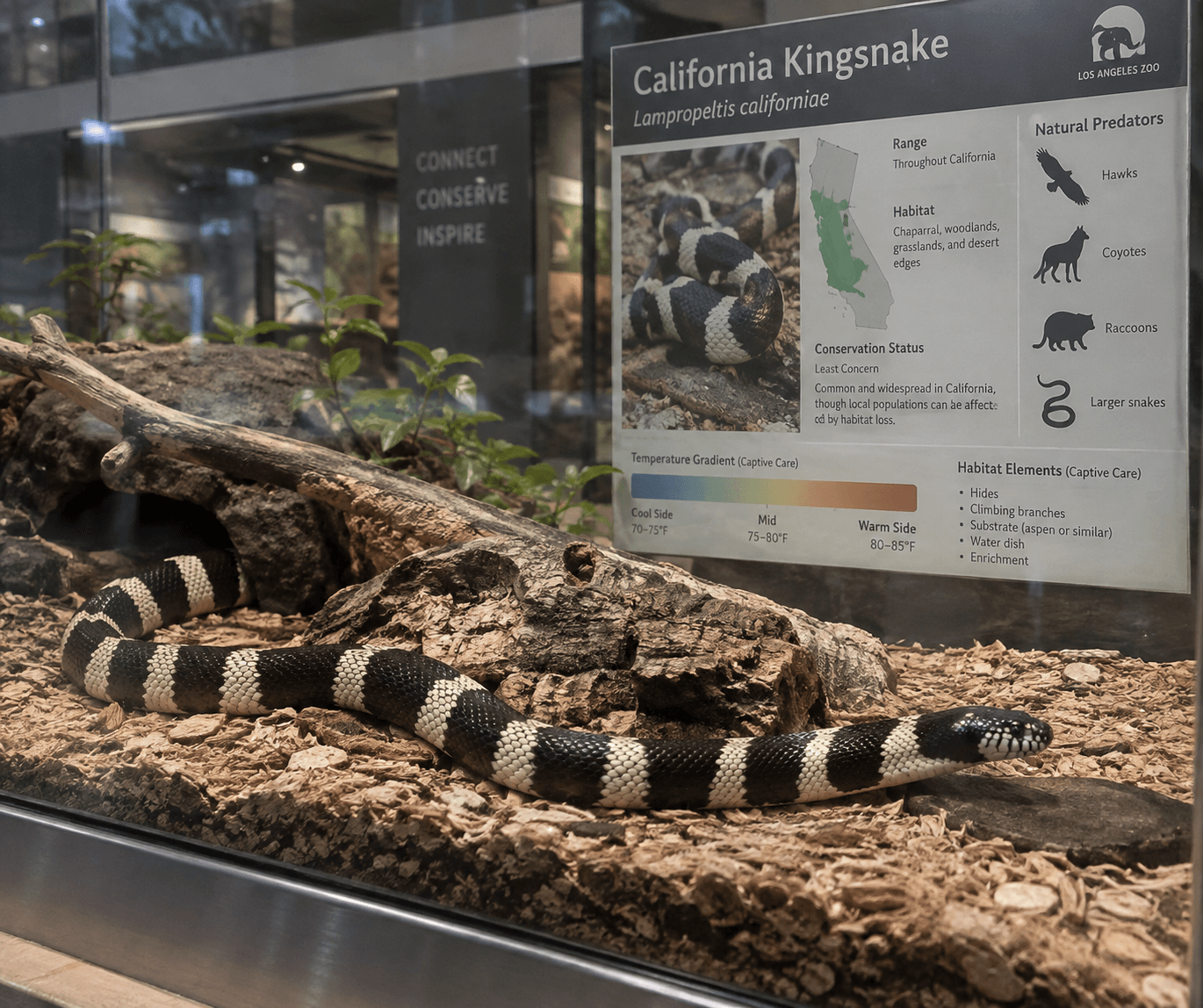
Keep a warm side around 85 to 88°F and a cool side in the mid-70s, using an under-tank heater or a ceramic heat emitter rather than a heat rock. Humidity should sit around 40 to 50%, with a water dish always available. Give it at least two hides, one on each end of the thermal gradient, so it never has to choose between feeling safe and feeling the right temperature.
The Cohabitation Mistake You Cannot Undo
Never house two kingsnakes together. This species is cannibalistic, and even similarly sized adults can end in one snake killing and eating the other, sometimes within a single feeding cycle. There’s no safe way to “test” cohabitation with this species; the risk isn’t worth one interesting photo for social media.
If you’re mapping out a full build, sites like petterrarium.com run through enclosure security details and heat setups step by step, which is worth a look before you buy glass.
Feeding, Handling, and Everyday Care
Feed a juvenile kingsnake an appropriately sized mouse every 5 to 7 days, and shift an adult to every 7 to 10 days once it’s past the one-year mark. Always use pre-killed or frozen-thawed rodents. Live prey can injure a snake that isn’t in a strike-and-eat mood, and there’s no upside to the risk.
Handling is where this species earns its reputation as a great first snake. Most individuals tolerate 10 to 15 minutes of handling a few times a week without much stress, especially once they’re past their first year and used to your scent and grip. Musking, a defensive smell some snakes release when startled, fades fast with regular gentle handling.
In the wild, adult kingsnakes live 10 to 15 years, and captive individuals regularly reach 15 to 20 years with steady care. Females typically lay 5 to 12 eggs per clutch after a spring breeding season, and eggs incubated around 80 to 84°F hatch in roughly 60 to 75 days.
Here’s a quick rundown of the growth and feeding stages to expect:
Juvenile (3-12 months): small mice, every 5 to 7 days, growing enclosure needs
Subadult (1-2 years): adult mice, every 7 days, full adult-size housing
Adult (2+ years): one adult mouse or small rat, every 7 to 10 days
Breeding adults (3+ years): slight feeding increase before and after egg-laying
Life Stage
Typical Length
Feeding Frequency
Hatchling
8-12 inches
Every 5 days
Juvenile
12-24 inches
Every 5-7 days
Adult
30-48 inches
Every 7-10 days
In the Wild: Range, Predators, and Conservation Standing
The California kingsnake’s native range covers most of California, parts of Oregon, Nevada, Arizona, and down into Baja California, Mexico, in habitats ranging from grassland to desert scrub to oak woodland. It’s a generalist, which is a big reason the species isn’t in trouble.
Predators include hawks, coyotes, and larger snakes, and juveniles face the highest risk simply from being small and slow compared to adult prey animals. The California kingsnake carries no special federal listing and is considered a species of least concern, mostly thanks to that same adaptability that makes it such an easygoing pet.
Compare that to other kingsnake subspecies and relatives, like the desert kingsnake or the eastern chain kingsnake, and you’ll notice similar temperaments but different native ranges and slightly different color defaults. The care playbook stays close to identical across most of them.
Frequently Asked Questions
Can a king snake really eat a rattlesnake?
Yes, California kingsnakes do eat rattlesnakes and other pit vipers in the wild. They rely on quick constriction and some natural resistance to venom, not full immunity, so it’s a real risk they take, not a guaranteed win every time.
Is a king snake a good first pet snake?
Yes, it’s one of the best beginner snakes because of its calm temperament and manageable size, topping out around 30 to 48 inches. Just budget for a secure, locking enclosure, since escapes are common with loose-fitting lids.
Can I keep two kingsnakes in one tank?
No, never house two kingsnakes together. They’re cannibalistic, and even a well-fed adult can kill and eat a cage mate, so each snake needs its own fully separate enclosure at all times.