Gray frogs change color right in front of you. One night your frog is pale ash, the next morning it’s almost dark green, and that shift is your enclosure talking to you. Gray treefrogs (Hyla versicolor) are the most common “gray frog” people keep, and their skin tone tells you exactly how happy they are with the humidity, temperature, and background color you’ve given them. Get those three things right, and you’ll watch a frog that actually looks calm and healthy instead of stressed and blotchy.
What Exactly Is a Gray Frog?
The “gray frog” most hobbyists mean is the gray treefrog, a small arboreal amphibian native to the eastern and midwestern United States. It’s not one fixed color at all — that’s the whole point of the species.
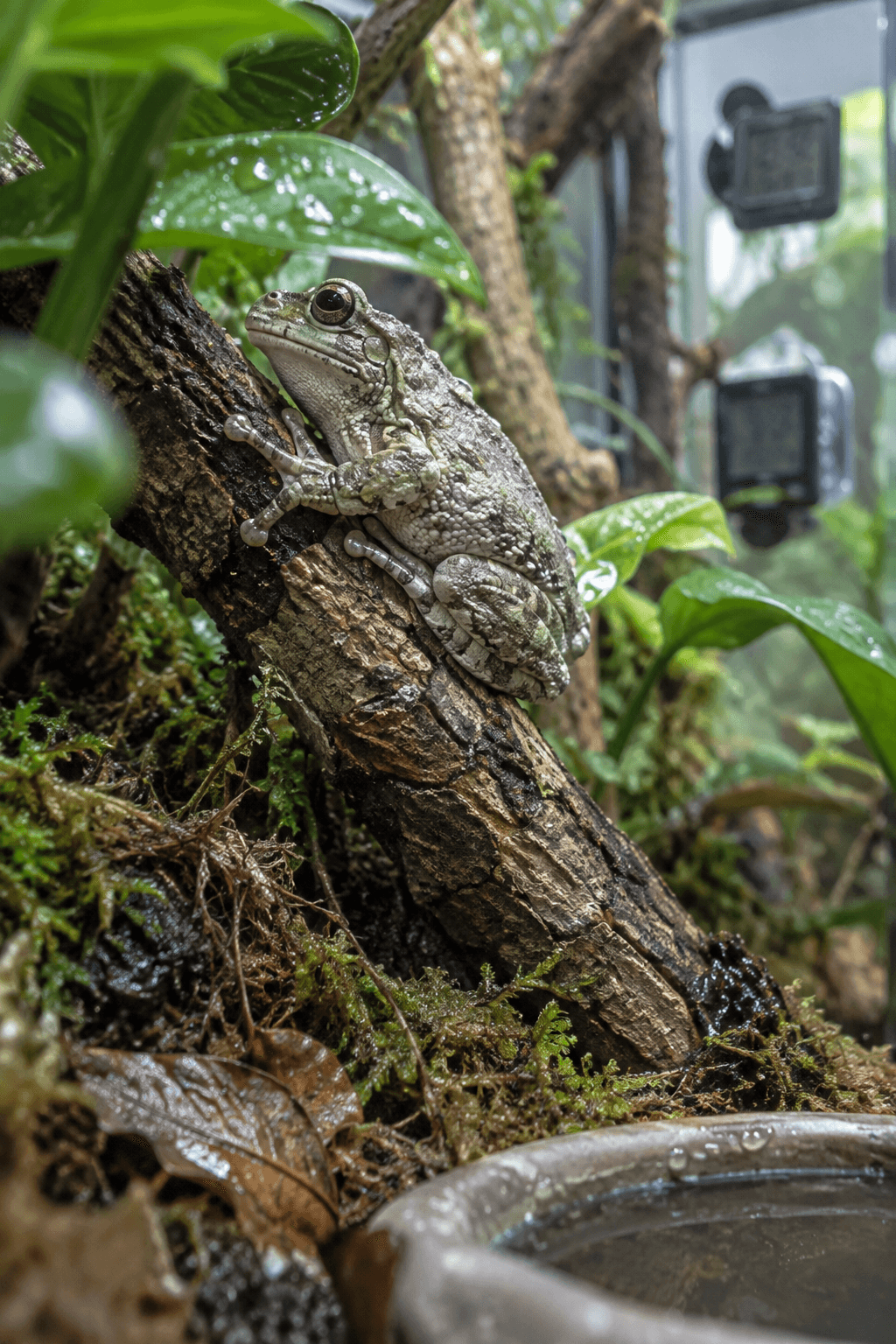
Gray treefrogs run about 1.25 to 2 inches long and can shift between gray, green, and brown depending on temperature, humidity, and what they’re sitting on. This isn’t random. It’s camouflage tied directly to their environment, which is why a stressed or dehydrated frog often looks dull, blotchy, or stuck in one shade instead of shifting naturally.
Here’s where people mess up early: they hear “gray frog” and assume something like an African clawed frog or a dwarf aquatic frog, which live mostly underwater. Gray treefrogs are climbers, not swimmers. They spend most of their time off the ground, gripping bark, glass, and leaves with sticky toe pads, so an aquatic tank setup is the wrong build entirely.
Building the Right Enclosure: Size, Substrate, and Climbing Space
A single adult gray treefrog needs a tall terrarium, not a wide, shallow tank. Because they’re arboreal, vertical space matters more than floor space, and the enclosure itself doubles as a health check — dull color usually means something in this setup needs fixing.
Tank Size and Layout
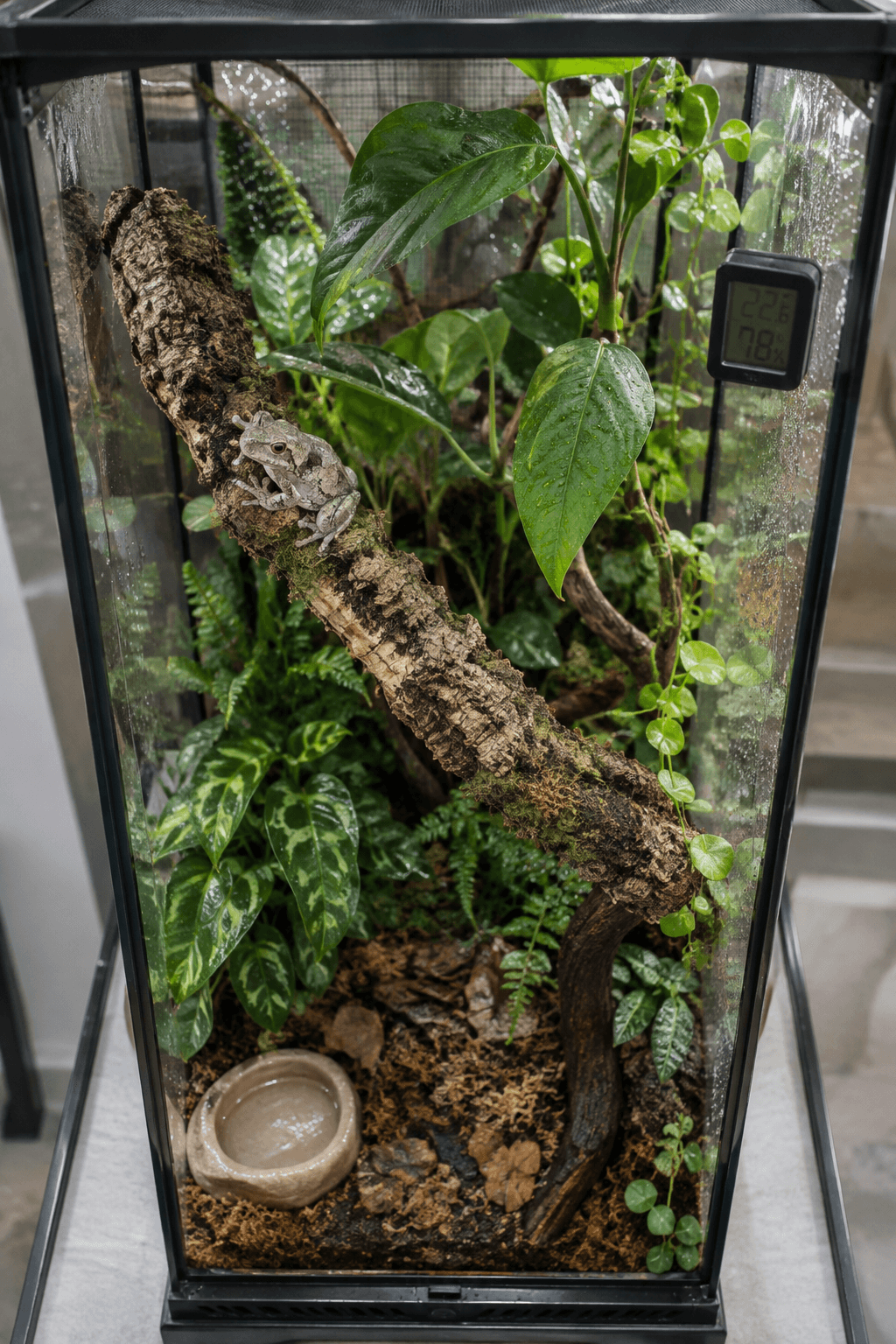
Go with at least an 18x18x24 inch terrarium for one or two adults; a standard 10-gallon aquarium is too short and too horizontal for a climbing species. Taller glass or PVC terrariums (the kind sold for arboreal geckos or chameleons) work better because they give the frog multiple height levels to choose from as temperature and humidity shift through the day.
Substrate Choices
Use a moisture-retentive substrate like coconut fiber (coco coir), sphagnum moss, or a bioactive mix with leaf litter on top. Avoid gravel or sand alone — they dry out fast and don’t hold the humidity gray treefrogs depend on for healthy skin.
Decor and Climbing Structures
Add cork bark tubes, sturdy branches, and live or silk plants angled at different heights. Live plants like pothos or bromeliads also raise humidity naturally as they’re misted, and if you’re picking plants for the first time, a terrarium-focused site like petterrarium.com has decor and planting guides that make it easier to match plant choice to a humidity-loving species like this one.
Humidity, Temperature, and Light: The Trio That Controls Their Color
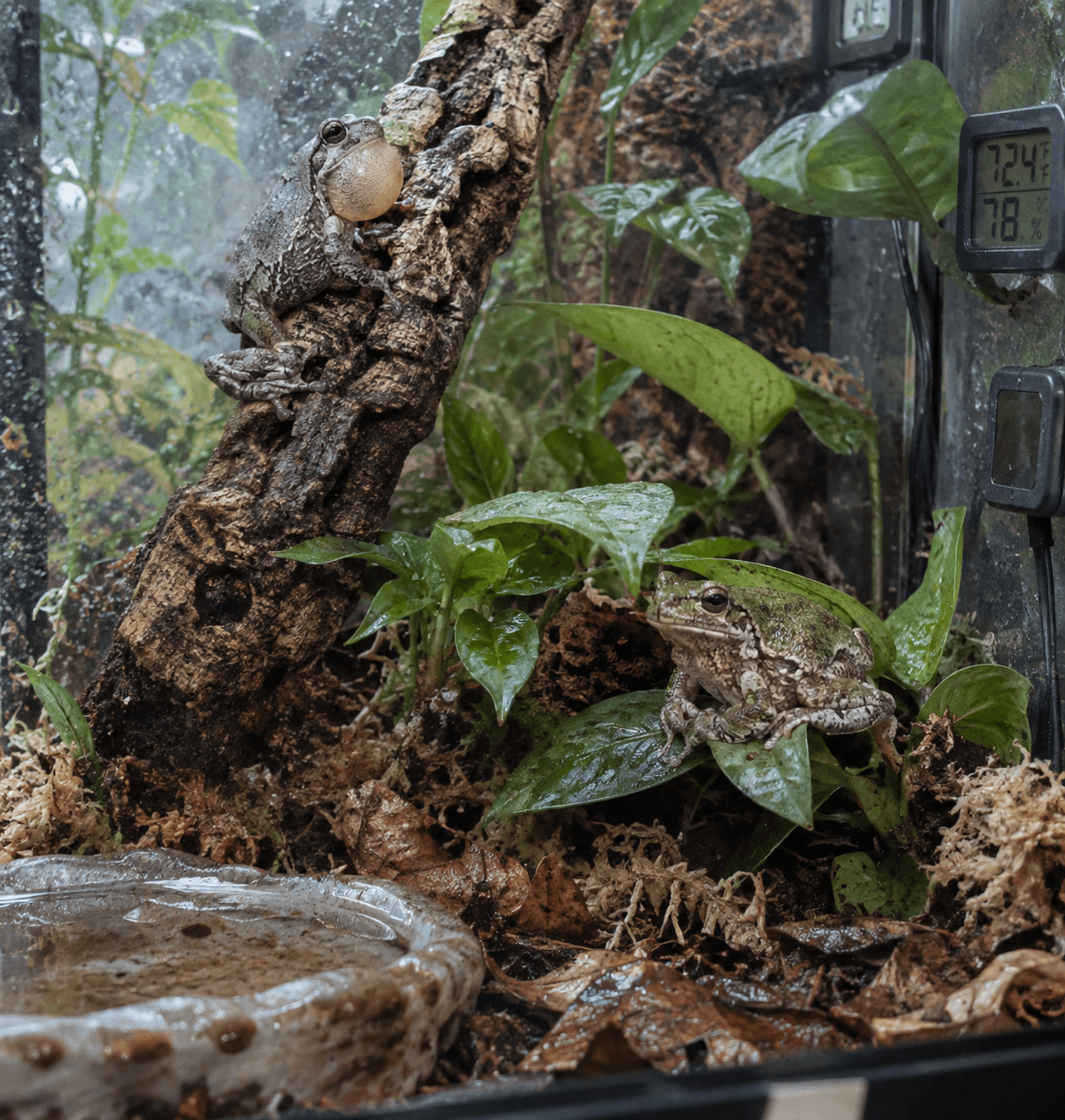
Humidity is the single biggest factor behind how a gray treefrog looks and behaves, and getting it wrong shows up on the frog’s skin within a day or two. Aim for 60-80% humidity, checked with a digital hygrometer, not a guess.
Mist the enclosure once or twice a day, more often in dry winter months when indoor heating drops room humidity fast. If your frog looks pale, dry, or “stuck” in one gray shade for days, that’s usually a sign the tank has dried out, not that something’s permanently wrong — a heavier misting schedule for a few days often brings the color shifts right back.
Temperature should sit between 70-80°F during the day and can drop to around 65°F at night, since gray treefrogs come from a temperate climate and don’t need tropical heat. A low-wattage terrarium heat lamp on one side works fine; skip anything marketed for desert reptiles, since it’ll cook the humidity right out of the tank. For light, a basic low-UVB fluorescent tube on a 12-hour on/off cycle supports the live plants and gives the frog a normal day-night rhythm without overheating the glass.
Factor
Target Range
Common Mistake
Humidity
60-80%
Letting substrate dry out between mistings
Daytime temp
70-80°F
Using desert-style heat lamps
Nighttime temp
60-65°F
No nighttime drop at all
Tank height
24 inches or taller
Using a wide, short aquarium
Feeding, Water, and Handling Without Stressing the Frog
Gray treefrogs eat live insects, and getting the feeding schedule right keeps them active and correctly colored instead of thin and sluggish. Juveniles eat daily; adults do fine on 2-3 feedings a week.
Offer appropriately sized crickets or roaches, no bigger than the space between the frog’s eyes.
Dust insects with a calcium supplement 2-3 times a week to prevent metabolic bone disease.
Add a vitamin D3 supplement once a week alongside calcium.
Remove uneaten insects within 24 hours so they don’t stress the frog or foul the substrate.
Keep a shallow water dish available at all times, deep enough to soak in but not deep enough to trap and drown a small frog.
That water dish matters more than people expect. Never fill it — or mist the tank — with straight tap water. Chlorine and chloramine in tap water are toxic to amphibian skin, since frogs absorb water and chemicals directly through it. Use a reptile-safe water conditioner or let tap water sit out for 24 hours to off-gas chlorine before it touches the enclosure.
Handling should be rare. Gray treefrogs have thin, permeable skin that dries out fast, and the oils and salt on human hands can irritate it. If you must move your frog, use a damp paper towel or a soft net instead of bare hands, and keep it brief — a minute or two, not a long cuddle session.
Breeding Signs and Health Red Flags to Watch For
Breeding season for gray treefrogs runs roughly April through July in the wild, triggered by warm rain and rising humidity, and males call with a loud, musical trill you’ll notice fast if you keep a pair. In captivity, breeding is possible but genuinely tricky — most home keepers focus on healthy long-term care rather than trying to breed, and that’s a completely reasonable choice.
Health problems in gray frogs almost always trace back to humidity or hygiene, not some mystery illness. A frog that stays one dull color for more than a few days, has crusty or peeling skin, or shows red patches on its belly needs an environment check first and a reptile-experienced vet visit if the enclosure fixes don’t help within a few days.
One mix-up worth flagging: gray treefrogs aren’t the only “gray” frog people run into. Some keepers confuse them with gray-colored morphs of other species, like certain dart frogs or true toads, which have completely different humidity, diet, and enclosure needs. If you didn’t buy your frog specifically labeled Hyla versicolor or Hyla chrysoscelis (the nearly identical Cope’s gray treefrog), it’s worth double-checking the species before copying any care sheet exactly.
Frequently Asked Questions
Do gray treefrogs need an aquarium with water like other pet frogs?
No. Gray treefrogs are arboreal, so they need a tall terrarium with climbing branches and a shallow water dish, not a water-filled aquatic setup like African dwarf frogs use.
Why does my gray treefrog keep changing color?
Color shifts between gray, green, and brown are normal and tied to temperature, humidity, and background color. A frog stuck pale or dull for days usually means humidity has dropped below the 60-80% range and needs more frequent misting.
How long do pet gray treefrogs typically live?
With consistent humidity, proper diet, and a reptile-experienced vet on call for issues, gray treefrogs commonly live 5-7 years in captivity, sometimes longer with strong husbandry and low handling stress.