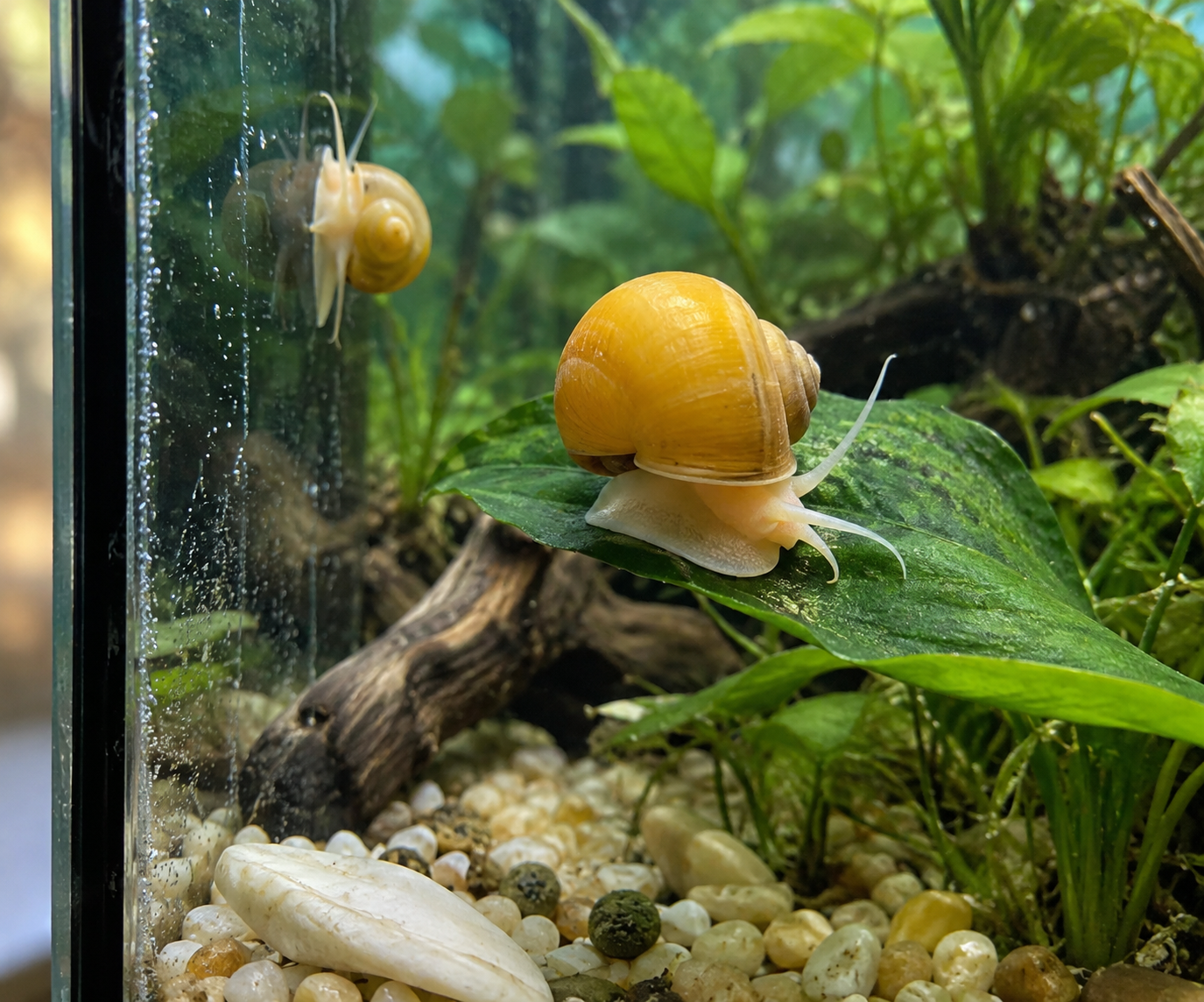
Gold mystery snails need at least 5 gallons each (10 is better), a gentle filter, a tight lid with air space above the water, and hard water around pH 7-8 at 68-82°F. Feed blanched veggies and sinking pellets, add calcium, and plan on about one year of life. Skip any copper medication.
That’s the short version. Think of these snails as short-lived, chemistry-sensitive animals, not a “set it and forget it” cleanup crew. Let’s build a tank where yours actually thrives!
Quick Snapshot: What Gold Mystery Snails Need
Here is the whole care sheet in one place. The ranges below overlap across several hobby references, so I’ve picked the safe middle where they differ.
Factor
Target
Why it matters
Tank size
5 gallons minimum per snail, 10+ ideal
Waste builds up fast in small water
Temperature
68-82°F (76-80°F for peak activity)
Cold slows them, heat shortens life
pH
7.0-8.0 (up to about 8.4 is fine)
Acidic water eats shells
GH
8-12 dGH is a good target
Supplies calcium and magnesium
KH
4-8 dKH
Keeps pH from drifting
Lid
Tight, with air space above water
They climb out and lay eggs above the waterline
Lifespan
About 1 year, sometimes up to 2
Plan for a short, good life
Adult size
About 2 inches across the shell
Bigger than most beginners expect
GH (general hardness) measures calcium and magnesium in the water. KH (carbonate hardness) measures how well the water resists pH swings. Both matter more than the exact pH number.
Are Gold Mystery Snails Hard to Keep?
No, but they are less forgiving than their reputation. The animal itself is calm and simple to feed. The trouble comes from tap water that is too soft, a stray drop of copper, or a lid with a gap. Fix those three things and most beginners do fine.
When NOT to Keep Them
Skip gold mystery snails if your tap water is very soft and you won’t add minerals. Skip them if you plan to use copper treatments. Skip them if your only tank holds puffers or loaches. In each case, a different animal will be happier.
Tank Size and Filtration: Why Small Bowls Fail
Can a snail live in a bowl? Technically, for a while. Realistically, no. A mature snail makes a surprising amount of waste for its size, and a tiny unfiltered bowl turns toxic quickly.
How Big a Tank?
One snail can live in a 5-gallon tank. A group of two or three needs 10 gallons or more. Extra water volume buffers swings in temperature and chemistry, and it dilutes waste.
If you keep reptiles, think of it like humidity in a terrarium. A bigger space holds steady, and a small one swings wildly.
Filter Choice
Pick a filter rated for about twice your tank volume. Then slow it down. Snails are slow movers, and a strong current can push them around or pin them to the intake.
Cover the intake with a foam sponge so snails don’t get sucked in
Aim the outflow at the glass to spread the current
Rinse the sponge in old tank water, never tap water, to protect your good bacteria
A sponge filter is a great fit for a snail tank. It’s gentle, cheap (often under $15 for a small one), and it’s hard to hurt a snail with it.
The Lid and the Air Gap
A tight lid is not optional. Mystery snails climb the glass, follow the silicone seam to the rim and drop out. On a hard floor they dry out within hours.
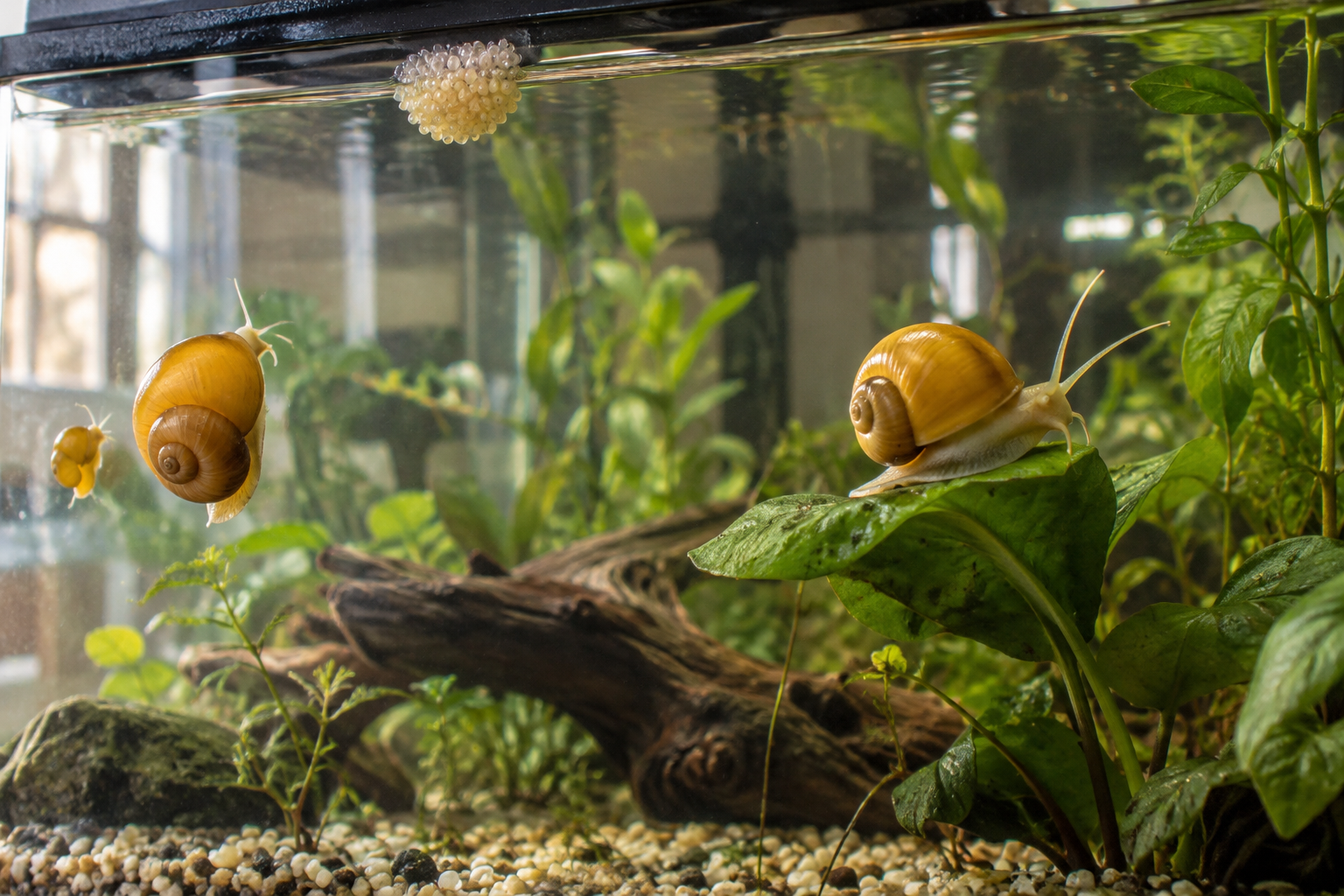
Seal every opening, including the cutout around the filter. Leave about 2 to 6 inches of air between the water surface and the lid. Snails breathe air through a tube called a siphon, and females lay their eggs above the waterline. No gap means no clutch, or a clutch that gets wet and rots.
Setup Steps: From Empty Tank to First Snail
You know basic tank setup, so this part moves fast. The snail-specific bits are in steps 3, 5 and 7.
Rinse the tank and gear with plain water only. No soap, no cleaners.
Add 1 to 2 inches of sand or fine gravel. Sharp gravel can scratch the soft foot.
Add a calcium source. A mesh bag of crushed coral in the filter or substrate slowly lifts hardness.
Fill with dechlorinated water and start the filter and heater.
Cycle the tank. Cycling means growing bacteria that turn ammonia into safer nitrate. Expect about 4 to 6 weeks without a fish-in shortcut, or use mature filter media from an established tank.
Acclimate slowly. Float the bag for 15 minutes, then add small cups of tank water over about an hour.
Put the snail in, then close the lid right away.
Substrate and Decor
Sand or fine gravel works well. Add hardy plants such as Anubias, Java fern and moss. They tolerate hard water, and snails graze the soft film on their leaves without harming healthy plants. Smooth driftwood and rounded rocks are fine. Avoid sharp decor that could chip a shell.
One warning for planted tanks: most plant fertilizers contain copper. Check the label. Copper is toxic to all invertebrates, snails included.
Reality Check on Cost
A basic 10-gallon setup with a sponge filter, heater, lid, test kit and substrate typically runs about $70 to $120. The snail itself is usually just a few dollars. The gear is where the money goes, so a “cheap snail” is never really a cheap project.
Water Chemistry and Shell Health
Is soft water really a big deal? Yes. It’s the number one reason mystery snail shells go wrong.
Why Soft Water Erodes Shells
Shells are made of calcium carbonate. Soft or acidic water slowly pulls calcium out of them. You’ll see white patches, pits, thin spots and flaking, usually near the oldest part of the shell at the tip. That damage does not heal. New growth can come in healthy, but the old pitting stays.
Test your tap water before you buy a snail. If GH reads under about 6 dGH or pH sits under 7, you’ll need to add minerals.
Raising Hardness the Safe Way
Go slowly and change one thing at a time. Quick swings stress snails more than a mild, steady value does.
Crushed coral or aragonite in a filter bag nudges pH and hardness up over days
Cuttlebone floating or sunk in the tank gives snails a snack and a mineral source
Mineral supplements made for shrimp or snails work when dosed by the label
Calcium-rich foods (see the next section) help from the inside
Retest weekly at first. Once the numbers settle, check every two weeks. Don’t chase a perfect pH. A stable reading inside the range beats a perfect number that bounces.
Temperature
Keep the tank between 68 and 82°F. Right around 76 to 80°F they’re most active and eat well. Hot water speeds up their metabolism, and many keepers think that shortens their lives. Cold water makes them sluggish and can cause long periods of hiding.
Feeding: What Gold Mystery Snails Eat
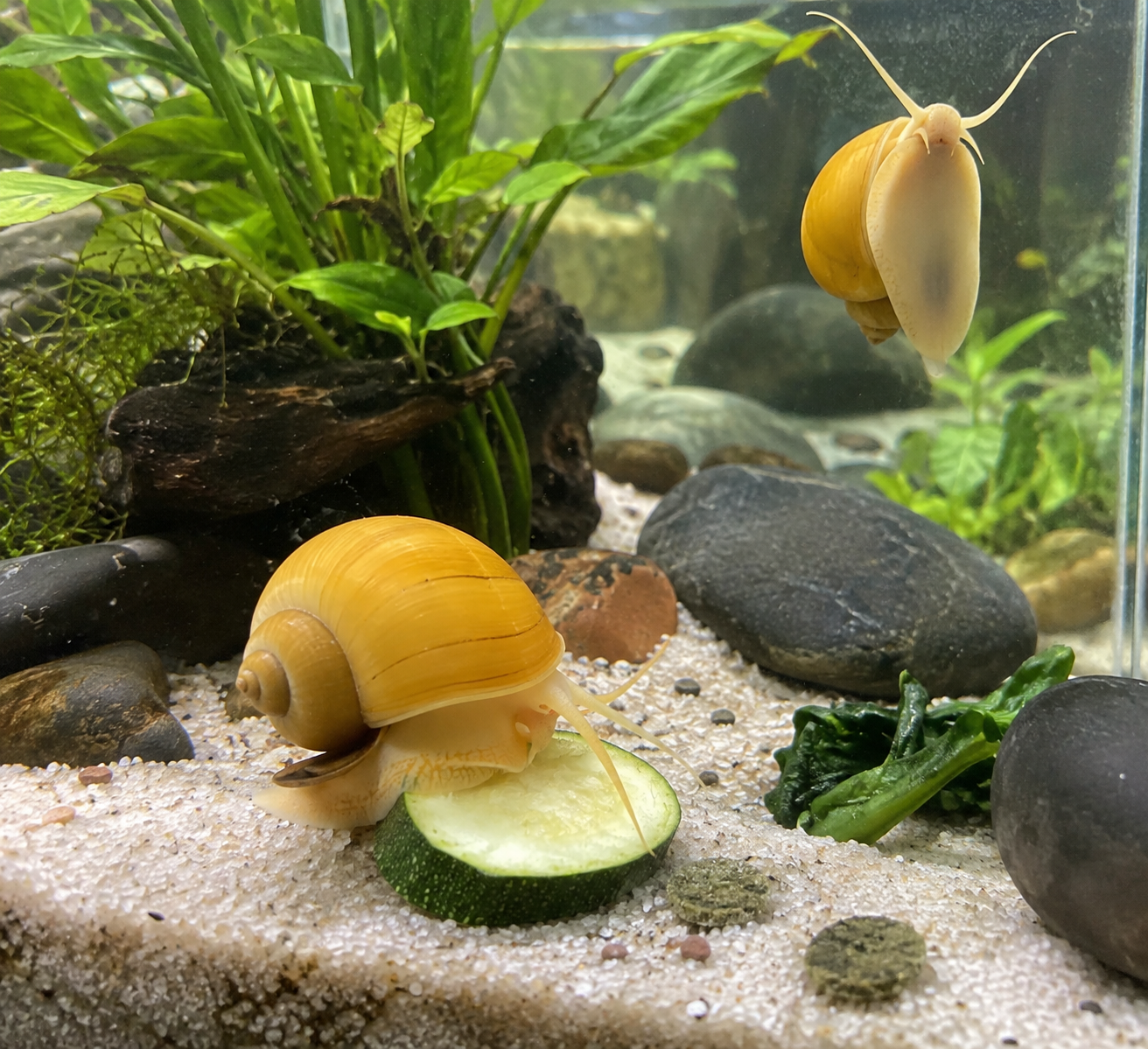
What do mystery snails eat? Mostly plant matter. They’ll clean up leftover food and soft algae, but algae alone won’t feed them well. Offer blanched vegetables and sinking pellets a few times a week, plus a calcium source.
Good Foods
Zucchini, cucumber, kale and spinach, blanched (dunked in boiling water for about a minute, then cooled)
Sinking algae wafers or snail pellets
Shrimp pellets with some calcium in the ingredients
Cuttlebone or calcium chips
Feed small amounts once a day or every other day. Pull out uneaten veggies after 12 to 24 hours, because rotting food spikes ammonia. Boiled spinach is popular, but don’t lean on it alone. Rotate your greens.
Not Enough Food?
In a tank full of fast fish, snails get outcompeted and can slowly starve. If you see a thin, slow snail while the fish gobble everything, feed after lights out with sinking food. Snails often wake up and feed at night.
Tank Mates: Who Gets Along and Who Doesn’t
Who can share a tank with a snail? Calm, small fish do best. The snail is slow and has a thick shell, but its long antennae and soft body make it an easy target for fin-nippers.
Safe Picks
Small tetras, rasboras and corydoras
Guppies, mollies and platies (they like hard water too)
Peaceful livebearers and most small catfish
Cherry shrimp and other dwarf shrimp, usually fine
Bad Matches
Puffers eat snails, plain and simple. Many loaches, especially clown and yoyo loaches, hunt them. Cichlids such as oscars and large angelfish often harass or eat them. Bettas vary. Some ignore a snail, and others nip at the antennae.
If you also keep reptiles or frogs, remember that a paludarium (a tank with both land and water) is a tricky place for snails. Land areas must be sealed from the water side only if you want to protect eggs. Frogs may eat small snails, and many amphibian-safe products are not copper-free. Check every treatment label before it goes near the water.
Copper and Medications: The Silent Snail Killer
Why does copper matter so much? Because it kills invertebrates at levels fish handle just fine. Many fish medicines for ich and parasites use it. Some algae removers and plant foods do too.
Read every label. If you see “copper sulfate,” “chelated copper” or any invertebrate warning, don’t dose the main tank. Move the sick fish to a hospital tank and treat there.
Sudden mass inactivity of several snails at once usually points to a toxin, not old age. Do a big water change with dechlorinated water and add fresh carbon to the filter. Carbon can pull out some medications.
Mystery Snail vs Nerite Snail
Which snail suits you? The two are very different animals.
Feature
Gold mystery snail
Nerite snail
Adult size
About 2 inches
About 1 inch
Lifespan
About 1 year
About 1 to 2 years
Algae eating
Light
Excellent
Escape risk
High
High
Eggs
Clutch above water
White specks that don’t hatch in fresh water
Hardness need
Moderate to hard
Moderate to hard
A nerite does a better job on glass algae. A mystery snail is bigger and more fun to watch. Both want hard water and a tight lid.
Breeding and Egg Clutches
Will your snail breed? Only if you have both a male and a female. Mystery snails have separate sexes, and you can’t tell them apart by looking. If you buy one snail, you won’t get babies. If you buy two or three, expect clutches sooner or later.
A clutch looks like a pinkish-tan, bumpy mass stuck to the lid or the glass above the water. It takes about 2 to 4 weeks to hatch, and it needs humidity to survive.
You have three choices:
Leave it alone. Babies drop in the water and many get eaten or die.
Remove it. Scrape it off and freeze it, or dispose of it.
Hatch it. Move it to a sealed container above water in a warm spot.
Tank space is the real limit. A dozen babies will outgrow a 10-gallon tank in months. Don’t release any snails into local ponds or streams. The U.S. Department of Agriculture restricts many apple snail species, and even legal ones can harm native ecosystems.
Lifespan, Size and Signs of a Happy Snail
How long do gold mystery snails live? About a year is typical. Great care can push it to 2 years, and a few reach 3, but don’t count on it. Many sold at stores are already several months old.
Adults reach about 2 inches across the shell. Young snails grow quickly, often noticeably in a few weeks.
Healthy Signs
Moves around and explores, especially at night
Smooth shell with a glossy, clean look
Foot out, antennae extended, grazing food
Eats most of what you offer
Unhappy Signs
Floating for days, or stuck above the waterline
Hiding inside the shell with the trapdoor (the operculum) shut
Pitted, white or flaking shell
A foul smell when you lift it out of the water
A snail that stays shut for a day or two may just be resting. If it won’t move and smells bad, it has died. Take it out right away and test for ammonia.
Frequently Asked Questions
What size tank does a mystery snail need?
At least 5 gallons for one snail and 10 gallons for two or three. A bigger tank keeps water stable and handles waste better. Don’t use a tiny bowl.
How long do gold mystery snails live?
Typically about one year, sometimes up to two with stable water and good calcium. Warm water and poor care shorten that.
What do mystery snails eat?
Blanched vegetables like zucchini and spinach, sinking pellets and algae wafers. Add cuttlebone or calcium for shell strength, and remove uneaten food within 24 hours.
What is the difference between a mystery snail and a nerite snail?
Mystery snails are bigger, around 2 inches, and lay clutches above water. Nerites are smaller, eat far more algae, and their eggs won’t hatch in freshwater. Both need a tight lid and hard water.