Yes, fish sleep, but not the way you do. They have no eyelids, so their eyes stay open the whole time. Instead, a resting fish goes still, breathes more slowly and uses less energy.
So will fish sleep in your tank? Every night, most likely. You may spot yours hovering in place, settled near the bottom or tucked into plants, sometimes with duller color. It still reacts fast if you disturb it. Below, you’ll learn how to tell rest from trouble.
How Fish Rest: A Low-Power Mode, Not Mammal Sleep
Mammals close their eyes, lie down and go deeply unconscious. Fish don’t have eyelids, and they lack the brain structure (the neocortex) that mammals use for deep sleep. Even so, they do rest, and scientists can measure it.
Researchers at Stanford University monitored zebra danios and found sleep patterns that look a lot like slow-wave sleep in mammals. The fish didn’t show rapid eye movement, and of course their eyes never closed. Zebrafish studies also found a rebound effect: after being kept awake, the fish slept longer next time. That’s very much like you after a bad night!
What actually changes in the body
During rest, a fish moves much less, breathes more slowly and burns less energy. Its brain activity drops too. Think of it as a low-power mode. The fish stays aware enough to bolt if a predator (or your net) shows up.
Why open eyes fool people
Open eyes make people think fish never sleep. That’s the most common mistake. The eyes tell you nothing. Watch the body instead: posture, gills, color and how the fish reacts when something moves nearby.
Signs Your Fish Is Resting
You can’t look for closed eyes, so you look for a pattern of small clues. One clue alone doesn’t prove much. Three or four together, at the right time of day, point to sleep.
Here are the signs to check:
Very little movement. The fish hovers or drifts slowly with the water flow. A little bobbing is normal.
Slow, steady gills. The gill covers open and close at a calm pace, slower than when the fish is active.
Settling low. Many fish sink toward the bottom or the lower third of the tank.
Tucked-in spot. The fish rests in a cave, behind a plant or against a rock or ornament.
Duller color. Bettas and many others fade a bit while resting, then brighten up when they wake.
Slow reaction. The fish seems less alert, but stirs and swims off if you move your hand near the glass.
Timing matters as much as posture. Watch at the same time of night for a few days. Once you’ve seen your fish’s normal routine, anything different jumps out.
Pro tip: Peek with a dim flashlight or a phone light turned low. Bright room lights make fish bolt, and you’ll miss the resting pose.
Where and How Fish Sleep: Positions You’ll See
Different species pick very different bedrooms. A fish lying on the gravel can be perfectly fine, and a fish wedged in a log can be too. It looks alarming the first time you see it!
Hovering and drifting
Many midwater fish, like tetras and danios, hold nearly still in open water or near the surface. They flick a fin now and then to stay balanced. Some slowly bob as the filter current pushes them.
Bottom resting and burying
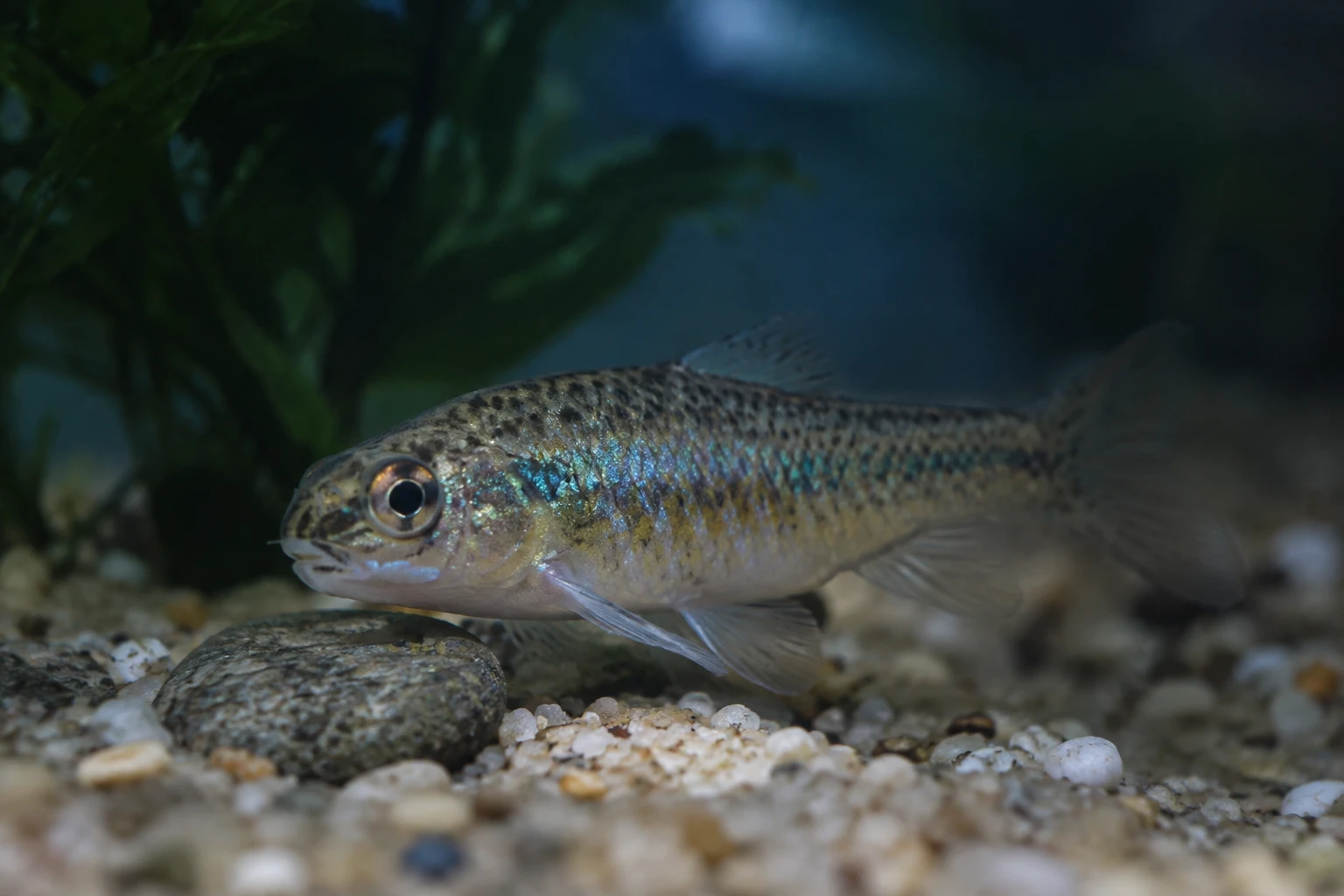
Corydoras and loaches often lie flat on the substrate (the sand or gravel floor). Some fish bury themselves in sand. Wedge-sleepers push into a gap between rock and decor so the current can’t bounce them around.
Cover sleepers
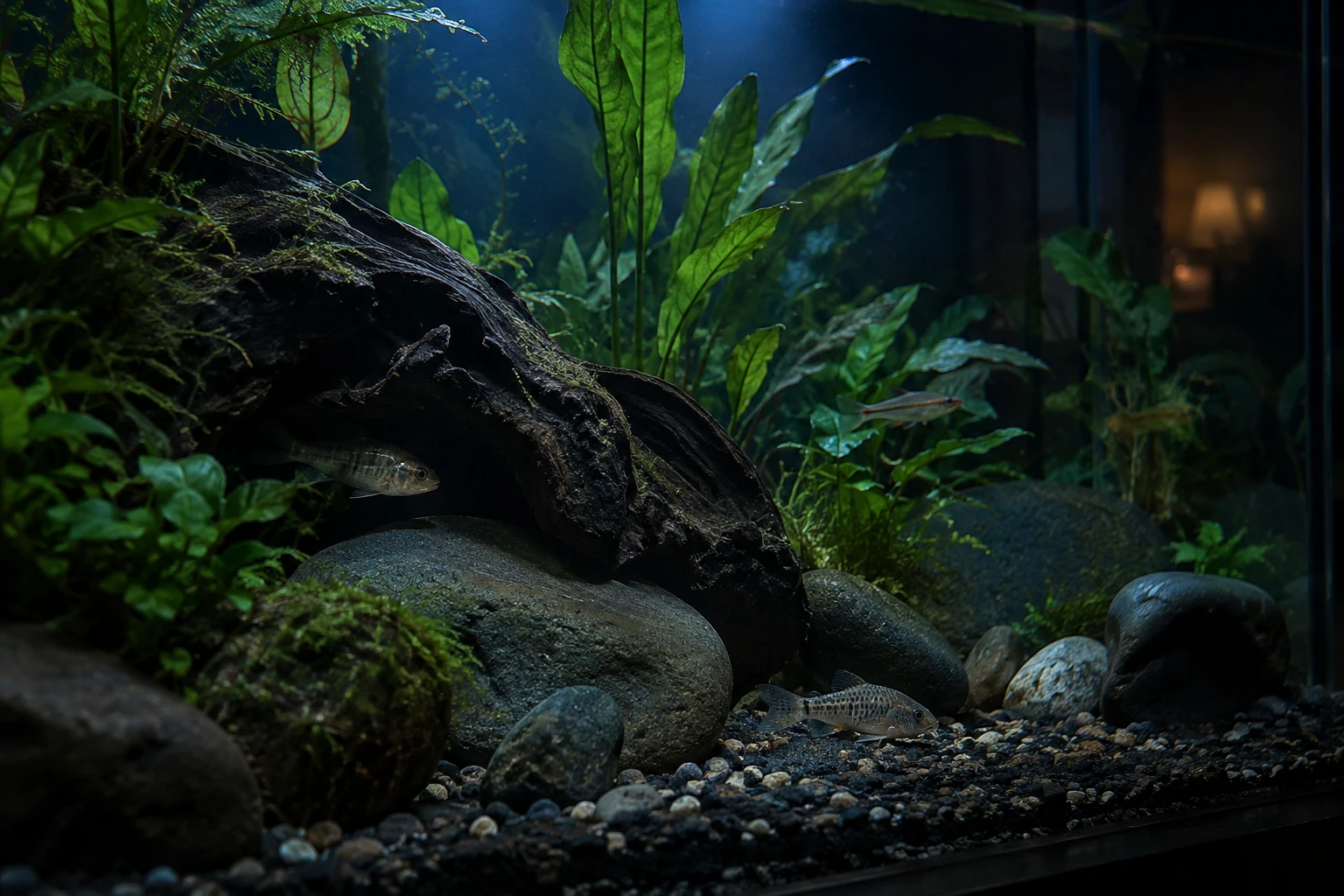
Fish that feel exposed tuck behind plants, inside caves or under driftwood. This is instinct. In the wild, calm crevices have less water flow and hide the fish from predators, and your fish still wants that, even in a safe glass box.
Day Shift or Night Shift: Diurnal vs Nocturnal Fish
Most aquarium fish are diurnal, meaning they’re active by day and rest at night. Some are nocturnal: they sleep through daylight in a cave and roam after dark. Don’t assume every fish keeps your schedule.
Common nocturnal fish include certain catfish, plecos (plecostomus), some knifefish and many loaches. If your pleco hides all day, it isn’t lazy or sick. It’s on the night shift.
Why this matters for tank mates
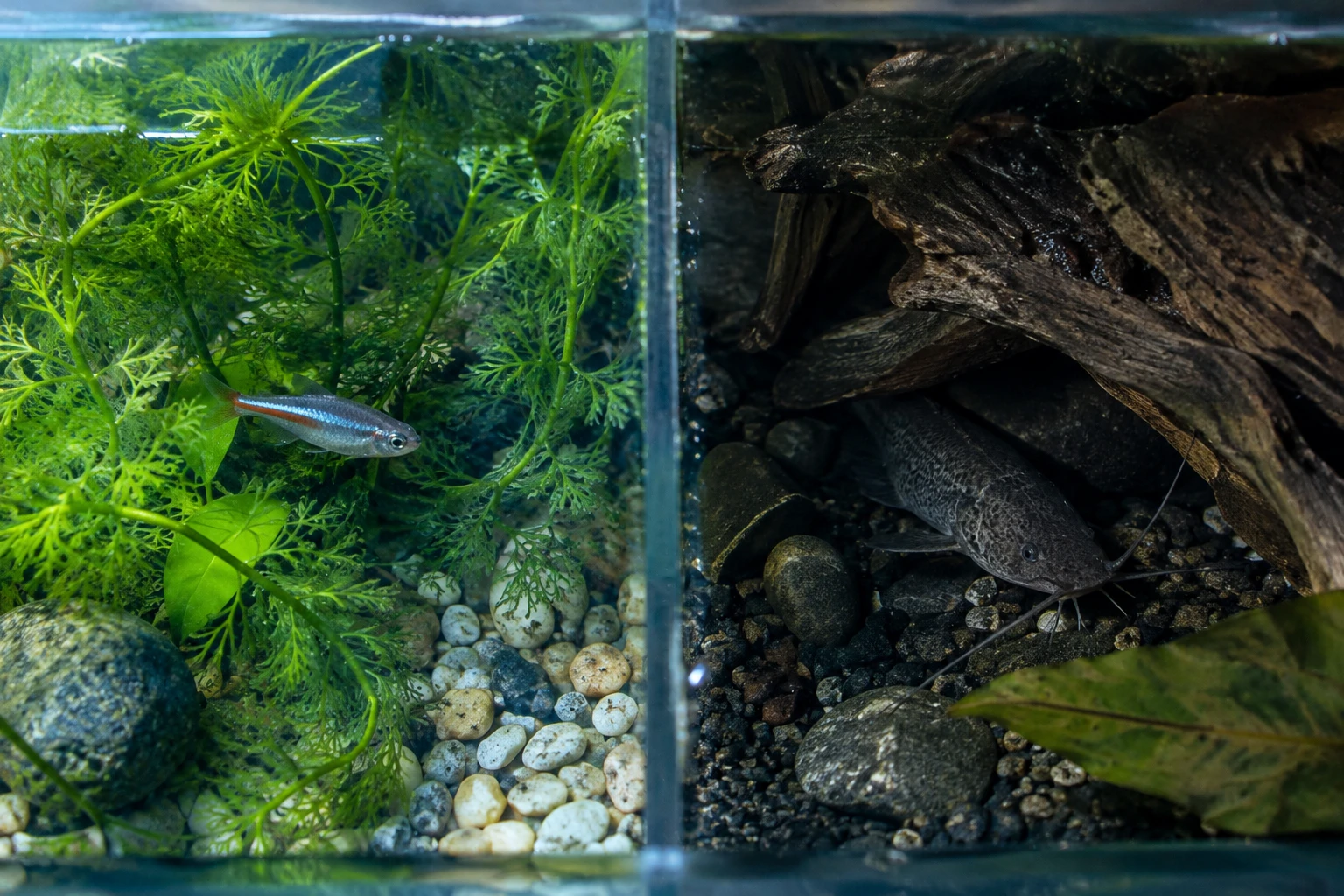
Mixing day and night fish can cause real trouble. Small tetras like neons settle at night, just when a big-mouthed catfish such as a pictus cat starts cruising for food. The catfish isn’t mean. It’s just hungry! Keep that in mind before you pair small fish with large nocturnal predators.
Special sleepers
Some species break the usual pattern:
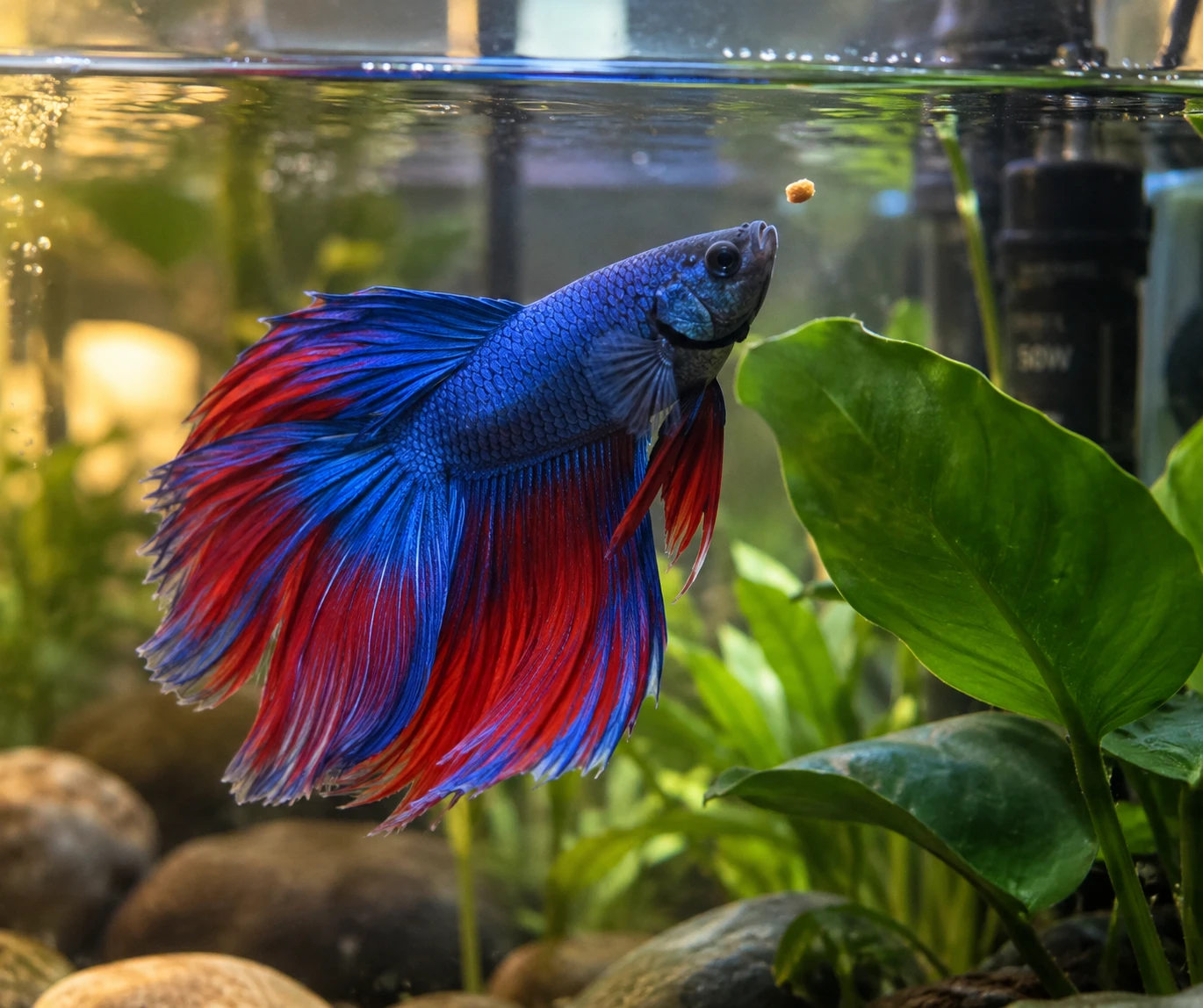
Bettas rest often, sometimes on a leaf or at the surface, and lose some color while they do.
Parrotfish and wrasses (marine fish) wrap themselves in a mucus cocoon at night. Scientists think this slimy sleeping bag may help protect them from predators and parasites.
Some sharks must keep moving to push water over their gills, so they rest while swimming.
Sleeping, Sick or Dead? A Keeper’s Diagnostic
This is the question that sends keepers running to the tank. Use five checks: responsiveness, posture, breathing, color and timing. Start with the quickest one. Gently wave your hand near the glass, or tap the tank lightly. A sleeping fish stirs and swims away. A sick fish responds slowly or not at all.
Pro tip: Don’t tap hard or bang the glass. Fish sense vibrations, and a hard knock stresses a healthy fish.
Check
Sleeping
Sick or stressed
Dead
Response to a hand near the glass
Stirs and swims off quickly
Slow, weak or no reaction
None
Posture
Upright, hovering, tucked in or flat on the bottom (for bottom species)
On its side, nose down, tail down or stuck at the surface
On its side or floating or sinking, limp
Gills
Slow and steady
Fast, heavy or gasping (or clamped)
No movement
Color
Slightly faded, returns when awake
Stays pale, dark or patchy all day
Dull, cloudy eyes
Timing
Lights out or normal rest hours
Any time, lasts for hours or days
Not applicable
Why a fish on its side is a warning
Lying on its side is not normal sleep. It often points to swim bladder trouble (the organ that controls buoyancy), poor water quality or illness. Bottom sleepers like corydoras rest flat on the belly, not tipped over.
What to do if it fails the test
Test your water first. Check ammonia and nitrite with a liquid test kit, and look at temperature. Bad water causes most sudden problems. If the fish keeps failing the checks after a day, look for other symptoms like white spots, torn fins or refusal to eat. For a firm diagnosis, you’ll need an aquatic vet. We can’t diagnose your fish from a description.
If you still can’t tell whether the fish is alive, gently check for gill movement and a reaction to a soft touch from a net. If nothing happens and the body looks stiff or cloudy, remove it so it doesn’t foul the water.
How Long Fish Sleep and What Disturbs Them
Rest time varies by species. Many fish rest for several hours a day, mostly in low light or darkness. There’s no single number that fits every fish, so learn your own tank’s rhythm by watching.
Light and the clock
Fish can sleep with the lights on, but the rest is poorer. Long-term constant light can stress fish, change their behavior and feed more algae. Fish follow light cues much as we follow the sun.
Use a timer. Most freshwater tanks do well with about 6 to 10 hours of light a day, then full darkness. Some keepers run up to 10 to 12 hours on and 12 to 14 off. Pick one schedule and keep it the same every day, because consistency beats length.
Night noise and activity
Fish feel vibrations. A TV, subwoofer or washing machine next to the tank can break up their rest. A tank in a child’s bedroom used as a night light is another trap. If you do that, switch the tank light off during the day and keep the curtains drawn so the fish think it’s night.
Abrupt darkness can also startle fish. If your light has a dimmer, ramp it down over 15 to 30 minutes. Hyperactive or aggressive tank mates keep others on edge and cut into rest, too.
Setting Up Your Tank So Fish Can Rest Well
A good rest setup costs very little. Most of it is a timer, some cover and a calm corner. Here’s the order I’d tackle it in.
Put the light on a timer. A basic outlet timer runs about $8 to $15 at most hardware or pet stores (typical prices).
Add cover. Use live or silk plants, caves and driftwood so every fish has a safe nook.
Make a calm zone. Aim the filter outflow so at least one corner has gentle flow.
Move the tank away from noise. Keep it clear of speakers, washers and busy doorways.
Dim the lights gradually, if your fixture allows it.
Match tank mates. Don’t mix tiny day fish with big night hunters.
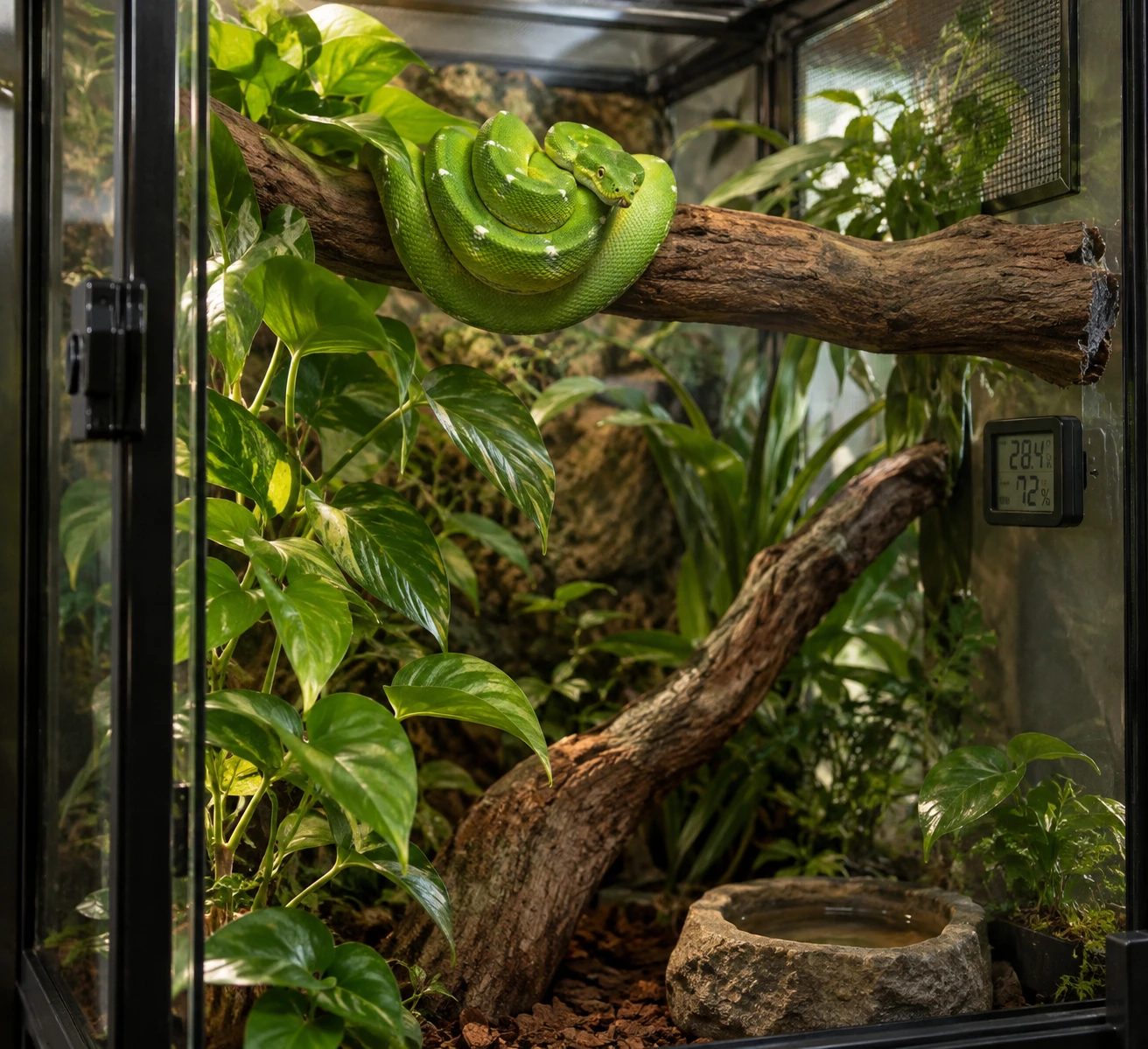
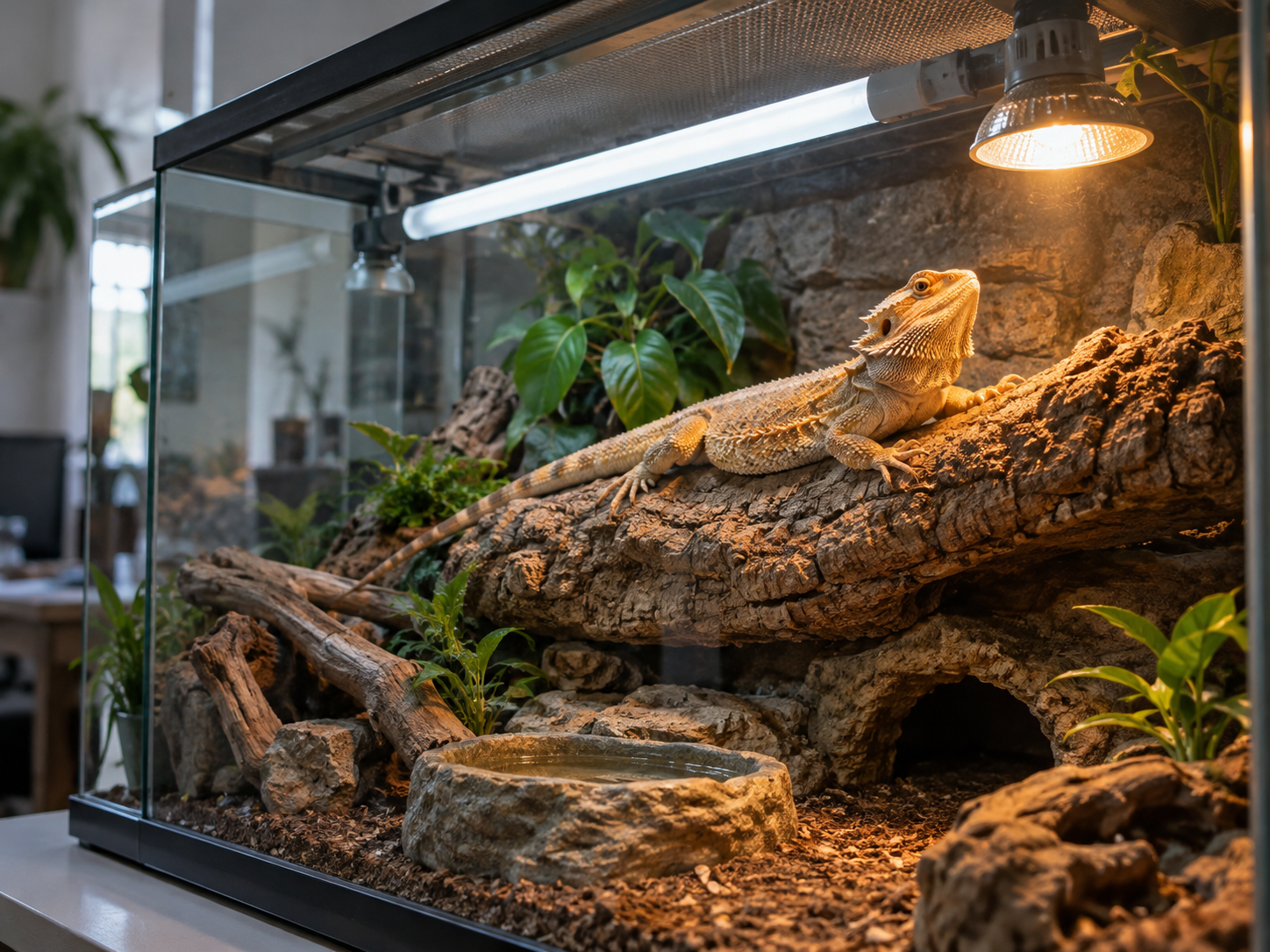
Fish from different habitats want different cover. Corydoras like a smooth sandy patch. Plecos want a cave or hollow log sized to their body. Bettas like broad leaves near the surface. If you keep a frog or reptile enclosure beside your tank, remember that its heat lamp and night lighting can spill onto the aquarium too. Pet Terrarium covers lighting for both tank types in its setup guides, so you can plan one routine for every enclosure in the room.
A final check: after a week of the new routine, watch the tank after lights-out. If your fish settle quickly and look calmer, the setup is working!
Frequently Asked Questions
How do you know if your fish is sleeping?
Look for stillness, slow gill movement, settling low or tucking into cover, and slightly faded color. The fish should stir and swim away if you wave a hand near the glass. If it doesn’t react, treat it as a possible health problem.
Do fish sleep with their eyes open?
Yes. Fish have no eyelids, so their eyes stay open even during deep rest. That’s why you have to read their posture, breathing and reactions rather than their eyes.
Do fish need darkness at night?
Yes, they rest best with a regular period of darkness. Fish can doze with the lights on, but constant light can stress them and feed algae. A timer with roughly 6 to 10 hours of light a day works for most freshwater tanks.
Is my fish sleeping or dead?
Gently wave your hand near the glass. A sleeping fish stirs and swims off, while a dead fish has no gill movement and doesn’t react. A fish lying on its side that responds weakly is likely sick, so test your water right away.