Cherry red shrimp (Neocaridina davidi) are hardy beginner shrimp, but only in a tank that is already cycled. Use at least 5 gallons, a sponge-covered filter, inert substrate, and live plants or moss. Keep the water steady at about 65-78°F with a pH of 6.5-7.8 and moderate hardness. Feed lightly, and keep copper and shrimp-eating fish far away.
Hardy does not mean forgiving. Most losses come from swings, not from the shrimp being weak. Let’s build a tank that stays steady.
Should You Buy Shrimp Yet? Three Signs You Should Wait
Why start with a “not yet”? Because the most common way to lose a whole batch of shrimp is buying them too early. A few minutes of honesty now saves you $20-$30 and a sad week.
Wait if any of these are true:
Your tank has not finished cycling. Ammonia or nitrite still shows on your test kit.
You use copper anywhere. That includes fish medications, some plant fertilizers, and some pond or algae products.
You plan to keep a betta, cichlid, or any fish that fits a shrimp in its mouth. Shrimp become snacks.
Also wait if you can’t check on the tank daily for the first two weeks. Shrimp problems show up fast, and a quick look at the water and the shrimp catches most of them early.
None of this is a dead end. Each one has a fix, and the rest of this guide walks you through them.
What Cherry Red Shrimp Are and What to Expect
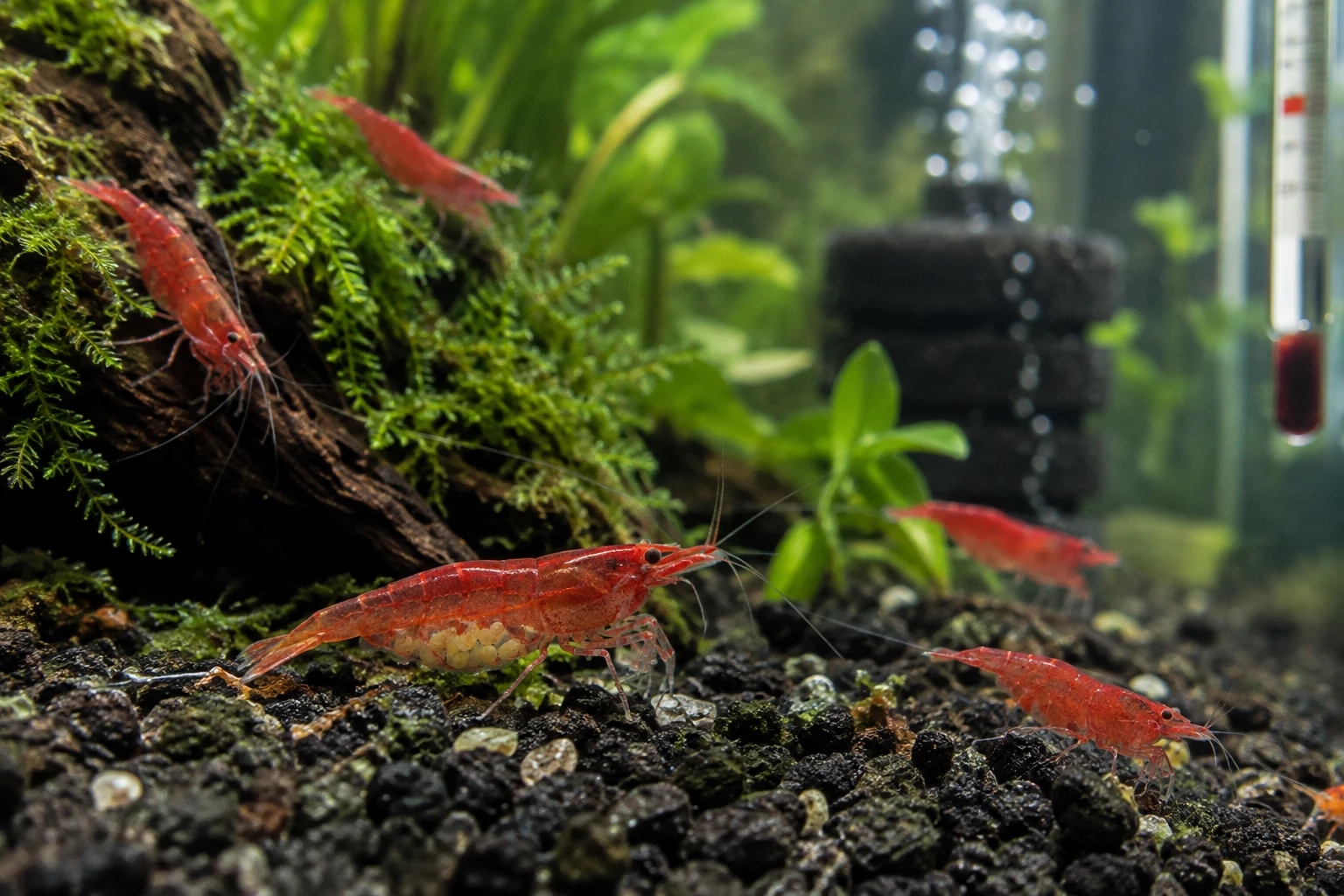
Cherry red shrimp are small freshwater shrimp from streams and lakes in Taiwan and other parts of Asia. They are peaceful and busy. Adults reach about 1-1.5 inches and usually live 1-2 years.
Color grades
Shops sell them in grades based on how red they are. Plain “cherry” shrimp are patchy red and often see-through in places. Higher grades, like sakura and fire red, have deeper, more even color. Wild-type shrimp are brownish-gray. Pick what you like, since care is the same for all of them.
Males and females
Females are bigger, rounder, and usually redder. Males are smaller and paler. You’ll want about two females for every male when you start. That keeps the males from chasing any single female too hard.
What they do for you
They graze on algae and the thin slime layer (called biofilm) that grows on every surface. They won’t clean a dirty tank for you, though. They just add color and movement to a clean one!
The Setup Sequence: Seven Steps From Empty Tank to Shrimp
The order matters here. If you skip ahead, the shrimp pay for it. Follow these steps from top to bottom.
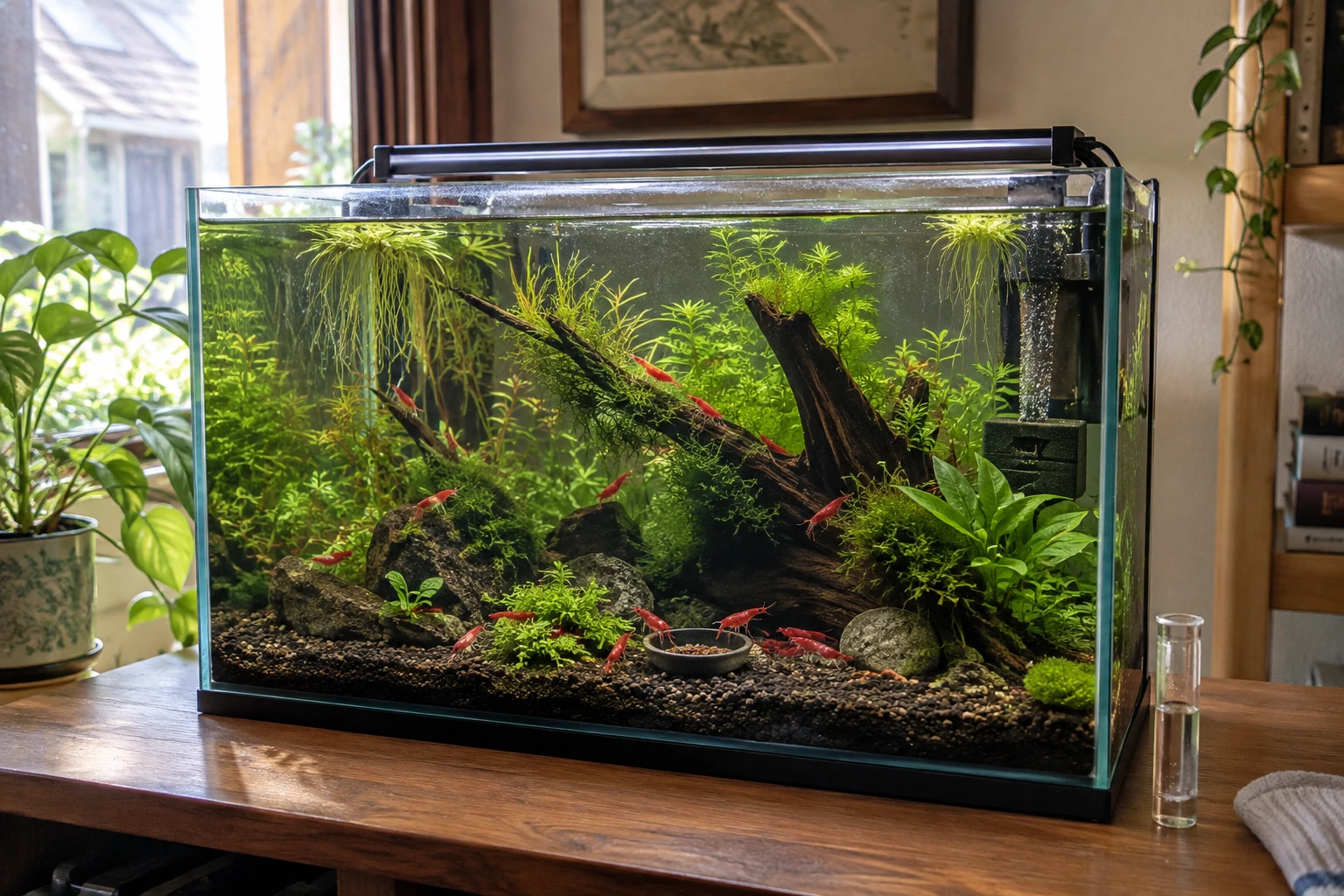
Pick the tank. Choose at least 5 gallons. A 10-gallon is easier, because small tanks swing in temperature and chemistry faster. Add a snug lid, since shrimp can climb out.
Add the substrate. Use inert gravel or sand. Inert means it won’t change your water chemistry. Rinse it well before use.
Install a sponge filter. Attach it to an air pump with a small air line. Details are in the next section.
Plant it. Add java moss, hornwort, or other fine-leafed plants. Use a handful of moss, a few stems of hornwort, and one or two rooted plants.
Cycle the tank. This takes about 4-6 weeks with no shrimp in it. Cycling is covered below.
Test, then acclimate. When ammonia and nitrite read 0 ppm and nitrate stays under 20 ppm, bring the shrimp home and acclimate them slowly.
Heater or no heater? If your room swings more than a few degrees, add a small adjustable heater and a thermometer. A steady 72-76°F is a good target. Hot summer rooms are a bigger risk than cold ones, so keep the tank out of direct sun.
Filter, Substrate and Plants: The Parts That Keep Babies Alive
A shrimp tank is mostly about three things: gentle flow, a safe floor, and lots of surfaces to graze and hide on.
Why a sponge filter wins
A sponge filter is a block of foam. Air bubbles pull water through it, so flow is gentle and baby shrimp cannot get sucked in. The sponge also grows biofilm, which young shrimp eat all day. It is cheap too, often under $15 for a small one.
Already have a hang-on-back or canister filter? Cover the intake with a fine sponge pre-filter. Baby shrimp are tiny, and an open intake will pull them in. This is one of the easiest ways to lose a whole generation without noticing.
Substrate: inert is safe
Inert gravel or sand is the safe beginner choice. Some soils, sold for planted tanks, lower pH and soften water. That’s useful for other shrimp types but not needed here. Cherry shrimp do fine on plain sand. Pick a dark color if you want the red to stand out.
Moss, plants and hiding places
Shrimp hide when they molt (shed their shell), and they feel exposed in a bare tank. Give them cover with:
Java moss or other moss clumps
Hornwort floating or planted
Small cholla wood, driftwood, or smooth rock stacks
Dried, rinsed leaves such as Indian almond leaves
Plants also soak up nitrate. More green means a calmer tank. Skip any fertilizer that lists copper, and read the label on every bottle before you dose.
Cycling: The Step Most Beginners Skip
What does cycling actually mean? It means growing helpful bacteria in your filter. They turn toxic ammonia into nitrite, then into nitrate, which is far less harmful. Shrimp cannot handle ammonia or nitrite at all, so a tank without these bacteria is not ready.
How to cycle without animals
Add a pinch of fish food every day, or use a bottled ammonia source made for cycling. Test every few days. First ammonia climbs. Then nitrite shows up. Finally both fall to 0 ppm and nitrate appears.
Expect roughly 4-6 weeks. Adding a squeezed bit of sponge from an established, healthy tank can speed that up. Make sure that tank has never been treated with copper.
How to know it’s done
Add ammonia or food, then test 24 hours later. If ammonia and nitrite both read 0 ppm, you’re done. Nitrate should stay under 20 ppm. Do a partial water change if it climbs above that.
Even after the cycle ends, new tanks stay a bit shaky. Plants and biofilm take another few weeks to settle in. That’s why the first-month plan below starts slow.
Water Numbers and Stocking by Tank Size
Cherry shrimp tolerate a wide range, but they hate sudden change. A tank that sits at pH 7.6 all month beats one that bounces between 6.8 and 7.6. Pick a target and hold it.
Here are the targets to aim for:
Parameter
Target range
Temperature
65-78°F (72-76°F is ideal)
pH
6.5-7.8
GH (general hardness)
6-8 dGH
KH (carbonate hardness)
2-6 dKH
TDS (total dissolved solids)
150-250 ppm
Ammonia and nitrite
0 ppm
Nitrate
Under 20 ppm
GH measures calcium and magnesium, which shrimp need to build new shells. KH buffers your pH so it doesn’t jump. TDS is a quick total of everything dissolved in the water. A cheap TDS pen costs about $10-$15.
Test your tap water too. Many US cities have hard water, and that’s fine for cherry shrimp. Soft water is the harder problem, since low GH leads to bad molts. If your GH is below 4, add a mineral supplement made for shrimp, and add it slowly.
How many shrimp per tank
Start small. A new tank does better with a modest group that grows on its own. Use the low end of each range in your first months:
Tank size
Starting group
Mature colony (planted, well kept)
5 gallons
10
10-25
10 gallons
10-15
25-50
20 gallons
15-20
50-100
Keep at least 10 shrimp in a group. A bigger group feels safer and spends more time out in the open. A colony can double in about 3-4 months once they breed, so plan for the extras.
Bringing Shrimp Home: Drip Acclimation That Works
A shrimp bag holds different water from your tank. Dumping them straight in shocks them. Acclimation gives their bodies time to adjust, and it takes about an hour.
Here’s the method:
Float the bag for 15 minutes to match temperature. Keep the lights dim.
Pour the shrimp and their water into a clean bucket or container. Don’t use soap on it.
Run a thin air line from your tank into the container. Tie a loose knot in it or use a valve, so water drips out at about 2-4 drops per second.
Wait until the water volume has doubled, then let it double again. This takes 45-60 minutes.
Scoop the shrimp out with a small net and move them into the tank. Don’t pour the bag water in.
Cover the container, because shrimp jump. Expect them to hide for a day or two. That is normal, so don’t chase them around the tank. Ready to bring yours home?
Buy from a breeder or a shop that keeps its tanks clean. Healthy shrimp have clear eyes, bright color for their grade, full antennae, and they graze actively. Skip any with fuzzy growths, odd rusty patches, or ones that sit still on the glass.
Feeding, Molting and Stress: Daily Care That Keeps Them Healthy
How much should you feed? Less than you think. Overfeeding is one of the biggest causes of tank crashes, because extra food rots and spikes ammonia.
Feeding without fouling the water
Feed a tiny amount every 1-2 days. A pinch of shrimp pellets is plenty for a group of 10. Remove anything left after 24 hours. Good foods include shrimp pellets, blanched zucchini or spinach, and leaf litter. Skip days now and then, since biofilm and algae feed them in between.
In a brand-new tank, feed even less. Biofilm needs time to grow, so keep a few extra bits of moss and wood around for grazing.
Molting: normal, but watch it
Shrimp shed their shell as they grow, about every few weeks. You’ll find pale, empty shells in the tank. Leave them there. Shrimp eat the shell to recover minerals.
A healthy molt is quick. A bad one leaves a shrimp stuck halfway, and it often dies. Poor molts usually come from low GH, sudden changes, or a stressful tank. A white band around the body is a warning sign. Check your numbers first.
Signs of stress
Shrimp swimming wildly or clinging to the top
Pale or faded color
Hiding all day when they used to graze
Several deaths soon after a water change
If you see these, test ammonia, nitrite, nitrate, pH and GH. Fix the biggest problem first. Do small water changes of about 10-20% with matched, dechlorinated water. Big, sudden changes do more harm than good.
Tank Mates and Breeding
Cherry shrimp work best alone. If you want fish, choose small, peaceful ones and accept that baby shrimp may get eaten. Adults of a calm species usually make it.
Safe-ish neighbors
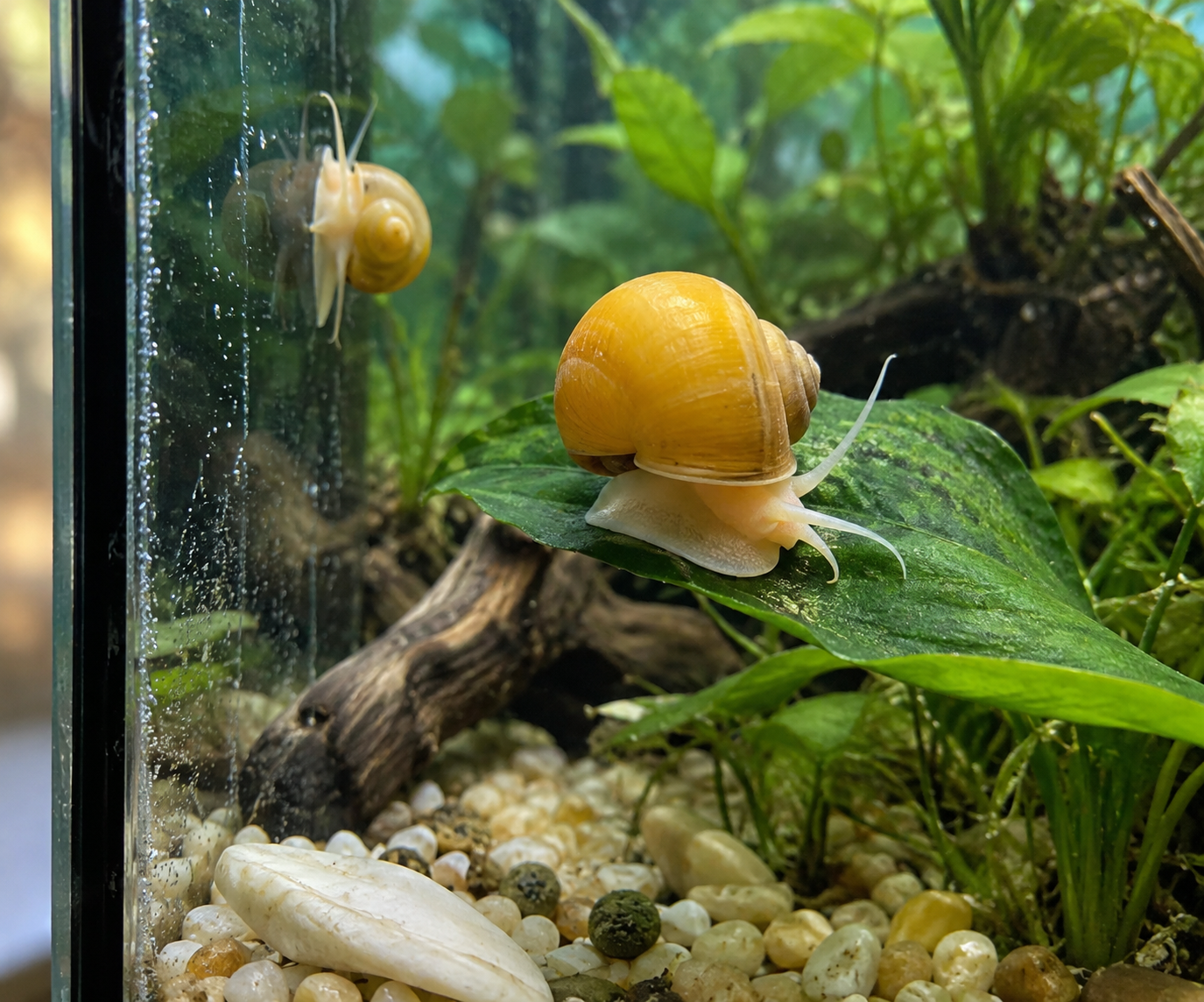
Nerite and mystery snails
Otocinclus catfish
Small corydoras
Ember tetras
Bettas, cichlids, goldfish and most larger fish will hunt shrimp. Avoid them. Fish also add waste, so a mixed tank needs closer watching.
Breeding made easy
Breeding mostly happens by itself. A female with a yellow-green saddle behind her head is ready. When she carries eggs under her tail, she’s berried. The eggs hatch in about 3-4 weeks into tiny copies of the adults.
Babies need moss, biofilm and stable water. Keep the sponge filter on, add extra moss, and feed tiny amounts. Don’t move berried females around, since stress can make them drop eggs.
Your First Month: A Realistic Timeline
Here’s what a good first month can look like once your tank is ready. Cycling comes before this, so the first-month clock starts the day the shrimp arrive.
Day 1: Drip acclimate. Turn the lights low. Do not feed.
Days 2-3: Feed a tiny pinch. Test water daily. Expect shyness.
Week 1: Test every other day. Remove leftover food. No big water changes yet.
Weeks 2-3: Do a 10-20% water change weekly with matched water. Watch for molts and berried females.
Week 4: Test weekly. Add plants if you want. Hold off on new shrimp until the group looks settled.
Ready to see them settle in? By the end of the month, they should be out in the open, grazing all day.
Common Mistakes and Quick Fixes
Most problems trace back to a few repeat mistakes. Here’s the list, with what to do instead:
Adding shrimp to an uncycled tank. Wait until ammonia and nitrite read 0 ppm.
Leaving filter intakes open. Cover them with sponge so babies stay safe.
Overfeeding. Feed a pinch, then remove leftovers after a day.
Using copper. Check every medication, fertilizer and algae product label.
Making sudden water changes. Change small amounts and match temperature and hardness.
Skipping drip acclimation. Take the hour. It’s worth it.
If you want more help planning a first aquarium, Pet Terrarium has beginner aquarium setup guides that cover cycling and water testing in more detail.
One last tip: write down your test results each week. Spotting a slow change is much easier on paper, and your shrimp will thank you!
Frequently Asked Questions
How many cherry red shrimp should I keep together?
Start with at least 10 in a group. A 5-gallon tank can hold 10-25, and a 10-gallon tank can hold about 25-50 once it’s mature. Aim for roughly two females per male, and start at the low end.
What size tank do cherry red shrimp need?
At least 5 gallons. Smaller tanks can work for a few shrimp, but water changes faster in them. A 10-gallon tank is easier to keep steady, and it leaves room for a growing colony.
Why are my cherry red shrimp dying or losing color?
Usually it’s unstable water: leftover ammonia or nitrite, a sudden swing in temperature or hardness, or copper. Test your water first. Pale color can also come from stress, a recent molt, or low GH.
What fish can live with cherry red shrimp?
Small, peaceful ones, such as ember tetras, otocinclus and small corydoras. Snails also work well. Avoid bettas, cichlids and goldfish. Even safe fish may eat baby shrimp, so you’ll see fewer youngsters.