Viperidae snakes are the family of venomous snakes called vipers. They live on every continent except Antarctica and Australia, plus some islands. They have hinged, hollow fangs, heavy bodies and an ambush style of hunting. Every one of them is medically significant, and many states restrict or ban them. If you came here wondering whether to keep one, the honest answer is probably no. Let’s check that first, then look at the species and the care basics.
Before You Buy: When Keeping a Viper Is a Bad Idea
Should you keep a viper? Only if you have experience, a permit, a bite plan and a hospital nearby. A beginner who loved a ball python care sheet should not copy it for a viper. The risks are different, and a mistake can send you to the ER.
Permits and state laws
Rules vary a lot by state. Alabama, for example, bans possessing venomous snakes of the family Viperidae that don’t naturally live in the state, with a small list of exceptions. Other states, such as Arkansas, ask for a venomous reptile permit for non-native medically significant species. Some states allow native species but ban exotics. Some ban everything. Cities and counties can add their own rules.
Check your state wildlife agency before you spend a cent. Also ask your landlord and your homeowner’s insurance company. Many policies exclude venomous animals, and a bite to a guest can become a lawsuit.
Bite risk and emergency access
Ask yourself these questions honestly:
Is the nearest hospital with antivenom within about an hour of your home?
Does anyone else live in the house, including kids, roommates or pets?
Have you worked under an experienced venomous keeper?
Do you own snake tongs, a hook and a locking enclosure?
Do you have a written bite plan posted by the enclosure?
Can you cover the cost of permits, insurance and an emergency visit?
If any answer is no, skip vipers. That’s not a failure. It just means you should start with a safer snake, and we cover good options at the end.
What Viperidae Snakes Are: Three Subfamilies at a Glance
The family has over 200 species by some counts, and roughly 350 by others, depending on how scientists split them. It breaks into three main groups that matter to most readers: true vipers, pit vipers and Azemiopinae. Some sources add a fourth small group called Causinae (the night adders of Africa).
True vipers (Viperinae) live in Europe, Asia and Africa. Pit vipers (Crotalinae) live mostly in the Americas and Asia. Azemiopinae holds one or two species, such as Fea’s viper, from mountain forests of Asia.
Comparing the main groups
Group
Main range
Heat pits
Example species
True vipers (Viperinae)
Europe, Asia, Africa
No
Gaboon viper, puff adder, European adder
Pit vipers (Crotalinae)
Americas, Asia
Yes
Rattlesnakes, copperhead, bushmaster
Azemiopinae
Mountain forests of Asia
No
Fea’s viper
The big difference is the pit. A pit viper has a small hole between each eye and nostril. It senses heat, so the snake can find warm prey in total darkness. True vipers lack it and rely on smell, sight and vibrations.
Why a triangular head isn’t proof
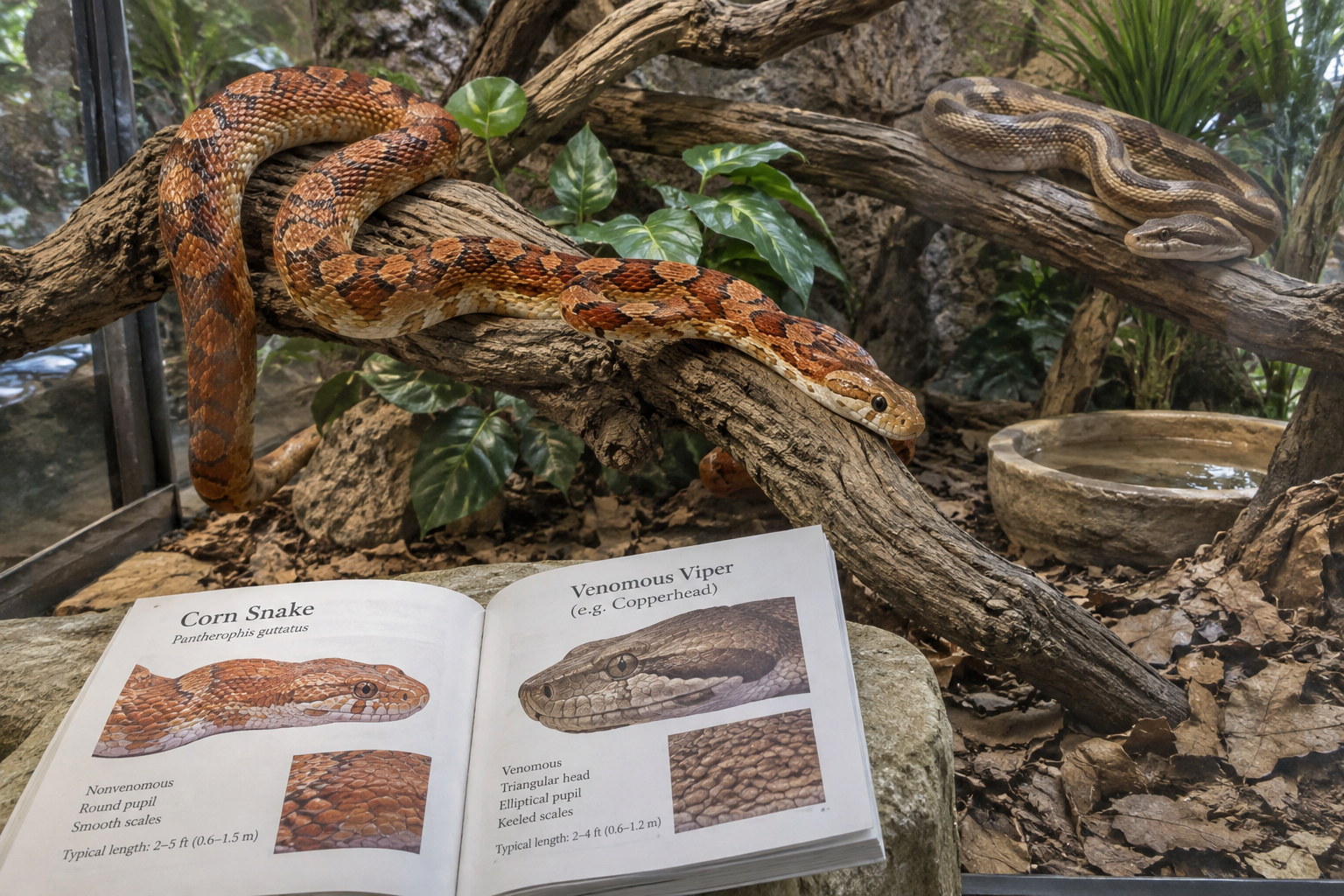
Many vipers have a wide, triangular head and a thick body with keeled scales (ridged, so they look dull). But a triangular head alone is a poor ID tool. Harmless water snakes flatten their heads when scared and look a lot like vipers. Some vipers have slim heads. Learn the pit, the pupil shape and the body build together, and when in doubt, treat the snake as dangerous and leave it alone.
Fangs, Venom and Ambush Hunting
How do vipers actually bite? They have solenoglyphous fangs. That means long, hollow fangs on a short, rotating upper jaw bone. When the mouth is shut, the fangs fold flat against the roof of the mouth. When the snake strikes, they swing forward like a switchblade.
The fangs can be big. A gaboon viper’s can reach about 2 inches (50 mm), the longest of any snake. Fangs this long can go through thin clothing and even some boots.
Venom: mostly blood and tissue damage
Viper venom is mainly hemotoxic. It attacks blood and tissue, causing pain, swelling, bruising and bleeding. Elapids such as cobras and mambas have mostly neurotoxic venom, which targets nerves. Real venom is a mix, though. Some rattlesnakes, like certain Mojave rattlesnakes, carry strong nerve-affecting toxins too. So don’t assume a “mild” viper is safe.
Sit-and-wait predators
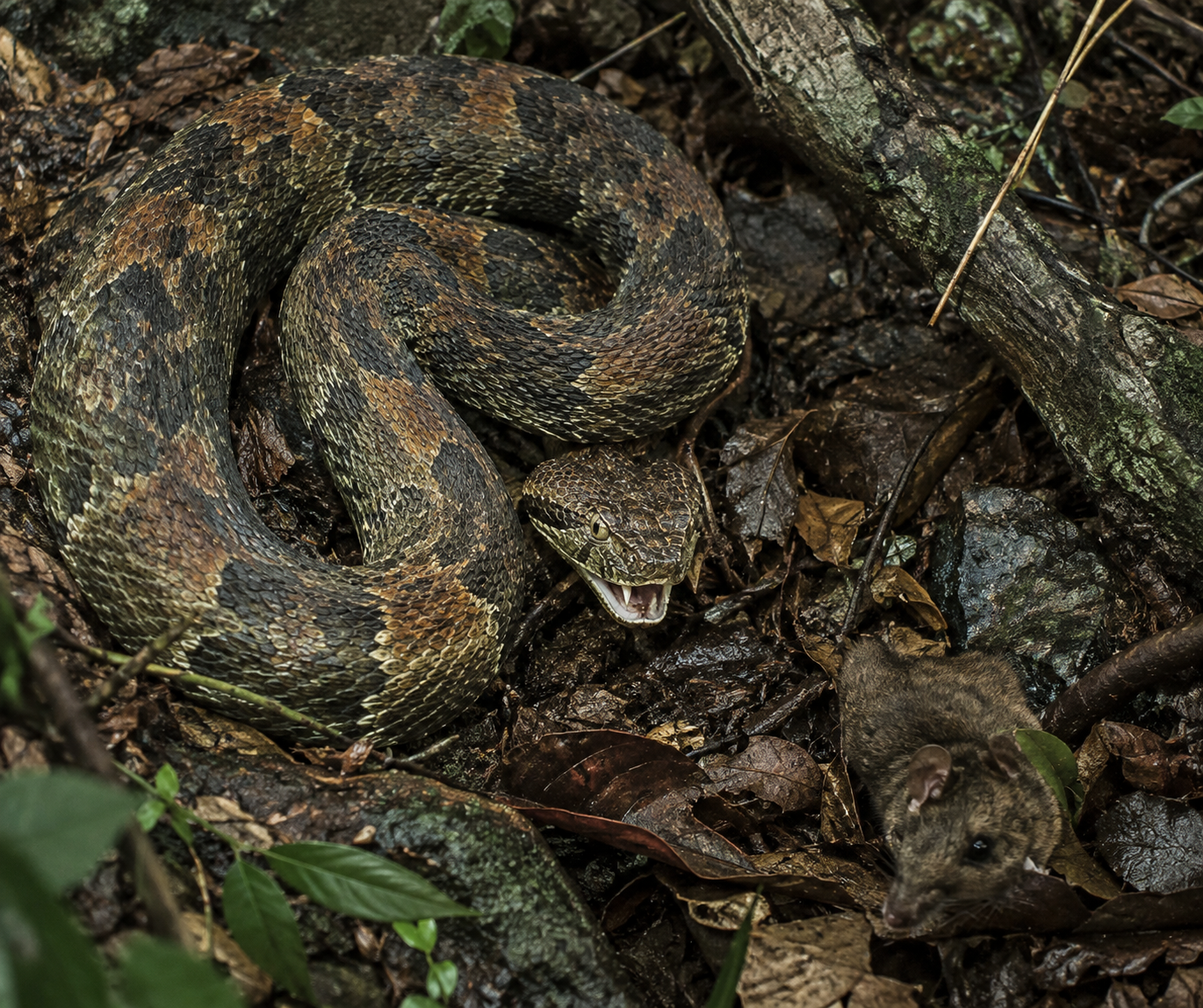
Vipers rarely chase food. They pick a spot, hold still and wait for a rodent, bird, frog or lizard to walk past. Then they strike, inject venom and often let go. The prey wanders off and dies, and the snake follows its scent trail.
Camouflage does the rest. Zigzag, diamond and leaf-like patterns blend into sand, bark and leaf litter. That’s why most bites on people happen when someone steps on or reaches near a hidden snake.
Are vipers aggressive? Usually not. Most hiss, freeze or flee and bite in defense. But a snake that’s cornered, stepped on or handled is a different story!
Where Vipers Live and the Species Worth Knowing
Not every viper lives in a desert. People picture sand and cactus, but many vipers live in rainforests, mountains, grasslands and swamps. Some are tree dwellers. Others are semiaquatic. Sizes range from under 10 inches to the bushmaster, which can reach about 10 feet.
Species profiles
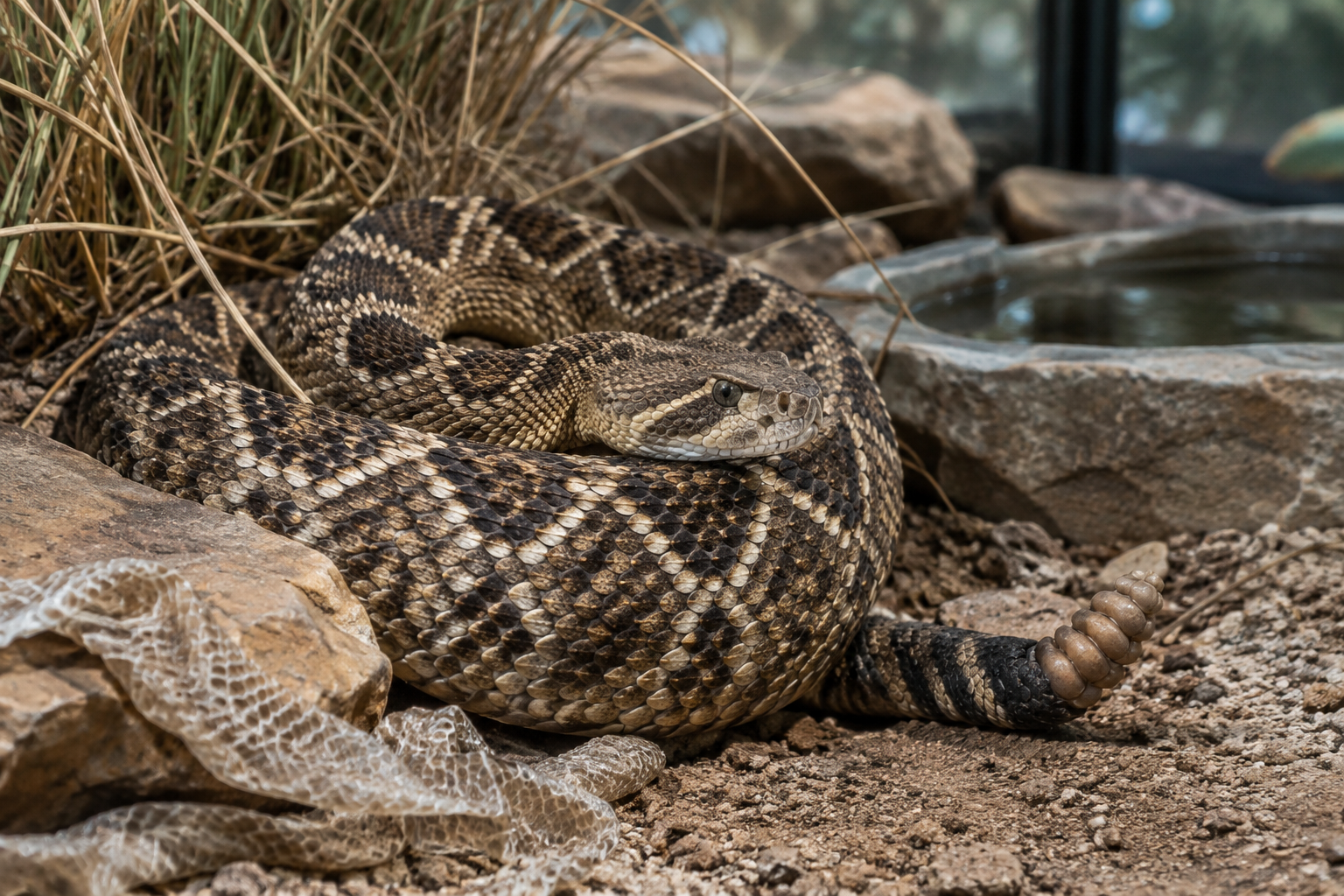
Rattlesnakes (Crotalus and Sistrurus): Found across the Americas, from Canada down to Argentina. The tail rattle is a warning. Western diamondbacks and timber rattlesnakes are well-known US species.
Copperhead (Agkistrodon contortrix): Native to the eastern and central US. Its hourglass bands blend into leaf litter. Bites are common but rarely deadly with treatment.
Gaboon viper (Bitis gabonica): A heavy, tropical African snake with a huge head and a leaf-pattern back. It is usually calm but carries a large venom load.
Puff adder (Bitis arietans): A thick African viper that hisses loudly. It is responsible for many bites because it sits still on paths.
Bush vipers (Atheris): Small, colorful, tree-living snakes from Central and East Africa. They are fast and nervous.
Saw-scaled vipers (Echis): Small but dangerous, linked to thousands of deaths in Africa and Asia each year.
European adder (Vipera berus): One of the few vipers that lives far north, across Europe and into Asia.
Are all vipers deadly? No. Many bites are survivable, especially with fast medical care. But they all need to be treated as a medical emergency.
Enclosure, Heat and Humidity for Qualified Keepers
This section is for permitted, experienced keepers only. Care differs a lot by species, so work from a species-specific plan and a mentor. Treat the numbers below as typical starting points, not a recipe.
Security comes first
A viper enclosure must be escape-proof and bite-proof. Use a front-opening or top-opening cage with a locking lid and a secure latch. Many keepers use a PVC or glass enclosure with a double-lock system. Label it as venomous. Keep it in a room that kids and visitors can’t enter.
Also plan for cleaning without touching the snake. A hide box with a lid lets you move the snake to a holding tub using tongs or a hook.
Matching the habitat
Ask first: where does your species live? A desert rattlesnake and a tropical bush viper need totally different setups.
Type
Typical setup
Warm spot
Humidity
Desert rattlesnake
Sand and soil mix, rocks, dry hide
About 85–90°F basking area, cooler side near 75°F
Low, about 30–40%
Ground tropical viper (gaboon)
Deep leaf litter and soil, large hide
Mid-80s°F, nights in the low 70s°F
High, about 70–80%
Arboreal bush viper
Tall enclosure, live plants, branches
Mid-70s to low 80s°F
High, often 70–90% with a drier gap between mistings
These ranges are typical, and keepers adjust by species and by locality. Use a digital thermometer and a hygrometer (a humidity gauge). Skip the sticky dial types, because they drift.
Always offer a temperature gradient, meaning a warm side and a cool side. A viper that can’t pick its temperature will refuse food and get sick. Ready to build one? Let’s go step by step with a test run before the animal arrives, so you can fix humidity swings early.
Pet Terrarium has enclosure setup guides for other snake types, and the same ideas about heat gradients and humidity checks carry over to venomous setups.
Water and hides
Give a heavy water bowl that can’t tip. Provide at least two hides, one on each side of the gradient. Snakes feel safer when they can hide, and a stressed viper is a more dangerous viper.
Feeding, Handling and Daily Safety
Feeding a viper is simple on paper and risky in practice. Most captive vipers eat appropriately sized frozen-thawed mice or rats, and adults typically eat every 2 to 4 weeks. Heavy-bodied species often eat less often. Always use long tongs and keep your hands well back.
Feeding steps
Thaw the rodent fully and warm it to room temperature or slightly above.
Check that the snake is in a calm state, not mid-shed.
Open only one access point, then drop or present the food with tongs.
Close and lock the enclosure before you do anything else.
Leave the snake alone for 48 hours after it eats.
Handling: just don’t
Free handling isn’t a thing with vipers. Moving one means a hook, tongs or a tube, plus a second adult nearby. Never handle one when you’re tired, rushed or alone. Never keep one if you can’t commit to that rule every single day.
Bite response
If someone gets bitten, call 911 right away. Keep the person calm and still. Keep the bitten limb at about heart level, take off rings and watches before swelling starts, and note the time. Don’t cut the wound, suck out venom, use ice or apply a tight tourniquet. Those old tricks cause harm. Poison Control at 1-800-222-1222 can help guide the hospital team.
Know the species you keep. Hospitals need to know which snake, and the right antivenom depends on it. Antivenom in the US is made for North American pit vipers, while exotic species may need specialist supply through a zoo or a poison center. Sort that out before you buy.
Safer Snakes That Give You a Similar Look
What if you love the chunky body and camouflage? You have good options. None of these carry venom, and all are beginner friendly.
Ball python: Compact, calm and easy to feed. Adults reach about 3 to 5 feet.
Western hognose snake: Thick-bodied, with a flared neck and an upturned nose. It bluffs and plays dead but is mildly venomous only to small prey and rarely bothers people.
Rosy boa: Small, slow and gentle. It does well in a simple dry setup.
Corn snake: Easy to feed, widely available, and comes in many color morphs.
Each of these costs far less to house than a viper and needs no special permit in most states. Check your local rules anyway. Start with one, learn to read snake behavior and feeding responses, and revisit venomous species only after years of experience and mentoring. Your first snake will teach you plenty!
Frequently Asked Questions
What snakes are in the Viperidae family?
Viperidae includes rattlesnakes, copperheads, cottonmouths, gaboon vipers, puff adders, bush vipers, saw-scaled vipers, bushmasters and the European adder. It is split into true vipers, pit vipers and a small group called Azemiopinae.
What is the difference between true vipers and pit vipers?
Pit vipers have heat-sensing pits between the eye and nostril. True vipers lack them. True vipers live in Europe, Asia and Africa, while most pit vipers live in the Americas and Asia.
Can you keep a viper as a pet, and do you need a permit?
In some states you can, but usually only with a venomous reptile permit, and some states ban them outright. Rules differ by state and sometimes by city, so check with your state wildlife agency first. Insurance and landlord rules matter too.
What should you do if bitten by a viper?
Call 911 immediately, keep the person calm and still, and remove rings or watches before swelling starts. Keep the limb near heart level. Don’t cut, suck, ice or tie off the bite. Tell the hospital which species it was.