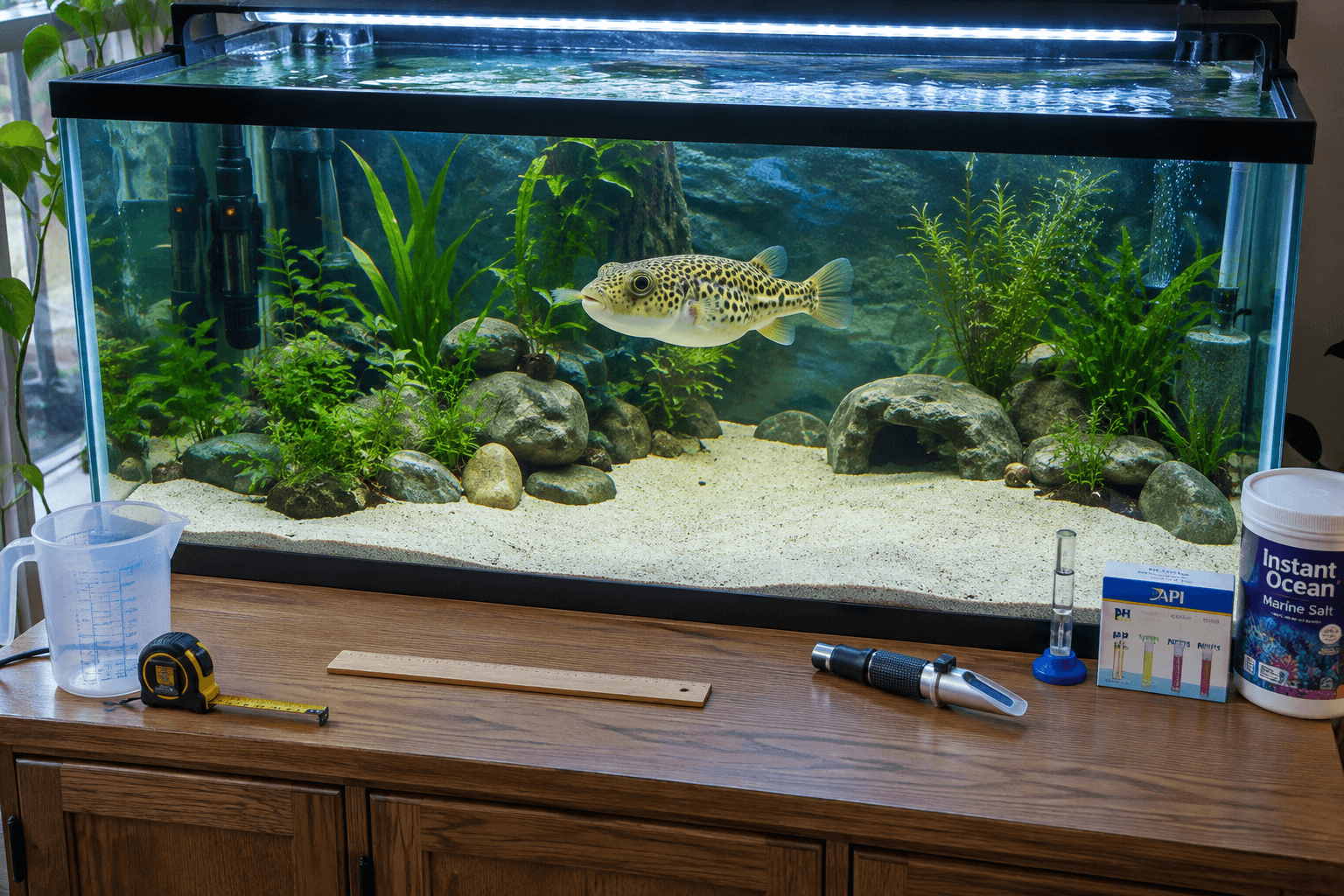
That green spotted puffer at the pet store looks perfectly happy in freshwater. Give it six months, and that same water will start hurting it, because most green spotted puffers actually need brackish or even full marine water as adults. This is the biggest trap in puffer keeping, and it catches a lot of people who did their homework on everything except this one detail.
Puffer fish aren’t one-size-fits-all pets. Some species stay in freshwater their whole lives, some need a slow salinity increase, and some are ocean fish from day one. Getting this wrong isn’t a minor mistake — it’s the difference between a thriving pet and a dead one within a year.
Tank Size: Matching Gallons to Species and Adult Length
Tank size for puffer fish depends entirely on which species you’re keeping, and going too small is one of the fastest ways to stunt growth and spike aggression. A dwarf puffer needs way less room than a green spotted puffer, so figure out your species before you buy a tank.
Dwarf Puffers Need Less Than You’d Think
A single dwarf puffer (Carinotetraodon travancoricus) can live in a 10-gallon tank, though I’d recommend 15 to 20 gallons if you want to keep a small group. These guys max out around 1 inch long, so they’re the easiest puffer for someone working with limited space.
Bigger Species Need Real Room to Grow
Figure-8 puffers and green spotted puffers grow to 3 or 4 inches and need at least 20 to 30 gallons as adults, with 55 gallons being a comfortable long-term home. Skimping on space causes stress, and stressed puffers get territorial fast, nipping at anything that moves nearby.
Species
Adult Size
Minimum Tank Size
Water Type
Dwarf puffer
1 inch
10 gallons
Freshwater
Figure-8 puffer
3 inches
20 gallons
Brackish
Green spotted puffer
6 inches
55 gallons
Brackish to marine
Freshwater, Brackish, or Marine: The Switch Nobody Warns You About
This is the section that separates a puffer that lives 5-10 years from one that dies within months. Green spotted puffers are sold as freshwater fish because juveniles tolerate low salinity, but as they mature, they need brackish water and eventually full marine conditions to stay healthy.
Why the Juvenile Setup Stops Working
A baby green spotted puffer can survive in straight freshwater for a while, but that tolerance is temporary, not permanent. Around 6 to 12 months of age, you’ll usually need to start raising salinity, or you’ll see appetite loss, cloudy eyes, and fin damage that looks like disease but is really a water chemistry problem.
Building the Salinity Ramp
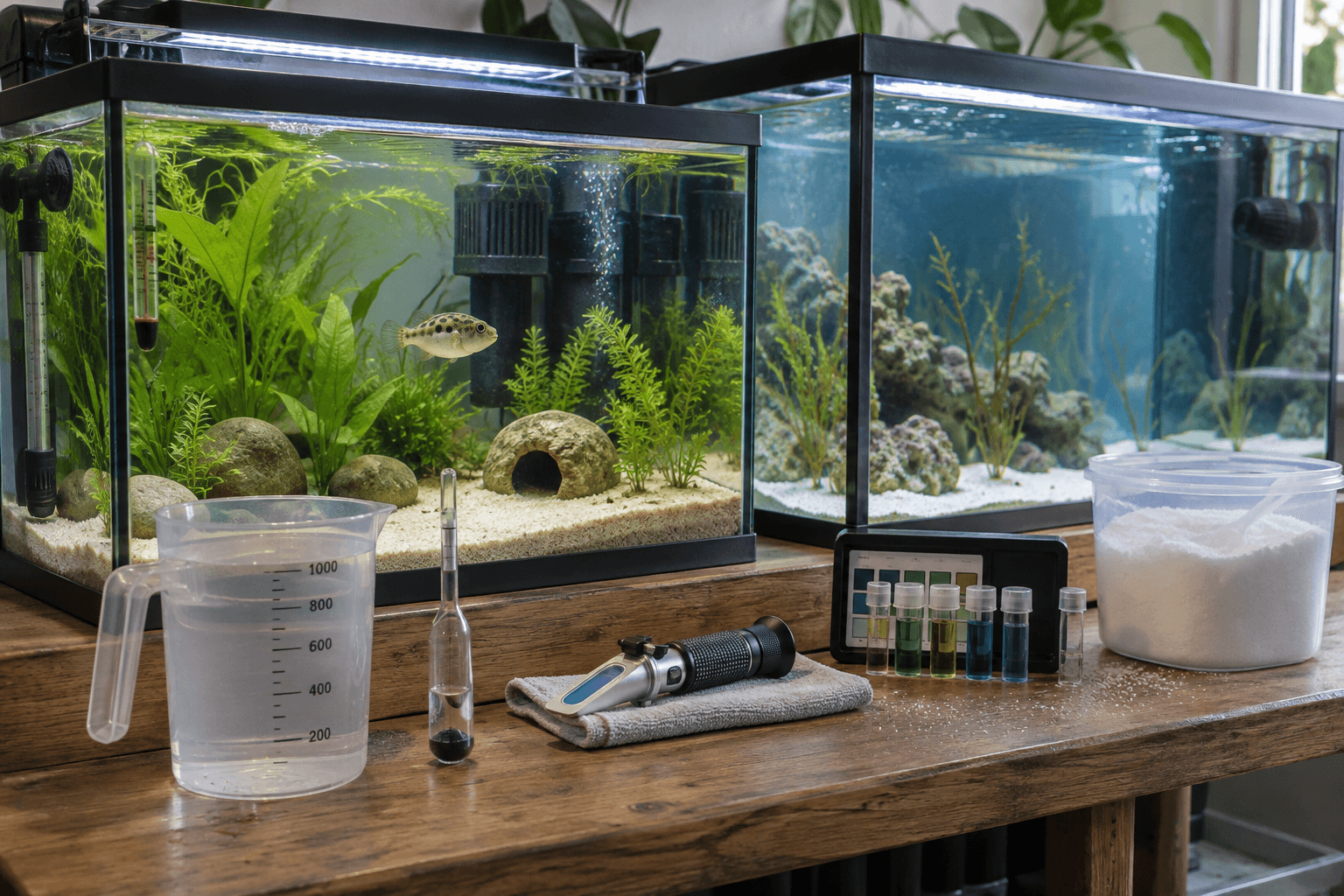
Raise specific gravity gradually, something like 0.002 to 0.005 every week or two, using a swing-arm hydrometer or refractometer to track it. By the time your green spotted puffer is a year old, aim for a specific gravity around 1.005 to 1.010, working toward closer to seawater levels (1.020+) as it reaches full adult size.
Figure-8 puffers stay brackish their whole lives and don’t need the full marine push. Dwarf puffers, on the other hand, never need salt at all — adding any is actually harmful to them. Knowing your exact species before setup saves you from guessing later.
Water Parameters, Filtration, and Heating That Actually Hold Up
Puffers are messier than their size suggests, so filtration needs to punch above the tank’s actual gallon count. Aim for a filter rated for at least double your tank volume, and cycle the tank fully (usually 4 to 6 weeks) before adding any puffer.
Water temperature should sit between 74 and 78°F for most tropical puffer species, held steady with a reliable heater and checked with a separate thermometer, not just the heater’s dial. Ammonia and nitrite should read zero, and nitrates should stay under 20 ppm, since puffers are notably sensitive to water quality swings compared to hardier community fish.
Here’s the setup order that actually works, in practice:
Choose your species first, then size the tank and salinity plan around it.
Set up filtration rated for at least double the tank’s volume.
Cycle the tank for 4 to 6 weeks before adding any fish.
Test ammonia, nitrite, and nitrate weekly until readings stabilize.
Begin salinity adjustments early if you’re keeping a brackish or marine-bound species.
Add the puffer only after parameters hold steady for at least a week.
Keep testing weekly for the first two months, since puffers show stress fast.
Substrate matters more for puffers than for most fish, since many species like to dig or bury themselves. Fine sand works well and won’t scratch their soft undersides the way sharp gravel can. If you want more ideas on layering substrate and hardscape for aquatic setups, petterrarium.com has additional aquarium build guides worth a look.
Feeding, Teeth, and Keeping Aggression in Check
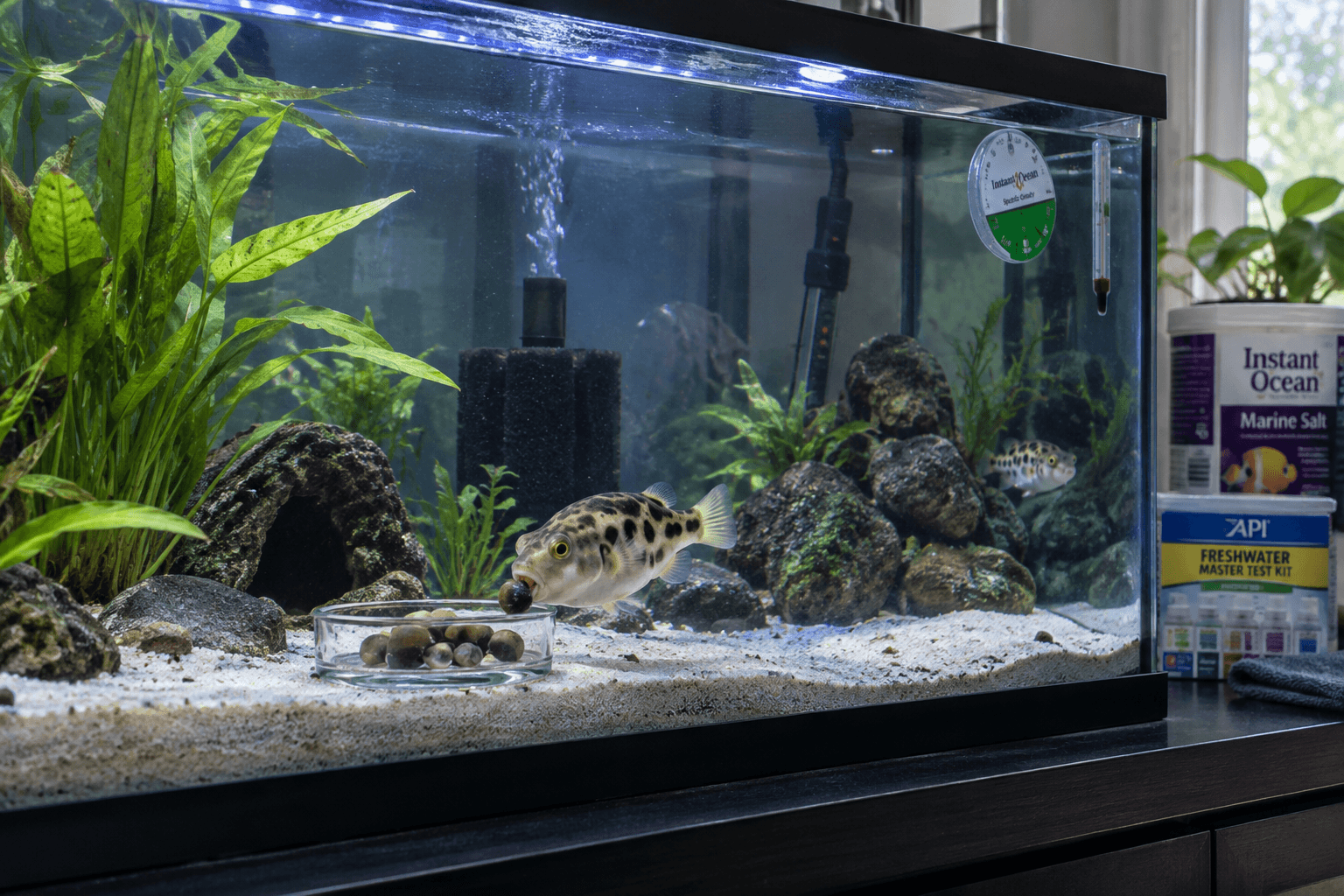
Puffer fish need hard-shelled foods regularly, or their teeth (which never stop growing) get overgrown and eventually prevent them from eating at all. Snails, crustaceans, and crunchy commercial pellets should be a regular part of the diet, not an occasional treat.
Feed a mix of live or frozen snails, shrimp, and bloodworms two to four times a week, adjusting portions so the puffer isn’t visibly bloated the next day. Overfeeding soft foods and skipping hard ones is one of the most common mistakes new owners make, and it’s an easy one to fix once you know what to look for.
On tank mates: most puffers are fin-nippers, and green spotted puffers in particular do poorly in community tanks with slow-moving or long-finned fish. I wouldn’t add any tank mates to a green spotted puffer setup at all — they’re best kept solo or with other puffers that can hold their own. Figure-8 and dwarf puffers can sometimes handle peaceful, fast tankmates, but even then, watch closely for the first few weeks.
Frequently Asked Questions
Do all puffer fish need salt water?
No. Dwarf puffers stay in freshwater their entire lives, figure-8 puffers need brackish water, and green spotted puffers need a gradual shift from brackish to near-marine salinity as they mature past their first year.
How big of a tank does one puffer fish need?
It depends on species: a dwarf puffer is fine in 10 gallons, a figure-8 needs at least 20 gallons, and a green spotted puffer needs 55 gallons or more once fully grown.
Why does my puffer fish stop eating?
Overgrown teeth from a lack of hard-shelled food are a common cause, along with poor water quality or wrong salinity for the species. Check ammonia and nitrite first, then add snails or crunchy food to the diet.