Fish hanging at the top of the tank, gills pumping hard, mouths breaking the surface over and over? That’s not a feeding habit. That’s low oxygen in tank water, and it’s one of the fastest ways to lose fish if you don’t catch it. The good news: fixing it usually takes less than a weekend and doesn’t require fancy gear.
Most oxygen problems come down to a handful of fixable habits, not some mystery chemistry issue. Once you know what’s actually driving oxygen down in your tank, the fixes are pretty straightforward.
Watch for Fish Gasping at the Surface First
Gasping at the surface is the clearest warning sign your tank’s dissolved oxygen has dropped too low, and it means you need to act within hours, not days. Other signs include fish clustering near filter outflow, sluggish movement, and loss of appetite.
Dissolved oxygen (DO) is the actual oxygen molecules floating in the water that fish pull through their gills. It’s invisible, and you can’t tell how much is there just by looking at clear water. A cheap DO test kit or a digital DO meter, often $20 to $80, is the only way to know your real number.
Healthy freshwater tanks generally sit somewhere around 6 to 8 mg/L of dissolved oxygen. Below 4 mg/L, most fish start showing stress. Below 2 mg/L, you’re in emergency territory and fish can die within hours.
Don’t wait for a test kit to act if you see gasping right now. Do a partial water change and turn up surface movement immediately, then figure out the root cause once everyone’s breathing easier.
Fix #1: Boost Surface Agitation, Not Just Bubbles
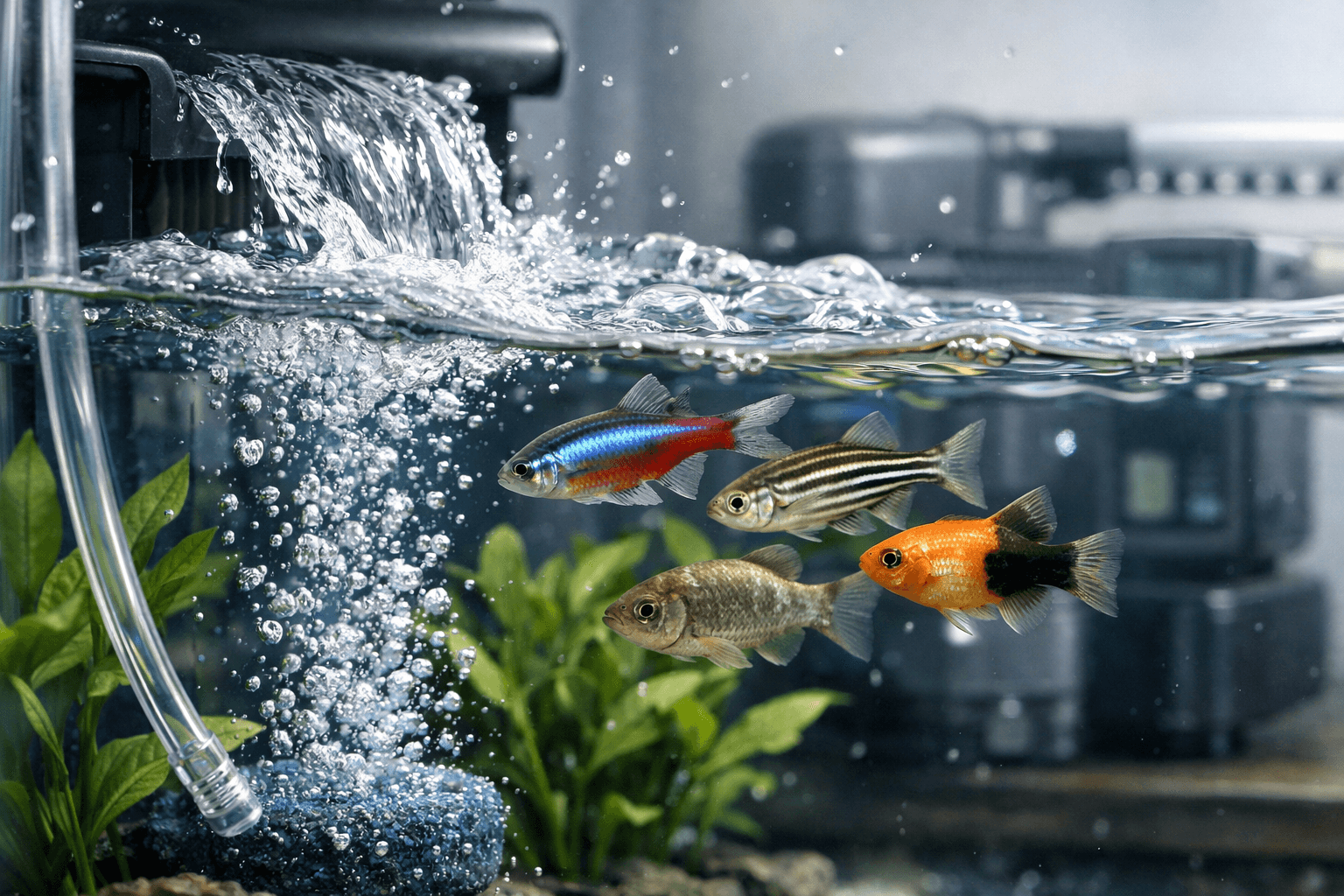
Surface agitation, not the bubbles themselves, is the main way oxygen actually gets into your tank. Gas exchange happens at the water’s surface, so more disturbed surface area means more oxygen dissolving in and more carbon dioxide escaping.
Why Air Stones Get Misunderstood
An air stone’s bubbles carry very little oxygen directly into the water. What they really do is stir the surface as they rise and pop, which increases gas exchange at the top. A tank with a totally still surface and a lonely air stone bubbling in one corner still won’t oxygenate well.
What Actually Moves the Needle
Point a filter outflow or powerhead so it ripples the surface, add a spray bar, or angle an air stone near the top instead of the bottom. In a 20-gallon tank, a $15 to $25 air pump paired with a wide air stone and good placement usually outperforms a strong pump aimed at the wrong spot.
Fix #2: Rethink Filtration and Water Flow Together
Filtration and oxygen are linked because moving water carries more dissolved oxygen and filters need oxygen-rich water to keep beneficial bacteria alive. A filter that’s too weak for your tank size leaves dead zones where oxygen barely circulates.
A general rule: your filter should turn over the tank’s full volume at least 4 times per hour. A 40-gallon tank should have a filter rated for roughly 160 gallons per hour or more. If yours falls short, either upgrade it or add a second small filter or powerhead to help circulation.
Clogged filter media is a sneaky oxygen killer. A dirty sponge or cartridge slows flow, which slows surface movement, which drops oxygen, all without you noticing until fish start gasping. Rinse mechanical media every 2 to 4 weeks depending on bioload.
Fix #3: Manage Water Temperature Through Summer Heat
Warm water holds less dissolved oxygen, period. That’s basic physics, not a fish problem, and it means summer is the season most tanks run into trouble even when nothing else changed.
Water at 68°F can hold noticeably more oxygen than water at 82°F. So a tank that’s been fine all winter can suddenly get dicey in July when the room heats up and nobody adjusted aeration to match.
Cooling and Compensating
You don’t need a chiller for most home setups. Adding an extra fan blowing across the surface, moving the tank out of direct sun, or running the air pump on a higher setting during hot months usually keeps oxygen levels stable. Aim to keep tropical tanks under 82°F when possible, and boost surface agitation any time temps climb.
Fix #4: Match Stocking and Bioload to Your Actual Setup
Overstocking is one of the biggest oxygen killers, and it’s also the one people fix last because the tank “looks fine” until it doesn’t. More fish means more oxygen consumed and more waste breaking down, which also eats oxygen.
This is where tank type matters a lot, and it’s something a lot of general advice skips. A heavily planted community aquarium behaves very differently from a turtle tank or paludarium with a high bioload and few live plants. Planted tanks get an oxygen boost during the day from photosynthesis, but that reverses at night when plants respire and pull oxygen out, right when fish need it most. A turtle or reptile-adjacent aquatic setup usually has bare glass, heavy waste output, and warmer water from basking lamps, so an air stone alone rarely solves an overstocked or overheated situation there. That tank needs stronger filtration and real bioload reduction, not just more bubbles.
Tank Type
Main Oxygen Risk
Best First Fix
Planted community tank
Nighttime oxygen dip from plant respiration
Add surface agitation active overnight
Overstocked fish-only tank
Constant high oxygen demand
Reduce stocking or upgrade filtration
Turtle or paludarium tank
Heavy bioload plus warm basking-lamp water
Stronger filtration, more frequent water changes
Bare quarantine tank
No plants, no biological buffer
Air pump plus small partial water changes
Fix #5: Use Water Changes and Live Plants the Right Way
Regular water changes are one of the quickest ways to raise oxygen because fresh tap or treated water usually carries more dissolved oxygen than water that’s been sitting in a stagnant, overstocked tank. Live plants help too, but only if you understand their day-night swing.
Here’s a simple order of operations if you’re dealing with a gasping tank right now:
Do a 20 to 25% water change immediately, using properly conditioned water at a matched temperature.
Increase surface agitation with a powerhead, filter adjustment, or added air stone.
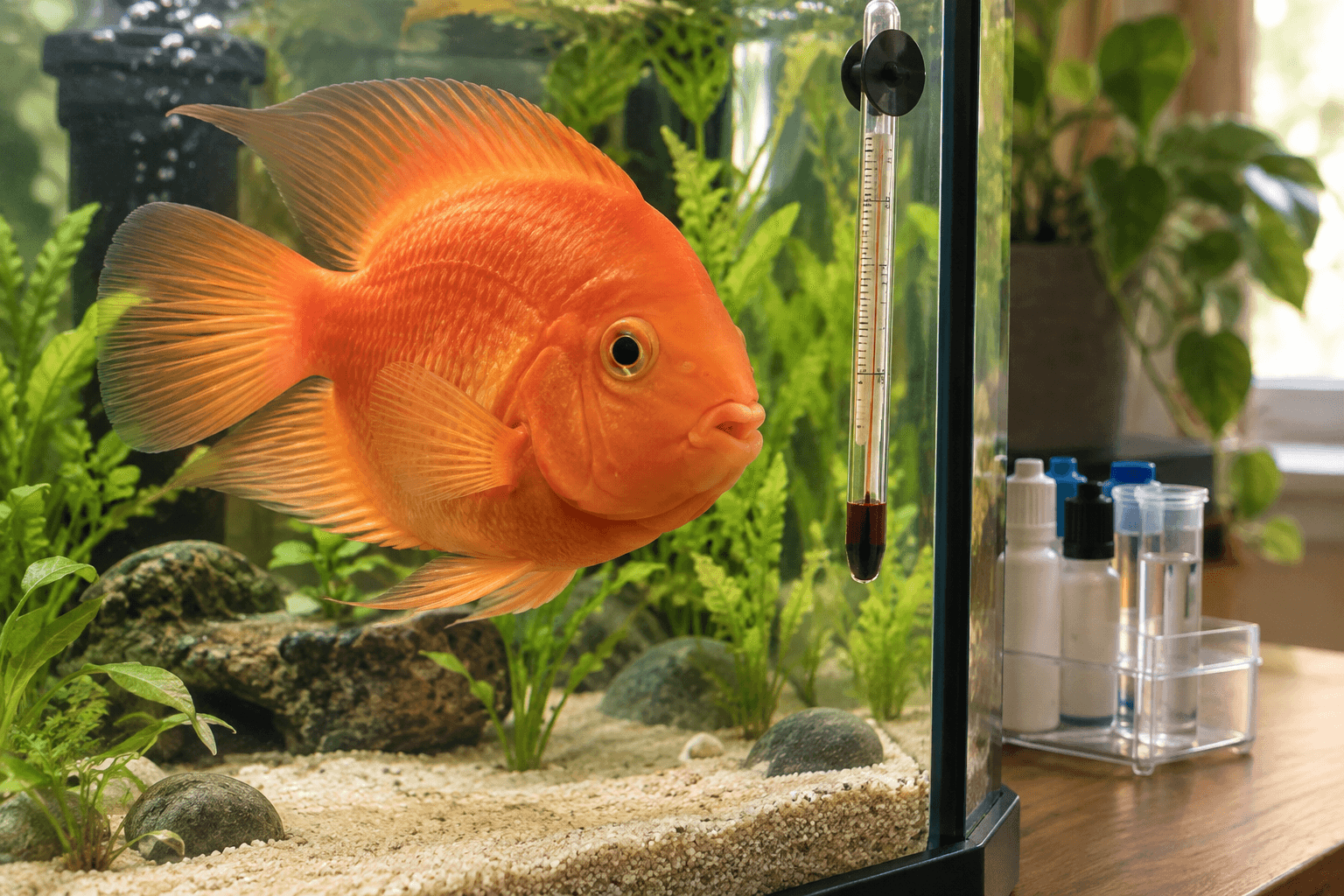
Check your thermometer and cool the tank if it’s above 82°F.
Count your fish and compare against your gallon-per-inch stocking guideline.
Clean or upgrade filter media if it hasn’t been serviced in over a month.
Add fast-growing plants like anacharis or hornwort if you want a long-term daytime oxygen boost.
Retest dissolved oxygen after 24 hours to confirm improvement.
Live plants are a genuine long-term help, but don’t add a bunch of them expecting an overnight fix. More plants means more oxygen consumption at night too, so a heavily planted tank without any mechanical aeration can still dip low right before dawn. For anyone setting up a new aquarium or paludarium from scratch, working through a full setup guide, like the ones on petterrarium.com, before stocking fish saves you from these oxygen headaches down the road.
Frequently Asked Questions
How do I know if my tank has low oxygen without buying a test kit?
Watch your fish. Gasping at the surface, clustering near filter outflow, and sluggish behavior are strong signs oxygen is low, even before you get a number from a test kit.
Can I add too much aeration to a fish tank?
It’s rare, but very strong current from oversized pumps can stress fish that prefer calm water, like bettas or some fry. Match pump strength to your species rather than maxing it out by default.
Do all tanks need an air stone?
No. A well-planted, lightly stocked aquarium with good surface movement from the filter often doesn’t need one. Bare, high-bioload setups like turtle tanks usually benefit from added aeration most.