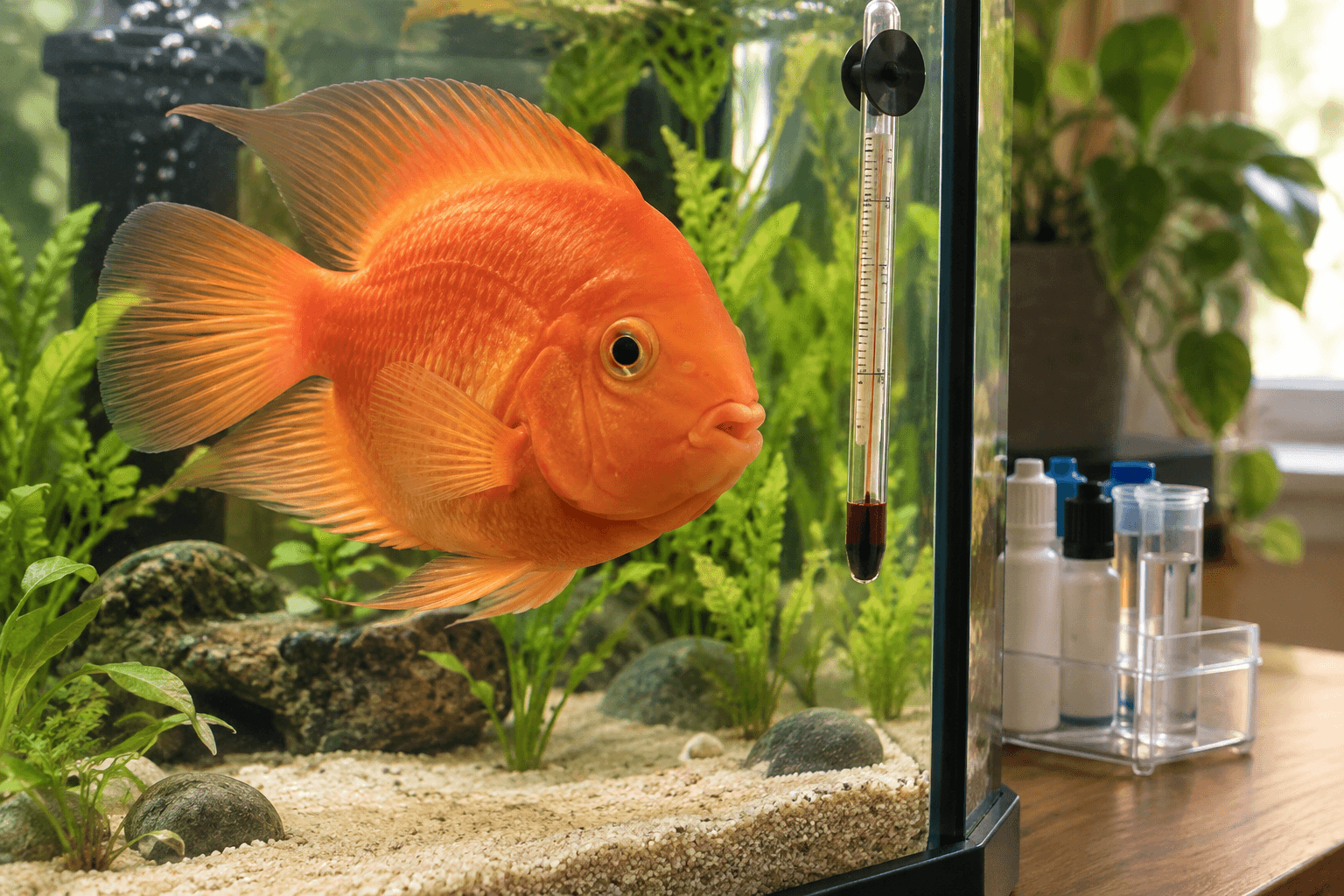
That bright orange fish with the round body and permanent little smile at the pet store? That’s almost certainly not a real parrot fish from the ocean. It’s a Blood Parrot Cichlid, a man-made freshwater hybrid, and it needs completely different care than what you’d expect from a saltwater reef species.
This mix-up trips up a lot of first-time buyers, and it matters because the care is nothing alike. Marine parrotfish live on coral reefs and can’t survive in a home tank. The freshwater hybrid you’re actually bringing home is a whole different animal, with its own quirks, its own feeding needs, and its own personality.
Freshwater Hybrid or Ocean Fish? Clearing Up the Confusion
The parrot fish sold at pet stores is a Blood Parrot Cichlid, bred in Taiwan in the late 1980s by crossing several South American cichlid species. It’s not found in nature and can’t be caught wild anywhere.
The ocean parrotfish you might see on a nature documentary, chewing coral with its beak-like teeth, belongs to the family Scaridae. These fish need massive reef systems, specific algae diets, and saltwater conditions no home aquarium can replicate. They’re not sold for home tanks at all.
Once you know it’s the Blood Parrot Cichlid you’re dealing with, the rest of the care picture makes sense. This is a cichlid at heart, just with a rounder body and a mouth that never fully closes because of its hybrid genetics.
Tank Size: Why 30 Gallons Is the Real Starting Point
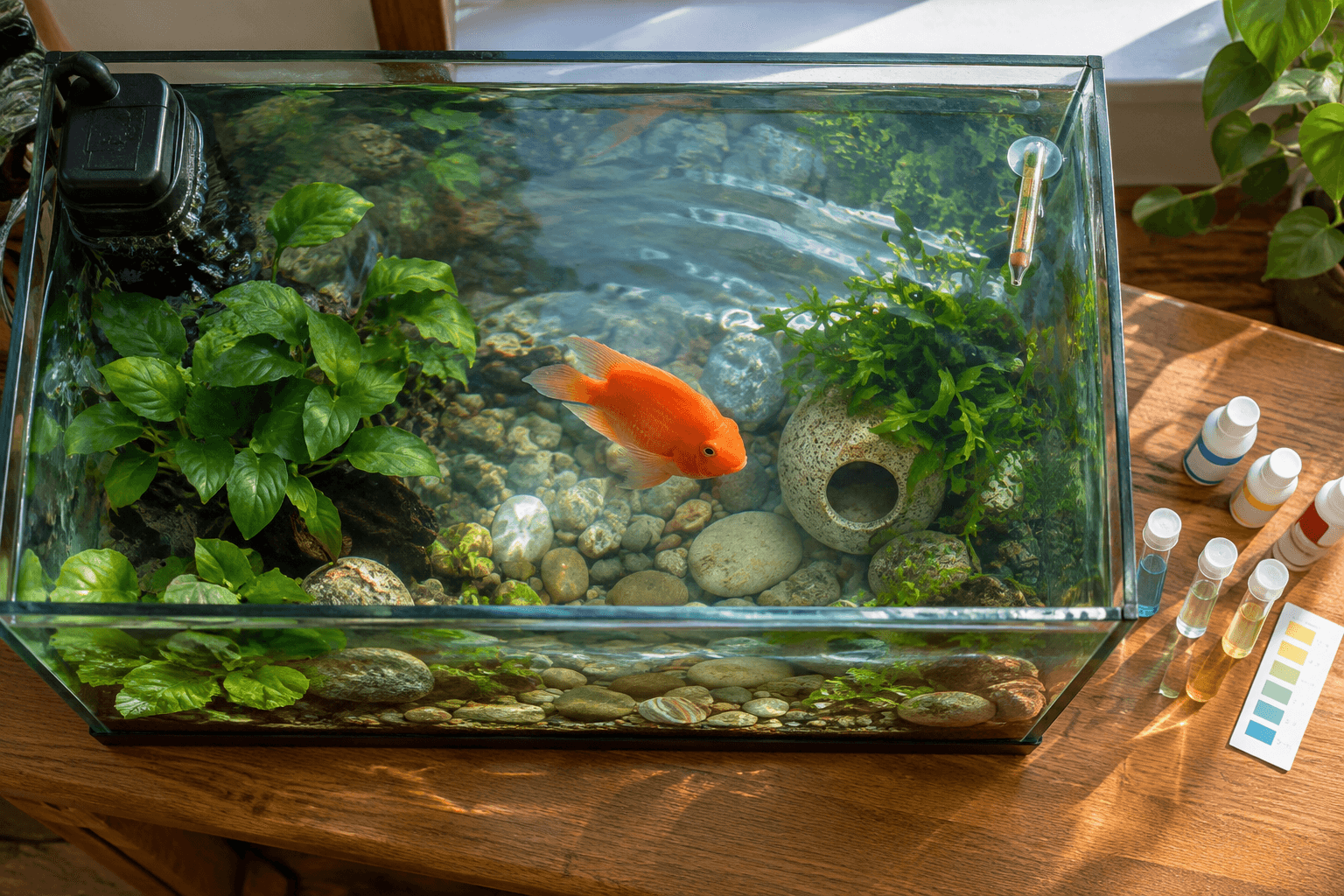
A single Blood Parrot Cichlid needs at least a 30-gallon tank, though 55 gallons gives you much more room for tank mates and decor. These fish grow to 7-8 inches and produce a fair amount of waste, so bigger is always safer.
Cramped tanks lead to stress, stunted growth, and aggression toward anything smaller sharing the space.
Water Parameters That Keep This Hybrid Healthy
Blood Parrot Cichlids do best in water between 76-80°F, with a pH range of 6.5 to 7.4. That’s a fairly forgiving window compared to some cichlids, but swings in either direction cause real stress.
Consistency matters more than hitting an exact number. A tank that drifts from 7.0 to 7.8 over a few weeks stresses the fish way more than one that sits steady at 7.2.
Filtration and Water Changes
Run a filter rated for at least double your tank’s volume, since these fish are messy eaters and waste builds up fast. A canister filter works well for tanks 40 gallons and up.
Do a 25-30% water change every week. Skipping this is one of the fastest ways to see fin rot or cloudy eyes show up within a month.
Testing Your Water
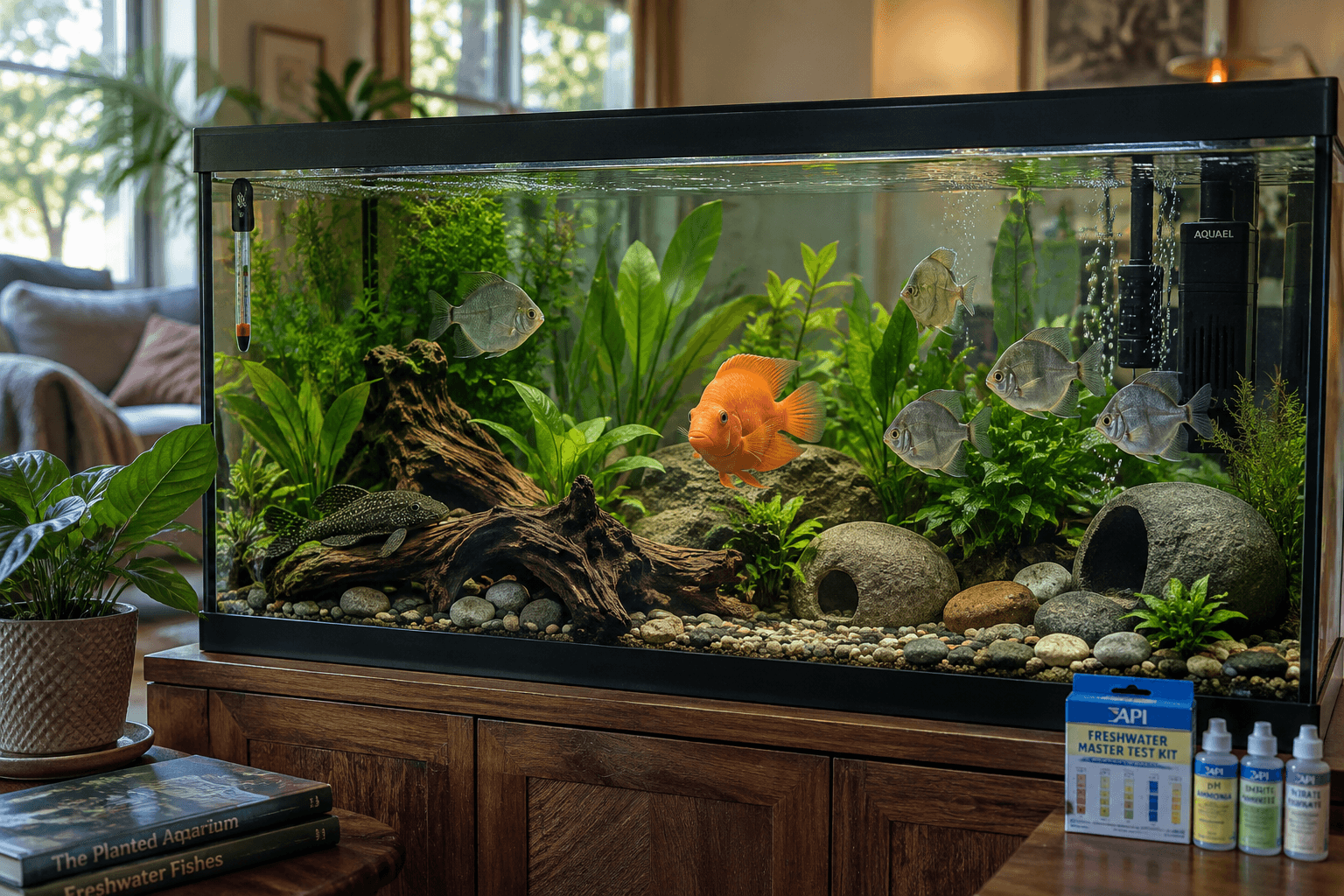
Use a liquid test kit (the API Freshwater Master Test Kit is a common, reliable pick) to check ammonia, nitrite, and nitrate weekly for the first few months. Once the tank cycles fully, usually 4-6 weeks in, testing every two weeks is enough.
Feeding Around the Mouth Deformity Generic Advice Ignores
Here’s the part most care sheets skip entirely: Blood Parrot Cichlids have a genetically malformed mouth that never closes all the way. This isn’t a health problem you caused, it’s baked into the hybrid, but it changes how you need to feed them.
Because the mouth stays slightly open and the jaw is short, these fish struggle to grab large pellets or big chunks of food. Sinking pellets sized for cichlids under 5mm work better than floating flakes, which they often miss entirely trying to strike at from below.
Feed a varied diet:
High-quality cichlid pellets as the base, fed once or twice daily
Freeze-dried or frozen bloodworms a couple times a week for protein
Blanched peas or spirulina-based food for fiber and color
Small amounts of brine shrimp as an occasional treat
Avoid large feeder fish, which they often can’t catch or chew properly
Only feed what they finish in about two minutes. Overfeeding this species is common because owners assume the fish isn’t eating enough when really it’s just missing the food.
Choosing Tank Mates That Won’t Get Bullied
Blood Parrot Cichlids are semi-aggressive and territorial, especially as they mature past 4-5 inches. Pairing them with skittish or tiny fish almost always ends badly.
Good tank mates include other medium-sized, similarly-tempered fish that can hold their own without escalating fights.
Tank Mate
Compatibility
Notes
Silver Dollars
Good
Fast enough to avoid conflict
Plecos
Good
Bottom-dwelling, low overlap
Firemouth Cichlids
Good
Similar temperament and size
Neon Tetras
Poor
Too small, often seen as food
Bettas
Poor
Get outcompeted and stressed
Oscars
Fair
Only in tanks 75+ gallons
Substrate and decor matter here too. Use soft sand or smooth gravel, since Blood Parrots like to dig, and add caves or PVC pipe hideouts so each fish can claim its own territory. A heavily decorated 55-gallon tank cuts down on aggression noticeably compared to a bare one. Readers setting up a full South American cichlid community tank might find it worth checking a dedicated cichlid tank guide, since mixing species successfully depends a lot on layout and hiding spots.
Breeding Behavior and Common Health Problems
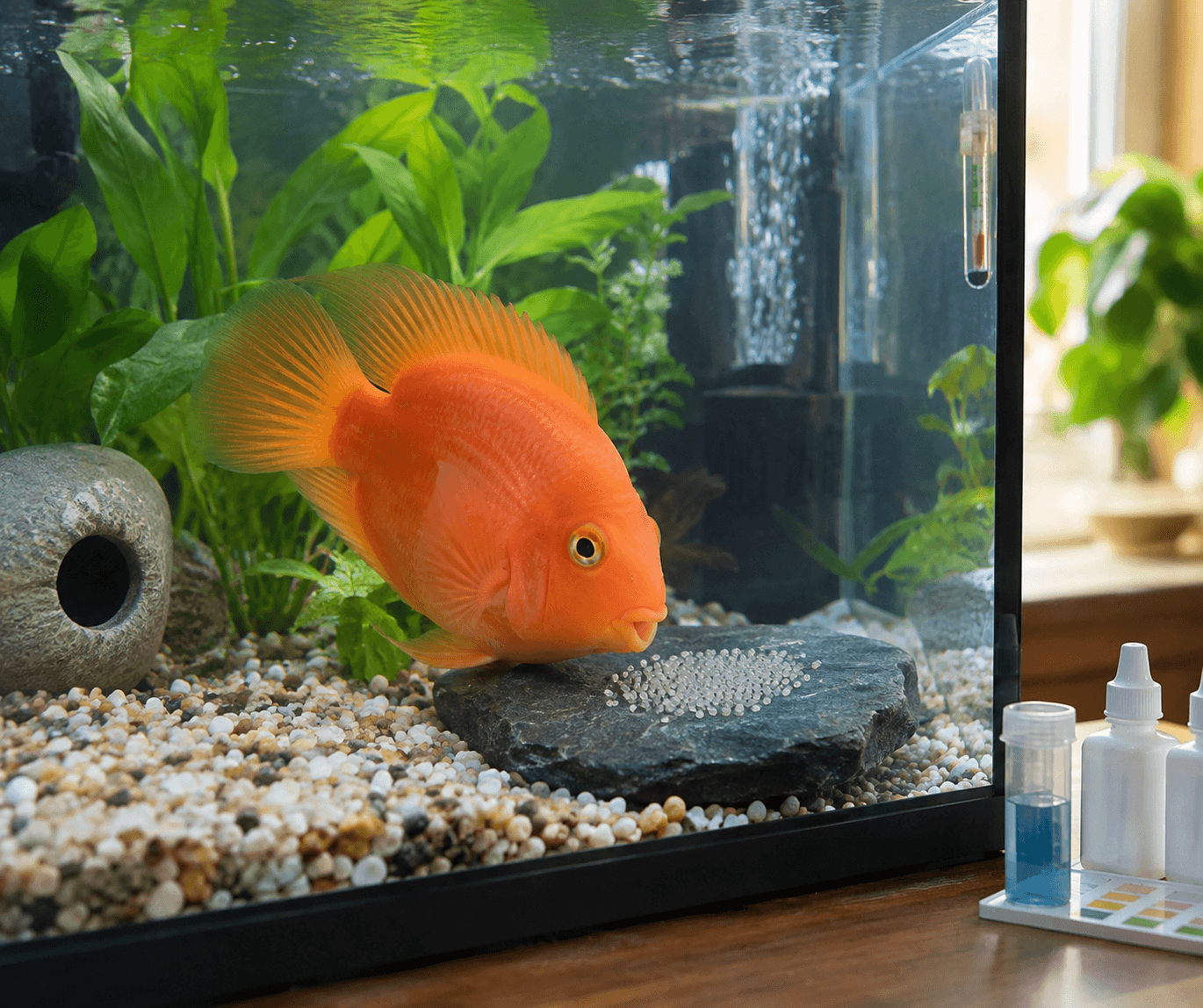
Blood Parrot Cichlids will pair off and dig pits in the substrate when ready to breed, usually once they’re over a year old. Because most males are sterile from the hybridization, eggs often don’t hatch, though some strains do produce viable fry.
Signs of Trouble to Watch For
Cloudy eyes, clamped fins, or white spots on the body usually point to poor water quality or ich, a common parasite in stressed fish. Since these cichlids already have a compromised mouth structure, any swelling or discoloration around the mouth needs quick attention, since infections there spread fast.
Bloating and floating problems (sometimes called swim bladder disease) show up often in this species, usually tied to overfeeding or constipation from too many pellets. Adding peas to the diet once a week helps prevent this.
Frequently Asked Questions
Is a parrot fish the same as a Blood Parrot Cichlid?
For home aquarium buyers, yes, almost always. The “parrot fish” sold at pet stores is the freshwater Blood Parrot Cichlid hybrid, not the marine reef parrotfish, which can’t live in home tanks at all.
How big does a parrot fish tank need to be?
Start with at least 30 gallons for one fish, but go with 55 gallons if you want tank mates. Their waste output and territorial behavior both need the extra space to stay manageable.
Why won’t my parrot fish eat normal fish food?
Its mouth doesn’t fully close due to hybrid genetics, making it hard to grab floating flakes or large pellets. Switch to small sinking pellets under 5mm, and expect it to eat more slowly than other cichlids.