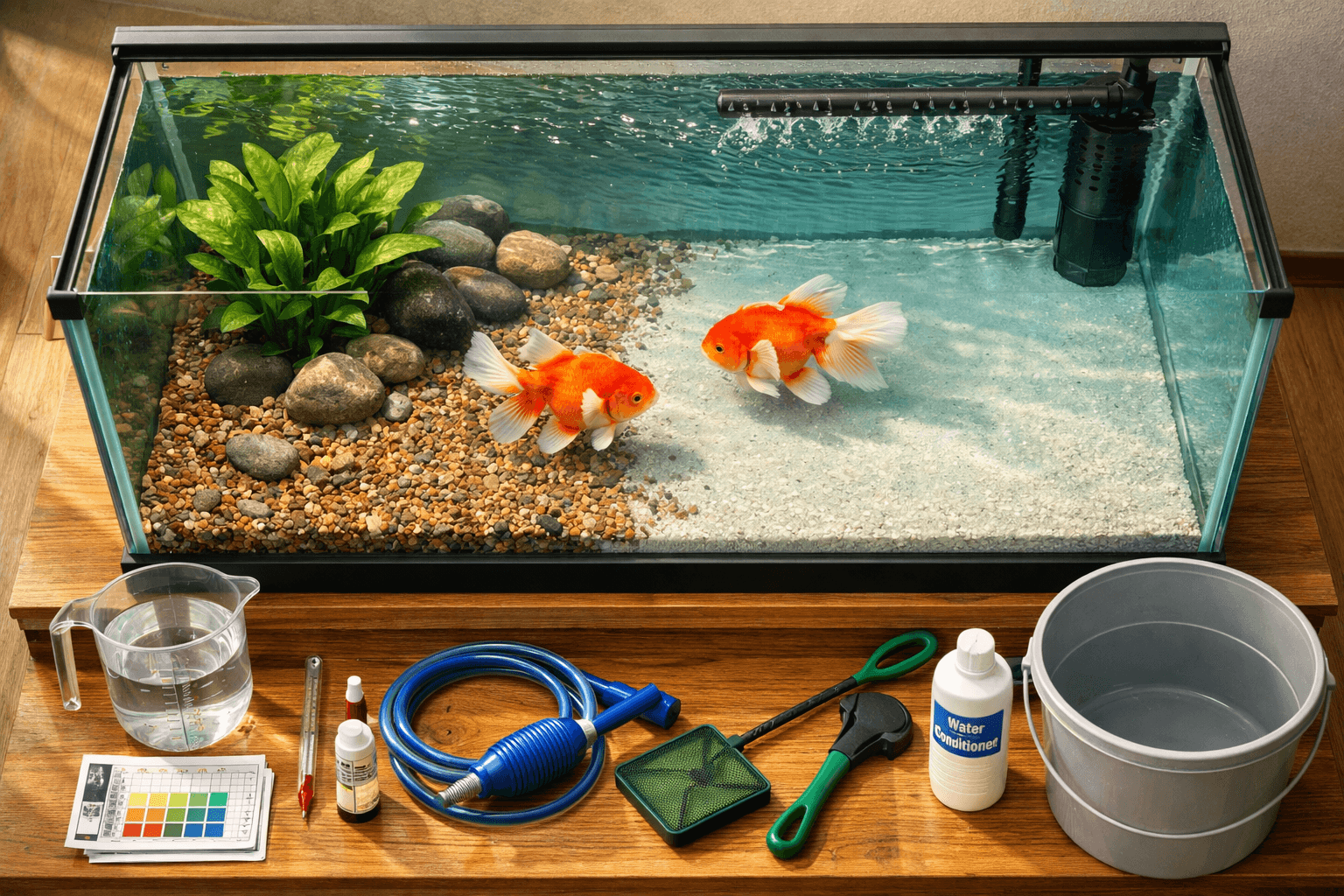
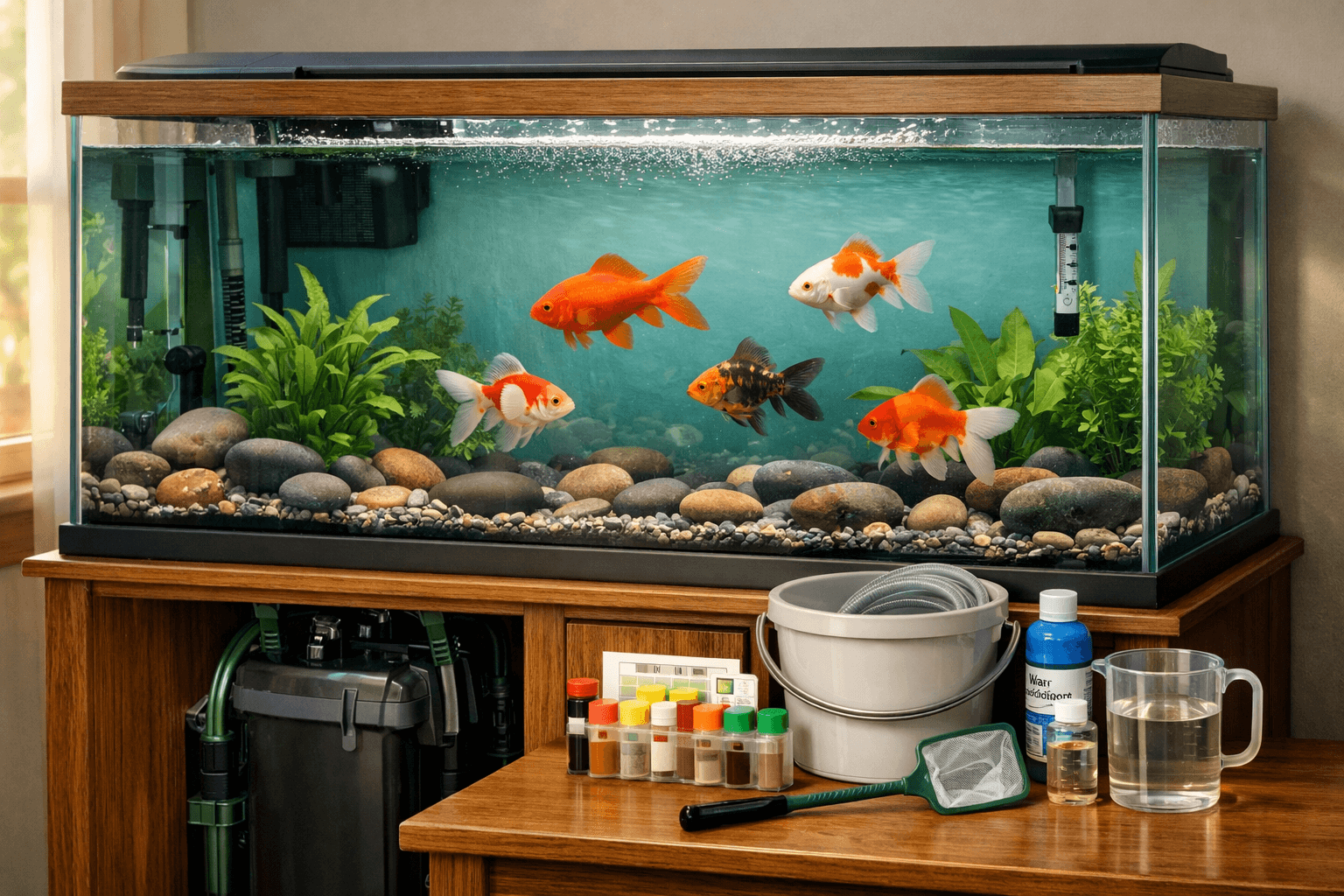
A goldfish tank is not a bowl with a fancy name. That little orange fish sold in a plastic bag can grow to 8-12 inches and live 10-15 years, which means the tiny bowl setup at the pet store is basically a death sentence in slow motion. If you want your goldfish to actually thrive, you need to think like an aquarium keeper, not a “starter pet” buyer.
How Big Does a Goldfish Tank Really Need to Be?
A single common or comet goldfish needs at least 30 gallons, and fancy varieties like orandas or ranchu still need a minimum of 20 gallons. That’s not a typo. These fish grow fast and produce a lot of waste, so tank volume is really about dilution and swimming room, not just “fitting the fish.”
Common and Comet Goldfish Need More Room Than You Think
Common and comet goldfish can hit 10-12 inches in body length alone, not counting the tail. A single comet realistically needs 30 gallons minimum, and every additional comet needs another 20 gallons on top of that. People buy these as “cheap starter fish” for a 5-gallon bowl, and within a year the fish is stunted, stressed, or dead.
Fancy Goldfish Are Smaller but Still Not Bowl Fish
Fancy goldfish (oranda, ranchu, fantail) stay rounder and shorter, usually 6-8 inches, but they’re also more delicate around water quality. A 20-gallon tank works for one fancy goldfish, with 10 extra gallons per additional fish. Two fantails together is a reasonable starter stocking plan, not a solo bowl fish.
Here’s a quick reference for planning tank size by fish type and number:
Goldfish Type
1 Fish
2 Fish
3 Fish
Fancy (oranda, ranchu)
20 gallons
30 gallons
40 gallons
Common/Comet
30 gallons
50 gallons
70 gallons
Mixed community (fancy only, no comets)
20 gallons
30 gallons
40 gallons
Filtration: Why “Rated for Your Tank Size” Isn’t Enough
The filter box that says “for up to 30 gallons” is rated for average tropical fish waste, not goldfish waste. Goldfish are messy eaters and constant poopers, so you want to oversize your filter by at least one full tank-size category.
Canister Filters vs. Hang-On-Back (HOB) Filters
For anything over 30 gallons, I’d reach for a canister filter over a hang-on-back unit. Canisters hold more media, run quieter, and handle heavier bioloads without clogging every few days. HOB filters work fine on smaller fancy goldfish tanks (20-30 gallons) if you’re doing weekly media rinses, but they hit their limit fast once you add a second fish.
Matching Filter Flow Rate to Bioload
A practical rule: aim for a filter rated at double your actual tank gallons. A 30-gallon comet tank should run a filter labeled for 55-60 gallons. This isn’t overkill, it’s the actual buffer goldfish need since they produce roughly triple the ammonia output of a similarly sized tropical fish like a tetra.
Cycling the Tank Before Fish Go In
Never add goldfish to a brand-new tank on day one. The nitrogen cycle needs to establish first, which means growing a colony of beneficial bacteria that converts ammonia into nitrite, then nitrite into nitrate. Skipping this step is the single biggest reason beginner goldfish die in the first two weeks.
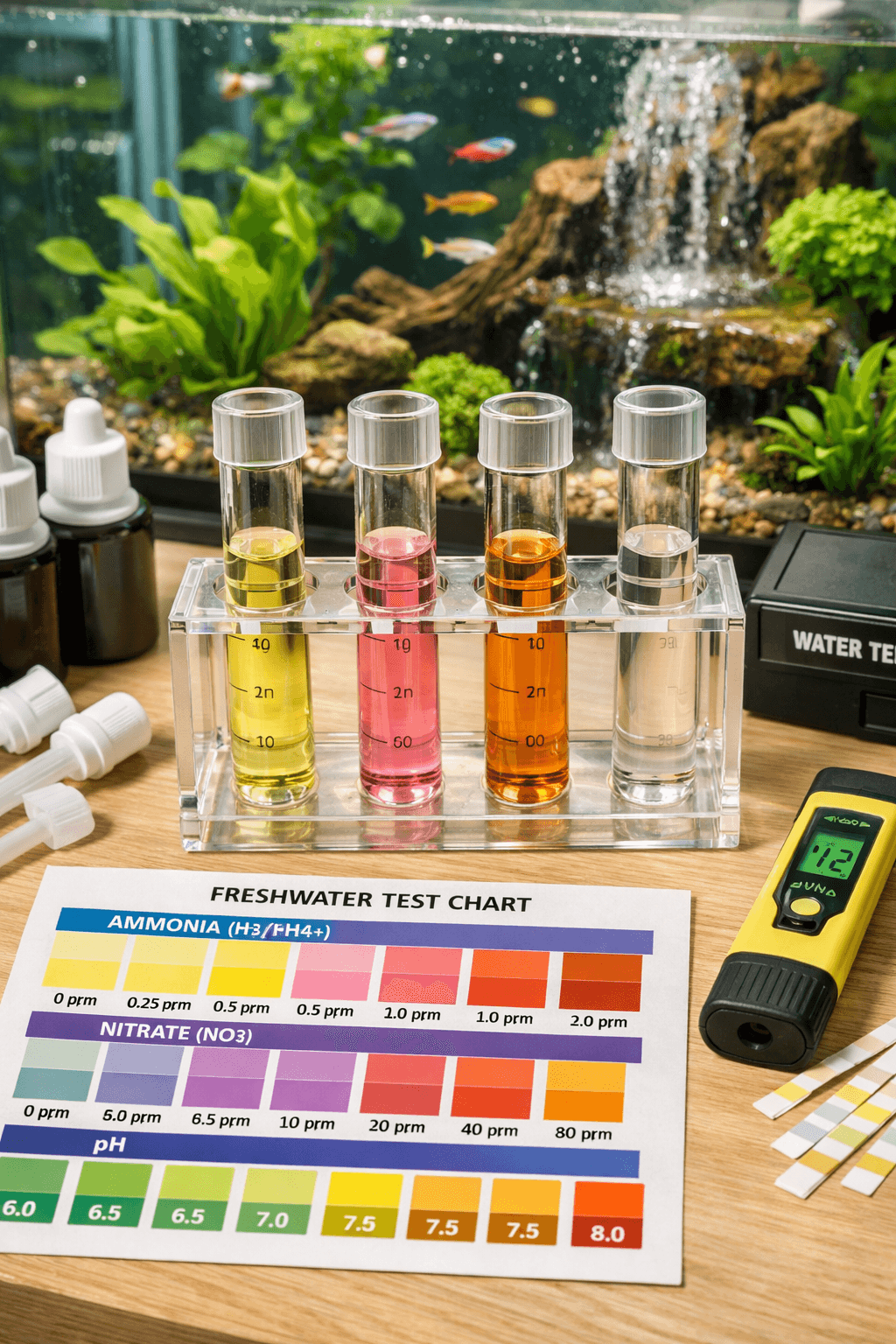
Fishless cycling with a bottled ammonia source takes about 3-6 weeks, testing daily with an API Freshwater Master Test Kit or similar. Target readings before adding fish: ammonia and nitrite at 0 ppm, nitrate under 40 ppm.
Here’s the general order of a fishless cycle:
Add pure ammonia to reach about 2-4 ppm in dechlorinated water.
Test daily for ammonia, nitrite, and nitrate using a liquid test kit.
Watch ammonia drop and nitrite spike around week 2-3.
Watch nitrite drop as nitrate rises around week 4-5.
Confirm ammonia and nitrite both read 0 ppm for several days straight.
Do a partial water change to bring nitrate under 40 ppm.
Add your goldfish gradually, one at a time, a few days apart.
Once fish are in, keep testing weekly. Ammonia or nitrite above 0 ppm at any point means an emergency water change, not a wait-and-see approach.
Water Changes, Substrate, and Keeping Oxygen Up
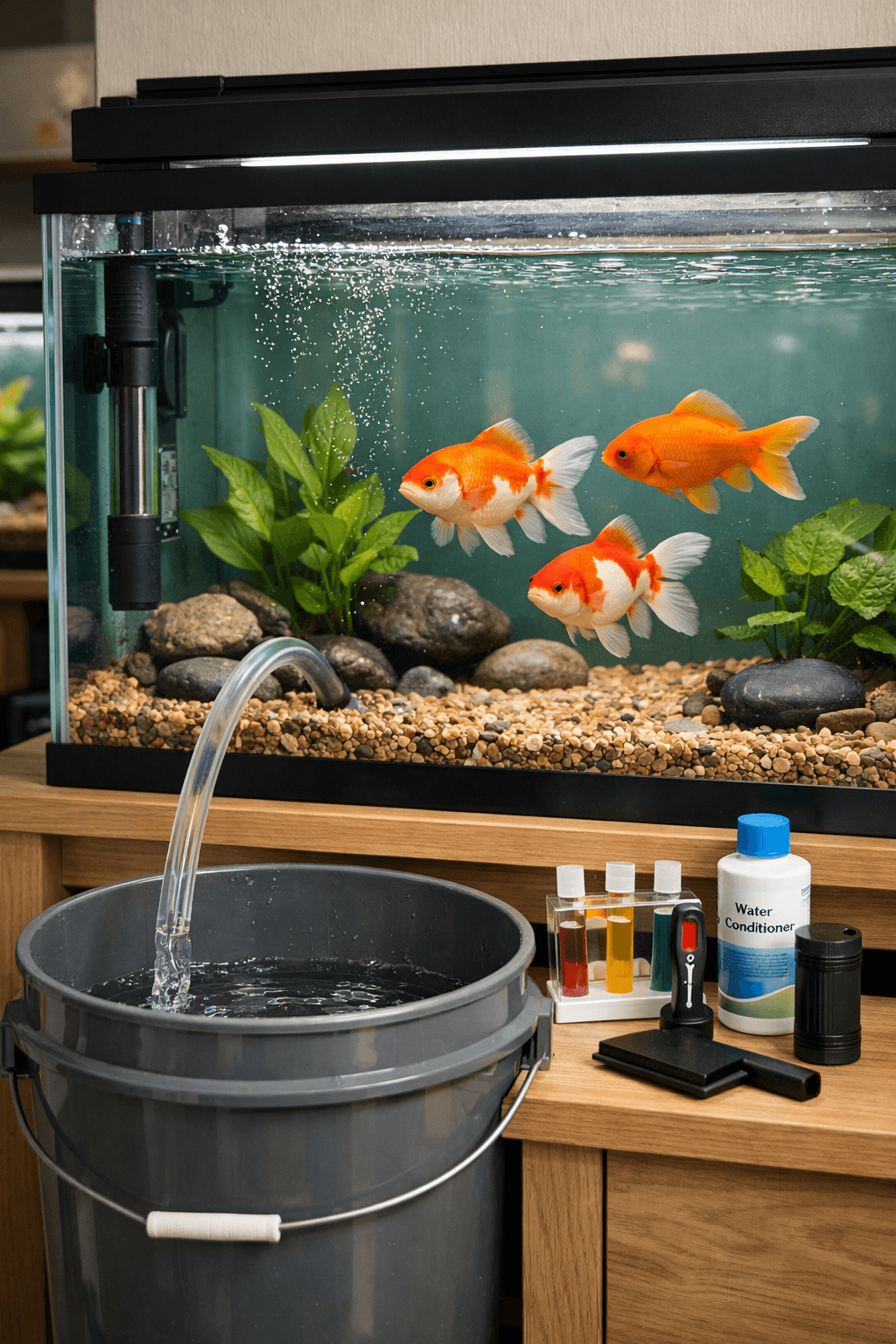
Goldfish tanks need a 25-30% water change weekly, more often in smaller tanks or with heavier stocking. This isn’t a suggestion you can skip if the water “looks clean” — goldfish waste builds up invisible ammonia and nitrate long before the water turns cloudy.
Substrate should be smooth gravel or sand, never anything sharp or small enough to swallow whole. Goldfish are notorious for sucking substrate into their mouths while foraging, so skip tiny gravel under 2-3mm and skip anything with rough edges that could scratch their gills.
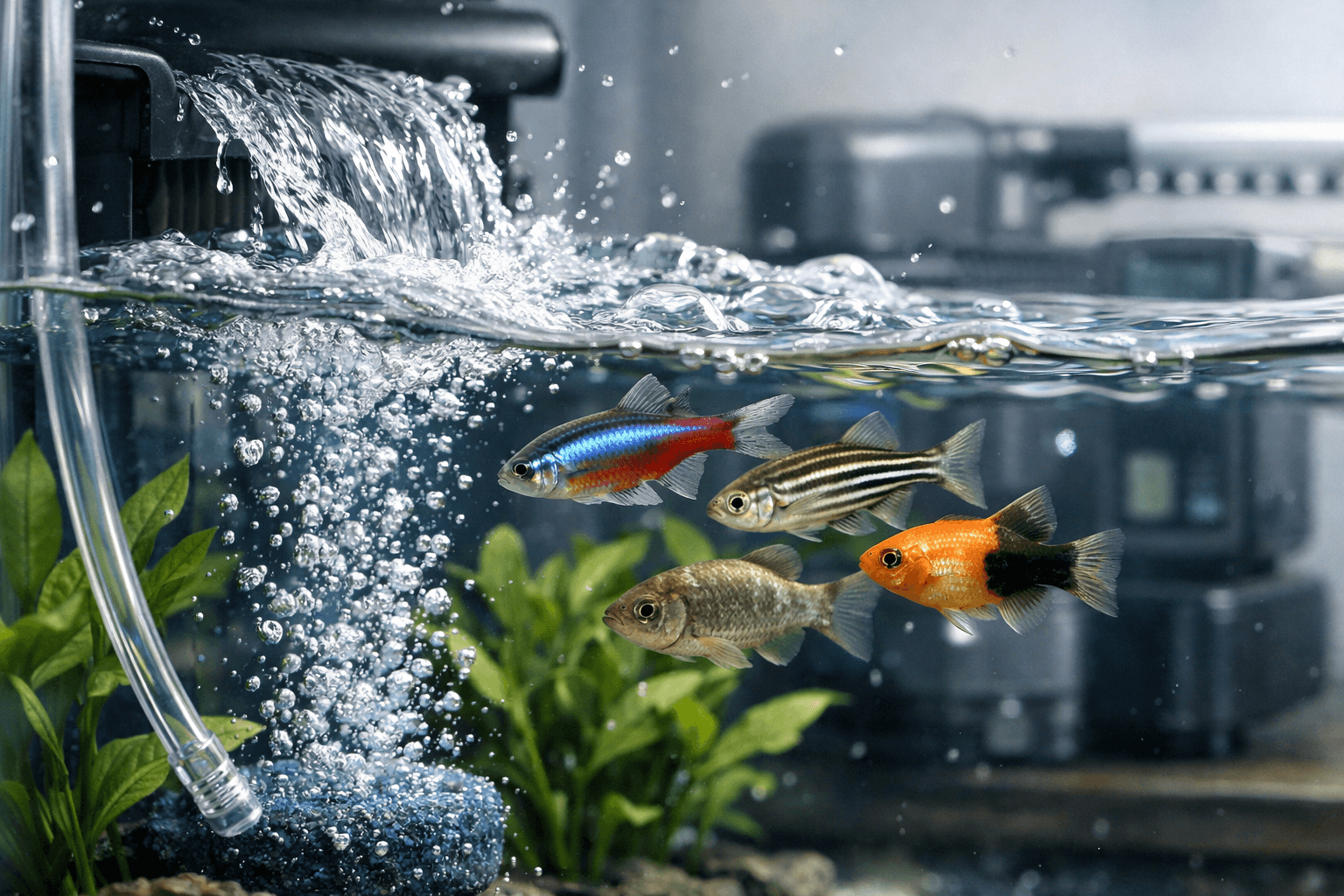
Aeration matters more than people expect. Goldfish consume a lot of oxygen relative to their size, so an air stone or a filter with strong surface agitation helps a lot, especially in summer when warmer water holds less dissolved oxygen. A heater isn’t required for most goldfish since they’re a cold-tolerant species built for outdoor ponds and unheated rooms, but keep the tank out of direct sun and away from drafty windows so temperature doesn’t swing more than a few degrees a day.
If you’re setting up your first tank alongside a reptile or amphibian enclosure, the same instinct that made you research substrate safety and heating gradients for a terrarium applies here too — goldfish just trade basking spots for oxygen and water chemistry. Guides like the setup tutorials on petterrarium.com cover both sides of that learning curve if you’re building multiple habitat types at once.
Frequently Asked Questions
Can goldfish live in a bowl if I change the water every day?
No. Even daily water changes can’t keep up with ammonia buildup in a bowl under 5 gallons, and bowls lack the surface area and filtration needed for stable oxygen and bacteria colonies. Goldfish in bowls typically become stunted and die years earlier than tank-raised fish.
What tank mates work with goldfish?
Stick to other goldfish or true pond fish like weather loach; most tropical community fish need warmer water and calmer tank mates than goldfish provide. Goldfish also nibble on plants and slower fish, so avoid delicate species like bettas or small tetras.
How long before I can add fish after setting up the tank?
Plan for 3-6 weeks of fishless cycling before adding any goldfish. Adding fish sooner risks ammonia poisoning, which is the leading cause of early goldfish deaths in new tanks.