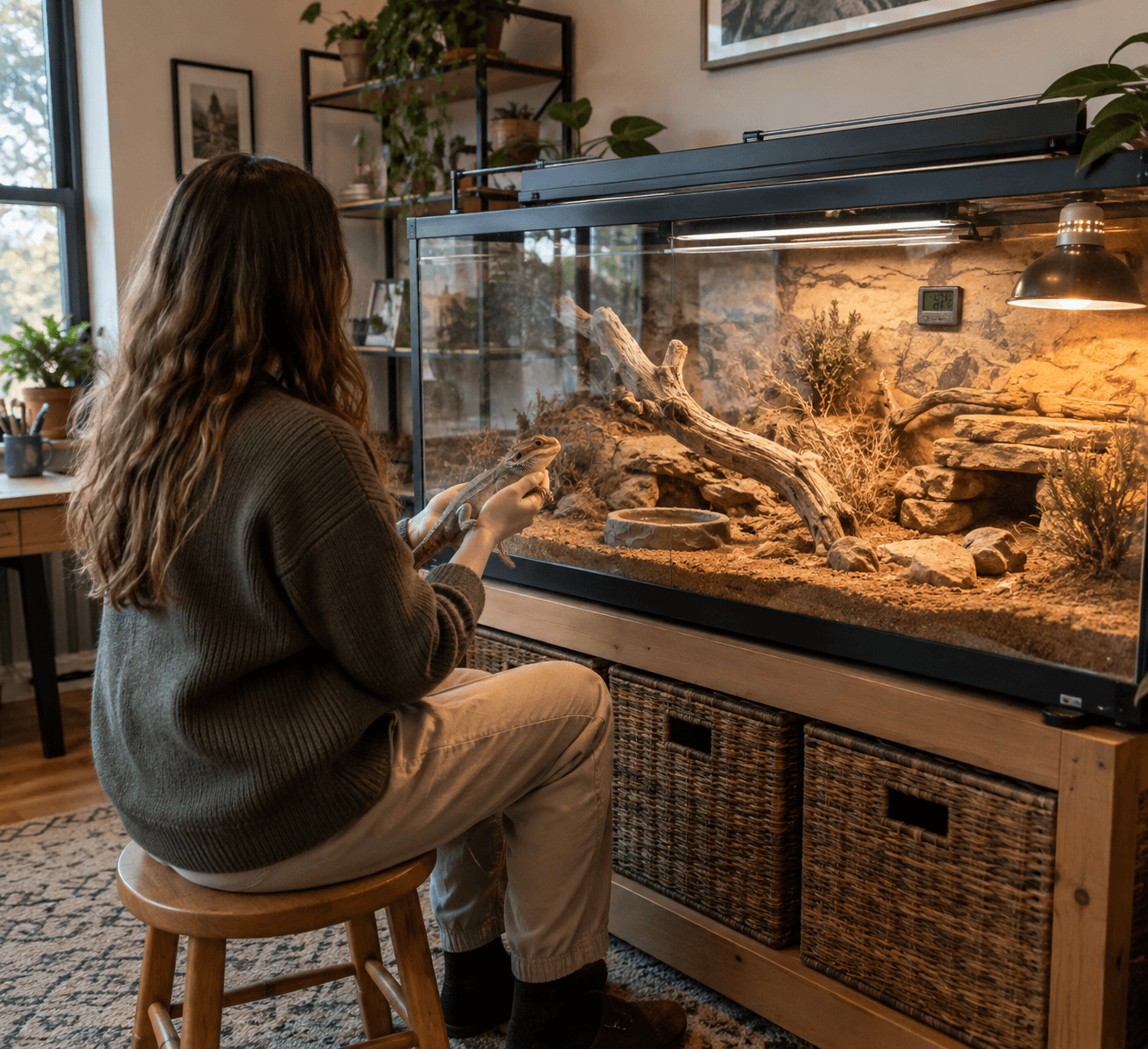
What kind of hooded lizard are you actually looking at? That question decides almost everything about its habitat, because “hooded lizard” covers a handful of agamid species from very different parts of Australia and Southeast Asia, some from dry scrubland and some from humid forest floors. Get that wrong and you’ll build the wrong tank before you even buy the animal.
Most care sheets treat every hooded lizard like a bearded dragon: dry sand, blazing heat lamp, done. That’s how you end up with a stressed, dehydrated, or overheated lizard within weeks. The fix isn’t complicated, but it does mean checking your specific species before you shop for gear.
Match the Enclosure to Where Your Species Actually Comes From
Hooded lizards aren’t one species with one rulebook. The frilled dragon-adjacent and bearded-hood types from Australia’s drier woodlands want a different setup than forest-floor hooded agamids from humid tropical regions.
Arid-Origin Species
For dry-habitat hooded lizards, go with a loose, sand-clay substrate blend that lets them dig without collapsing. Keep humidity around 30-40%, with one light misting every couple of days. A single daily deep soak in a shallow water dish is more useful than constant spraying for these species.
Humid-Origin Species
Forest and jungle hooded lizards need coco fiber or a topsoil-and-leaf-litter mix that holds moisture. Humidity should sit at 60-70%, checked with a digital hygrometer (the $10-15 kind works fine). Mist twice daily, and expect to top off a small drip system or fogger if your house runs dry in winter.
A 20-gallon long tank works for one adult of most hooded lizard species, though some of the larger agamids do better in a 40-gallon breeder or a custom enclosure at least 36 inches long. Add branches for climbing since most of these lizards spend real time off the ground, not just in hides.
Heating and UVB: The Number One Mistake People Make
Skipping proper UVB is the fastest route to metabolic bone disease, a condition where a lizard’s bones soften from calcium deficiency. It’s preventable, and it’s cheap to prevent.
Use a T5 HO UVB bulb rated for 12% output, spanning most of the enclosure length, replaced every 10-12 months even if it still lights up (UVB output fades long before the bulb dies). Pair it with a basking bulb on a thermostat, not left running unregulated.
Temperature needs vary by origin:
Zone
Arid-species hooded lizard
Humid-species hooded lizard
Basking spot
100-105°F
90-95°F
Warm side (ambient)
85-90°F
80-85°F
Cool side (ambient)
75-80°F
72-78°F
Nighttime low
68-72°F
70-75°F
Don’t crank the basking spot to bearded-dragon-level heat for a humid-forest hooded lizard. That mismatch causes lethargy, poor appetite, and skin problems, and it’s the single most common setup error people bring to reptile forums and local shop staff.
Feeding Schedule and Supplements That Actually Work
Most hooded lizards are insectivorous, and diet mistakes usually come from skipping the prep steps, not from the wrong bugs.
Gut-load feeder insects (crickets, dubia roaches, black soldier fly larvae) with fresh greens and carrots for 24 hours before feeding.
Dust insects with a calcium powder (no vitamin D3) at every feeding for juveniles, every other feeding for adults.
Add a calcium-D3-and-multivitamin dust once a week, especially if UVB exposure is limited.
Feed juveniles daily, adults every 1-2 days, adjusting portion to body condition.
Offer prey sized to fit between the eyes — anything bigger risks impaction.
Remove uneaten insects after 15 minutes so they don’t stress the lizard or hide in substrate.
Overfeeding shows up as rapid weight gain and a sluggish lizard. Underfeeding shows up as visible hip bones and low energy. Either one is fixable within a couple of weeks once you adjust portions.
Handling, Temperament, and Common Health Red Flags
Hooded lizards are generally more skittish than bearded dragons, and some species puff or flare a neck frill when startled, hence the name. Handle for short sessions once they’re eating and moving normally, usually a week or two after arrival.
Watch for these signs something’s off: sunken eyes or wrinkled skin (dehydration), a limp jaw or bowed legs (early metabolic bone disease), or dark stuck shed on toes and tail tips. Catching these early, often before they show up in behavior, makes treatment far simpler and cheaper than waiting.
A well-planned enclosure setup, the kind detailed in most reptile habitat guides on sites like petterrarium.com, cuts down on nearly all of these problems before they start. The lizard’s environment is doing most of the preventive work for you.
Frequently Asked Questions
How big of a tank does a hooded lizard need?
A single adult needs at least a 20-gallon long tank, though larger hooded agamid species do better in 40 gallons or a custom enclosure 36+ inches long. Vertical space matters as much as floor space since most climb.
Do hooded lizards need UVB lighting?
Yes, every hooded lizard needs UVB exposure to process calcium properly. Skipping it is the top cause of metabolic bone disease in captive agamids, and a T5 HO 12% bulb replaced yearly covers most setups.
Can I keep a hooded lizard with a bearded dragon setup?
Not safely for most species. Bearded dragons need much drier, hotter conditions than many hooded lizard species from humid regions, and reusing that setup without adjusting humidity and basking temps causes lethargy and skin issues.