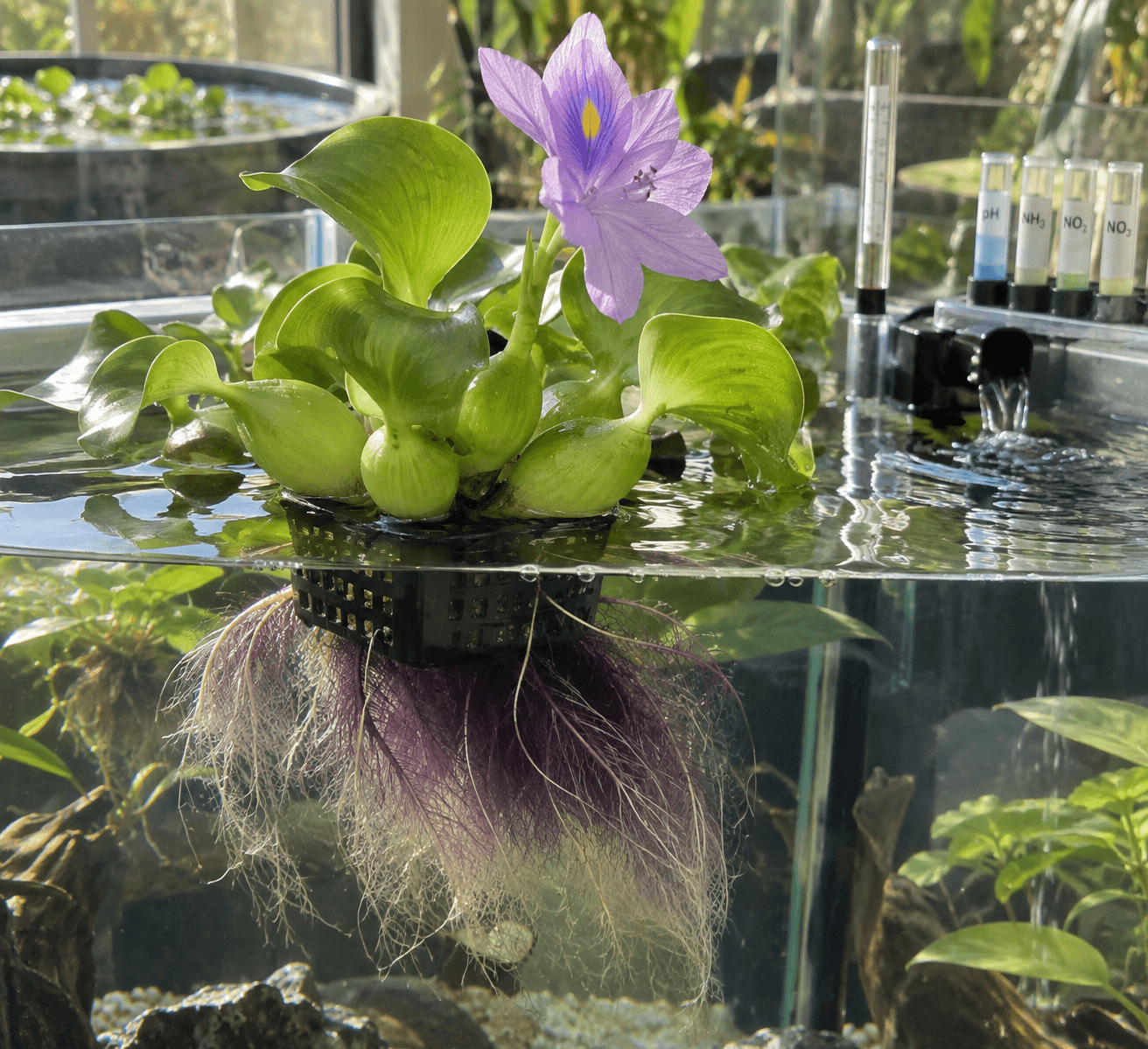
Before you drop a hyacinth water plant into your pond or tank, check your state’s invasive species list. That one step matters more than light or fertilizer for this plant, because in a lot of the US, water hyacinth (Eichhornia crassipes) is banned or restricted outright. It’s a gorgeous floating plant with big lavender flowers and puffy roots, but it spreads fast enough to choke a waterway in a single season if it gets loose.
Is Water Hyacinth Legal to Own Where You Live?
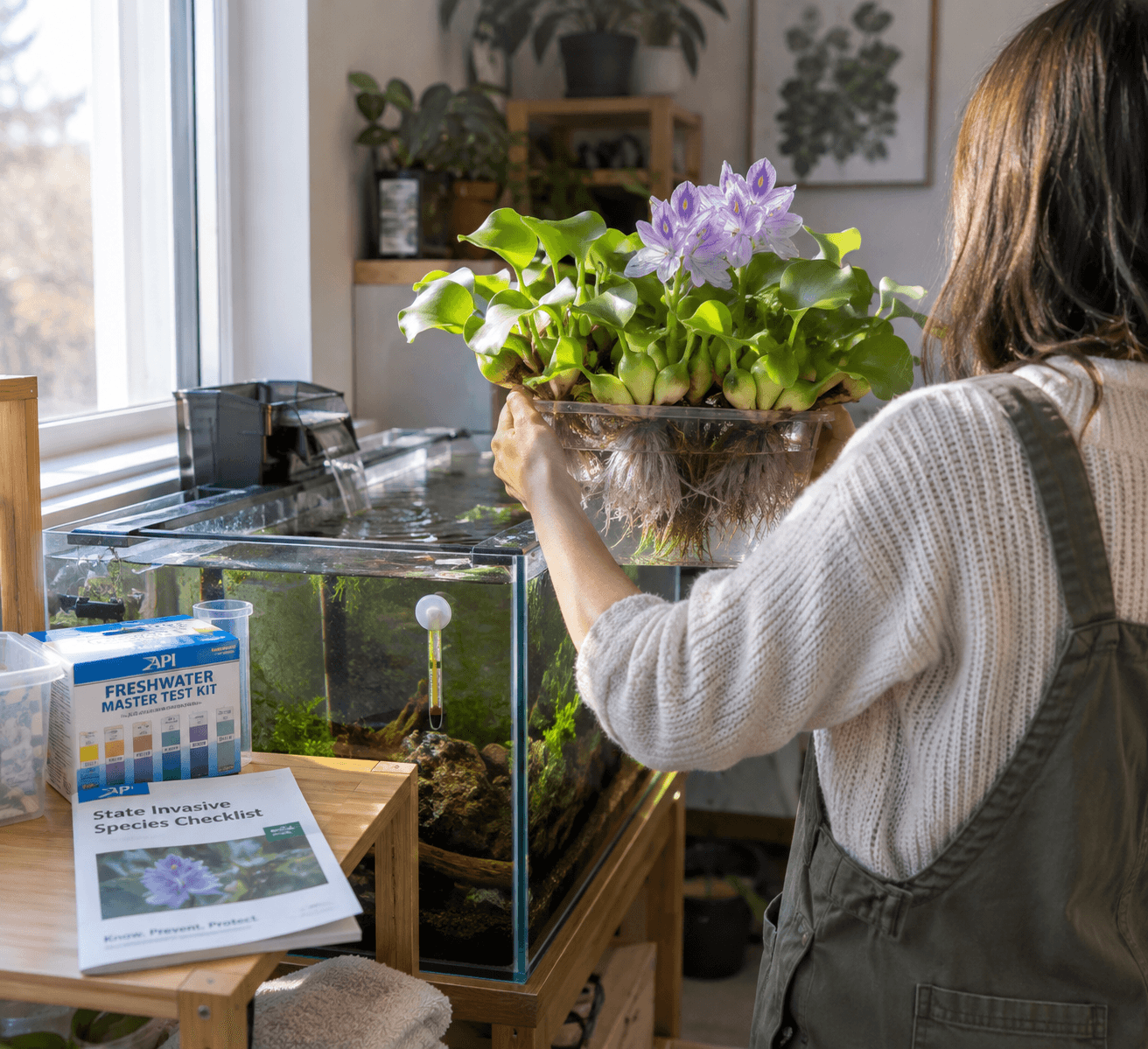
The honest answer is: it depends, and you need to check before you buy, not after. Florida, Texas, Louisiana, and California all restrict or ban water hyacinth because it clogs canals and starves native plants of light. Some states let you keep it in a fully contained aquarium but not in an outdoor pond connected to any natural water source.
I’d treat this like checking local exotic pet laws before buying a snake. Your state’s department of agriculture or invasive species council website usually has a plain-language list. A five-minute search saves you a fine and saves a lake from a green carpet nobody wants.
If your state allows it only indoors, that’s not a downgrade. An indoor aquarium or paludarium setup actually gives you more control over the plant’s biggest problem: it not knowing when to stop growing.
What Counts as “Contained”
Contained means the plant physically cannot reach a storm drain, creek, or wild pond, even during heavy rain or flooding. A pond with an overflow pipe that leads to a ditch doesn’t count, even if it looks isolated most of the year.
Disposal Is Part of Legal Ownership
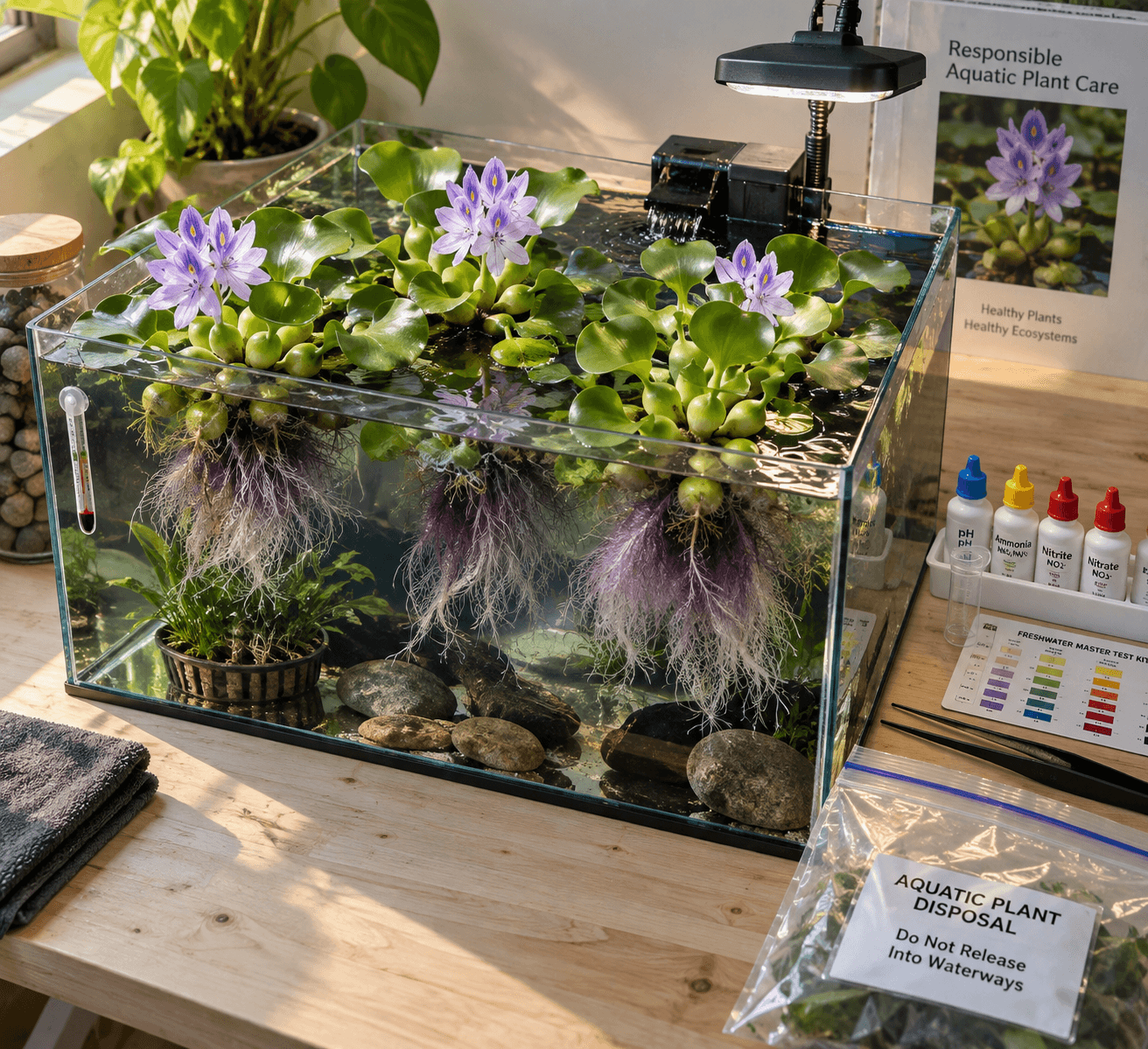
Never toss extra plants in a canal, creek, or roadside ditch. Compost them, bag them for trash pickup, or let them fully dry out in the sun until they’re dead before disposal.
Light, Temperature, and Water Setup That Actually Works
Water hyacinth wants full sun, warm water, and nutrients to pull out of that water. Give it at least 6 hours of direct light a day, and keep water temperature between 65°F and 85°F for real growth. Below 50°F, the plant starts dying, so this is not a year-round outdoor plant for most of the US.
Pond Setup
In an outdoor pond, water hyacinth does double duty as decoration and a natural filter. Its roots pull nitrates and phosphates out of the water, which cuts down algae blooms in a way a lot of pond owners actually notice within a couple weeks. A pond with heavy fish waste and visible green water is exactly where this plant earns its keep.
Aquarium and Paludarium Setup
Indoors, a 20-gallon-plus tank with a bright LED grow light works fine, and a paludarium setup with a land area gives the roots room to trail into deeper water. This is where a resource like petterrarium.com is genuinely useful if you’re building a mixed terrarium-aquarium setup, since paludarium lighting and humidity needs aren’t quite the same as a plain fish tank.
Root Damage: The Turtle and Big-Fish Problem
Turtles and large fish will shred hyacinth roots, and that’s a real limitation, not a minor inconvenience. Turtles bite and dig at the dangling roots out of curiosity or hunger, and goldfish, koi, and cichlids will nibble roots down to nothing within days.
That doesn’t mean turtles and hyacinth can never coexist. It means you plan around the behavior instead of hoping it won’t happen.
Use a floating ring or mesh barrier to keep the plant in one section of a pond, away from a turtle’s favorite basking-dive spot.
Stock extra plants, since some root loss is normal and expected, not a sign you’re doing something wrong.
Skip hyacinth entirely in tanks with snapping turtles or red-eared sliders over 6 inches, where damage happens almost daily.
Pair it with tougher floaters like water lettuce in mixed setups, so one plant getting shredded doesn’t leave the tank bare.
Check roots weekly for rot, which spreads fast once a turtle has torn the tissue open.
Propagation, Thinning, and Winter Care
Water hyacinth reproduces through runners, and a single healthy plant can double its coverage in under two weeks during warm months. That’s the appeal for pond owners wanting fast algae control, and it’s exactly why unchecked ponds turn into solid green mats by midsummer.
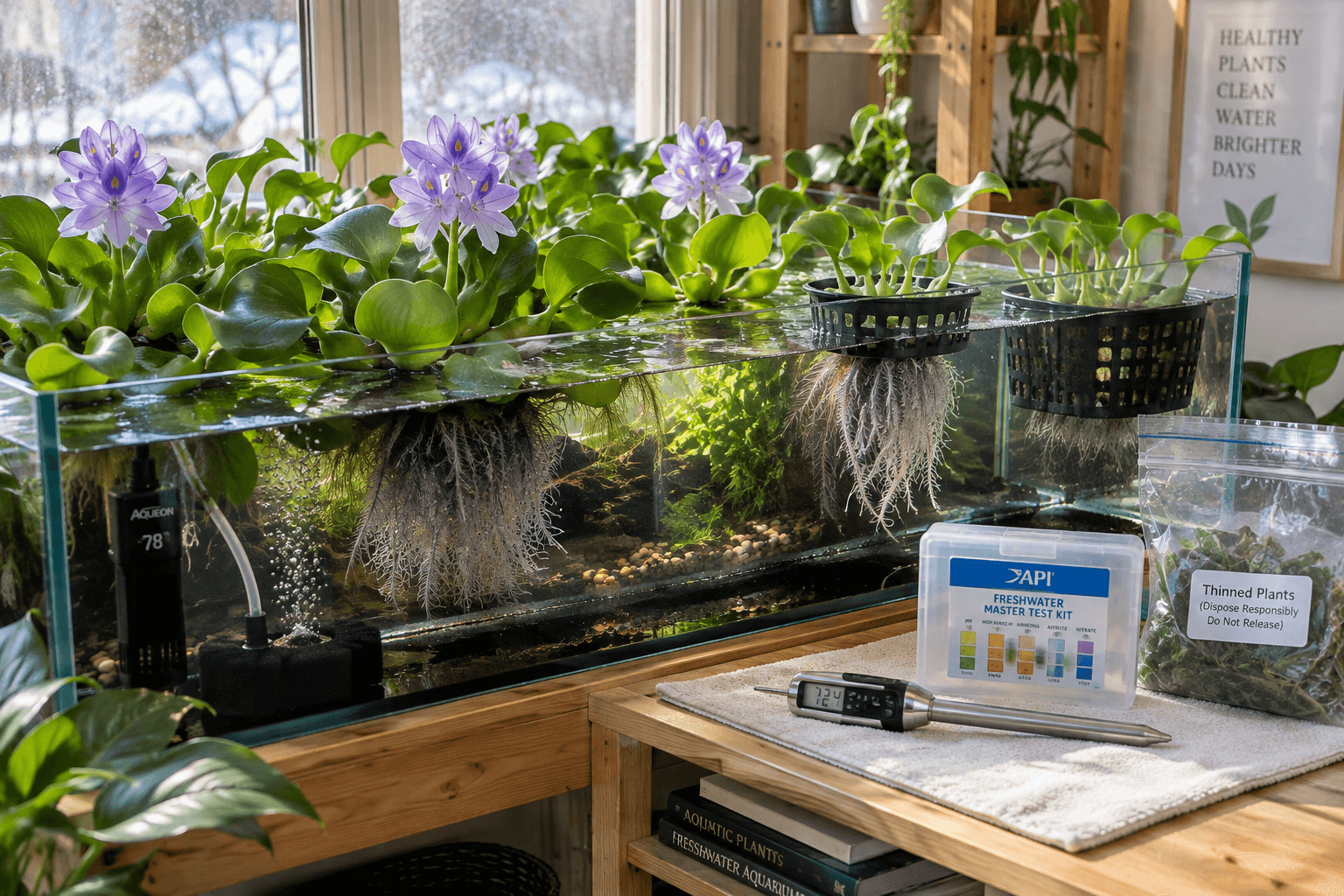
Thinning isn’t optional maintenance, it’s the main job. Plan on removing a third of the coverage every couple weeks once the pond warms up past 70°F, more often in a small backyard pond under 300 gallons.
Fertilization Needs
In a nutrient-rich pond with fish, you likely need zero added fertilizer, since fish waste already feeds the plant. In a clean aquarium with few fish, a diluted liquid aquatic fertilizer every couple weeks keeps growth steady without overfeeding algae competitors.
Bringing It Indoors for Winter
Where winters drop below 50°F, bring a few healthy plants indoors into a bucket or aquarium with a grow light before the first frost. This overwintering approach costs almost nothing and means you’re not buying new plants every spring.
Setup Type
Ideal Temp
Light Needed
Main Risk
Outdoor pond (fish only)
65-85°F
6+ hrs direct sun
Overgrowth, invasive spread
Outdoor pond (with turtles)
65-85°F
6+ hrs direct sun
Root shredding
Indoor aquarium/paludarium
68-80°F
Bright LED grow light
Overcrowding small tanks
Indoor overwinter tub
60-75°F
Partial sun or grow light
Slow growth, needs monitoring
Frequently Asked Questions
Is water hyacinth safe for turtles to be around?
It’s not toxic, so it’s safe to be near, but turtles will tear up the roots fast. Expect regular root damage rather than a plant that thrives long-term in a turtle tank.
Can I keep water hyacinth in a small 10-gallon aquarium?
Not for long. It doubles coverage quickly and will block light and oxygen in anything under 20 gallons within a few weeks unless you thin it constantly.
What happens if water hyacinth escapes into a natural pond or creek?
It can form dense mats that block sunlight and oxygen for fish and native plants, which is exactly why so many states restrict it. Always confine and dispose of it properly rather than releasing extra plants outdoors.