Stop calling them “breeds” for a second. Lizards don’t have breeds the way dogs or cats do — a leopard gecko isn’t a “breed,” it’s a whole different species from a bearded dragon, with its own body, its own home turf, and its own rulebook for staying healthy. That mix-up trips up a lot of new keepers browsing breeds of lizards online, because it makes people think one care sheet fits every scaly critter at the pet store.
Here’s the fix: pick your lizard based on the size tank you can actually fit, the climate control you’re willing to run, and how much hands-on work you want. Get that order right, and the “which species” question gets a lot easier to answer.
Why “Breed” Is the Wrong Word (And Why It Matters)
A breed is something humans created through selective breeding, like a Labrador or a Persian cat. Lizards in the pet trade are almost always distinct species, each shaped by millions of years in a specific wild habitat, not by a breeder’s clipboard.
That distinction isn’t just nitpicking. A Labrador and a Chihuahua still need roughly the same temperature range and diet. A leopard gecko and a green iguana do not. One comes from dry, rocky ground in South Asia and barely touches UVB light. The other comes from tropical Central and South American canopy and needs strong UVB, high humidity, and eventually a walk-in closet-sized enclosure.
Once you think in species instead of breeds, you stop assuming “lizard care” is one universal checklist. You start asking the right question for each animal: where did this species evolve, and what does that mean for my tank setup at home?
Matching Species to Enclosure Size (This Is Where Most People Get Burned)
Enclosure size should be the first filter you apply, before looks or price, because outgrowing a tank is the most common and most preventable mistake in lizard keeping. A lot of pet stores sell juvenile lizards in tiny setups that look adorable but only fit that animal for a few months.
Small, beginner-friendly footprints
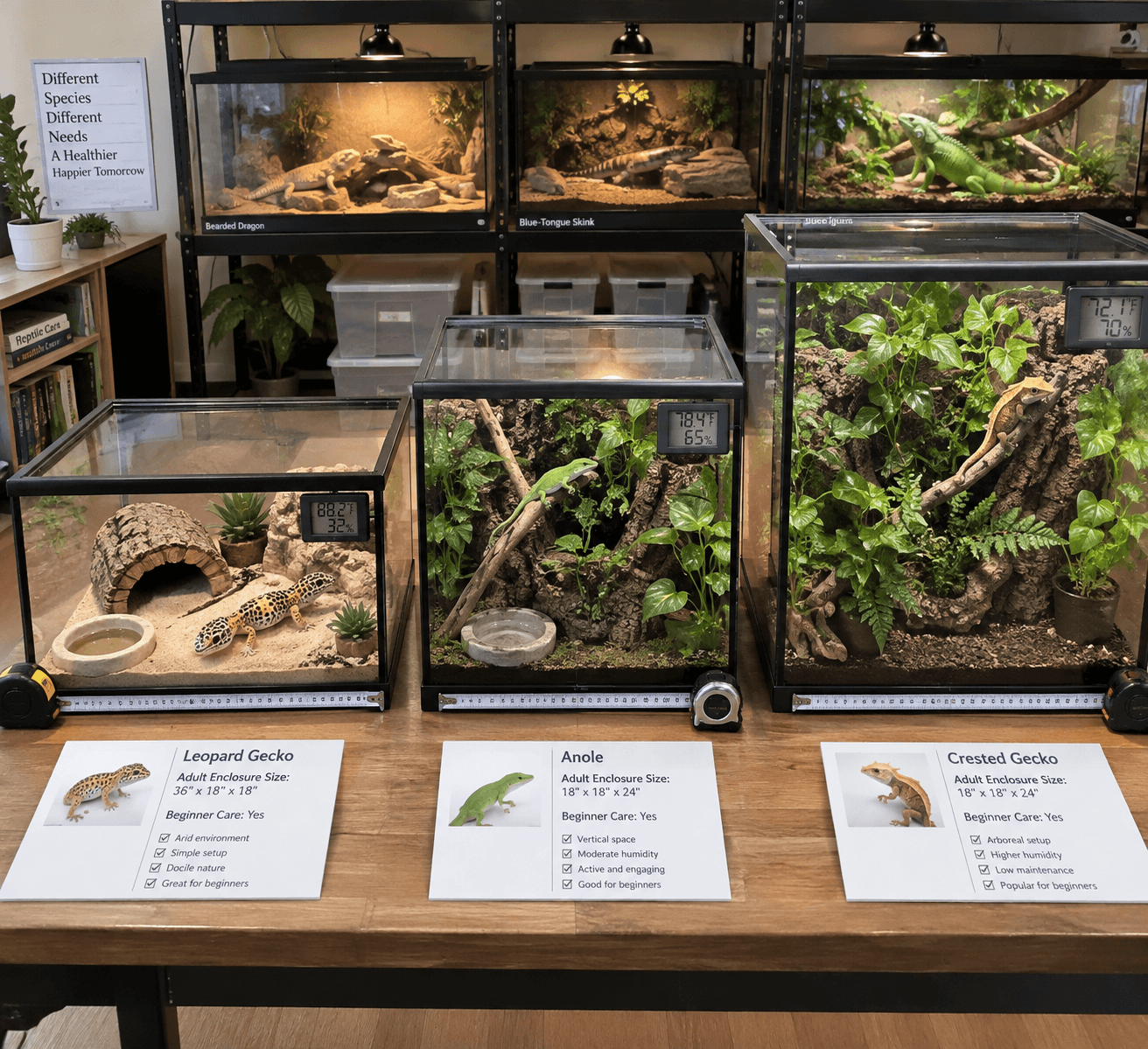
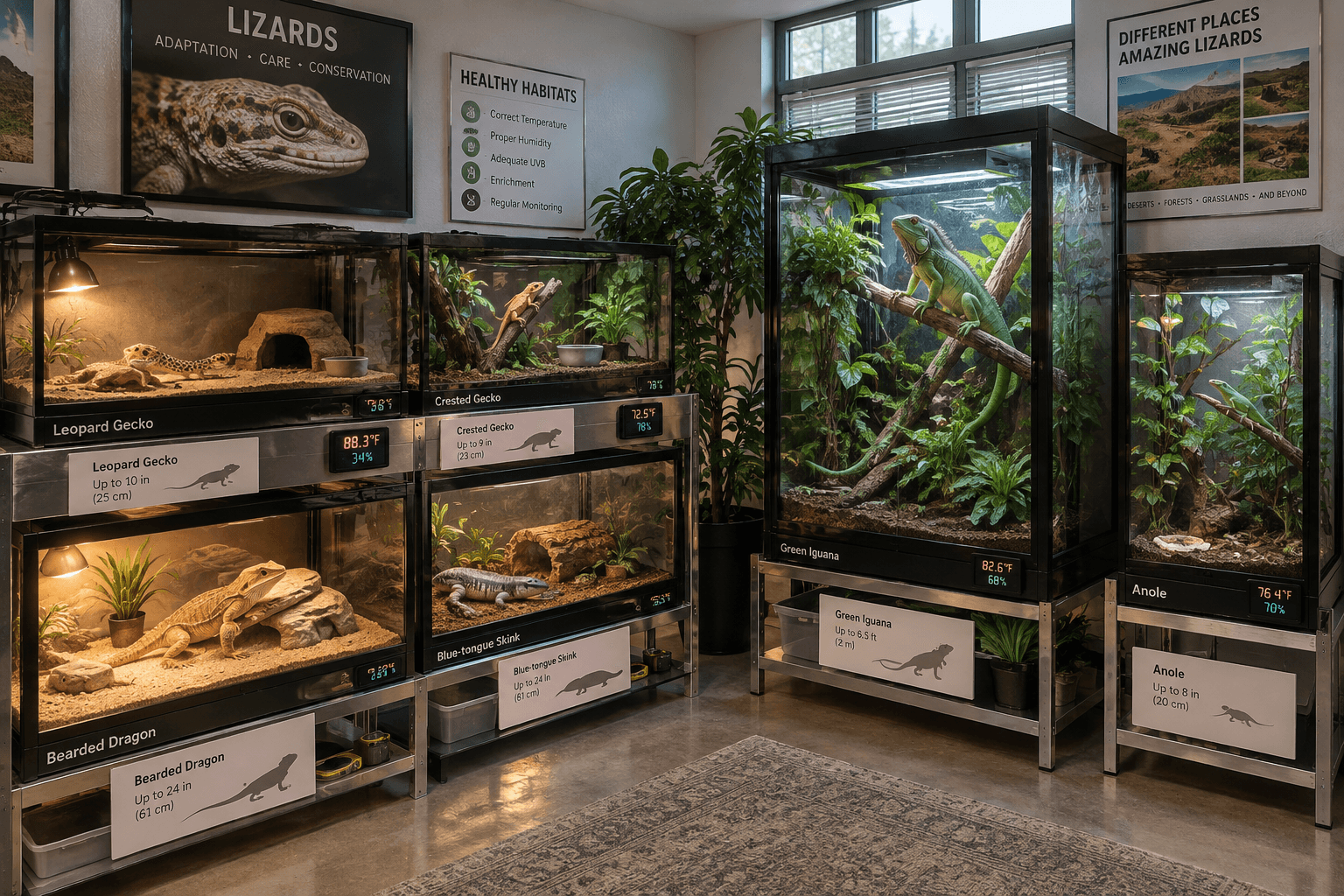
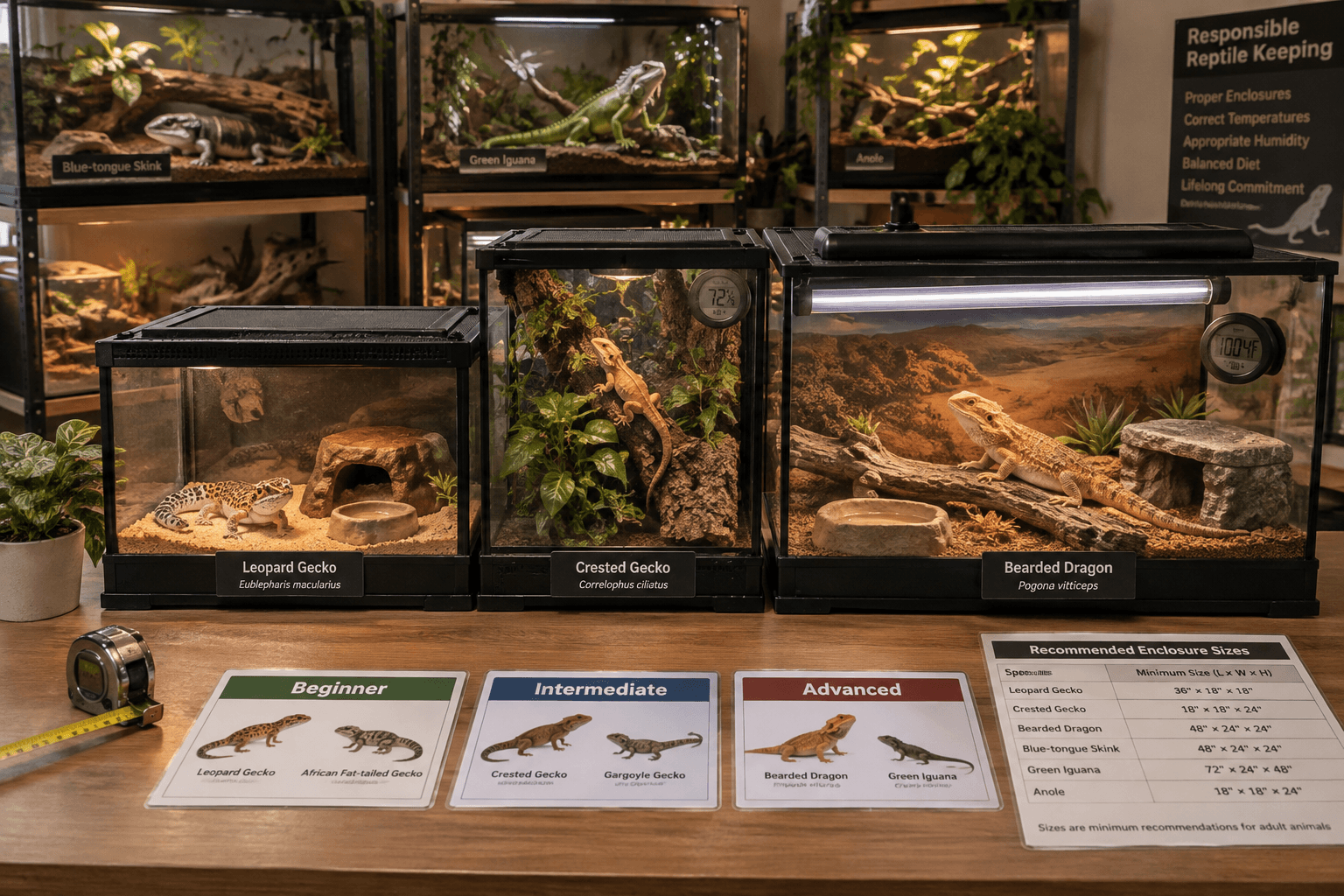
A leopard gecko does fine as an adult in a 20-gallon long tank, and a crested gecko is happy in a tall 18x18x24-inch enclosure since it climbs more than it walks. Anoles are similar — small, quick, comfortable in a 20-gallon vertical setup with some branches.
Medium species that need real square footage
A bearded dragon needs at least a 40-gallon breeder tank as an adult, and honestly, a 4-foot enclosure is better long-term. Blue-tongue skinks run similar, wanting floor space more than height since they’re ground-dwellers with some serious bulk.
The size traps: iguanas and monitors
This is the big warning. A green iguana can hit 5 to 6 feet long including tail, and a common setup ends up being a custom-built room enclosure, not a store-bought tank. Monitor lizards, depending on species, range from manageable to genuinely enormous — a savannah monitor alone often needs an enclosure the size of a large dresser turned on its side. Buying either as a cute 8-inch baby without a size plan is how rescues end up full.
Climate Control by Species: Temperature, Humidity, and UVB
Every lizard species needs a temperature gradient and some UVB exposure, but the exact numbers shift a lot from species to species, and getting this wrong is the second most common beginner mistake after tank size.
Desert species like leopard geckos and bearded dragons want a hot basking spot (95-110°F for beardies) and low humidity, generally under 40%. Tropical species like crested geckos and many chameleons want humidity in the 60-80% range with daily misting, plus a cooler basking area since they didn’t evolve baking in open sun.
UVB isn’t optional for daytime baskers like bearded dragons and iguanas — skip it and you’re looking at metabolic bone disease within months, not years. Chameleons and crested geckos need gentler, indirect lighting setups since intense heat lamps dry out their arboreal enclosures too fast.
Here’s a quick comparison across seven common pet lizard species:
Species
Adult Size
Enclosure Size (min.)
Humidity
UVB Need
Leopard gecko
8-10 in
20-gallon long
30-40%
Low
Crested gecko
6-9 in
18x18x24 in vertical
60-80%
Moderate
Bearded dragon
18-24 in
40-gallon breeder
30-40%
High
Blue-tongue skink
18-24 in
40-gallon+
40-60%
Moderate-High
Green iguana
5-6 ft
Custom room enclosure
60-70%
High
Chameleon (veiled)
14-24 in
Tall screen, 2x2x4 ft
50-70%
High
Green anole
5-8 in
20-gallon vertical
50-70%
Low-Moderate
Matching Species to Your Experience Level
Not every lizard is “beginner-friendly,” and pretending otherwise sets people up to fail in the first six months. The good news: there are genuinely easy species, and picking one first sets you up to level into harder animals later.
Leopard gecko — tolerant of small temperature swings, doesn’t need UVB as urgently as others, calm handling. Great first reptile.
Crested gecko — no UVB drama compared to baskers, simple misting routine, doesn’t bite hard even startled.
Bearded dragon — needs strong UVB and precise basking heat, but forgiving personality and predictable feeding schedule.
Blue-tongue skink — hardy and food-motivated, but needs real floor space and a varied diet plan.
Chameleon — beautiful but genuinely tricky; needs dripping/misting systems, specific branching, and stresses easily from handling.
Green iguana — long lifespan (15-20 years) and a serious size commitment; not a starter pet despite looking approachable as a baby.
Monitor lizard — best left to keepers with prior reptile experience and space for a custom enclosure; strong, smart, and demanding.
If you’re still narrowing things down, species-specific enclosure guides (petterrarium.com has several) are worth reading before you buy anything, because the tank build really does change depending on which of these species you land on.
Frequently Asked Questions
What’s the easiest lizard species for a first-time owner?
Leopard geckos and crested geckos are the two most beginner-friendly choices. Both tolerate small husbandry mistakes better than bearded dragons or chameleons, and neither needs a huge enclosure to start.
Do all lizards need a UVB light?
No, but most do. Desert and basking species like bearded dragons and iguanas need strong UVB daily, while some nocturnal species like leopard geckos need much less, though a low-level UVB bulb is still recommended by most keepers today.
How big will my lizard actually get as an adult?
It depends entirely on species: leopard geckos top out around 8-10 inches, while green iguanas can reach 5-6 feet and monitors vary widely by type. Always research adult size before buying a juvenile.