You’re standing at the fish store, staring at a tank full of lush green plants, wondering which ones will actually survive in your setup at home. Choosing the right aquarium plants for fish tank success isn’t about grabbing whatever looks prettiest — it’s about matching plants to your specific light, substrate, and fish. Get that match right, and your tank almost runs itself.
Live plants do real work. They absorb nitrates, produce oxygen, and give your fish places to hide and feel safe. The difference between a thriving planted tank and a tank full of dying stems usually comes down to one bad match between plant needs and what your tank can actually offer.
Live Aquarium Plants Do More Than Look Good
Live plants pull nitrogen compounds out of the water, shade out algae, and give fish a sense of security that plastic decorations just can’t replicate. A well-planted tank can visibly reduce algae growth within two to three weeks of adding fast-growing species. That’s a real, measurable change.
Biofilm builds up on plant leaves and becomes a food source for small fish and shrimp. Fry and small species like ember tetras use dense plant cover to hide from larger tankmates. Plants also buffer sudden swings in water chemistry by consuming nutrients before they spike.
The benefits stack up fast. And the good news is you don’t need a high-tech setup to get them.
Match Plants to Your Tank, Not to a “Best” List
The single biggest mistake beginners make is buying plants off a “best” list without checking if those plants fit their tank. A plant that thrives under a strong LED in a 55-gallon setup will melt away under the stock light that came with a 10-gallon starter kit. Start with your tank’s conditions, then find plants that fit those conditions. Not the other way around.
Here’s a quick reference to help you match common aquarium plants for fish tank setups to real-world conditions:
Plant
Light Need
Substrate
CO2 Required
Tank Size
Anubias barteri
Low
Attach to hardscape
No
5 gal+
Microsorum pteropus (Java fern)
Low–Medium
Attach to hardscape
No
10 gal+
Echinodorus bleheri (Amazon sword)
Medium
Nutrient-rich substrate
No
20 gal+
Vallisneria spiralis
Medium
Sand or fine gravel
No
15 gal+
Hornwort (Ceratophyllum demersum)
Low–Medium
Floating or loose
No
10 gal+
Lemna minor (Duckweed)
Low–High
Floating
No
Any
Light Level Is Your First Filter
Before you buy a single plant, figure out how many hours and what intensity your tank light runs. Most stock aquarium lights run at roughly 10–20 lumens per liter, enough for low-light plants like Anubias and Java fern, but not enough for demanding species like Rotala or most stem plants. If you’re running a basic hood light on a timer set to 8 hours a day, stick to low-light plants and you’ll have far fewer problems.
Upgrading to a mid-range LED like the Fluval Plant 3.0 or the Finnex Planted+ opens up medium-light options. Those lights run around $50–$100 and make a real difference for rooted plants like Amazon sword.
Substrate and Placement Decide What Survives
Never bury the rhizome of an Anubias or Java fern in the substrate. That’s the thick horizontal stem the leaves grow from, and covering it causes rot within a week or two. These plants anchor to rocks or driftwood with their roots, not their rhizome. Tie them down with thread or fishing line until the roots grip on their own.
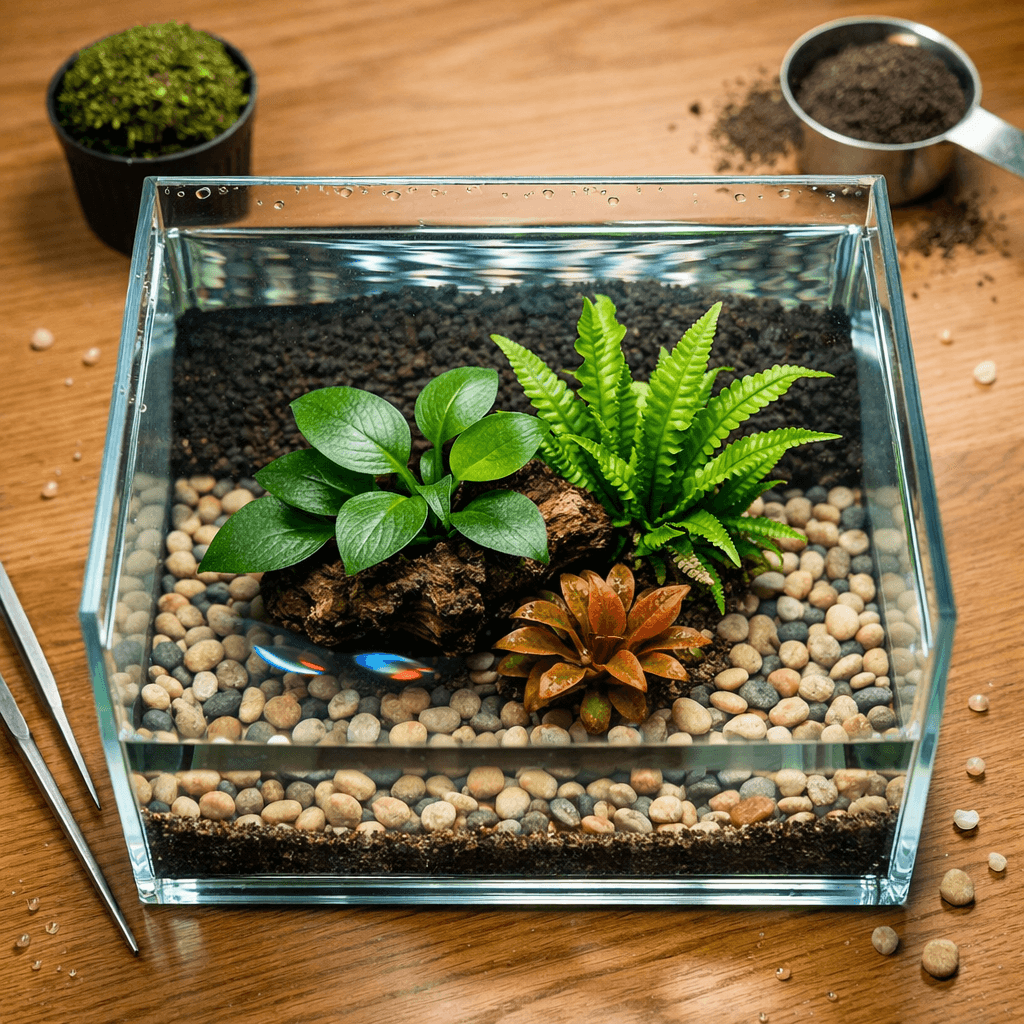
Rooted plants like Amazon sword need a nutrient-rich substrate to do well. Plain gravel works as a base, but you’ll want to add root tabs (small fertilizer capsules pushed into the gravel near the roots) every 4 to 6 weeks. Brands like Seachem Flourish Tabs cost around $10 for a pack of 10 and cover a 20-gallon tank for several months.
Beginner-Friendly Plants That Actually Thrive in Low-Tech Tanks
Low-tech means no CO2 injection, no high-powered lighting, and no specialized substrate. Just a basic filter, a standard light, and fish. Plenty of plants do great in those conditions. The key is picking species that evolved in slow, nutrient-rich water rather than fast-moving, clear streams.
Rhizome Plants: Java Fern and Anubias
Microsorum pteropus, or Java fern, is one of the most forgiving aquarium plants you can buy. It grows slowly (expect maybe one new leaf every two to three weeks) but handles low light, hard water, and temperature swings between 68°F and 82°F without complaint. Attach it to a piece of driftwood with black thread and leave it alone.
Anubias barteri is even slower but nearly indestructible. It’s a good choice for tanks with cichlids or goldfish that tend to uproot things, since it anchors to hardscape rather than sitting in the substrate. One drawback: its slow growth makes it more prone to algae growing on the leaves, especially if your light runs longer than 8 hours a day.
Rooted Plants: Amazon Sword and Vallisneria
**Amazon sword (Echinodorus bleheri) is a centerpiece plant** that can reach 20 inches tall in a 30-gallon tank. It needs medium light and root tabs to really perform. Without fertilizer, it’ll survive but the older leaves will yellow and die back faster than new ones grow in.
Vallisneria spiralis is a tall, grass-like plant that spreads by sending out runners along the substrate. It fills background space fast, sometimes too fast, and works well in hard, alkaline water where other plants struggle. It does not do well in soft, acidic water, so check your pH before buying.
Floating Plants: Hornwort, Duckweed, and Frogbit
Floating plants are the easiest entry point into live plants. Hornwort (Ceratophyllum demersum) can float at the surface or be loosely anchored near the bottom. It absorbs nitrates quickly and provides cover for fry. The downside is that it sheds fine needles as it grows, which can clog filter intakes if you’re not trimming it back weekly.
Lemna minor (duckweed) is free at most fish stores because it spreads so fast. A small handful doubles in a few days under decent light. It’s excellent for nutrient export but can cover the entire surface and block light to plants below if you don’t skim some off regularly. Limnobium laevigatum (frogbit) is a better-behaved alternative with larger leaves and slower spread, making it easier to manage in smaller tanks.
Do Live Plants Really Improve Water Quality?
Yes, live aquarium plants for fish tank setups genuinely improve water quality, and the effect is measurable. Plants absorb nitrate (NO3), the end product of the nitrogen cycle, directly through their leaves and roots. In a heavily planted tank, nitrate levels can stay low enough that water changes stretch from weekly to every two weeks without the numbers climbing into dangerous territory.
Nitrate Absorption and Oxygen Production
Fast-growing plants like hornwort and vallisneria absorb nitrates far more efficiently than slow growers like Anubias. That’s because nutrient uptake scales with growth rate. A hornwort stem growing an inch per day is pulling a lot more nitrogen out of the water than an Anubias leaf that takes three weeks to fully unfurl.
Plants also release oxygen during photosynthesis, which raises dissolved oxygen levels during the day. This matters most in warmer tanks. Water holds less oxygen above 78°F, so any extra oxygen production helps your fish breathe easier.
How Plants Outcompete Algae
Algae and plants compete for the same resources: light, CO2, and dissolved nutrients. When plants are growing well, they consume nutrients fast enough that algae can’t get a foothold. This is why a sparse, struggling plant won’t help much with algae, but a tank with healthy, actively growing plants tends to stay cleaner.
The key word is “actively growing.” A plant sitting in the wrong light or starved of nutrients isn’t consuming much of anything. Match your plants to your conditions first, and the algae control follows naturally as a side effect of healthy plant growth.
Planting Aquarium Plants in Gravel or Sand Without Killing Them
Getting plants into gravel or sand without stressing them takes a few specific steps. Rushing this part is how you end up with floating plants and disturbed substrate for days.
Rinse new plants under dechlorinated water before adding them to the tank. This removes any snail eggs or hitchhiker algae from the nursery.
Trim any dead or yellowing roots with clean scissors before planting; dead root tissue rots and clouds the water.
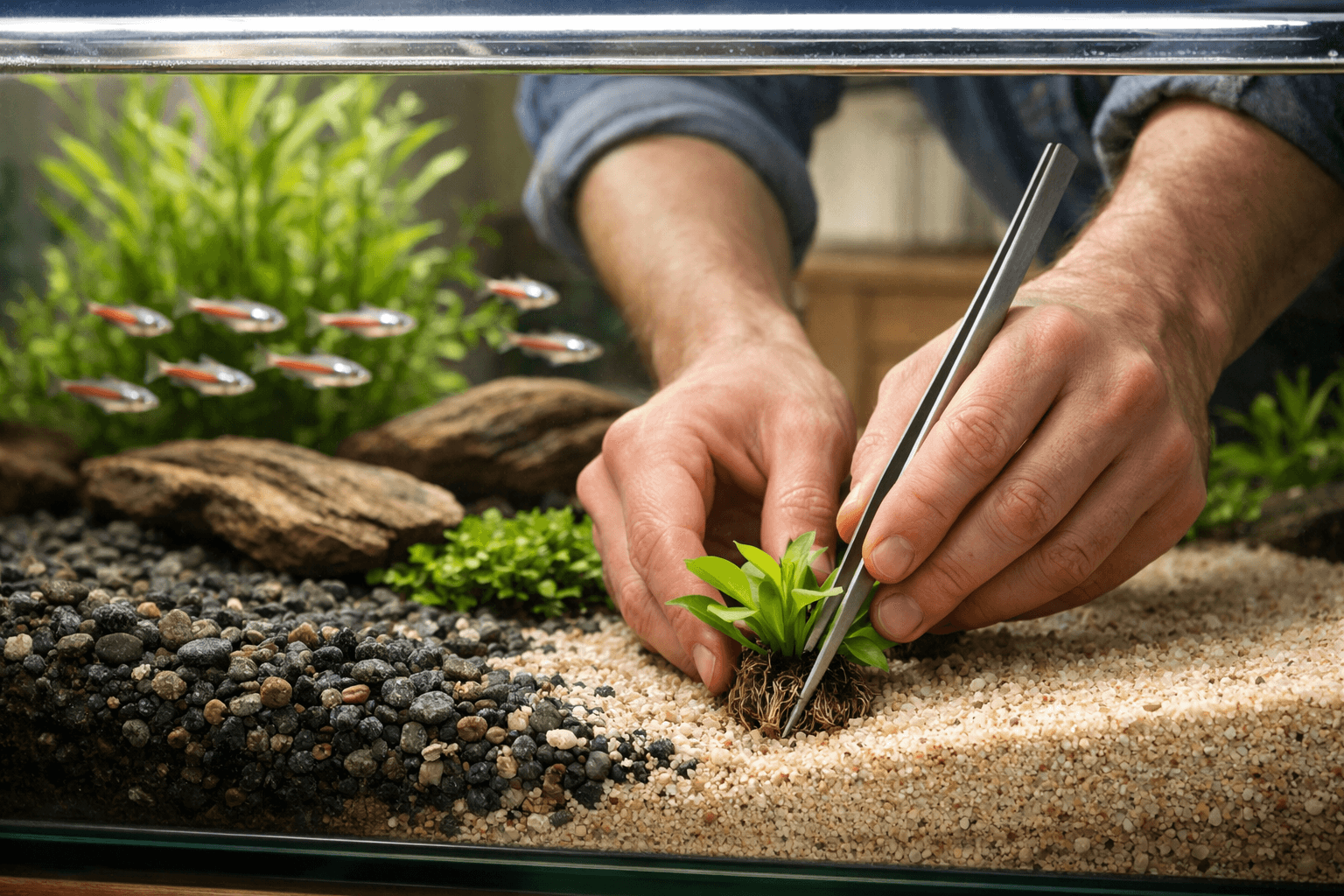
Use long aquascaping tweezers (a 12-inch pair costs around $8 on Amazon) to push roots straight down into the substrate without disturbing the surrounding gravel.
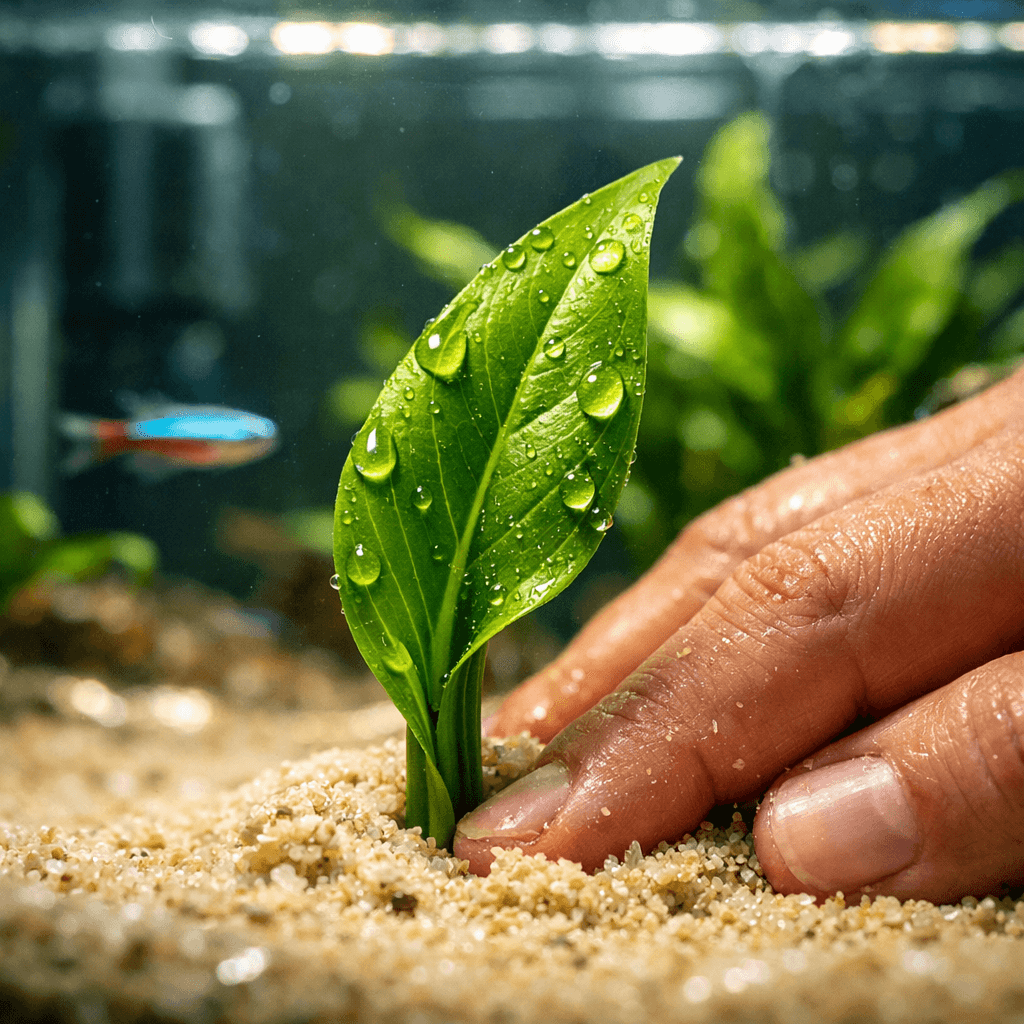
Angle the plant slightly and push the roots in deeper than you think you need. At least 1.5 to 2 inches deep, so the crown sits just above the substrate surface.
For sand specifically, pack a small ring of gravel around the base of new plants for the first week. Sand is too light to hold stems before roots establish.
Add root tabs within 2 inches of each rooted plant at planting time, not weeks later when deficiency symptoms appear.
Never bury the crown (the point where roots meet stem), or the plant will rot from the base up within a week or two.
CO2 and Fertilizers: What You Actually Need vs. What Gets Oversold
Skip the CO2 system for now. A pressurized CO2 injection setup costs $150 or more to start, and it’s genuinely unnecessary for low-light plants like Java fern, Anubias, hornwort, or vallisneria. Those species pull enough dissolved CO2 from the water naturally, especially in a tank with fish producing it as a waste gas.
What you do need is a basic liquid fertilizer. Seachem Flourish Comprehensive runs about $10 for 250ml and covers micronutrients that fish waste doesn’t supply — things like iron, manganese, and potassium. Dose once or twice a week at the recommended amount on the label.
For rooted plants like Amazon sword, liquid fertilizer alone isn’t enough. Root tabs placed near the roots every 4 to 6 weeks make a bigger difference than any amount of liquid dosing, because swords feed heavily through their roots, not the water column.
The products that get oversold are CO2 liquid supplements like Seachem Excel. They have a mild algaecide effect and provide a small carbon boost, but they’re not a substitute for real CO2 and can harm certain mosses at higher doses. Use them sparingly if at all.
Fish and Plant Compatibility: Not Every Species Plays Nice
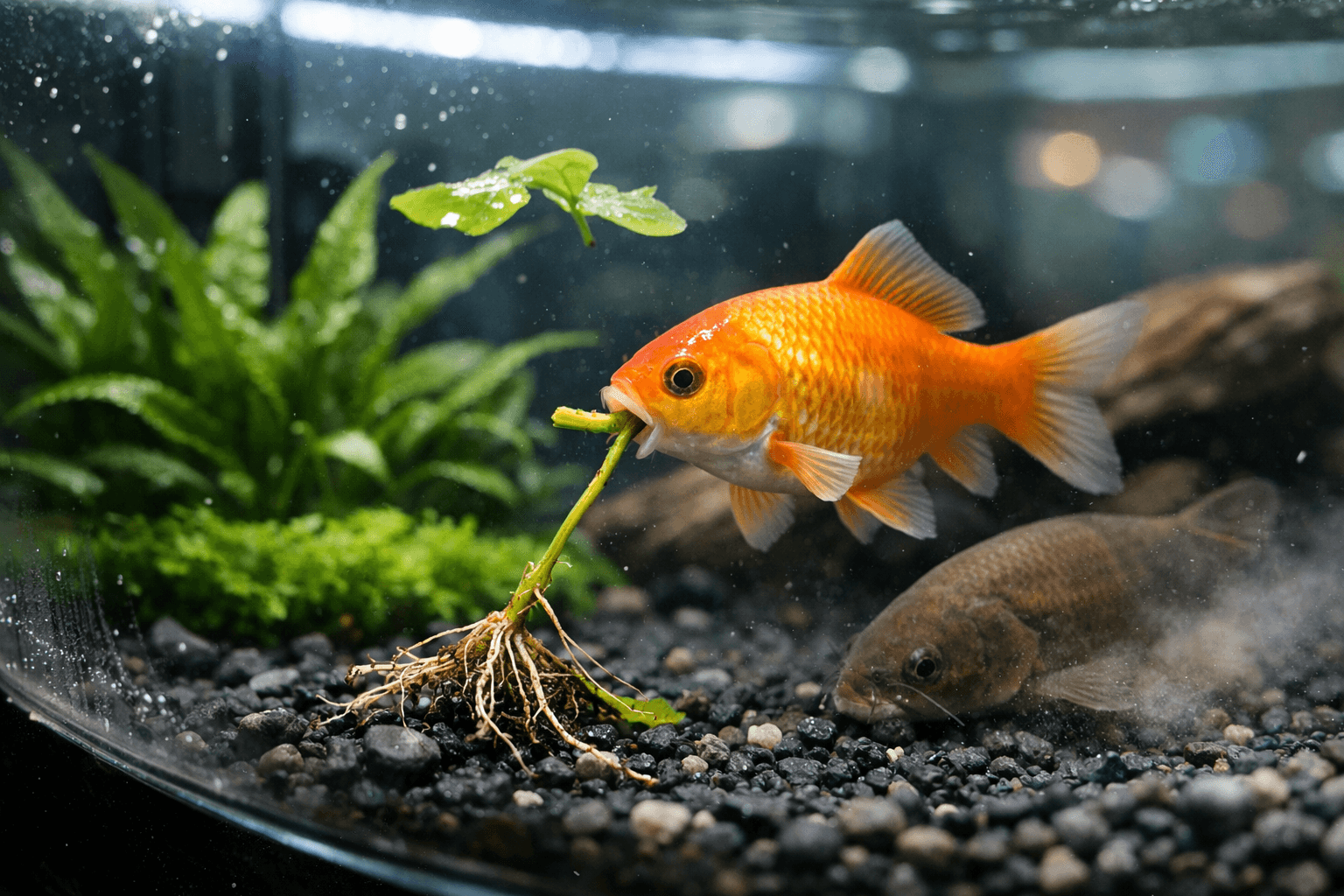
Some fish will destroy your plants no matter how well you grow them. **Goldfish, large cichlids like oscars, and Buenos Aires tetras (Hyphessobrycon anisitsi) are notorious plant eaters.** They’ll shred or uproot most species within days. If you keep any of these, stick to tough rhizome plants like Anubias tied to rocks, or skip live plants entirely in that tank.
Plecos are a mixed bag. Small species like bristlenose plecos (Ancistrus cirrhosus) are generally fine, but larger common plecos will rasp on broad-leafed plants like Amazon sword and leave them riddled with holes.
Cichlids that dig, including many Geophagus species, will uproot any rooted plant repeatedly, even if they’re not eating it. The fix is to anchor plants to hardscape or use heavy gravel that’s harder to shift.
Bettas, tetras, rasboras, corydoras, and most livebearers leave plants completely alone. Those fish and aquarium plants for fish tank setups are a natural pairing. If you’re building a planted tank from scratch, choosing fish from that group makes the whole project easier from day one.
Frequently Asked Questions
Can I use aquarium plants for fish tank setups without any special lighting?
Yes, but your plant choices narrow significantly. Java fern and Anubias grow under standard LED strip lights — even cheap ones that come with budget tanks. Avoid plants labeled “medium” or “high light” if you’re not upgrading your fixture.
How long does it take for new plants to start growing after planting?
Expect a 1 to 3 week adjustment period called transplant shock, where plants look rough and may drop some leaves. This is normal. As long as roots are intact and the crown isn’t buried, most plants recover and begin putting out new growth within two to four weeks.
Do live plants need to be removed during fish medication treatments?
Most copper-based medications will kill live plants, so yes — remove them or move your fish to a hospital tank for treatment. Medications like API Melafix are generally plant-safe, but always read the label before dosing a planted tank.
Will live plants survive in a tank with no fish yet?
They will, but they’ll grow slower without fish waste supplying nitrogen. Add a small amount of liquid fertilizer like Seachem Flourish weekly to keep plants fed during a fishless cycle. Petterrarium.com has additional guides on cycling planted tanks if you’re building a habitat from the ground up.