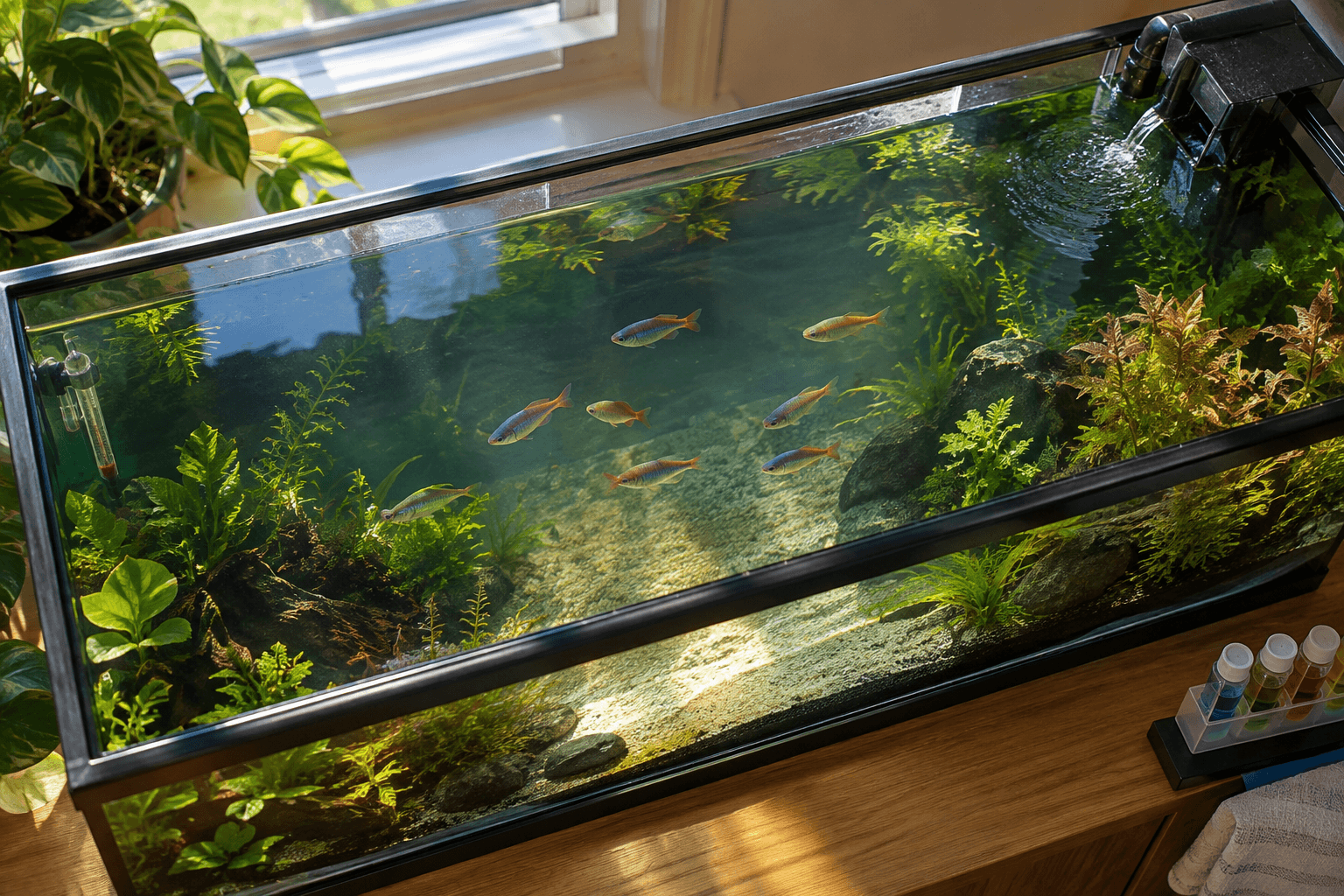
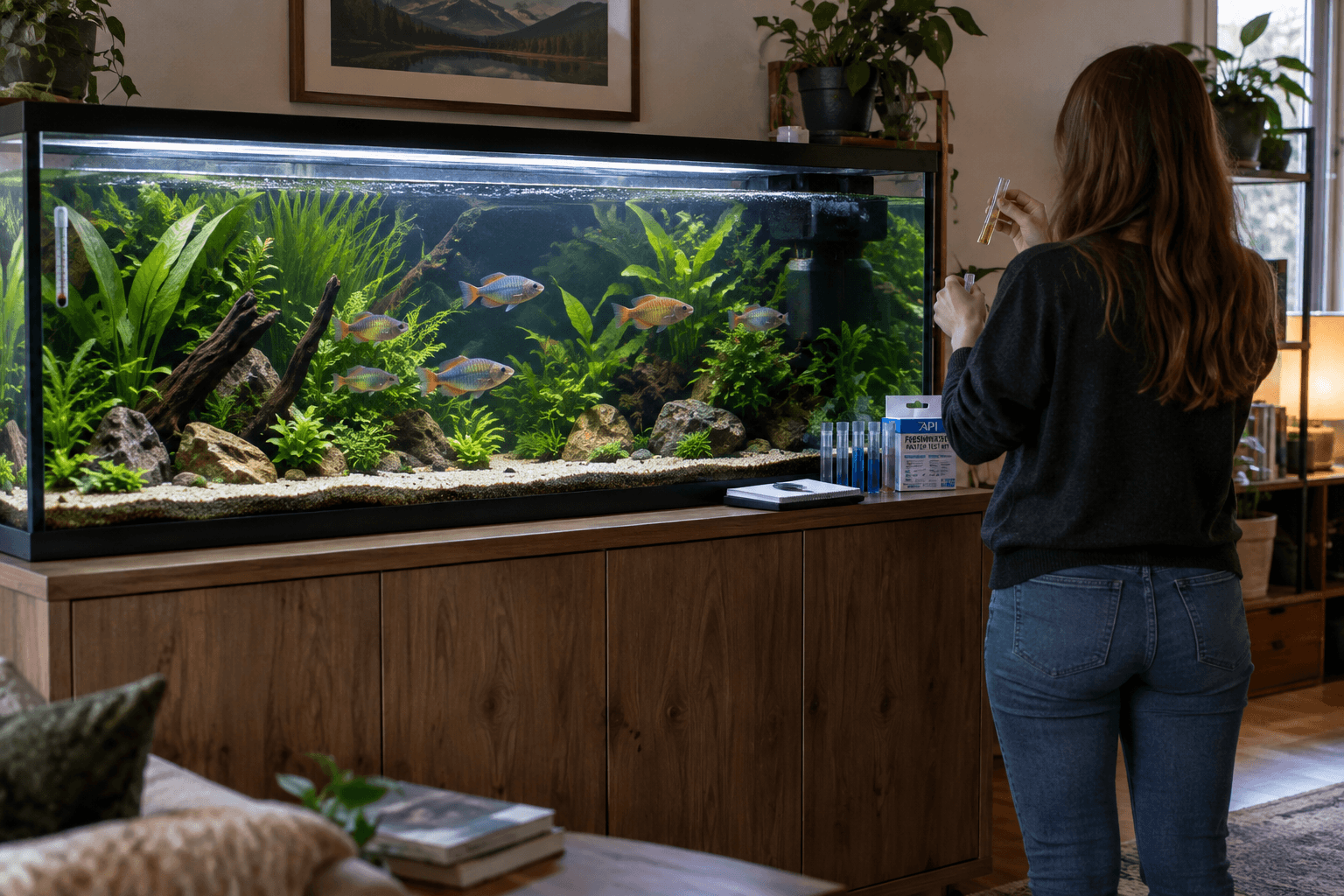
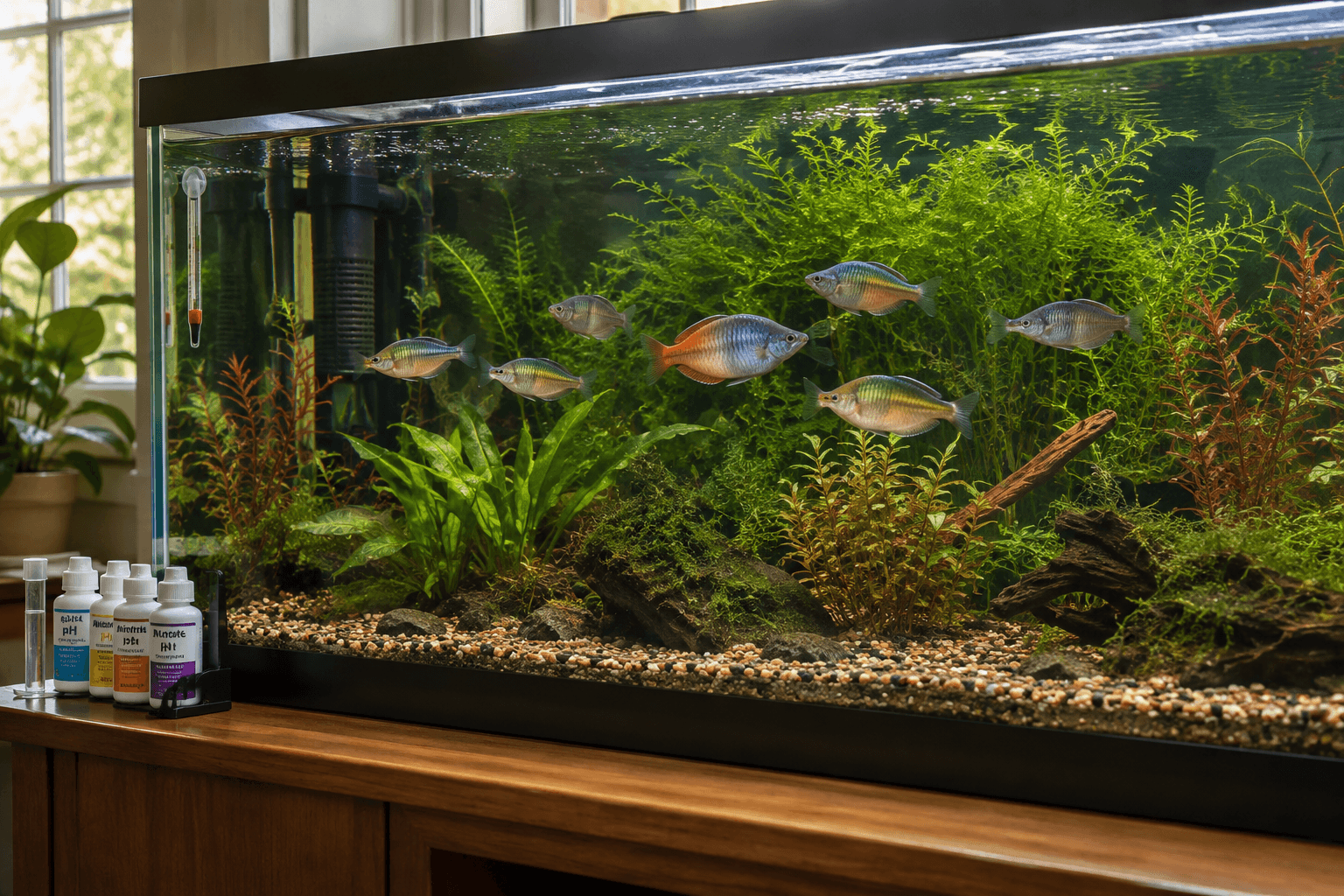
Rainbow fish don’t turn that electric blue-and-orange color just because they’re alive in a tank. That color show is a direct response to shoal size, light, and stress levels, which means most “just keep it alive” fishkeeping advice sells this species short. Get the habitat right and you’ll see color that looks almost painted on; get it wrong and you’ll have a tank of gray, jumpy fish that never show their real selves.
Tank Size: Why 20 Gallons Is the Real Starting Point
A single rainbow fish, or even a pair, will never look right. This species needs a shoal of six or more to feel safe enough to relax and color up, so plan your tank size around the group, not the individual.
Minimum Footprint
For six Boesemani or similar rainbows, I’d start at a 20-gallon long tank, and honestly 29 gallons gives you a lot more breathing room. Longer, lower tanks beat tall ones here because rainbow fish are active mid-water swimmers that need horizontal space to cruise.
Growing Into Bigger Species
Some popular species get bigger than beginners expect. Boesemani rainbows reach about 4 inches, but Australian red rainbows can push past 5 inches and want a 40-gallon tank once they’re grown. Buying a tank sized for juveniles is one of the most common mistakes I see, and it’s an easy one to avoid if you plan for adult size on day one.
Water Parameters That Actually Support Color
Rainbow fish do best in water that’s stable, slightly alkaline, and warm but not hot. Aim for 74-78°F, pH between 7.0 and 8.0, and moderately hard water, and keep those numbers steady rather than swinging.
Here’s a quick reference for the most common species you’ll find at a local fish store:
Species
Temp Range
pH
Adult Size
Boesemani Rainbow
75-80°F
7.0-8.0
4 in
Dwarf Neon Rainbow
72-78°F
6.5-7.5
2.5 in
Australian Red Rainbow
68-77°F
7.0-8.0
5.5 in
Turquoise Rainbow
74-79°F
7.0-8.5
4 in
Skipping regular testing is the biggest trap here. These fish are often sold as “hardy community fish,” which they can be once established, but new tanks or ammonia spikes will stress them fast and you’ll see it in dulled color before you see anything else. A basic liquid test kit and a thermometer are worth the $15-25 they cost.
Filtration, Flow, and Planting for a Low-Stress Setup
Rainbow fish like moving water and clean, oxygen-rich conditions, since in the wild many species come from rivers and flowing streams in New Guinea and Australia. A canister or hang-on-back filter rated for at least double your tank volume, paired with a powerhead for extra current, gives them the flow they want.
Dense planting matters more than people think. Java fern, Amazon sword, and anubias give the shoal cover to retreat into, which lowers stress and, again, that lower stress shows up directly as brighter color. A dark substrate (fine gravel or sand) also makes their colors pop by contrast, the same trick aquascapers use with tetras.
Don’t skip a decent light. A full-spectrum LED aquarium light set to 6-8 hours a day brings out the blue and red pigments far better than a dim or blue-only bulb ever will. This is one of the cheapest upgrades ($30-60 for a mid-range LED strip) that makes the biggest visible difference in a rainbow fish tank.
Feeding, Water Changes, and Breeding Conditions
A varied diet is what turns “surviving” into “vivid.” Feed a quality flake or small pellet as the base, then add frozen brine shrimp, daphnia, or bloodworms two to three times a week, since the carotenoid pigments in those foods feed directly into color development.
A Realistic Weekly Routine
Feed small amounts twice daily, only what they clear in two minutes.
Test water weekly for ammonia, nitrite, and nitrate until the tank is fully established.
Change 20-25% of the water weekly, matching temperature closely.
Treat new water with a dechlorinator before adding it.
Vacuum substrate lightly during each water change to pull out uneaten food.
Check filter flow and clean media monthly, never all at once.
Watch color and behavior daily; dulling is often the first sign something’s off.
Water Conditioning Products Worth Using
Tap water almost always needs treatment before it touches a rainbow fish tank. A basic dechlorinator like Seachem Prime handles chlorine and ammonia in one dose, and if your local water runs hard or soft outside their preferred range, a buffering product can nudge pH gently rather than all at once, since sudden swings stress fish more than a slightly “wrong” but stable number. Petterrarium.com has broader water-conditioning breakdowns if you’re setting up multiple tank types and want one system that works across species.
Breeding Without a Dedicated Setup
Rainbow fish will spawn in a well-planted community tank without much fuss, scattering eggs among fine-leaved plants or a yarn mop over several days. If you want to raise fry, move a breeding pair into a separate 10-gallon with a mop or spawning mat, keep temps around 78°F, and expect eggs to hatch in roughly 7-10 days.
Frequently Asked Questions
How many rainbow fish should I keep together?
Keep at least six, and eight or more is even better if your tank size allows it. Groups smaller than that tend to hide, stress out, and lose the bright color that makes this fish worth keeping in the first place.
Are rainbow fish hard to keep for beginners?
They’re manageable but not beginner-hardy in the way tank-bred bettas or platies are. Stable temperature (74-78°F), regular testing, and a real shoal size are all non-negotiable, so skip them if you’re not ready to monitor water weekly.
Why do my rainbow fish look pale instead of colorful?
Pale color usually points to stress, poor lighting, too small a shoal, or a diet missing color-boosting foods like brine shrimp. Check group size and light spectrum first since those two factors move color the fastest.