A childrens python is not the tiny, couch-potato beginner snake most people picture. Named after naturalist John George Children, not because it makes a good “kids’ pet snake,” this species from northern Australia grows faster, climbs more, and stays busier than the ball python it’s constantly compared to. If you want a snake that actually does things in its tank, this is the one to look at.
That activity level is exactly why some new owners feel blindsided a few months in. A hatchling that fit in a shoebox setup can hit 4 to 5 feet as an adult, and it’ll want branches, not just a hide box. Get ahead of that now, and this species turns into one of the easiest, most rewarding snakes you’ll ever keep.
What Exactly Is a Childrens Python?
Antaresia childreni is a small-to-medium python from Australia, usually reaching 3 to 5 feet at full size, with a lifespan of 20 to 30 years in captivity. It’s part of the Antaresia group, the smallest pythons on earth, and it’s often shelved right next to ball pythons in pet stores as “another easy beginner snake.”
That comparison undersells them. Ball pythons are famous for sitting still in a hide for days. Childrens pythons, especially as juveniles, are climbers that patrol their enclosure, explore branches, and show up at the glass when you walk by. Expect more personality, not less effort.
The naming mix-up trips up a lot of new buyers. People assume “childrens python” means a snake bred to be handled by kids, when it’s really an homage to a 19th-century zoologist. Worth knowing before you tell your kid this is “their” snake, since it still needs adult-level supervision and handling skill.
Enclosure Setup: Why Juveniles Need Room to Climb, Not Just Room to Hide
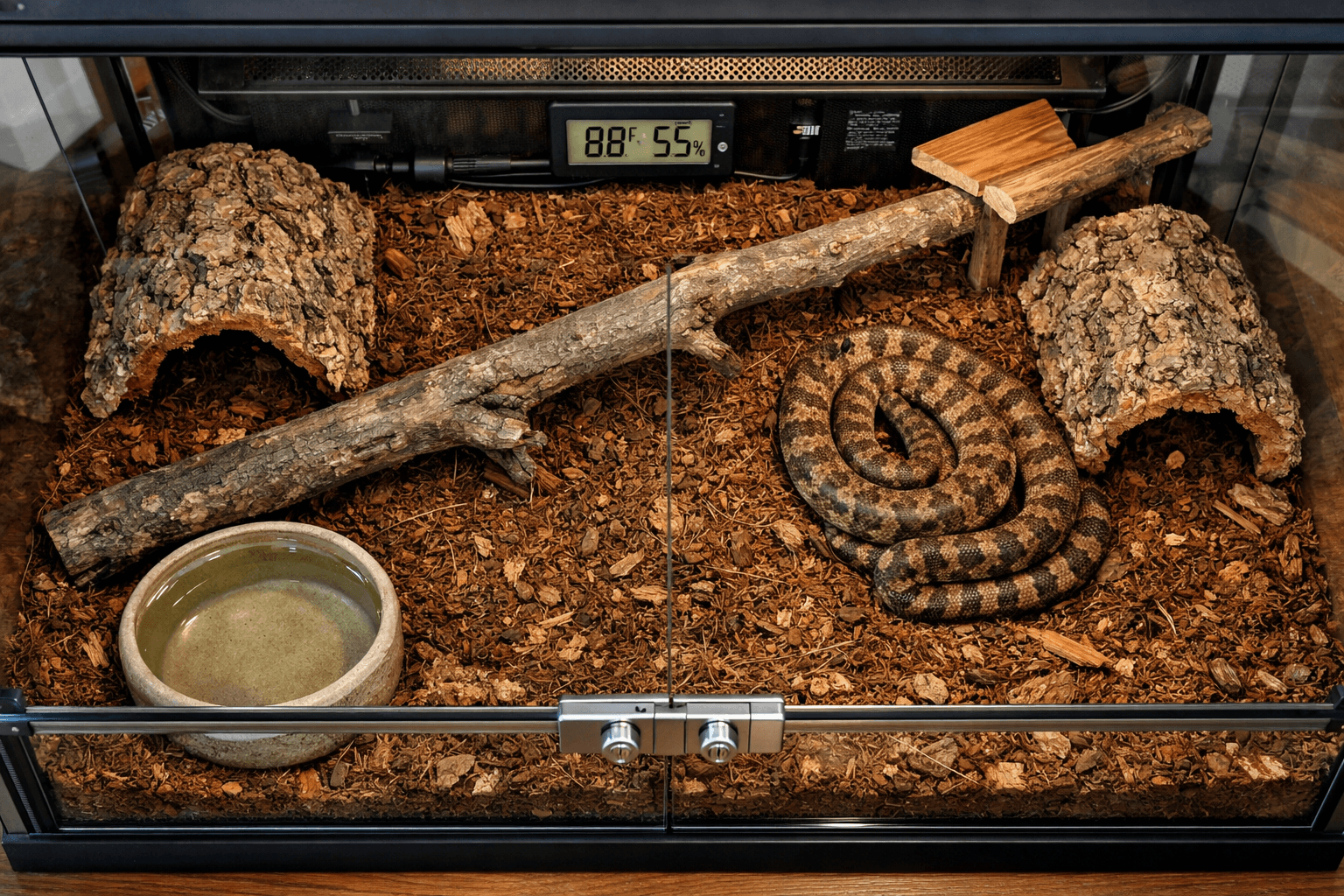
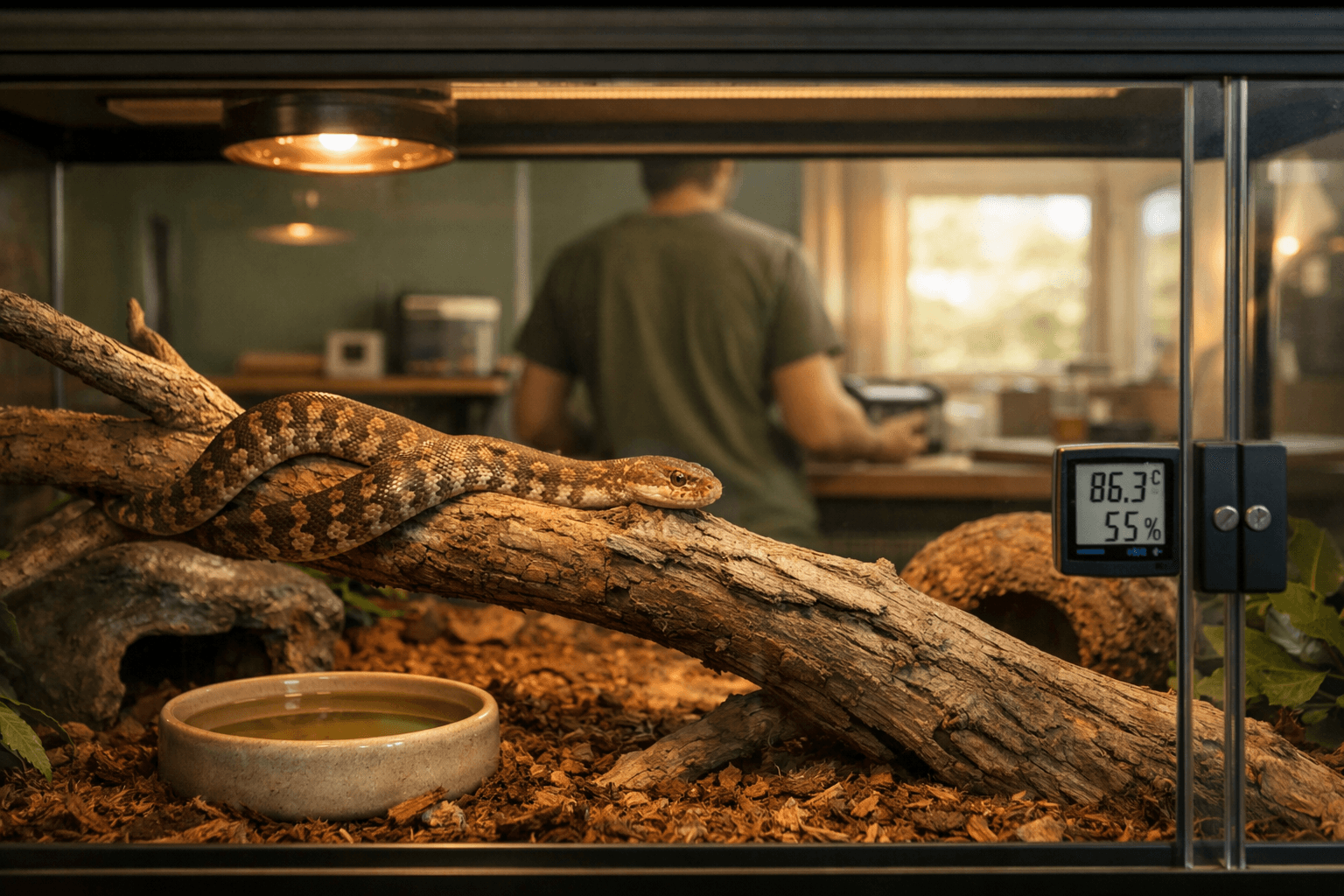
A childrens python does best with vertical space from day one, since it’s a climbing species even as a baby. Skip the shoebox-only approach that works for ball python hatchlings, and add branches early instead of waiting until the snake outgrows a bare tub.
Sizing It Right by Age
A hatchling can start in a 10 to 20-gallon enclosure with secure branches and two hides. By 12 to 18 months, most owners are upgrading to a 40-gallon breeder or a 3-foot wide enclosure, and adults do well in a 4-foot enclosure with real height for climbing. Because growth moves faster than people expect, I’d plan the upgrade budget in year one rather than treating the started tank as permanent.
Substrate and Furniture
Coconut fiber, cypress mulch, or a coco-soil blend all hold humidity well and support light burrowing. Add cork bark rounds, grapevine, or manzanita branches angled diagonally across the tank so the snake can actually use the vertical space you’re giving it. A water bowl big enough to soak in matters too, especially around shedding time.
Heat, Humidity, and Lighting: The Numbers That Actually Matter
Get the temperature gradient right and most other problems solve themselves. Run a warm side of 88 to 92°F, a cool side around 75 to 78°F, and nighttime lows no colder than 70°F, using an under-tank heater or radiant heat panel controlled by a thermostat.
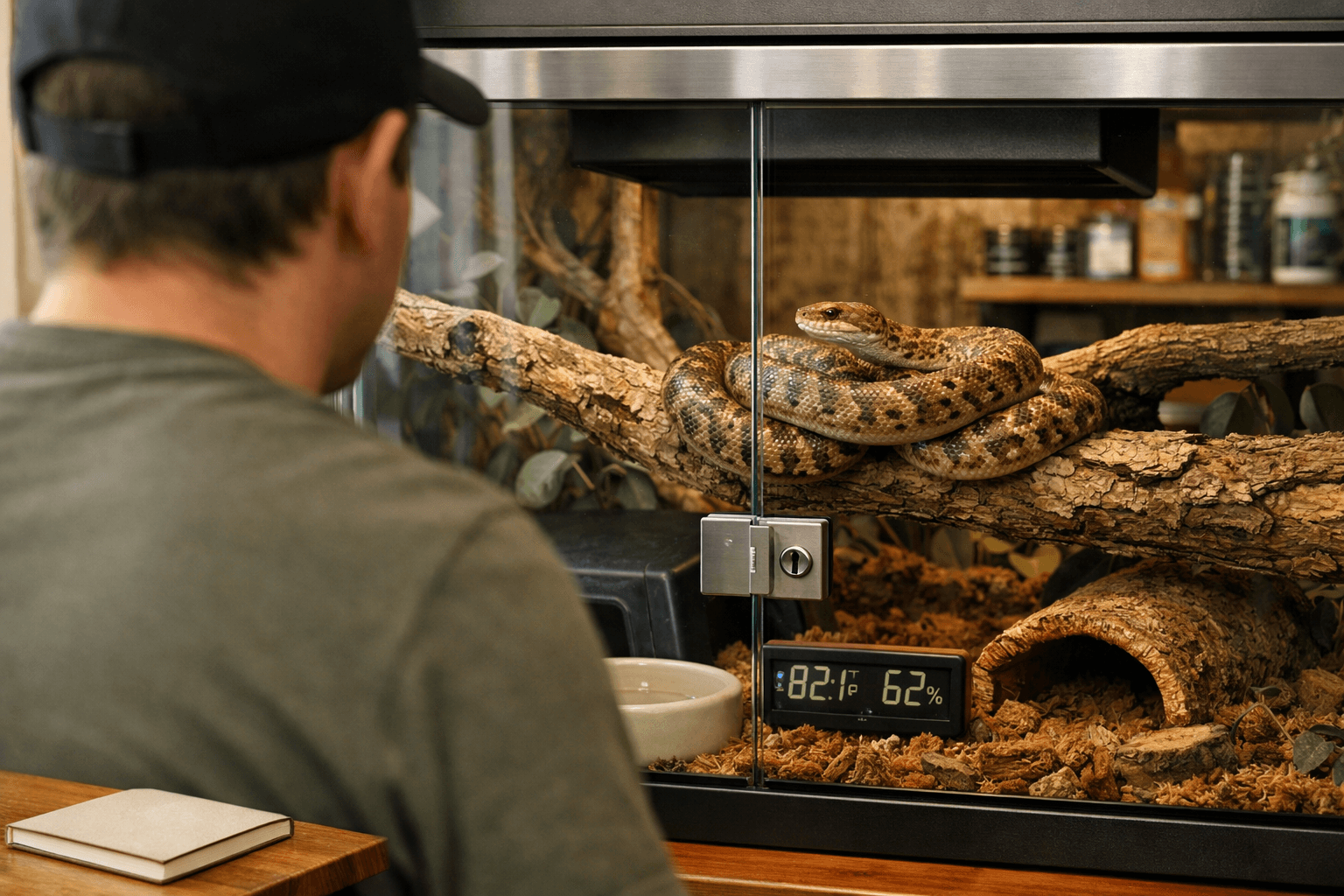
Humidity is where beginners lose the most sheds. Keep ambient humidity around 50 to 60%, bumping it to 70% during shedding by misting or adding a humid hide with damp sphagnum moss. A snake that consistently sheds in pieces instead of one clean piece is telling you the humidity’s been running too low, and it’s a fixable problem, not a sign something’s fundamentally wrong.
Full-spectrum lighting isn’t required for this nocturnal-leaning species, but a low-output UVB bulb on a 12-hour cycle supports appetite and activity for a lot of keepers. A basic thermostat, like a proportional or pulse-proportional model, is worth the $30 to $50 it costs, since a rogue heat source without one can cook a snake overnight.
Life Stage
Enclosure Size
Warm Side Temp
Feeding Frequency
Hatchling (0-6 mo)
10-20 gallon
88-90°F
Every 5-7 days
Juvenile (6-18 mo)
40-gallon breeder
88-92°F
Every 7-10 days
Adult (2+ yrs)
4-foot enclosure
88-92°F
Every 10-14 days
Feeding, Handling, and Growth: Setting Realistic Expectations
Feed appropriately sized frozen-thawed mice or rats, roughly the width of the snake’s widest point, and resist the urge to feed bigger prey just to speed up growth. Oversized meals cause regurgitation, and it sets feeding response back for weeks when it happens.
A Feeding Routine That Works
Thaw prey fully in warm water, never in a microwave.
Offer it with tongs after lights-out or during dim evening hours, since this species feeds more actively at dusk.
Leave the snake undisturbed in its enclosure for 48 hours after eating.
Skip a meal if the snake looks like it’s in pre-shed (cloudy eyes, dull skin).
Adjust prey size up only once the current size is a comfortable, not oversized, ratio to body width.
Keep a simple feeding log so you can catch appetite changes early.
Handling a childrens python is genuinely fun once you get past the first jumpy weeks. Juveniles can be quick and a little bitey out of nervousness, but that settles down fast with short, calm sessions two or three times a week. This is a far more interactive snake than a ball python, and that’s a selling point, not a downside, as long as you’re prepared for a snake that wants to explore your arms and shoulders instead of freezing in a ball.
Buying a Healthy Snake and Watching for Trouble
A healthy childrens python has clear eyes, rounded body condition, no retained shed around the tail or eye caps, and a firm feeding response. Buy from a reputable breeder or a specialty reptile shop rather than a big-box store bin, and ask to see the animal eat if possible.
Respiratory infections show up as wheezing, bubbling at the nostrils, or open-mouth breathing, usually tied to temperatures running too cold or an enclosure that’s too damp without airflow. Mites look like tiny moving dots near the eyes and chin, and they’re treatable but need the whole enclosure cleaned out, not just the snake. If you’re building your first setup and want more detail on drainage, ventilation, and substrate depth, petterrarium.com has enclosure build guides that pair well with the numbers above.
Common mistakes stack up fast for first-timers: assuming a hatchling stays hatchling-sized, keeping humidity too low, overfeeding to “bulk up” a young snake, and housing a baby in an adult-sized tank where it can’t find food or feel secure. Each one is avoidable once you know to watch for it, and none of them are hard to fix if you catch them early.
Frequently Asked Questions
Do childrens pythons make good pets for actual children?
They can, but only with an adult handling feeding and enclosure maintenance, since juveniles move fast and can nip out of nervousness. Older kids under supervision usually do fine with calm, short handling sessions.
How big of a tank does an adult childrens python need?
Plan for a 4-foot-long enclosure with real vertical climbing space, not just floor area. A 40-gallon breeder works during the juvenile stage, but adults need the extra room to stretch out and climb comfortably.
Why does my childrens python have trouble shedding?
Low humidity is almost always the cause. Keep ambient humidity at 50-60%, raise it to around 70% during shedding with a humid hide, and incomplete sheds should stop within a cycle or two.