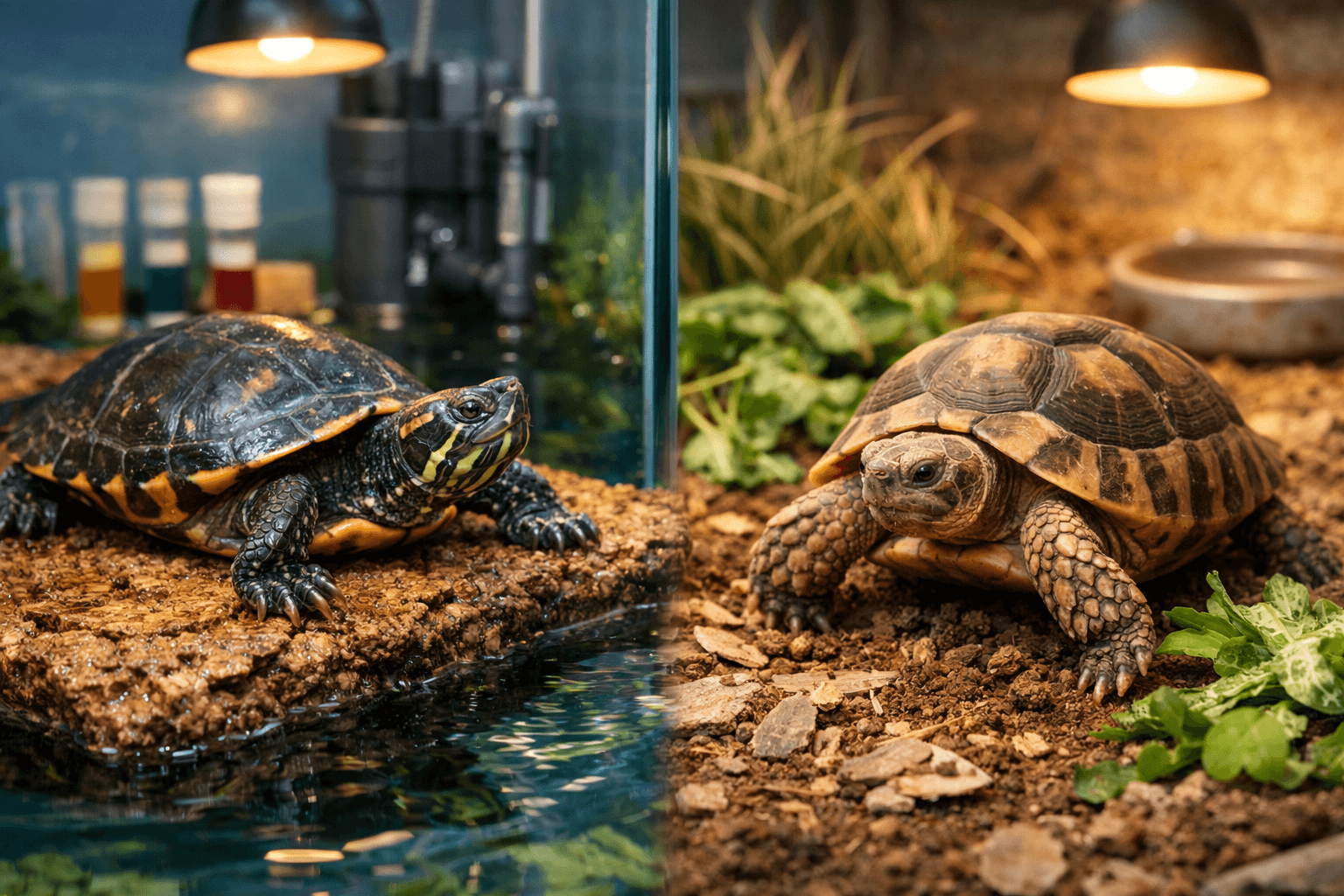
A turtle spends its life half-submerged in water you have to filter and test forever. A tortoise walks around on dry land and needs a small yard more than a tank. That’s the real turtle vs tortoise split, and it’s less about the animal and more about which chore you’d rather do for the next 20 to 50 years.
If you’re picturing one cute shelled pet and trying to decide, the honest answer depends on whether you like tank maintenance or dirt-and-plants terrarium work. Both are great pets. Neither is “easier,” just different.
What’s Actually Different: Turtle vs Tortoise Biology
Turtles and tortoises aren’t the same animal wearing different outfits. A turtle is built for water, with webbed or flippered feet, a flatter, lighter shell, and a diet that leans toward fish, worms, and aquatic plants. A tortoise is built for dry land, with stumpy clawed feet, a heavy domed shell, and a diet that’s mostly grasses, weeds, and leafy greens.
Shell and Body Differences That Matter for Care
A tortoise’s shell is thick and heavy because it doesn’t need buoyancy help. A turtle’s shell is flatter and lighter so it can glide through water without much drag. This isn’t trivia, it changes what kind of enclosure floor and climbing structures each animal can safely handle.
Where Terrapins Fit In
People throw around “terrapin” like it’s a third category, but it’s really a subset. In the US, the term usually points to species like the diamondback terrapin, which lives in brackish coastal water, part salt, part fresh. Functionally, terrapins get treated like aquatic turtles for care purposes, just with slightly different water chemistry needs.
Turtle Habitat Requirements: The Water Work Never Stops
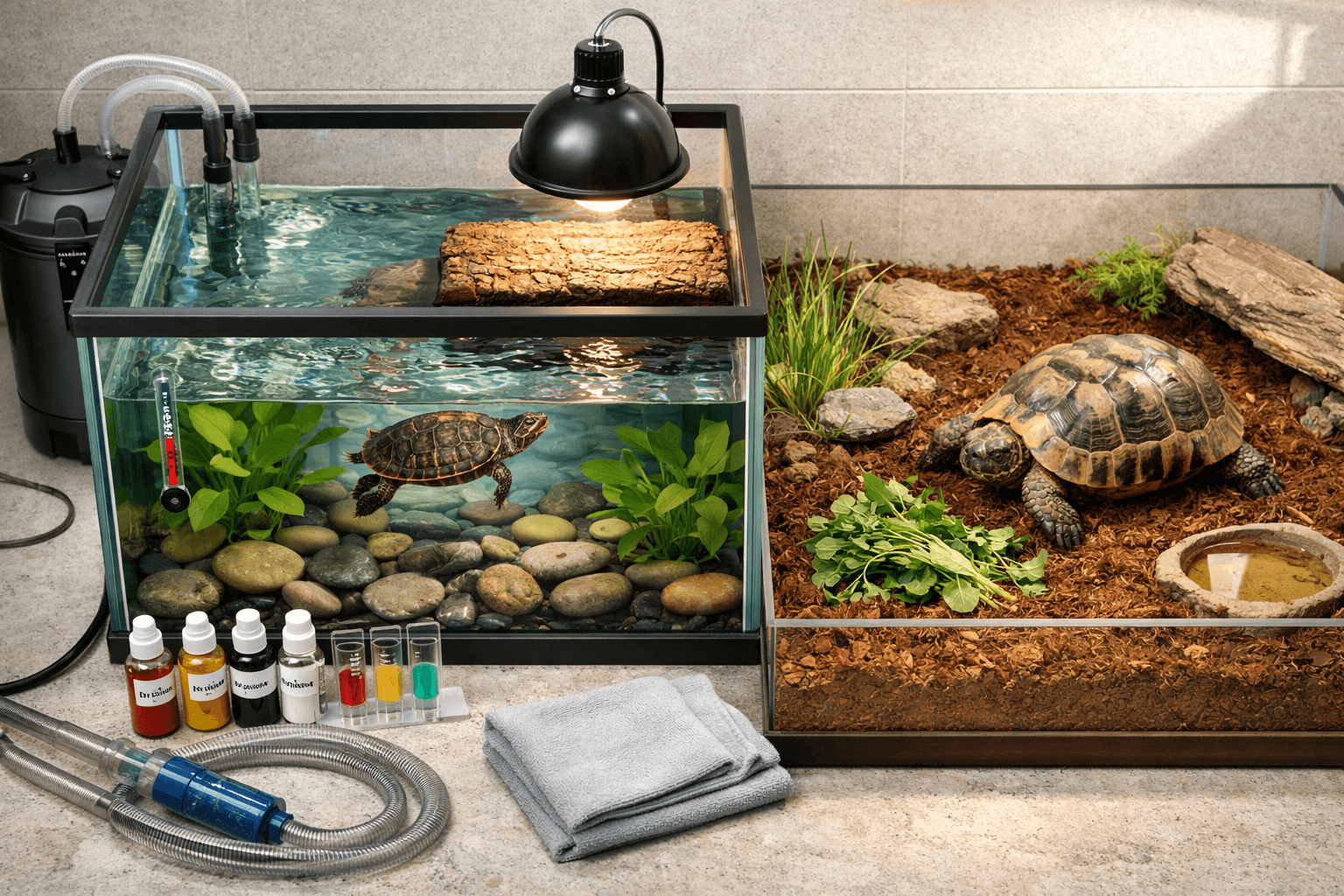
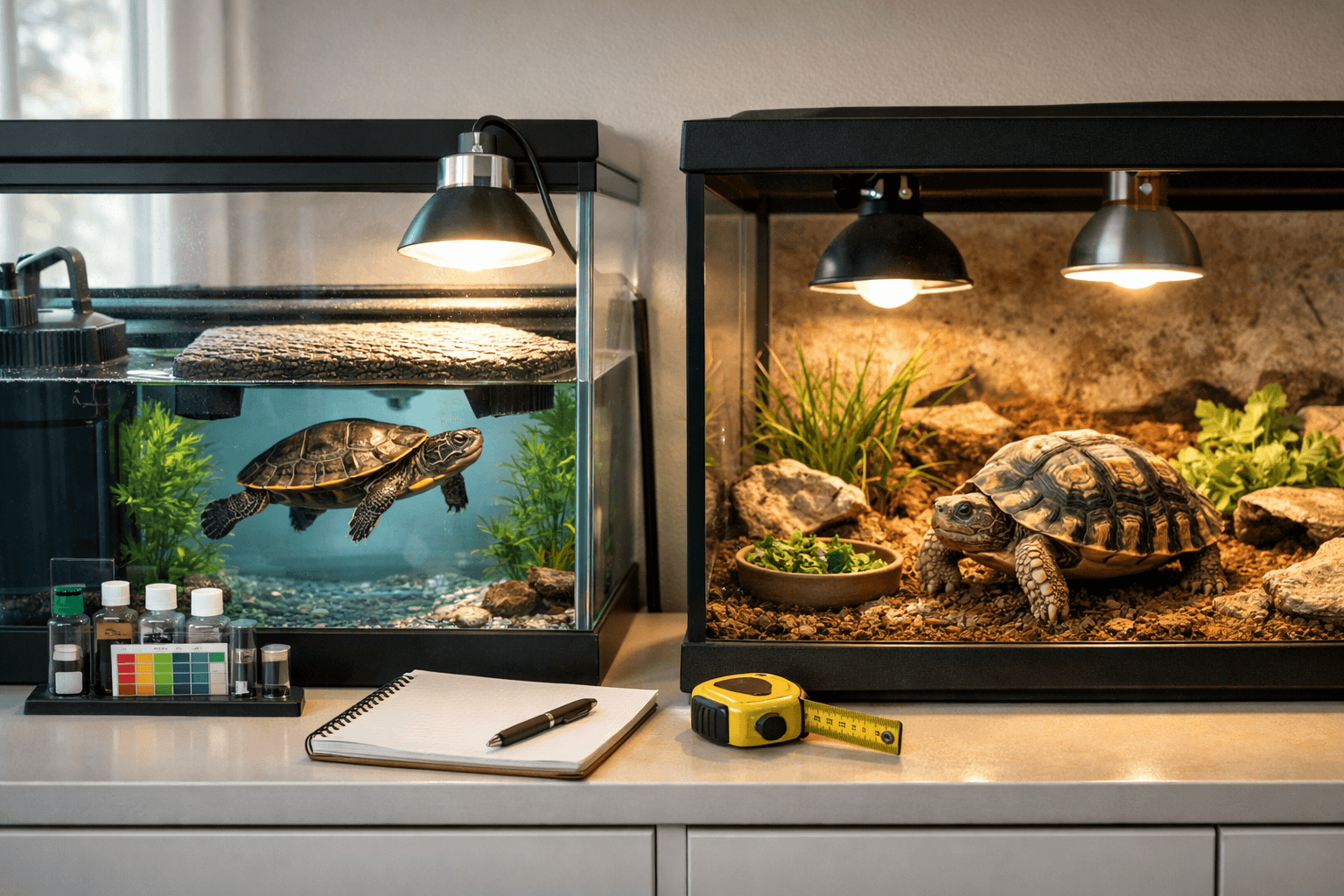
Turtles need a filtered aquatic setup, and that filter runs for the animal’s entire life, not just the first year. A single red-eared slider, one of the most common pet turtles in the US, eventually needs a tank in the 75 to 125-gallon range once full grown, plus a basking dock, UVB lighting, and a canister filter rated for at least double the tank’s volume.
Water quality is the part beginners underestimate. Turtles are messy eaters and produce a lot of waste, so ammonia and nitrite can spike fast in an under-filtered tank. Expect to do partial water changes every one to two weeks even with a good filter, and full water testing at least monthly.
Cost adds up quickly. A grown-turtle setup with a canister filter, basking platform, and proper lighting commonly runs $400 to $800 to build, and the electric bill from running heaters and filters 24/7 is an ongoing cost people forget to budget for.
Tortoise Habitat Requirements: Floor Space Instead of Filtration
Tortoises trade water maintenance for floor space and heat management. There’s no filter to clean, but you need a dry enclosure with a deep substrate for digging, a basking spot around 95-100°F, and UVB lighting because tortoises can’t make vitamin D3 without it.
Enclosure Size Grows With the Animal
A baby tortoise can start in a 40-gallon-equivalent tortoise table, but many species outgrow that within a year or two. A full-grown Russian tortoise, a common beginner species, needs roughly a 6×3-foot floor space minimum, and larger species like sulcatas eventually need an outdoor pen measuring dozens of square feet.
The Substrate and Humidity Balancing Act
Tortoise substrate has to hold shape for burrowing but not stay soggy, since damp bedding can cause shell and respiratory problems. A mix of coconut coir and topsoil works for many species, refreshed every few months, with spot-cleaning daily. This kind of species-specific enclosure planning is exactly the sort of detail worth checking against a build guide before you buy the animal, and sites like petterrarium.com keep species-by-species setup breakdowns for that reason.
Lifespan, Legal Rules, and Everyday Handling
Both animals live a long time, and that alone should shape the buying decision more than color or size. A red-eared slider commonly lives 20 to 30 years, while many tortoise species live 50 years or more, with some giant species outliving their owners entirely.
Legal rules matter here too. In the US, federal law bans the sale of turtles with a shell under 4 inches, aimed at reducing salmonella risk, so any pet-store slider you see is already past hatchling size. Some cities and states also restrict specific tortoise or turtle species, so it’s worth a quick check with your state wildlife agency before buying.
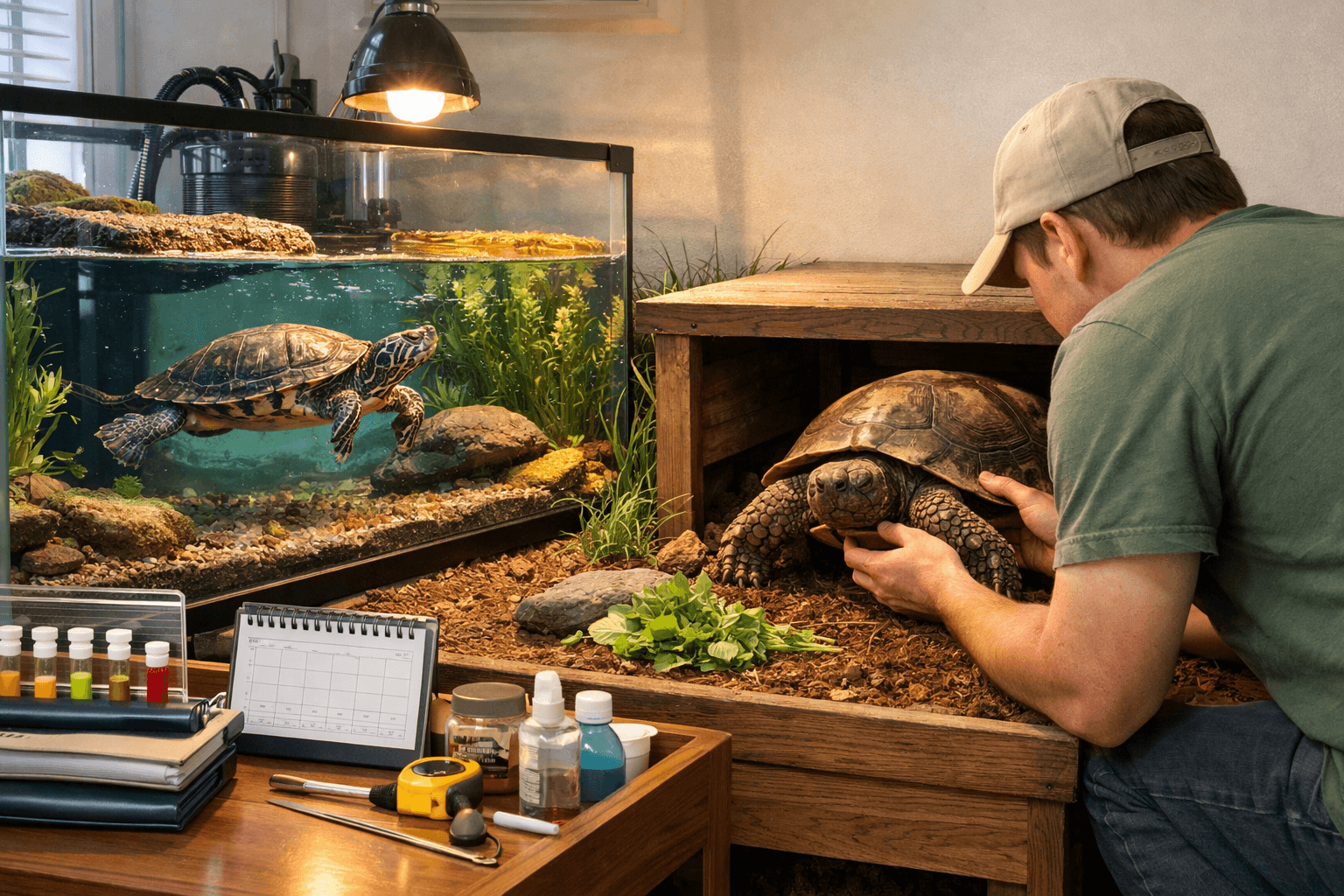
Handling temperament differs in a way people don’t expect. Turtles tend to be skittish, quick to retreat, and not big fans of being picked up. Tortoises are generally calmer to handle and some, like the Russian tortoise, get downright food-motivated and curious around their owners.
Before buying either one, run through this quick checklist:
Confirm the adult size of the exact species, not just the baby size at the store.
Check your state and city rules on owning that species.
Price out the full adult-size enclosure, not the starter tank.
Decide if you want daily water testing or daily substrate spot-checks.
Plan for a 20-plus-year commitment, ideally in writing to yourself.
Factor
Turtle
Tortoise
Adult enclosure size
75-125 gallon aquatic tank
6×3 ft floor space or larger
Ongoing maintenance
Water filtration, weekly water changes
Substrate refresh, daily spot-clean
Typical lifespan
20-30 years
50+ years
Diet
Mostly protein and aquatic plants
Mostly grasses and leafy greens
Handling temperament
Skittish, prefers not to be held
Calmer, often curious
Which One Fits a Beginner Better?
Neither is the universal “easy” pet, but tortoises usually forgive beginner mistakes better than turtles do. A missed water change on a turtle tank can spike ammonia within days and stress the animal fast, while a slightly dry or slightly damp tortoise substrate rarely causes an emergency overnight.
That said, tortoises need more real estate over time, and that’s the tradeoff nobody mentions at the pet store. If you live in an apartment with no yard access, a full-grown sulcata tortoise is a genuinely bad fit, while an aquatic turtle setup can stay indoors indefinitely.
My honest take: if you like the idea of aquarium work, filters, water testing, that rhythm, get a turtle. If you’d rather build a mini landscape with plants, rocks, and digging space and check on it once a day, get a tortoise. Both choices are solid as long as you build for the adult animal, not the baby you bring home.
Frequently Asked Questions
Can a tortoise live in an aquarium like a turtle?
No. Standing water and glass-walled aquatic tanks cause shell rot and respiratory problems in tortoises, since they need dry, open floor space and can’t swim. Use a tortoise table or open-top enclosure with dry substrate instead.
Is a turtle or tortoise cheaper to keep long-term?
Tortoises usually cost less month-to-month since there’s no filter or water heater running constantly, but turtles have lower upfront enclosure costs at a small size. Over 20-plus years, tortoise electric costs are typically lower.
Do turtles and tortoises need UVB lighting?
Yes, both need UVB to process calcium and avoid shell and bone disease. Turtles need it paired with a basking dock above the water, while tortoises need it over a dry basking spot around 95-100°F.