Fifteen to twenty years. That’s the honest life expectancy of leopard gecko pets living in a well-run tank, and it’s roughly the same span as owning a car, raising a kid through high school, or holding down two or three different jobs. A lot of people hear “gecko” and picture a low-effort pet. In reality, you’re signing up for a housemate that might outlast your current apartment, relationship, or career.
That’s not a scare tactic. It’s just math worth doing before you bring one home, not five years in when life gets complicated.
How Long Do Leopard Geckos Actually Live?
Most captive leopard geckos live 15 to 20 years, with plenty hitting 20+ when their setup and diet stay consistent. Wild leopard geckos rarely see that kind of age at all.
Captivity vs. the Wild
In the wild, leopard geckos deal with predators, food scarcity, and rough temperature swings across the Middle East and South Asia. Most wild individuals probably don’t make it past 6 to 8 years. Captivity strips out those threats, which is the main reason captive geckos live two to three times longer.
The Record-Holders
There are well-documented pet leopard geckos that reached their early 30s in captivity, which is wild when you think about it. Those cases aren’t the norm, but they prove the ceiling is way higher than the “15-20 year” number suggests, if the care stays sharp the whole way through.
Why the Range Is So Wide
A five-year gap between “average” and “great” isn’t random. It comes down to diet consistency, temperature accuracy, and how fast you catch health problems. A gecko fed properly and kept at the right temps from day one has a real shot at that upper range, not just the lower end of it.
Care Factors That Add or Subtract Years
This is the part most lifespan articles skip. The 15-20 year number isn’t a guarantee, it’s a ceiling you either work toward or miss. Every habitat decision either adds time or quietly takes it away.
Temperature and Humidity Mistakes That Add Up
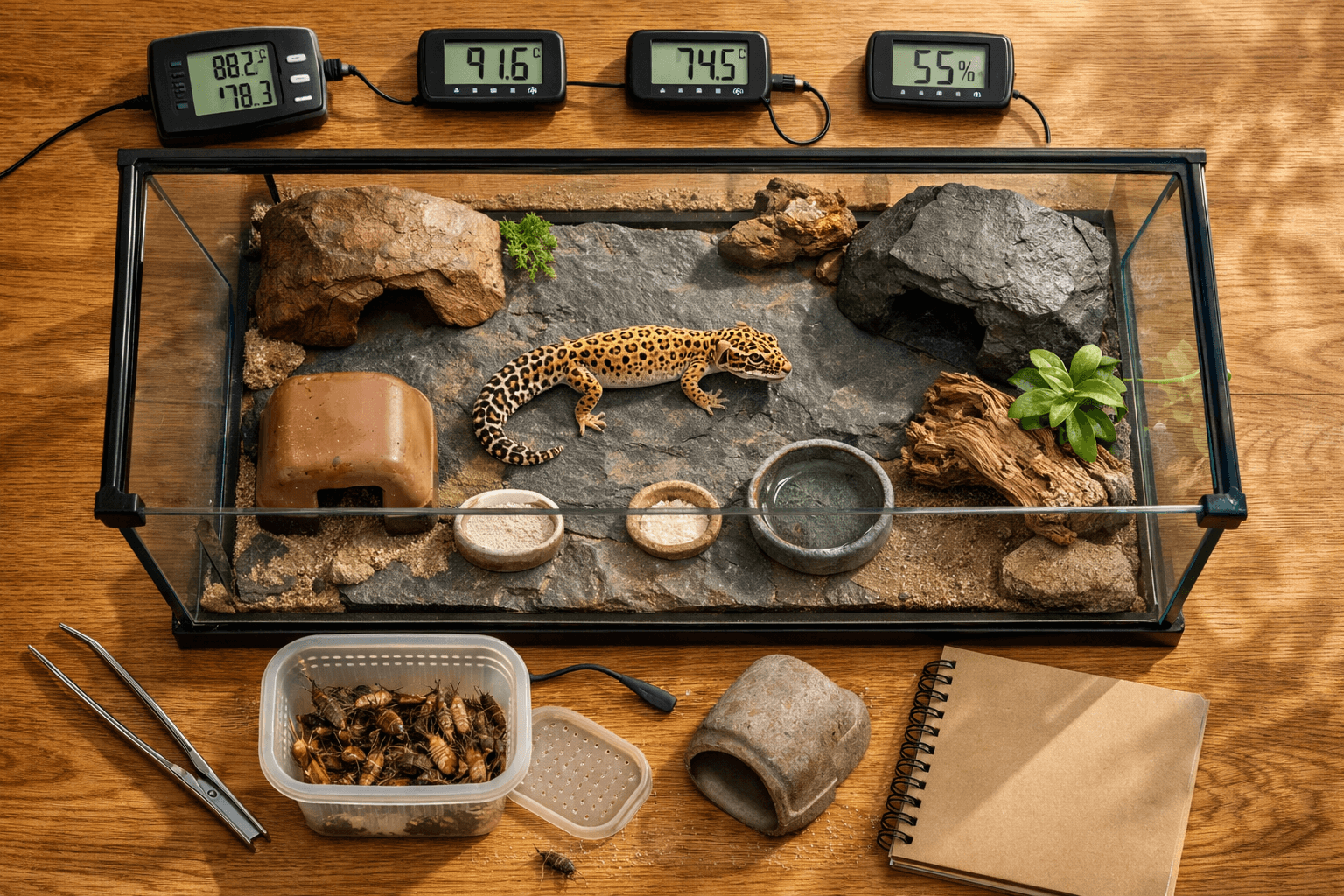
Leopard geckos need a warm side around 88-92°F and a cool side in the mid-70s, with humidity kept moderate (around 30-40%, higher in the humid hide). Get this wrong for a few weeks and nothing seems to happen. Get it wrong for years, and you’re looking at chronic stress, poor digestion, and a much shorter life. This is the silent killer in gecko care, because there’s no dramatic moment where it goes wrong.
Diet and Nutrition
Feed a steady rotation of gut-loaded crickets or dubia roaches, dust with calcium at most feedings, and add vitamin D3 two to three times a month. Skimping on calcium is the fastest way to trigger metabolic bone disease, which is one of the top killers in captive geckos and often shows up as wobbly legs or a soft jaw.
Substrate and Enclosure Setup
Loose substrate like sand can cause impaction if a gecko swallows too much while hunting, especially in young geckos. Paper towel, reptile carpet, or a bioactive soil blend with a solid clean-up crew are safer long-term choices. If you want a full walkthrough on building out a bioactive setup that handles humidity and waste on its own, petterrarium.com has enclosure guides that go step by step through substrate layering and drainage.
Genetics, Sex, and Breeding: Do They Change the Numbers?
Yes, genetics and breeding history both shift the odds. Morph genetics can matter, and breeding females almost always pay a lifespan cost.
Certain morphs, especially some enigma-line geckos, carry a higher risk of neurological issues (often called “enigma syndrome”) that can shorten life or reduce quality of life. It’s not every enigma gecko, but it’s common enough that reputable breeders openly discuss it.
Breeding females face a much steeper trade-off than males. Producing eggs repeatedly drains calcium reserves and body condition, and females bred aggressively across back-to-back seasons often live noticeably shorter lives than males or unbred females. If you’re not planning to breed, a female gecko kept solo has just as much shot at 18-20 years as a male does.
Here’s a quick comparison of how these factors stack up:
Factor
Typical Lifespan Impact
Well-cared-for male, no breeding
15-20 years, sometimes 20+
Well-cared-for female, no breeding
15-20 years
Actively breeding female
Often 8-12 years
Enigma morph with neurological issues
Variable, sometimes shortened
Poor temp/humidity control (any gecko)
Often under 10 years
Aging, Illness, and When to Call a Vet
Slowing down is normal aging. Sudden weight loss, refusing food for weeks, or a swollen belly is not, and that’s the line worth knowing. Confusing the two is one of the most common owner mistakes, and it usually delays a vet visit that could have caught something treatable.
What Normal Aging Looks Like
Older geckos (past 12 or so) tend to eat less often, move slower, and lose some tail thickness. Their skin might look a little duller between sheds. None of that alone is an emergency.
Warning Signs That Need a Vet
A reptile-experienced exotic vet visit runs somewhere between $50 and $150 for a basic exam in most U.S. cities, and it’s worth budgeting for at least one or two visits a year as your gecko ages. Watch for these signs and don’t wait them out:
Sunken eyes or a hollow-looking tail base
Refusing food for more than two weeks straight
Stuck shed that won’t come off after soaking
Lethargy that doesn’t improve with warmer basking temps
Black or discolored patches on the skin
Difficulty walking or dragging the back legs
Planning for the Long Haul
A 15-20 year commitment means life changes will happen around your gecko: moves, roommates, kids, maybe a few career switches. Building a simple care plan (a backup pet-sitter, a travel-ready feeding schedule, a savings buffer for vet visits) now saves a lot of stress later.
Frequently Asked Questions
What is the average life expectancy of a leopard gecko as a pet?
The average is 15-20 years with consistent care, proper heating, and a calcium-rich diet. Neglect in any of those areas can cut that down to under 10 years, so care quality matters more than genetics alone.
Do male or female leopard geckos live longer?
Males and unbred females have similar lifespans, both landing in the 15-20 year range. Females used repeatedly for breeding often live only 8-12 years due to the physical toll of egg production.
How can I tell if my gecko is just aging or actually sick?
Aging looks like slower eating and less activity; illness looks like weight loss, sunken eyes, or refusing food for weeks. If symptoms go beyond mild slowdown, a reptile vet visit ($50-$150 typically) is worth it.