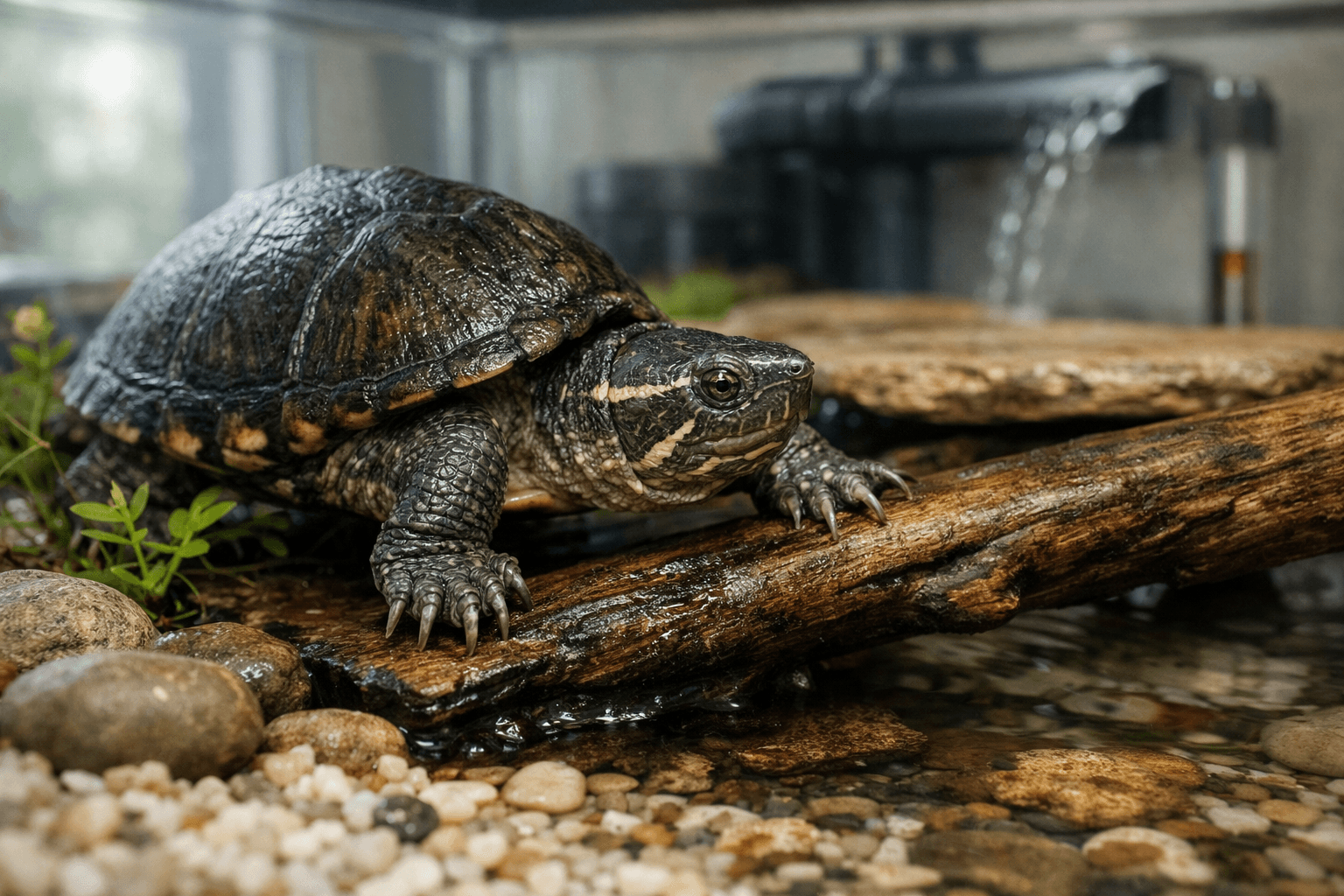
Drowning in deep water isn’t a myth for the stinkpot common musk turtle — it’s a real risk if you set up their tank like a typical aquatic turtle habitat. That’s the single biggest mistake I see people make with this species. Stinkpots aren’t strong swimmers; they’re bottom-walkers who crawl along the substrate and climb rather than paddle around open water.
Get that one idea right, and the rest of this habitat is honestly pretty simple to build. Here’s how to set it up so your turtle actually thrives instead of just surviving.
Tank Size: Small Turtle, Not a Small Tank
A single adult stinkpot common musk turtle needs at least a 20-gallon long tank, and I’d push for 30 gallons if your budget allows it. People underestimate space because stinkpots only grow to about 3 to 5 inches, but a cramped tank leads to poor water quality and a stressed, inactive turtle.
Why Bigger Footprint Beats Height
Go long and wide, not tall. Since your water depth stays shallow to moderate, you need floor space for the turtle to walk, dig, and explore, not vertical swimming room.
Juvenile vs. Adult Setups
A hatchling can start in a 10-gallon tank, but plan to upgrade within the first year as it grows. Trying to save money by keeping an adult in juvenile-sized housing long-term is the kind of shortcut that catches up with you fast, usually as shell health or behavior problems.
Water Depth and Filtration: The Detail Every Generic Guide Gets Wrong
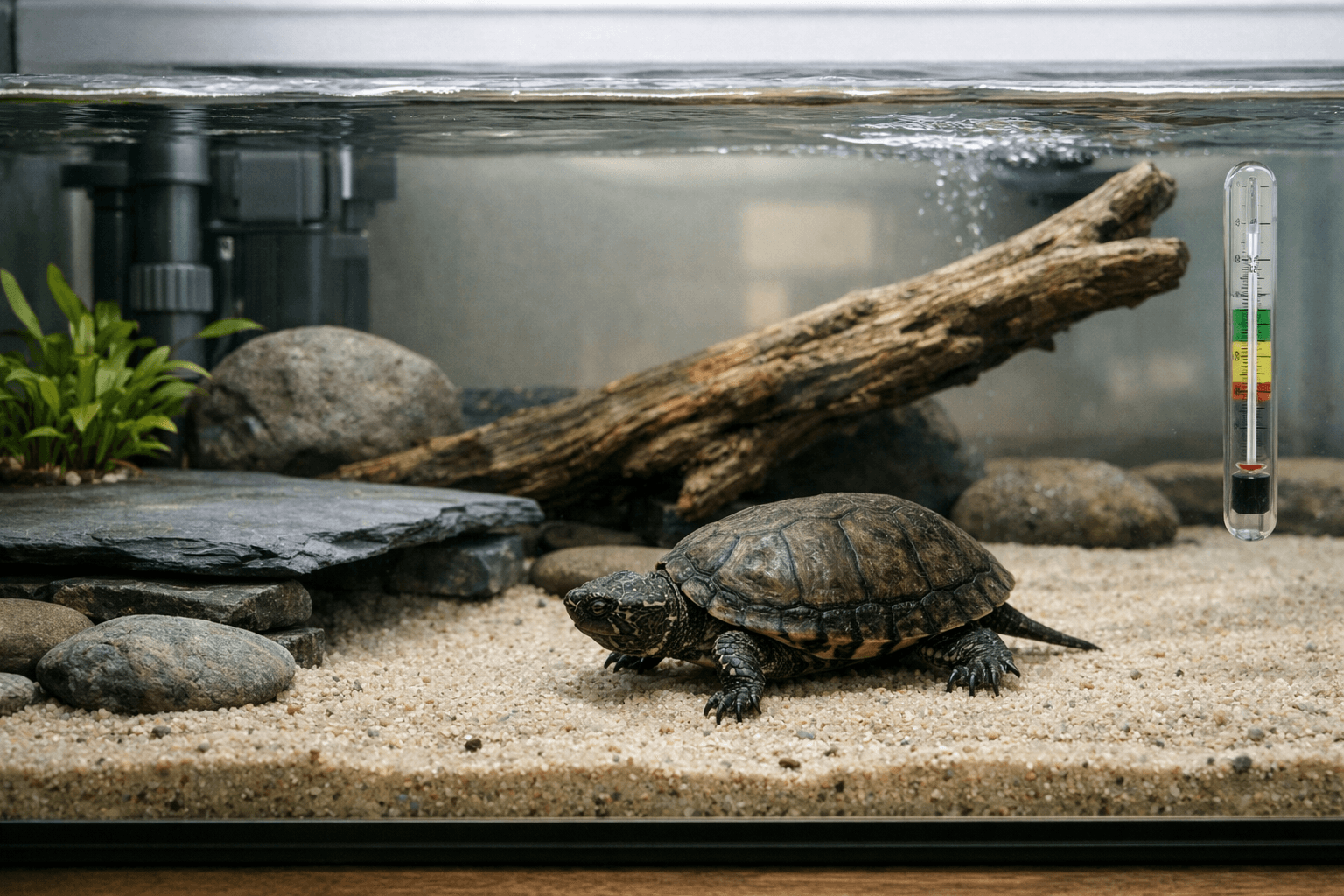
Water depth should sit around 1.5 to 2 times the turtle’s shell length, not filled to the top like a red-eared slider tank. That means an adult stinkpot usually does best in water roughly 6 to 10 inches deep, always with easy access to the surface.
Because stinkpots aren’t confident swimmers, deep, open water without frequent resting points is genuinely dangerous. They can tire out and drown if they can’t reach air quickly. This is the core design difference between a stinkpot setup and a typical aquatic turtle tank, and it’s worth building your whole layout around it.
Adding Climbing and Resting Structure
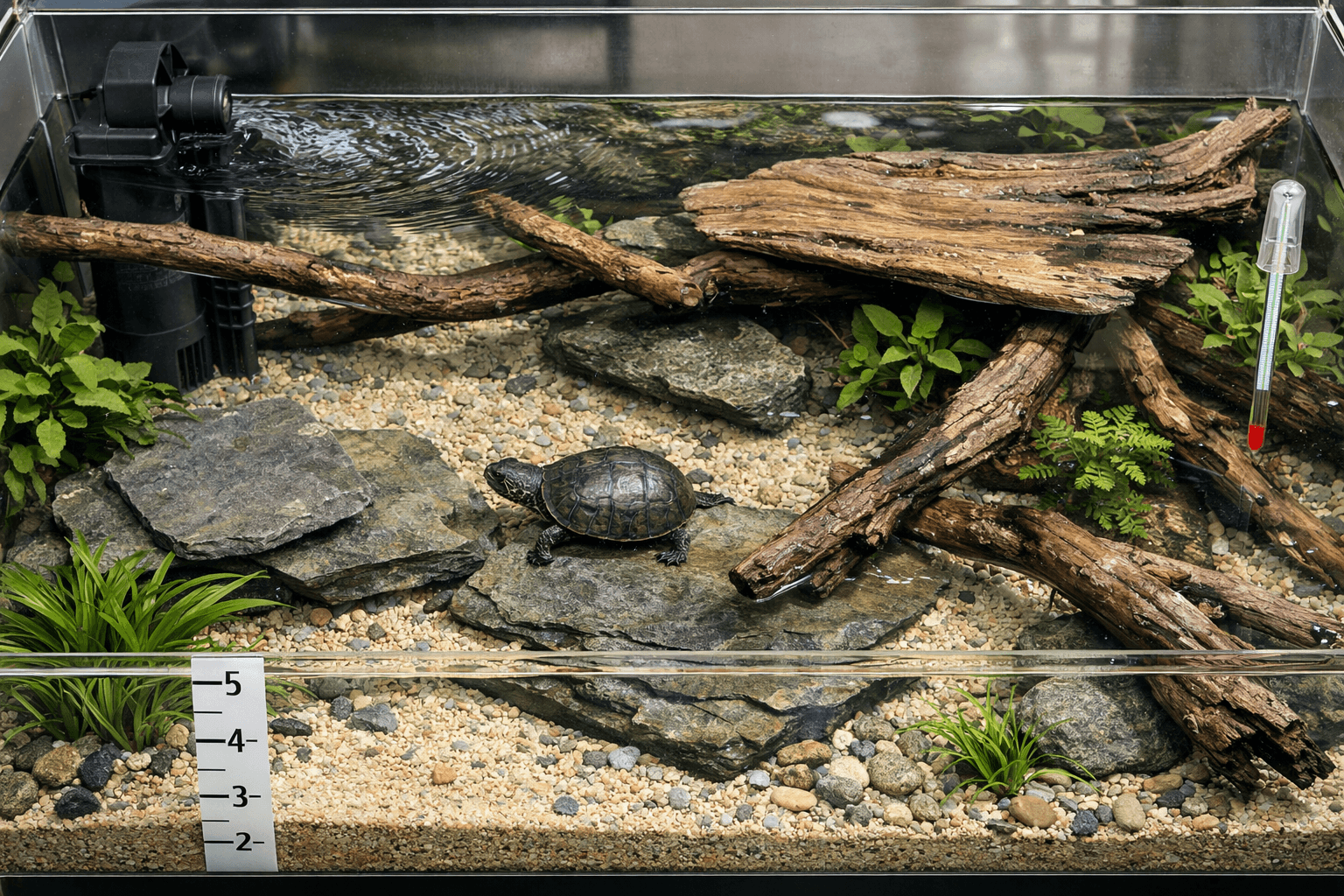
Stack flat rocks, driftwood, or aquarium-safe branches so they break the water’s surface at multiple points. This gives your turtle constant access to air without having to swim far.
Filtration That Keeps Up
Musk turtles are messy eaters and produce a lot of waste for their size. A canister filter rated for double your tank’s actual gallon count handles the bioload far better than an underpowered hang-on-back filter, and it saves you from doing partial water changes every other day.
Basking, UVB, and Heat: Yes, They Still Need It
Stinkpots bask less than sliders or cooters, but they still need UVB lighting for shell and bone health. Skipping UVB because “they don’t bask much” is one of the most common and costly mistakes new keepers make.
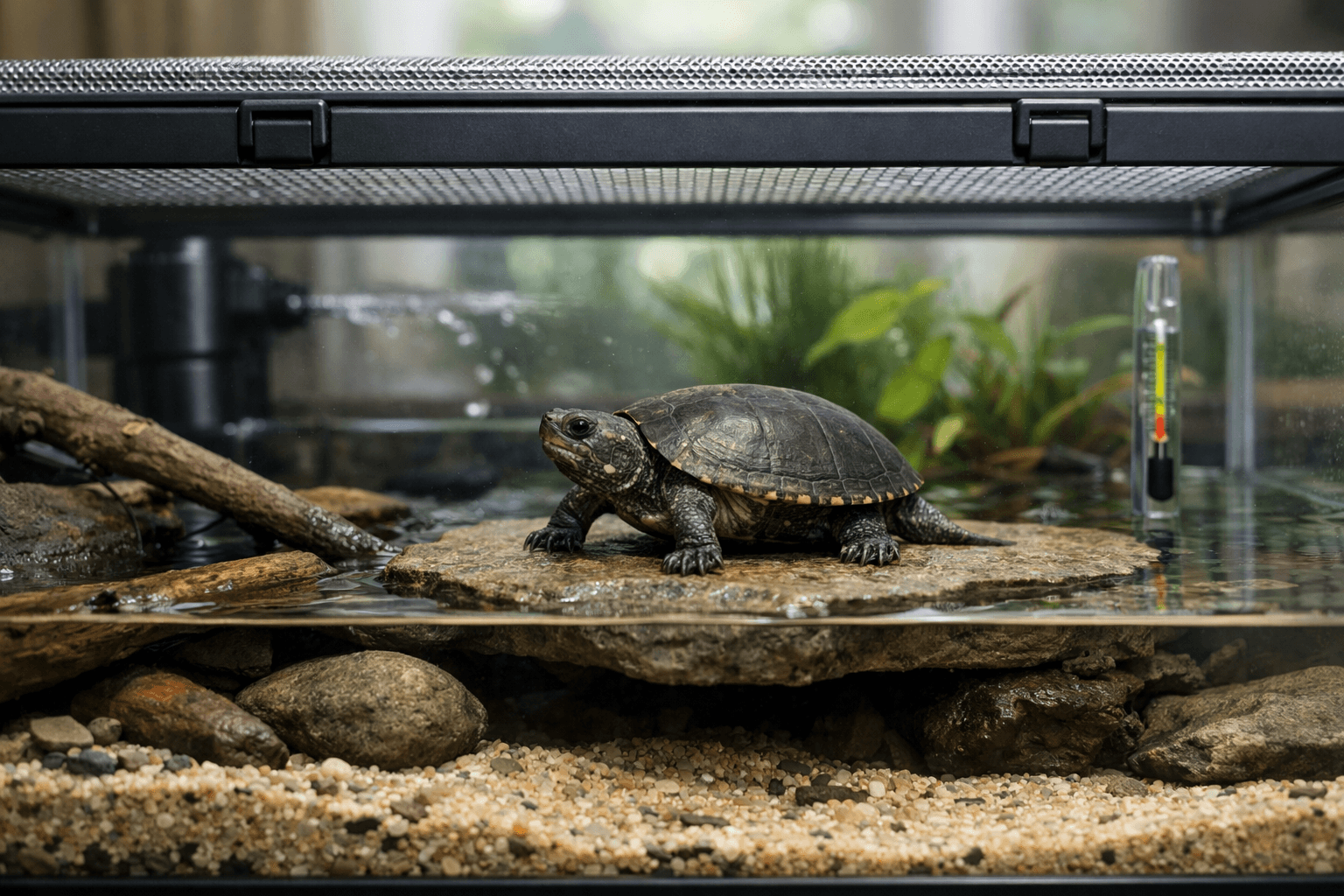
Set up a low, easy-to-reach basking platform, since stinkpots are clumsy climbers and won’t use a steep ramp. A partially submerged piece of driftwood or a foam turtle dock works well. Run a UVB bulb rated for reptiles (look for a 5.0 or 6% output) across the basking area, and replace it roughly every 6 to 12 months since UVB output fades long before the bulb burns out.
Water temperature should stay around 72 to 78°F, with basking-side air closer to 85°F. A simple submersible aquarium heater plus a basking lamp on a timer covers both needs without much daily fuss.
Substrate, Water Quality, and Tank Mates
Substrate choice affects both water clarity and the turtle’s natural digging behavior. Fine gravel or smooth river sand works well since stinkpots like to root around the bottom looking for food.
Setting Up the Base Layer
Rinse gravel or sand thoroughly before adding it to remove dust and debris.
Add a 1 to 2 inch layer across the tank floor.
Place heavier basking anchors (rocks, driftwood) directly on the glass before adding substrate around them.
Fill with dechlorinated water treated with a standard aquarium water conditioner.
Let the filter run for 24 to 48 hours before adding your turtle.
Test ammonia and pH before introduction, especially in a newly cycled tank.
Recheck water parameters weekly for the first month.
On tank mates: skip fast, aggressive fish and skip other turtle species that outcompete stinkpots for food. Their slow, bottom-dwelling nature means quick swimmers will out-eat them every time, and larger turtles can bully or injure them. If you want company, slow-moving bottom fish in a much larger, separate tank make more sense than crowding one enclosure. Sites like petterrarium.com have separate species-specific guides if you’re weighing which tank mates actually work for a shared setup.
Life Stage
Minimum Tank Size
Water Depth
Hatchling
10 gallons
3-4 inches
Juvenile
20 gallons
5-7 inches
Adult
20-30 gallons
6-10 inches
Lid Security and the Musk Gland Reality
A secure, well-ventilated lid isn’t optional, since stinkpots are surprisingly good climbers for their size and will use basking structures as a launchpad. A screen top with clips works better than a loose-fitting glass lid that can slide.
Now, about the name. Stinkpots earn their nickname from musk glands near the shell edge that release a strong smell when they feel threatened or handled roughly. It’s not dangerous, and it fades fast once the turtle calms down. Handle them gently and infrequently, and you’ll rarely deal with it beyond the occasional whiff during setup changes or vet visits.
Diet-wise, stinkpots are omnivores that lean toward protein. Offer a mix of commercial turtle pellets, feeder fish, snails, and the occasional piece of leafy green, feeding juveniles daily and adults every 2 to 3 days.
Frequently Asked Questions
Do stinkpot musk turtles need deep water like other aquatic turtles?
No. They’re weak swimmers who walk along the bottom, so keep water around 6 to 10 inches for adults with plenty of resting spots, never filled tall like a slider tank.
How big of a tank does one adult stinkpot musk turtle actually need?
Plan on 20 to 30 gallons minimum, favoring a long, wide footprint over height. Adults only reach 3 to 5 inches, but they still need real floor space to move around comfortably.
Can I skip UVB lighting since stinkpots don’t bask much?
No, skip that shortcut. Even light baskers need UVB for shell and bone health, so run a 5.0 or 6% UVB bulb over a low, easy-access basking spot year-round.