That squeak you saw on video? It only happens when a desert rain frog feels safe, and getting that safety right in captivity comes down to one thing most guides skip: a narrow humidity sweet spot, not a bone-dry desert box. Copy generic desert terrarium advice and you’ll likely lose the frog within months. Get the micro-gradient right, and this odd little ball of a frog can do well for years.
Desert rain frogs (Breviceps macrops) come from a tiny strip of coastline in the Namib Desert, where fog rolls in most nights and the sand stays cool and slightly damp just below the surface. That’s the whole trick to housing them: dry on top, moist underneath, never soggy all over.
Tank Size and Setup: What Actually Fits This Frog’s Lifestyle
A single desert rain frog does fine in a 10-gallon tank, though I’d lean toward a 15 or 20-gallon long if you can swing it, since more floor space means more room for the burrowing and humidity gradient to actually work. These frogs don’t climb and don’t jump much, so height matters less than floor area.
Front-opening enclosures beat top-opening ones here, because this species startles easily and a hand dropping in from above is scarier than one sliding in from the side.
Enclosure Dimensions and Stocking
Don’t house multiples in a small tank hoping they’ll “work it out.” One frog per 10-gallon footprint is the baseline; add roughly 5 extra gallons per additional frog if you’re keeping a small group, and always add more hides than frogs so nobody gets cornered.
Ventilation Without Drying Everything Out
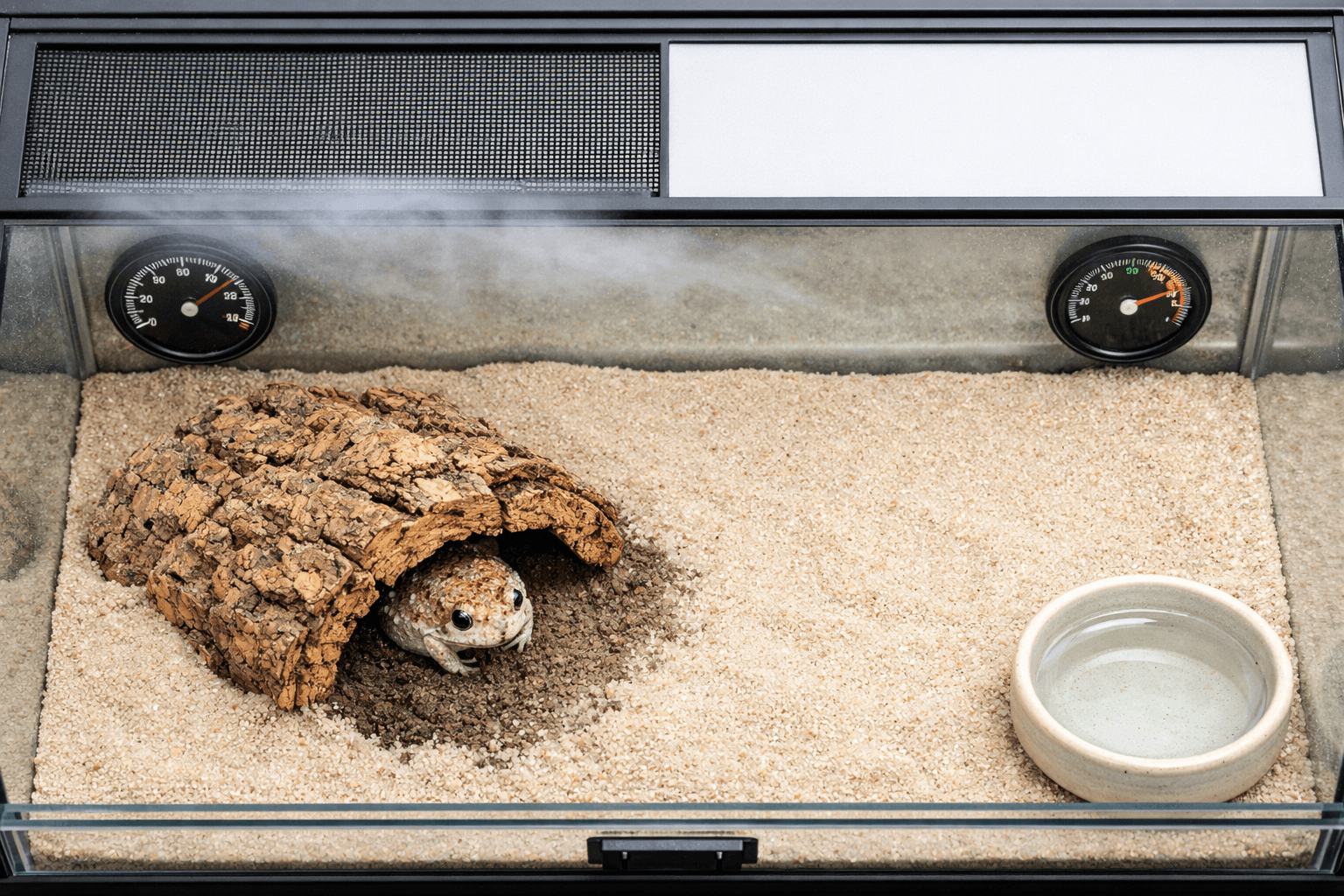
Screen tops are standard, but a full screen lid on a desert setup can wick moisture away too fast. Cover half to two-thirds of the screen with glass or acrylic and leave a strip open. That keeps air moving without turning your moist hide into a memory within an hour.
Substrate and the Humidity Micro-Gradient (This Is the Part People Get Wrong)
The single biggest killer of captive desert rain frogs is treating the whole tank like it needs even, tropical-style humidity. It doesn’t. What it needs is deep, fine sand kept mostly dry, with one localized moist zone the frog can dig into when it wants dampness.
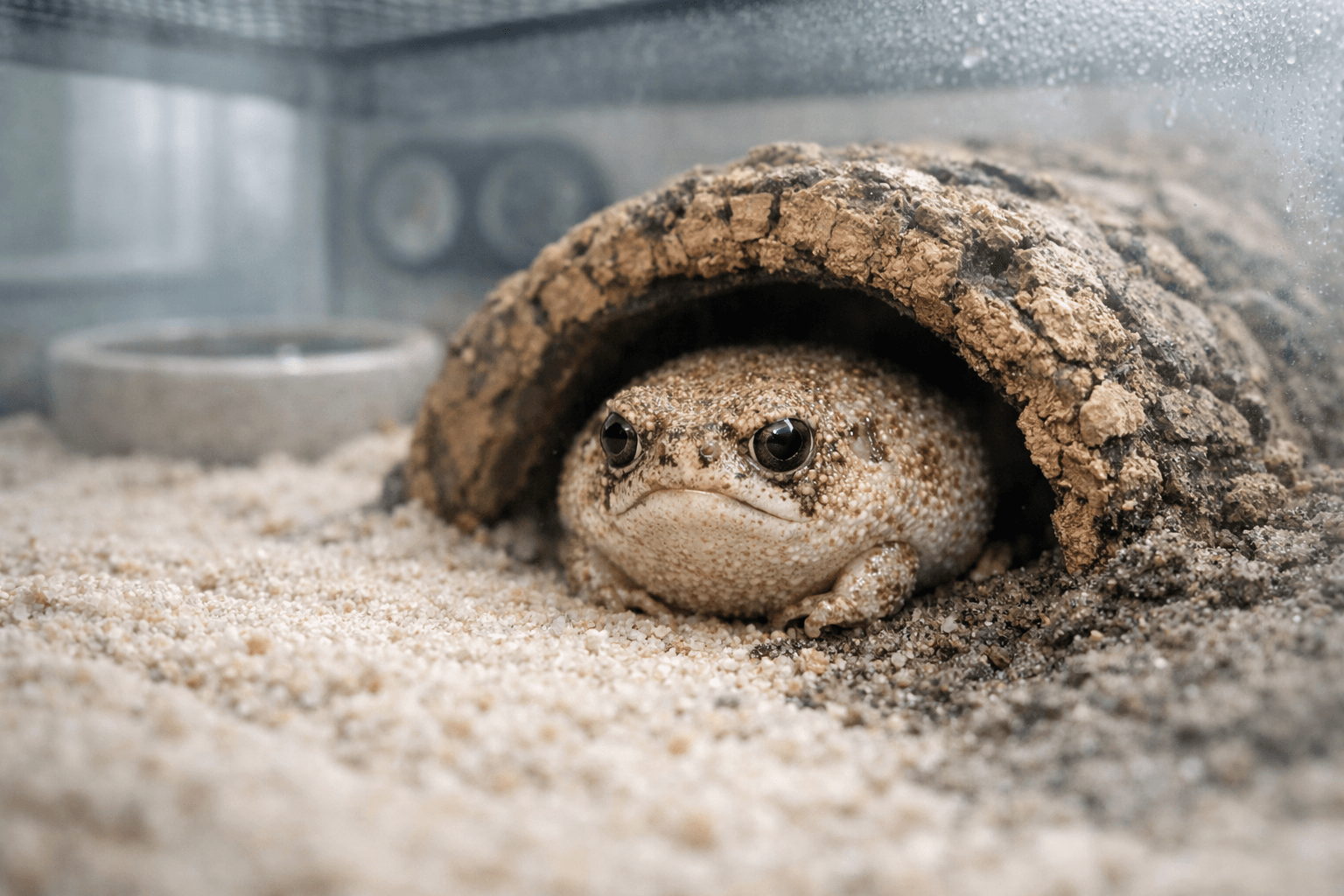
Use a play sand or reptile-safe desert sand blend, not gravel or coarse aquarium sand, and go at least 4 to 6 inches deep. Shallow substrate is a common mistake, and it’s a serious one: desert rain frogs are obligate burrowers, and if they can’t dig down far enough to reach cool, slightly damp sand, they’ll sit exposed on the surface and dry out fast.
Building the Moist Hide Zone
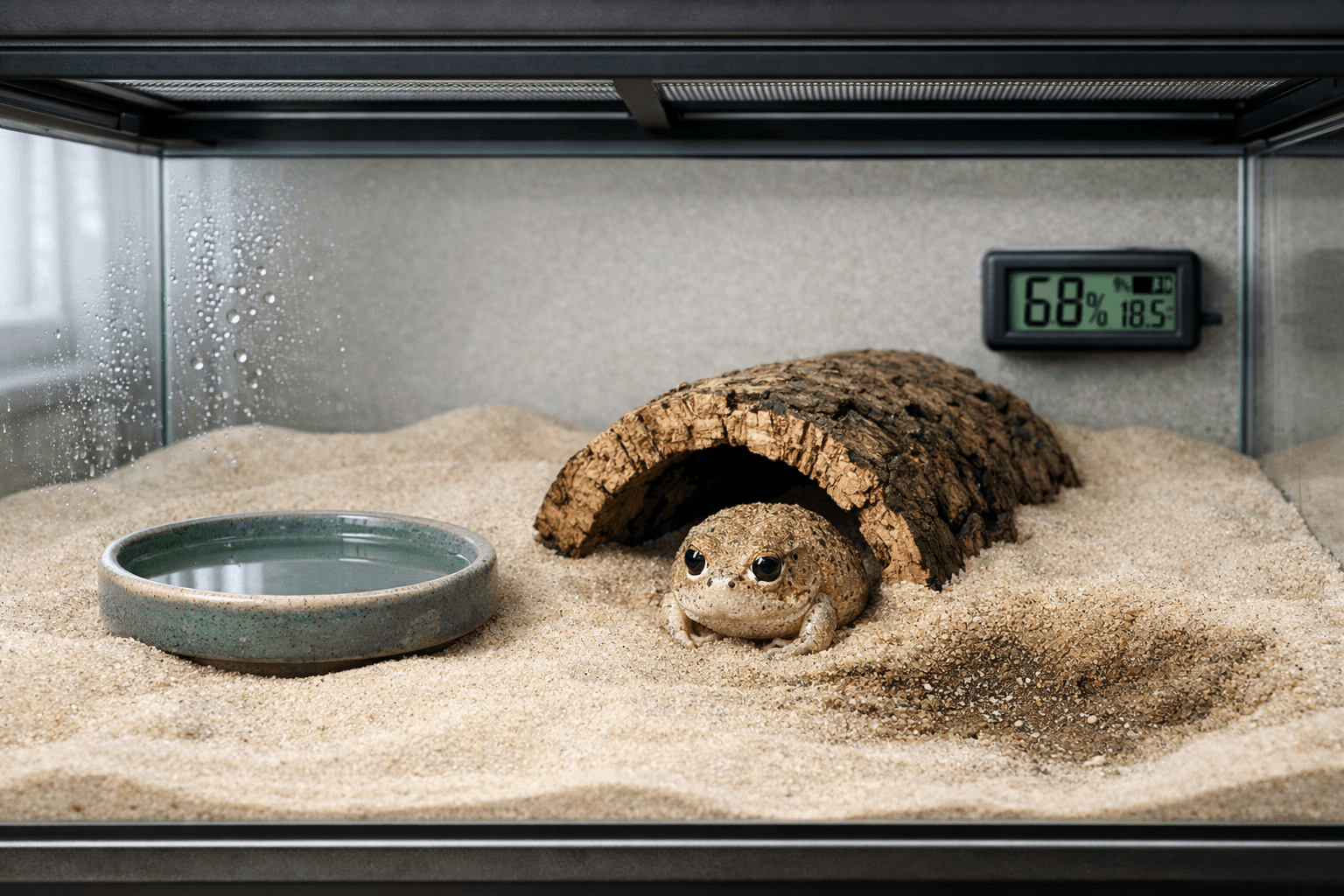
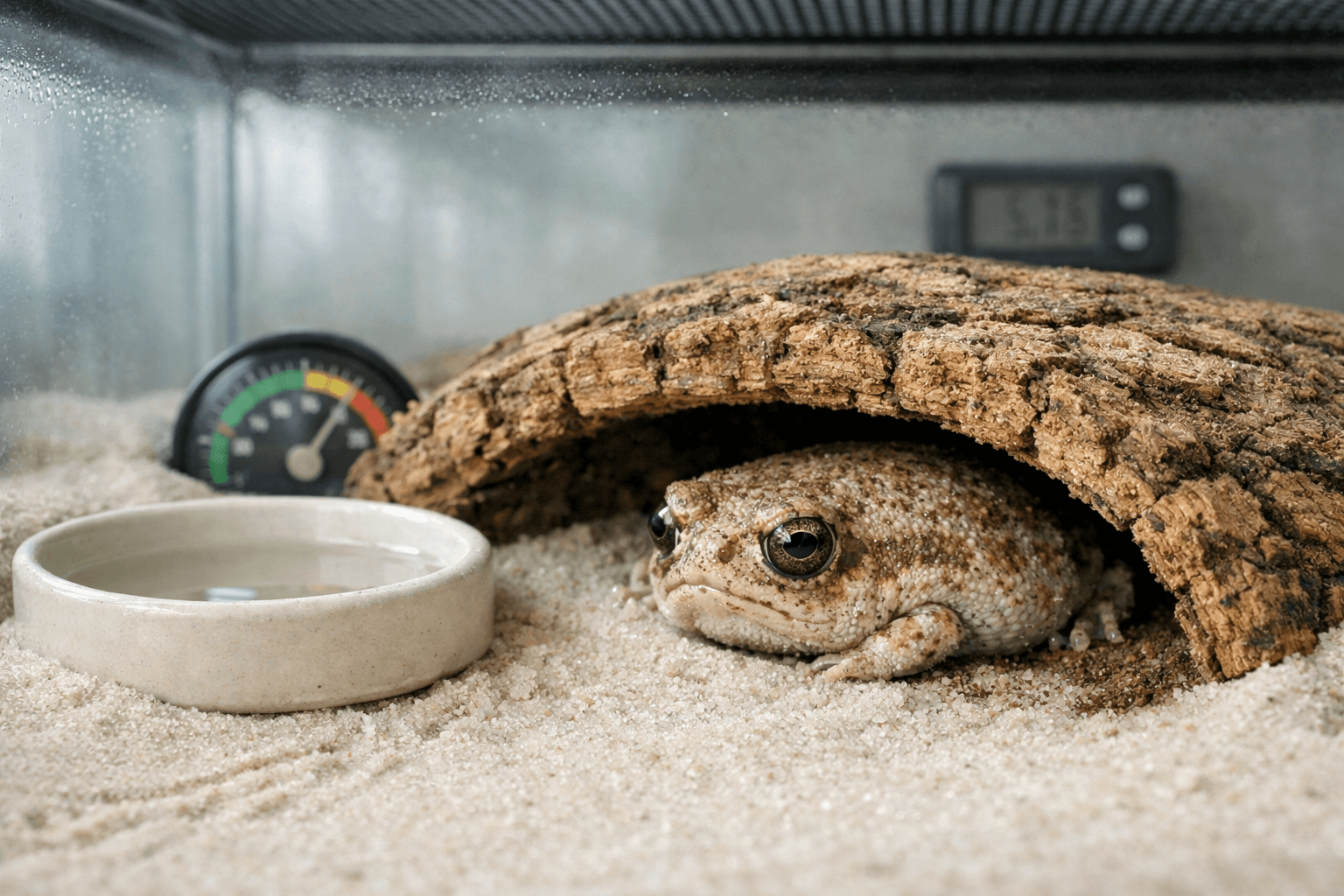
Pick one corner, dig a shallow depression down to the sand, and layer in damp (not wet) coconut fiber or sphagnum moss under a flat piece of cork bark or slate. This becomes the frog’s go-to burrow spot. Mist that zone directly rather than blasting the whole tank, aiming for the sand a few inches down to feel like a wrung-out sponge, never squelchy.
Reading Humidity Right
Overall tank humidity should sit around 40 to 50 percent, with the moist hide pocket running higher, closer to 70 to 80 percent locally. A cheap digital hygrometer placed near the surface will read low and worry you; that’s normal, since it’s the buried micro-zone that matters, not the room-air number.
Misting Schedule, Water Dish, and Getting Hydration Right
Mist the moist hide zone once daily, lightly, rather than soaking the whole enclosure. A shallow water dish with dechlorinated water should also be available at all times, refreshed every 1 to 2 days so it doesn’t grow film or attract mold.
Desert rain frogs absorb water through their skin, so the dish matters less than most people expect; it’s really a backup. The real hydration source is that damp sand pocket they burrow into for hours at a time.
Skip full-tank rain systems and fogger setups sold for tropical frogs. Those push humidity levels this species never evolved to handle, and prolonged dampness on the skin is a fast track to fungal and bacterial problems.
Temperature, Lighting, and Why UVB Isn’t the Priority Here
Keep daytime temperatures around 75 to 80°F and let it drop to the low 60s at night, which mimics the coastal desert swing these frogs actually experience. A low-wattage heat mat on one side of the tank, controlled by a thermostat, works better than overhead heat lamps that dry the sand surface unevenly.
Skip strong UVB. Desert rain frogs are nocturnal and light-sensitive, and the instinct to copy bearded dragon or uromastyx setups with blazing UVB bulbs is a real mistake here. A low-output UVB bulb (around 2.0 to 5.0) on a short daytime cycle is plenty, mostly for general health support rather than heavy vitamin D synthesis.
Setup Factor
Target Range
Common Mistake
Substrate depth
4-6 inches fine sand
Too shallow, blocks burrowing
Ambient humidity
40-50% overall
Copying tropical frog humidity
Moist hide humidity
70-80% localized
Misting whole tank instead
Daytime temp
75-80°F
Overhead lamps drying sand
Night temp
Low 60s°F
No nighttime drop at all
UVB
Low output, short cycle
Bright desert-reptile UVB
Diet, Handling, and Reading Stress Signals Early
Desert rain frogs eat small crickets, mealworms, and roaches dusted lightly with calcium powder, offered 2 to 3 times a week for adults. Overfeeding is easy with a species this small and sedentary, so stick to a couple of appropriately-sized insects per session rather than a full cricket buffet.
Handling should be rare. This is a genuinely fragile, easily stressed species, and the viral appeal of that squeak has led a lot of new owners to pick these frogs up constantly to trigger it. That’s a mistake that adds up over weeks into real health decline.
Signs of Stress to Watch For
Repeated squeaking when approached, not just when picked up
Refusing food for more than a week
Staying on the surface instead of burrowing during the day
Pale or unusually dry-looking skin
Lethargy that doesn’t improve after a proper misting
If you see two or more of these together, check your humidity gradient first before assuming illness. In most cases, the fix is environmental, not medical.
Setting up an amphibian enclosure like this from scratch takes patience, and if you want a broader walkthrough of terrarium builds beyond this one species, petterrarium.com has general setup guides worth cross-referencing before you buy glass and sand.
Frequently Asked Questions
Why does my desert rain frog keep squeaking?
Squeaking is a stress or startle response, not a happy sound. Frequent squeaking usually means too much handling or disturbance, so cut back on picking it up and give it a few quiet days to settle.
Can desert rain frogs live together in one tank?
Yes, in a group setup with enough space and hides, but watch for competition at feeding time. A 20-gallon long with 3-4 moist hide zones works better than cramming several frogs into one 10-gallon.
How long do desert rain frogs live in captivity?
With a properly managed humidity gradient and deep sand for burrowing, they can live several years, though exact lifespan data in captivity is still fairly limited compared to more common pet frogs. Most captive losses trace back to humidity or substrate mistakes in the first few months, not old age.