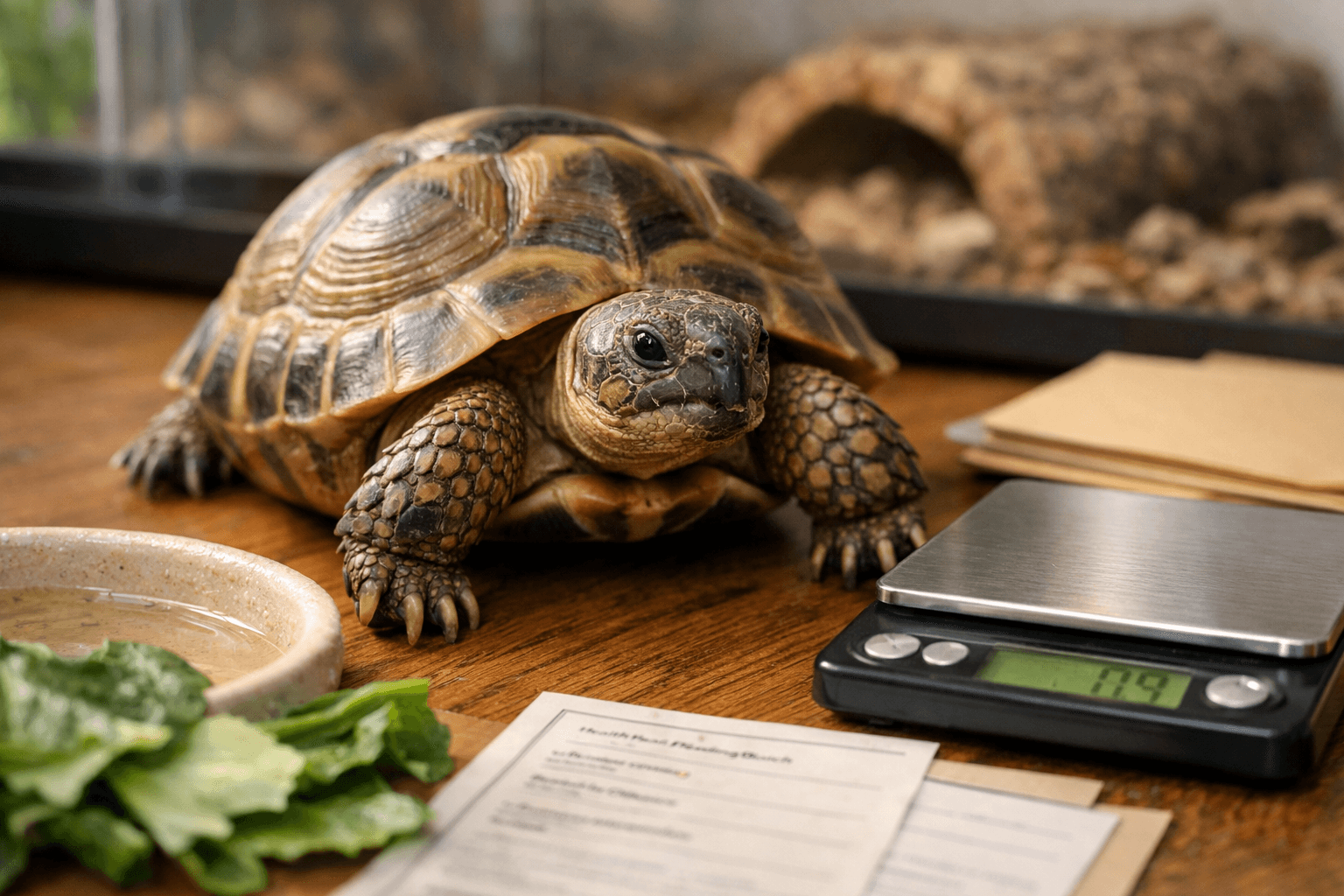
A Russian tortoise for sale listing that looks like a steal usually is one, and not in a good way. Healthy, captive-bred Russian tortoises cost real money to produce, so a $40 “baby tortoise, no papers” ad should make you pause before you make you excited. This guide walks through what a fair price actually looks like, how to spot a seller worth trusting, and the one pre-purchase step almost everyone skips.
Where to Buy: Breeders, Pet Stores, and Reptile Expos Compared
Your best source for a healthy Russian tortoise is a dedicated reptile breeder who specializes in tortoises, not a general pet store. Breeders can tell you the hatch date, the parents, and how the animal has been fed since it was the size of a quarter.
Specialty Breeders
A reputable breeder will happily answer questions about incubation temps, diet, and growth rate. Many sell through their own websites or at reptile expos like the ones run by Repticon across the country. Expect a wait list during peak hatching season, which typically runs spring through early summer.
Chain and Local Pet Stores
Big pet store chains sometimes carry Russian tortoises, but staff often can’t tell you if the animal is captive-bred or wild-caught. That matters a lot for a species that’s been heavily collected from the wild in Central Asia for decades. If nobody on staff can answer basic husbandry questions, treat that as a warning sign, not just an inconvenience.
Online Classifieds
Online marketplaces and reptile classified sites can work, but only after you’ve video-called the seller and asked to see the animal moving around, eating, and being handled. A seller who refuses video or rushes you toward payment is telling you something important.
Captive-Bred vs. Wild-Caught: Why the Cheaper Tortoise Isn’t a Bargain
Always choose captive-bred. Wild-caught Russian tortoises are frequently loaded with internal parasites, stressed from transport, and dehydrated by the time they reach a buyer, and that “cheap” $50 tortoise can turn into $300+ in vet bills within the first month.
Wild-caught animals also adjust to captive life poorly. They tend to hide more, eat less, and take longer to trust a new enclosure. A captive-bred hatchling, by contrast, has never known anything but a controlled setup, so it settles in faster and handles stress better from day one.
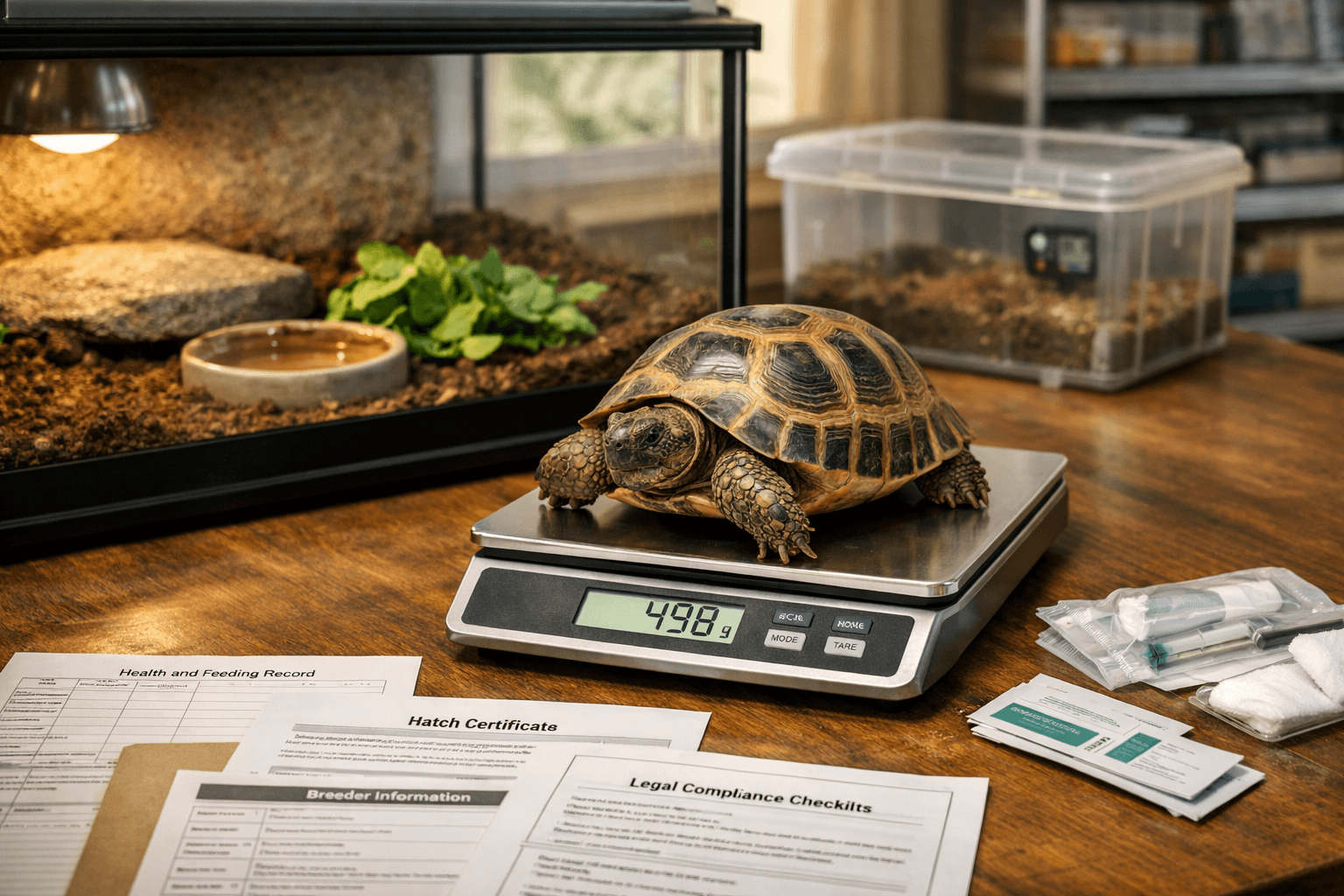
Ask directly: “Is this captive-bred, and can you show me the parent animals or hatch records?” A legitimate breeder answers without hesitation. Someone selling wild-caught stock imported in bulk usually gets vague or changes the subject.
What a Russian Tortoise Actually Costs in 2026
Price depends heavily on age, size, and whether the seller offers a health guarantee. Budget somewhere between $80 and $350 depending on where the animal falls in that range.
Age/Size
Typical Price Range
Notes
Hatchling (0-6 months)
$80-$150
Fastest growing, needs the most careful humidity control
Juvenile (1-3 years)
$150-$250
Hardier than hatchlings, easier for first-timers
Adult, unsexed
$200-$350
Size and shell quality drive price
Proven breeding pair
$400-$700+
Comes with paperwork and known lineage
A health guarantee in writing (usually 48-72 hours) is worth paying extra for. It should cover basic vet-verifiable issues like respiratory infections or shell damage, not general “buyer’s remorse.” Ask for a receipt with the seller’s contact info regardless of price point, since that paperwork matters if you ever need to prove legal acquisition.
Set Up the Enclosure Before You Buy, Not After
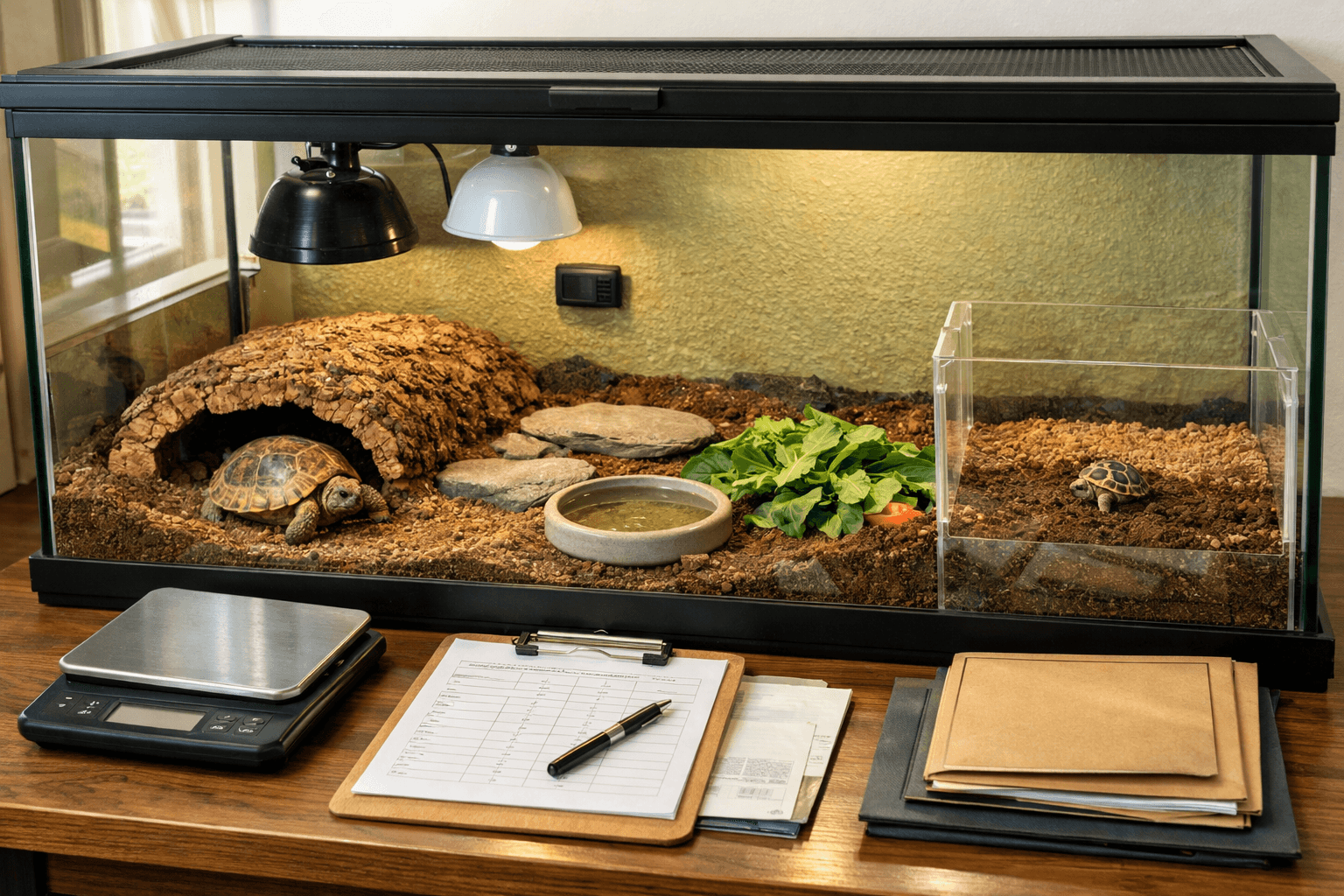
Your enclosure needs to run stable for at least one full week before the tortoise ever arrives. This is the step almost every buyer guide skips, and it’s the single biggest reason new tortoises get sick or die in the first month.
Why the One-Week Rule Matters
Substrate needs time to reach the right moisture balance, basking bulbs need time to prove they’re holding a steady 95-100°F hot spot, and you need to confirm the cool side sits around 70-75°F without swinging overnight. A tortoise dropped into a still-fluctuating tank gets hit with temperature stress on top of the stress of a new home, and that combination is what tanks immune systems fast.
Minimum Setup Checklist
A tank or open-top enclosure at least 4 feet by 2 feet for one adult
UVB lighting running 12 hours a day, replaced every 6-12 months per the bulb’s rating
A basking bulb creating a 95-100°F hot spot, confirmed with a probe thermometer, not a sticker gauge
Substrate mixed for burrowing, at least 3-4 inches deep, holding humidity in the 40-60% range
A shallow water dish big enough to soak in but shallow enough it can’t drown
Hiding spots on both the warm and cool ends
Sites like Pet Terrarium run full step-by-step enclosure builds if you want a walkthrough before you commit to a purchase, and working through one of those a week or two ahead of pickup day takes the guesswork out of it.
Buying Basics: Health Checks, Sexing, Quarantine, and Legal Notes
Before money changes hands, physically inspect the animal (or ask for close-up video) for clear eyes, no nasal discharge, a firm shell without soft spots, and active leg movement when picked up. A tortoise that stays limp or won’t open its eyes needs a vet check before you consider buying it, guarantee or not.
Sexing matters if you’re planning to keep more than one. Males have longer tails and a slight concave underside (plastron); females have shorter tails and flatter plastrons. Most sellers won’t confidently sex an animal under a year old, so don’t expect certainty on a hatchling.
Quarantine any new tortoise separately for 30 days minimum, even if it came from a trusted breeder. This protects any existing tortoises you own from parasites or respiratory issues that don’t show symptoms right away.
Diet is grass hay, weeds like dandelion and clover, and leafy greens such as collard or mustard greens, with fruit skipped almost entirely since it causes gut problems in this species. On the legal side, Russian tortoises don’t require a federal permit to own in most states, but a few jurisdictions restrict non-native reptile ownership, so a quick call to your state’s fish and wildlife office before buying is worth the ten minutes.
One more thing buyers underestimate: a Russian tortoise can live 40 years or more in captivity and reaches only 6-10 inches as an adult. That long lifespan means this purchase is closer to adopting a dog than buying a goldfish, so it’s worth being honest with yourself about care for the next few decades before you commit.
Frequently Asked Questions
How can I tell a Russian tortoise apart from a Hermann’s or Greek tortoise?
Russian tortoises have four claws on each front foot (Hermann’s and Greek have five), a flatter shell, and a smaller adult size around 6-10 inches versus 8-12 inches for the others.
Is it legal to ship a live tortoise across state lines?
Yes, reputable breeders ship live tortoises using overnight carriers with temperature-controlled packaging, and most charge $40-$80 for shipping on top of the animal’s price.
What are the biggest red flags when buying a Russian tortoise?
Refusal to show live video, no hatch or health records, pressure to pay immediately, and prices under $50 for a supposedly captive-bred animal are the clearest warning signs.