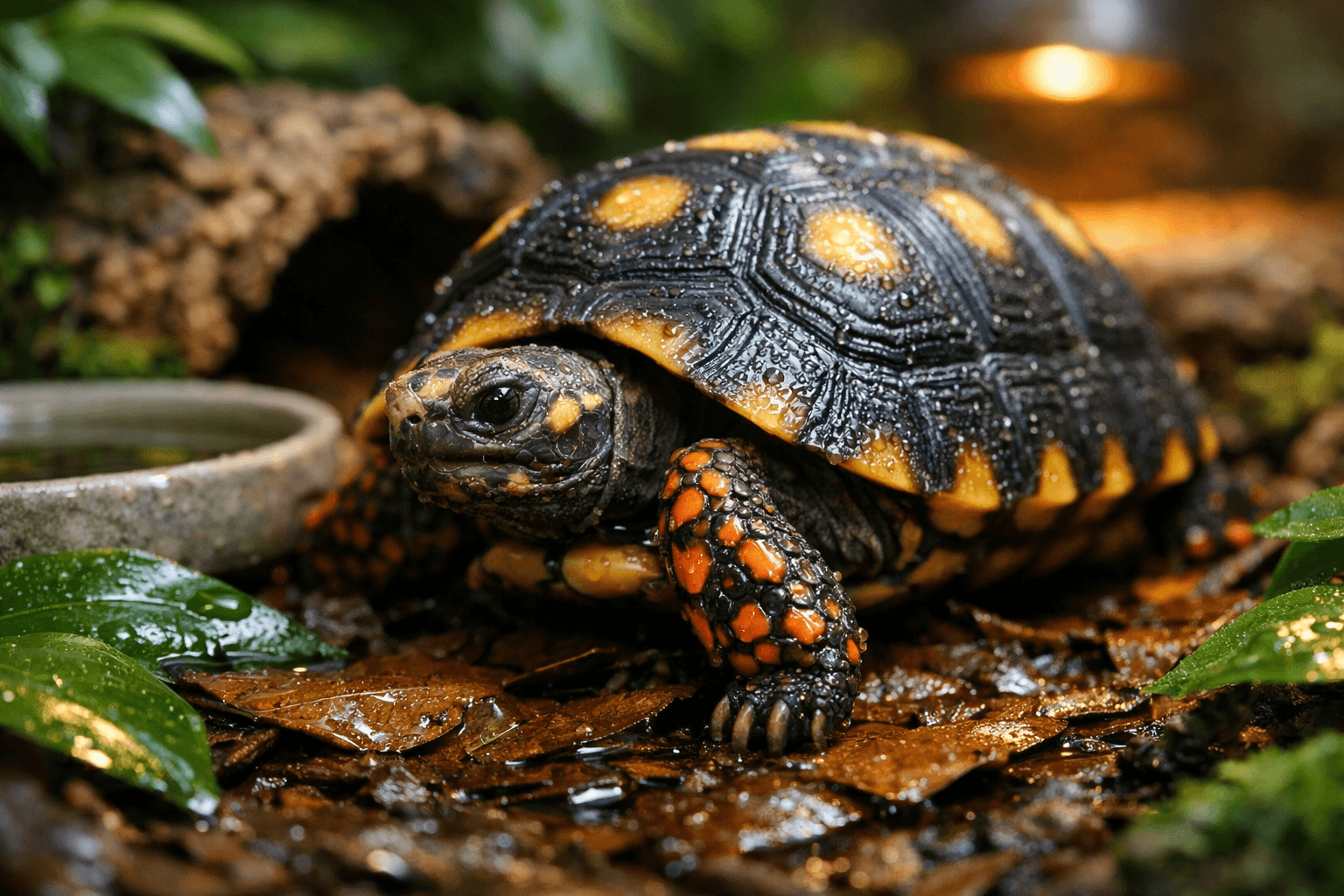
Forget everything you think you know about desert tortoises. A red footed tortoise is a forest animal, not a sand-and-rock species, and treating it like a sulcata or Russian tortoise is the fastest way to land in a vet’s office. These guys come from the humid forests and savannas of South America, and their whole body runs on moisture in the air, not just water in a dish.
That mismatch is where most new owners get stuck. They set up something dry, add a heat lamp, and call it done, then wonder why their tortoise develops a raspy wheeze or soft shell patches six months later. Get the humidity and basking balance right from day one, and a red footed tortoise is honestly one of the more forgiving, food-motivated, easygoing tortoises you can keep.
Why “Tropical Forest Tortoise” Changes Your Whole Setup
Red footed tortoises live in the leaf litter and brushy edges of South American forests and grasslands, stretching across Brazil, Colombia, Venezuela, and neighboring countries. That native range means humidity isn’t optional background info, it’s the single biggest thing separating this species from the arid tortoises most beginners have read about.
The Sulcata Comparison Trap
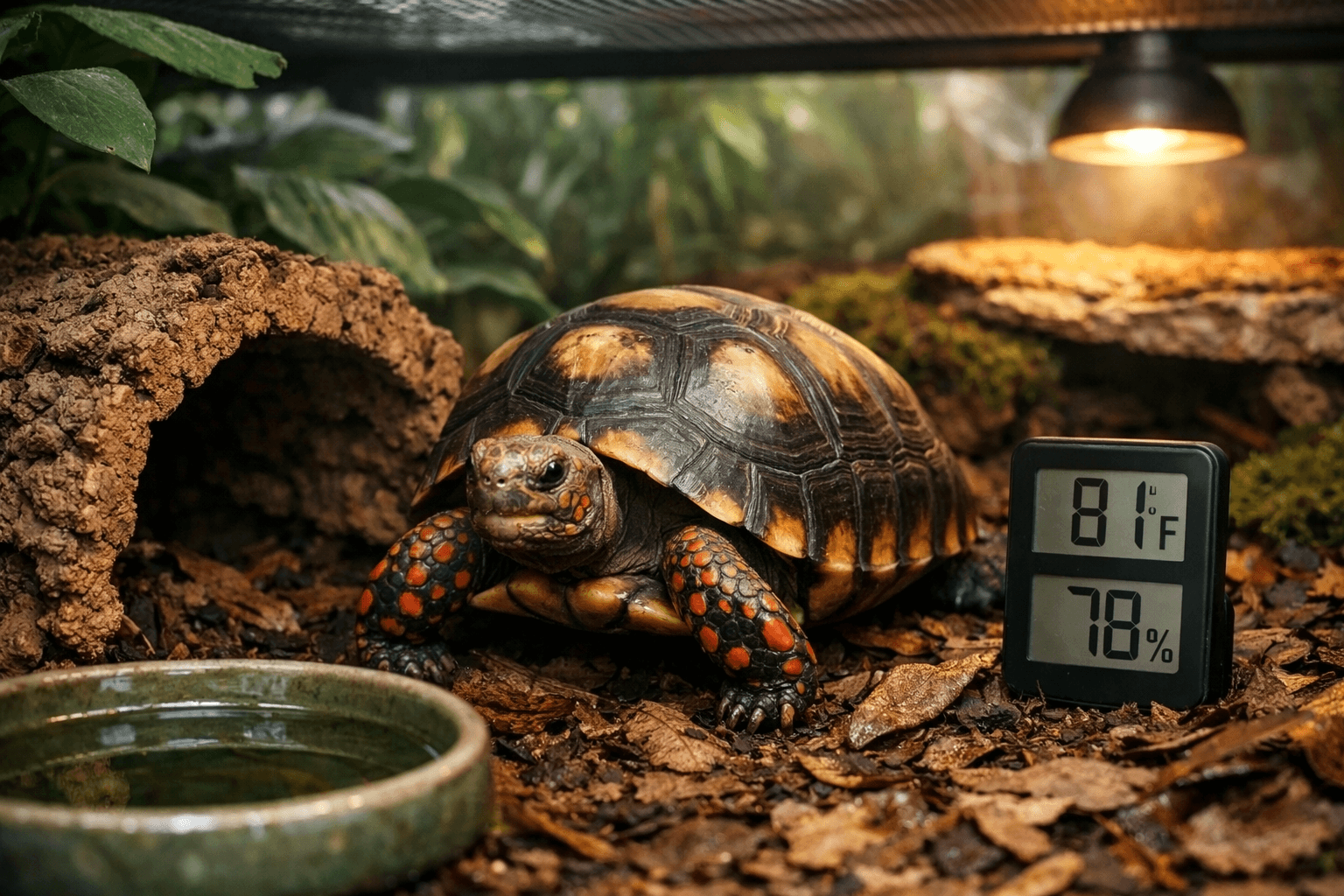
Sulcatas and Russian tortoises come from dry grassland and steppe habitats, so their care sheets push low humidity and bone-dry substrate. Copy that formula for a red footed tortoise and you’ll see dry, flaky skin, stuck shed on the legs, and eventually respiratory infections. Aim for 70-80% ambient humidity, not the 30-40% that works fine for a sulcata.
What High Humidity Plus Dry Basking Actually Means
The trick isn’t just cranking humidity everywhere. You need a moist, humid enclosure overall with one genuinely dry, warm basking spot the tortoise can retreat to. Think damp forest floor with a sunny clearing, not a sauna. That contrast is what these tortoises evolved with, and recreating it is the real skill in this hobby.
Enclosure Size and Setup From Hatchling to Adult
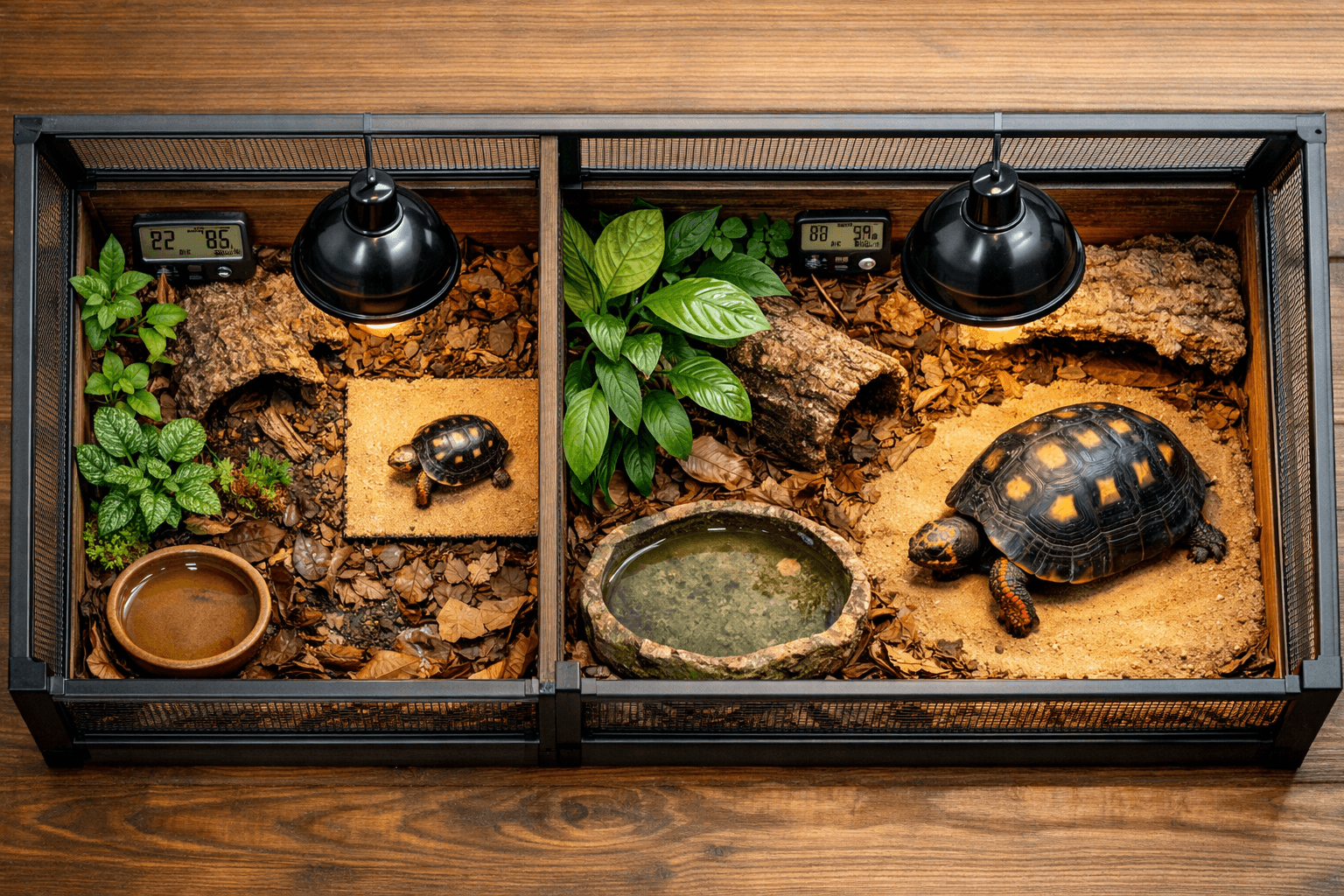
A single adult red footed tortoise needs a minimum floor space of 4 feet by 8 feet, and honestly, bigger is always better once you have the room. Hatchlings can start smaller, around a 40-gallon breeder tank or equivalent tub, but they grow fast and outgrow that setup within a year or two.
Indoor vs Outdoor Housing
Outdoor housing works well in warm months across most of the southern United States, using a secure, predator-proof pen with shade and a shallow water feature. Indoors, a wood-sided tortoise table beats a glass tank because glass doesn’t hold humidity and tortoises can’t see clear walls, so they pace and stress. In colder climates, plan on moving them indoors once nighttime temps drop below 60°F.
Substrate That Holds Moisture
Skip sand and gravel entirely. A mix of coconut coir, sphagnum moss, and organic topsoil holds humidity far better and lets your tortoise dig and burrow the way it would in leaf litter back home. Keep it damp to the touch, like a wrung-out sponge, and top it up with a spray bottle or reptile fogger daily.
Adult red footed tortoises typically reach 11 to 14 inches in shell length and can weigh 20 to 30 pounds, so budgeting for that final size now saves you an expensive re-build later.
Heat, UVB, and the Basking Spot That Prevents Shell Problems
Skipping UVB because a tortoise is “tropical” is one of the most common and costly mistakes in this hobby. Even forest-dwelling reptiles need UVB to process calcium properly, and without it you’re looking at metabolic bone disease down the road. A high-output UVB tube rated for 10-12% UVB output, running the length of the enclosure, is the standard here.
Basking temperature should sit around 90-95°F directly under the lamp, with the cooler end of the enclosure holding steady around 75-80°F. Ambient air temperature overall should stay in the mid-70s to low 80s, day and night, since these tortoises don’t tolerate cold snaps well. A ceramic heat emitter works for overnight warmth since it doesn’t disrupt their sleep cycle with light.
Setup Element
Target Range
Common Mistake
Ambient humidity
70-80%
Running it dry like a desert species
Basking spot temp
90-95°F
No dedicated dry basking zone
Ambient temperature
75-82°F
Letting nighttime temps drop too low
UVB output
10-12% UVB tube
Skipping UVB because they’re “tropical”
Enclosure size (adult)
4 ft x 8 ft minimum
Keeping a full-grown adult in a small table
Running a UVB bulb costs roughly $30 to $50 and needs replacing every 6 to 12 months even if the light still looks fine, since UVB output fades long before the bulb burns out.
Feeding a Red Footed Tortoise Without Overdoing Protein or Fruit
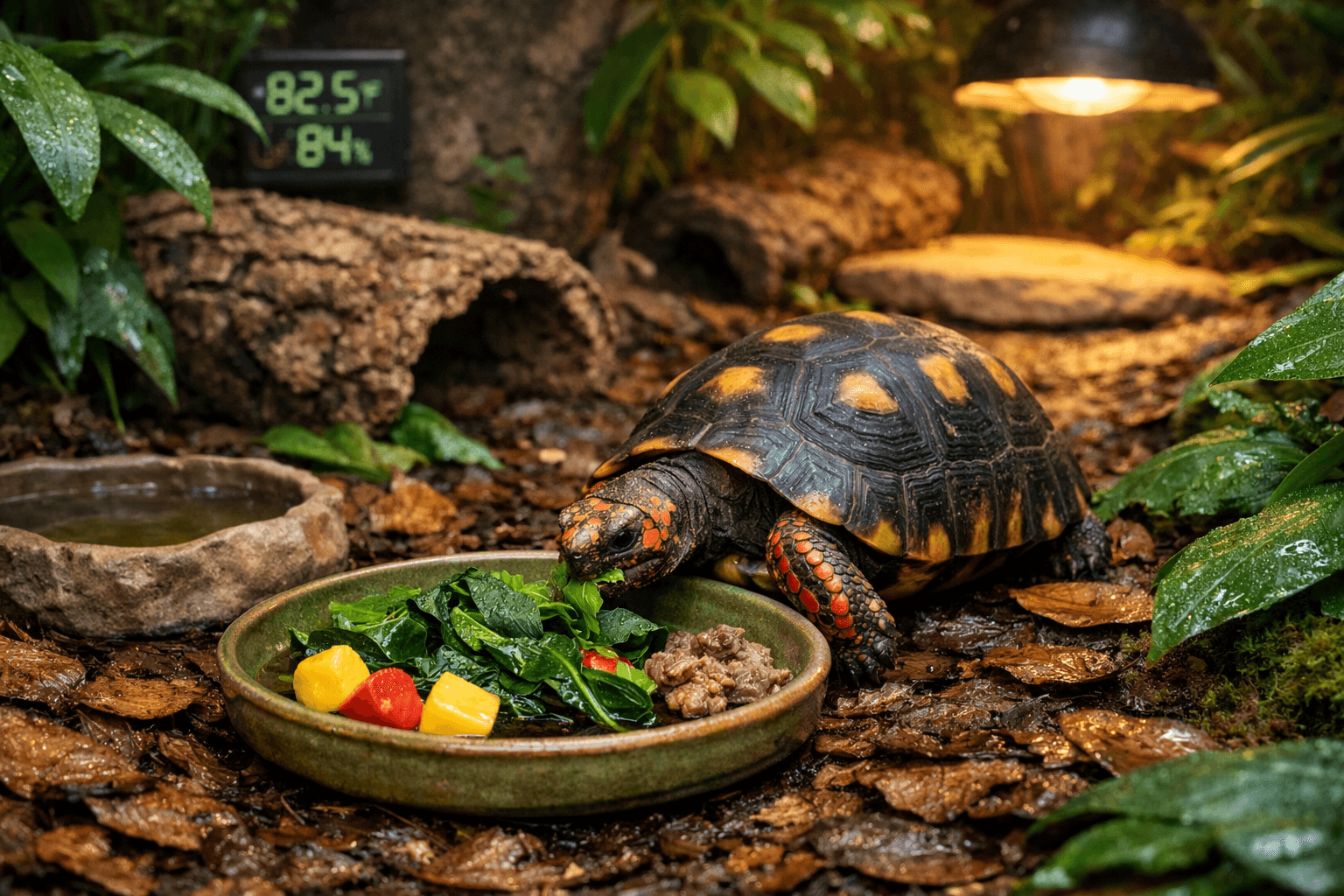
The right diet is 80% dark leafy greens and weeds, 10% fruit, and a small rotating portion of protein like earthworms or low-fat cooked meat once or twice a week. This species is genuinely omnivorous, more so than most tortoises, but that doesn’t mean protein and fruit should dominate the bowl.
Building a Feeding Routine
Offer a mixed base of collard greens, dandelion, mustard greens, and hibiscus leaves daily.
Rotate in squash, bell peppers, and green beans a few times a week for variety.
Add a small piece of fruit like papaya or melon once or twice a week, not daily.
Provide a protein source, such as earthworms or a bit of cooked chicken, once weekly.
Dust food with a calcium supplement three to four times a week, and add a reptile multivitamin once weekly.
Feed hatchlings daily; shift adults to feeding every other day once they’re past two years old.
Too much fruit or protein causes rapid, uneven growth and can contribute to shell pyramiding, that bumpy, stacked look on the scutes that signals something’s off nutritionally. Pyramiding is largely preventable with the right humidity and diet combo, so don’t panic if you spot early signs, just correct the setup fast.
Water access matters as much as food. Keep a shallow water dish always available for soaking and drinking, and give hatchlings a warm soak two to three times a week to support hydration and shedding.
Health Watch: Shell Rot, Respiratory Infection, and Sizing Up Too Late
The two health issues that show up most in red footed tortoises are shell rot and respiratory infection, and both trace back to a humidity or hygiene problem you can usually fix fast. Shell rot looks like soft, discolored, or foul-smelling patches on the shell, often from substrate staying too wet without enough airflow, or from a dirty enclosure.
Respiratory infection shows up as wheezing, bubbling at the nose, or lethargy, and it’s often caused by temperatures dropping too low at night rather than humidity being too high. If you catch either issue early, a reptile vet visit and a setup adjustment usually turns things around within a couple of weeks. Waiting too long is what turns a fixable problem into a serious one, so don’t put off that vet call if something looks wrong.
The other slow-motion mistake is enclosure size. A hatchling in a 40-gallon tub looks perfectly happy, but that same tortoise at 25 pounds and 13 inches long needs real floor space, not a bigger version of a small setup. Planning your enclosure around the adult size from the start, even if you build it in stages, saves you a stressful scramble later. Sites like petterrarium.com are worth browsing for tropical enclosure build examples if you want to see how other keepers scaled their setups as their tortoise grew.
Frequently Asked Questions
How big of an enclosure does a red footed tortoise actually need?
An adult needs at least 4 feet by 8 feet of floor space, larger if you can manage it. Hatchlings can start in a 40-gallon tub but will outgrow it within one to two years as they grow toward their adult size of 11 to 14 inches.
Do red footed tortoises need a humidifier or fogger?
Most keepers get by with daily misting and moisture-retaining substrate, but a fogger or humidifier helps a lot in dry climates or heated homes where indoor air drops below 40% humidity in winter. Aim to keep the enclosure at 70-80% consistently.
How long do red footed tortoises live, and how big do they get?
Expect a lifespan of 30 to 50 years with good care, sometimes longer, and an adult size of 11 to 14 inches and 20 to 30 pounds. That long lifespan means this is a decades-long commitment, not a short-term pet.