A guy at a reptile expo in Ohio once bought a gorgeous crested gecko on a Saturday morning, drove home thrilled, and realized that night he had no misting schedule, no live plants, and a heat lamp meant for a desert species that would’ve cooked the poor thing. He returned to the expo table the next day asking for help, and the breeder just laughed and said “you bought the gecko before you built the house.” That backwards order is the single biggest mistake people make when browsing pet geckos for sale, and it’s fixable before you ever hand over cash.
If you’re hunting for pet geckos for sale right now, you’re probably comparing local pet stores, breeders, and online listings, trying to figure out who’s trustworthy. Good instinct. The real work, though, happens before purchase day: picking the right species for your life and getting the enclosure running days ahead of time.
Which Gecko Species Actually Fits Your Life?
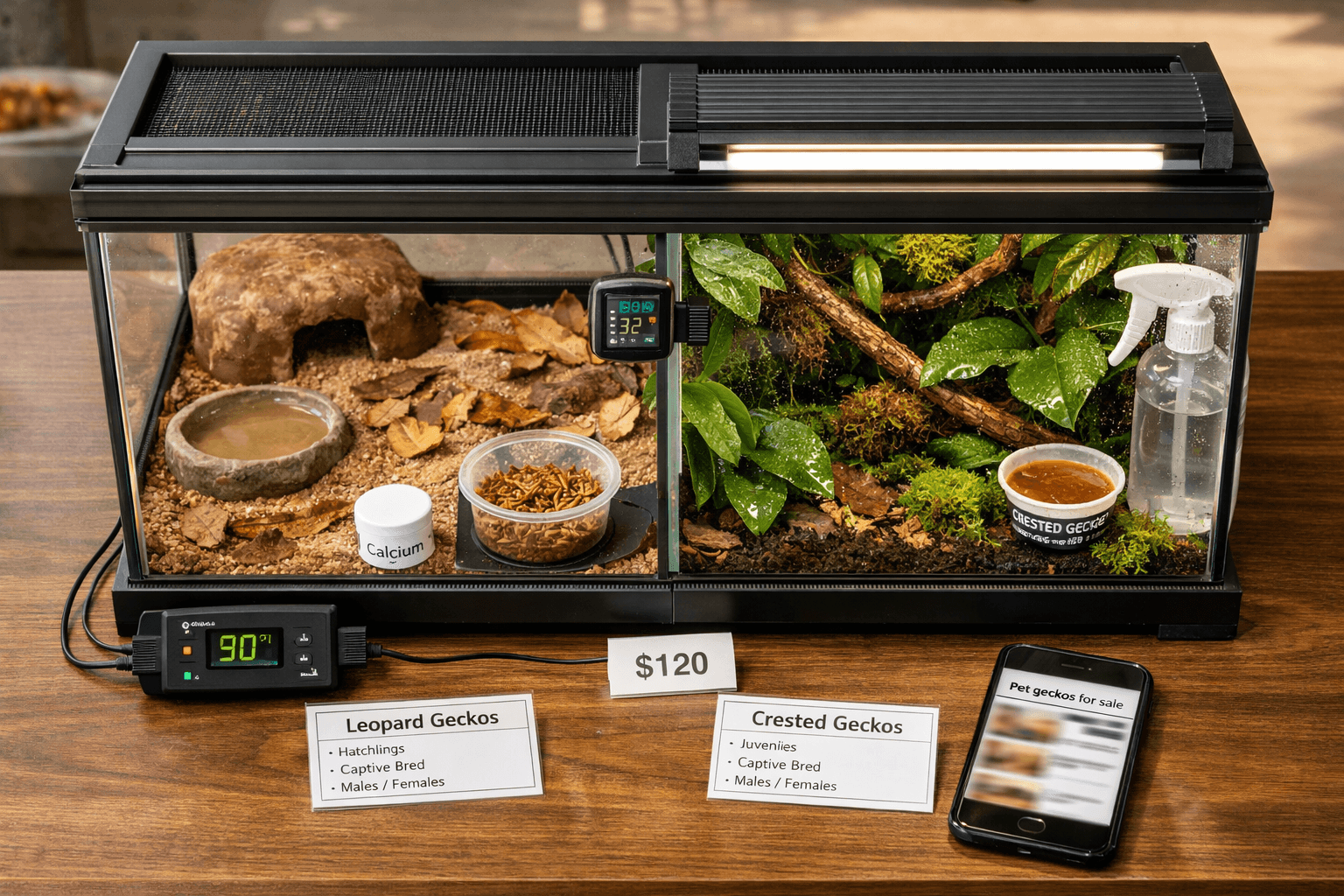
The two most common starter geckos are the leopard gecko (Eublepharis macularius) and the crested gecko (Correlophus ciliatus), and they need almost opposite setups. Pick based on your schedule and climate control, not looks alone.
Leopard Geckos: Ground-Dwelling and Low-Humidity
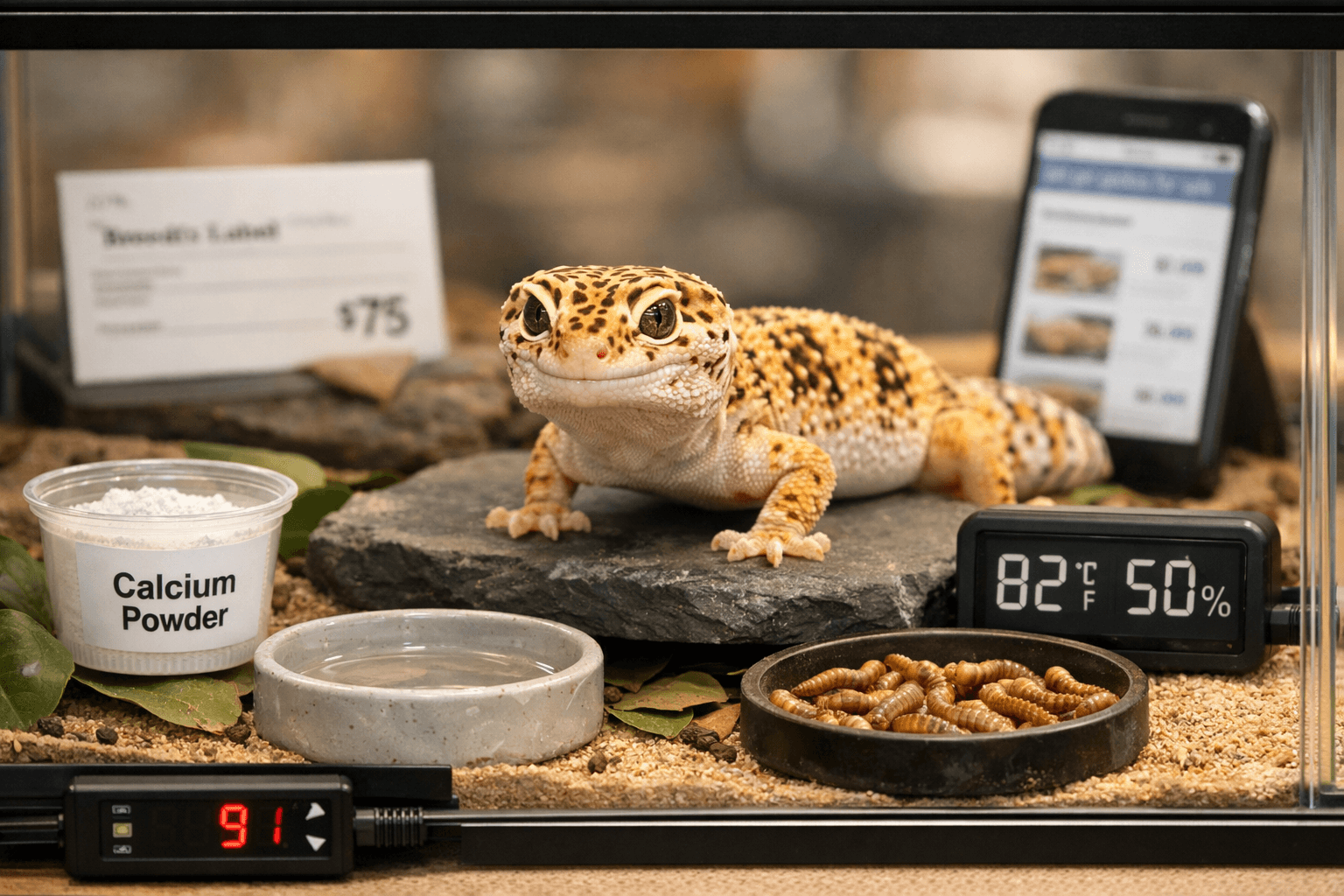
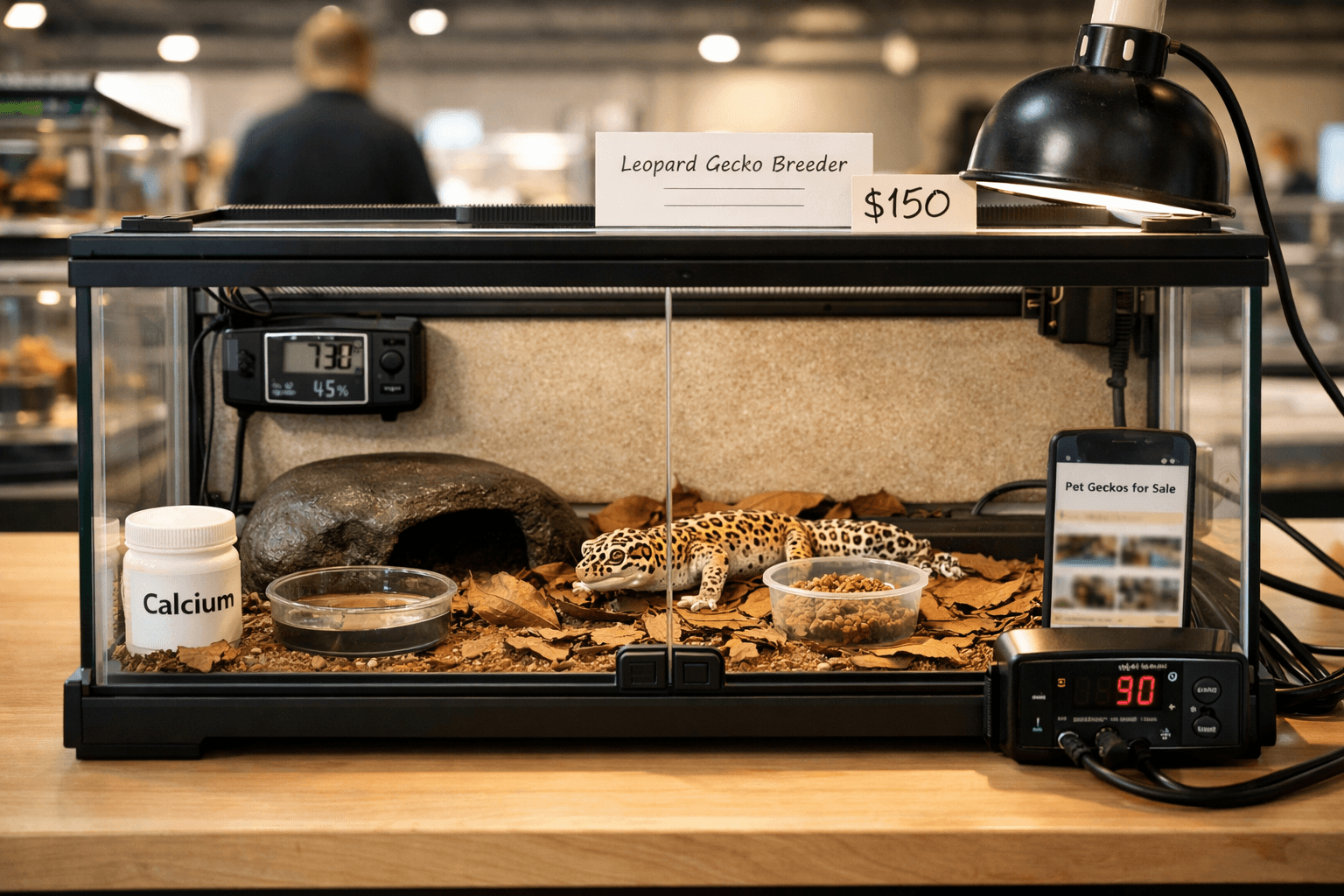
Leopard geckos live on the ground, need dry heat around 88-92°F on the warm side, and don’t climb much. They’re calm, handle-tolerant, and forgive a missed feeding here and there since they store fat in their tails.
They do need a solid heat source like an under-tank heater paired with a thermostat, because leopard geckos can suffer thermal burns from unregulated heat mats. Budget geckos are famously easygoing eaters, mostly crickets and mealworms, dusted with calcium a few times a week.
Crested Geckos: Arboreal and No Heat Lamp Required
Crested geckos climb, jump, and live at room temperature, usually 72-78°F, so you often don’t need supplemental heat at all in a warm house. That sounds easier, but they need daily misting and a taller, planted enclosure to feel secure.
They also eat differently. Most owners feed a commercial crested gecko diet powder mixed with water instead of live insects, which is honestly one of the easiest feeding routines in the whole reptile hobby.
Less Common Options Worth a Look
Gargoyle geckos, African fat-tails, and Gecko species from the Phelsuma genus (day geckos) show up at expos too, but they come with sharper learning curves around lighting or diet. If a seller is pushing you toward one of these as a “beginner gecko,” ask specifically why. A good breeder will give you a real answer, not just a sales pitch.
Setting Up the Habitat Before You Buy: The Step Most Guides Skip
Here’s the part almost nobody tells you clearly: your terrarium needs to be fully running, heated, and stable for at least a week before the gecko arrives. Rushing this step is the number one cause of early gecko health problems, more than breeder quality or species choice combined.
A “cycled” reptile habitat just means the temperature and humidity have settled into a steady range you’ve actually measured, not guessed at. Thermostats, heat mats, and hides all need testing time. Skip this and you’re troubleshooting a sick animal instead of tweaking an empty box.
What a Basic Setup Actually Costs
Don’t expect to spend under $50 and get something safe. Realistic first-time costs land somewhere in this range depending on species:
Item
Leopard Gecko Setup
Crested Gecko Setup
Enclosure (20-gallon long or tall)
$60-$100
$80-$130
Heating (heat mat + thermostat)
$35-$60
$0-$40 (often not needed)
Lighting (UVB fixture)
$30-$50
$30-$50
Substrate
$15-$25
$15-$25
Hides, plants, decor
$25-$50
$40-$70 (live plants cost more)
Thermometer/hygrometer combo
$10-$20
$10-$20
Total estimate
$175-$305
$175-$335
Prices swing based on whether you go bare-bones plastic tub or a nicer glass display tank, but budgeting under $150 total usually means cutting a corner you’ll regret, like skipping the thermostat.
The One-Week Test Run
Set the whole tank up empty first. Run the heat source, check both ends of the enclosure with a separate thermometer, and watch the humidity for several days before you bring a gecko home.
If you’re not sure what “normal” numbers look like for your specific species, spending a night reading through species care guides on a site like petterrarium.com before setup day can save you from buying the wrong bulb or the wrong substrate entirely.
Breeders vs. Pet Stores vs. Online Sellers: Who Should You Trust?
Reptile breeders generally offer the healthiest, best-documented geckos, but pet stores and reputable online sellers can work too if you know what to check. The seller matters less than what proof they can show you about the animal’s history.
Local Exotic Pet Stores
A good local exotic pet store lets you see the animal in person, watch it move, and ask staff direct questions about feeding history. The catch is that not every store has staff who specialize in reptiles, so care quality between individual geckos can vary even within the same shop.
Ask how long they’ve had the specific gecko and where it came from. If nobody can answer, that’s a red flag worth taking seriously.
Reptile Breeders and Expos
Breeders selling directly, whether online or at a table at a reptile expo, usually know the exact lineage, hatch date, and feeding schedule of each gecko. This matters because inbred or poorly-bred lines can carry health issues that show up months later.
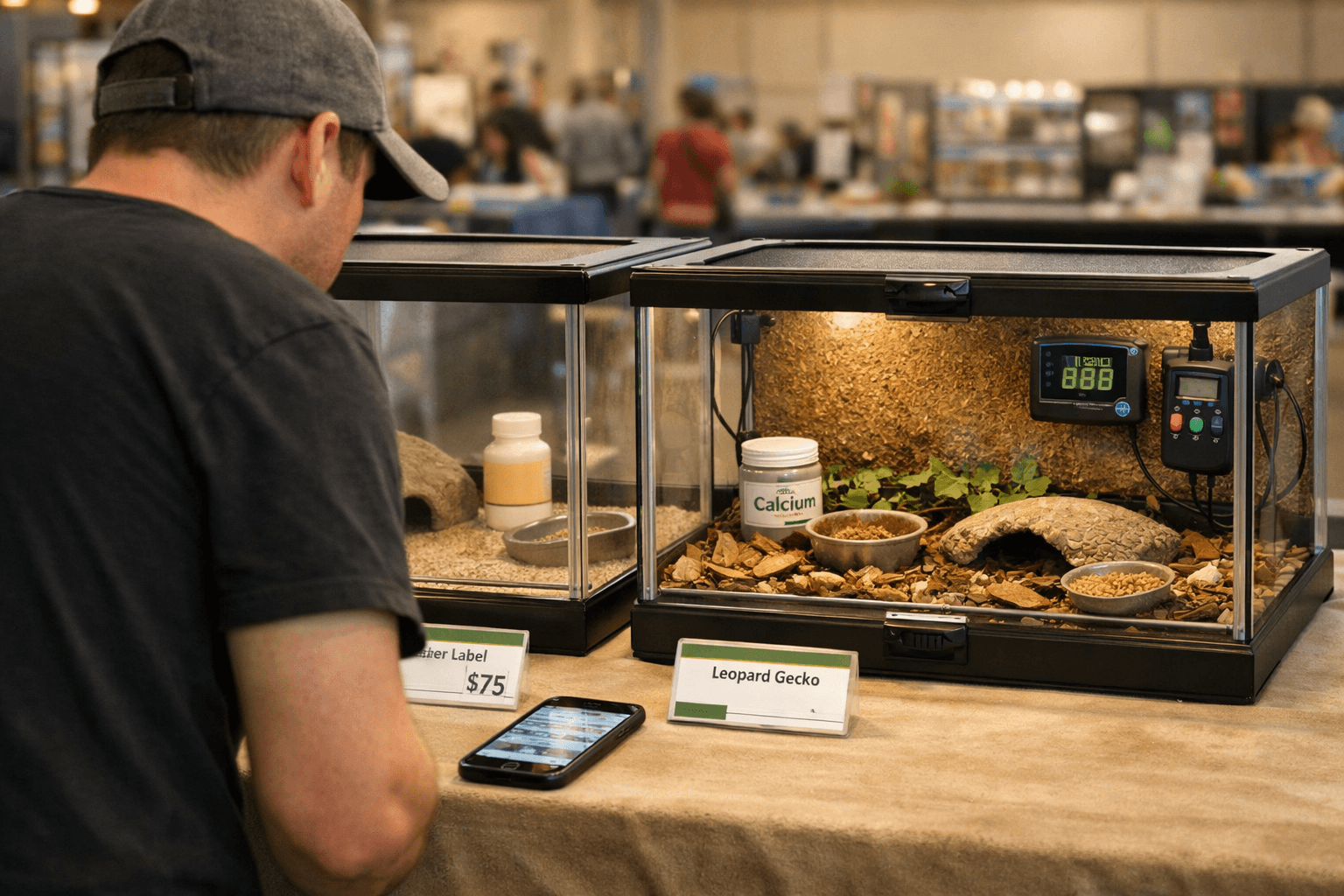
At an expo, you get the huge advantage of handling the animal before buying. Watch how it grips your hand, check its weight isn’t oddly light, and ask the breeder how many clutches this particular gecko’s parents produced.
Online Reptile Sellers and Shipping Live Reptiles
Buying online works fine with an established seller, but shipping live reptiles is weather-dependent and stressful for the animal. Most reputable sellers won’t ship in extreme heat or cold and will include a live-arrival guarantee in writing.
Ask directly about their shipping cutoffs and what happens if a package is delayed. A seller who dodges this question or ships regardless of forecast is not one I’d trust with a living animal.
CB (Captive Bred) vs. Wild-Caught: Why It Changes Everything
Always choose a captive-bred (CB) gecko over a wild-caught one when you have the choice. CB geckos are used to captivity, carry a far lower parasite load, and have known genetics, while wild-caught animals often arrive stressed, dehydrated, and loaded with internal parasites nobody has treated yet.
Most leopard and crested geckos sold in the US pet trade today are captive bred, which is genuinely good news for buyers. It wasn’t always this way, and the shift toward captive breeding programs over the last couple decades is a real win for both animal welfare and buyer confidence.
Wild-caught geckos still show up sometimes, especially with rarer species imported from Madagascar or parts of Southeast Asia. If a listing doesn’t specify, ask directly: “is this captive bred or wild caught?” A seller who can’t answer clearly probably doesn’t know the animal’s actual origin.
The price difference tells part of the story too. Wild-caught geckos are often cheaper upfront, sometimes by $20-$40, but the vet bills from treating parasites can wipe out that savings fast. A fecal exam and treatment round at an exotic vet frequently runs $75-$150 on its own.
Beyond health, CB geckos tend to be calmer around handling since they’ve been around people their whole lives. A wild-caught animal may never fully settle into handling, no matter how patient you are.
If you do end up with a wild-caught gecko, treat quarantine and vet screening as mandatory, not optional. Don’t skip the fecal test just because the animal “looks fine” — internal parasites rarely show obvious symptoms until the infestation is serious.
Health Checks: What to Look for Before You Pay
Before any money changes hands, look at the gecko’s body, behavior, and surroundings. A healthy gecko has clear eyes, a rounded tail base, and no visible sores or retained shed. Skipping this check is how people end up with expensive vet visits in week one.
Physical Signs Worth Checking
Look closely at the tail. A leopard gecko’s tail should be plump and carrot-shaped, since that’s where it stores fat reserves; a thin, shriveled tail usually means the animal hasn’t been eating well. Check the toes and tail tip for retained shed, which looks like dry, discolored skin stuck in a ring.
Gently ask the seller to let the gecko walk on their hand so you can watch its gait. A healthy gecko moves smoothly; one that drags a limb or seems wobbly may have metabolic bone disease from poor calcium or UVB history.
Behavior and Enclosure Clues
Look at the enclosure the gecko is currently living in, not just the animal. Clean water, appropriate substrate, and a visible feeding schedule posted or explained by staff all suggest the animal has been cared for properly up to this point.
A gecko that hides constantly isn’t necessarily unhealthy since many species are naturally shy, but one that seems lethargic even when disturbed is worth a second look. Ask the seller directly when it last ate and what it ate.
Here’s a quick sequence to run through before you commit to any specific animal:
Ask to see the gecko out of its enclosure and handle it briefly if the species allows.
Check the tail shape and look for retained shed around the toes and tail tip.
Watch it walk across a flat surface and look for any limping or dragging.
Ask when it last ate, what it ate, and how often it’s fed.
Ask if it’s captive bred and request the hatch date if known.
Confirm whether a health guarantee or return policy applies.
Walking away from a gecko that fails several of these checks isn’t being paranoid. It’s the same instinct you’d use buying a used car with a suspicious noise. There’s always another gecko for sale next week.
Quarantine: The Step People Skip Right Before Something Goes Wrong
New geckos need a minimum 30-day quarantine period in a separate room from any existing reptiles, with separate tools for cleaning and feeding. Skipping quarantine is how one sick new gecko turns into an outbreak across your whole collection.
Why Quarantine Length Matters
Some parasites and respiratory infections have incubation periods that stretch several weeks before symptoms show. A gecko that looks totally fine on day 3 can start showing signs of a parasite load by day 20, which is exactly why the 30-day window exists rather than something shorter and more convenient.
During this stretch, keep the new gecko’s enclosure, water dish, and cleaning tools totally separate. Wash your hands between handling the new animal and any existing pets, and consider handling the new gecko last in your daily routine.
Setting Up a Separate Quarantine Space
You don’t need a second bedroom for this. A spare room, a closet with airflow, or even a corner of the garage with stable temperatures works, as long as it’s physically apart from your other reptile tanks.
If you only have one gecko already and space is tight, a simple divider like a closed door between rooms is usually enough. What matters most is not sharing equipment. Don’t reuse the same misting bottle, feeding tongs, or hide décor between the quarantine tank and your established enclosures.
Watch closely for warning signs during this window: unusual stool, refusing food for more than a week, weight loss, or lethargy that doesn’t match normal shy behavior. If anything seems off, a fecal exam at an exotic vet is worth the $50-$100 it typically costs, caught early instead of after it spreads.
Common Mistakes That Cost New Gecko Owners Money and Animals
Most gecko problems trace back to a handful of repeatable mistakes, and every one of them is avoidable with a little planning. Recognizing these before you shop saves both money and heartbreak.
Assuming every pet store gecko is automatically healthy and well-bred is probably the most common one. Pet stores vary hugely in quality, and a beautiful display tank doesn’t guarantee the animal behind the glass got proper care before arriving there.
Buying the gecko before the enclosure is ready is a close second, and it’s the exact situation from the opening story. An unfinished habitat with untested temperatures is the leading cause of early health problems, not bad luck or a “weak” animal.
Treating a crested gecko like a leopard gecko (or the reverse) trips up plenty of first-timers who assume all geckos need the same setup. One needs dry desert-style heat on the ground; the other needs a humid, planted, climbing space at room temperature. Mixing up those care sheets can stress an animal within days.
Ignoring quarantine when you already have reptiles at home rounds out the list, usually because the new gecko “seems fine” and the owner is excited to introduce everyone. That excitement is understandable, but 30 days of patience beats months of treating a spreading illness.
Frequently Asked Questions
How much does a pet gecko typically cost?
Leopard geckos usually run $30-$75 for common color morphs, while crested geckos range from $50-$150 depending on pattern and coloring. Rare morphs from specialty breeders can climb past $300, well above the beginner budget most people expect.
Can I buy a gecko online and have it shipped safely?
Yes, reputable sellers ship live geckos safely using insulated packaging and temperature-controlled shipping methods, usually avoiding days above 90°F or below 40°F. Always confirm the seller offers a live-arrival guarantee before paying.
Do I need a vet checkup right after buying a gecko?
It’s smart but not always required immediately; watch the animal through its 30-day quarantine first. If you notice any signs of illness, an exotic vet visit runs roughly $50-$100 for a basic exam and fecal test.
How do I know if a breeder is reputable?
Reputable breeders answer questions clearly about lineage, hatch dates, and feeding history, and they usually offer some form of health guarantee. Hesitation, vague answers, or refusal to show the animal in person are warning signs worth taking seriously.