You’re measuring your african spurred tortoise hatchling in inches right now, but that same animal will weigh over 100 pounds within a decade. Most new owners don’t plan for that. They buy a 40-gallon tank, get comfortable, and then scramble when the tortoise outgrows it in under two years.
This isn’t a species where you can patch together a housing plan as you go. Geochelone sulcata grows faster than almost any other land tortoise, and the enclosure decisions you make in year one shape the animal’s health for the next 50-plus years.
A Sulcata Grows Fast — Your Housing Plan Needs to Cover All Three Stages
A hatchling african spurred tortoise fits in your palm. By age three, it can hit 20 pounds. By age ten, expect 80 to 100 pounds, sometimes more. That’s not a slow drift. It’s a sprint by tortoise standards.
Plan for all three life stages before you buy: juvenile (under 6 inches), sub-adult (6 to 14 inches), and adult (14 inches and beyond). Each stage needs a completely different setup, not just a bigger version of the last one. Skipping ahead in your planning is the single most common reason sulcata owners end up overwhelmed.
Enclosure Size by Life Stage: Juvenile, Sub-Adult, and Adult Specs Compared
The size difference between a juvenile setup and an adult setup is enormous. We’re talking about going from a 4-square-foot enclosure to a dedicated outdoor pen measured in hundreds of square feet. The table below lays out the hard numbers so you can plan ahead.
Life Stage
Shell Length
Weight (Approx.)
Minimum Floor Space
Housing Type
Juvenile
Under 6 in
Under 5 lbs
4 sq ft (e.g., 2 ft x 2 ft)
Indoor tortoise table or tub
Sub-Adult
6–14 in
5–50 lbs
16–32 sq ft
Large indoor pen or outdoor pen
Adult
14 in+
50–150 lbs
100+ sq ft
Outdoor pen only
Juvenile Housing (Under 6 Inches): Where the Terrarium Actually Works
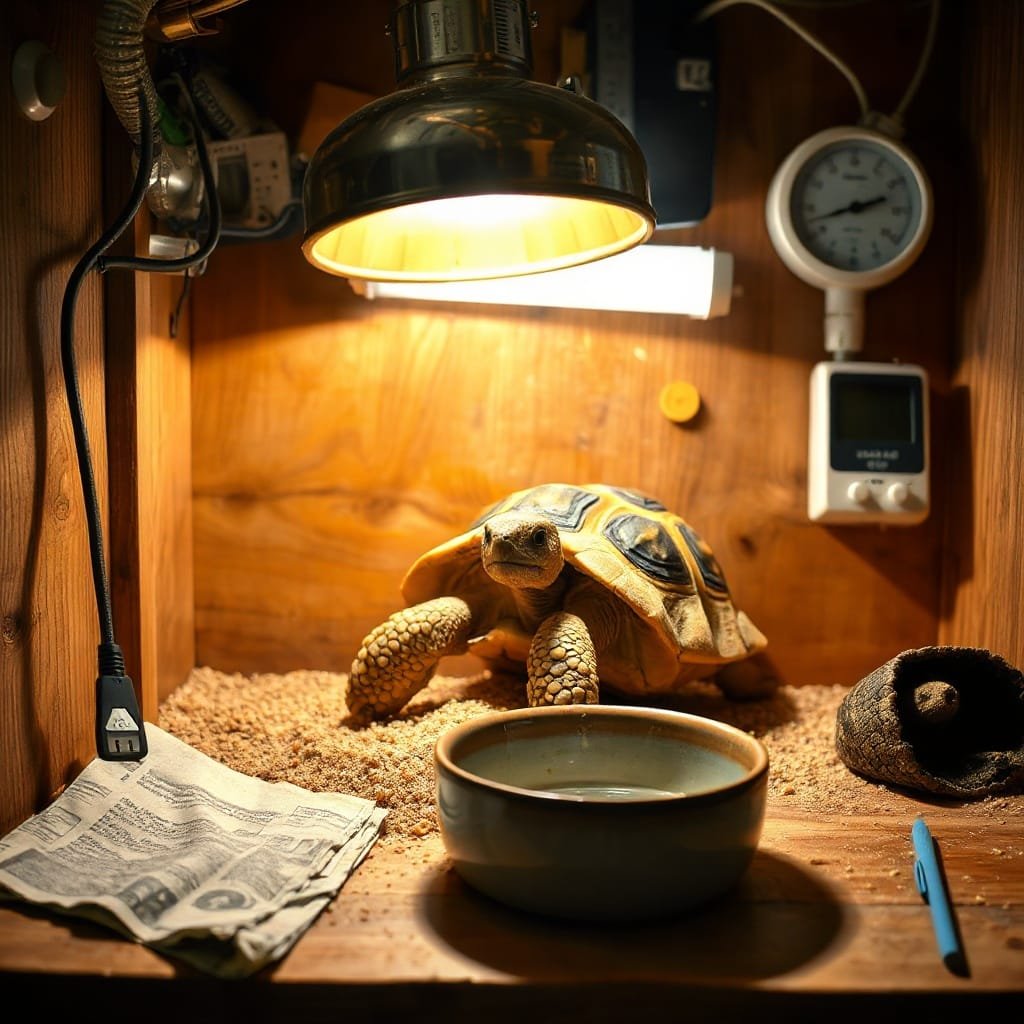
For the first year or two, an indoor setup is perfectly fine. A tortoise table (an open-top wooden enclosure) beats a glass aquarium every time. Glass tanks trap humidity and block UVB radiation from reaching the tortoise properly. A 2-foot by 2-foot tortoise table gives a hatchling enough room to move, thermoregulate, and burrow without getting lost.
Don’t start smaller than 4 square feet, even for a tiny hatchling. Sulcatas are active animals that pace and graze constantly. A cramped enclosure causes stress behaviors like wall-ramming within weeks.
A standard 40-gallon breeder tank (36 inches x 18 inches) is roughly 4.5 square feet, which is acceptable as a starting point, but you’ll outgrow it fast. Budget for an upgrade within 12 to 18 months.
Sub-Adult and Adult Housing: When Indoors Stops Making Sense
Once your african spurred tortoise hits 6 inches, indoor housing becomes a real management challenge. The tortoise needs more floor space than most rooms can reasonably provide, and the burrowing behavior gets destructive fast. By 14 inches, keeping it indoors full-time is no longer practical for most owners.
Outdoor pens work well in USDA hardiness zones 9 through 11, where nighttime temperatures rarely drop below 50°F. In cooler climates, you’ll need a heated shelter inside the pen. A small insulated shed with a ceramic heat emitter works well and costs roughly $150 to $300 to set up. The transition to outdoor housing should happen before the tortoise hits 50 pounds, not after, when moving it becomes a two-person job.
Building the Right Indoor Setup for a Juvenile Sulcata
A good juvenile setup has four non-negotiable elements. Get these right and the tortoise will thrive indoors for its first couple of years.
A tortoise table or open-top tub with at least 4 square feet of floor space
Substrate that’s at least 4 inches deep and holds a burrow shape
A basking spot hitting 95–100°F with a cooler end around 75–80°F
A T5 HO UVB bulb rated for 10.0 or 12% output, mounted no more than 12 inches above the tortoise
Substrate Depth and Burrowing Room
Use at least 4 inches of substrate. Six inches is better. A mix of topsoil and play sand (roughly 70/30) holds burrow shape without packing into cement. Coco coir works in a pinch but retains too much moisture on its own for a species adapted to arid savanna conditions.
Sulcatas burrow to regulate body temperature. If the substrate is too shallow, they’ll scrape at the bottom of the enclosure repeatedly. That’s stress, not curiosity.
Temperature Gradient and Basking Zone
The basking spot needs to hit 95 to 100°F, measured at shell level, not air level. Use an infrared thermometer like the Etekcity Lasergrip 774 (around $15) to check the actual surface temperature. The cool end of the enclosure should sit between 75 and 80°F.
A single heat lamp won’t cut it if the enclosure is large. For a 4-square-foot table, one 75-watt basking bulb positioned 8 to 10 inches above the basking spot usually does the job. Check temperatures at midday and again two hours after lights-on to catch any cold spots.
UVB Lighting That Actually Reaches the Tortoise
The african spurred tortoise needs strong UVB to metabolize calcium and avoid metabolic bone disease. A T5 HO bulb (the Arcadia 12% or the Zoo Med Reptisun 10.0 T5 HO are both widely available) should run the length of the basking zone and hang no more than 12 inches above the tortoise’s shell.
Replace UVB bulbs every 12 months even if they still produce visible light. The UV output drops well before the bulb burns out, and you can’t see that drop happening.
Humidity, Hydration, and the Substrate Mistakes That Cause Shell Rot
The african spurred tortoise comes from the semi-arid Sahel region of Africa. It is not a tropical animal. Keeping humidity above 60% for extended periods is one of the fastest ways to cause shell rot, a bacterial or fungal infection that eats into the keratin scutes and, if ignored, reaches the bone underneath.
Target humidity is 40 to 60% during the day. A drop to 30% overnight is fine and actually mirrors natural conditions. The problem most new owners create is using tropical substrates like pure coco coir or sphagnum moss, which hold moisture and keep humidity stubbornly high.
Keeping Humidity in the 40–60% Range Without Tropical Substrates
Stick with the 70/30 topsoil-and-play-sand mix mentioned earlier. It drains fast, dries out between mistings, and doesn’t stay wet the way fiber-based substrates do. A digital hygrometer like the Govee H5075 costs around $12 and logs readings over time, so you catch humidity spikes before they become a problem.
Mist one corner of the enclosure lightly every two to three days. That gives the tortoise a slightly humid microclimate to retreat to without soaking the whole enclosure. Never mist the entire enclosure floor, and never let standing water sit in the substrate.
Shell rot (ulcerative shell disease) shows up as soft spots, discoloration, or a foul smell coming from the scutes. Catch it early and a vet can treat it. Catch it late and you’re looking at surgical debridement.
Soaking Schedule and Water Dish Placement
Soak juvenile sulcatas two to three times per week in shallow, lukewarm water. It should be deep enough to reach the chin, not the nostrils. About 10 to 15 minutes per soak is enough. This handles hydration and helps with waste elimination, which keeps the enclosure cleaner.
A water dish inside the enclosure is fine, but keep it shallow and anchor it so the tortoise can’t flip it. A terra cotta saucer about 1 inch deep works well. Wet substrate around a tipped dish is exactly the humidity problem you’re trying to avoid.
Transitioning to an Outdoor Pen: When and How to Make the Move
Move your african spurred tortoise outdoors once it reaches 6 to 8 inches, typically around age two to three, and nighttime temperatures in your area stay reliably above 50°F. At that size, the tortoise is sturdy enough to handle temperature swings and large enough that outdoor predators are a manageable (not impossible) risk.
Don’t wait until the animal is 30 pounds and destroying your indoor setup. Earlier transitions are smoother for the tortoise and easier for you.
Escape-Proofing Against a Powerful Digger
A sulcata can dig down 18 inches or more. Standard garden fencing buried just a few inches won’t hold it. Bury your pen walls at least 12 inches underground, and angle the buried section outward at roughly 45 degrees. That anti-dig apron discourages tunneling along the wall line.
Use concrete blocks, treated lumber, or cinderblock for the pen walls. Chicken wire alone is not enough. Walls should be at least 18 inches above ground, because sub-adults can push and climb surprisingly well.
Shelter, Shade, and Weather Considerations Outdoors
Every outdoor pen needs a tortoise house, an insulated wooden shelter big enough for the tortoise to fully turn around inside. Add a ceramic heat emitter on a thermostat set to 75°F for cool nights. Shade cloth covering at least 40% of the pen prevents overheating during summer afternoons.
In climates with hard winters, bring the tortoise indoors or into a heated garage once nighttime lows drop below 50°F consistently.
Hide Boxes, Enrichment, and Feeding Station Placement Inside the Enclosure
A juvenile african spurred tortoise needs at least one hide box — a dark, enclosed space it can fully fit inside with a little room to spare. The hide should cover the tortoise completely so it feels secure, not just partially sheltered. A wooden box or a half-log hide from a pet shop both work; size up every few months as the tortoise grows.
Place the hide on the cool end of the enclosure, away from the basking lamp. Sulcatas use their hide to cool down and sleep, so positioning it under a heat source defeats the purpose.
For environmental enrichment, add small rocks, a cork bark flat, and variation in substrate depth across the enclosure floor. These give the tortoise different textures to walk on and surfaces to rub against, which supports natural shell conditioning.
Place the feeding station on the warm side of the enclosure, about midway between the basking spot and the hide. Feeding on a flat slate tile or a ceramic dish keeps food off the substrate, which reduces the amount of sand and soil the tortoise accidentally ingests during meals.
The Biggest Setup Mistakes Sulcata Owners Make
New owners repeat the same errors. Here are the ones that cause the most damage:
Starting with a glass aquarium. Glass tanks trap humidity and block airflow. Even a 40-gallon breeder is too small for a juvenile past the first few months, and the stagnant air raises infection risk fast.
Using shallow substrate. Less than 4 inches of substrate prevents burrowing, which the african spurred tortoise uses to regulate its own body temperature. Stressed tortoises stop eating and grow slowly.
Picking tropical substrates. Pure coco coir or sphagnum moss keeps humidity too high for an arid-adapted species. Stick with the 70/30 topsoil-and-sand mix.
Skipping the long-term housing plan. A hatchling sulcata fits in a 4-square-foot tortoise table. That same animal hits 30 pounds within five to seven years. Owners who don’t plan for an outdoor pen end up scrambling.
Underestimating thermoregulation needs. One heat lamp with no cool side means the tortoise can’t self-regulate. Always provide a temperature gradient of at least 20°F across the enclosure.
Weak outdoor pen walls. Burying fencing only 3 to 4 inches down is not enough for a species that digs 18 inches or more. Use the anti-dig apron method and bury walls at least 12 inches deep.
Frequently Asked Questions
How big will a sulcata tortoise actually get?
Adult african spurred tortoises typically reach 24 to 30 inches in shell length and weigh between 70 and 100 pounds, with some males exceeding 150 pounds. Most reach 30 pounds within five to seven years of hatching. Plan your outdoor pen before that happens, not after.
Can I keep an adult sulcata indoors permanently?
No. An adult african spurred tortoise needs an outdoor pen. Indoors, you can’t provide the space, natural UVB exposure, or ventilation a 70-plus-pound animal requires. A heated garage setup can work as a temporary winter solution, but it’s not a long-term substitute for outdoor living.
How often should I replace the UVB bulb?
Replace T5 HO UVB bulbs every 12 months. The UV output drops significantly before the bulb stops producing visible light, so a bulb that looks fine may no longer be delivering usable UVB to your tortoise. Mark the installation date on the fixture with a piece of tape.
What temperature is too cold for a sulcata outdoors?
Bring your african spurred tortoise inside when nighttime lows drop below 50°F consistently. A single cold night above 45°F probably won’t cause harm to a healthy sub-adult, but repeated exposure below 50°F causes respiratory infections and metabolic slowdown that compound quickly.