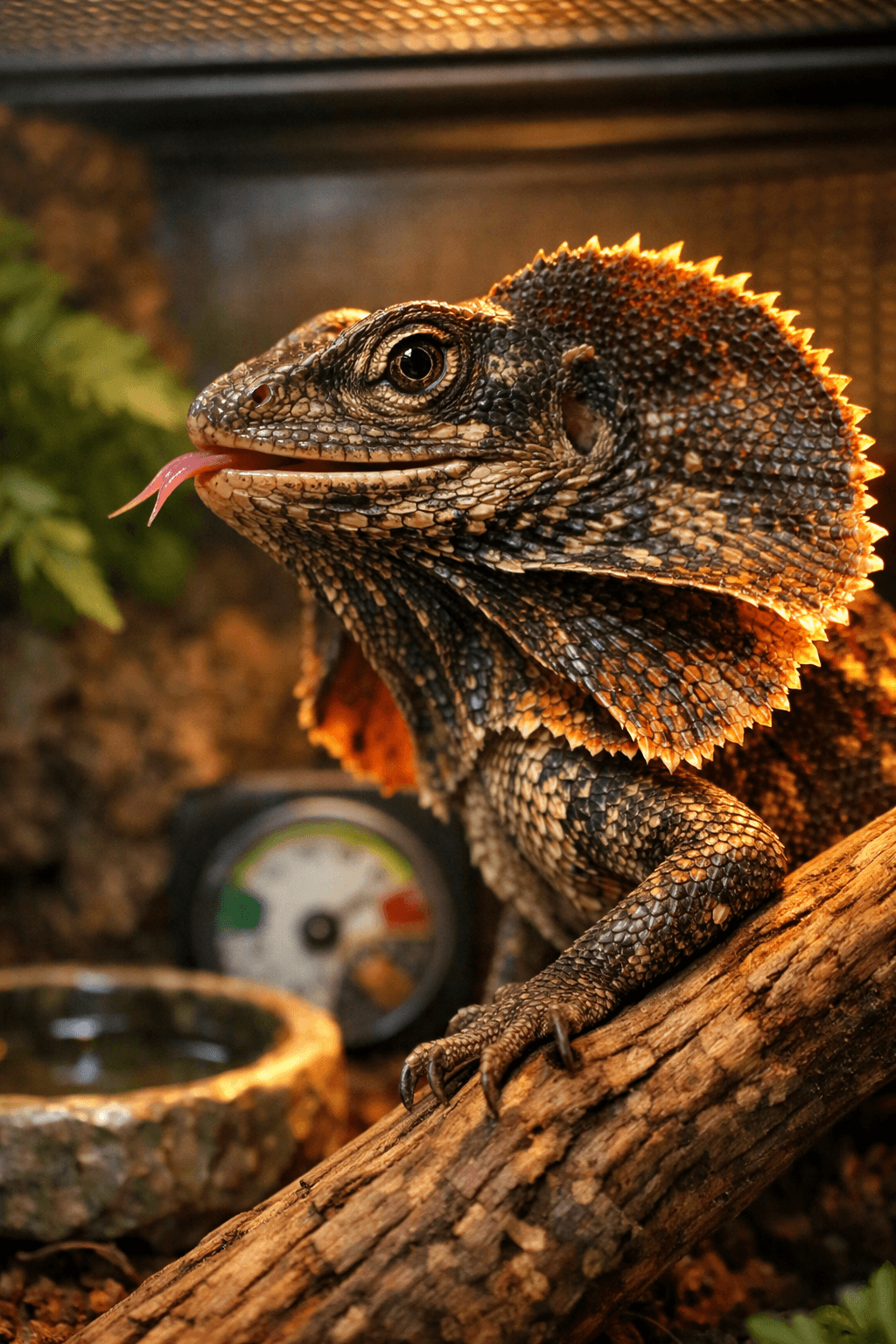
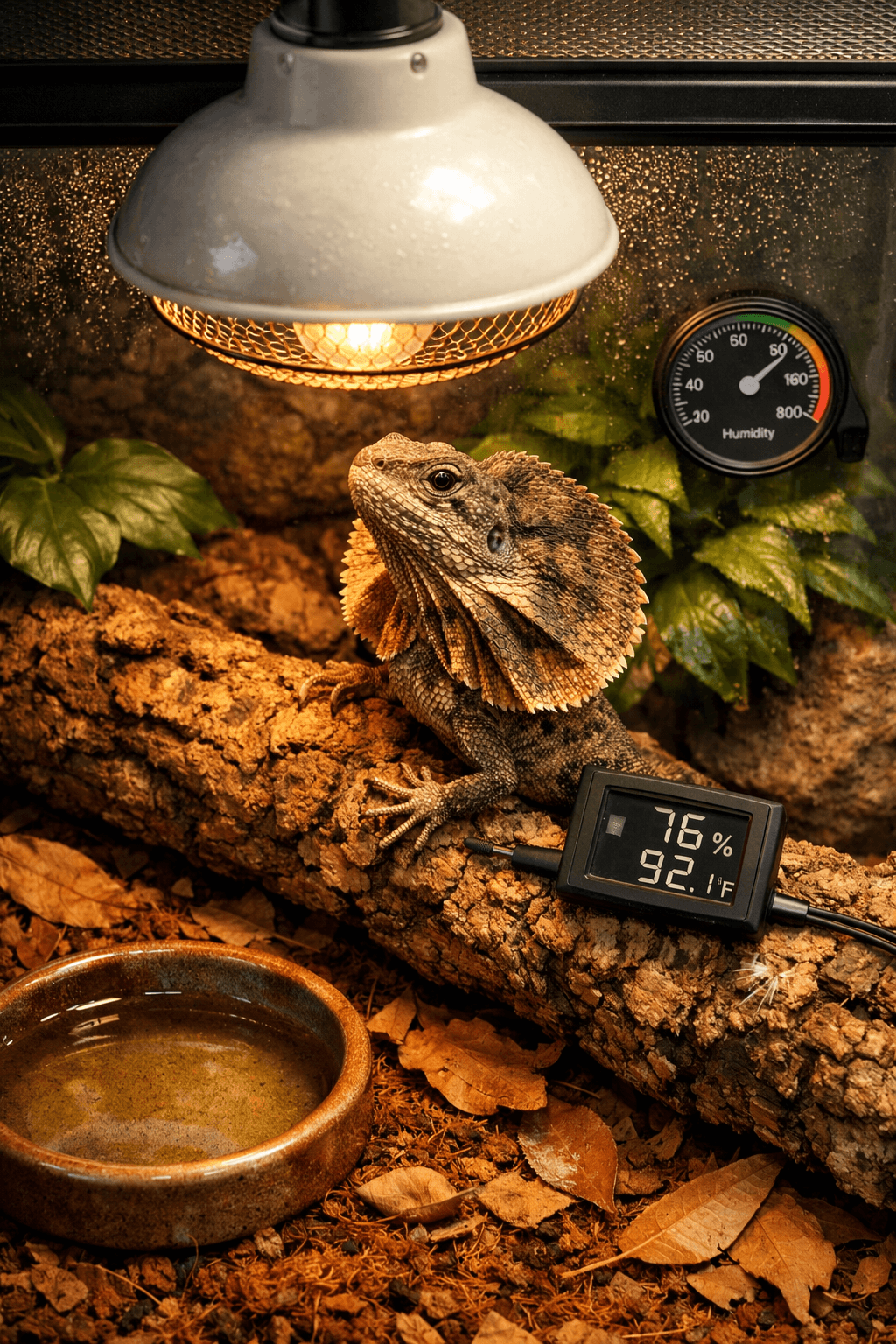
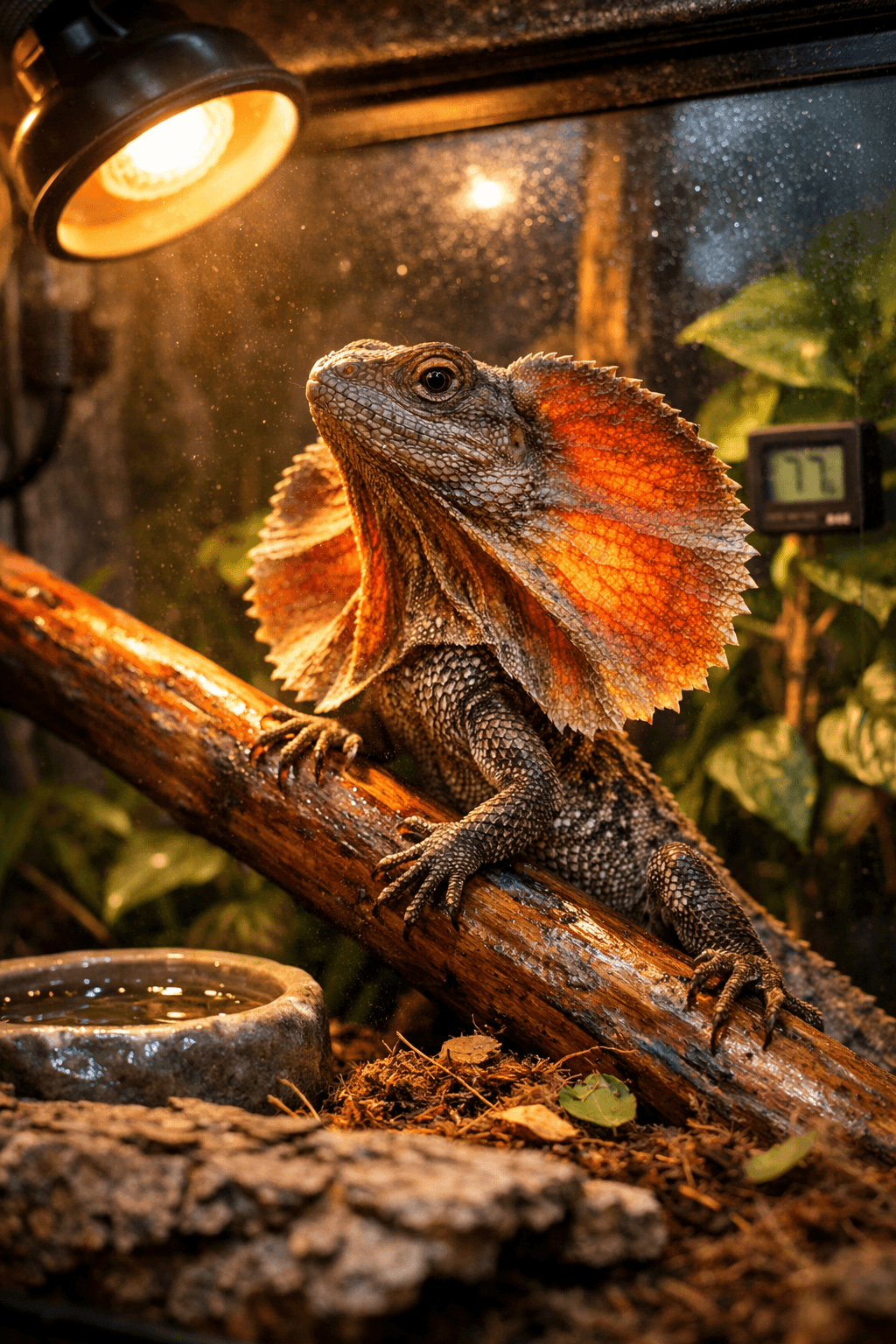
You’re standing in front of a frilled-neck lizard at a reptile expo, and it fans that collar wide open — and suddenly you need to know everything about keeping one. The flared neck lizard (Chlamydosaurus kingii) is one of the most striking reptiles you can own, but it’s also one of the most demanding in terms of habitat design. Get the setup wrong and you’ll see that frill constantly, which is not the good kind of attention-grabbing.
These lizards come from the tropical and dry forests of northern Australia and southern New Guinea. They’re arboreal, fast, and need very specific heat and humidity to thrive. This guide gives you the real numbers and the practical decisions that separate a lizard that survives from one that genuinely thrives.
Chlamydosaurus kingii at a Glance: What You’re Actually Getting Into
Adult frilled-neck lizards reach 2 to 3 feet in total length, with most of that being tail. They’re arboreal by nature, meaning they spend the majority of their time off the ground on vertical branches and tree trunks. They are not beginner lizards. Their heat, UVB, and space requirements are all higher than most common pet lizards, and their stress tolerance is low. Plan on a serious investment. A proper adult setup can easily run $400 to $600 before you add the animal.
Enclosure Size and Vertical Space: The Numbers That Matter
Frilled-neck lizards need tall enclosures. This is the single most common setup mistake, and it directly affects how often you’ll see stress displays. A lizard that can’t get off the ground is a lizard that feels exposed and threatened all the time.
Minimum Dimensions for Juveniles vs. Adults
Juveniles under 12 inches can start in a 4-foot-tall enclosure, but they’ll outgrow it faster than you expect — often within 6 to 8 months. For adults, the minimum is 4 feet wide by 2 feet deep by 6 feet tall, and bigger is always better with this species.
Life Stage
Minimum Width
Minimum Depth
Minimum Height
Juvenile (under 12 in)
2 ft
2 ft
4 ft
Sub-adult (12–18 in)
3 ft
2 ft
5 ft
Adult (18 in+)
4 ft
2 ft
6 ft
Many keepers build custom PVC panel enclosures rather than buying off the shelf, since commercial options at 6 feet tall are limited and expensive. A DIY build in PVC and screen panels runs roughly $200 to $350 in materials and gives you full control over ventilation placement.
Why Horizontal Tanks Fail This Species
A standard 4x2x2 reptile tub works great for a ball python. For a frilled-neck lizard, it’s a stress box. These lizards instinctively move upward when they feel threatened, and a horizontal tank removes that option entirely.
Without vertical escape routes, the lizard defaults to frill displays and defensive posturing — behaviors that look dramatic but signal a chronically stressed animal. Poor height also limits your ability to create a proper thermal gradient, which compounds the problem. Horizontal tanks aren’t a budget compromise here; they’re genuinely incompatible with this species’ behavioral needs.
Building the Right Thermal Environment
Temperature is where most keepers underperform with this species. A basking spot below 95°F leads to sluggish digestion and lethargy that’s easy to mistake for a calm, tame lizard. The basking surface should sit between 105°F and 115°F, measured with a temperature gun (also called an infrared thermometer) at the exact spot the lizard contacts.
Basking Spot, Cool Side, and the Gradient Between Them
The cool side of the enclosure should stay around 80°F to 85°F during the day. That 20- to 30-degree spread across the enclosure lets the lizard self-regulate its body temperature, which directly affects immune function and digestion. Place branches at multiple heights so the lizard can fine-tune its position within the gradient rather than being forced to choose between floor-level cool and a single hot perch.
Heating Gear That Holds Temps Reliably
A halogen flood bulb (50W to 100W depending on enclosure size and ambient room temperature) is the most reliable and cost-effective basking heat source. Brands like Arcadia and Zoo Med both make suitable options. Pair it with a proportional thermostat on any ceramic heat emitter you use for overnight ambient warmth — thermostats prevent dangerous temperature spikes and extend bulb life considerably.
Avoid heat mats for this species. They don’t replicate overhead solar heat, and frilled-neck lizards don’t thermoregulate effectively from below.
Nighttime Drops and When They Help
Nighttime temps can drop to 70°F to 75°F without stressing a healthy adult. This natural drop actually supports the lizard’s circadian rhythm and can improve appetite over time. If your room drops below 68°F overnight, add a low-wattage ceramic heat emitter on a thermostat set to 72°F — just enough to hold the floor temperature without disrupting the dark cycle.
UVB, Lighting Schedule, and Why Index Matters More Than Brand
The UVB index number matters far more than which brand you buy. Frilled-neck lizards come from high-UV environments in northern Australia, where the UV Index regularly hits 6 or above at ground level. In captivity, you need a UVB lamp that produces a Ferguson Zone 3 to 4 output at the basking position — not just any “reptile UVB bulb” from the pet store shelf.
Choosing the Right UVB Output Level
The Arcadia T5 HO 12% and the Zoo Med Reptisun T5 HO 10% are both real, widely available options that can hit Zone 3 to 4 output when mounted 10 to 14 inches above the basking branch. Distance matters as much as tube percentage. Mount the lamp too far away and you’re delivering Zone 1 output to a lizard that needs Zone 3 — the brand on the box won’t save you there.
Replace T5 HO tubes every 12 months even if they still produce visible light. UVB output degrades well before the bulb goes dark, and a tube past its service life can look fine while delivering almost nothing useful.
Photoperiod and Seasonal Adjustments
Run lights for 12 to 13 hours daily during warm months and drop to 10 to 11 hours in winter. This seasonal shift mimics the natural photoperiod in northern Australia and supports healthy hormonal cycling. A simple plug-in outlet timer (under $15 at any hardware store) handles this automatically and removes the guesswork entirely.
Pair your UVB tube with a separate visible-light bulb to give the lizard a strong daylight signal. UVB tubes alone don’t produce enough visible brightness to drive normal basking behavior in most enclosures.
Humidity, Substrate, and Enclosure Placement
Frilled-neck lizards need ambient humidity between 60% and 80%, with brief spikes after misting that drop back down within a couple of hours. Stagnant high humidity breeds respiratory infections — airflow and humidity have to work together, not against each other. A digital hygrometer placed at mid-enclosure height gives you the most accurate reading of what the lizard actually experiences.
Substrate Options That Hold Moisture Without Growing Mold
The substrate does most of the humidity work passively, so your choice here has real consequences. These four options work well in practice:
A 60/40 mix of coco fiber and organic topsoil holds moisture evenly and resists mold better than either material alone.
Bioactive substrate blends with a drainage layer (leca balls at the bottom, then a mesh barrier, then soil) let you mist heavily without waterlogging the base.
Cypress mulch is a budget-friendly single-material option that holds humidity and dries out slowly enough to prevent bacterial buildup.
Sphagnum moss used as a top layer over any base substrate adds a humidity buffer and gives the lizard a cool microclimate near the floor.
Avoid sand, paper towels, or reptile carpet. None of them support the humidity range this species needs.
Where You Put the Enclosure Changes Everything
Place the enclosure against an interior wall, away from windows and exterior doors. Direct sunlight through glass overheats the enclosure unpredictably, and cold drafts from doors spike stress displays fast. Keep the enclosure out of high-traffic areas — a lizard that sees constant movement through the front glass will frill repeatedly, and that chronic stress compounds over weeks.
Elevate the enclosure so the top sits at or above eye level. When a frilled-neck lizard looks down at approaching humans, it’s calmer than when it looks up at them. That one positioning choice makes taming noticeably easier.
The Frill Is a Health Barometer, Not Just a Party Trick
A frill display looks impressive, but treat it as information, not entertainment. A well-kept flared neck lizard in a properly designed enclosure should rarely frill at its keeper after the first few weeks of settling in. Frequent frill displays in an established animal signal something is wrong. Usually that means inadequate hides, sightline exposure, or a thermal problem.
Watch for gaping combined with frill displays. That combination can indicate respiratory distress rather than a behavioral response. A lizard that frills and gapes repeatedly without an obvious external trigger deserves a vet visit, not a video.
A lizard that never frills, moves sluggishly, and stays low in the enclosure is also telling you something. Lethargy without frill response often points to low basking temperatures or early illness. The frill is the lizard’s most visible communication tool. Learning to read it accurately matters as much as any piece of equipment in the setup.
Feeding a Frilled-Neck Lizard: Variety Over Volume
Crickets alone won’t cut it. A varied live prey rotation is the single most important thing you can do for long-term health in this species. Frilled-neck lizards are active hunters, and dietary monotony leads to nutritional deficiencies even when you’re supplementing.
Live Prey Rotation and Gut-Loading
Rotate between Dubia roaches, black soldier fly larvae, silkworms, and crickets as your core feeders. Offer waxworms sparingly. They’re high fat and work as an occasional treat, not a staple. Gut-load all insects for at least 24 hours before feeding using a commercial gut-load mix or fresh leafy greens like collard greens and squash. Dust prey with a calcium/D3 supplement two to three times per week for juveniles, once weekly for adults.
Adult animals can also take the occasional pinky mouse, no more than once a month. More than that tips the protein-to-fat ratio in the wrong direction.
Feeding Frequency by Age
Juveniles under 12 months eat daily. Adults shift to every other day, and overfeeding adults causes fatty liver disease, which is one of the more common keeper mistakes with this species. Always remove uneaten prey within an hour to reduce enclosure stress.
Handling, Taming, and Sourcing a Legal Captive-Bred Animal
Start slow. For the first two weeks after bringing a flared neck lizard home, skip handling entirely and let the animal acclimate to its enclosure and your presence. Rushing this step sets taming back by months, not days.
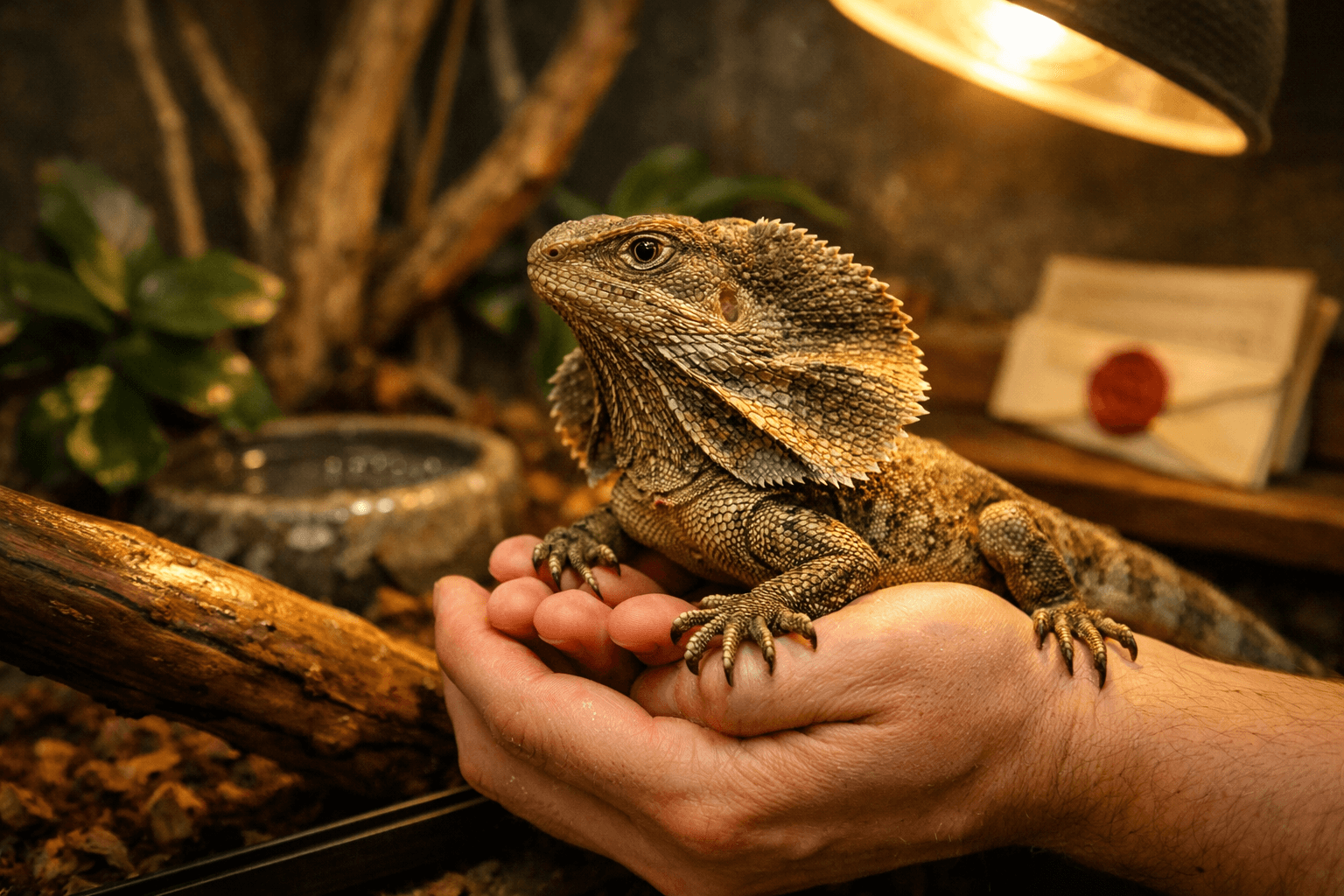
Begin with short sessions of five minutes or less, keeping the lizard at or above your chest height. Low positions trigger defensive responses. If the frill goes up, put the animal back immediately — ending the session calmly is more productive than pushing through a stress display.
Positive association is the actual taming mechanism here. Offer a favorite feeder (silkworms work well) from your hand during or just after handling sessions. Over four to six weeks of consistent short sessions, most captive-bred animals become genuinely relaxed with their keeper.
Sourcing is where many US buyers hit a wall. Frilled-neck lizards are not widely available in pet stores, and captive-bred animals from a reputable breeder are the only responsible choice. Wild-caught imports carry heavy parasite loads and rarely tame well. Check reptile expos and established online breeder communities — expect to pay $200 to $400 or more for a healthy captive-bred juvenile. Confirm the seller can provide documentation of captive-bred status before you commit.
Frequently Asked Questions
Can a frilled-neck lizard live in a standard 4x2x2 enclosure?
No. That footprint works for many lizards but not this one. Frilled-neck lizards need vertical height above all else. A 4x2x4 (height) is the minimum for an adult. A 4x2x2 is fine temporarily for a juvenile under six months.
How long do frilled-neck lizards live in captivity?
Expect 10 to 15 years with proper husbandry. That lifespan depends heavily on consistent UVB, correct basking temps, and dietary variety. Cut corners on any of those and the timeline shortens noticeably.
Why does my frilled-neck lizard keep its frill partially open all the time?
Partial frill extension that doesn’t fully retract usually points to chronic low-level stress. Check enclosure placement first, since sightline exposure to foot traffic is the most common cause. A persistent partial frill in an otherwise active animal is not normal and warrants a habitat review.
Do frilled-neck lizards need a companion?
No. They’re solitary in the wild and do better housed alone. Two adults in the same enclosure, especially two males, will stress each other out, and that stress shows up in the frill before anything else does.