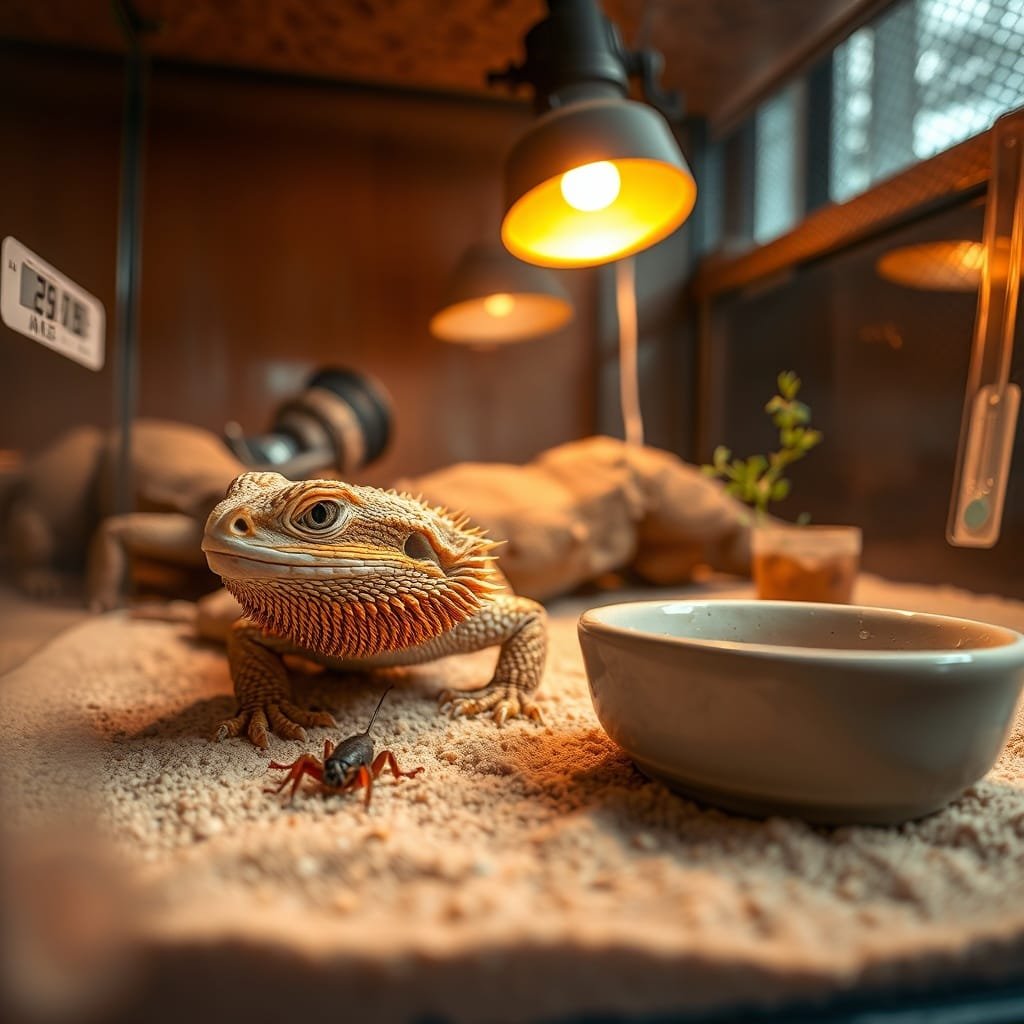
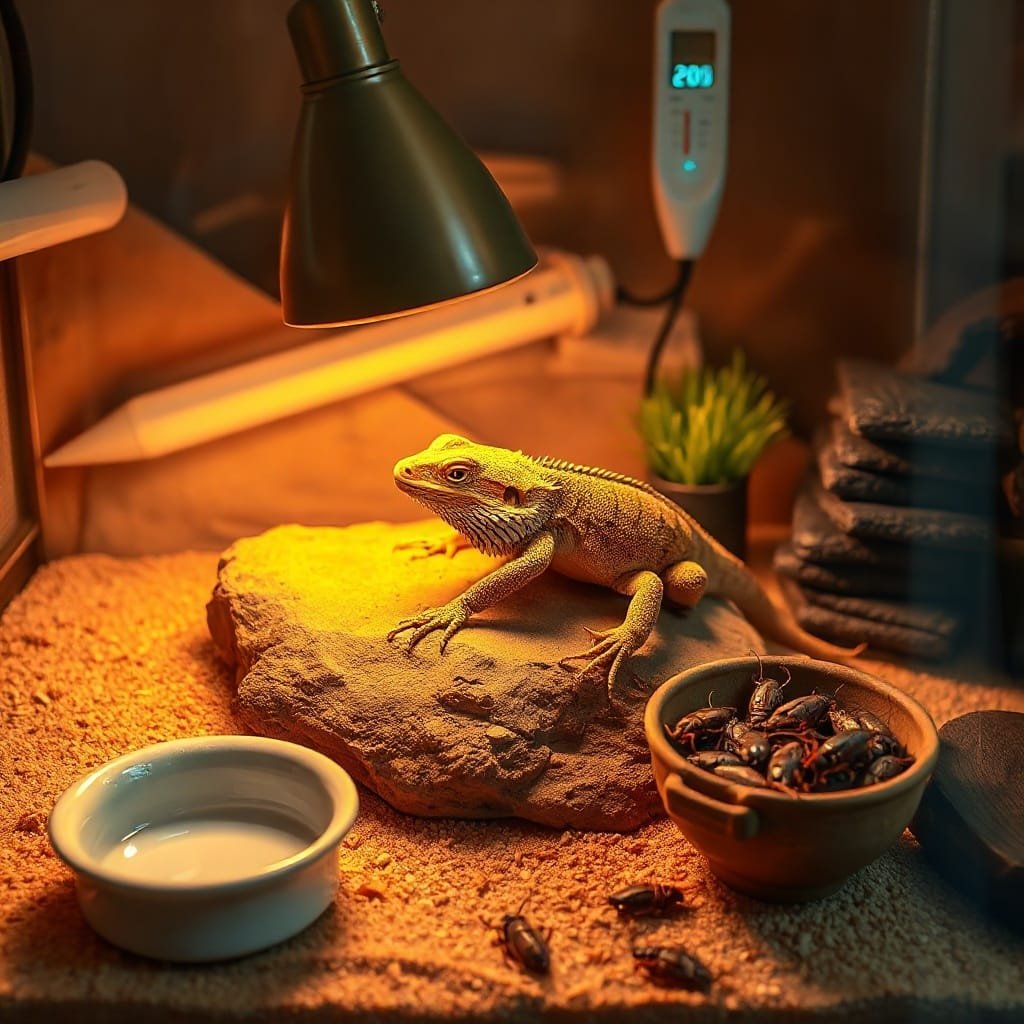
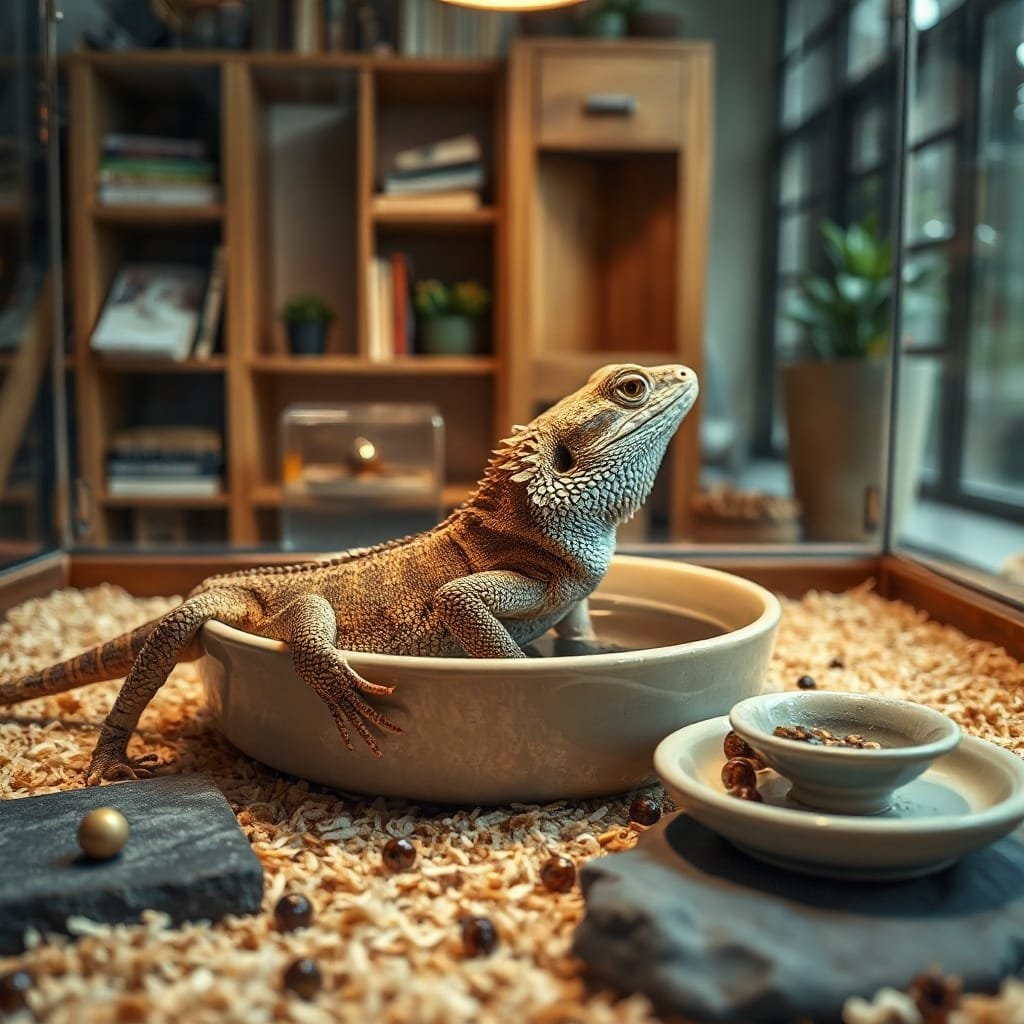
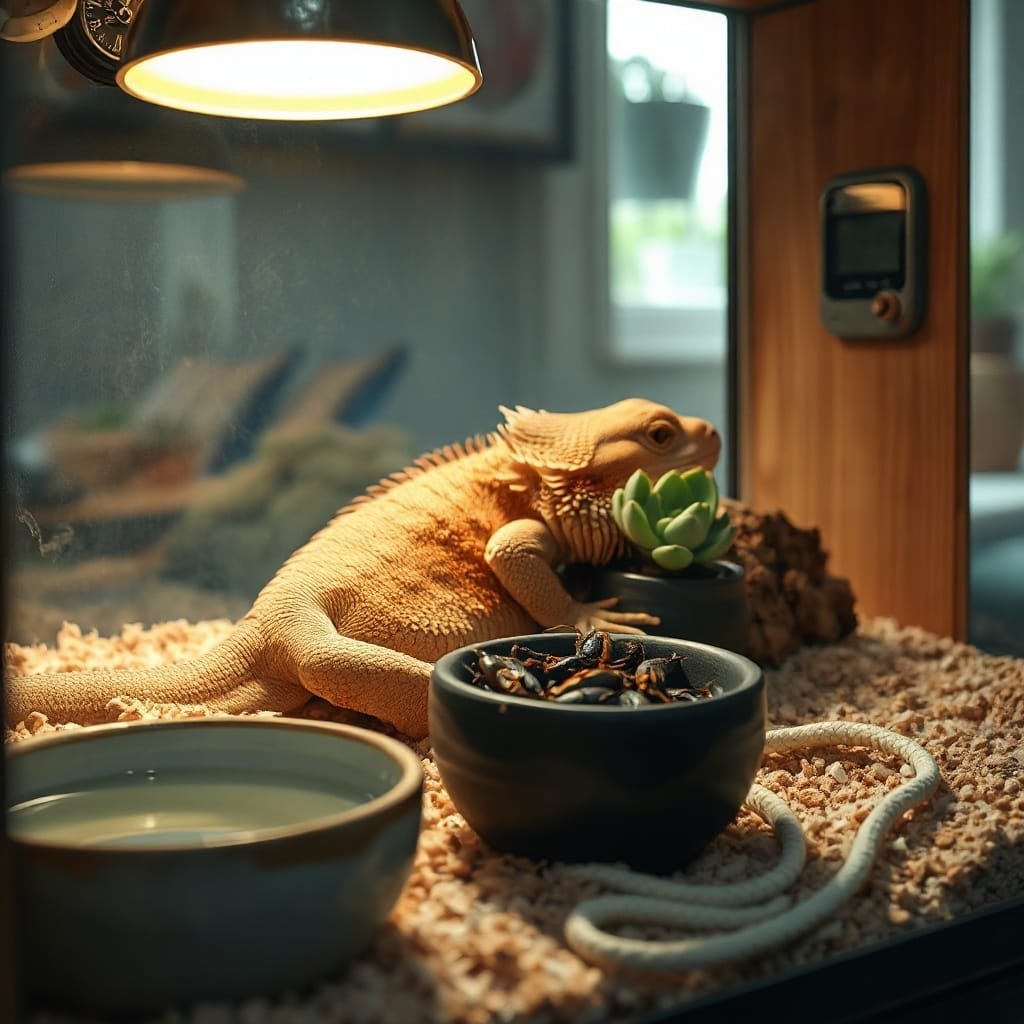
Your bearded dragon just stared you down from across the pet store, and now you’re home wondering if you actually know what you signed up for. Looking after a bearded dragon is genuinely rewarding, but it’s not a one-size-fits-all situation. The care shifts pretty dramatically from hatchling to adult.
That’s the part most guides skip. They hand you a static checklist and call it done. What you actually need is a roadmap that grows with your dragon.
Care Needs Change as Your Bearded Dragon Grows
Pogona vitticeps (the central bearded dragon) lives roughly 10 to 15 years in captivity, and what it needs at 3 months old is almost the opposite of what it needs at 3 years. Get this wrong and you’ll either stunt a juvenile or slowly harm a healthy adult.
Life Stage
Age Range
Diet Split (Insects/Plants)
Feeding Frequency
Hatchling
0–3 months
80% / 20%
3–5 times daily
Juvenile
3–12 months
70% / 30%
2–3 times daily
Sub-adult
12–18 months
50% / 50%
Once daily
Adult
18+ months
20% / 80%
Every 1–2 days
The diet flip from juvenile to adult is the single biggest shift most new owners miss.
Enclosure Size and Setup: Start With a 120-Gallon for Adults
A 120-gallon enclosure (48″ x 24″ x 24″) is the minimum for a full-grown bearded dragon. Anything smaller limits their ability to thermoregulate properly, and a dragon that can’t move between temperature zones will get sick. Go big from the start if your budget allows.
The Right Tank Size at Each Life Stage
Hatchlings do fine in a 20-gallon tank for the first couple of months. A tank that’s too large actually makes it harder for them to catch feeder insects, which leads to stress and poor feeding response.
Move to a 40-gallon breeder around the 3-month mark, then step up to a 75-gallon by 6 months. By 12–18 months, your dragon will need that full 120-gallon setup. Buying a 120-gallon up front and using a temporary divider is a practical workaround that saves you from buying multiple tanks.
Front-opening enclosures from brands like Zen Habitats or Carolina Custom Cages are worth the extra cost. Top-opening tanks stress bearded dragons because they approach from above — exactly how a predator would.
Substrate That Won’t Send Your Dragon to the Vet
For juveniles, skip all loose particle substrates entirely. Sand, calcium sand, and wood chips all cause impaction — a life-threatening intestinal blockage — when accidentally swallowed during feeding. Reptile carpet or paper towels are the safest options for dragons under 12 months.
Adults can handle bioactive substrate setups using a mix of organic topsoil and play sand (roughly 60/40), but only once they’re feeding confidently and you’ve ruled out any health issues. Slate tile is another solid adult option: it’s easy to clean, holds heat well under a basking spot, and naturally files down your dragon’s nails over time.
Never use cedar or pine shavings. The aromatic oils are toxic to reptiles.
Lighting and Temperature: UVB and Basking Are Non-Negotiable
Without proper UVB and a real basking spot, your bearded dragon cannot process calcium, and metabolic bone disease (MBD) will follow. MBD causes permanent skeletal deformities. This is the one area where cutting costs will cost you far more at the vet.
Linear T5 HO Bulbs Beat Coiled UVB Every Time
Coiled or compact UVB bulbs don’t produce enough UV output across the enclosure to meet a bearded dragon’s needs. **Use a linear T5 HO (high-output) UVB bulb — the Arcadia 12% Desert or the Reptisun 10.0 T5 HO are both proven options. Mount it inside the enclosure, 10–12 inches above the basking surface.
Replace UVB bulbs every 6 months even if they still light up. The UV output drops well before the visible light does, and you can’t see that change happening.
Building a Proper Thermal Gradient From Cool Side to Basking Spot
Your enclosure needs a genuine temperature range, not one uniform heat level. Aim for a cool side of 80–85°F, an ambient mid-range of 88–92°F, and a basking spot surface temperature of 100–110°F** for adults (up to 115°F for juveniles).
Use a temperature gun — an infrared thermometer like the Etekcity 1022D runs under $20 and gives you accurate surface readings in seconds. Stick-on dial thermometers are notoriously inaccurate and not worth relying on.
Turn off the basking light at night. Nighttime temps can drop to 65–70°F without any issue, and a full light-dark cycle supports healthy sleep and hormonal rhythms.
What Bearded Dragons Eat (and How That Changes With Age)
Bearded dragons are omnivores, and their diet is split between live insects and plant matter. The ratio between those two shifts dramatically with age. Get the balance wrong in adulthood and you’ll end up with an obese dragon dealing with fatty liver disease.
Here’s what a healthy diet actually looks like across life stages:
Hatchlings eat mostly dubia roaches or crickets, offered 3–5 times daily, with just a small amount of finely chopped greens on the side.
Juveniles still lean heavily on insects (around 70% of intake) but should have fresh greens available every day.
Sub-adults transition to a roughly even split — this is the stage where many owners fall behind on greens.
Adults eat mostly plants (around 80% of daily intake), with insects offered 2–3 times per week as a protein supplement.
Feeder insects should always be gut-loaded with leafy greens or commercial gut-load products for 24 hours before feeding.
Feeding Juveniles vs. Adults: Flipping the Protein-to-Plant Ratio
Feeding an adult bearded dragon a primarily insect-based diet is one of the most common mistakes new owners make. High protein loads in adults stress the kidneys over time. Collard greens, mustard greens, and dandelion greens are all excellent staple plants. Avoid spinach and iceberg lettuce — spinach binds calcium, and iceberg has almost no nutritional value.
Insects like dubia roaches are a better feeder choice than crickets for most setups. They’re quieter, slower, and have a better calcium-to-phosphorus ratio.
Calcium and Vitamin Supplementation Schedule
Dust feeders with a calcium-without-D3 powder at nearly every feeding for juveniles. For adults, dust insects with calcium-without-D3 twice a week and calcium-with-D3 once a week. Add a multivitamin supplement (like Repashy Supervite) once every 1–2 weeks on top of that.
Don’t skip the schedule. Inconsistent supplementation is a direct path to MBD even when UVB lighting is correct.
Hydration and Bathing Keep Shedding and Digestion on Track
Bathe your bearded dragon in shallow, lukewarm water (around 90–100°F) for 10–15 minutes, two to three times per week. This is one of the most practical things you can do for their overall health. Bathing supports ecdysis (the shedding process) by softening retained skin, and it stimulates gut motility, which helps prevent constipation.
Keep the water shallow enough that your dragon can stand with its head above the surface comfortably. A plastic storage bin or a clean kitchen sink works perfectly fine.
Bearded dragons absorb water through their skin and will also drink from the bath. Don’t bother with a water dish in the enclosure — they rarely drink from standing water, and it raises humidity levels that can cause respiratory issues in a desert species.
During a shed, you may notice dull, patchy skin. Increase baths to daily until the shed completes. Never pull off retained shed manually; let the water do the work.
Handling Your Bearded Dragon Without Stressing It Out
Start slow. New dragons need at least one to two weeks to settle into their enclosure before you introduce regular handling. Jumping straight into daily interaction raises stress hormones and can trigger stress darkening, where the beard and belly turn dark gray or black.
Support the full body when you pick up your dragon. Scoop from below, never grab from above. That top-down approach triggers a predator response and will make your dragon defensive fast.
Once your dragon is comfortable, aim for 15–30 minutes of handling per day. Most bearded dragons genuinely tolerate handling well once trust is built, but watch for signs of stress: a puffed beard, gaping mouth, or tail twitching. Put them back when you see those signals.
Avoid handling for at least an hour after feeding. Digestion requires heat, and a dragon that’s being moved around after a meal can’t thermoregulate properly. That slows digestion and can cause regurgitation.
Brumation Is Normal, Not a Medical Emergency
Brumation is a reptile’s version of hibernation. It’s a natural, seasonal slowdown triggered by shorter days and cooler temperatures. Your dragon may stop eating for weeks, sleep most of the day, and show almost no interest in food or handling. That’s normal. Don’t force-feed a brumating dragon or rush it to the vet just because it’s not eating.
Brumation typically hits dragons between October and February, usually starting after their first birthday. Juveniles under 12 months rarely brumate fully, so extended lethargy in a young dragon warrants a vet check more than it does in an adult.
Sign
Brumation
Illness
Appetite
Reduced or absent for weeks
Sudden drop with other symptoms
Activity
Sleeping more, still responsive
Lethargic, unresponsive to touch
Appearance
Normal color, clear eyes
Sunken eyes, weight loss, discharge
Duration
Weeks to a few months
Doesn’t improve over time
Keep offering water and a weekly soak during brumation even if your dragon ignores food. Maintain normal lighting schedules and don’t cut the photoperiod short trying to “wake” them up.
How to Tell if Your Bearded Dragon Is Healthy
A healthy bearded dragon has clear, bright eyes, firm muscle tone along the tail and legs, and a consistent appetite outside of brumation periods. Weight loss that shows up as a visible spine or hip bones is a red flag worth acting on immediately.
Check the tail base and thighs regularly. Muscle wasting in those areas often signals parasites or chronic illness before any other symptom appears. A fecal parasite test at your vet once a year is a reasonable baseline, especially for dragons that came from a pet store.
Healthy skin sheds in complete sections, not in scattered patches that linger for weeks. Retained shed around the toes is particularly risky. It can cut off circulation and cause toe loss if left too long. A few extra baths usually clear it up.
Atadenovirus (also called ADV or wasting disease) is worth knowing about. It’s a viral disease with no cure, but early detection through a PCR test means you can manage husbandry to reduce stress and slow progression. Any dragon showing persistent neurological signs, including head tilting, star-gazing, or seizures, needs a vet visit, not a wait-and-see approach.
Frequently Asked Questions
How long do bearded dragons live?
With proper care, bearded dragons (Pogona vitticeps) live 10–15 years in captivity. Some reach closer to 15 with consistently good husbandry, stable temperatures, and regular vet checkups. Wild specimens typically live far shorter lives due to predation and environmental stress.
Can bearded dragons eat fruit?
Yes, but keep it to an occasional treat — no more than once or twice a week. Fruits like blueberries and mango are fine in small amounts, but their high sugar content makes them a poor staple. Citrus fruits should be avoided entirely; the acidity irritates the digestive tract.
Do bearded dragons need a companion?
No. Bearded dragons are solitary by nature and do better alone. Cohousing two dragons almost always leads to one dominating the other, causing chronic stress, competition for the basking spot, and sometimes serious injury. Keep them in separate enclosures.
How often should I take my bearded dragon to the vet?
Once a year for a wellness exam is a solid baseline. New dragons should see a reptile-experienced vet within the first few weeks — ideally for a fecal test to check for parasites. Find a vet with exotic or reptile experience specifically; a general small-animal vet may not have the right background for Pogona care.