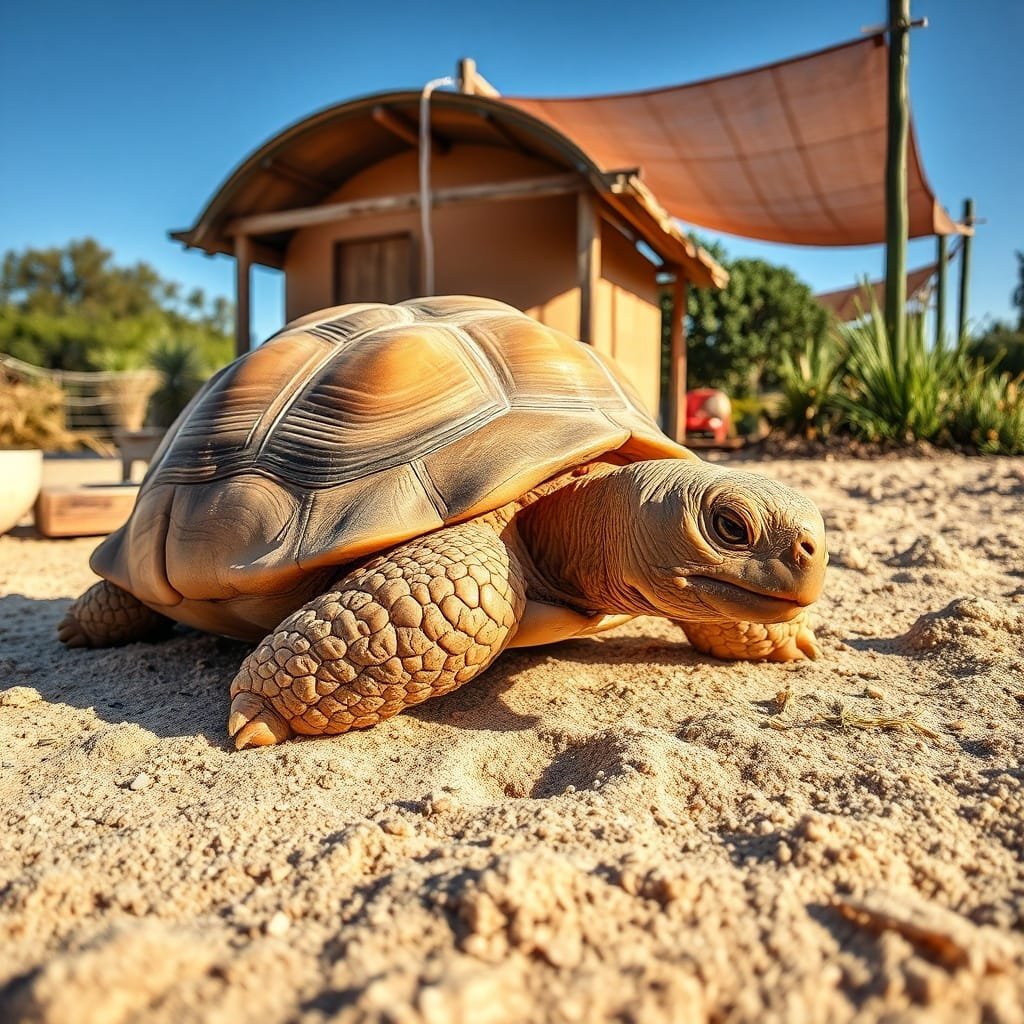
You’re measuring out a 10-by-10-foot pen for your new sulcata tortoise hatchling, and it already feels huge. Fast forward five years, and that same tortoise will laugh at it. Sulcatas (Geochelone sulcata) are the third-largest tortoise species on earth, and building their outdoor habitat is an engineering project, not a weekend craft.
Most guides treat this like a scaled-up box turtle setup. It isn’t. A sulcata will dig, ram, and graze its way through a poorly built enclosure for the next 70-plus years. Get the structure right from the start, and you won’t be rebuilding it every few seasons.
Quick-Reference Specs: What a Sulcata Tortoise Outdoor Habitat Actually Needs
Before you break ground, know the numbers. This table covers the minimum specs for a permanent outdoor sulcata habitat.
Spec
Juvenile (under 6 inches)
Adult (over 18 inches / 50+ lbs)
Enclosure floor space
50–100 sq ft
300–500+ sq ft
Fence height (above ground)
18 inches
24–36 inches
Fence depth (below ground)
6 inches
12–18 inches
Basking zone temp
95–100°F
100–110°F
Shade zone temp
Under 85°F
Under 90°F
Shelter nighttime low
65°F minimum
65°F minimum
These are working minimums, not ideals. Bigger is always better.
Enclosure Size: Adults Need Hundreds of Square Feet, Not Dozens
A single adult sulcata needs at least 300 square feet of outdoor space, and 500 is a more comfortable target. That’s roughly a 20-by-25-foot pen at minimum. Most people build smaller and regret it within three years.
Sizing for a Juvenile vs. a Full-Grown Sulcata
A hatchling sulcata is palm-sized, so 50 square feet works fine for the first year or two. But sulcatas grow fast — expect 5 to 7 pounds per year under good conditions. By year four or five, you’re looking at a 30- to 40-pound animal that needs real room to move and graze.
Plan your permanent enclosure around the adult size, not the animal you have today. Building a 100-square-foot pen now and expanding later sounds practical, but it usually means tearing out fencing, regrading soil, and replanting. Do it once, do it big.
Why Most First Enclosures End Up Too Small
The math looks fine on paper — a 15-by-20-foot space is 300 square feet, which hits the minimum. But once you add a tortoise house, a water station, and a shaded rest area, the usable grazing space shrinks fast. Footprint overlap from structures can eat 40 to 60 square feet of that total.
Account for structures before you fence, not after. Sketch your tortoise house, shade structure, and water dish placement first, then size the fence around them. A sulcata that can’t pace, forage, and thermoregulate freely will show it through stress behaviors like repetitive pacing along the fence line.
Fencing and Escape Prevention: Go Underground or Start Over
A sulcata will test every inch of your fence line. The fence must extend at least 12 inches underground, or the tortoise will eventually dig under it. Above-ground-only fencing is not a habitat. It’s a delayed escape.
Burying the Barrier at Least 12 Inches Down
Dig a trench around your full perimeter before you set posts. Twelve inches is the minimum burial depth, and 18 inches is safer for adults over 60 pounds. Bend the bottom of the buried section outward at a 90-degree angle (an anti-dig apron) to make tunneling under even harder.
This step adds a few hours of work and maybe $30 to $60 in extra material. Skip it, and you’ll be chasing a 70-pound tortoise through your neighbor’s yard.
Material Strength: What a 100-Pound Tortoise Can Actually Break Through
Standard chicken wire and lightweight plastic garden fencing will not hold an adult sulcata. A full-grown animal can push through chicken wire or knock over a T-post that isn’t set in concrete. Use welded wire panels rated for livestock (at least 14-gauge), concrete blocks, or solid wood planks at least 2 inches thick.
Wooden privacy fence boards hold up to repeated ramming and look decent too. Set corner posts in concrete, then check for wobble every season. A loose post is the first sign the fence is about to fail.
Substrate Depth and Burrowing: The Ground Is Part of the Habitat
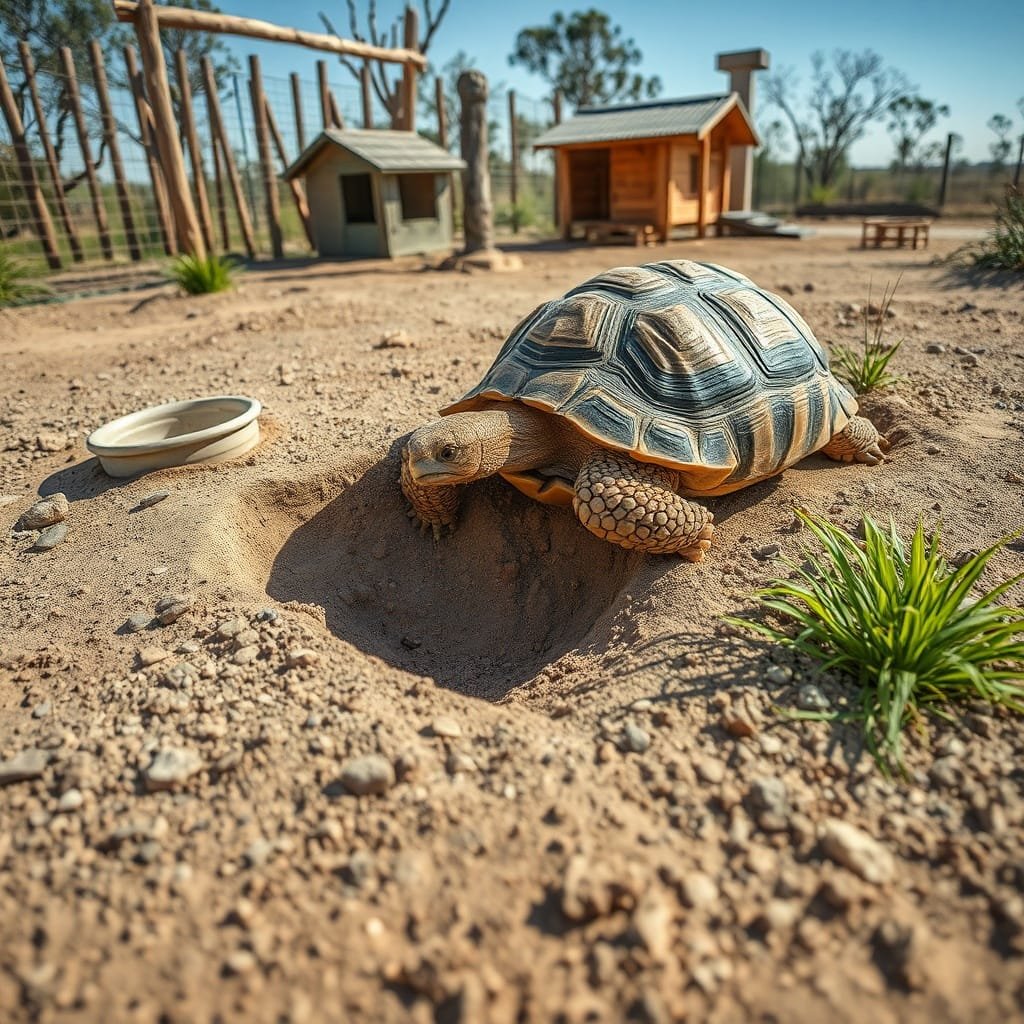
Sulcatas are fossorial animals — they burrow by instinct, not just for fun. In the wild, they dig tunnels up to 10 feet deep to escape heat and cold. Your outdoor enclosure needs to account for that behavior from day one, or the habitat will fail structurally within a couple of seasons.
How Deep to Dig Before You Fill
Excavate at least 18 to 24 inches before you add substrate. That depth gives the tortoise room to dig without immediately hitting compacted native soil or, worse, a concrete footer. If your native ground is dense clay, break it up another 6 inches deeper so drainage doesn’t pool at the bottom of any burrow.
Line the excavated perimeter walls (not the floor) with your buried fencing before backfilling. This keeps the burrowing contained without blocking downward drainage.
Substrate Mixes That Hold a Tunnel Without Collapsing
Pure sand collapses. Pure topsoil stays too wet. The best mix is roughly 70% sandy loam and 30% plain topsoil, packed moderately firm. This combo holds a tunnel shape long enough for the tortoise to use it without becoming a cave-in hazard.
Avoid play sand alone — it’s too loose and offers no structural support. A product like Quikrete All-Purpose Sand mixed with bagged topsoil works well and costs around $15 to $20 for enough to fill a 4-by-4-foot burrow zone. Tamp it lightly in layers as you fill; don’t just dump it in.
Basking Zones, Shade, and Temperature Gradients That Work Outdoors
Outdoor enclosures give you free solar energy, but you still need to engineer the temperature gradient deliberately. A sulcata that can’t find a 100°F basking spot or a sub-90°F cool zone will thermoregulate poorly and eat less. Both zones need to exist at the same time, every day.
Here’s the priority order for setting up your outdoor temperature zones:
Position the basking area on the south-facing side of the enclosure for maximum sun exposure from morning through early afternoon.
Place a flat flagstone or dark paver (at least 24 inches wide) as the basking surface — it absorbs and radiates heat better than bare soil.
Build or position shade structures on the north side so the shaded zone never receives direct midday sun.
Check both zones with an infrared thermometer (the Etekcity Lasergrip 774 is a reliable, under-$20 option) before the tortoise uses the space.
Add a low berm or planted border between the two zones to slow heat bleed from the basking end into the cool zone.
Hitting 100–110°F on the Basking End
On a clear summer day, a dark flat stone in full sun will easily hit 110°F by late morning. The problem is cloudy days and shoulder seasons. On overcast days, basking surface temps can drop 20 to 30°F, which is enough to shut down a sulcata’s digestion.
Add a secondary heat lamp mounted over the basking stone for days when sun isn’t enough. A 100-watt incandescent flood bulb mounted about 12 inches above the stone will hold surface temps in the right range when the sky doesn’t cooperate.
Building a Shaded Cool Zone That Stays Below 90°F
A shade structure doesn’t need to be elaborate. A simple wooden frame with a corrugated polycarbonate roof panel (the kind sold at home improvement stores for around $25 to $40 per sheet) blocks direct sun while letting some diffuse light through. Aim for at least 30 square feet of shaded ground.
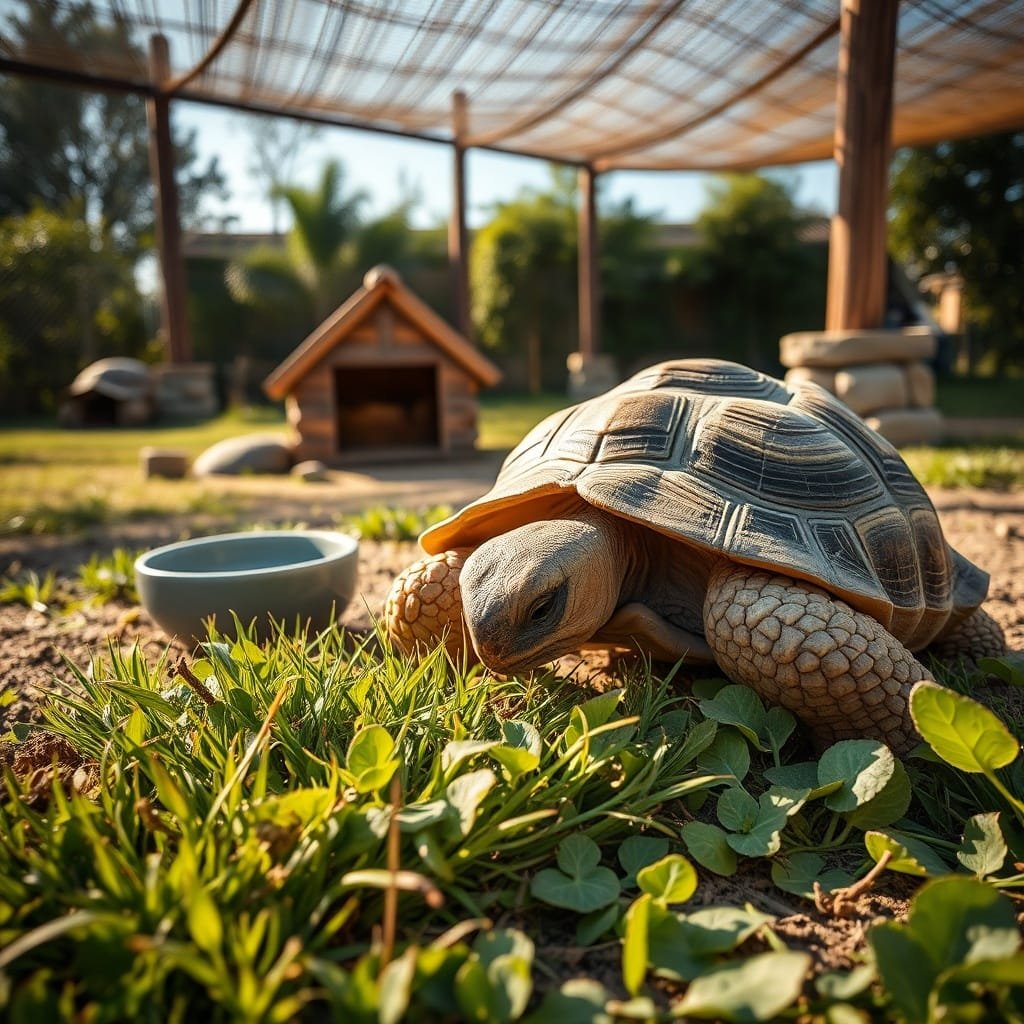
Plant low-growing tortoise-safe grasses along the edges of the shade zone. They drop soil temperature by a few degrees and give the sulcata something to graze on while cooling down.
The Tortoise House: Heated Shelter Is Non-Negotiable
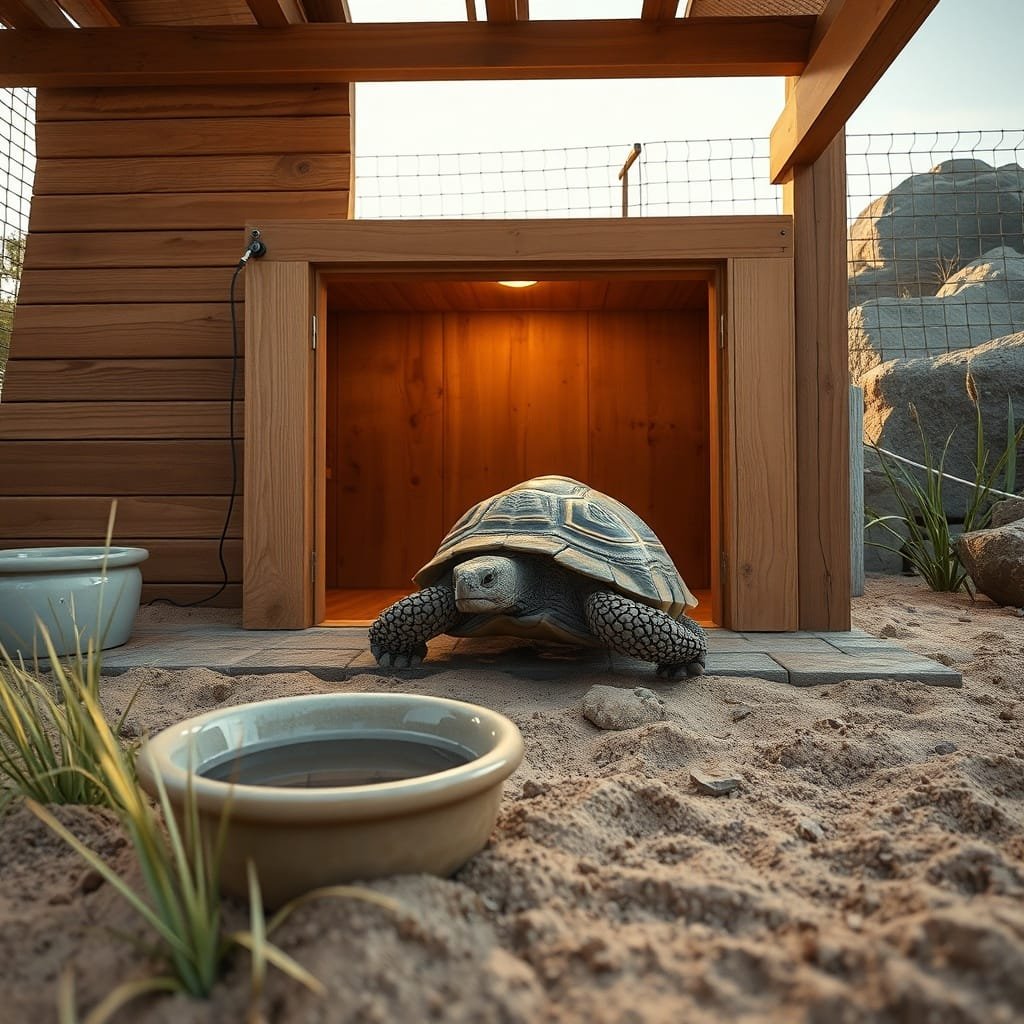
Sulcatas are a tropical species. They do not hibernate, and temperatures below 50°F can be fatal. Every outdoor sulcata needs a fully enclosed, heated tortoise house, not just a covered lean-to.
Insulation and Supplemental Heat for Cold Snaps
Build the shelter walls with at least 2 inches of rigid foam polyisocyanurate board sandwiched inside wood framing. A 4-by-6-foot insulated structure holds heat well overnight. Add a ceramic heat emitter (a 100-watt bulb works for smaller shelters) on a thermostat set to kick on at 60°F. This keeps interior temps above 65°F even when outdoor temps dip into the 40s.
Ventilation and Moisture Control Inside the Structure
A sealed shelter traps humidity fast, which leads to respiratory infections. Cut two small vents near the roofline, each about 4 inches square, and cover them with hardware cloth. This keeps airflow moving without letting cold drafts hit the tortoise directly at floor level.
Water, Drainage, and Keeping the Ground From Turning Into a Swamp
Standing water is one of the fastest ways to wreck a sulcata enclosure. Wet ground softens substrate, collapses burrow walls, and breeds bacteria that cause shell rot and foot infections. Get drainage right before you add a single animal.
Grade the enclosure floor so water flows toward one corner or a low exit point. A slope of about 1 inch per 8 feet is enough to move water without creating an obvious ramp. If your native soil is dense clay, dig a French drain (a gravel-filled trench with a perforated pipe) along the lowest edge of the enclosure. This alone can prevent pooling after heavy rain.
For the water dish, use a shallow, heavy-duty rubber livestock pan (the 10-gallon size works for juveniles; adults need a 20-gallon). Bury it flush with the ground so the tortoise can step in without tipping it. Sulcatas soak and defecate in water, so plan to empty and scrub the pan at least three times a week. Position it on a gravel pad so spills drain away from the main substrate zone rather than soaking into it.
Safe Plants, Grazing Vegetation, and Predator-Proofing the Perimeter
Planting inside the enclosure does two things: it gives your sulcata tortoise a natural grazing source and it makes the habitat structurally richer. The catch is that the wrong plants can poison an animal that will eat almost anything it can reach.
Tortoise-Safe Plants Worth Growing Inside the Enclosure
Stick to grasses and broadleaf weeds that sulcatas eat in the wild. **Bermuda grass, orchard grass, and broadleaf plantain (Plantago major)** are all safe, easy to grow, and recover quickly from heavy grazing. Prickly pear cactus (Opuntia species) works well in drier climates and adds enrichment. Avoid anything in the nightshade family, azaleas, and most ornamental flowering plants — many are toxic and a sulcata won’t avoid them on its own.
Overhead Coverage and Ground-Level Predator Barriers
Dogs, raccoons, and birds of prey are real threats, especially to juveniles. Cover the entire enclosure with a welded wire roof if you have juveniles under 6 inches long — hardware cloth with 1-by-2-inch openings works well and lets rain through. For adults, a partial overhead cover on the shelter end is enough to deter most aerial predators. At ground level, the same buried fencing that stops escapes also stops digging predators from entering. Check the perimeter monthly for gaps.
Frequently Asked Questions
Can a sulcata tortoise live outside year-round?
Only in climates where nighttime temps stay above 50°F for the full year. In most of the U.S., that means a heated tortoise house is required year-round, and the animal should be brought indoors or kept in the heated shelter whenever temps drop below 55°F.
How much water does a sulcata need each day?
Offer fresh water in a soaking pan daily. Adults also benefit from a 20-to-30-minute full soak two to three times per week, especially in dry climates. Dehydration shows up as sunken eyes and dry, flaky skin before it becomes a vet-level problem.
Do sulcata tortoises need UVB lighting outdoors?
Natural sunlight provides all the UVB a sulcata needs when it has unrestricted outdoor access. Supplemental UVB bulbs are only needed inside the heated shelter during extended cold spells when the tortoise can’t get outside for several days straight.
How long does it take to build a proper outdoor sulcata enclosure?
Expect roughly two full weekends for a 200-square-foot setup — one for fencing, grading, and drainage, and one for the tortoise house and substrate. Detailed build guides for custom outdoor enclosures are available at petterrarium.com if you want a step-by-step reference while you plan.