Red touch yellow, kill a fellow. Red touch black, safe for Jack. That old rhyme is the fastest way most people try to sort out coral snake vs king snake, and it’s a decent starting point, but it’s not the whole story. Get this wrong in the wild and you’re gambling with a venomous bite; get it wrong in the hobby and you might be trying to keep an illegal, high-stress animal that won’t even eat for you.
This guide breaks down how to actually tell these two apart, what their venom and behavior differences mean for you, and why one of them belongs in a terrarium and the other really doesn’t.
How to Tell a Coral Snake From a King Snake
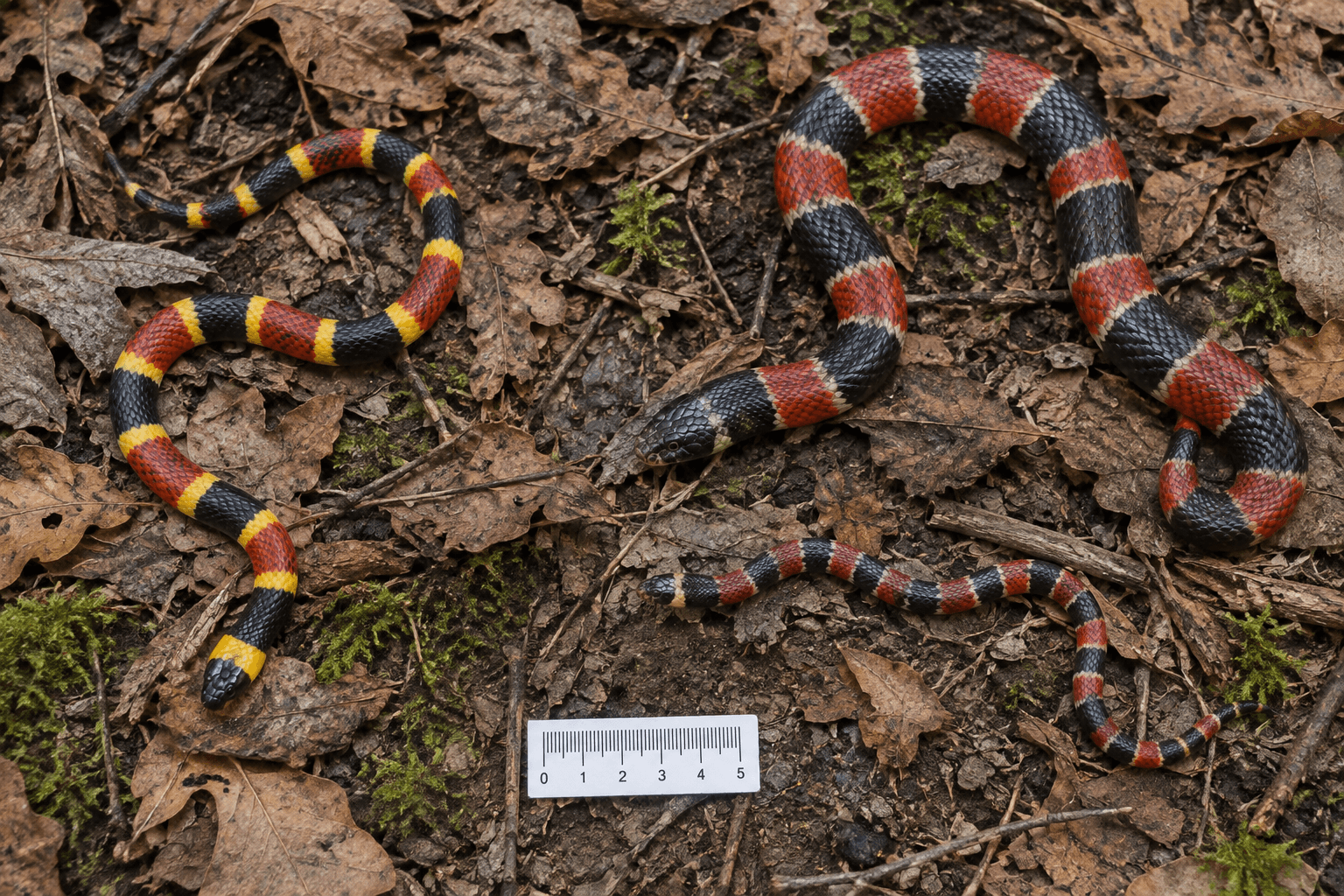
The quickest tell is band order: on a coral snake, red bands touch yellow bands directly. On a king snake, red bands touch black bands instead. That’s the core of the classic rhyme, and in most of the eastern and southern US, it holds up well.
The Rhyme Has Limits
The red-touches-yellow rhyme was built for North American coral snakes, mainly the eastern coral snake (Micrurus fulvius) and the Texas coral snake. It does not apply to coral snakes or similarly patterned species outside the US, so don’t try to use it if you’re looking at photos from Central or South America. Always confirm location before trusting the rhyme.
Size, Head Shape, and Faded Juveniles
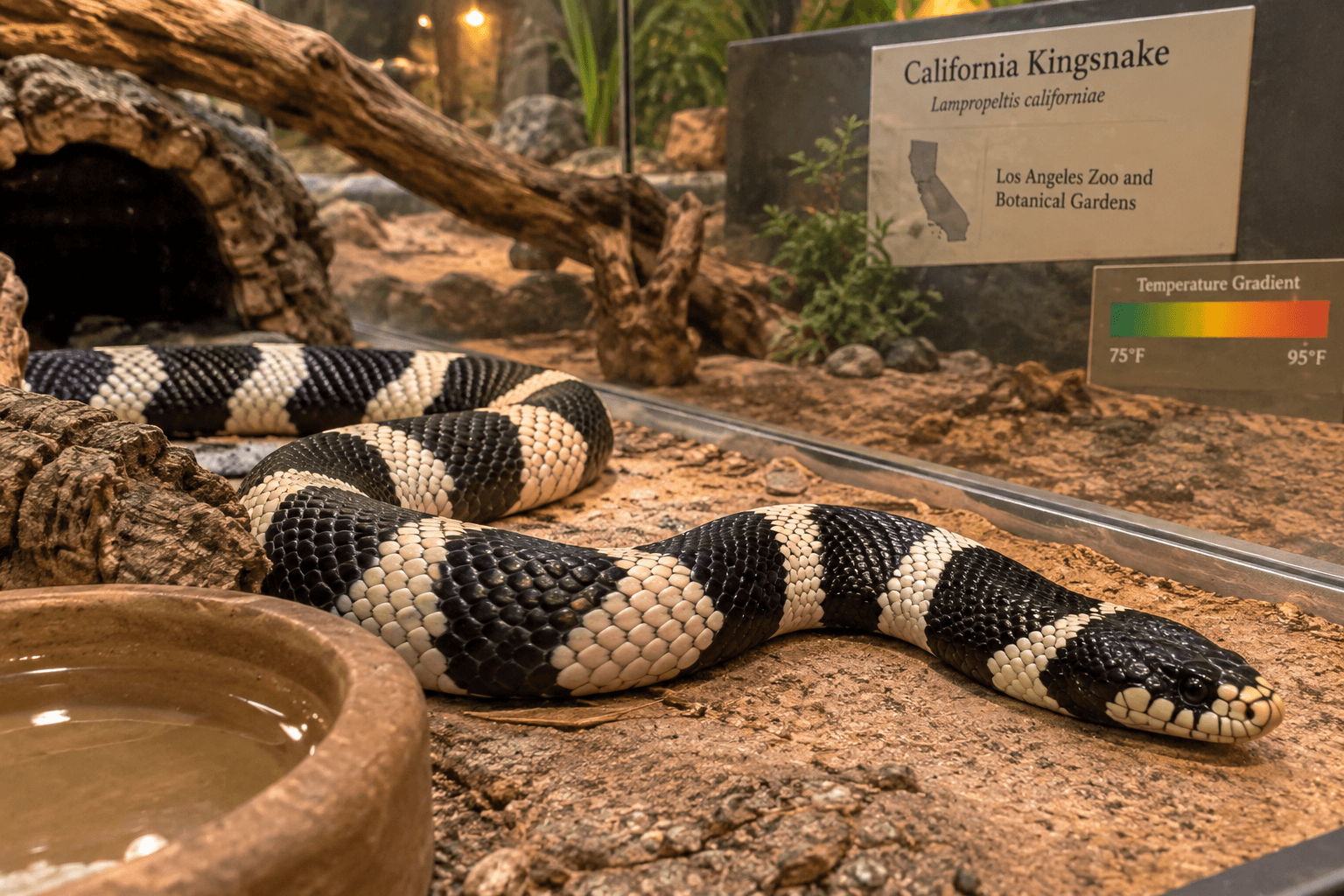
Coral snakes have small, rounded heads with no visible neck taper, black snouts, and rarely grow past 30 inches. King snakes have broader heads, bigger bodies (some scarlet king snakes and eastern kings hit 36 to 48 inches), and more visible neck definition. Watch out for juveniles of both species; their colors can look muted or washed out, which is exactly when misidentification happens most.
Venom, Fangs, and What a Bite Actually Means
Coral snakes are venomous elapids with short, fixed front fangs and a neurotoxic venom that affects breathing and muscle control. King snakes are non-venomous constrictors that bite defensively but pose no medical danger beyond a scratch. This difference alone should settle most of the debate for anyone thinking about handling one.
Is a King Snake Immune to Coral Snake Venom?
Not fully, and this is a common myth worth correcting. King snakes have some natural resistance to pit viper venom, which helps them eat rattlesnakes and copperheads, but that resistance doesn’t reliably extend to coral snake neurotoxin. Assuming a king snake is bulletproof against any snake venom is a mistake, even though the two rarely compete for food in the wild.
What to Do If You Suspect a Coral Snake Bite
Coral snake bites can have delayed symptoms, sometimes hours later, which makes them sneaky. If you or someone nearby is bitten by a snake matching coral snake coloring, get to an emergency room immediately, even if it doesn’t hurt much yet. Antivenom exists and works, but timing matters, so don’t wait around to see if symptoms show up.
Where Their Ranges Overlap (and Why That Matters for ID)
Coral snakes and several king snake species share territory across the southeastern US, from the Carolinas down through Florida and west into Texas. That overlap is exactly why misidentification happens so often in backyards and on hiking trails.
Trait
Coral Snake
King Snake
Venom
Neurotoxic, medically significant
None
Typical length
Up to 30 inches
36-48 inches
Head shape
Small, rounded, black snout
Broader, defined neck
Legal to own (most states)
No or heavily restricted
Yes, widely legal
Beginner-friendly pet
No
Yes
Mimicry theory suggests king snakes and some other harmless species evolved similar banding to “borrow” the coral snake’s warning colors, scaring off predators without needing the venom to back it up. It’s a good survival trick for the snake, but it’s a lousy identification shortcut for a hiker who only gets a half-second look.
The Real Verdict: Which One Should You Actually Keep?
King snakes win the captive care question by a wide margin, and it’s not close. Coral snakes are venomous, often refuse to eat frozen-thawed rodents, and are illegal or tightly permitted in many states, while king snakes are hardy, legal almost everywhere, and thrive on a simple enclosure setup.
Why Coral Snakes Fail as Pets
Many states classify coral snakes as venomous reptiles requiring special permits or outright ban private ownership.
They’re picky eaters, often preferring lizards over the mice most keepers can easily source.
A bite requires immediate hospital care and antivenom, not a home first-aid kit.
Their small size and secretive, burrowing habits make them stressful to observe or handle.
Even experienced keepers report low feeding success rates in captivity compared to colubrids.
Why King Snakes Work
King snakes handle well, eat consistently on frozen-thawed mice, and adapt to a basic 20-gallon terrarium setup with a warm side around 85°F and a cool side in the mid-70s. If you’re building your first enclosure, a species-specific king snake habitat guide (petterrarium.com has one worth checking) walks through substrate, hide placement, and humidity levels step by step. Temperament-wise, most kings settle into handling within a few weeks and rarely show the defensive musking some other colubrids do.
Frequently Asked Questions
Can a king snake actually kill and eat a coral snake?
It’s rare in the wild since their habits and prey preferences differ, but king snakes do have some resistance to pit viper venom that helps them eat other snakes. Direct coral snake predation isn’t well documented as a regular event.
Is it legal to own a coral snake as a pet?
In most US states it’s illegal or requires a venomous reptile permit through your state wildlife agency. Even where legal, most reptile shops won’t sell them due to liability and low survival rates in captivity.
How do I tell a juvenile coral snake from a juvenile king snake?
Check the black snout and rounded head shape first, since juvenile banding can look faded on both species. When in doubt, treat any ambiguous snake as venomous and keep your distance until you can photograph it for an expert to review.