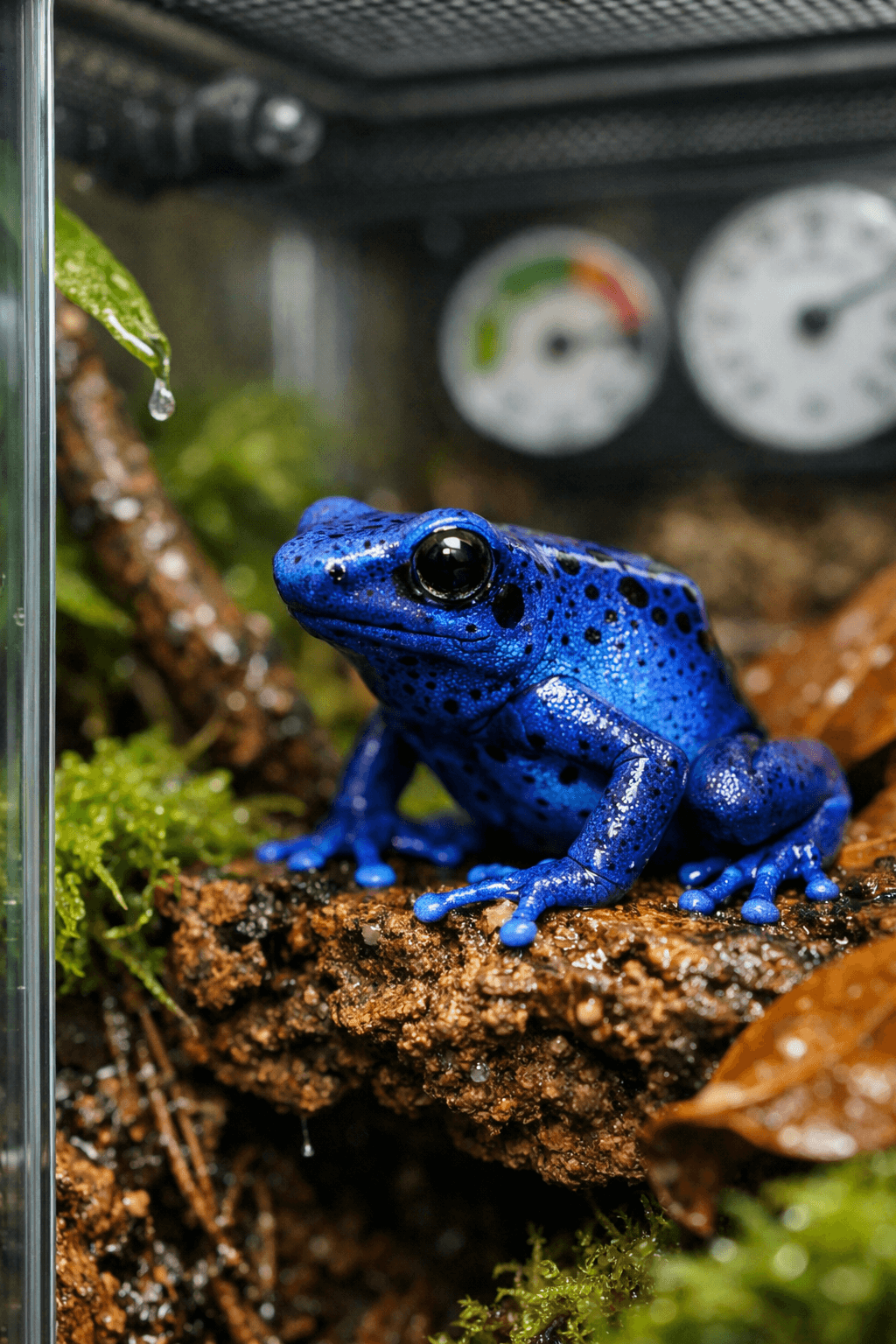
That electric blue skin isn’t just for show, and it’s not going to poison anyone in your living room. A blue poison dart frog (Dendrobates tinctorius “azureus”) kept in captivity loses its toxicity within a generation or two because that toxin actually comes from alkaloid-rich ants and mites the frog eats in the wild, not from the frog itself. So the real danger in your terrarium isn’t venom. It’s a paper-thin skin that reacts badly to the wrong water, the wrong humidity, or a set of hands that hasn’t been rinsed.
Tank Size and Setup: What a Blue Dart Frog Actually Needs
A single blue poison dart frog needs at least a 10-gallon vertical or front-opening terrarium, but a trio does much better in an 18x18x24-inch enclosure with real floor space and climbing height. Bigger is almost always better here, since these frogs are ground-dwelling but love leaf litter, cork bark, and low plants to hide in.
Ventilation and Escape-Proofing
Dart frogs are tiny and shockingly good at squeezing through gaps, so screen-top lids with small mesh openings are non-negotiable. You still need airflow to prevent stagnant, moldy air, so a mix of screen top and glass sides works better than a fully sealed box.
Group Size and Compatibility
Blue dart frogs do fine in small groups, usually a trio or a pair, but you want more females than males or you’ll get chasing and stress. Mixing them with other frog species is a bad idea. Different Dendrobates types can hybridize or pass along health issues neither species evolved defenses for.
Humidity, Water, and Temperature: The Section Most Guides Rush Through
Humidity has to stay between 70-80% and temperature between 72-78°F, and this is where most first-time keepers get into trouble. Skin that thin dries out fast, and a too-dry enclosure shows up as lethargy, stuck shed, or a frog that stops eating.
Misting Systems That Actually Work
Hand-misting twice a day works for a beginner setup, but an automated fogger or misting system (something like a MistKing-style setup) keeps humidity steady even when you’re at work or asleep. Consistency matters more than any single high humidity reading.
Why Tap Water Is the Silent Killer
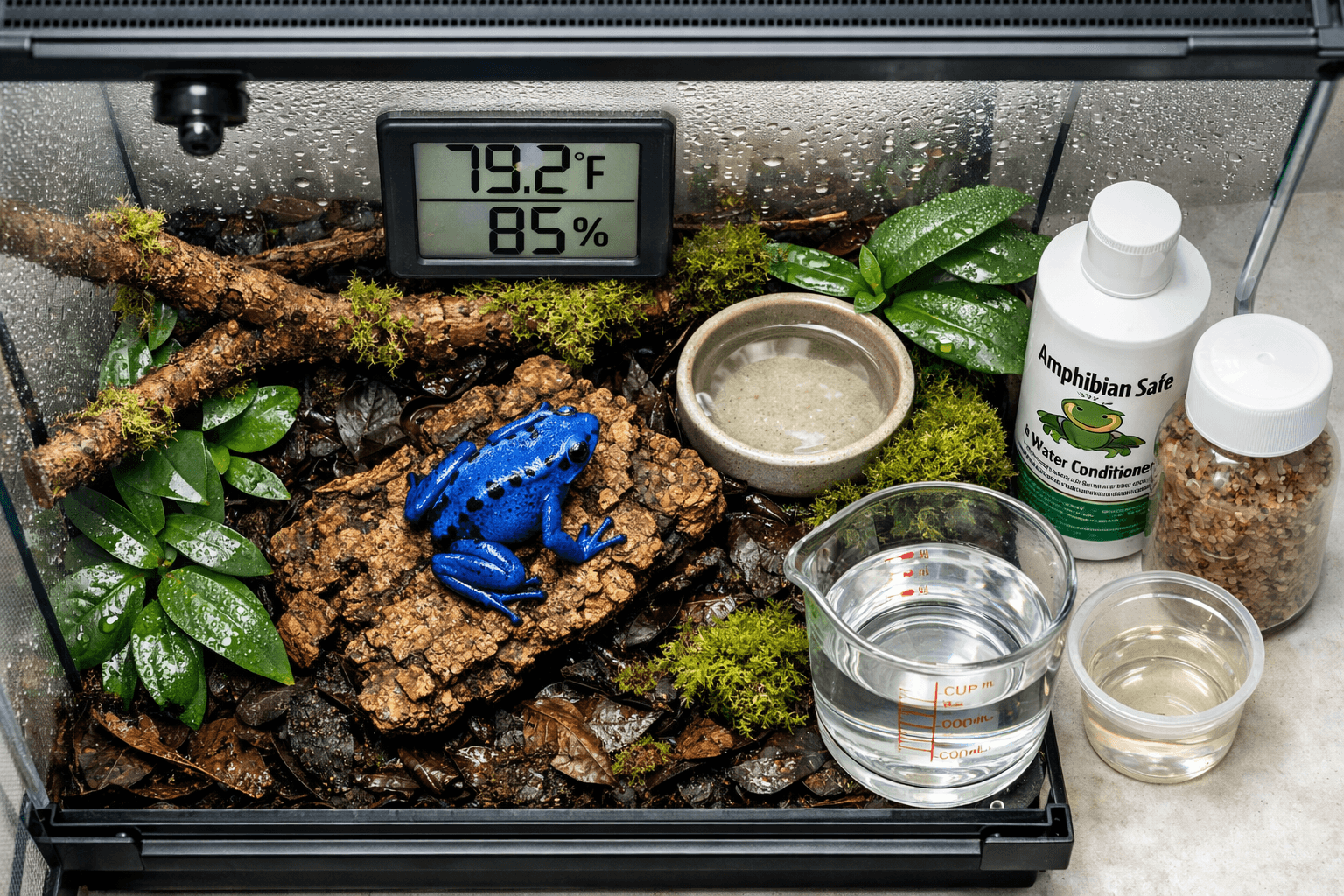
This is the part most care sheets gloss over. Chlorine and chloramine in ordinary tap water can burn amphibian skin on contact, and a blue poison dart frog absorbs water and chemicals directly through its skin instead of drinking it. Always use water treated with a reptile-safe dechlorinator, or reverse osmosis water remineralized for amphibians, for every misting session and water feature.
Water Type
Safe for Dart Frogs?
Notes
Straight tap water
No
Chlorine/chloramine irritate skin
Tap water + dechlorinator
Yes
Cheap, works well for daily misting
Reverse osmosis (remineralized)
Yes
Best for sensitive setups, costs more
Distilled water (no minerals added)
No
Lacks minerals frogs need long-term
Building a Bioactive Terrarium: Plants, Substrate, and Cleanup Crew
A bioactive setup with live plants, a drainage layer, and a cleanup crew of springtails and isopods is the closest thing to a self-cleaning terrarium you’ll ever run. It’s not extra decoration. It’s how waste gets broken down before it fouls the humidity you’re working so hard to keep stable.
Start with a false bottom or hydroballs, then a substrate mix of coconut fiber, sphagnum moss, and leaf litter about 2-3 inches deep. Pothos, creeping fig, and small bromeliads all hold up well in high humidity and give frogs places to perch and hide.
Springtails and isopods should go in a couple weeks before the frogs arrive, so the colony has time to establish. If you want a full walkthrough on layering substrate and seeding a cleanup crew correctly, petterrarium.com has step-by-step bioactive setup guides worth following before your frogs move in.
Don’t skip the cleanup crew to save $20. A tank without one turns into a mold and ammonia problem within a month, and that’s a much bigger fix than buying a starter culture upfront.
Feeding, Toxicity, and Handling: Separating Real Risk From Myth
Feed a blue poison dart frog fruit flies dusted with a vitamin and calcium supplement every other day, and skip the handling almost entirely. The toxin myth is the first thing to let go of. Wild-caught blue dart frogs carry alkaloid toxins from their natural diet, but captive-bred frogs raised on fruit flies never build up that toxin, so azureus frogs from a reputable breeder are effectively non-toxic.
Building a Feeding Routine
Culture or buy fruit flies (Drosophila melanogaster, the flightless strain) every 1-2 weeks so you never run dry.
Dust flies with a calcium supplement most feedings, and a vitamin A/D3 supplement once or twice a week.
Feed every 1-2 days for adults, daily for juveniles who are still growing fast.
Watch body weight and belly fullness rather than a strict clock, since appetite shifts with temperature and shedding.
Rotate in isopods or springtails from the bioactive floor as a bonus snack; frogs will hunt them naturally.
Handling Safety Runs Both Ways
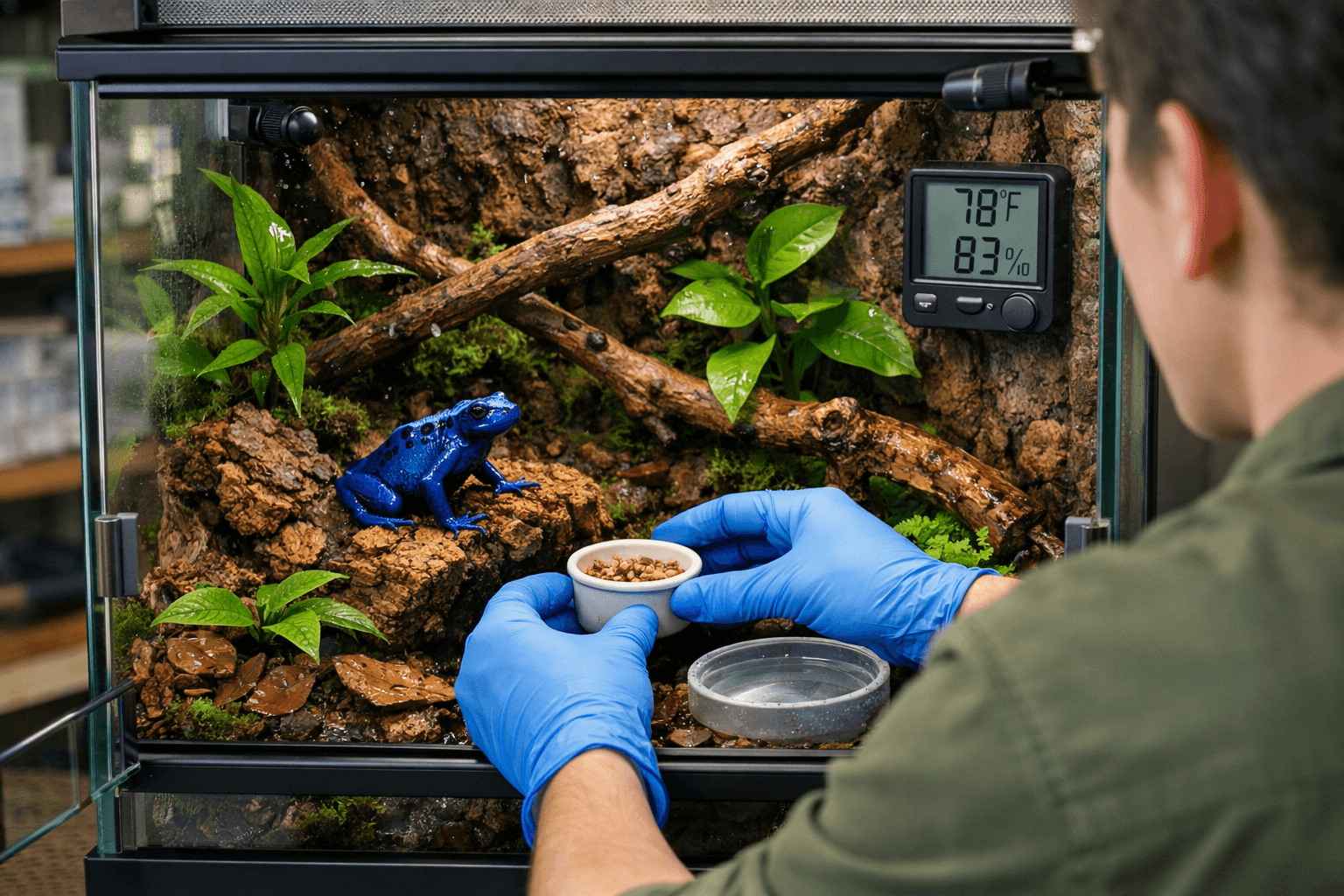
Wash your hands before and after any contact, even though the frog isn’t going to poison you. Lotion, soap residue, or hand sanitizer left on your skin can injure the frog through that same thin skin that makes tap water risky. If you must move a frog, use a clean plastic cup instead of your hands.
Sourcing, Breeding, and Common Health Problems
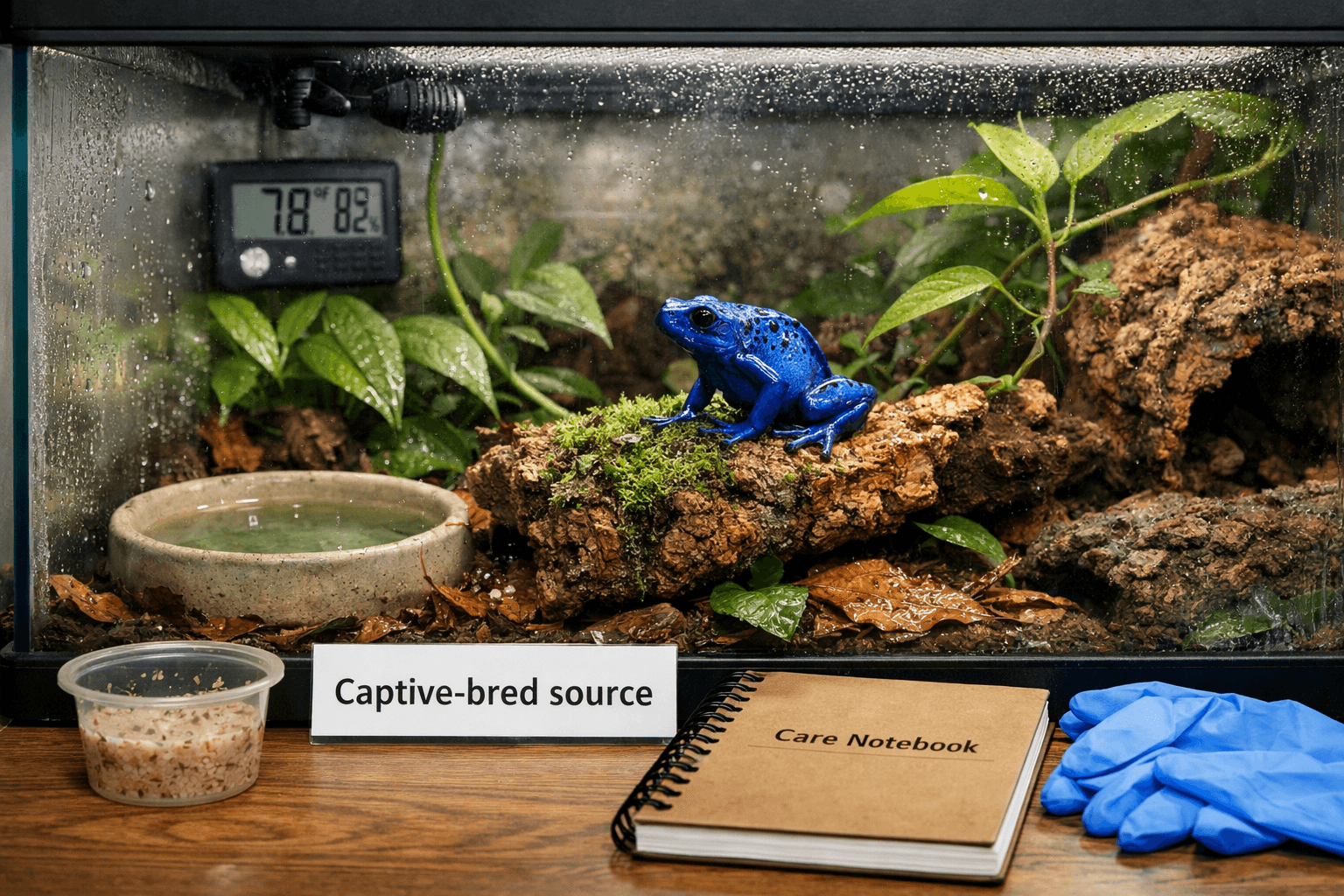
Buy captive-bred, not wild-caught, every time. Captive-bred blue dart frogs adjust faster to captive diets, arrive healthier, and don’t strip wild populations that are already under pressure from habitat loss. Expect to pay somewhere in the $40-80 range per frog from a reputable breeder or specialty reptile shop, though rarer color morphs run higher.
Common health issues include metabolic bone disease from missed calcium dusting, bacterial infections from dirty water features, and stress-related appetite loss from being housed with too many males. Most of these are preventable with the dusting schedule and dechlorinated water covered above.
Breeding blue dart frogs at home is realistic once you’ve kept a healthy pair or trio for 6-12 months. They’ll lay eggs on broad leaves or in film canisters if you provide them, and froglets need their own smaller rearing container with the same humidity rules as the adults.
Frequently Asked Questions
Are blue poison dart frogs actually poisonous to touch?
Captive-bred ones generally aren’t, since their toxicity comes from a wild diet of alkaloid-rich insects they never eat in captivity. The bigger risk is the opposite direction: your hands can hurt the frog’s sensitive skin.
How much humidity does a blue dart frog terrarium need?
Aim for 70-80% humidity consistently, checked with a digital hygrometer, not a guess. Dips below that for more than a day or two can cause stuck shed and lethargy.
Can I keep a blue poison dart frog with other frog species?
It’s not a good idea. Mixing Dendrobates species risks hybridization and can spread stress or illness between frogs that never evolved together, even if both species look healthy on their own.