A tarantula that won’t come out of hiding, refuses food, or paces the glass at 2 a.m. is usually telling you something about its enclosure, not just being shy. Getting tarantula enclosures right isn’t about buying the biggest tank at the pet store. It’s about matching the space to how that species actually lives, and once you get that part right, everything else (feeding, molting, handling stress) gets easier fast.
The good news? You don’t need a fancy bioactive build or years of experience to house a tarantula safely. You need the right shape, the right size, and a few safety habits. Let’s get into it.
Bigger Isn’t Better: Why Enclosure Shape Matters More Than Size
The biggest mistake I see in tarantula keeping is treating enclosure size like it’s a tank of fish. A tarantula in an oversized enclosure is often a stressed tarantula, not a happy one with “more room to explore.” Tarantulas are ambush predators. In a huge open space, they burn energy hunting down prey, they feel exposed, and they sometimes stop eating altogether.
The real question isn’t “how big” — it’s “what shape.” A burrowing species needs deep substrate, not floor space. A climbing species needs height, not width. Get the orientation wrong and even a well-intentioned setup causes problems.
Terrestrial Species
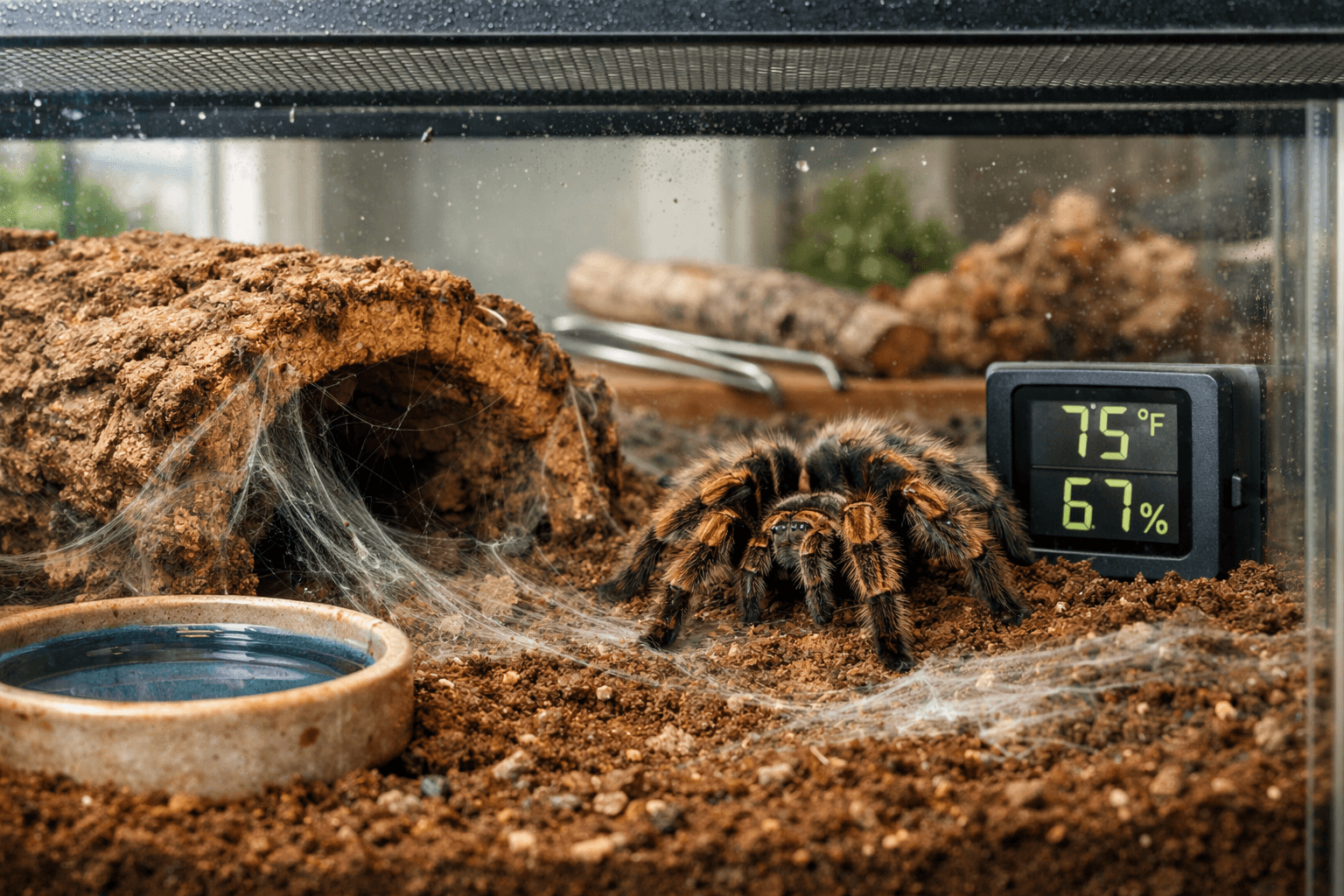
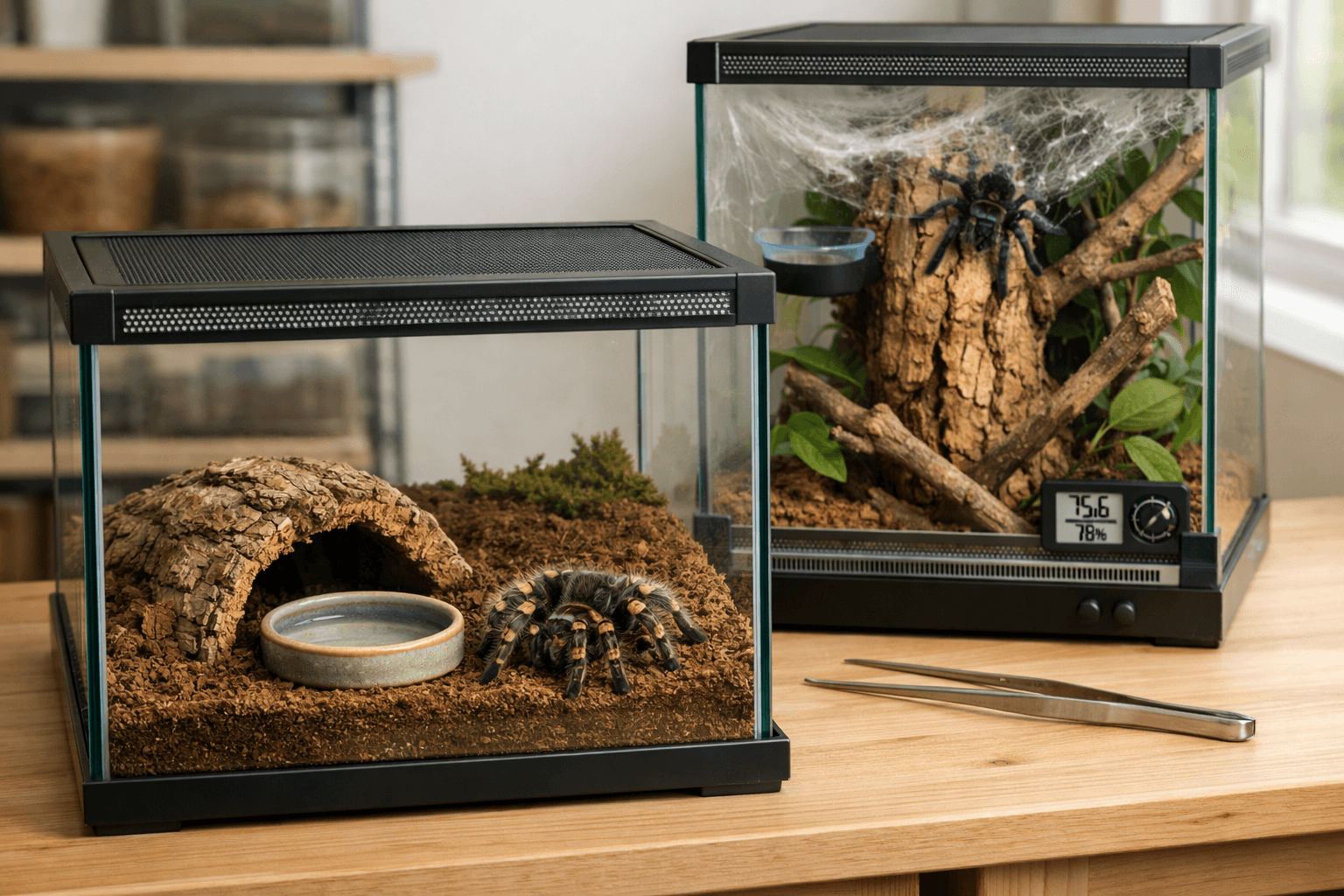
Ground-dwelling tarantulas, like a Chilean rose hair or Mexican red knee, need floor space more than height. A general rule: the enclosure footprint should be roughly 2-3 times the spider’s leg span, not gallons and gallons of open air above it. Extra height above a terrestrial species is wasted space and a fall risk if the spider climbs and drops.
Arboreal Species
Tree-dwelling species, like a pink toe tarantula, need vertical space instead. Look for tanks built taller than wide, with cork bark or branches angled upward. These spiders build silk tube webs near the top, so horizontal floor space barely gets used.
Fossorial Species
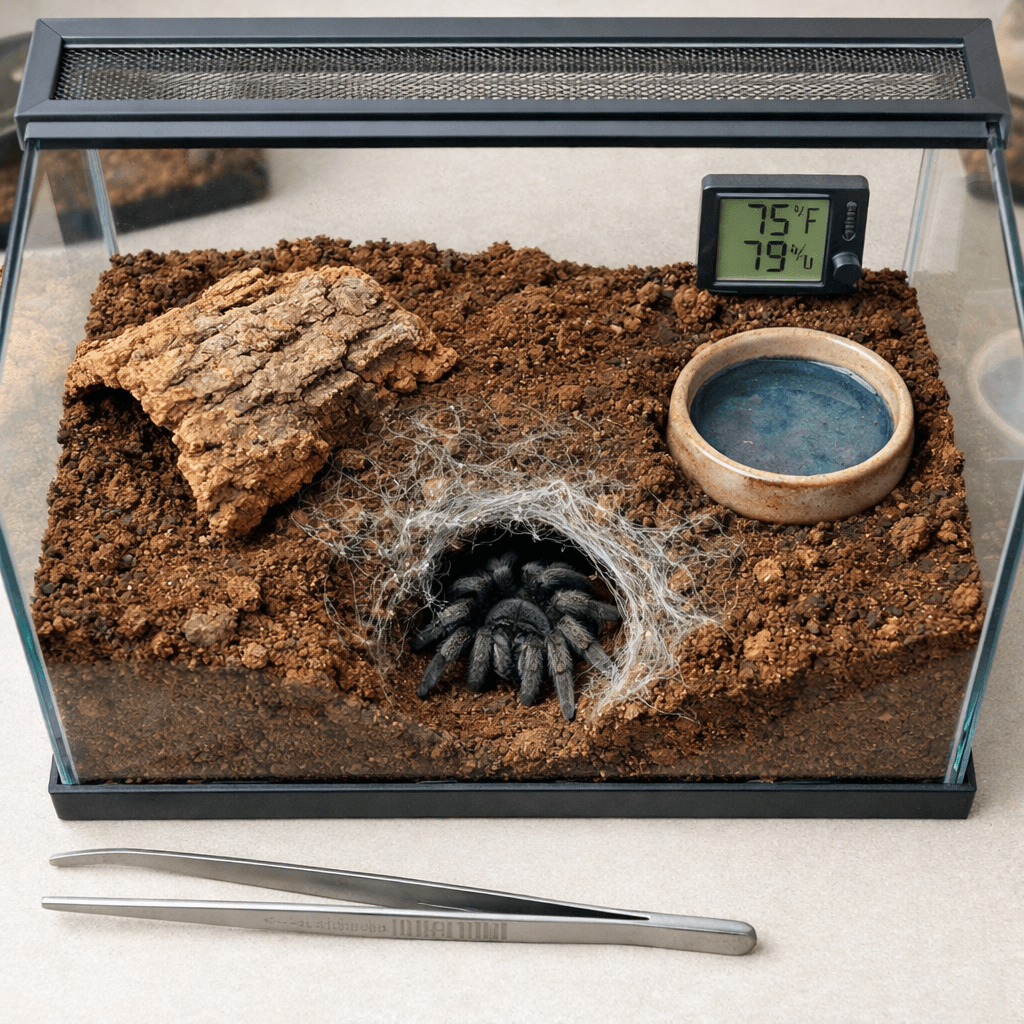
Burrowing species, like most Brachypelma and many baboon tarantulas, need depth over anything else. Give them 4-6 inches of packable substrate minimum, sometimes more for adults, so they can dig a real burrow instead of just scratching the surface.
Getting the Habitat Basics Right
Once the shape and size are settled, the day-to-day setup is what keeps your spider healthy long-term. This part is honestly the easiest to get right once you know the numbers.
Substrate and Humidity
Substrate depth depends on species type: 4-6 inches for burrowers, 2-3 inches for terrestrial species, and just 1-2 inches for arboreal ones. Coconut fiber (often sold as coir) works well for most species and holds shape for burrowing without turning soggy.
Here’s the myth worth killing: not every tarantula wants a rainforest. Desert and dry-grassland species, like the Grammostola genus, actually do better in drier conditions with a water dish as the only moisture source. Keeping their substrate constantly damp invites mold and can stress the spider more than dry air ever would.
Heating Without Drying Things Out
Skip the heat lamp. Most tarantulas do fine at normal room temperature, somewhere between 70-80°F, and a heat lamp tends to dry out the enclosure and cook the animal from above in a small glass box. If your home runs cold, a low-wattage heat mat on the side of the tank (never the bottom, never directly under substrate) is the safer call.
Ventilation and Water
Cross-ventilation matters more than people expect. Air holes on opposite sides, not just the top, keep air moving and prevent mold without drying the whole enclosure out. A shallow water dish, refreshed every couple of days, covers hydration for species that don’t need humid substrate.
Escape-Proof Lids: The Detail Beginners Skip
An enclosure that looks secure but isn’t is worse than an obviously open one, because you won’t know there’s a problem until the spider is gone. Tarantulas are strong for their size and surprisingly good at pushing through gaps you’d swear were too small.
Sliding lids need a locking clip or latch, not just a snug fit. A tarantula pushing against glass for a few hours can shift a lid that “seemed tight” at setup. This matters even more for arboreal species that climb and press against the top constantly.
Material matters here too. Glass holds humidity better but scratches easier and is heavier to move. Acrylic is lighter and safer if it ever gets knocked over, but it scratches and can warp slightly with heat mats. PVC enclosures, common in the reptile trade already, resist warping and insulate well, though they cost more up front.
Material
Weight
Humidity Retention
Typical Cost (10-20 gal equivalent)
Glass
Heavy
Good
$25-$60
Acrylic
Light
Fair
$30-$70
PVC
Medium
Very good
$60-$120
Molting and Setup Adjustments by Life Stage
A tarantula getting ready to molt often stops eating and gets sluggish; this is normal, not a red flag. What matters during this window is keeping the enclosure calm and undisturbed, since a mid-molt tarantula flipped onto its back can die if it can’t right itself.
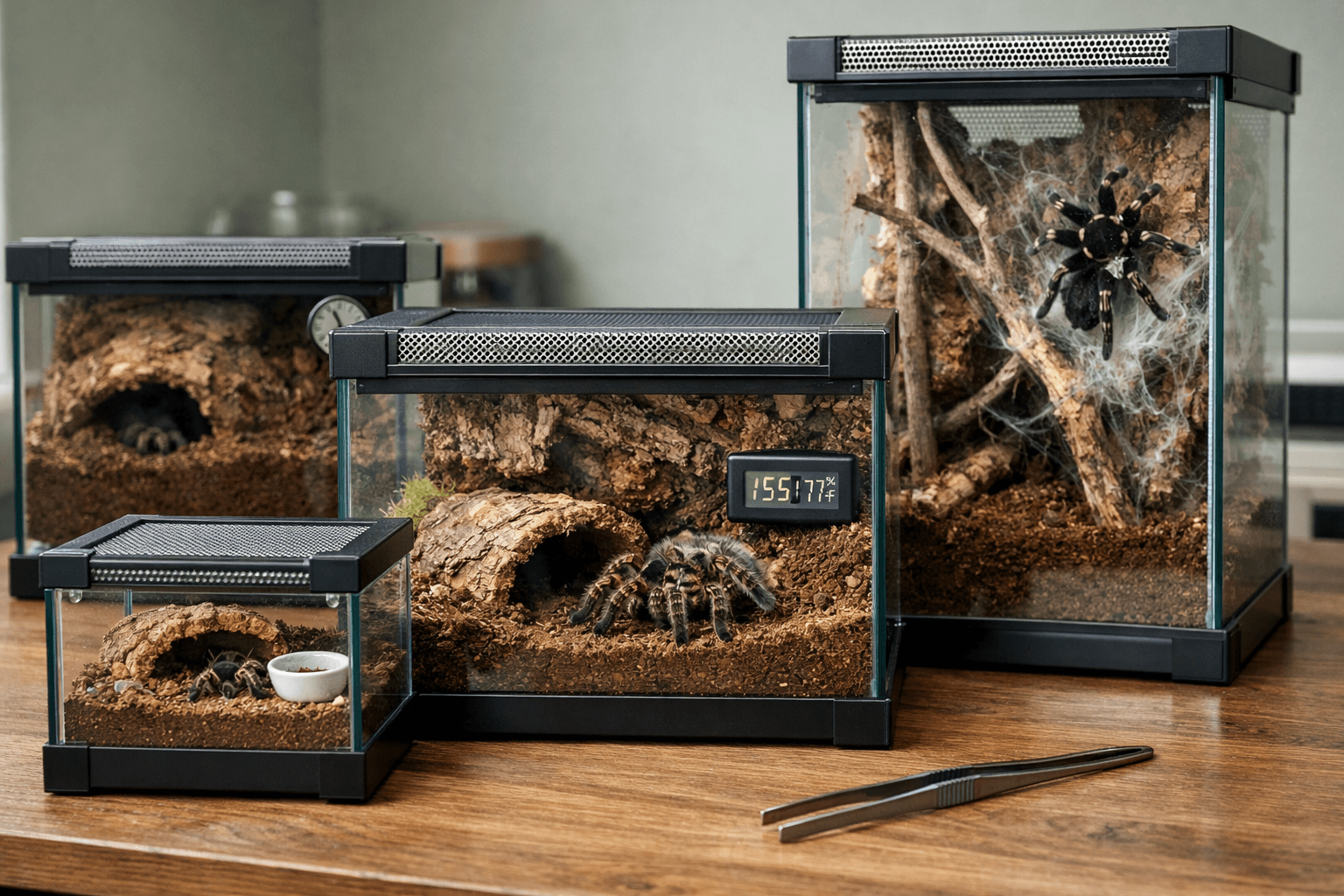
Juveniles and adults need genuinely different housing, not just a scaled-down version of the same tank. A juvenile tarantula the size of a quarter doesn’t need a hide the size of a shoebox; it needs a small, secure space where it feels covered on most sides. Oversized enclosures for slings (baby tarantulas) are a common cause of stress and failure to eat, since they can’t find prey or feel safe enough to leave a hide.
Here’s a simple sequence for moving a growing tarantula into a new enclosure:
Wait until a few days after a molt, once the exoskeleton has hardened.
Set up the new enclosure completely before moving the spider, including substrate, hide, and water dish.
Use a clear cup or catch container instead of hands, especially for skittish or fast species.
Guide the tarantula gently rather than dropping it, to avoid a fall injury.
Leave the spider undisturbed for at least a week to settle in.
Skip feeding for the first few days after the move, since stress can suppress appetite anyway.
Check ventilation and lid security again once everything’s in place.
If you’re setting up your first species-specific build, checking a dedicated species guide (Pet Terrarium runs several) before buying an enclosure can save you from picking the wrong shape entirely.
Frequently Asked Questions
What size enclosure does a tarantula actually need?
Size depends on species behavior, not a fixed gallon number. Terrestrial species need a footprint 2-3 times their leg span, arboreal species need height over floor space, and burrowers need 4-6 inches of substrate depth instead of a bigger tank.
Do all tarantulas need high humidity?
No. Many popular species, including most Grammostola and Brachypelma tarantulas, prefer drier substrate and get moisture from a water dish alone. Constant damp substrate on a dry-adapted species often causes mold and stress, not comfort.
Is a heat lamp necessary for tarantula enclosures?
Usually not. Most tarantulas do fine at 70-80°F room temperature, and heat lamps tend to dry the enclosure out fast. A side-mounted, low-wattage heat mat is the safer option if your home runs cooler than that.