One female mourning gecko in your tank today can turn into a dozen within a year, and that’s the part most care sheets skip. Mourning geckos reproduce through parthenogenesis, meaning every gecko is female and can lay fertile eggs without a mate. That’s a fun fact until your “starter pair” is suddenly a colony of fifteen packed into a 10-gallon tank meant for two.
Designing their home right from day one saves you a stressful, crowded scramble later. Let’s build a setup that fits how these tiny geckos actually live, not just how many you bought.
Tank Shape: Why Vertical Beats Horizontal Every Time
Mourning geckos are climbers first, floor-walkers never. A tall, vertically oriented enclosure suits them far better than the long horizontal tanks sold for most beginner reptile setups.
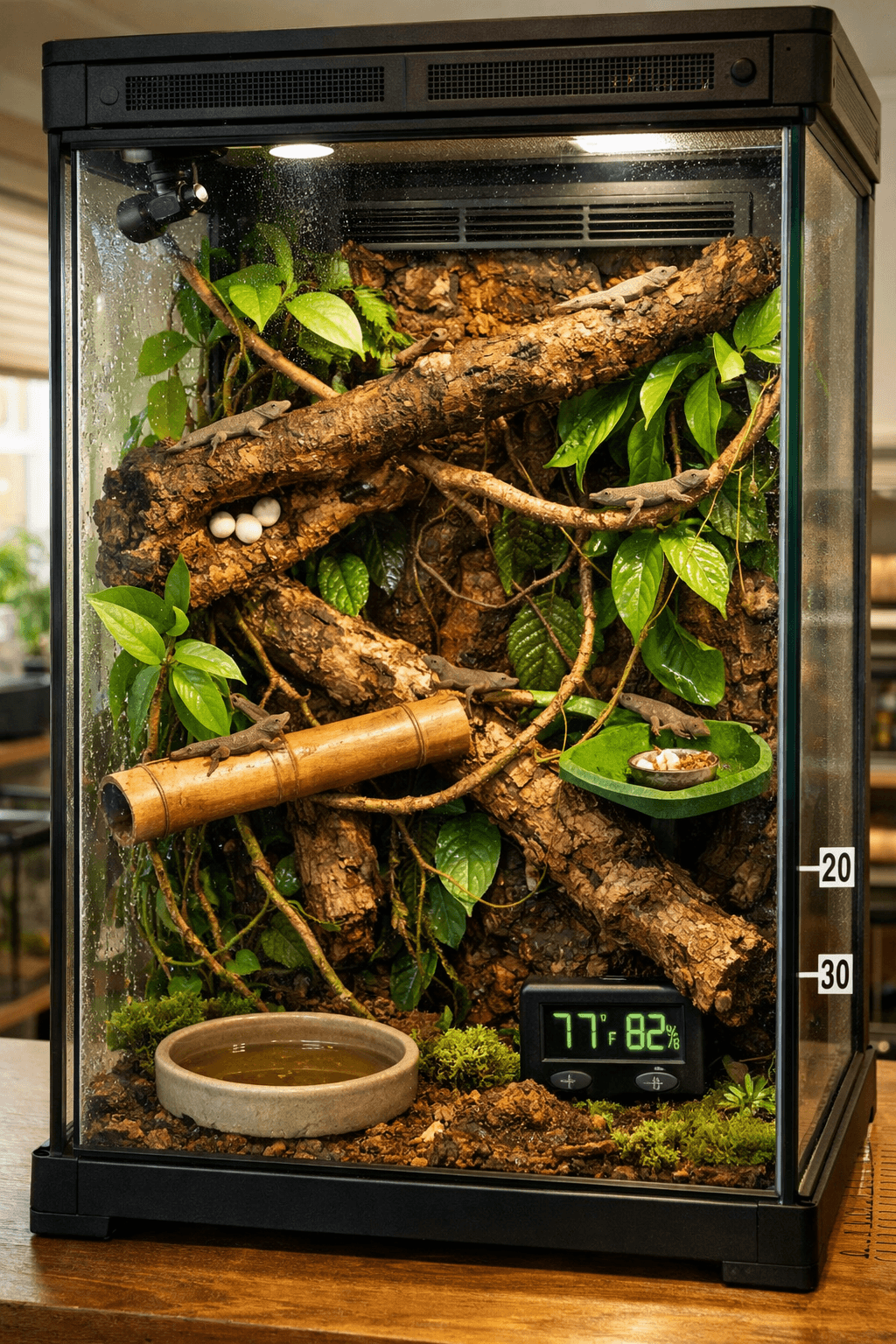
In the wild, these geckos spend nearly all their time on leaves, bark, and bamboo, rarely touching the ground except to grab a dropped bit of food. A horizontal 20-gallon “long” tank wastes most of its usable space on floor area they’ll ignore. A vertical 18x18x24-inch enclosure, by contrast, gives them three feet of climbing terrain in a footprint that fits on a dresser.
Minimum Sizing by Group
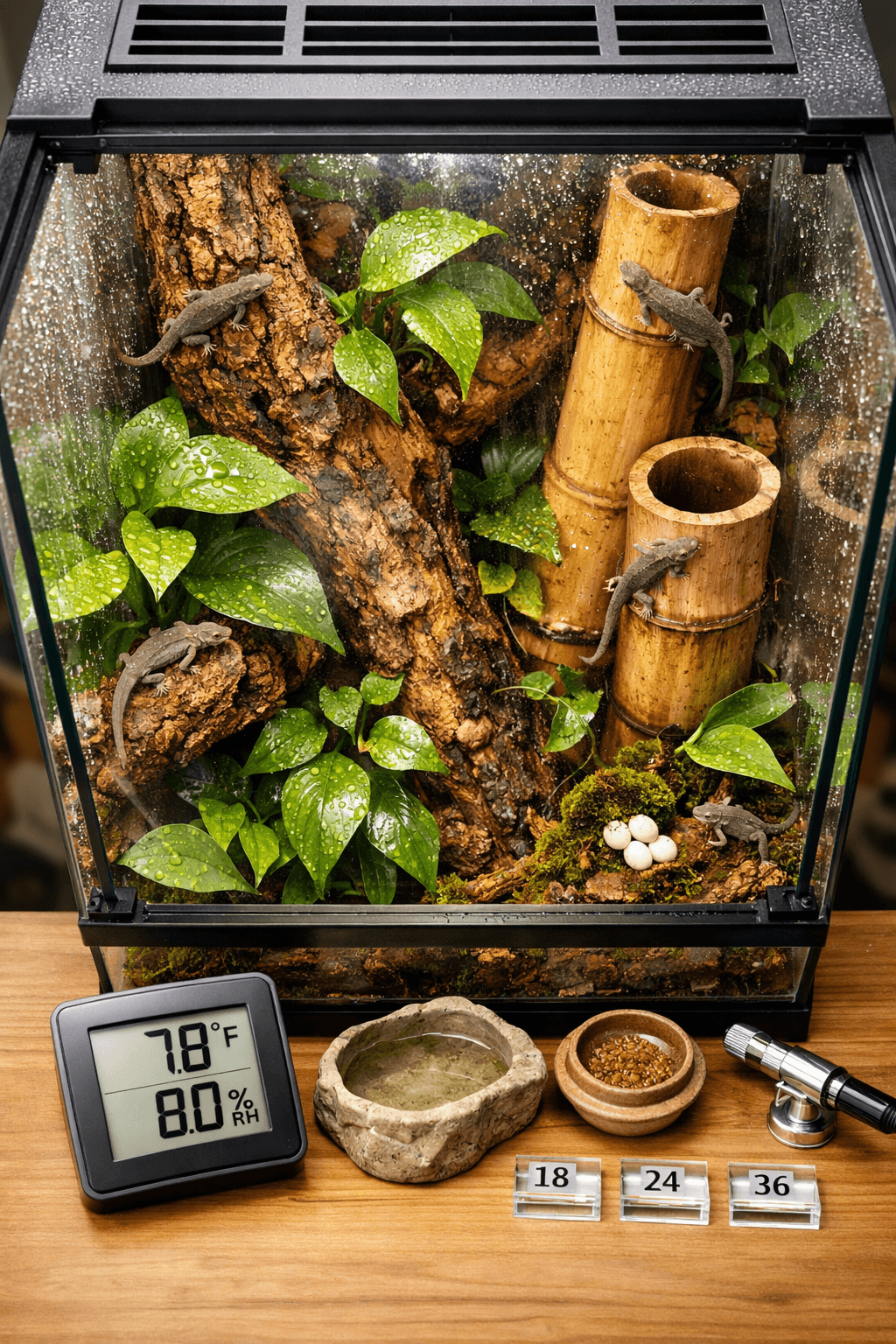
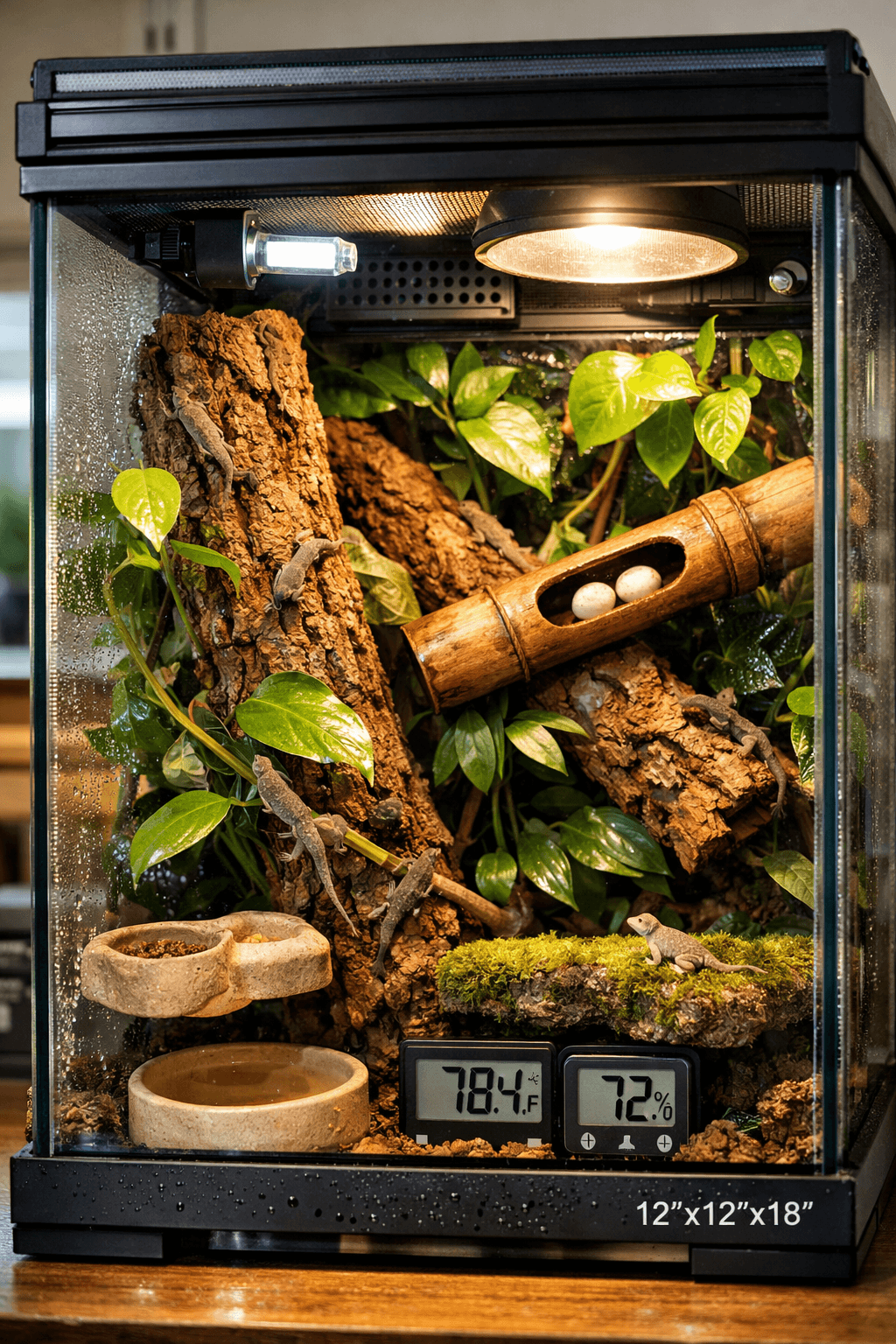
For a single gecko or a bonded pair, go no smaller than a 12x12x18-inch enclosure. For a growing colony of four to six, move up to 18x18x24 inches. Once you’re past eight adults, you need an 18x18x36-inch tower or a second enclosure entirely — cramming ten-plus mourning geckos into one small tank is the single most common design mistake I see, and it’s almost always avoidable with a little planning up front.
Planning for Population Growth
Because colonies grow on their own, size the enclosure for the population you’ll have in 12 months, not the population you have on setup day. If you start with three geckos, expect six to ten within a year given regular egg-laying. Buying the bigger tank now costs maybe $30-50 more upfront but saves you from an emergency rehoming project down the road.
Humidity and Temperature: Getting the Climate Right
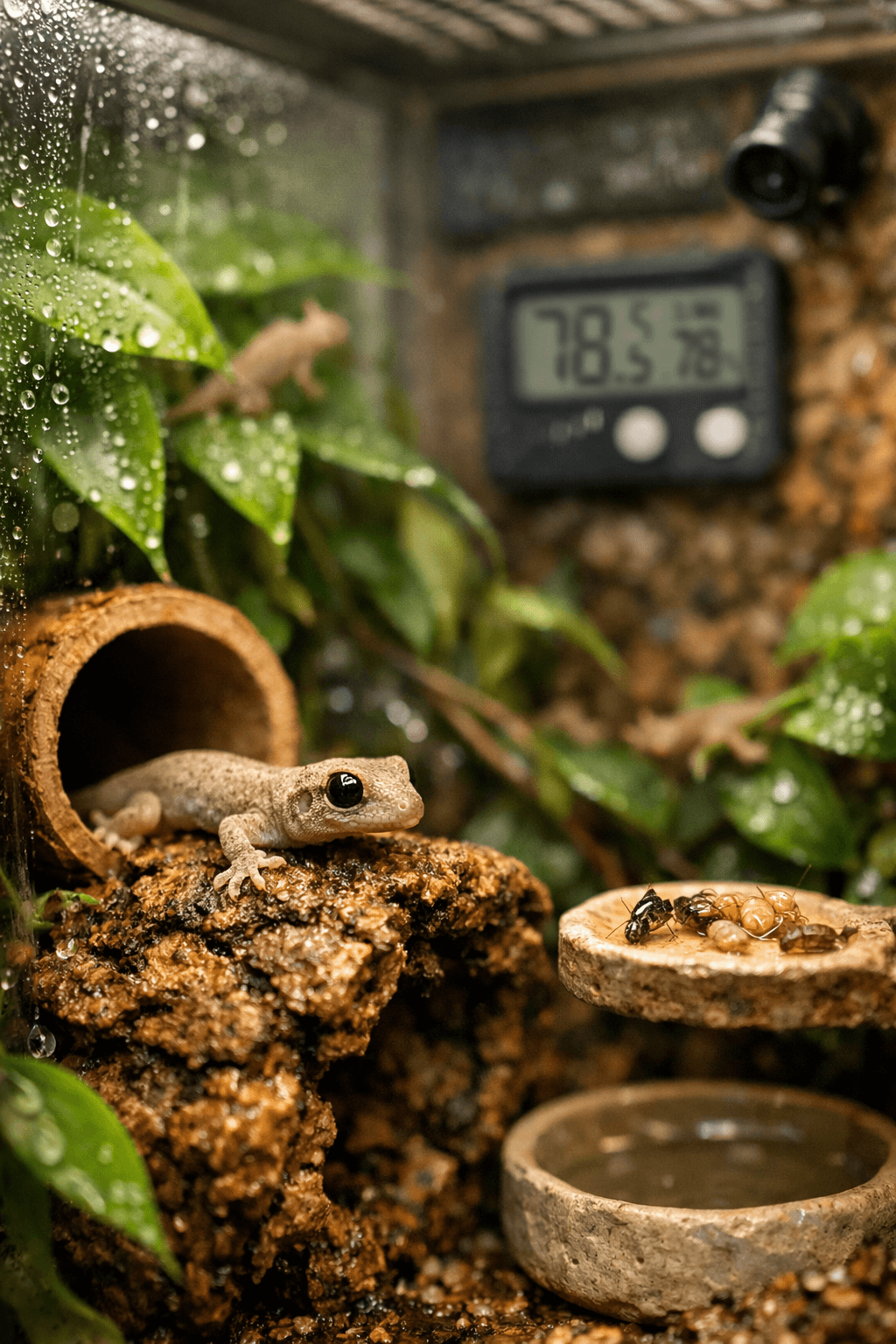
Mourning geckos need humidity between 60% and 80%, with a daytime temperature gradient of 75-82°F and a slight nighttime drop into the high 60s. Get this wrong and you’ll see stuck shed, dehydration, and lethargic geckos within weeks.
A single daily misting isn’t enough in most homes, especially with dry winter heating. Mist twice a day, morning and evening, using a pump sprayer or an automatic mister on a timer if you’ve got more than one enclosure to manage. Live plants like pothos and small bromeliads hold moisture in their leaves and help humidity linger between mistings instead of crashing right after you spray.
Skip a heat mat under a glass tank; use a low-wattage heat bulb or ceramic heater mounted outside a screen top instead, aimed at the upper third where the geckos actually bask. A digital probe thermometer and a hygrometer, placed at gecko height rather than the substrate, tell you if your numbers are real or just guesses. Mourning geckos tolerate small humidity swings fine, but a tank stuck below 50% for days at a time is where shedding problems start.
Ventilation and Screen Top Design
A full screen top isn’t optional in a high-humidity build — it’s what keeps your tank from turning into a mold incubator. Glass tanks with only a small vent strip trap stagnant, wet air, and that stagnant air is worse for gecko health than slightly low humidity ever would be.
Look for enclosures with mesh or screen panels on at least two sides, not just the top. Cross-ventilation lets moist air move instead of pooling in corners behind branches and leaf litter. If you’re converting an old aquarium, a DIY screen lid with a hinged frame runs about $15-25 in hardware store materials and solves most mold issues within days.
Good airflow also protects your live plants from rot and keeps fungus gnats from taking over the substrate, which is a common complaint in overly sealed bioactive setups.
Building the Interior: Substrate, Plants, and Climbing Structure
A vertical tank is only as good as what’s inside it. The interior needs to give geckos climbing options, hiding spots, and separate territories, or a crowded colony turns tense fast.
Substrate and Drainage
Use a bioactive mix of coconut fiber, sphagnum moss, and a drainage layer of expanded clay pebbles at the bottom. This setup holds humidity, supports live plants, and lets isopods or springtails clean up waste, cutting down on the manual cleaning you’d otherwise do weekly.
Climbing Branches and Foliage Density
Cork bark rounds, manzanita branches, and dense pothos or ficus foliage give geckos vertical pathways and, more importantly, visual barriers. In group housing, those visual barriers matter as much as total space, since mourning geckos rely on not seeing each other constantly to avoid territorial standoffs. If you’re setting up your first tall build and want more layout ideas, browsing a few vertical terrarium setup guides on sites like petterrarium.com can save you some trial and error on plant placement and branch angles.
Water and Feeding Stations
Add a dripper system or misting routine that leaves water droplets on leaves, since mourning geckos drink standing droplets rather than from a bowl most of the time. Place feeding dishes with fruit puree or commercial gecko diet up high on a branch platform, and add a calcium supplement dish nearby, refreshed every 2-3 days so it doesn’t mold in the humidity.
Lighting and UVB: Not Just for Sun-Loving Species
Mourning geckos are dusk-and-dawn active, not fully nocturnal, and low-level UVB still supports their calcium metabolism and bone health. Skipping UVB because “they hide during the day” is a mistake that shows up later as soft jaw or weak limbs.
A low-output UVB bulb (roughly 2-5% UVB) mounted over the screen top on a 12-hour photoperiod gets the job done without overheating a small enclosure. Run lights on a simple timer so the day/night cycle stays consistent, since erratic lighting stresses geckos more than people expect.
Here’s a quick reference for matching enclosure size to lighting and heat setup:
Enclosure Size
Group Size
UVB Bulb
Heat Source
12x12x18 in
1-2 geckos
Low-output 5% UVB, compact
Small ceramic heater, external
18x18x24 in
4-6 geckos
Low-output 5% UVB, full-length
Low-wattage heat bulb, external
18x18x36 in
8+ geckos
Two low-output 5% UVB tubes
Two heat bulbs, staggered placement
Frequently Asked Questions
How many mourning geckos can live together in one tank?
A well-planted 18x18x24-inch enclosure comfortably houses four to six adults. Beyond eight, split the colony into two enclosures rather than adding geckos to one tank, since crowding causes stress-related aggression even among an all-female colony.
Do mourning geckos really need UVB if they’re active at dusk?
Yes. A low-output 2-5% UVB bulb on a 12-hour cycle supports calcium processing and bone health, even though mourning geckos aren’t full daytime baskers like a bearded dragon.
What’s the biggest mistake first-time owners make with mourning geckos?
Buying a horizontal tank sized for their starting pair instead of planning for population growth. Since mourning geckos reproduce without mates, a colony of three can become eight within a year, so size the enclosure for that growth now.