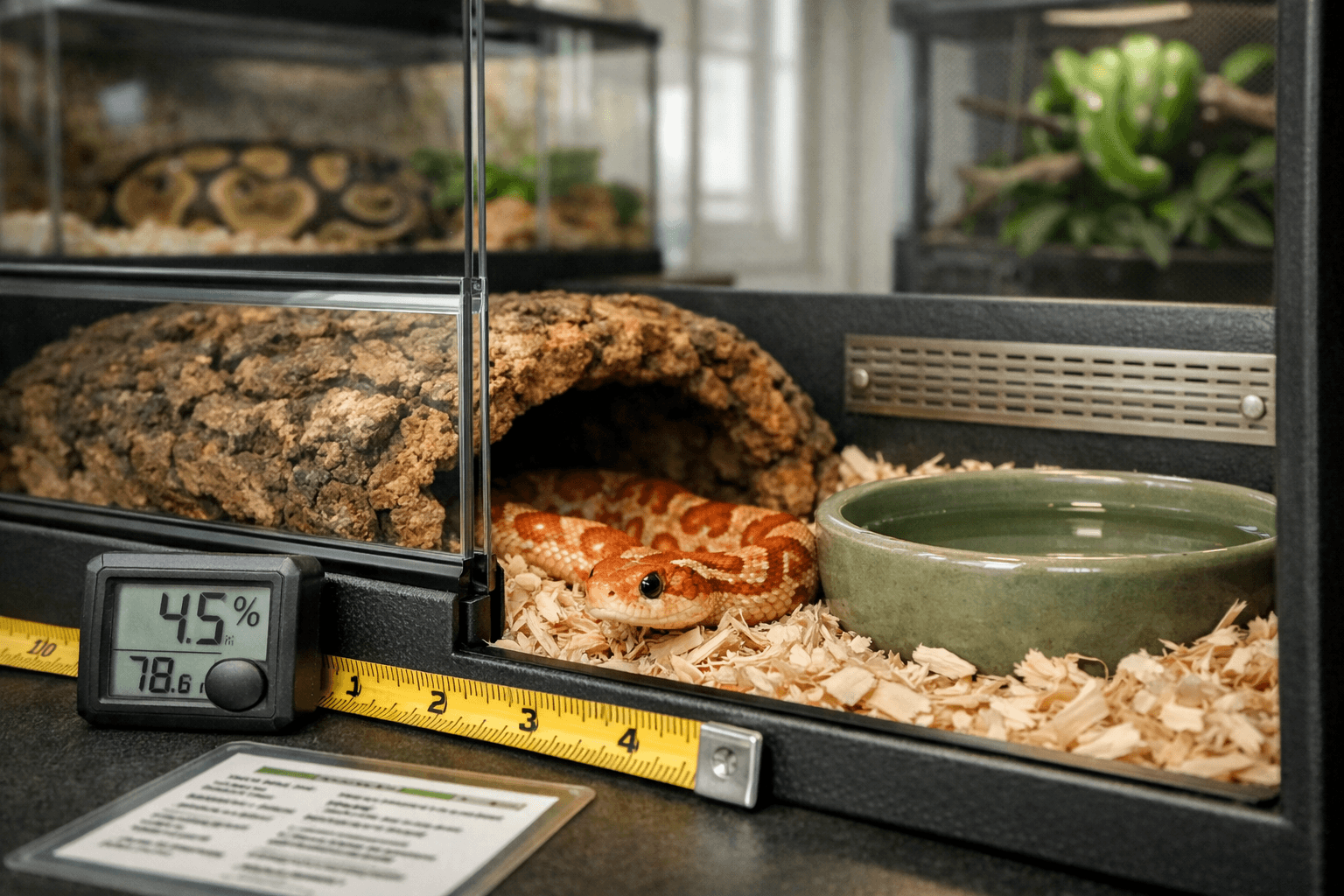
Skip the “bigger is always better” trap right now, because it’s the fastest way to stress out a snake and waste a few hundred dollars. Snake enclosures aren’t one-size-fits-all boxes; a ball python and a boa need different footprints, and a desert kingsnake needs totally different airflow than a green tree python. The right pick comes down to matching material, size, and ventilation to the actual animal in front of you, not just going with whatever looks nicest online.
That’s the real skill here. Anyone can scroll a marketplace and buy the priciest cage in stock. Figuring out what your specific snake actually needs to thrive is the part that separates a good keeper from a nervous one.
Matching Enclosure Size to Species and Age
The right size depends on your snake’s adult length and hunting style, not a flat rule like “40 gallons minimum.” A young ball python in an enclosure that’s too big often stresses out and stops eating, while an adult boa constrictor crammed into a 20-gallon tank will feel cramped and may refuse food too.
Sizing by Common Species
Ball pythons generally do fine as adults in a 36 x 18 x 18 inch enclosure. Corn snakes, being active and curious, appreciate similar floor space but benefit from more climbing height. Boa constrictors and carpet pythons, which get considerably longer, usually need something in the 48 x 24 x 24 inch range or bigger once fully grown.
Growing Snakes Need a Growth Plan
Don’t buy the “forever enclosure” for a hatchling. A juvenile in a huge, open space can have trouble finding food and feeling secure, so many keepers start small and upgrade as the snake grows. That’s not wasted money — it’s sequenced housing that matches the snake’s confidence level at each stage.
PVC vs. Glass vs. Screen: Picking the Right Material
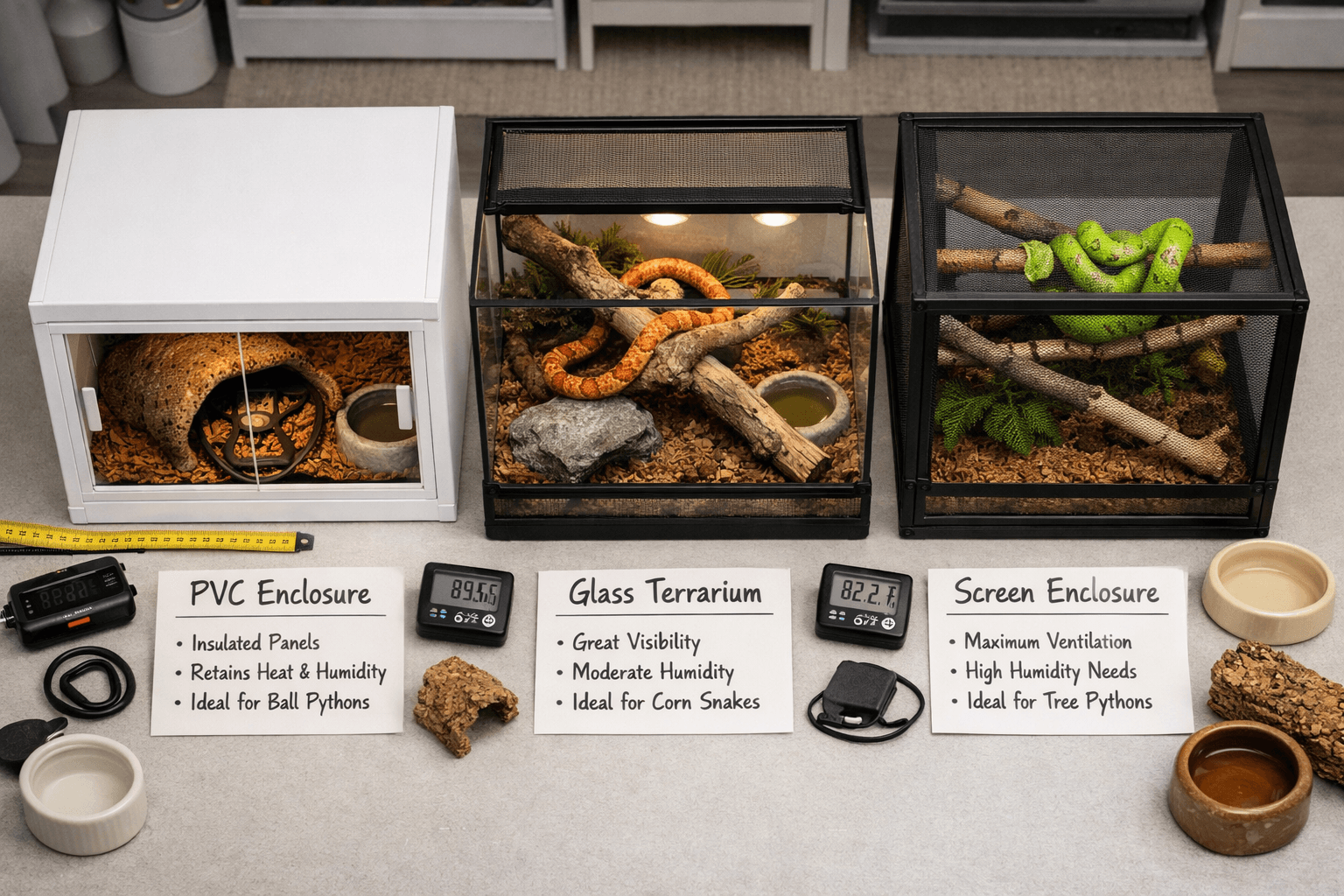
There’s no single best material — the right one depends entirely on your snake’s humidity needs, and this is where most buying guides get it backward. A $400 PVC enclosure is overkill and sometimes counterproductive for a species that wants dry air, while a $60 glass tank can be perfect if you ventilate it correctly.
PVC Enclosures Hold Heat and Humidity Well
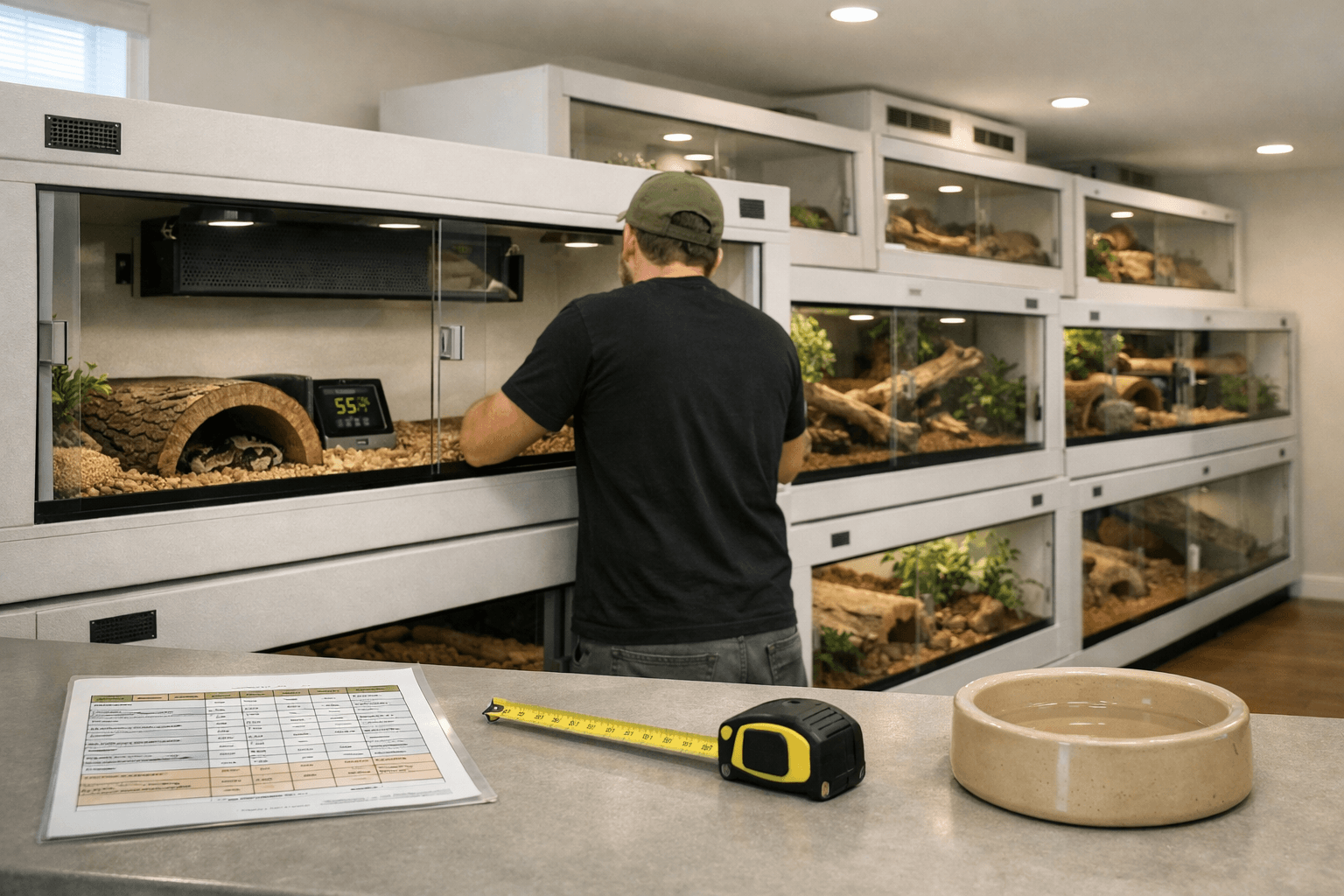
PVC cages, the kind made by brands like Boaphile or Animal Plastics, hold heat efficiently and retain humidity, which makes them a strong match for boas, ball pythons, and other species from humid tropical regions. They’re pricier, often running $200 to $600 depending on size, but the insulation cuts down on heating costs over time.
Glass Terrariums Work Great for Drier Species
Glass tanks are affordable, easy to find, and great for species like corn snakes or western hognose that don’t need heavy humidity. A basic 40-gallon glass terrarium runs $60 to $120, though you’ll want a tight-fitting screen or locking glass top to manage airflow.
Screen and Mesh Cages Are the Wrong Call for Humidity-Lovers
Open-top screen cages let humidity escape fast, which is exactly why they cause trouble for species like ball pythons or green tree pythons that need 60% humidity or higher. Screen cages work better for arid species like many kingsnakes, but even then, most keepers cover part of the top to manage airflow better.
Material
Best For
Typical Price Range
Humidity Retention
PVC
Boas, ball pythons, tropical species
$200–$600
High
Glass
Corn snakes, hognose, drier species
$60–$120
Medium
Screen/Mesh
Arid kingsnakes, some colubrids
$50–$150
Low
Ventilation, Humidity, and Thermal Gradients
Good airflow and a proper heat gradient matter more than the enclosure’s price tag. Every snake needs a warm side and a cool side, usually a 10 to 15 degree difference, so it can move around and regulate its own body temperature.
Ventilation isn’t just holes in the wall — it’s about balance. Too much airflow dries out a humidity-loving species; too little traps stale air and invites mold or respiratory issues in a dry-adapted one. A front-opening PVC enclosure with adjustable vents gives you the most control, letting you dial in conditions species by species instead of guessing.
Heating usually comes from an under-tank heat mat or a radiant heat panel, paired with a reliable thermostat (something like a Herpstat or Vivarium Electronics unit). Never run a heat source without a thermostat — that’s one of the most common ways keepers accidentally cook a snake overnight.
For species-specific setups, whether you’re working with a moisture-loving green tree python or a bone-dry desert kingsnake, it helps to look up a build guide tailored to that exact animal rather than following generic advice; sites like petterrarium.com break down humidity and heating targets species by species, which saves a lot of trial and error.
Front-Opening Access, Locks, and Avoiding Escapes
Front-opening doors beat top-opening lids for daily handling, and locking mechanisms are non-negotiable for any snake over 3 feet long. A top-opening screen lid might seem simpler, but it means reaching down over your snake every time, which can spook defensive species and lead to bites or panicked escape attempts.
Security matters more than people expect going in. A snake that can push open an unsecured lid or squeeze through a warped screen frame will find that gap eventually, sometimes within the first week. Locking clips, sliding bolt latches, or built-in key locks (common on PVC cages) are worth the extra $15 to $30 they might add to the price.
Here’s a practical order of operations for setting up a new enclosure the right way:
Confirm your snake’s adult size and pick an enclosure sized for that, not just its current length.
Choose PVC, glass, or screen based on the species’ humidity needs, not on looks or budget alone.
Install a thermostat-controlled heat source before adding substrate or decor.
Add substrate suited to humidity needs (cypress mulch or coco fiber for humid species, aspen for drier ones).
Test the locking mechanism under real conditions, including a light push from inside if possible.
Run the empty enclosure for 48 hours to check temperature and humidity stability before adding your snake.
Bioactive vs. Simple Setups (and the UVB Question)
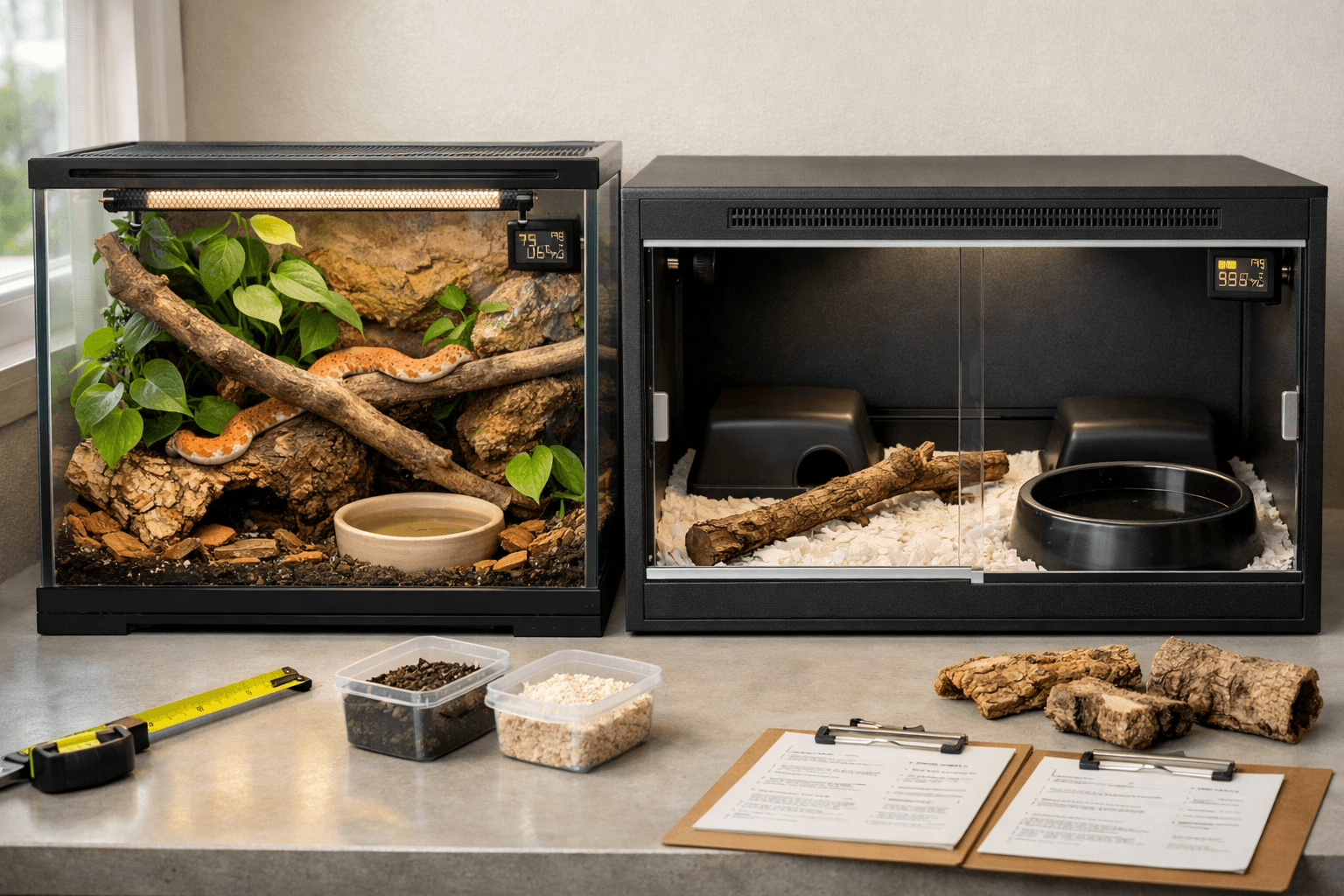
A bioactive enclosure, one with live plants, isopods, and springtails cycling waste naturally, isn’t required for a healthy snake, but it does make humidity management easier and looks great. A simple setup with paper towels or aspen shavings and a water bowl works fine too, especially for beginners still learning the ropes.
Bioactive setups cost more upfront — often an extra $100 to $200 for substrate, plants, and cleanup crews — but they cut down on spot-cleaning and tend to hold humidity more evenly once established. The tradeoff is a longer setup time, usually a few weeks for the cleanup crew to establish before adding your snake.
UVB lighting for snakes is still debated, but the growing consensus among keepers and reptile vets leans toward providing low-level UVB anyway. It’s not proven essential the way it is for many lizards, but a low-output UVB bulb (2.0 to 5.0 strength) seems to support better appetite and activity in species like ball pythons and boas, with little downside if positioned correctly.
Frequently Asked Questions
What’s the minimum enclosure size for a ball python?
An adult ball python does well in a 36 x 18 x 18 inch enclosure, though some keepers go slightly larger with heavy cover and hides. Hatchlings should start smaller, often a 10 to 20-gallon tub-style setup, and move up as they grow.
Do all pet snakes need high humidity?
No. Humidity needs vary a lot by species — ball pythons and boas want 50-60%+, while western hognose and many kingsnakes prefer drier conditions around 30-40%. Matching the enclosure material to that need matters more than matching everyone to one humidity number.
Is PVC always better than glass for snake enclosures?
Not always. PVC holds heat and humidity better, which suits tropical species, but a well-ventilated glass tank is often the better and cheaper choice for drier species like corn snakes or hognose that don’t need that extra insulation.