A customer walked into a local fish shop asking for “the same 20 gallons as my buddy’s tank,” pointed at a 20 gallon long, and got confused when it looked nothing like his friend’s tall, narrow setup. Same water volume, totally different shape. That mix-up happens more than you’d think, and it’s exactly why picking between a 20 long and a 20 high trips up so many first-time buyers.
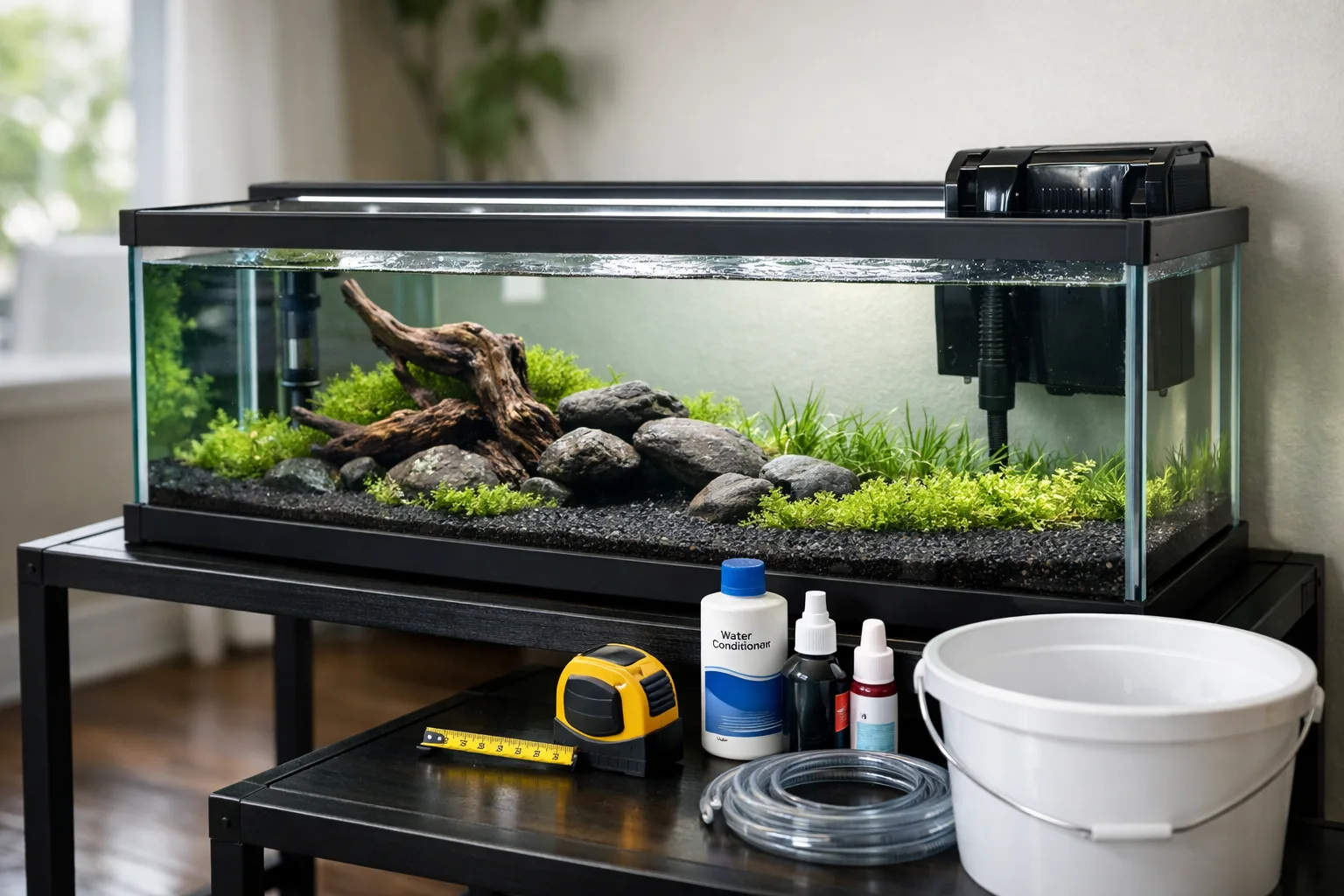
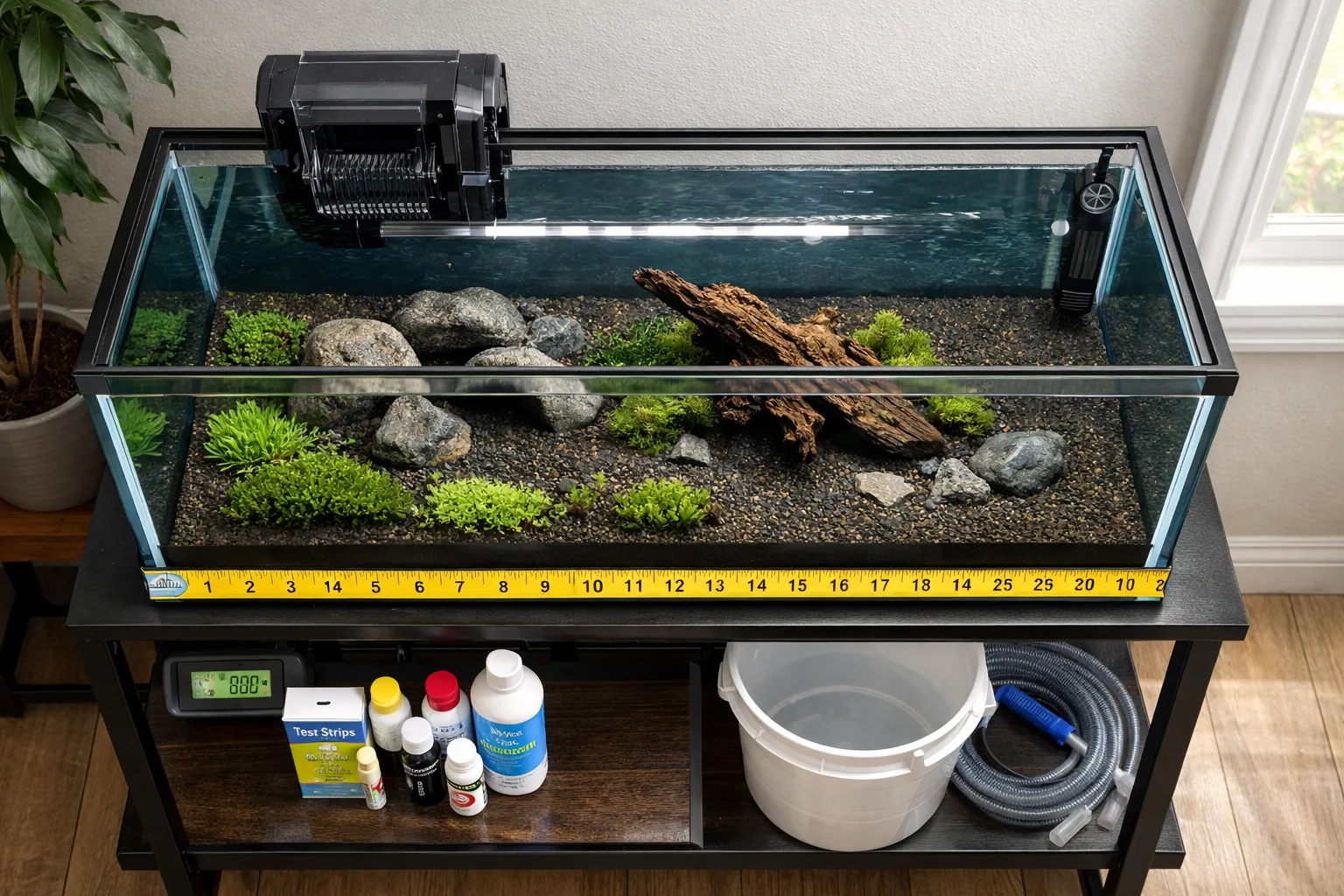
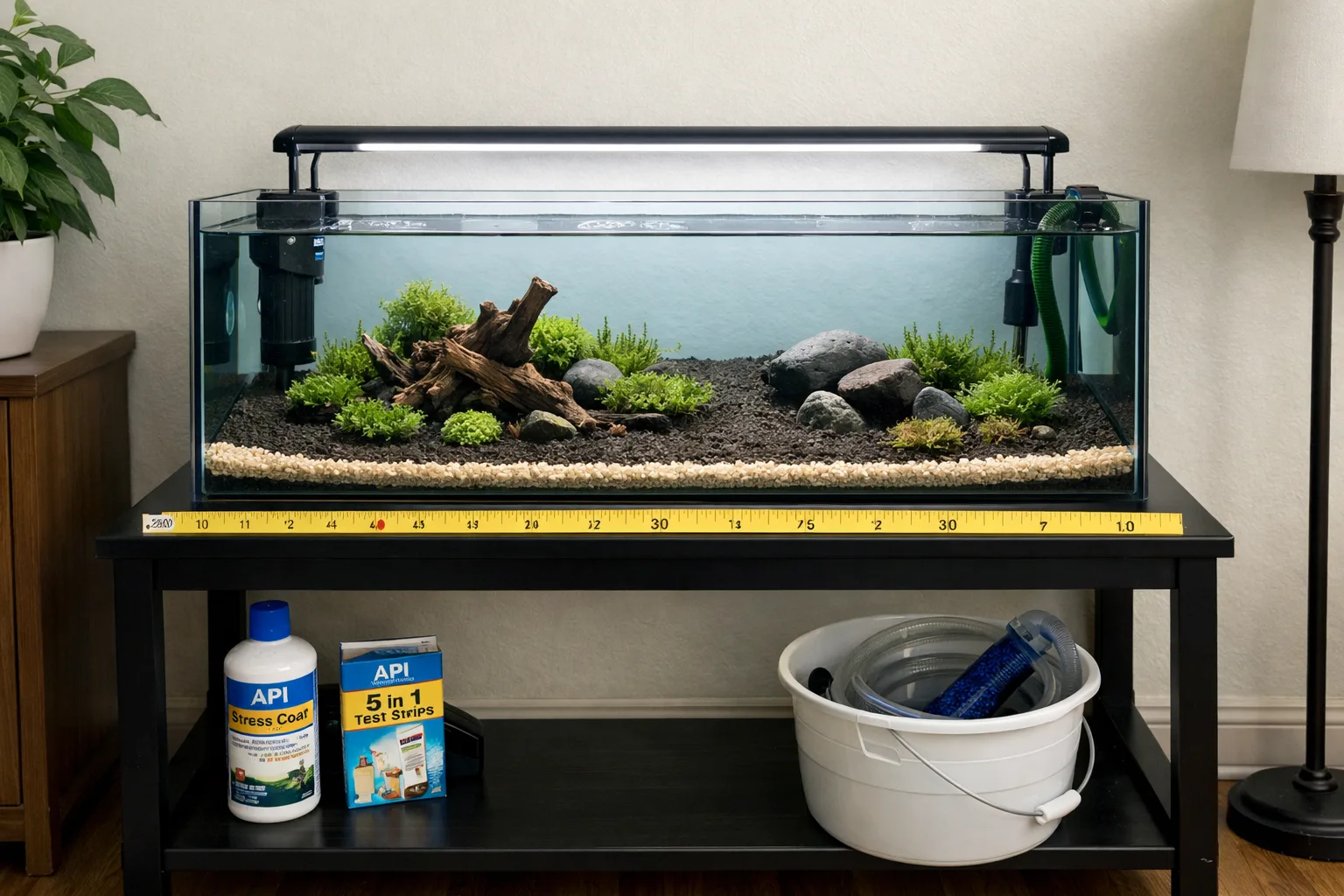
If you’re comparing tank shapes before you buy, here’s the short version: a 20 gallon long fish tank measures roughly 30 x 12 x 12 inches, giving you way more floor space than the taller 20 high, which makes it better for bottom-dwelling fish, planted layouts, and even crossover paludarium builds.
Tank Dimensions: What Makes the “Long” Different
A standard 20 gallon long runs about 30 inches wide, 12 inches deep front-to-back, and 12 inches tall. That’s the exact footprint that separates it from its sibling, the 20 gallon high, which is only 24 inches wide but stands 16 inches tall.
Both tanks hold 20 gallons of water. That’s the part people get wrong constantly.
Same Gallons, Totally Different Shape
Volume doesn’t care about shape, but your fish absolutely do. A 20 long spreads that water across a much bigger surface area and floor space, while a 20 high stacks the same water into a taller, narrower column. If you’ve ever set up a terrarium before, think of it like the difference between a wide, shallow enclosure and a tall vivarium — the usable space for your animals changes even when the “size” number stays the same.
Why the Footprint Matters More Than the Label
The floor space on a 20 long is close to 360 square inches, compared to roughly 288 square inches on a 20 high. That’s a meaningful jump for anything that lives near the substrate — bottom feeders, burrowing fish, or amphibians that spend more time walking than swimming. More floor space also means more room to build actual scenery instead of just stacking decorations vertically.
A Quick Gut-Check Before You Buy
If your fish or animals spend most of their time near the bottom or the surface, rather than swimming up and down, the long tank almost always makes more sense. Tall columns look dramatic in a fish store display, but a lot of that vertical water goes unused by fish that don’t naturally swim at mid-depth. I’d only pick the high over the long if I were keeping something that genuinely benefits from vertical swimming room, like certain tall-bodied cichlids.
20 Long vs. 20 High: Which One Should You Actually Buy
Pick the 20 long if you want more usable floor space, easier aquascaping, and better light penetration for plants. Pick the 20 high only if your species specifically needs vertical swimming room. For most community setups and crossover builds, the long wins.
Here’s a side-by-side to make the decision concrete:
Feature
20 Gallon Long
20 Gallon High
Dimensions
30 x 12 x 12 in
24 x 12 x 16 in
Floor space
~360 sq in
~288 sq in
Water depth
12 in
16 in
Best for
bottom dwellers, planted tanks, paludariums
tall-bodied fish, vertical swimmers
Light penetration
strong, even
weaker at substrate level
Stand footprint needed
wider stand
narrower, deeper stand
The long tank’s shallower water column is the real differentiator here. Light has less distance to travel before it hits your substrate, which matters a lot if you’re planning a planted tank. It also matters if you’re building something that isn’t a traditional fish tank at all.
This is where the crossover appeal kicks in. A shallow 12-inch water column, combined with almost 3 feet of horizontal space, is close to ideal for semi-aquatic builds — think turtle setups with a dry dock, dart frog paludariums, or planted vivariums with a water feature. Reptile and amphibian keepers who’ve built terrariums before will recognize this shape immediately; it’s the same logic behind a lot of paludarium tanks sold specifically for that purpose.
Don’t assume the 20 high is “more advanced” just because it’s taller. Height without matching footprint often just means less usable space for your animals and more work for you when aquascaping. The long format tends to be more forgiving for beginners because you can spread hardscape out instead of stacking it.
Stocking a 20 Gallon Long the Right Way
The long footprint makes a tank look roomier than it is, which is exactly why overstocking is the most common mistake with this size. Stick to the same bioload math you’d use for any 20-gallon tank — the shape doesn’t add water volume, just distributes it differently.
Community Fish That Do Well in a Long Tank
A 20 long handles a nice community mix because of its wide swimming lanes. Good candidates include small schooling fish like tetras or rasboras (keep them in groups of 6 or more), a pair of dwarf gouramis, a small school of corydoras catfish for the bottom, and a centerpiece fish like a honey gourami or a single betta if you skip the more active schoolers. Avoid anything that needs a lot of vertical swimming room, like tall angelfish, since the shallow depth will feel cramped for them as adults.
Bottom Dwellers Love the Extra Floor Space
This is where the 20 long really shines. Corydoras, kuhli loaches, and dwarf plecos all get noticeably more room to spread out compared to a 20 high, since they spend almost all their time on the substrate rather than mid-water. More floor space also means less territorial squabbling between bottom dwellers, which matters if you’re keeping more than one species down there.
A Simple Stocking Sequence to Follow
Start with a bare tank and run the nitrogen cycle for 4 to 6 weeks before adding any fish.
Add a small group of hardy schooling fish first, like six tetras, to establish a baseline bioload.
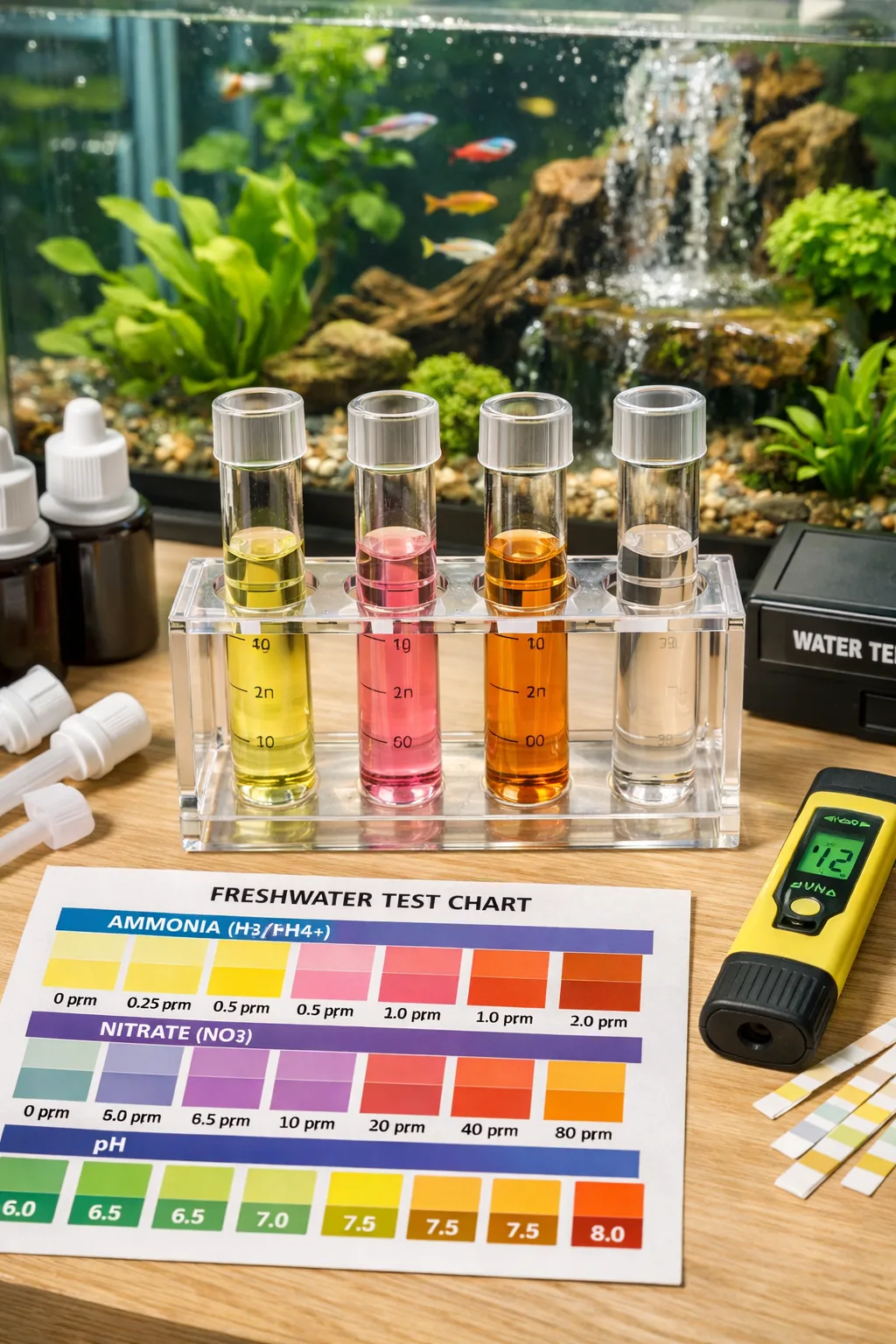
Wait 2 weeks and test water parameters before adding your next group.
Introduce bottom dwellers like corydoras once ammonia and nitrite consistently read zero.
Add any centerpiece or semi-aggressive fish last, once the tank is fully established.
Reassess stocking every few months as fish grow — a fish that fit fine at 1 inch may need more room at 3 inches.
Never add fish just because the tank “looks empty” from the front glass.
Looking empty is the trap. A 30-inch-wide tank with only six small fish in it can look sparse from the front glass, but that doesn’t mean it’s understocked. Judge bioload by gallons and species needs, not by how full the tank looks to your eye.
Filtration and Heating Sized for a Shallow, Wide Tank
Filtration and heaters for a 20 long need to match the wider surface area and shallow depth, not just the “20 gallon” label on the box. A filter rated for a 20 high can underperform in a 20 long because the flow pattern doesn’t reach the wider footprint the same way.
Picking a Filter That Covers the Width
Look for a filter rated for at least 20 to 30 gallons of turnover, and lean toward the higher end of that range since horizontal tanks benefit from stronger flow distribution. A hang-on-back filter like a mid-range Aquaclear or Fluval power filter works fine, but you may need to angle the outflow to push water across the full 30-inch width rather than just down one end. Sponge filters are a solid budget option too, especially if you’re keeping corydoras or shrimp that prefer gentler flow.
Heater Sizing for the Shorter Water Column
Because the water column is only 12 inches deep instead of 16, don’t just buy the same wattage heater you’d use in a 20 high. A 50 to 100 watt heater is typically enough for a 20 long in a normal room, but always check the heater’s submersion line since some models need a certain water depth to function safely. Mounting it horizontally along the back glass, rather than vertically, usually gives more even heat distribution across the wider tank.
The Mismatch Problem Nobody Warns You About
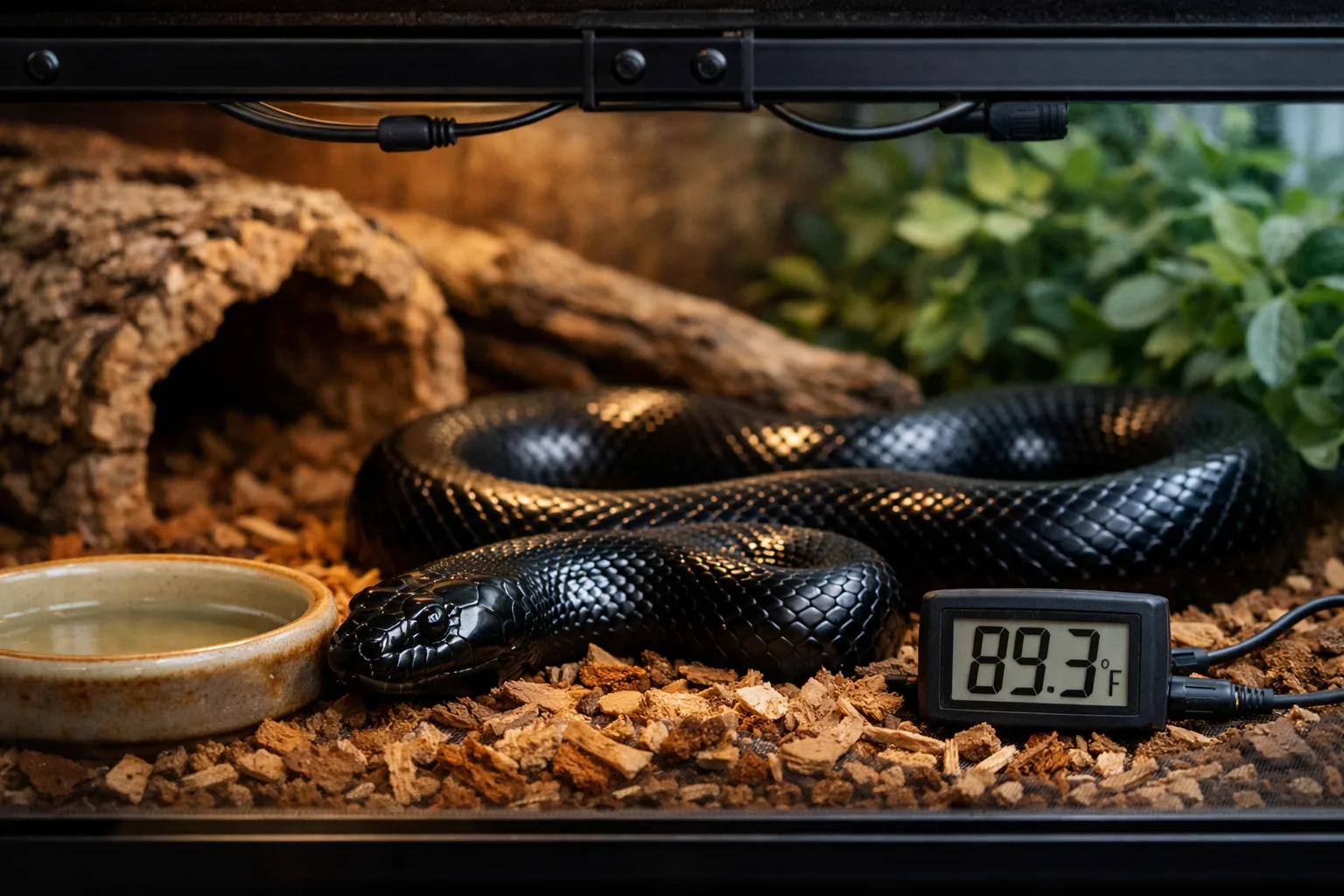
Here’s the catch a lot of buyers miss: heaters and filters are often marketed by gallon count alone, with no mention of tank shape. A heater built and tested for a tall, narrow 20 high might have its thermostat sensor positioned assuming more water sits above and below it. In a shallow 12-inch tank, that same heater can run hotter or cooler than the display setting suggests. When in doubt, add a separate stick-on thermometer at the opposite end of the tank from the heater and check both readings for the first week.
Lighting and Substrate for Live Plants in a Long, Shallow Tank
The 20 long’s shallow depth is actually an advantage for planted tanks, because light doesn’t have to punch through 16 inches of water to reach your substrate. That means you can run lower-intensity, cheaper lighting and still grow plants that would struggle in a deeper tank.
Why Shallow Water Helps Your Plants
Light intensity drops off the farther it travels through water, so a 12-inch column loses a lot less brightness by the time it hits the substrate compared to a 16-inch column. This lets low-to-moderate light plants like java fern, anubias, and cryptocoryne thrive without a specialized high-output LED fixture. If you do want to keep higher-light plants like dwarf hairgrass, a mid-range full-spectrum LED bar rated for planted tanks will do the job without needing to overspend.
Substrate Choices That Support Root Growth
A nutrient-rich substrate like Fluval Stratum or a basic capped sand-over-soil setup gives root-feeding plants a real foothold, which matters more in a wide tank since you’ve got extra floor space to fill with rooted plants instead of just floating ones. Budget around 1.5 to 2 pounds of substrate per gallon for a reasonable depth across that wide footprint — that works out to roughly 30 to 40 pounds total for a 20 long, more than you’d need for a 20 high with the same gallonage.
Building an Aquascape That Uses the Width
The extra horizontal space is where a 20 long really earns its keep for aquascaping. Instead of stacking hardscape vertically like you might in a tall tank, you can create a real left-to-right journey: a driftwood piece anchored on one side, a rock formation in the middle, and a dense plant grouping on the other end. This layout style, sometimes called a Dutch-style or landscape aquascape, depends on exactly the kind of width a 20 long provides and just doesn’t work the same way in a narrower 20 high.
Beyond Fish: Using a 20 Long for Paludariums and Semi-Aquatic Pets
A 20 gallon long is one of the better crossover tanks for semi-aquatic setups, precisely because its shallow 12-inch depth and wide floor space mirror what turtles, dart frogs, and other paludarium animals actually need. Generic fish sites rarely mention this, but it’s the detail that matters most to terrarium keepers eyeing this tank shape.
Why the Shallow Depth Works for Semi-Aquatic Species
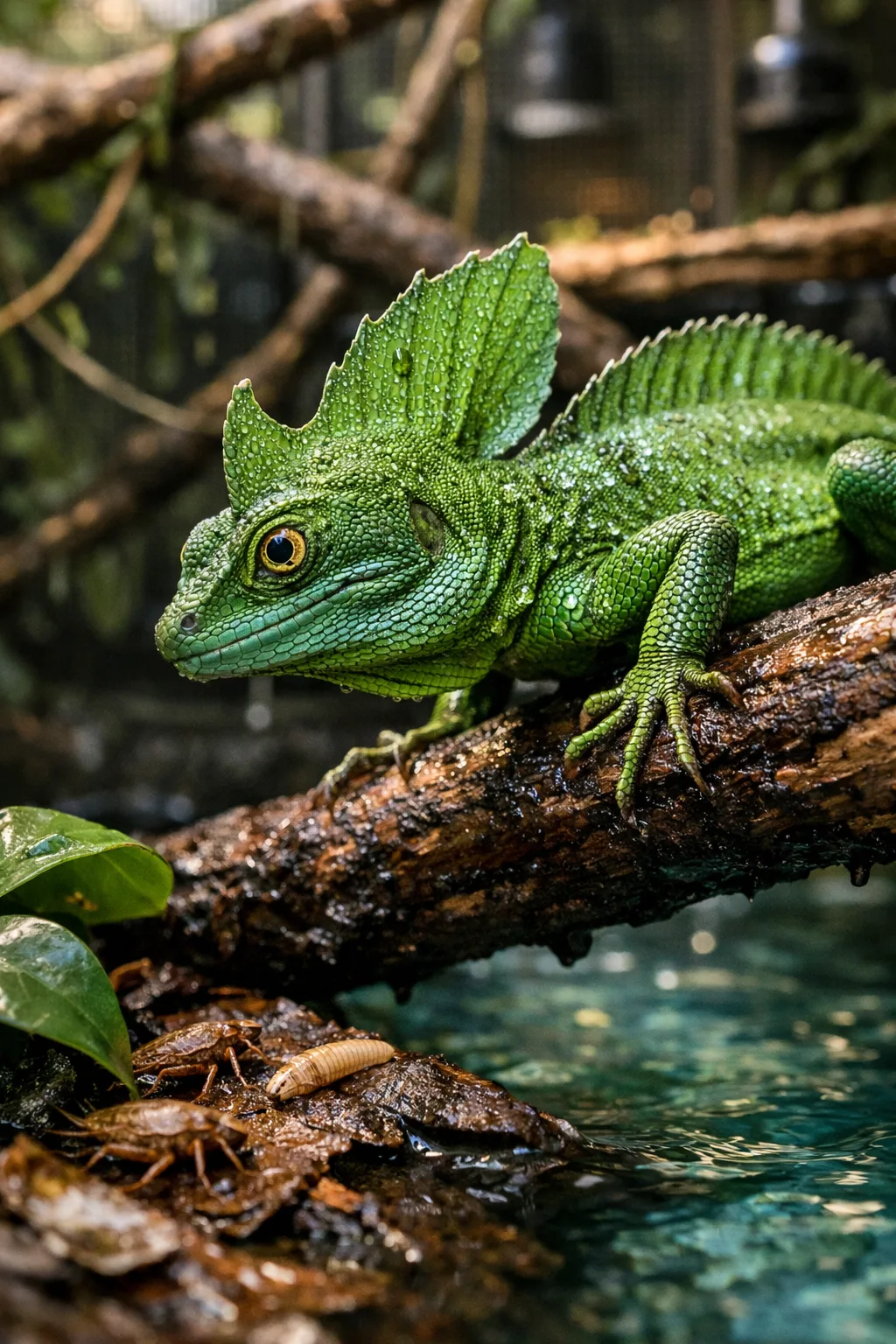
Most semi-aquatic animals don’t need deep water. Baby red-eared sliders, for example, do better in shallower water they can easily surface in without excessive swimming effort, and a 12-inch-deep tank makes building a basking dock much easier than a 16-inch one. Dart frog paludariums lean the same direction — you’re often building up land area and a shallow water feature, not a deep swimming zone, so the 20 long’s proportions save you build time compared to fighting against a tall, narrow footprint.
Building a Basic Paludarium Layout
A simple half-water, half-land paludarium in a 20 long usually splits the tank with a divider or a built-up landmass using foam, egg crate, and Great Stuff expanding foam sealed with aquarium-safe silicone. The land side gets substrate for plants and hiding spots, while the water side stays shallow enough for easy filtration and cleaning. If you want a full walkthrough on building this kind of setup step by step, petterrarium.com has detailed paludarium build guides that go deeper into sealing techniques and planting choices than I can cover here.
What to Watch Out For
The main pitfall is treating a paludarium build like a straight fish tank setup. Filtration needs adjusting since water volume drops once you add a landmass, and you’ll want a lid or at least a screen top for anything that climbs or jumps, like frogs. Humidity also becomes a factor once you’re not fully submerged in water anymore, so keeping an eye on both water quality and air moisture matters more than it would in a standard aquarium.
Stand and Weight Considerations Before You Fill It Up
A filled 20 gallon long weighs roughly 225 pounds once you count water, substrate, and glass, so the stand underneath it matters just as much as the tank itself. Don’t assume any furniture-store cabinet will hold that weight safely over time.
Weight Math You Shouldn’t Skip
Water alone weighs about 8.3 pounds per gallon, putting a full 20 long at around 166 pounds of water before you add substrate, rocks, or the tank’s own glass weight. Once you factor in 30 to 40 pounds of substrate and hardscape, you’re looking at a total closer to 220 to 230 pounds sitting on one footprint. That’s not something you want resting on a wobbly bookshelf.
Stand Shape Matters as Much as Strength
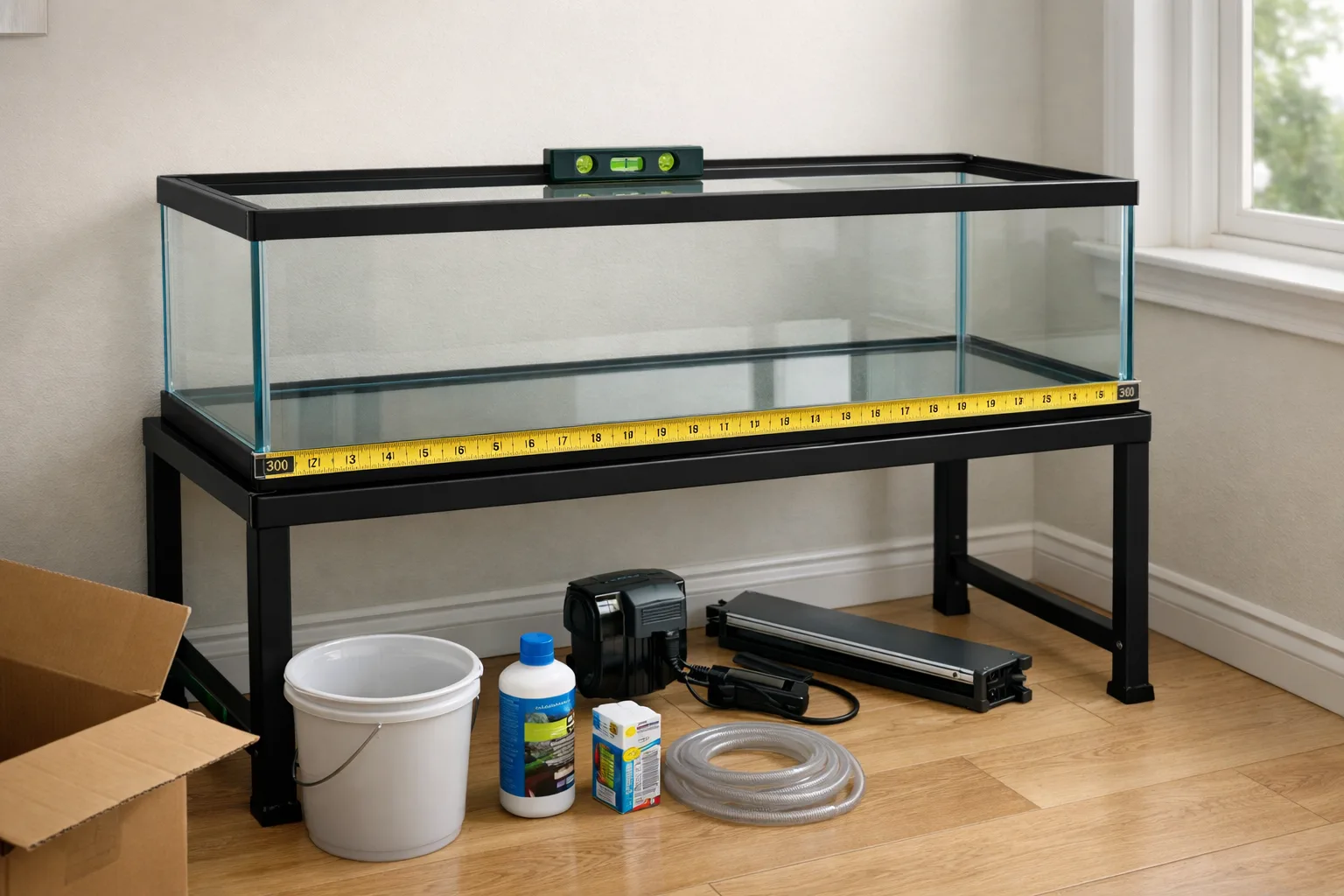
Because a 20 long is 30 inches wide but only 12 inches deep, you need a stand that matches that footprint rather than a deeper stand built for a 20 high. A stand that’s too deep leaves the front or back edge of the tank unsupported, and a stand that’s too narrow risks the tank overhanging the sides. Purpose-built aquarium stands rated for at least 30 gallons give you a safety margin, and it’s worth checking that the stand’s top surface is actually flat and level before setting the tank down, since even a slight tilt can stress the glass seams over time.
Frequently Asked Questions
Does a 20 gallon long hold the same amount of water as a 20 gallon high?
Yes, both hold 20 gallons. The difference is shape: the long is about 30 x 12 x 12 inches, while the high is 24 x 12 x 16 inches, so the water is distributed differently even though the total volume matches.
Can I keep a turtle in a 20 gallon long tank?
A single baby turtle can start in a 20 long, but most turtles outgrow it within a year or two and need at least 40 to 75 gallons as adults. Use it as a starter or quarantine tank, not a permanent home.
Is a 20 gallon long good for a beginner planted tank?
Yes, it’s one of the better beginner sizes for planted tanks because the shallow 12-inch depth lets moderate lighting reach the substrate without needing an expensive high-output fixture. Pair it with a nutrient-rich substrate for best results.
What’s the biggest mistake people make with a 20 gallon long?
Overstocking, mainly because the wide footprint makes the tank look emptier than it actually is. Stick to standard 20-gallon bioload guidelines regardless of how much open swimming space you see from the front glass.