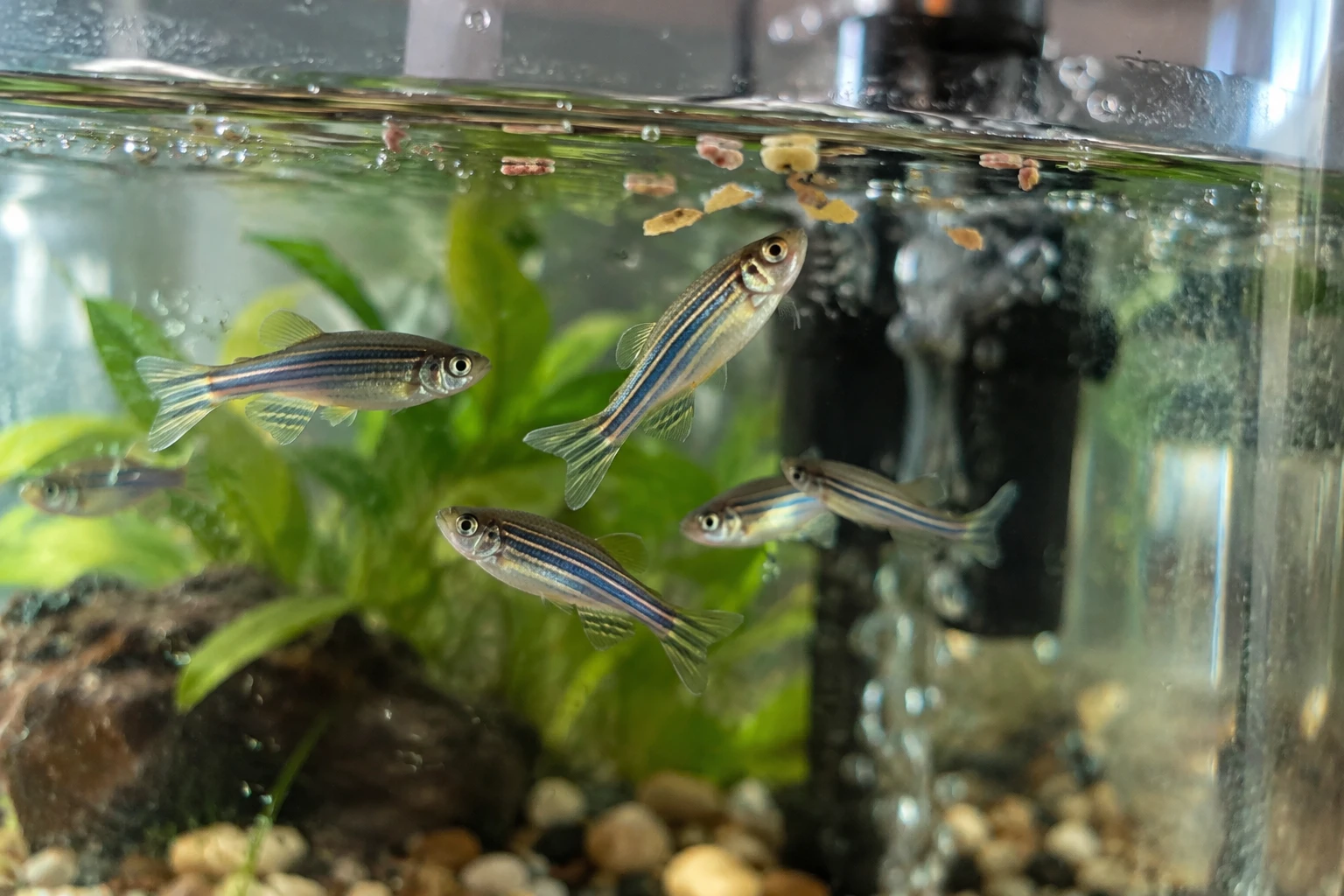
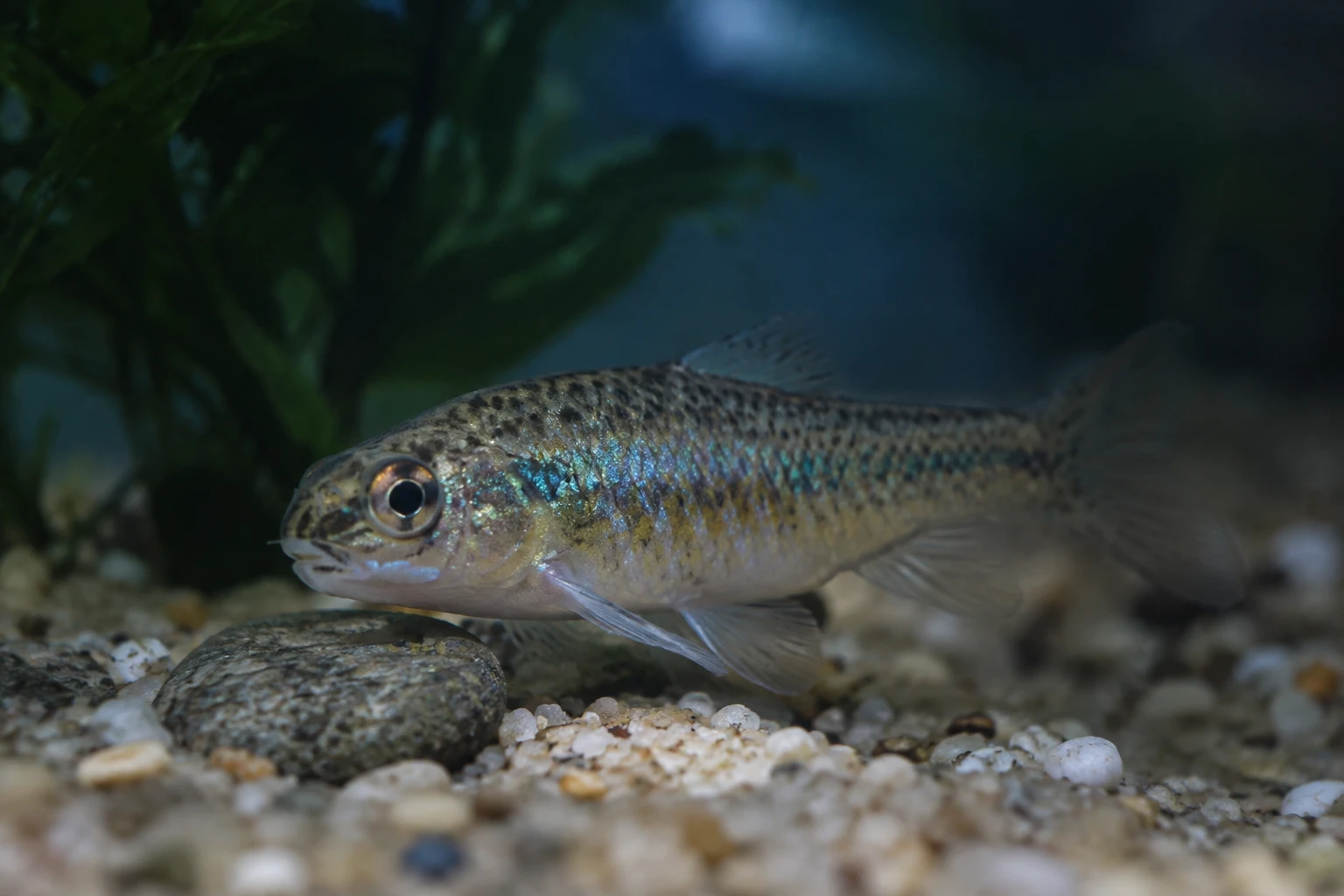
Danio rerio, the zebra danio, is a hardy schooling fish that suits beginners, but only in the right setup. Keep at least 6 in a 10-gallon tank or larger (longer is better), with gentle current, open swimming space and live plants. Hold the water around 65-77°F, test it weekly, and feed small amounts of quality flake or micro-pellets once or twice a day.
That’s the short version! Below you’ll find the length-first tank layout, a realistic school size, a measured feeding routine, and the tanks where danios are simply the wrong pick.
Zebra Danio Snapshot: What You’re Actually Buying
The zebra danio is a small, fast minnow from the streams and rice paddies of South Asia. It was first described in 1822 and is also sold as the zebrafish. Scientists use it in labs around the world, and that tells you something: it breeds easily and handles a lot.
Adults reach about 1.5 to 2 inches. Most live three to five years, though many pet-store fish die much sooner from poor water or tiny groups. They wear blue and gold stripes, and they spend their day zipping through the middle and top of the tank.
The price per fish is low, which tempts people to buy two or three. Don’t. A danio is a school fish first and a pet second.
Tank Setup in Six Steps, Length First
Danios sprint side to side, so floor length matters more than height. A tall, narrow tank of the same volume gives them far less room to run. Build the tank in this order.
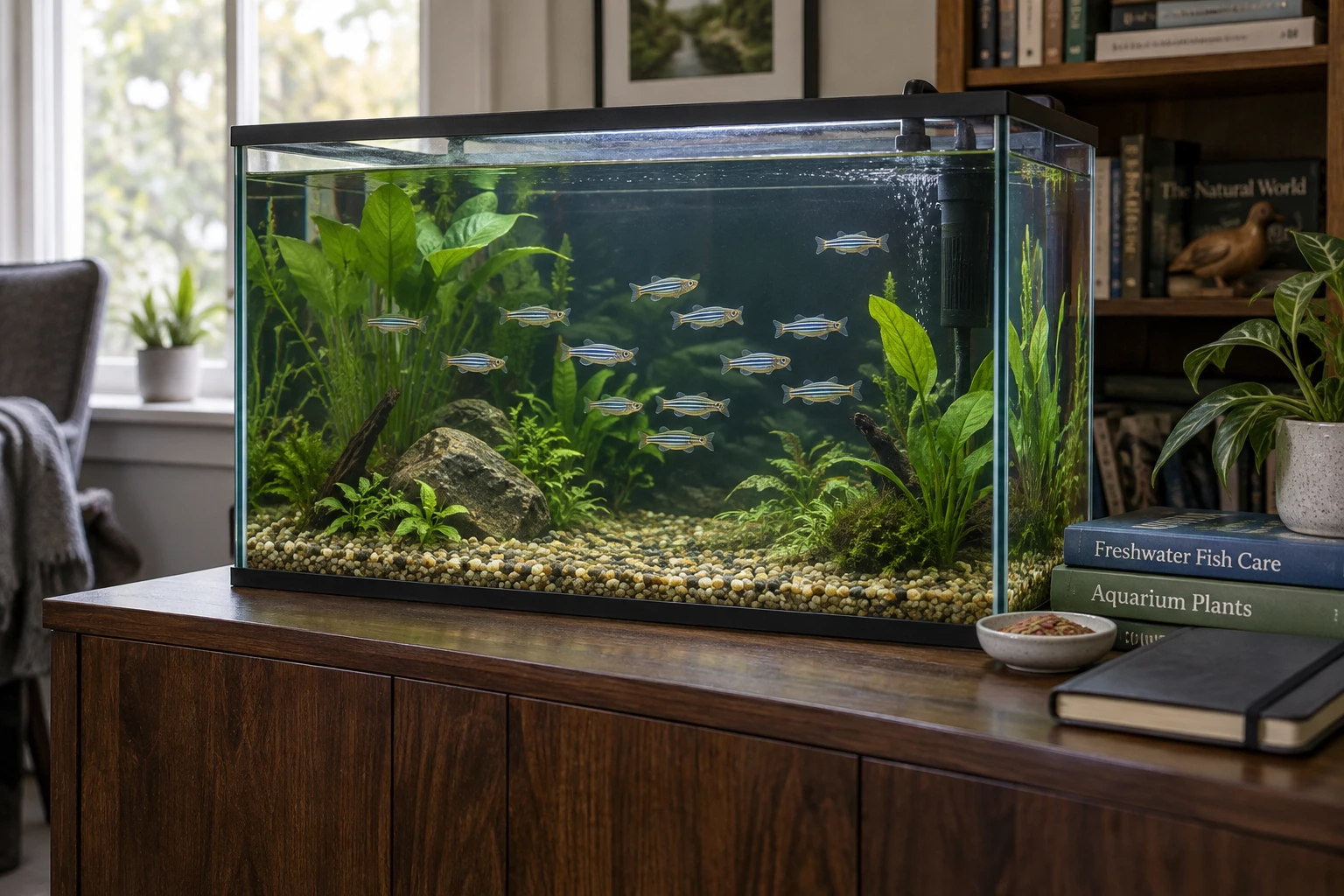
Pick a long tank. A 10-gallon holds 6 fish at the bare minimum. A 20-gallon long (about 30 inches front to back) is the sweet spot for a school of 8 to 12.
Set up the filter and flow. Choose a filter rated for your tank size or a bit higher. Aim the outflow along the long wall so the school has a current to swim into.
Add substrate and plants. Use fine gravel or sand. Dark substrate shows off their color.
Plant the edges. Leave the middle open. Put tall plants at the back and sides.
Add a heater only if needed. If your room stays near 70-72°F, you may not need one.
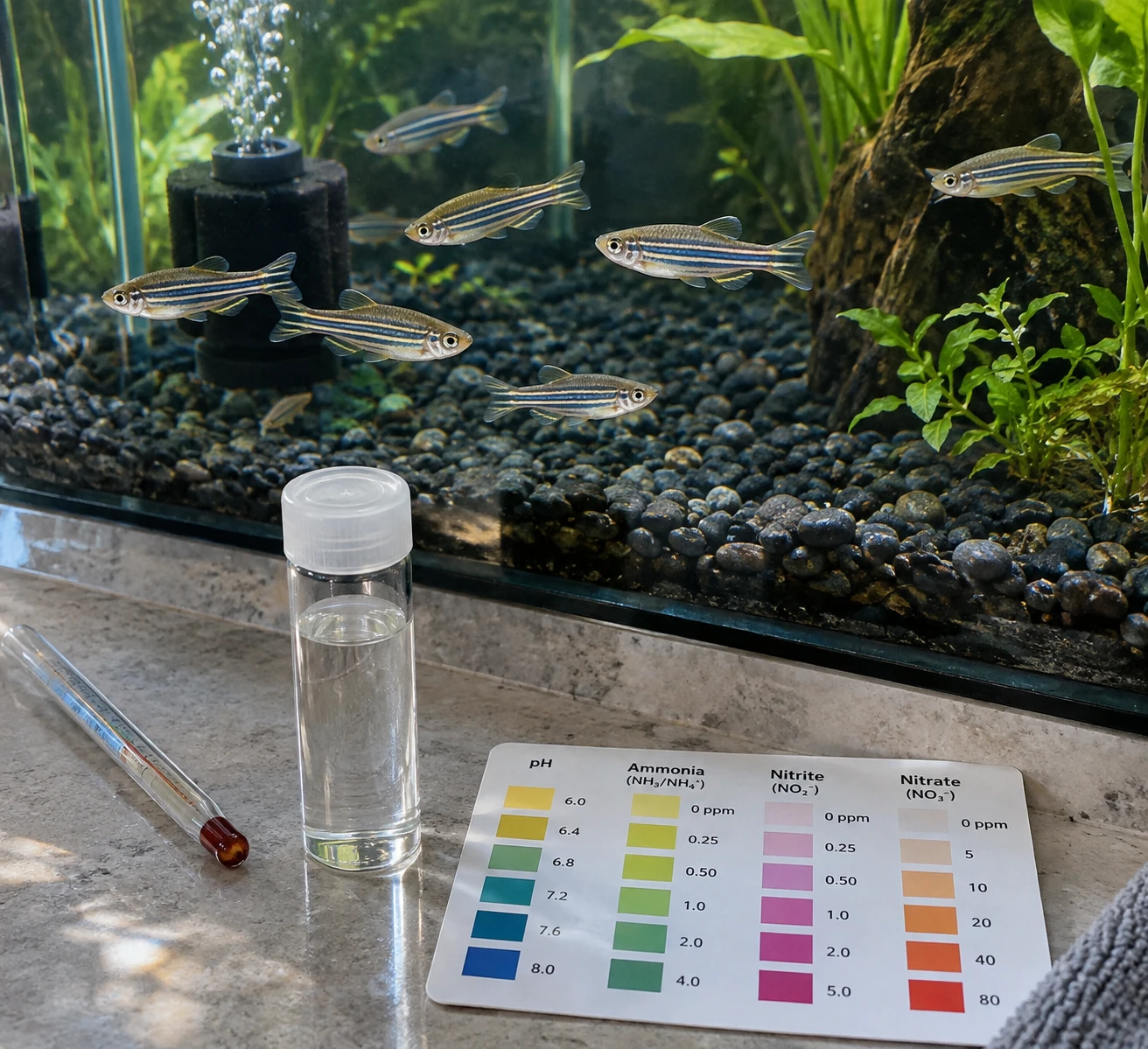
Cycle the tank, then buy fish. Run it empty and fed with ammonia until it reads zero for ammonia and nitrite.
Fit a tight lid before anything else goes in. Danios jump, and a gap of half an inch is enough for an escape.
Why a 10-Gallon Is the Floor, Not the Goal
Five or six danios will survive in 10 gallons. You just won’t see them behave normally. They bunch up, dart at the glass and have no room for the fast, zig-zag runs that make them fun to watch.
If you can spend a bit more, buy the 20-gallon long. It often costs roughly $60 to $120 as a bare tank, depending on the store and sales. That’s a small price for fish that look relaxed.
Flow, Filtration and Plants
Danios come from moving water. A hang-on-back or canister filter with a steady outflow suits them well. Avoid a blast that pins the fish against the glass; if they hover at the edge fighting it, turn the flow down or aim it at the wall.
Live plants give shelter and help soak up waste. Java fern, anubias, vallisneria and hornwort all grow in the cooler, moderate-light setup danios like. Floating plants such as water sprite give surface cover, which surface-oriented fish enjoy. Pro tip: tie java fern to a rock or wood instead of burying it, and it will grow fine without special lights.
Water Parameters and Cycling: Where “Hardy” Fish Still Die
Zebra danios handle a wide range, but they don’t handle spikes. Keep ammonia and nitrite at 0 ppm and nitrate under 20 ppm if you can. Hold the temperature at 65-77°F, with pH around 6.5 to 7.5 and moderate hardness.
Danios are one of the few “tropical” fish that are happy at room temperature. That helps in a US apartment, where a 70°F living room is normal. A heater still earns its keep during winter cold snaps, because a sudden drop does more harm than a steady cool temperature.
Cycle First, Even for an “Indestructible” Fish
Danios are often sold as the fish you can add on day one. That’s how new keepers lose them. In an uncycled tank, fish waste turns into ammonia and nothing breaks it down.
Cycling means growing helpful bacteria in your filter that turn ammonia into nitrite and then into nitrate. It typically takes four to six weeks. Here’s how to speed it up:
Add a bottled bacteria product or a scoop of used filter media from a healthy tank.
Feed the tank a pinch of flake daily, or add pure ammonia, as the bacteria need food.
Test with a liquid kit until ammonia and nitrite both read 0 for a full week.
Then add the first fish.
Weekly Testing and Water Changes
Test once a week. Change 30 to 40 percent of the water every week and treat new tap water with a conditioner first. Rinse filter sponges in old tank water, never straight from the tap, because chlorine kills the bacteria you worked to grow.
Vacuum loose debris off the substrate but leave a little film on the decor. A steady routine beats a big cleanup every few months.
School Size: Why Six Is the Minimum and Ten Is Better
Keep at least six. Eight to twelve is better. In a group of two or three, danios get stressed and start chasing and nipping each other and other fish.
A bigger school spreads out that energy. The fish settle into a tight group, move together and show the zig-zag dance people love. You’ll also see bolder behavior, because each fish feels safer.
Here’s a worked example. A 10-gallon tank holds 6 danios at the limit. A 20-gallon long holds 10 comfortably, and the fish have twice the volume and far more length. If a store only has four on hand, wait or buy from another shop instead of settling for a tiny group.
One more tip: buy all your danios at the same time. Adding two more to an existing group works, but a mixed batch from one tank settles faster.
Feeding Danios: A Measured Routine That Won’t Foul the Water
Feed small amounts once or twice a day, only what the school finishes in one to two minutes. Danios beg constantly. They act starving after a full meal because in the wild they snap at tiny food all day long. That begging is a habit, not hunger.
Overfeeding is the most common way keepers cloud the water. Leftover food rots, ammonia climbs and the fish pay for it. Healthy adults can skip a meal now and then without harm.
What to Feed
Danios are omnivores. Build the diet on a quality flake or micro-pellet. Their mouths point slightly upward, so floating and slow-sinking foods suit them. Add variety from the freezer or fridge section.
Food
How often
Notes
Flake or micro-pellet
Daily (staple)
Use the same quality brand each time
Frozen bloodworms or daphnia
1-2 times a week
Thaw first and drain
Baby brine shrimp
Weekly treat
Can trigger spawning
Blanched spinach or peas
Occasionally
Chop very small
Fasting day
Once a week, optional
Gives the gut a break
A Simple Daily Schedule
Feed in the morning and again in the evening. Drop in a pinch, watch for a minute, and add a little more only if it all vanishes. Scoop out anything left after about three minutes.
If you work long days, one feeding is fine. Don’t use a vacation feeder block unless you’ve tested it, because it can cloud the water. A healthy school will handle a long weekend without food.
Tank Mates: Who Fits and Who Doesn’t
Danios do best with other fast, sturdy fish that can keep up. Good picks include other danios, larger tetras, rasboras, platies, swordtails, small barbs and corydoras that stay near the bottom.
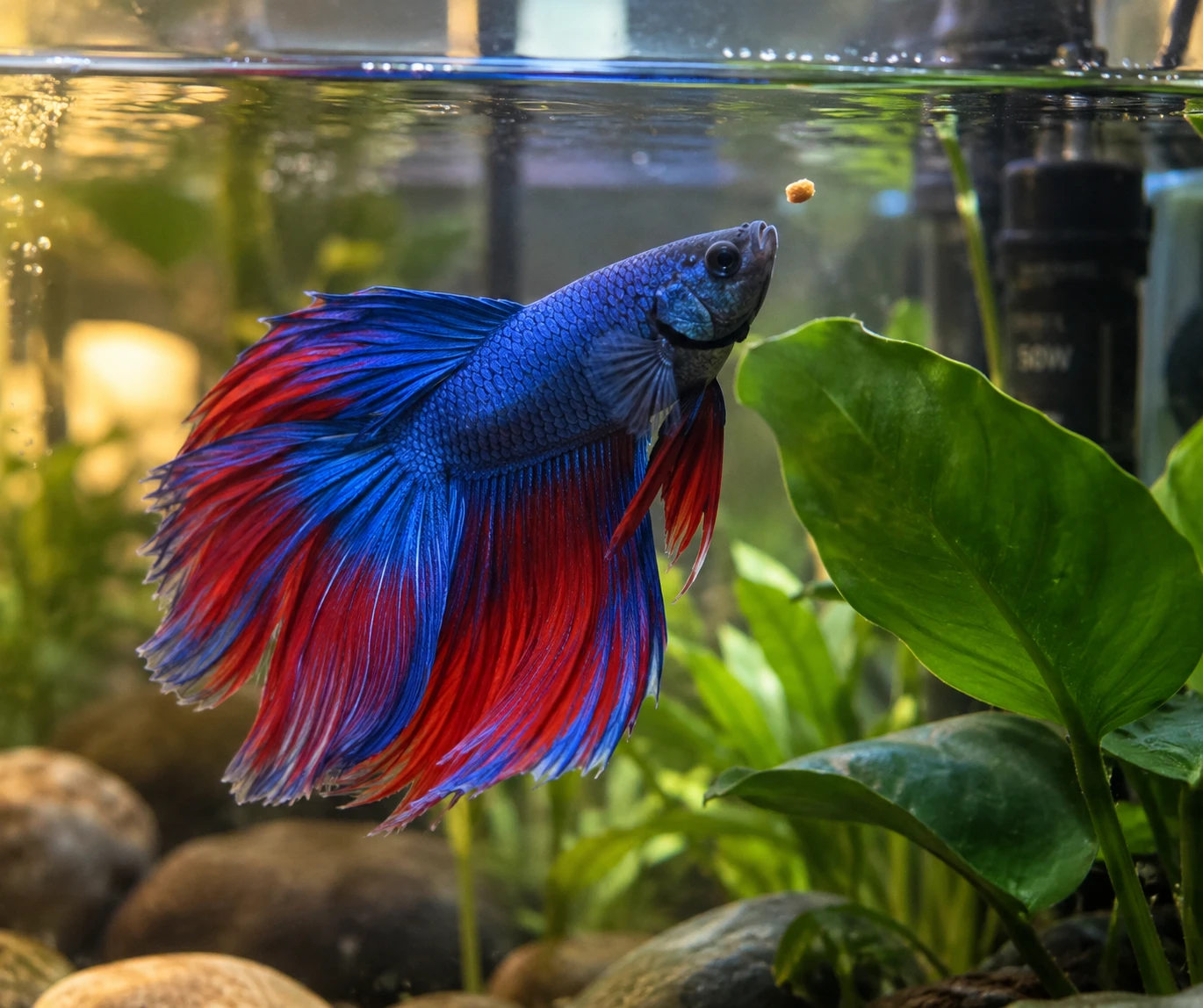
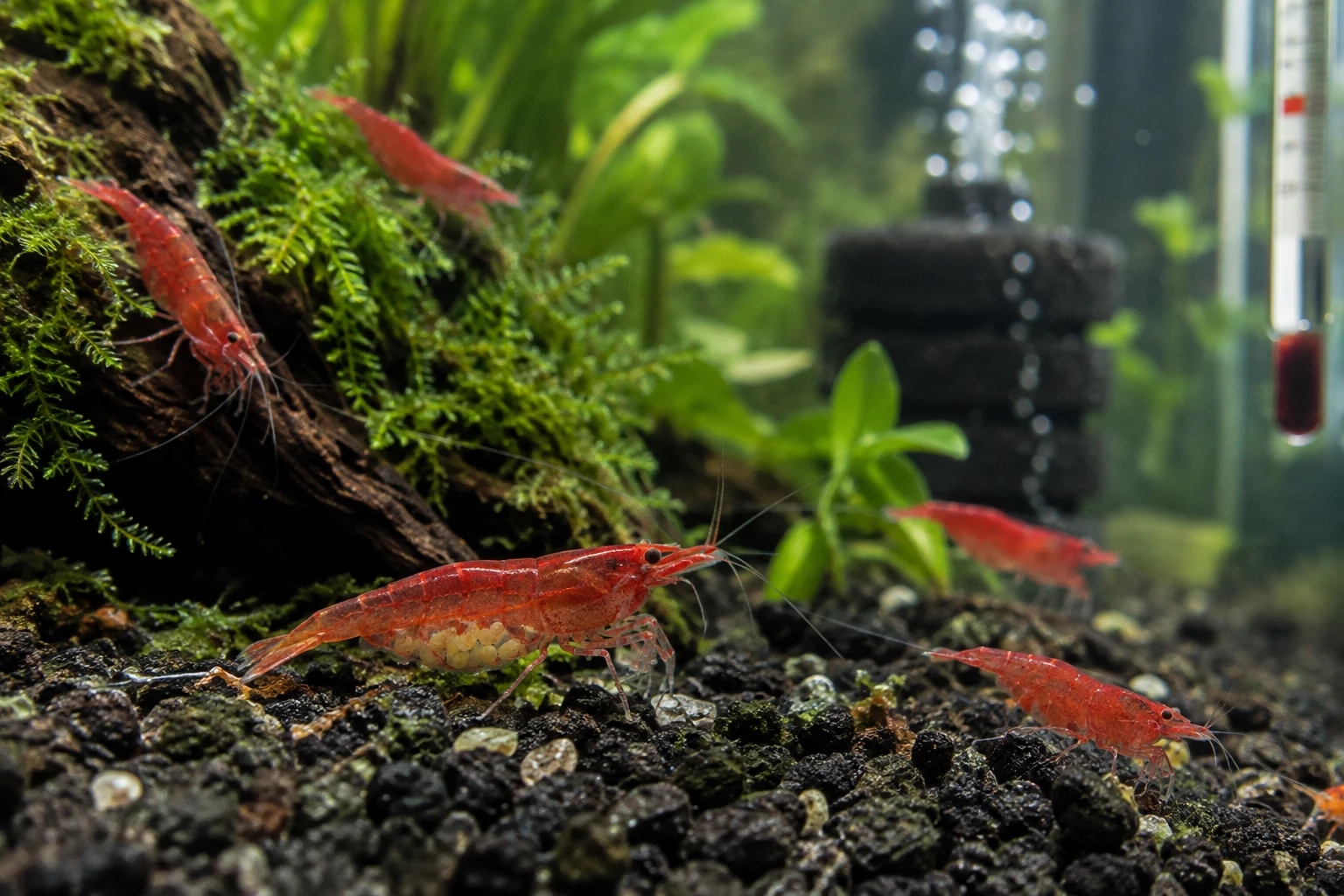
Skip slow or long-finned fish. A betta or a fancy guppy has fins that move like bait to an excited danio, and they will get nipped. Tiny fish, such as neon tetras in a small tank or shrimp fry, can get harassed or eaten. If your tank holds those, danios are the wrong pick.
What about reptile and amphibian keepers adding a fish tank? Keep your danios in their own aquarium. Don’t mix them into a paludarium with slow frogs or newts, since the fish will compete for food and stress timid animals.
Danio Varieties, Breeding and Lifespan
You’ll see a few kinds at stores. Each one has its own quirks.
Long Fin and Other Danios
Longfin zebra danios have flowing fins and look elegant. They are a bit slower and their fins are easier to nip, so keep them with calm, same-speed fish. Leopard danios have spots instead of stripes. Golden danios are a pale gold color. Pearl and gold ring danios are close relatives with similar care. Choose captive-bred fish when you can and skip dyed ones, which are risky and cruel.
Breeding Basics
Danios are egg-scatterers. A fat female is carrying eggs, not babies, so there’s no live birth. A well-fed group scatters eggs over plants and the substrate, usually in the early morning.
The adults eat the eggs, so lay marbles or mesh over the bottom, or use dense plants. Eggs hatch in about two days. Feed the fry infusoria and finely powdered food at first, then baby brine shrimp.
Lifespan and Common Health Problems
Expect three to five years in a good tank. Most problems start with stress from small groups, bad water or a new tank that wasn’t cycled. Watch for white spots (ich), clamped fins, curved spines and fish that hang at the surface gasping.
Quarantine new fish for about two to four weeks in a separate tank before adding them. If a fish looks sick, check your water first, because that’s usually the cause. A vet who treats fish can help with serious cases.
At Pet Terrarium, our aquarium setup guides follow the same length-first, comfort-first idea, so you can compare your plan with a full build.
Frequently Asked Questions
How many zebra danios should be kept together?
Keep at least six, and eight to twelve is better. Danios are schooling fish. In groups of two or three they get stressed and may nip each other or other fish.
What size tank do zebra danios need?
A 10-gallon tank is the minimum for six fish. A 20-gallon long is much better because danios swim fast and need horizontal room. Choose length over height.
What is the best feeding schedule for zebra danios?
Feed once or twice daily, only what the fish finish in one to two minutes. Use quality flake or micro-pellets as the staple, with frozen foods a couple of times a week. Skip food if the water looks cloudy.
What fish can live with zebra danios?
Fast, sturdy fish work best, such as other danios, rasboras, larger tetras, platies and corydoras. Avoid bettas, fancy guppies and other slow, long-finned fish, which may get nipped.