Betta splendens (Siamese fighting fish) need at least a 5-gallon heated tank at 78–80°F, a gentle low-flow filter, a lid, and dechlorinated water. Feed a small portion of high-protein pellets once or twice a day, skip one day a week, and keep each male betta alone. Two males in one tank will fight, often to the death.
Those cups and bowls at the pet store are not a real home. If you have room for a heated 5-gallon tank, a betta is a great pet. If you don’t, wait. Here is how to do it right.
Where Bettas Come From and Why It Matters
Wild bettas live in Southeast Asia, in warm, shallow, slow-moving water like rice paddies, ponds, and marsh edges. These spots are packed with plants. The water stays warm all year, and there is almost no current.
That tells you what to copy at home. You want warm water, plants, soft flow, and open space at the top. The betta is a small tropical fish, not a desk decoration.
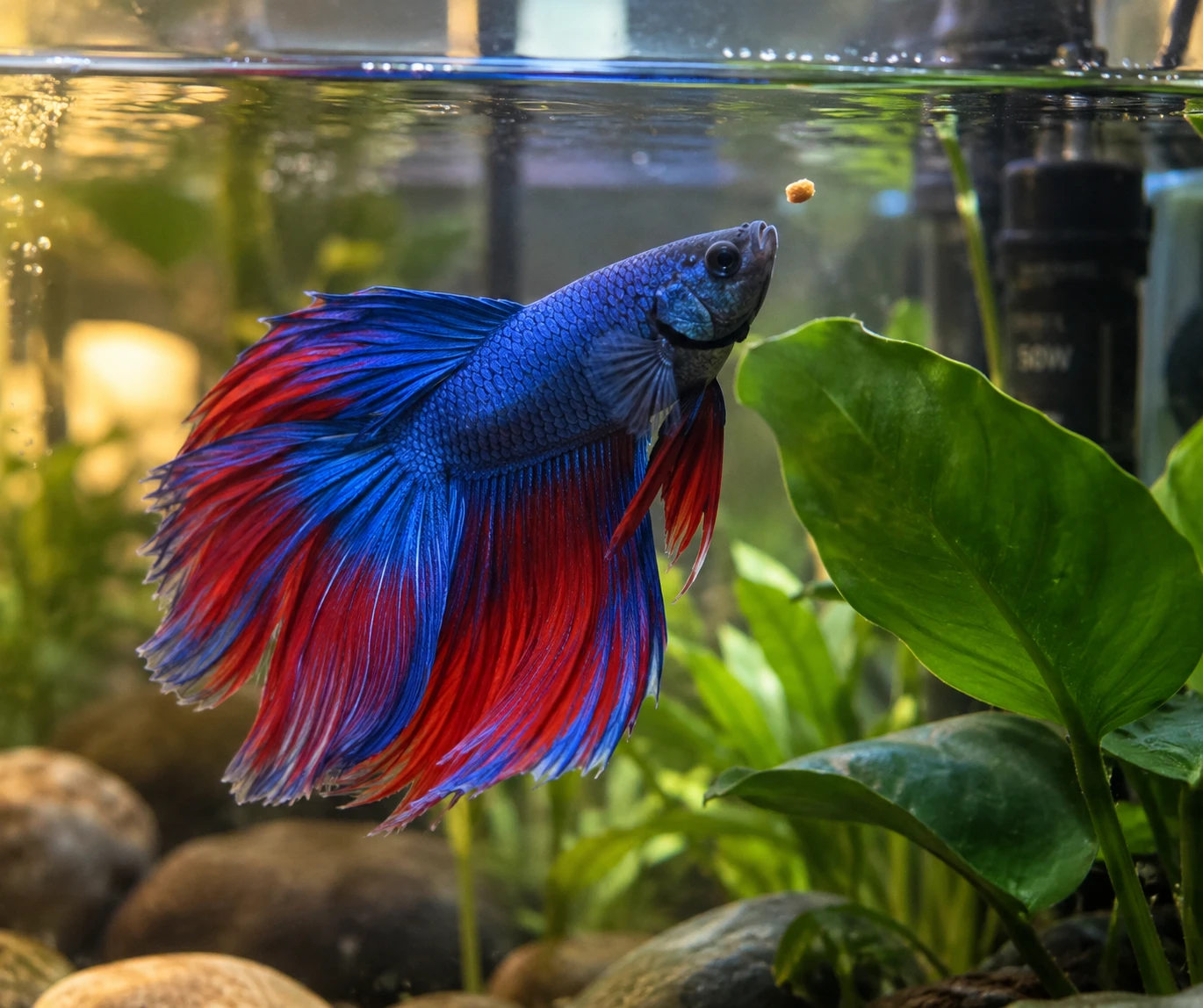
The bettas you buy today are also domesticated. Breeders have changed them over many generations, so they have longer fins and brighter colors than wild fish. Those long fins are pretty, but they are heavy. They make strong currents hard to swim against.
Bettas are labyrinth fish, which means they can gulp air from the surface with a special breathing organ. This is why they survive in bowls. Surviving is not the same as thriving. In cold, dirty water a betta’s immune system weakens within days, and fin rot and lethargy follow.
Healthy bettas live about 3 to 5 years. A fish kept well often reaches the upper end of that range.
Quick Care Summary
Here are the numbers in one place. Keep this handy while you shop.
Need
Target
Tank size
5 gallons minimum (10 is better)
Water temperature
78–80°F, steady
Filter
Sponge or low-flow filter
pH
About 7 (6.5–7.8 is fine)
Weekly water change
15–25%
Nitrate
Below 20 ppm
Feeding
Small portions, 1–2 times daily, 6 days a week
Tankmates
None for males; snails or peaceful bottom fish only with planning
Some care sheets say a 2.5-gallon tank is the bare minimum. I’d still start at 5. A bigger tank gives you more water to absorb mistakes, and it holds heat better. A tiny tank swings in temperature and fouls fast.
Tank Setup, Step by Step
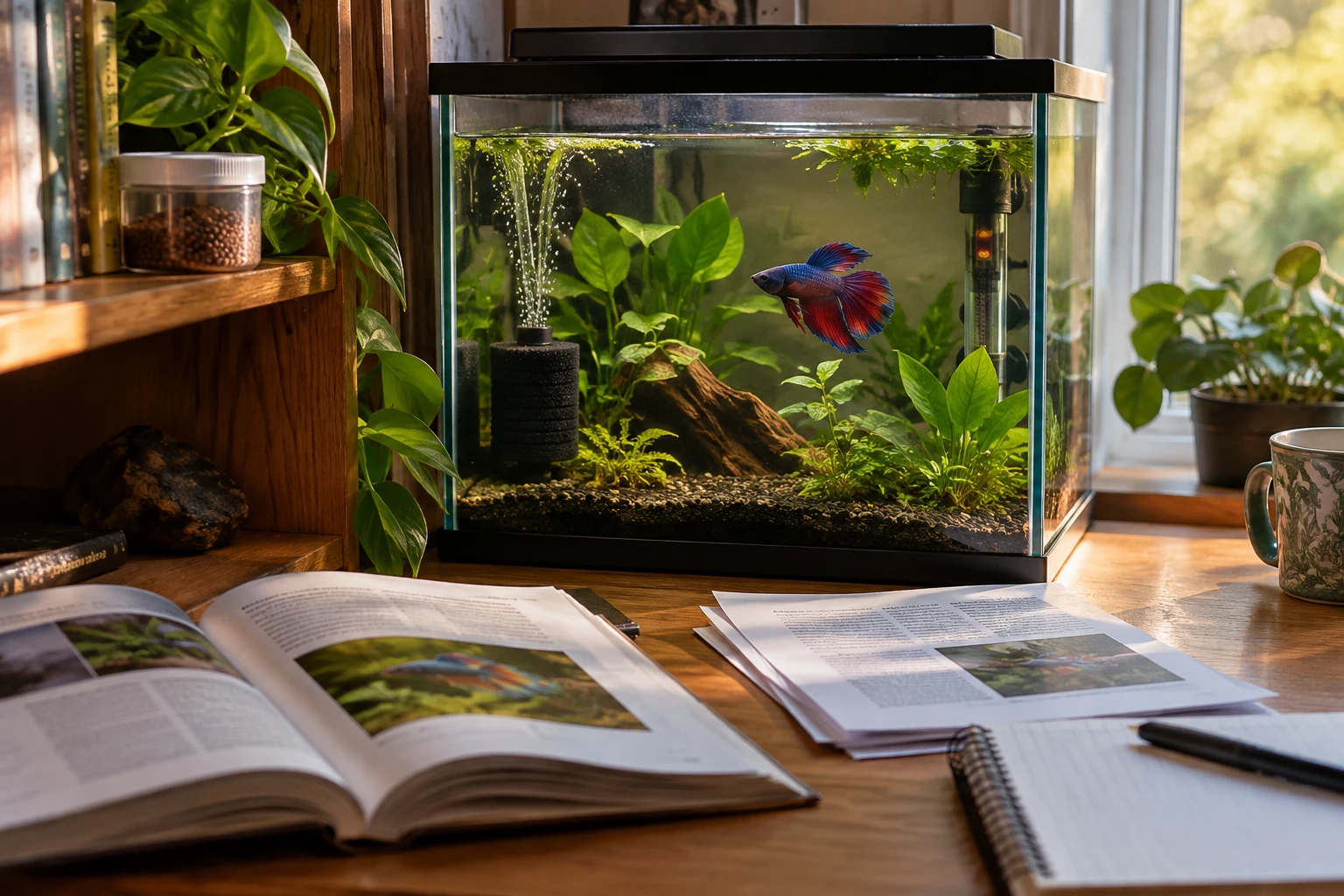
Set everything up and run it for a few days before the fish comes home. The tank needs time to settle, and so do you. Here is the order that works.
Pick the spot. Use a flat, sturdy stand. Water weighs about 8.3 pounds per gallon, so a 5-gallon tank is over 40 pounds before you add gravel and decor. Keep it away from drafty windows and direct sun.
Rinse the gear. Rinse the tank, gravel or sand, and decor with plain water. Skip soap.
Add substrate and decor. Use a thin layer of smooth gravel or sand. Place caves, logs, and plants.
Fill with treated water. Add water conditioner to tap water first. It removes chlorine and chloramine, which harm fish.
Install the heater and filter. Set the heater to 78–80°F and put a thermometer on the far side of the tank from the heater.
Add beneficial bacteria. A starter product helps the cycle begin (more on that below).
Fit the lid and light. Turn the light on a timer for about 8 hours a day.
Wait, then test. Check temperature and water numbers before buying the fish.
Pro tip: Buy the test kit before the fish. A liquid test kit costs roughly $20 to $35 and is more accurate than strips, though strips work for quick weekly checks.
Heater and Temperature
Bettas need warmth. Aim for 78–80°F, and use a thermometer to check it. Many care guides give a wider range of about 76–81°F, and that is fine, but steady matters more than the exact number. Water that stays below about 74°F for long stresses the fish and invites illness.
Pick a small adjustable heater rated at about 3 to 5 watts per gallon. For a 5-gallon tank, a 25-watt heater is typical. Many US homes sit at 68–72°F in winter, so even a “warm” room usually isn’t warm enough. A heater also stops the day-to-night swings that stress fish.
Filter and Flow
Yes, bettas need a filter. Without one, ammonia from waste and leftover food builds up. But strong flow tires out long-finned bettas, and you may see one clinging to a plant to rest.
Choose an air-driven sponge filter, or a filter with adjustable flow. Sponge filters run about $8 to $20 and are gentle. To test your flow, watch the fins. If they get pushed around, slow it down or add a baffle (a sponge over the outlet).
Lid and Surface Access
Bettas jump, and they get out through small gaps. Use a lid. It also keeps the air above the water warm and humid, which matters because a betta breathes from the surface. Cold dry air hitting a labyrinth organ is hard on them.
Leave a small gap between the water and the lid. Fish need to reach the surface freely.
Why Bowls and Vases Fail
Can a betta live in a bowl without a heater? It can survive for a while, but it will not do well. A bowl has no filter, no stable heat, and very little water. Waste builds up quickly and temperature swings are big.
Think about the math. A 1-gallon bowl holds one fifth of the water of a 5-gallon tank, so one day’s waste is five times as concentrated. That is why the water gets toxic so fast.
The cups at the store are for shipping, not for living. A fish sitting in one is waiting for sale, not thriving. That doesn’t mean it’s a “cheap, easy” pet. It means the store has a cost problem, and the fish pays for it.
When should you NOT buy a betta? Skip it if you only have room for a bowl, can’t afford a heater and filter (about $40 to $70 for both), or won’t do a weekly water change. Wait until you can set up the tank properly. The fish will still be there.
Water: The Nitrogen Cycle and Weekly Changes
New tanks are not safe yet. Fish make waste, and waste turns into ammonia, which is poison. Helpful bacteria in your filter turn ammonia into nitrite (also poison), then into nitrate, which is much milder. This process is the nitrogen cycle.
A new tank has almost no bacteria. It usually takes 4 to 6 weeks to cycle fully. That is a realistic timeline, and it’s worth the wait.
Cycling Before the Fish
The safest way is a fishless cycle. Add a small pinch of fish food or a few drops of pure ammonia, add a bacteria starter, and test every few days. You’re done when ammonia and nitrite both read zero and nitrate shows up. Live plants speed this up and soak up nitrate.
If you already have a betta in an uncycled tank, test daily. Change 25–50% of the water whenever ammonia or nitrite shows up. It’s more work, but it saves the fish.
Weekly Maintenance
Once the tank is cycled, a simple routine does the job:
Daily: feed, check the temperature, and look at your fish.
Weekly: test the water, vacuum the gravel with a small siphon, and change 15–25% of the water.
Monthly: wipe algae off the glass and rinse the filter sponge in old tank water.
Always treat new water with conditioner and match its temperature to the tank. Never rinse the filter sponge under the tap, because chlorine kills the helpful bacteria. Keep pH near 7, though 6.5–7.8 is fine. If your tap water is steady, don’t chase the pH with chemicals. Frequent water changes matter more.
Keep nitrate under 20 ppm. If it creeps up, change a bit more water.
Plants, Hides, and Resting Spots
A bare tank looks clean to us. To a betta, it looks like danger. Plants and caves make the fish feel safe, and a calm betta eats better and shows brighter color.
Use plants to recreate those Southeast Asian shallows. Good beginner picks are anubias, java fern, java moss, and marimo moss balls. They need little light and no special soil. You can tie anubias and java fern to a rock or log.
Silk plants work too. Avoid hard plastic plants, since they can tear long fins. Pass your hand or a pair of pantyhose over every decoration. If it snags, don’t use it.
Bettas also like a resting place near the top. A floating plant or a broad leaf (a “betta hammock”) lets them lie close to the surface and breathe. Add at least two hiding spots, such as a smooth cave and a clump of plants. Keep the middle open for swimming.
A basic LED light on a timer helps live plants grow and gives the fish a day and night rhythm. Don’t leave it on all day, or algae will take over.
What to Feed Your Betta, and How Much
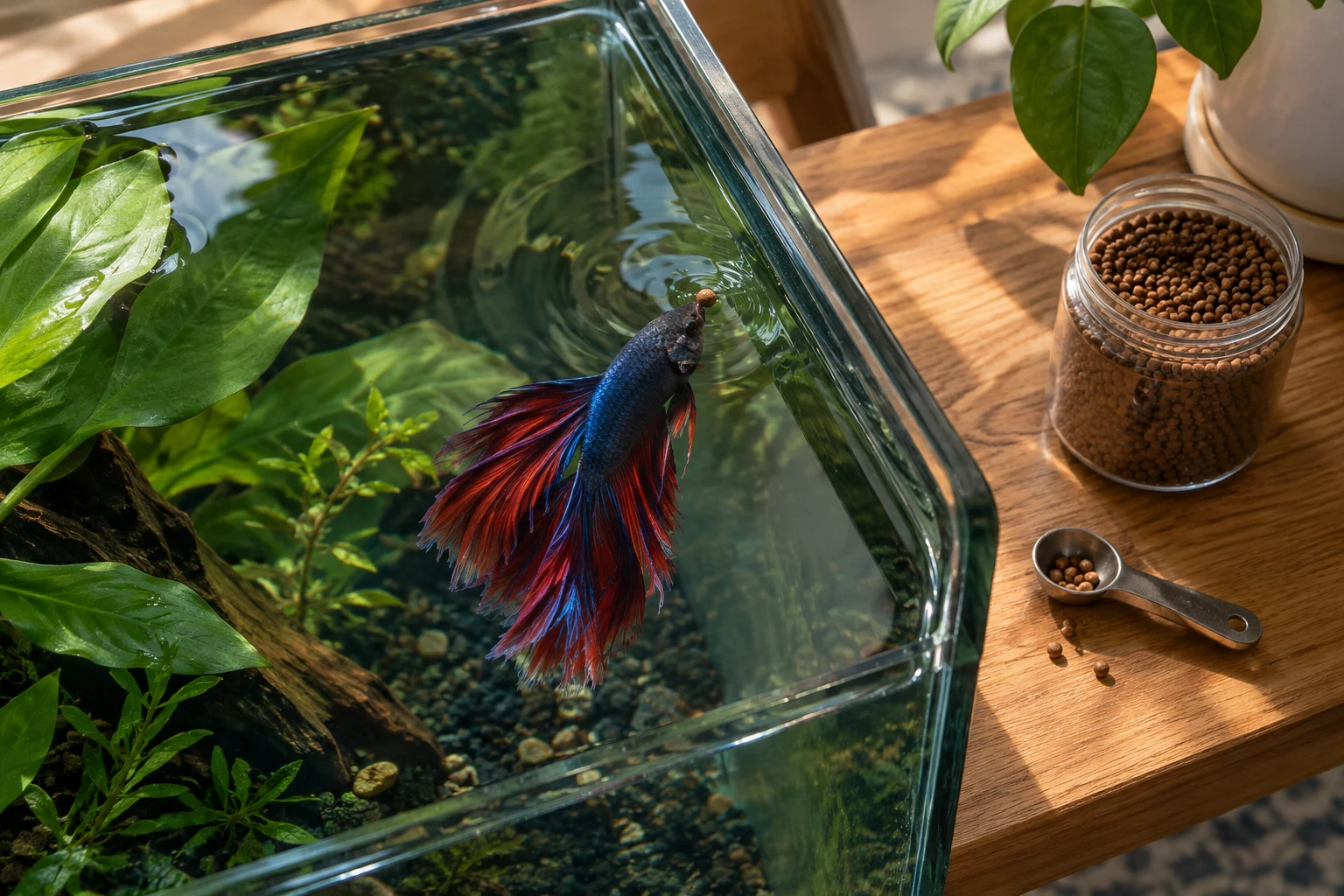
Bettas are carnivores. In the wild they eat insect larvae and small bugs, so the diet needs protein. Use a high-protein betta pellet as the staple, not generic tropical flakes, which usually have more filler.
Mix in variety a few times a week:
Frozen bloodworms
Frozen or live brine shrimp
Daphnia
Blackworms
Frozen foods should be thawed in a bit of tank water first. Live foods are a treat, but they can carry bugs and parasites, so buy from a trusted source.
Portion Size and Schedule
Overfeeding is the most common mistake new owners make. Bettas beg, and it is hard to say no. But a betta’s stomach is about the size of its eye, and extra food bloats the fish and fouls the water.
Start with about three pellets a day, a bit more for a large fish, and adjust. The belly should be slightly round, never sunken and never swollen. A good rule is to give only what your fish eats in about two minutes.
You can split the daily amount in two. For example, give one pellet in the morning and two in the evening. Then skip one day a week so the fish can clear its gut. If your betta ignores food one day, don’t push it. Take out whatever it left after a few minutes.
If your betta looks bloated or stops eating, fast it for a day or two. Fasting helps with mild constipation. Some owners also feed a soaked pea, though a regular fasting day usually prevents the problem.
Tankmates and Male Aggression
Can bettas live with other fish? Males can’t live with other bettas. They will fight until one dies, and a divider doesn’t fully fix it, because they flare and stress each other through the glass. One male per tank, always.
Community tanks are risky too. Bettas can attack fish with bright colors or flowing fins, like guppies. Fin-nippers like tiger barbs will shred a betta’s tail.
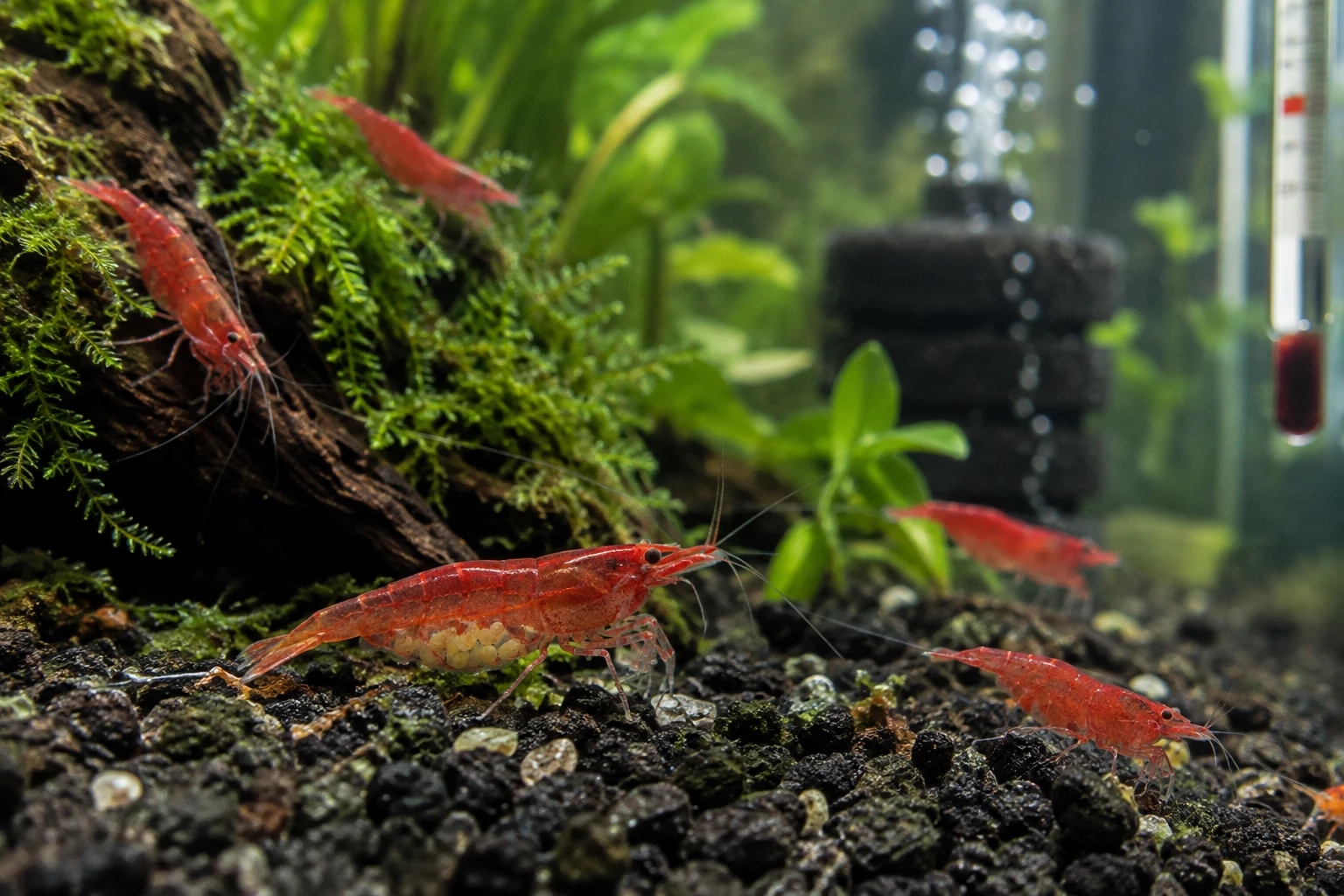
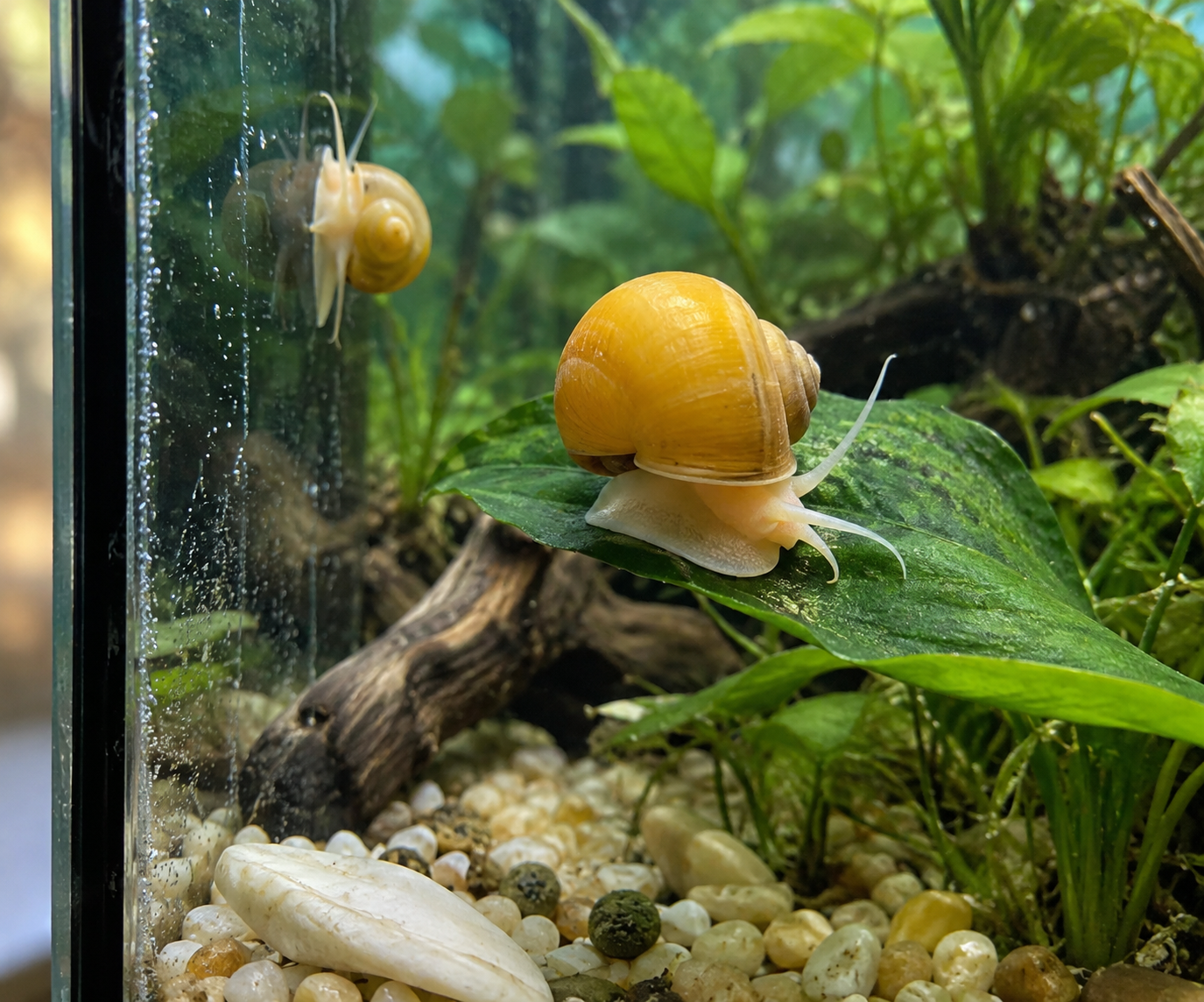
If you want company in a 10-gallon or larger tank, the safest choices are snails (nerite or mystery snails), a few corydoras, or ghost shrimp, though shrimp may get eaten. Dense planting helps, because it breaks sight lines. Even then, some bettas simply refuse any neighbor.
Have a backup plan before you try. Keep a second tank or a divider ready, and be willing to move a fish out. Don’t make a betta share a space it hates.
A female “sorority” is an advanced setup that needs a large tank, lots of cover, and experience. It’s not a first-timer project.
Spotting Illness and Stress
Most betta illness comes from poor water or cold temperatures, so fix those first. Check the thermometer and test the water before you reach for medicine.
Watch for these signs:
Clamped fins held tight against the body
Frayed or ragged fins (fin rot)
Bloating or a swollen belly
White spots like grains of salt (ich)
Lethargy or lying at the bottom
Pale color and no interest in food
A healthy betta has good color, whole fins, steady activity, and a quick appetite. Fin rot and mild stress usually improve with clean water and a few extra water changes. Ich needs gradual heat and fish-safe treatment from the pet store.
For anything that isn’t improving after a few days, call an exotic or aquatic vet. We can’t diagnose fish from a screen, and neither can a forum.
Pro tip: A stressed betta often has a reason you can fix, like cold water, strong flow, or a mirror in sight. Check those first.
If you like the idea of a planted, natural-looking aquarium, Pet Terrarium has setup guides that walk through building one step by step.
Common Mistakes to Avoid
Most betta problems come from a few repeat errors. Here is the short list.
Keeping a betta in a bowl or vase with no heater or filter.
Overfeeding. Small portions, one fasting day.
Using a strong filter that tires out long fins.
Skipping the cycle. New tanks need weeks, not hours.
Adding tankmates on impulse. Plan it, or skip it.
Forgetting the lid. Bettas jump.
All of these are fixable! A betta with a proper tank is a bright, curious fish that learns your routine and flares at your hand.
Frequently Asked Questions
What size tank does a betta fish really need?
A betta needs at least 5 gallons, and 10 gallons is better. Some guides allow 2.5 gallons, but small tanks swing in temperature and dirty fast. More water means steadier conditions and less work for you.
How often should I change a betta’s water?
Change 15–25% of the water once a week in a cycled, filtered tank. Treat the new water with conditioner and match the temperature. Test weekly, and change more if nitrate climbs above 20 ppm.
Can a betta live without a heater?
It can survive, but it will not thrive. Bettas need steady water at 78–80°F. Most homes are cooler than that, and swings weaken the fish. A small adjustable heater costs little and prevents most cold-related illness.
How much should I feed a betta?
Start with about three high-protein pellets a day, or what your fish eats in about two minutes, split into one or two feedings. Skip one day each week. Watch the belly, and cut back if it looks swollen.