A 15-foot snake that can crush and kill a grown man isn’t a weekend project. African rock pythons are the largest python species in Africa, routinely hitting 12 to 16 feet, and they’ve earned a reputation among keepers for being powerful, defensive, and nothing like the ball python at your local pet store. If you’re searching “african rock python” care info because you’re thinking about getting one, the real answer is: most people shouldn’t, and here’s exactly why, plus what it takes if you’re genuinely equipped.
This isn’t a beginner snake dressed up as advanced. It’s a different category of animal entirely, and the enclosure, legal, and safety requirements reflect that.
Why African Rock Pythons Aren’t a Bigger Ball Python
The comparison gets made constantly, and it’s the single most dangerous assumption in this hobby. Ball pythons max out around 5 feet and are famously calm. African rock pythons are a different animal in both size and temperament.
Adults regularly reach 12 to 16 feet and can weigh over 100 pounds. Unlike ball pythons, which tend to freeze or hide when stressed, rock pythons are known for staying defensive even in captivity, striking repeatedly rather than retreating. This isn’t a snake that “calms down with handling” the way smaller pythons often do. Some individuals do, but plenty stay reactive their whole lives, and you won’t know which you’ve got until the animal is already too large to safely test.
Growth happens fast, too. A hatchling that’s 18 inches long can hit 8 feet within two to three years on a solid feeding schedule. That means the enclosure you build has to anticipate an animal you haven’t met yet, not the one currently fitting in a 20-gallon tub.
Enclosure Size and Security: Building for 15 Feet, Not 5
Here’s the part most care sheets gloss over: a juvenile-sized tank is a short-term fix, and treating it as permanent housing is the most common mistake keepers make with this species. An adult African rock python needs a custom enclosure, not an off-the-shelf tank.
Minimum Adult Dimensions
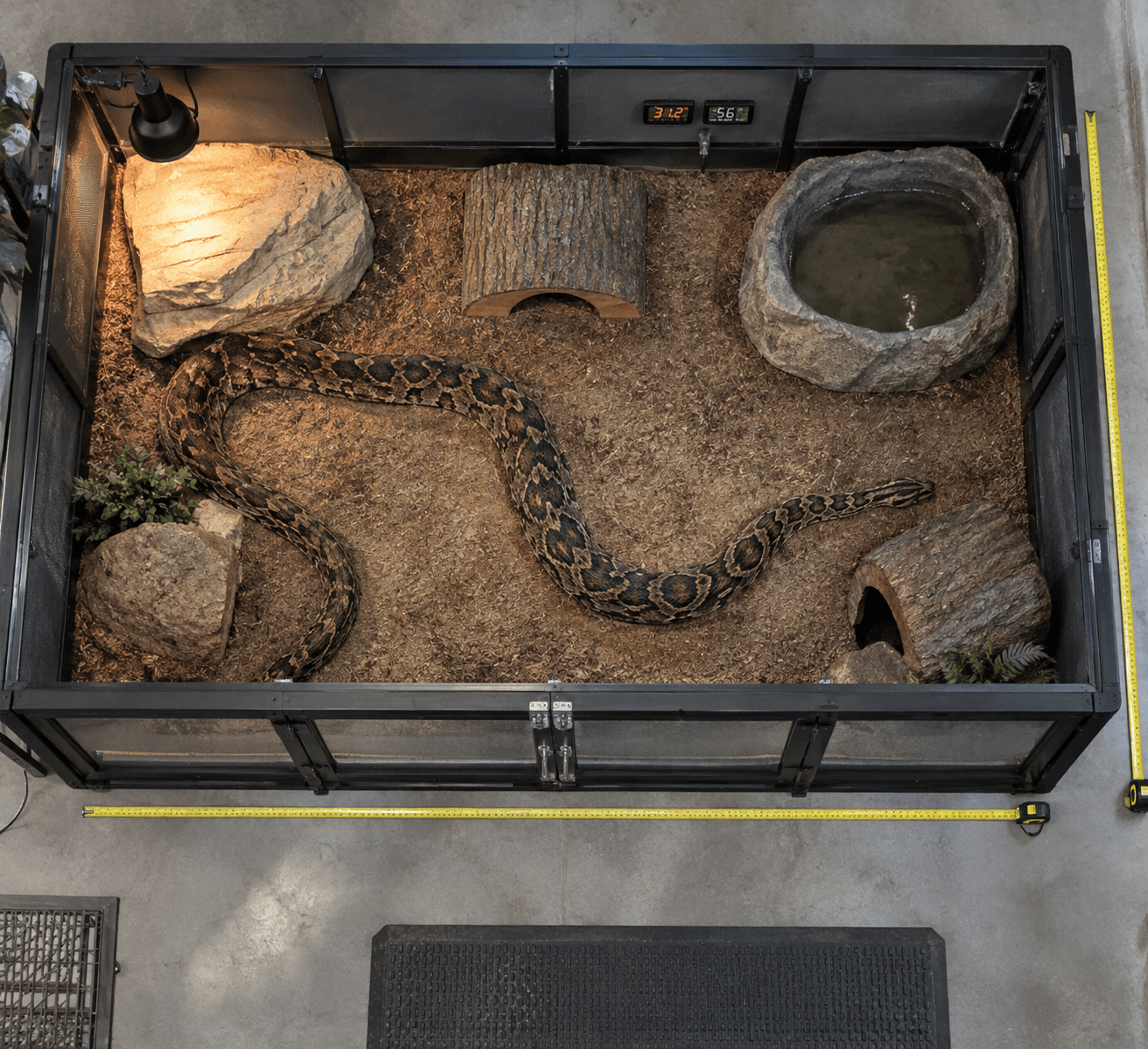
Plan for a floor space of at least 12 feet by 6 feet for a full-grown adult, though many experienced keepers build larger walk-in enclosures or dedicate a small room. Height matters less than floor space since these are primarily ground-dwelling, but allow at least 3 feet of clearance for basking setups and movement.
Locking Security Is Non-Negotiable
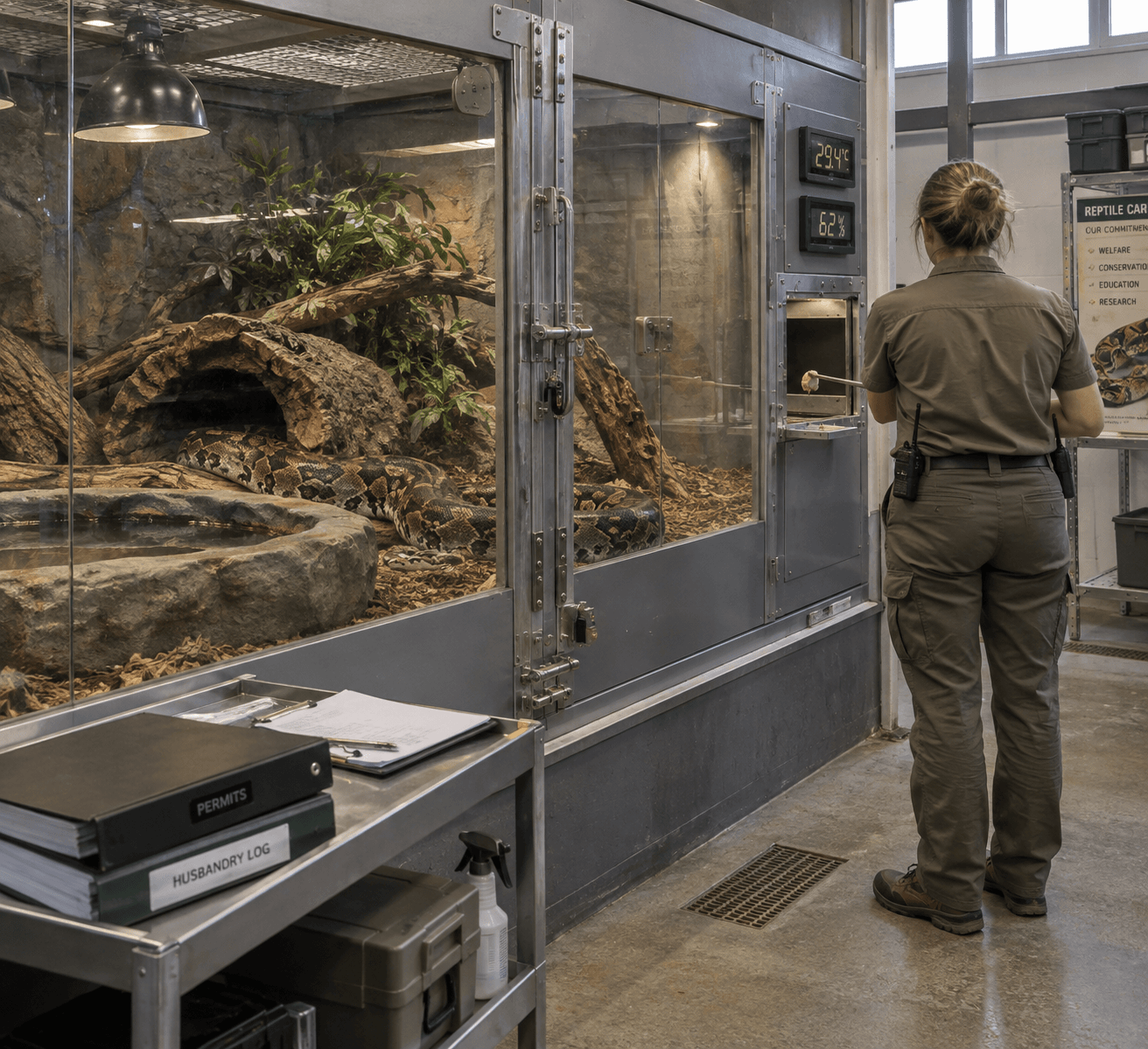
Standard sliding glass doors with a single latch are not enough. You need two independent locking mechanisms on every access point, because a 100-pound python can push through weak hardware without much effort. Escaped large constrictors make local news for a reason, and in states with permit systems, an escape can mean losing your license to keep the animal at all.
Here’s a rough comparison of housing stages:
Life Stage
Approx. Length
Minimum Floor Space
Enclosure Type
Hatchling
18-24 in
2 ft x 1 ft
Secure plastic tub
Juvenile (1-2 yrs)
5-8 ft
6 ft x 3 ft
Reinforced wood or PVC
Adult
12-16 ft
12 ft x 6 ft
Custom-built, double-locked
If you’re planning a custom build, working through the structural details on a site like petterrarium.com before you start cutting wood will save you from redoing panels after the snake outgrows a miscalculated design.
Heating, Lighting, and Humidity Targets
Get the thermal gradient wrong and you’ll see stress, poor digestion, or illness within weeks. African rock pythons need a basking spot of 95 to 100°F, with the cool end of the enclosure sitting around 78 to 82°F. Nighttime temps can drop to 75°F without issue.
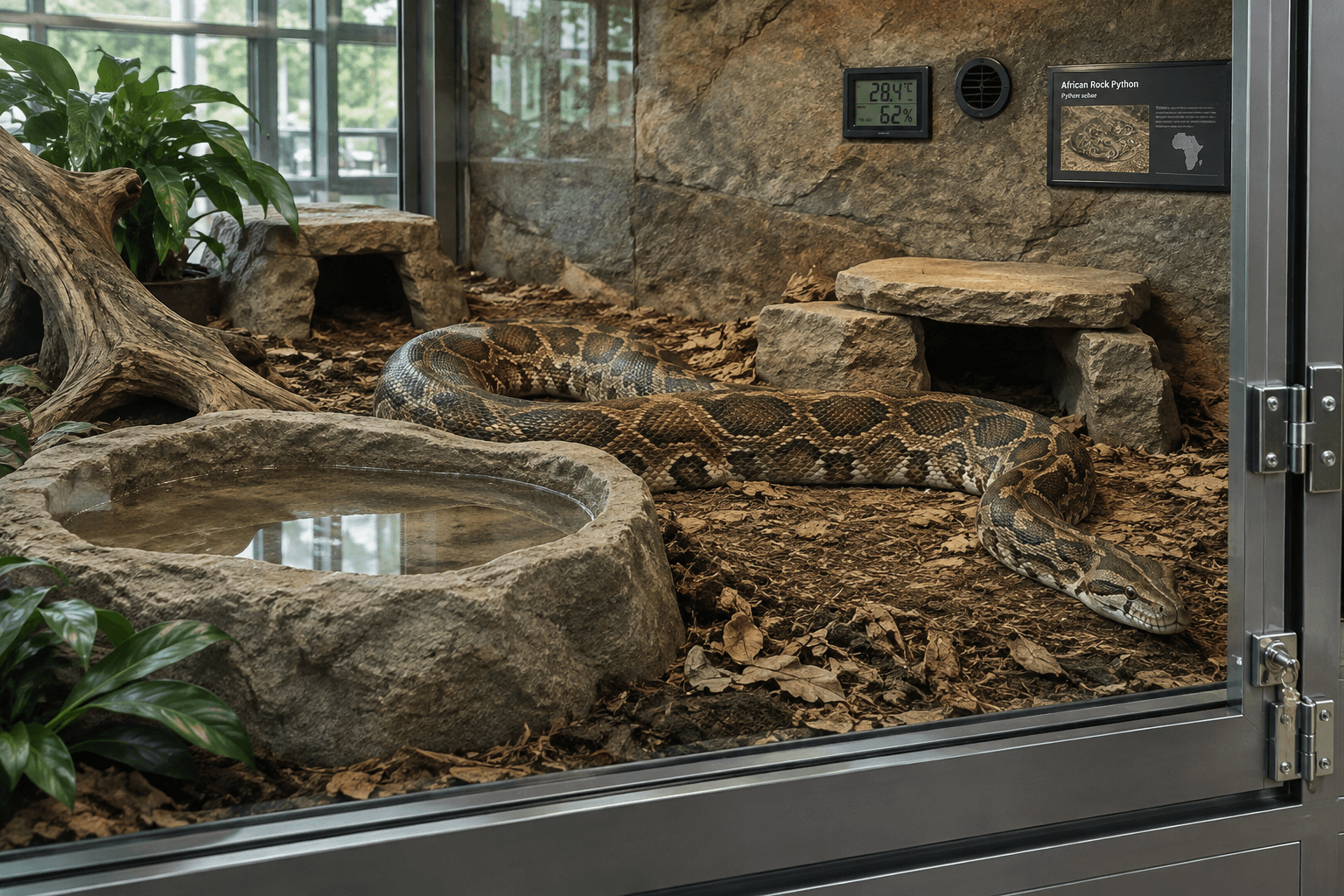
Humidity should stay in the 50 to 70% range, climbing higher during shedding. Low humidity during a shed cycle causes retained skin, especially around the eye caps and tail tip, which can lead to infection if it isn’t corrected. Mist the enclosure or add a large, damp hide a few days before you notice the skin dulling.
Substrate and Water Basin
Cypress mulch or a coco-fiber blend holds humidity well and lets the snake burrow, which this species does naturally. Avoid pure sand or gravel, since it doesn’t hold moisture and can cause impaction if ingested during feeding. A water basin large enough for the full body to submerge is worth building in, since rock pythons soak regularly, especially before shedding and after large meals.
Lighting doesn’t need to be intense since these are largely nocturnal and crepuscular, but a low-UVB bulb on a 12-hour cycle supports overall health and gives you a visual day/night rhythm to work around.
Feeding, Handling, and Legal Status
Feeding schedule depends on age: hatchlings eat every 5 to 7 days, juveniles every 10 to 14 days, and adults every 3 to 4 weeks once growth slows. Prey size should leave a visible but modest bulge, never anything that strains the body wall.
Start hatchlings on appropriately sized rats, never anything wider than the snake’s thickest point.
Move to rabbits or larger rats as the snake passes 6 feet.
Reduce feeding frequency once growth slows, usually after year three.
Always feed in the enclosure itself for adults, since transferring a 12-foot python for feeding adds unnecessary risk.
Keep a second adult on hand (literally, another person) for any adult feeding or enclosure maintenance.
Handling an adult alone is where most serious incidents happen. Never handle a rock python over 8 feet without a second person present, full stop. This isn’t overcaution, it’s standard practice among zoos and experienced private keepers alike.
Legally, this species is restricted or banned outright in several states, and some jurisdictions that allow it require a permit, inspection, or both. Check your state’s exotic animal regulations and your city or county code separately, since local rules are sometimes stricter than state law. If you’re not prepared to clear that paperwork before buying, that’s your answer about whether this snake fits your situation right now.
Frequently Asked Questions
Can I keep an African rock python in a standard reptile tank?
No. Standard glass tanks can’t handle the adult size (12 to 16 feet) or the structural stress of a powerful constrictor pushing against the enclosure, and most lack the double-lock security this species needs.
Are African rock pythons legal to own as pets?
It depends on your state and sometimes your city. Several states restrict or ban large constrictors outright, and others require a permit with inspections, so confirm both state and local rules before acquiring one.
How is an African rock python different from a Burmese python in care needs?
Both get large, but rock pythons are generally more defensive and less predictable with handling, even after years in captivity, which raises the bar on safety protocols and the number of people required for routine handling.