A lizard big enough to need its own dresser-sized enclosure doesn’t start that way. It starts as a foot-long baby that fits in your hand, and that’s exactly how people end up with a five-foot animal and no plan. If you’re shopping for a lizard big enough to turn heads, the real question isn’t “how big does it get” — it’s whether your space, budget, and next two years can keep up with the growth curve.
That growth curve catches almost everyone off guard the first time. A tegu or green iguana can go from hatchling to nearly full-grown in under two years, which means the tank you bought in month one is trash by month twelve. This guide walks through which big species actually make sense as pets, what their enclosures really cost, and where the line sits between “impressive” and “illegal to own.”
Which Big Lizard Species Are Actually Keepable Pets
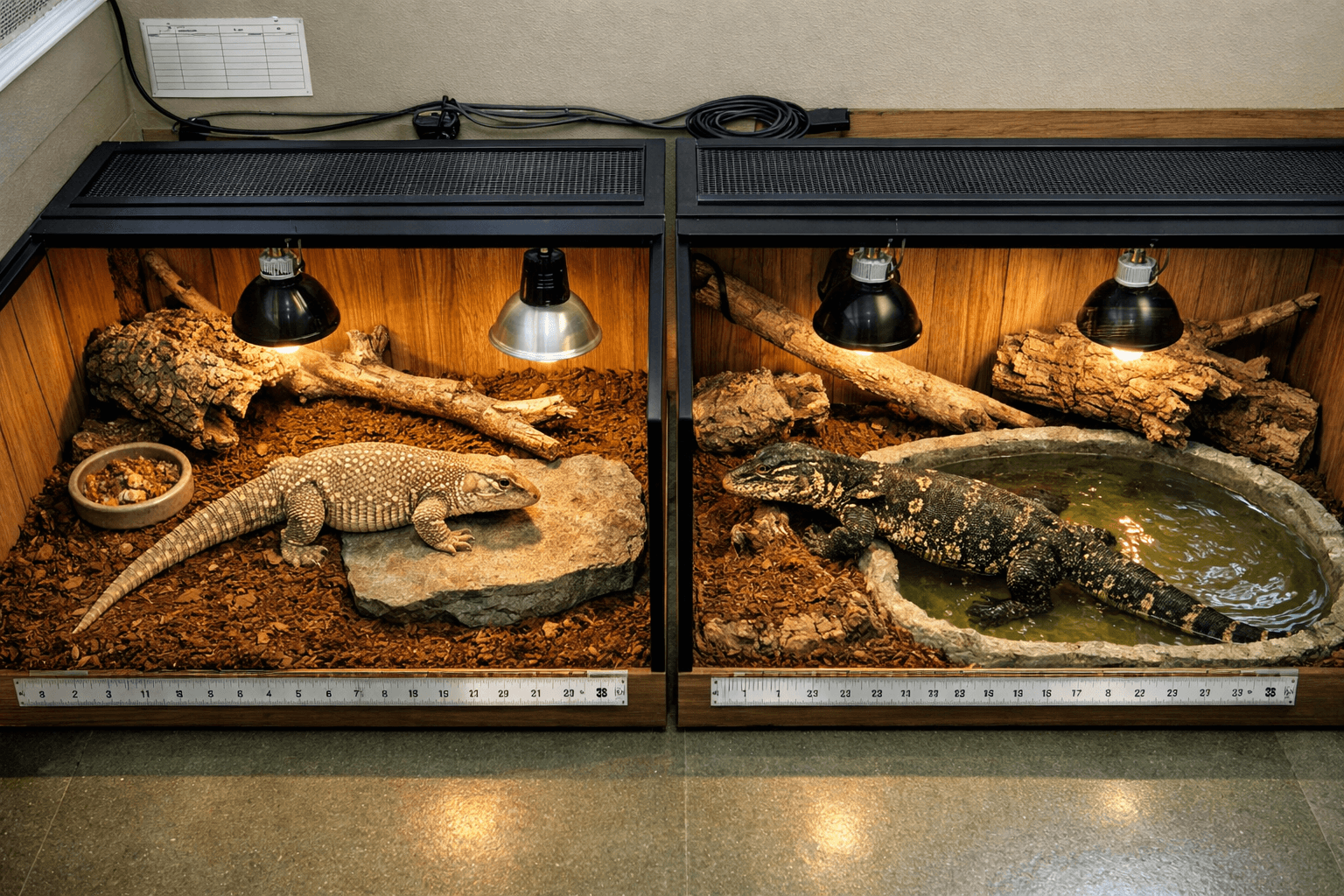
Only a handful of large lizard species are realistic, legal pet options in the US, and picking the right one matters more than picking the biggest one. The Argentine black and white tegu, green iguana, savannah monitor, and Asian water monitor cover most of what hobbyists actually keep.
The Tegu and the Iguana
The Argentine black and white tegu is the current favorite among big-lizard keepers, and for good reason. Adults hit 3-4 feet, some push past 4.5 feet, and with consistent handling from a young age, many settle into a calm, almost dog-like temperament. Green iguanas run similar in length but stay leaner, and they’re strict herbivores, which changes the whole feeding plan compared to an omnivorous tegu.
The Monitors
Savannah monitors top out around 3-4 feet and are more manageable for a first-time monitor owner. Asian water monitors are a different story entirely — they can reach 6-7 feet, need a semi-aquatic setup with real swimming depth, and are honestly better suited to experienced keepers or shop owners with the room for it. The Komodo dragon, meanwhile, isn’t part of this conversation at all: it’s a wild, protected species, not a pet, and no legitimate US dealer sells them.
The Growth Timeline Nobody Warns You About
Here’s the part that catches new owners off guard: most of these species do their major growing in the first 18-24 months, not gradually over a lifetime. A tegu hatchling that’s 8-10 inches at purchase can be pushing 3 feet within a year if it’s eating well and kept warm enough.
That timeline means you’re not buying “a small lizard.” You’re buying a future room fixture on a countdown clock. Waiting to upgrade the enclosure until the lizard “looks too big” almost always means you’re already behind.
A rough timeline for a tegu, which grows about as fast as any keepable species:
Month 1-3: 10-16 inches, fine in a 40-gallon tank temporarily.
Month 4-8: 18-30 inches, needs a custom enclosure at least 4 feet long.
Month 9-14: 30-42 inches, needs 6-8 feet of floor space minimum.
Month 15-24: near-full adult size, often 3.5-4.5 feet, needs a dedicated room or a large custom build (8×4 feet or bigger).
Year 2 onward: growth slows dramatically; focus shifts to maintenance, not upgrades.
Green iguanas follow a slightly slower version of the same curve, but they still hit most of their adult length within two to three years.
What the Enclosure and Setup Actually Cost
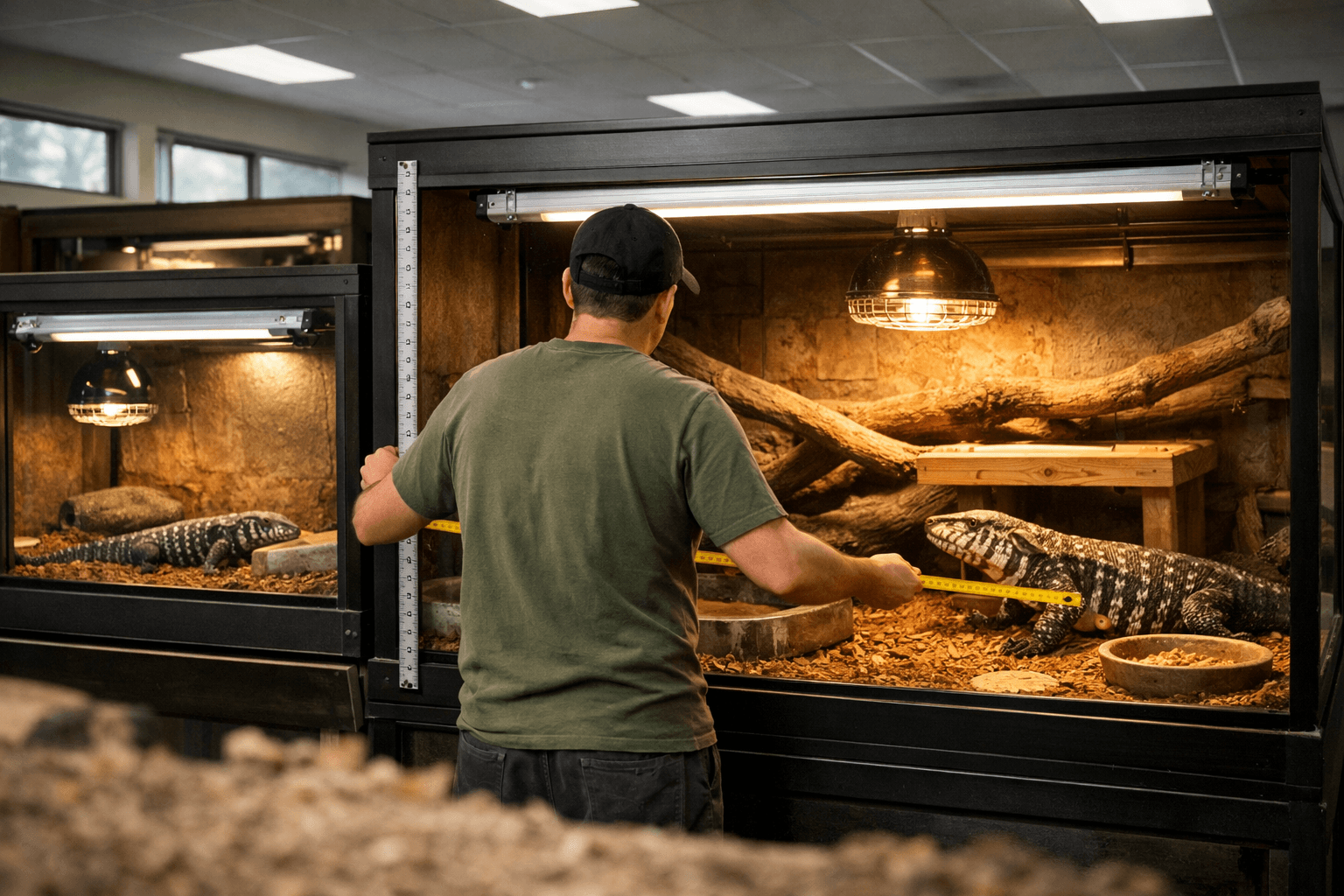
Budget for a full-grown big lizard, not the baby you’re bringing home. An adult tegu or iguana enclosure realistically costs $800-$2,500 once you include the build, heating, and UVB, and that’s before ongoing electric costs.
Heating and UVB Needs Scale Fast
A 20-gallon setup might run on a single 75-watt heat bulb. A room-sized enclosure for an adult monitor or tegu often needs multiple heat sources, a basking surface holding 95-110°F, and high-output UVB tubes across several feet of canopy. Underestimating wattage is one of the most common mistakes — a bulb that worked fine for a 2-foot lizard won’t heat a space built for a 5-foot one.
A Cost Snapshot by Life Stage
Life Stage
Enclosure Type
Approx. Setup Cost
Hatchling (under 1 ft)
40-gallon tank
$150-$300
Juvenile (1.5-3 ft)
Custom 4×2 ft enclosure
$400-$800
Sub-adult (3-4.5 ft)
Custom 6×3 ft enclosure
$700-$1,500
Full adult (4-7 ft)
Room build or 8×4 ft+ custom
$1,200-$2,500
Shop owners and hobbyists building custom enclosures often find plywood-and-melamine builds cheaper long-term than buying pre-made tanks at every size stage — one solid build that grows with the animal beats three tank upgrades.
Diet, Handling, and Lifespan: What You’re Signing Up For
A tegu or monitor isn’t a low-maintenance pet, and pretending otherwise sets people up to rehome an animal at year two. Diet, temperament, and lifespan all scale up right along with the size.
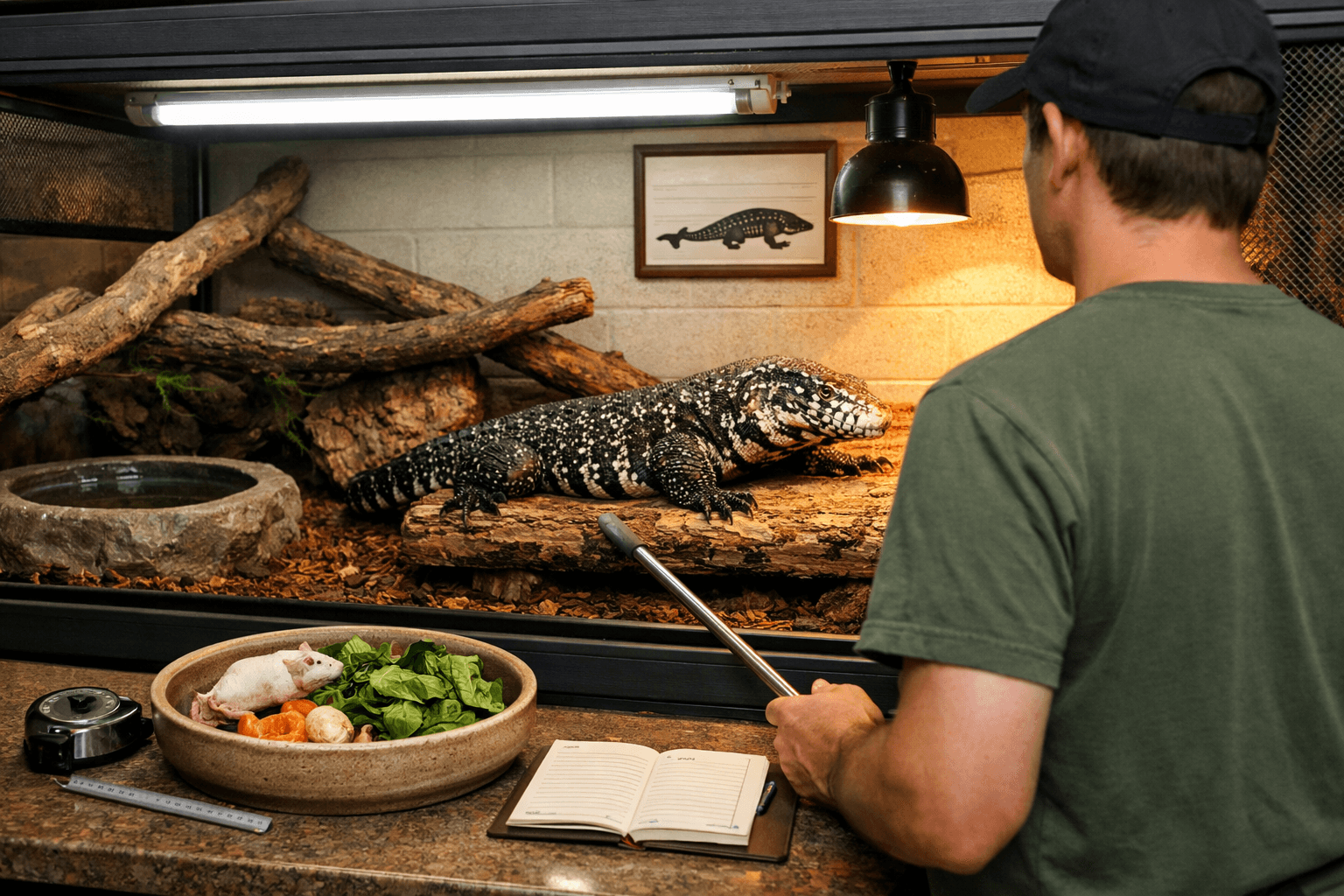
Tegus and monitors eat a lot as juveniles — expect feeding several times a week on whole prey, eggs, and lean protein, tapering to a couple of times a week as adults. Green iguanas need daily fresh greens and vegetables in real volume, not the occasional lettuce leaf. Temperament varies a lot by species and by individual: a well-handled tegu can be calm enough to walk on a leash, while an under-socialized savannah monitor might stay defensive for years. Don’t assume size equals aggression — that assumption causes more rehoming than any actual bite ever does.
Lifespan is where the real commitment shows up. Tegus and iguanas commonly live 15-20 years in captivity, and monitors can match or beat that. If you’re weighing species side by side, it’s worth checking detailed species enclosure guides on a site like petterrarium.com before buying, since the build specs differ more between species than most beginner guides let on.
Frequently Asked Questions
Is a Komodo dragon legal to own as a pet in the US?
No. Komodo dragons are a protected, endangered species and aren’t sold or kept as pets anywhere in the US. If you want something in that size range, a water monitor is the closest legal, keepable option.
How big of an enclosure does an adult tegu actually need?
Most adult tegus need at least 8×4 feet of floor space, sometimes a full dedicated room. Anything smaller tends to restrict natural movement and makes temperature gradients hard to maintain.
Do all big lizards need the same UVB strength?
No — UVB needs vary by species and enclosure depth. A savannah monitor in a 3-foot-tall enclosure needs a different tube strength than a water monitor in a 6-foot semi-aquatic build, so match the bulb to your actual setup, not a generic recommendation.