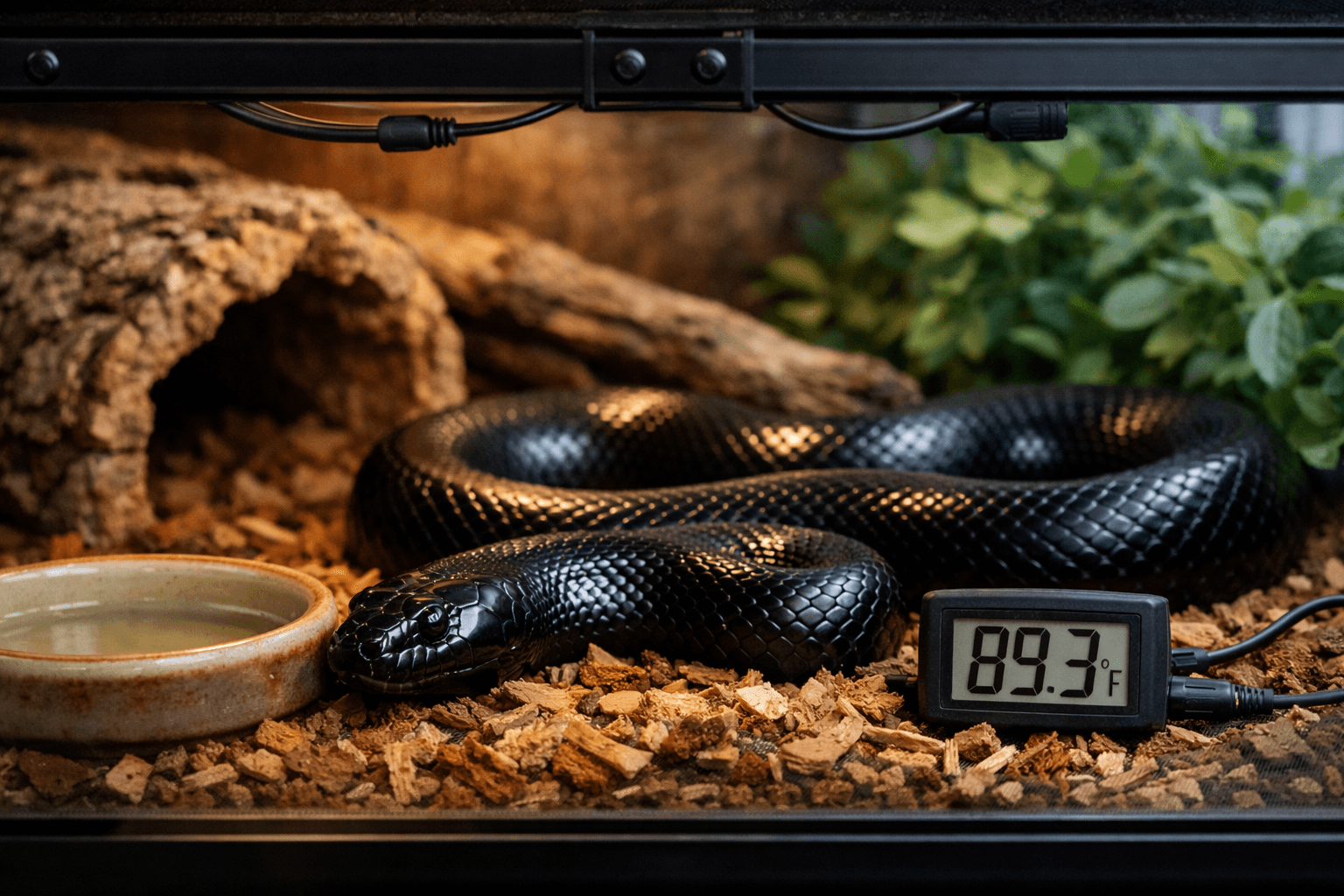
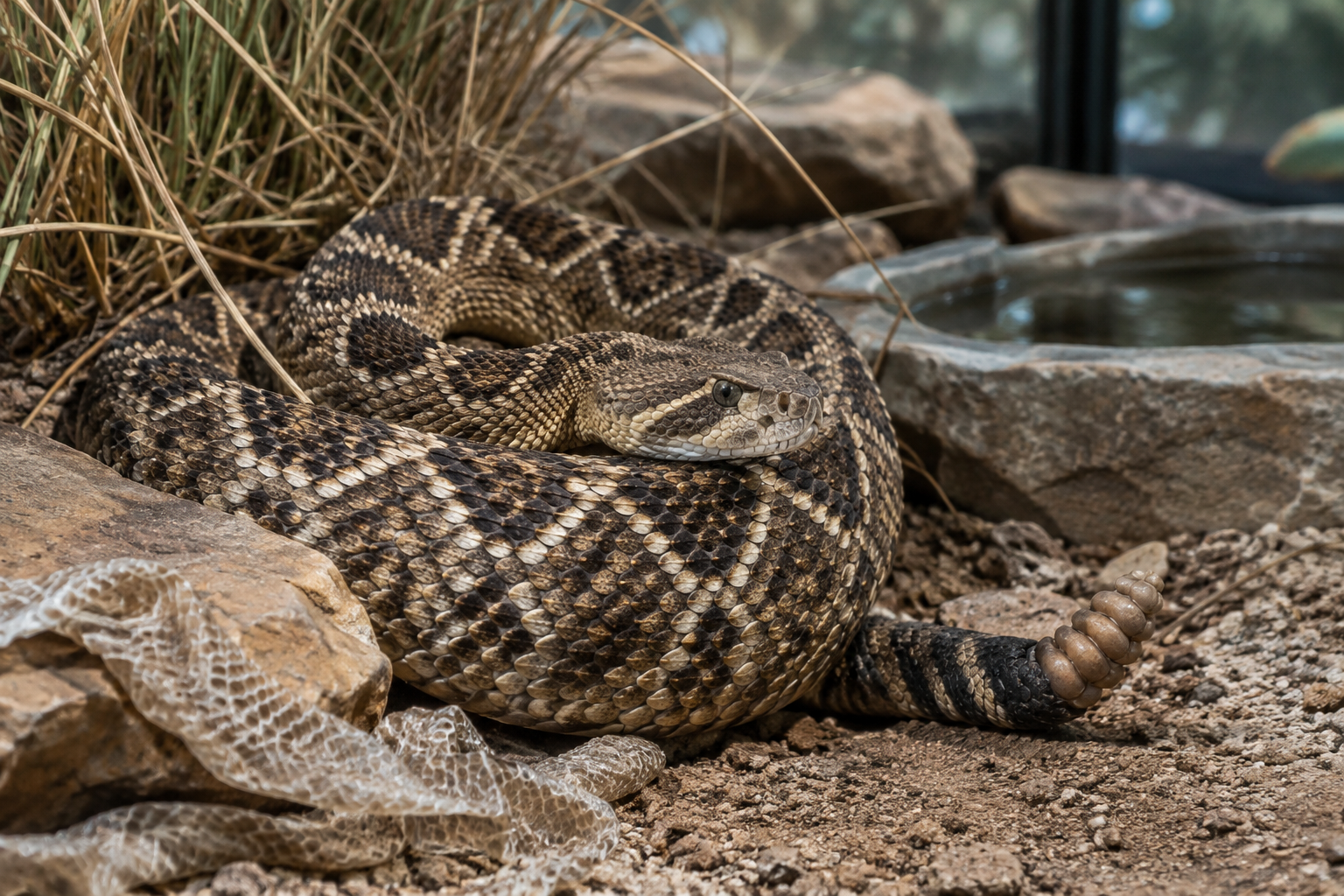
That glossy black coil in the pet shop tank looks calm enough to share space with a buddy. Don’t do it. A mexican black kingsnake will eat another snake given the chance, and its escape-artist streak means the “docile” reputation only applies to how it acts toward you, not to its cage mate or your terrarium’s weak spots.
If you’re setting one up, the good news is this snake is genuinely one of the easier colubrids to keep once you get the setup right. It just needs a few specific things most generic snake care sheets gloss over.
Enclosure Size and Security: Why This Snake Escapes More Than Most
A single adult mexican black kingsnake needs a tank around 36 x 18 x 18 inches, though a 40-gallon breeder-style enclosure works well too. Hatchlings can start in something smaller, like a 10-gallon tank, but plan to upgrade within the first year since they grow fast.
The bigger issue isn’t size. It’s security. This species is famous among keepers for pushing on lids, squeezing through gaps you’d swear were too small, and testing every corner of the enclosure at night. A loose screen top or a sliding glass lid without a lock is basically an invitation.
Locking Lids and Gap Checks
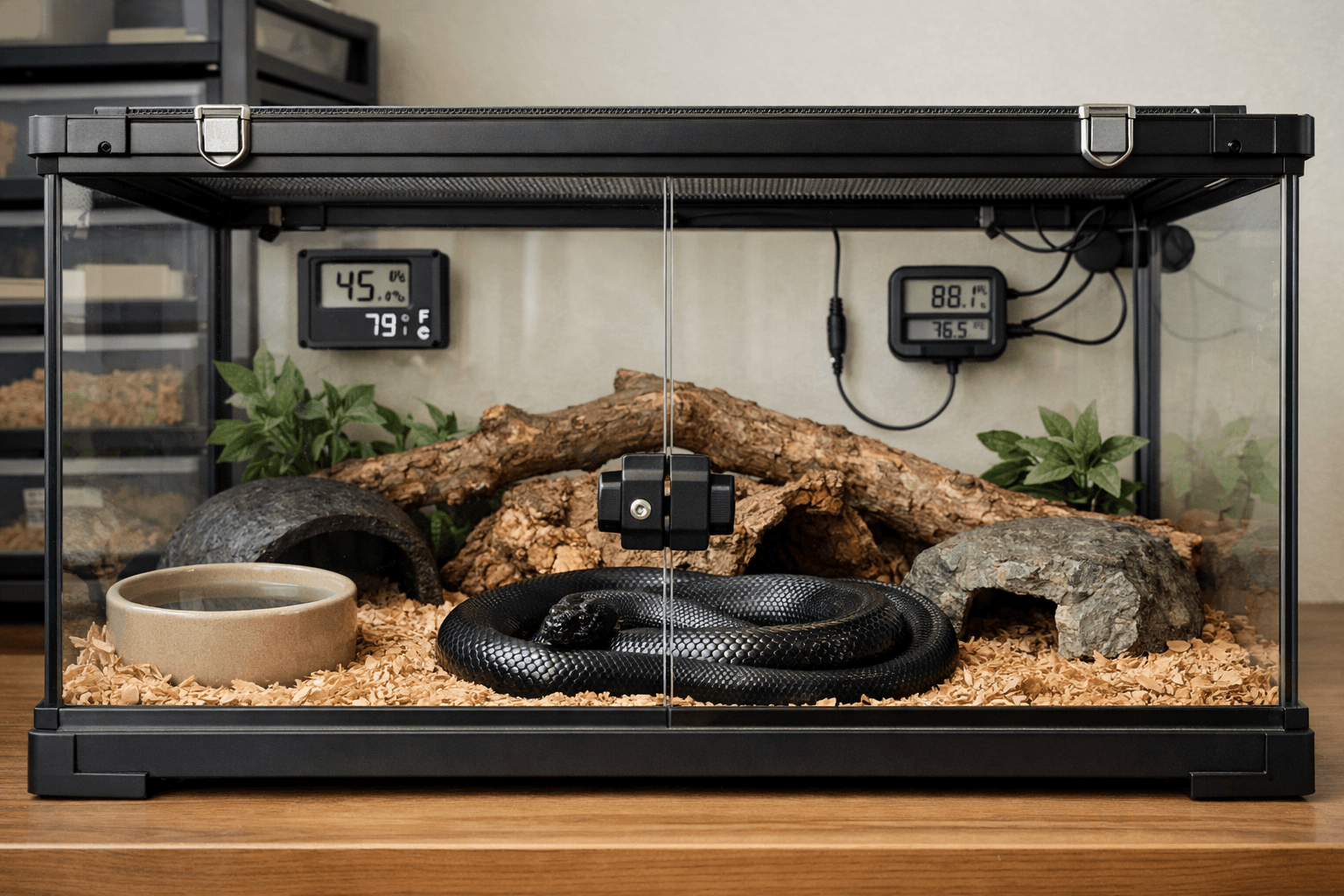
Go with front-opening enclosures that have actual latches, not just a lid that rests on top. If you’re using a screen top, add spring clips on all four corners, not just two. Check anywhere wires or tubing enter the tank. Kingsnakes will find that half-inch gap around a thermostat probe cord.
One Snake, One Enclosure
Here’s the correction that matters most: never house two kingsnakes together, even a breeding pair outside of an actual mating attempt. Mexican black kingsnakes are cannibalistic, and their feeding response is strong enough that one snake will strike at anything that moves the wrong way, including its tank mate. Keep them solo, full stop, and only ever put two together under direct supervision for breeding.
Heating, Lighting, and Humidity: Getting the Gradient Right
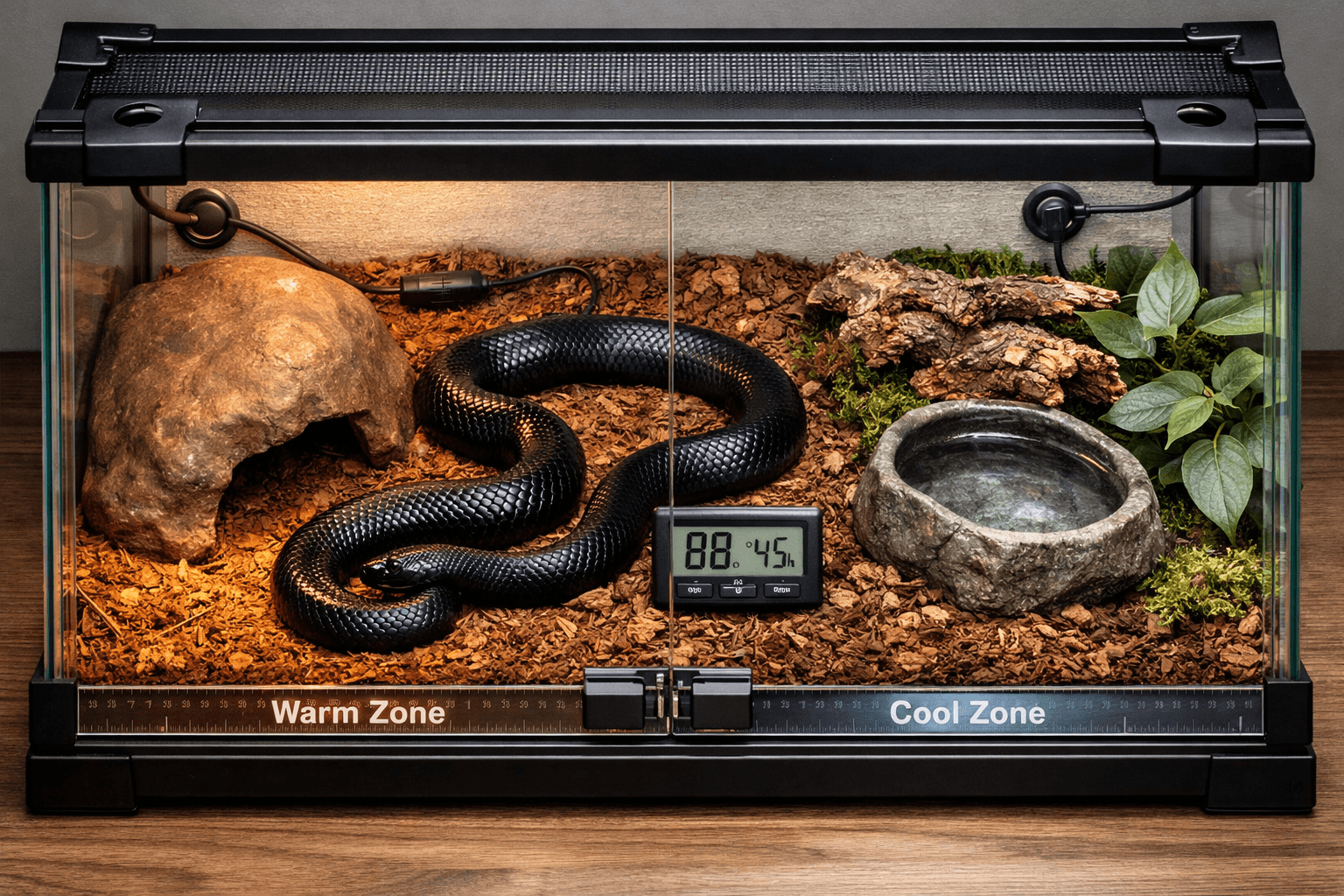
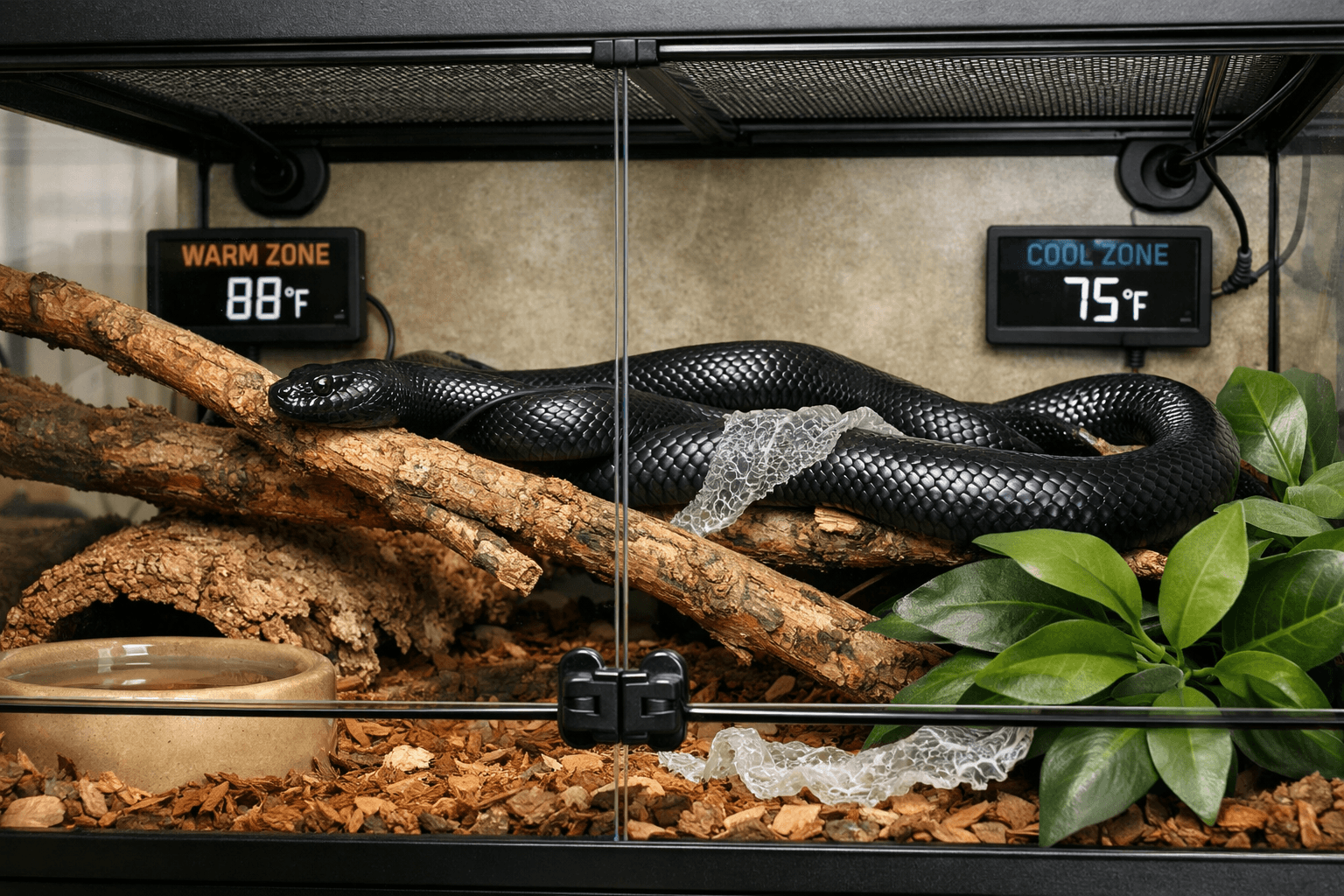
This species does best with a warm side around 85-88°F and a cool side in the mid-70s, dropping to about 70°F at night. Get the gradient wrong in either direction and you’ll see poor digestion or a snake that never leaves its hide.
Setting Up the Heat Source
An under-tank heater on the warm third of the enclosure, paired with a thermostat, is the safest way to hit that range. Skip heat rocks entirely; they cause more burns than they’re worth. A digital probe thermometer on both ends of the tank tells you what’s actually happening, not just what the dial says.
Lighting Needs
Mexican black kingsnakes don’t need UVB the way a bearded dragon does, but a low-level UVB bulb (around 5-7%) on a 12-hour cycle can support better appetite and bone health over time. It’s not mandatory, but it’s a cheap upgrade that pays off.
Humidity: Less Is More
This is where a lot of new keepers overcorrect. Keep ambient humidity around 40-50%, not the 70%+ some tropical care sheets suggest. Too much moisture in a glass tank with poor airflow leads to respiratory infections fast. A humid hide with damp sphagnum moss in one corner covers shedding needs without soaking the whole enclosure.
Parameter
Target Range
Warm side temp
85-88°F
Cool side temp
73-78°F
Nighttime low
70°F
Humidity
40-50%
Enclosure size (adult)
36 x 18 x 18 in
Substrate, Hides, and Feeding: The Daily Husbandry Basics
Aspen shavings are the standard substrate choice for this species because they hold burrows well and stay dry. Cypress mulch works too if you want a slightly more natural look, but avoid cedar and pine entirely since the oils are toxic to snakes.
Give your kingsnake at least two hides, one on the warm side and one on the cool side, so it never has to choose between temperature and security. A half-log or cork bark round works fine. Enrichment items like a climbing branch or a shallow water dish big enough to soak in round out the setup without much extra cost.
Feed juveniles a pinky or fuzzy mouse every 5-7 days, and shift adults to an appropriately sized mouse every 7-10 days. This snake has a famously strong feeding response, sometimes striking hard enough to surprise first-time owners, and that same appetite makes overfeeding an easy trap. A visibly thick, sausage-shaped body is a sign to cut back, not a sign of health.
A basic feeding and maintenance rhythm looks like this:
Feed juveniles every 5-7 days; adults every 7-10 days.
Offer prey roughly the same width as the snake’s thickest point.
Mist the humid hide lightly twice a week, more often during shedding.
Spot-clean substrate every few days; full substrate change monthly.
Check the water dish daily and scrub it weekly.
Handle 10-15 minutes a few times a week once the snake is settled.
If you’re building out a whole reptile room and want more species-specific tank breakdowns like this one, petterrarium.com has separate guides for other colubrids that follow a similar setup logic but with different heat and humidity numbers.
Handling, Shedding, and Health Watch-Outs
Handling a mexican black kingsnake is usually easy once it’s settled in, typically within 2-3 weeks of arriving home. They’re curious, active, and rarely defensive after that adjustment period, though a hungry snake fresh off a feeding day might strike at fast hand movement out of habit rather than fear.
During shedding, you’ll notice dull, grayish skin and a milky look to the eyes. Skip handling during this stretch and make sure that humid hide is doing its job, since a dry shed can leave stuck skin on the tail tip. If you spot retained shed after a few days, a lukewarm soak for 10-15 minutes usually loosens it right up.
Watch for the two most common problems: obesity from overfeeding, and respiratory infection from excess humidity. A wheezing sound, bubbling at the nostrils, or a snake that holds its head up oddly are all reasons to get to an exotics vet, not wait it out. Breeding, if you’re interested down the road, generally starts with a winter cooling period around 55-60°F for 6-8 weeks, but that’s a project for a snake you’ve already kept successfully through a full year of normal care.
Frequently Asked Questions
Can I keep two mexican black kingsnakes together?
No. They’re cannibalistic, and even calm-looking individuals will attack a tank mate that triggers their feeding response. House every kingsnake alone except during a supervised breeding introduction.
How big does a mexican black kingsnake get?
Adults typically reach 3 to 4 feet long. Growth is steady over the first two years, so expect at least one enclosure upgrade from a hatchling-sized 10-gallon tank to the full 36 x 18 x 18 inch adult setup.
Why does my kingsnake keep pushing on the lid?
It’s normal exploring behavior, but it’s also how escapes happen. Add locking latches or spring clips on every corner of a screen top, since this species is strong enough to lift an unsecured lid overnight.