Crickets or fruit? Bugs or both? What does a gecko eat actually depends on which gecko you’re holding, and mixing that up is the fastest way to end up with a sick, skinny lizard. A leopard gecko and a crested gecko eat completely different menus, and treating them the same is one of the most common rookie mistakes I see in this hobby.
The good news: once you know your species, feeding a gecko well is pretty simple and cheap. Most feeding problems trace back to one of two things — the wrong food, or an enclosure that makes eating harder than it should be. Fix both, and you’re most of the way to a healthy, food-motivated gecko.
Insectivore or Omnivore? Match the Diet to the Species
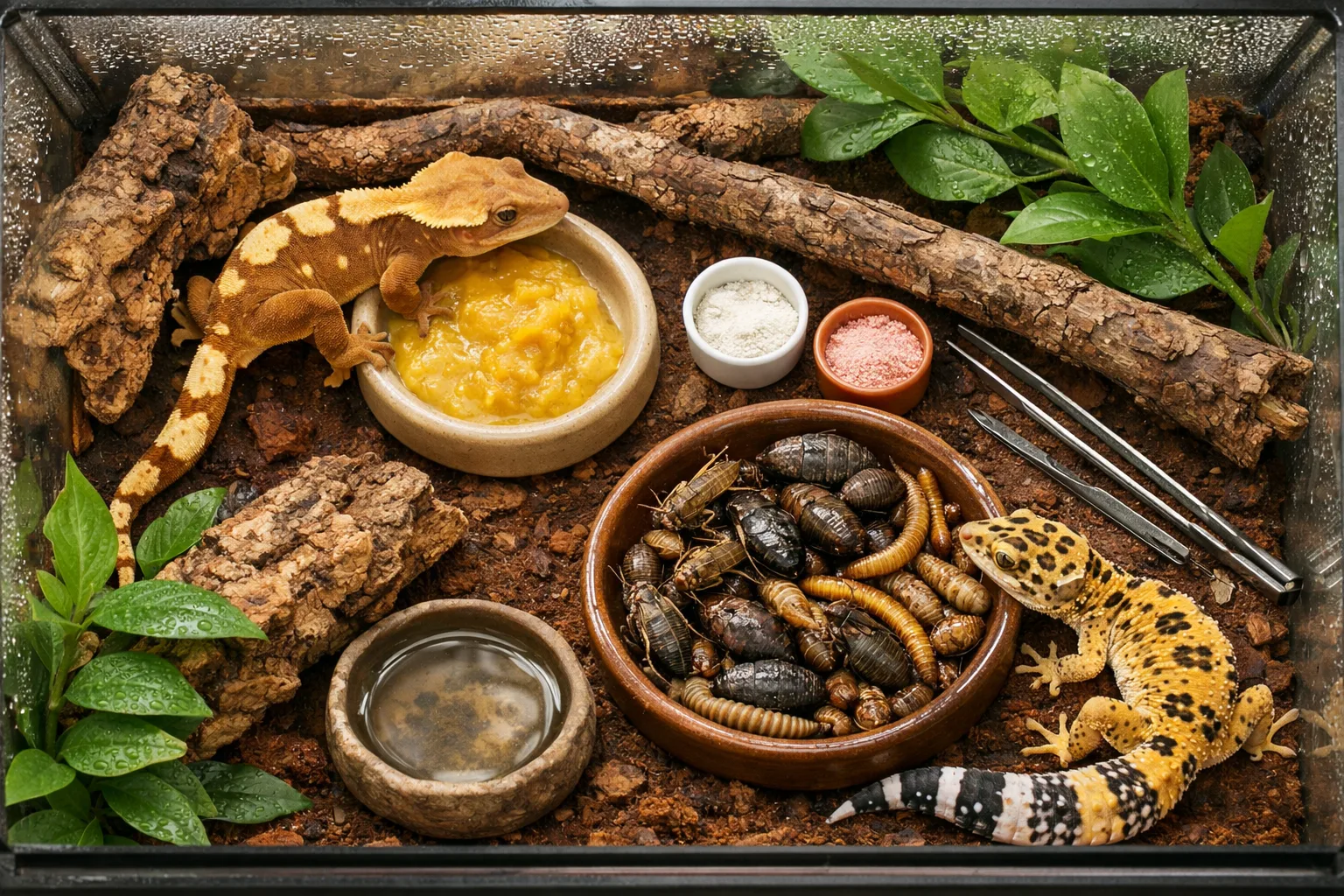
Not all geckos eat the same way, and this is the single biggest mix-up new owners make. Leopard geckos are strictly insectivorous, crested geckos lean heavily fruit-and-nectar based, and day geckos sit somewhere in between, eating both bugs and soft fruit.
Strict Insect-Eaters
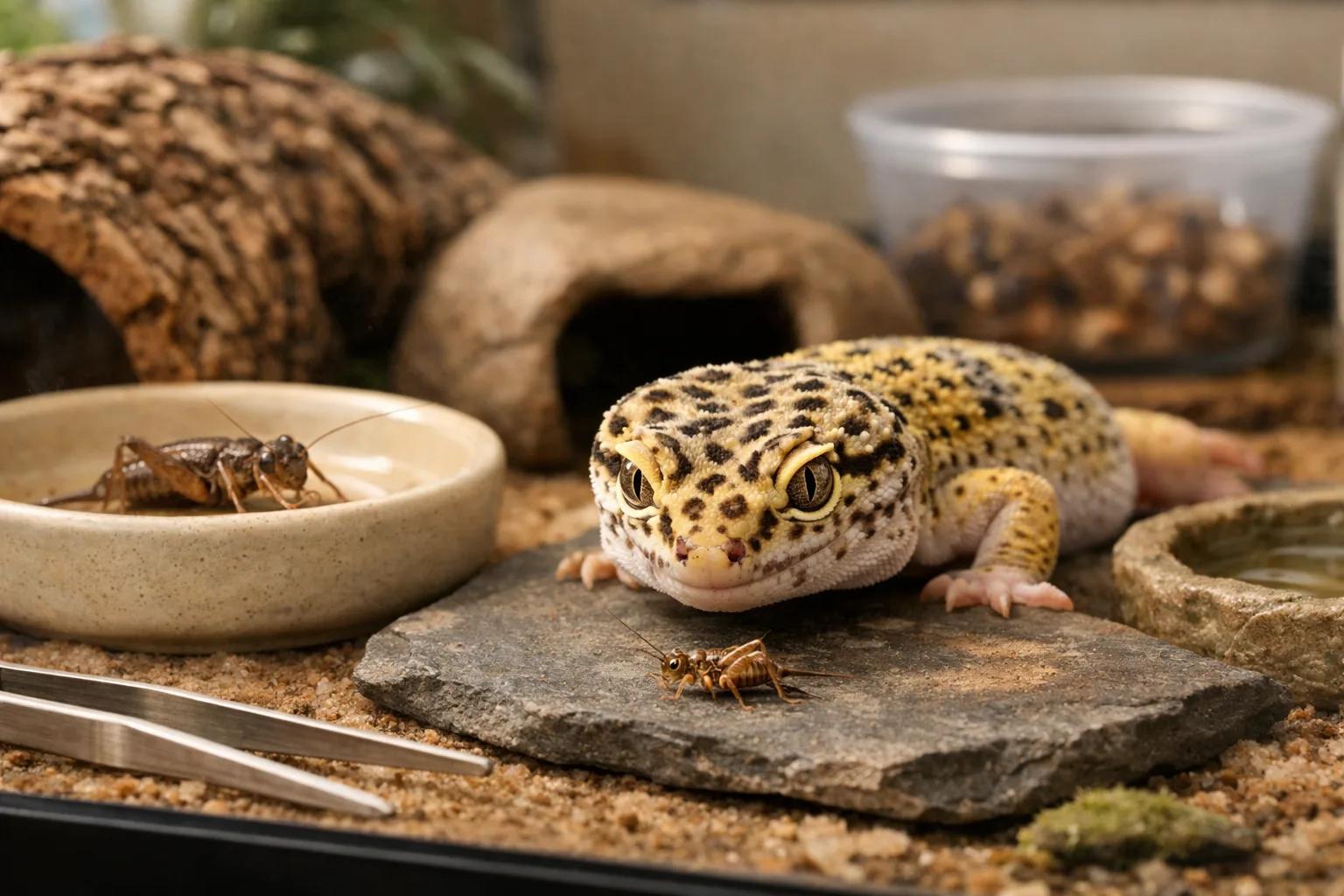
Leopard geckos, tokay geckos, and most ground-dwelling species need live prey every time. They’re wired to chase and pounce, so a bowl of mush just doesn’t register as food to them. Skip the insects entirely and you’ll see weight loss within a couple weeks.
Fruit-and-Bug Omnivores
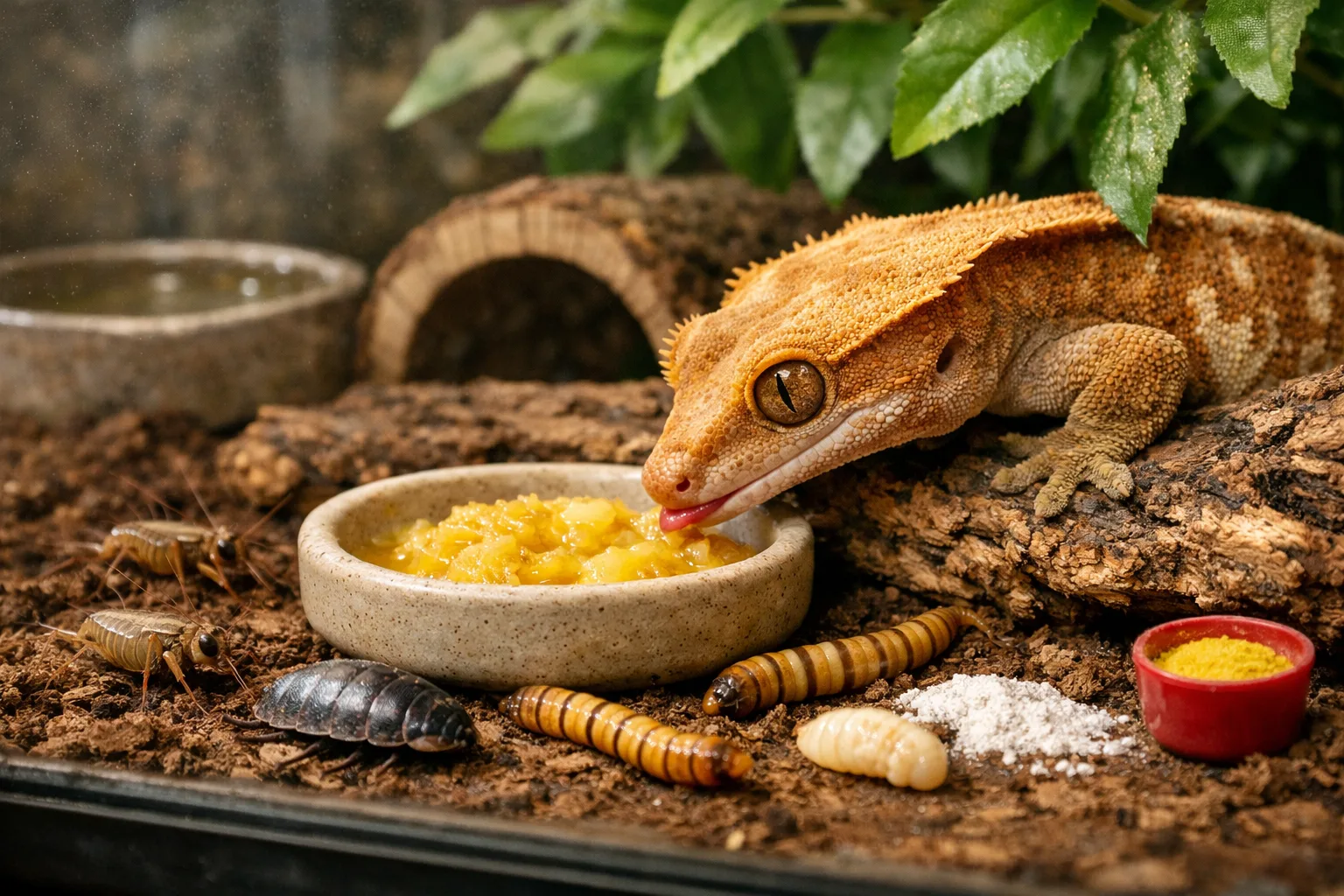
Crested geckos and gargoyle geckos do great on commercial fruit-based powders mixed with water, with insects as an occasional bonus rather than the main course. Day geckos want more insects in the mix, plus some mashed banana or mango a couple times a week. Getting this backwards, feeding a cresty like a leopard gecko or vice versa, is exactly the kind of “one size fits all” advice that gets geckos into trouble.
What Does a Gecko Eat? 7 Foods Worth Keeping on Hand
This is the core list. Rotate through these based on your species, and you’ll cover almost every nutritional need a pet gecko has.
Crickets – the classic staple for leopard and tokay geckos, easy to find at any pet store for a few dollars per dozen.
Dubia roaches – a better long-term staple than crickets for a lot of keepers, since they’re quieter, don’t smell as bad, and have a softer shell that’s easier to digest.
Mealworms – fine as a regular snack, but their tougher exoskeleton makes them harder to digest in large amounts.
Superworms – higher fat, good for underweight geckos or as an occasional treat, not a daily food.
Waxworms – basically gecko candy. High fat, very tasty, but limit these to once or twice a week max.
Commercial crested gecko diet (CGD) – a powdered mix you rehydrate, and honestly the easiest complete meal for crested and gargoyle geckos.
Fruit purees – baby-food-style mango, papaya, or fig works as a supplement or treat for omnivorous species, never as the sole diet for a leopard gecko.
Dubia roaches have become the go-to upgrade for keepers who got tired of cricket die-offs and escaped crickets chirping under the couch at 2 a.m. If you haven’t tried them yet, they’re worth the switch.
Calcium, Gut-Loading, and Prey Size: The Details That Actually Matter
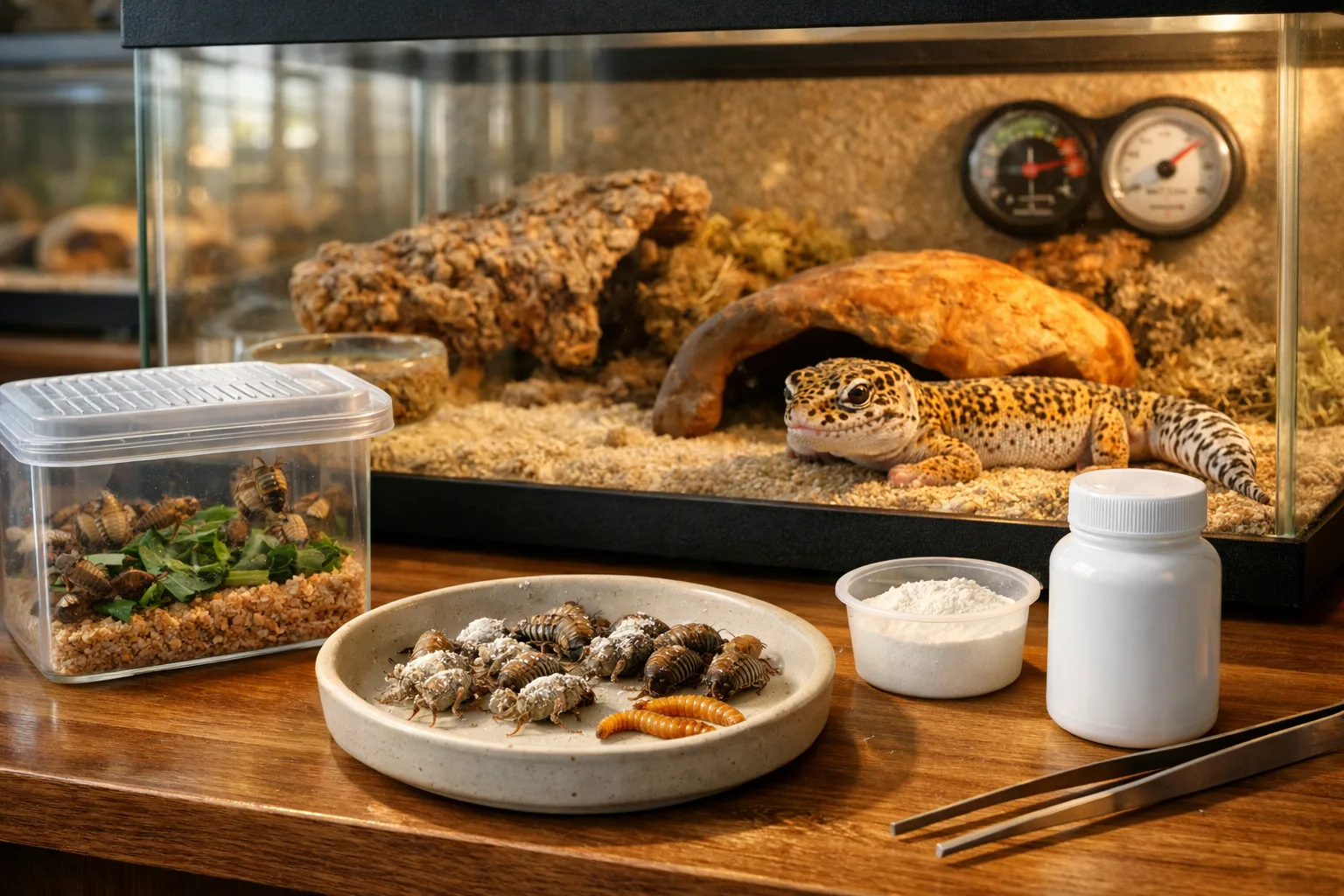
Feeding the right food isn’t enough on its own. Skipping calcium and vitamin D3 dusting is one of the top causes of metabolic bone disease, a painful and sometimes fatal condition where a gecko’s bones go soft. Dust feeder insects with a calcium powder at most feedings, and use a D3-added version once or twice a week for geckos without UVB lighting.
Gut-Loading Comes Before Dusting
Gut-loading means feeding your crickets or roaches nutritious greens and veggies for 24 to 48 hours before they become gecko food. A cricket that’s been eating carrot tops and squash passes that nutrition straight to your gecko. Skip this step and even dusted insects are less valuable than they could be.
Prey Size: The Space-Between-the-Eyes Rule
Never feed prey bigger than the space between your gecko’s eyes. Too-large crickets or roaches can cause impaction or even injure a young gecko trying to swallow something oversized. For juveniles especially, go smaller than you think you need to.
Life Stage
Feeding Frequency
Notes
Juvenile (0-6 months)
Daily
Small prey, frequent light dustings
Sub-adult (6-12 months)
Every other day
Start reducing frequency as growth slows
Adult leopard gecko
2-3 times per week
Overfeeding daily leads to obesity
Adult crested gecko
3-4 times per week (CGD-based)
Fresh puree every other feeding
Why Your Terrarium Setup Affects Feeding Success
Here’s the part most feeding guides skip entirely: a gecko can be on the perfect diet and still struggle to eat if the enclosure is working against it. Humidity, dish placement, and loose insects roaming the tank all affect whether food actually gets eaten.
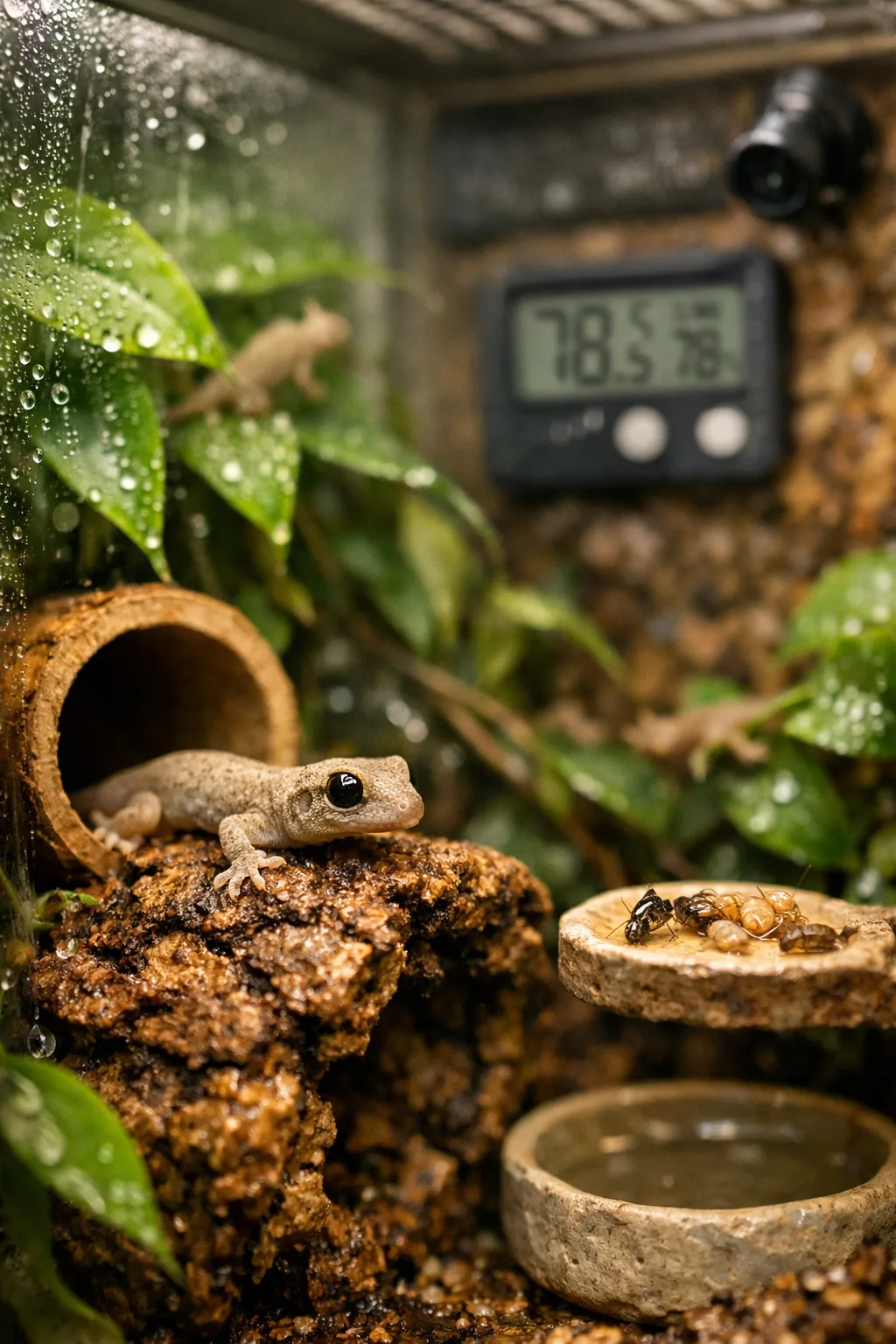
Crested geckos need humidity in the 60-80% range to stay active and hungry; a too-dry enclosure makes them lethargic and disinterested in food. Leopard geckos are the opposite, needing a drier setup with a humid hide only in one corner. Get the humidity wrong for the species and you’ll see refused meals long before you see any obvious diet problem.
A shallow feeding dish also matters more than people expect. Loose crickets that aren’t eaten within 15-20 minutes will hide in cork bark or substrate and start nibbling on your gecko’s toes or tail overnight. Using a dish, or pre-killing prey for reluctant eaters, solves this fast. If you’re setting up a new enclosure from scratch, checking a build guide over at petterrarium.com before you buy your tank can save you from a lot of these early layout mistakes.
Feeding refusal is also normal during shedding, breeding season, or brumation-like slowdowns in cooler months. Don’t panic if a healthy adult skips a meal or two. Check humidity and temperature gradients first before assuming it’s a diet issue.
Frequently Asked Questions
Can crested geckos eat crickets and mealworms?
Yes, occasionally. Crested geckos can eat small crickets or mealworms as a treat a couple times a week, but their main diet should stay fruit-based commercial powder, since that’s what keeps their calcium and nutrient balance steady.
How often should I feed an adult leopard gecko?
Feed adult leopard geckos 2-3 times per week, offering 4-6 appropriately sized insects per session. Daily feeding for adults often leads to obesity and fatty liver issues over time.
Do geckos need a water dish, or do they get enough from food?
Most geckos need a shallow water dish available at all times, even species that also lick droplets off leaves or misted glass. Don’t rely on humidity alone to keep them hydrated.