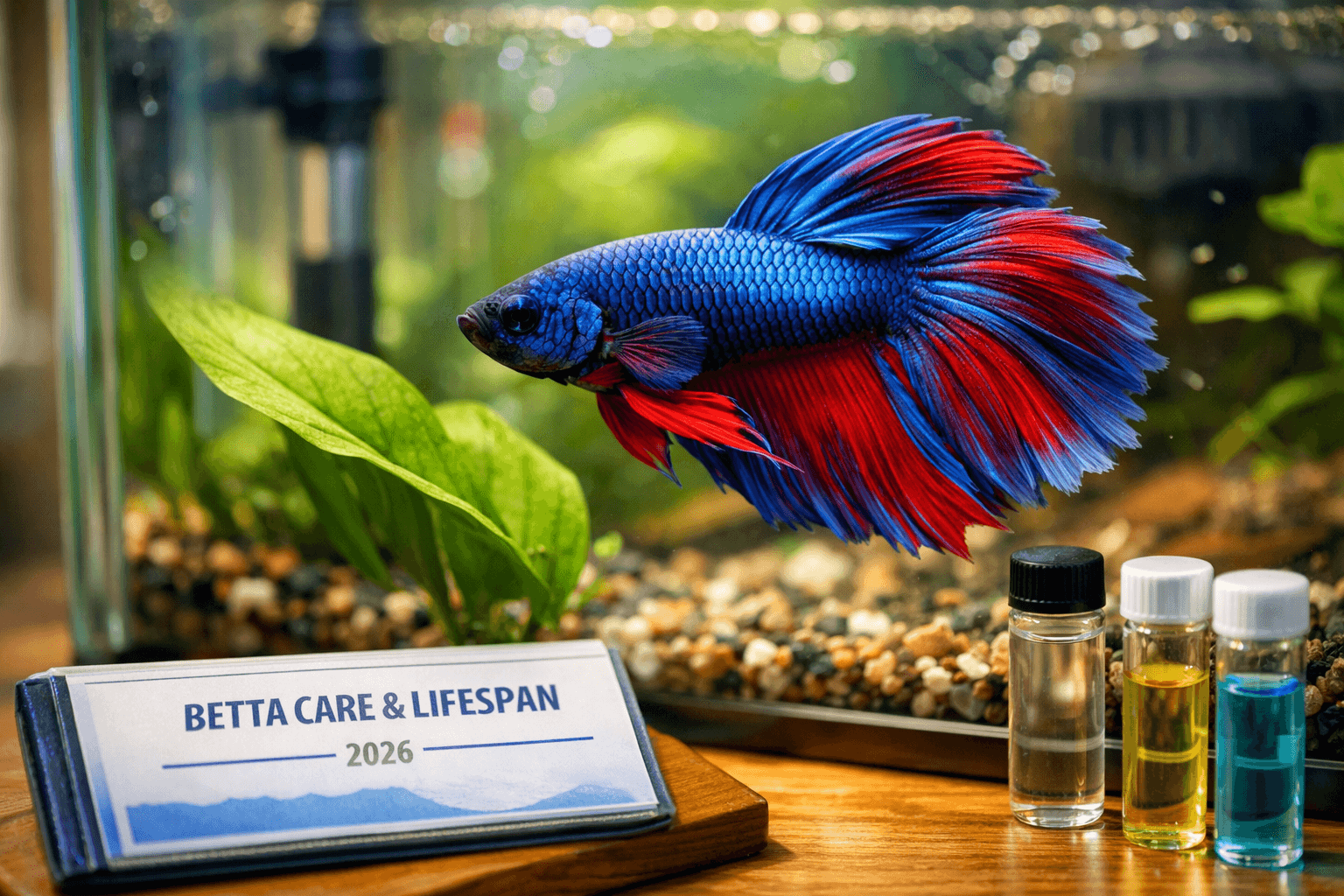
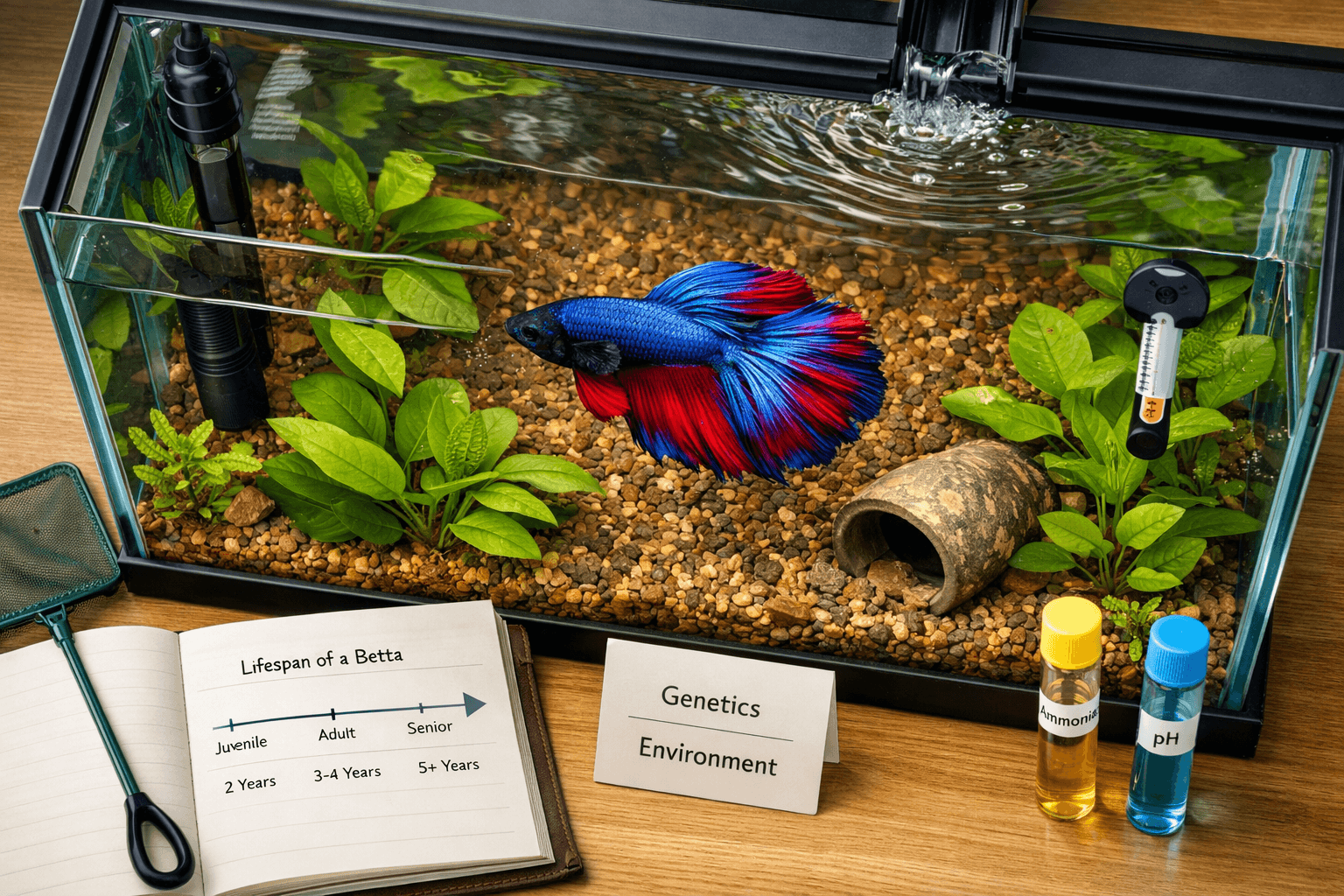
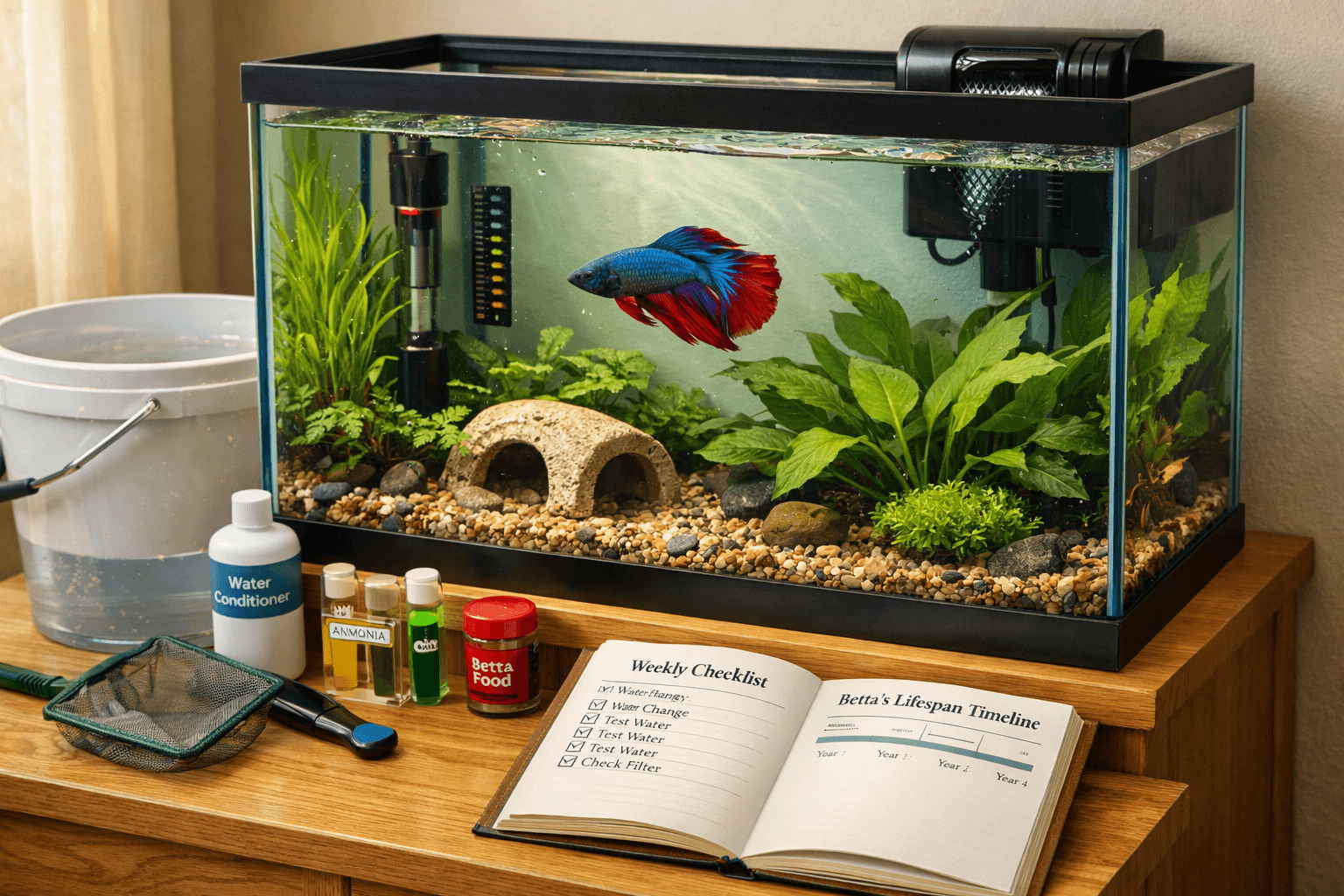
A betta in a bare bowl on a store shelf might last six months. A betta in a properly heated, filtered 10-gallon tank can live 3 to 5 years, sometimes longer. So how long does a betta live, really? The honest answer is: it depends almost entirely on the enclosure you build, not on the fish itself.
That’s the part most care sheets skip. People treat short betta lifespans as just how bettas are, like they’re disposable pets. But bettas are tropical fish with the same basic needs as any tank animal — stable water chemistry, warmth, and room to swim. Fix the habitat, and the lifespan problem mostly solves itself.
What’s The Real Average Lifespan Of A Betta Fish?
A healthy betta in good conditions typically lives 2 to 3 years, and plenty of well-kept bettas reach 4 to 5 years. The one-year lifespan you hear about isn’t genetics, it’s almost always a habitat problem.
Where The “One Year” Myth Comes From
Pet stores display bettas in cups or tiny vases because bettas can survive short spurts in low oxygen thanks to their labyrinth organ. That survival trick gets mistaken for a housing recommendation. A betta stuck in a half-gallon bowl isn’t thriving, it’s just barely getting by, and its body wears out fast from ammonia buildup and temperature swings.
What Genetics Actually Control
Genetics do matter, just not the way people assume. Bettas from careful breeders with good lineage tend to have stronger immune systems and fewer issues like fin rot or swim bladder problems later in life. A $5 bargain-bin betta and a $25 betta from a reputable breeder can both live long lives — but the cheaper fish is more likely to already be stressed or weakened before you even bring it home.
Tank Size And Water Quality: The Single Biggest Lifespan Lever
The single biggest thing you control is tank size, and the target is a minimum of 10 gallons, not the 1-gallon bowls sold as “betta kits.” Bigger water volume means more stable temperature and slower ammonia buildup, which is the real reason bettas in small containers die young.
Think of it the same way you’d think about a reptile enclosure. A leopard gecko in a shoebox-sized tub survives, but it doesn’t get the temperature gradient or space it needs to actually do well. A betta in a bowl is the same story, just underwater.
Heating: Bettas Are Tropical Fish, Full Stop
Bettas need water between 76°F and 82°F. Most homes run cooler than that, especially overnight, so skipping a heater is one of the most common mistakes new owners make. A basic 25-watt adjustable heater runs $12 to $20 and pays for itself in fewer vet-adjacent problems down the line.
Filtration And Ammonia: The Slow Killer
Ammonia from waste and uneaten food builds up fast in small tanks, and it’s often mistaken for “the fish just got old.” A gentle sponge filter (bettas dislike strong current) keeps ammonia in check between water changes. Test strips or a liquid test kit costing around $10 to $15 will show you ammonia, nitrite, and nitrate levels before they become a crisis.
Feeding, Water Changes, And Tank Mates: The Weekly Habits That Add Years
Feeding and water changes are the two habits that separate a betta that limps along for eight months from one that’s still going strong at year four. Neither takes more than a few minutes, a couple times a week.
Feed 2-4 pellets once or twice a day, using a betta-specific pellet rather than generic tropical flakes.
Skip one feeding day per week to prevent bloating and constipation.
Change 25-30% of the water weekly in a 10-gallon tank, using a dechlorinator like Seachem Prime.
Vacuum gravel or substrate during water changes to pull out trapped waste.
Check the heater and thermometer every water-change day, since a stuck heater is a common silent killer.
Avoid aggressive or fin-nipping tank mates; if you add any, go with small, calm species like Corydoras.
Quarantine new tank mates for 1-2 weeks before introducing them.
Skipping tank mates entirely is a completely fine choice, by the way. A well-decorated solo betta tank with live or silk plants gives plenty of enrichment on its own, and it avoids the stress and disease risk that comes with mixing species.
Signs Of Aging Versus Signs Of Illness In Bettas
Slower swimming and less vivid color in a 3-year-old betta is likely just aging. The same symptoms in a 6-month-old betta point to a water quality or disease problem, and that distinction matters for how you respond.
Common betta diseases include fin rot (ragged, discolored fin edges), ich (white speckles like salt grains), and swim bladder disorder (floating sideways or struggling to stay upright). Most of these trace back to poor water conditions or overfeeding, which loops back to the same habitat-first fix. A well-run tank with stable heat and regular water changes prevents the majority of these issues before they start.
How Bettas Compare To Other Common Freshwater Fish
Fish
Typical Lifespan
Minimum Tank Size
Betta
2-5 years
10 gallons
Guppy
2-3 years
5-10 gallons
Neon Tetra
3-5 years
10 gallons
Goldfish (common)
10-15 years
30+ gallons
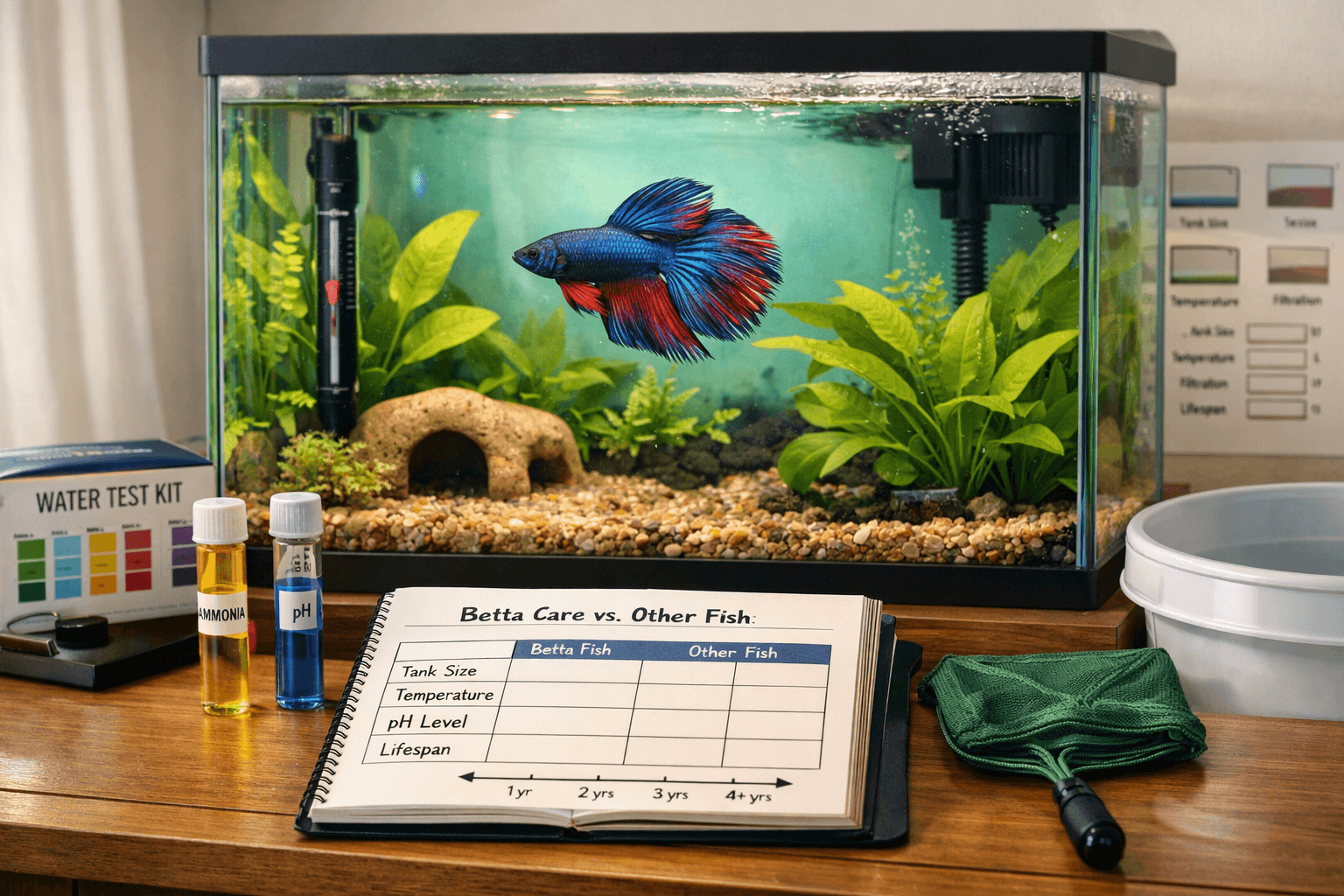
Bettas aren’t the short-lived outlier they get made out to be. They fall right in line with guppies and tetras once you give them a real tank instead of a display cup. For anyone setting up their first proper aquarium, walking through a full setup guide (petterrarium.com has a step-by-step one for beginners) makes the heater-and-filter side of this a lot less intimidating.
Frequently Asked Questions
Can a betta live in a bowl without a heater or filter?
It can survive short-term, but it won’t thrive and will likely die well before 2 years old. Cold, dirty water stresses the immune system and shortens lifespan dramatically compared to a heated, filtered 10-gallon setup.
Do female bettas live shorter lives than males?
No, females and males have similar lifespans of roughly 2 to 5 years. Females can sometimes be housed in small groups called sororities, but that setup needs a bigger tank, generally 20 gallons or more, to reduce aggression.
What’s the single fastest way to extend a betta’s life right now?
Check your water temperature today. If it’s below 76°F, add a heater this week; that one fix addresses the most common cause of early betta deaths.