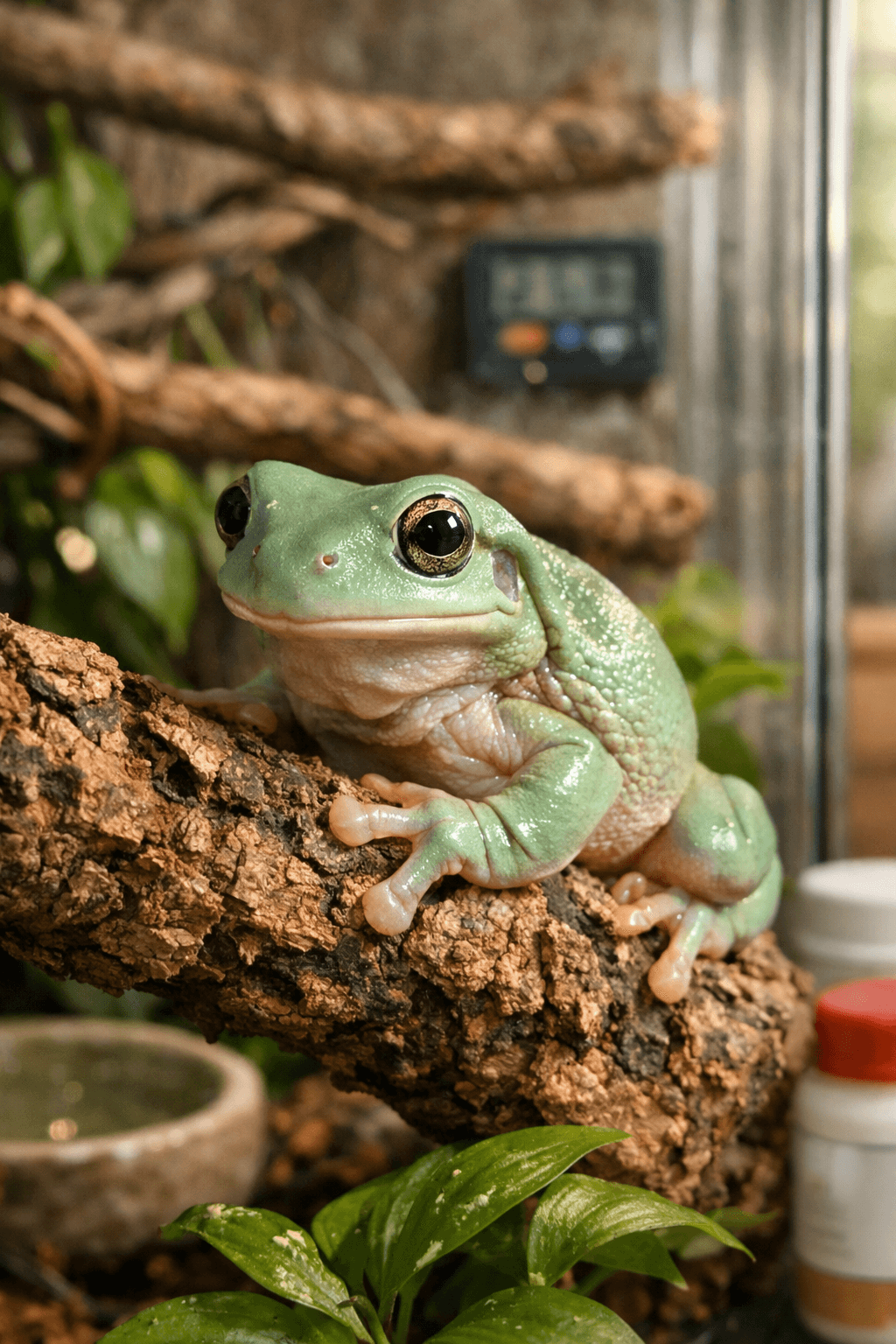
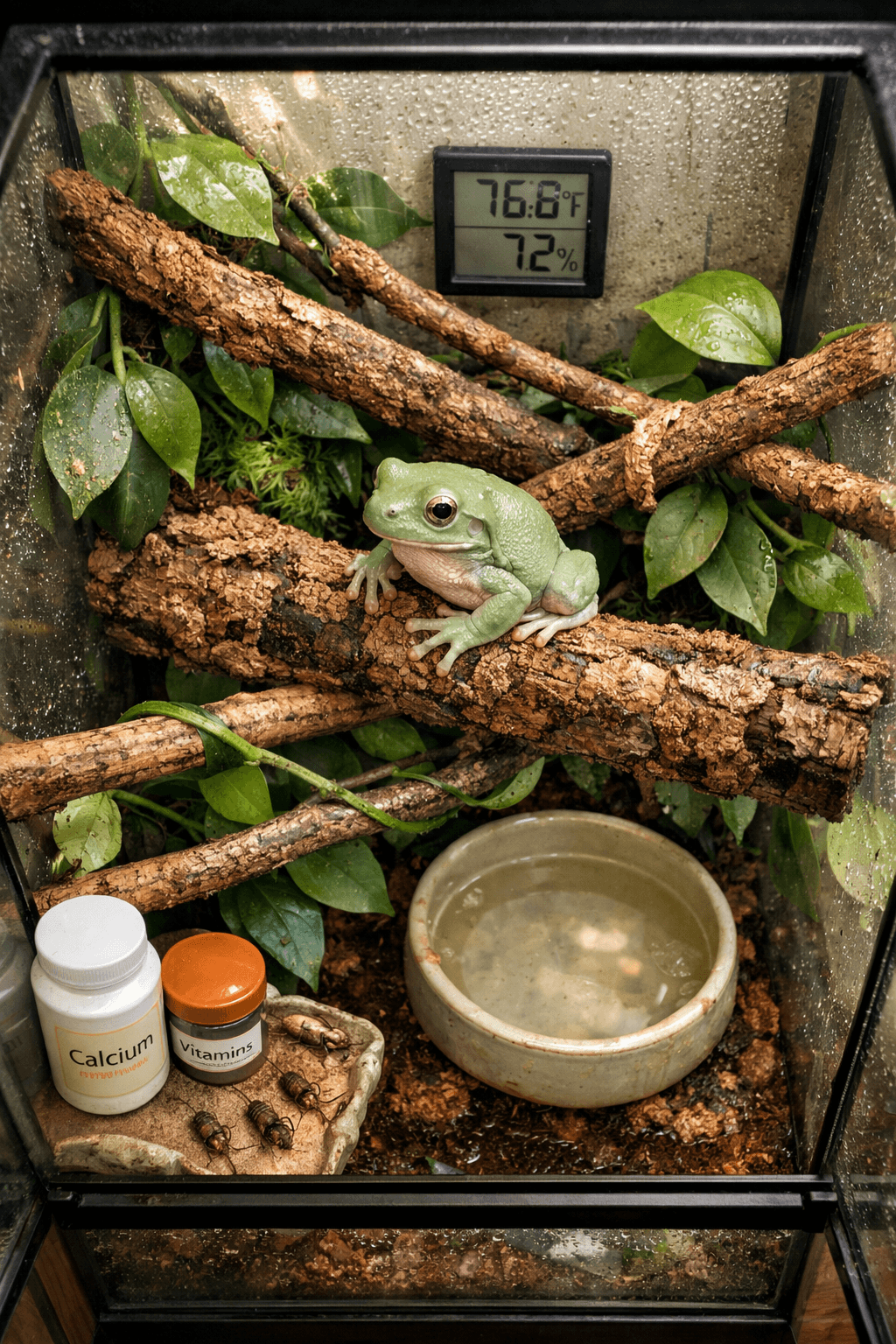
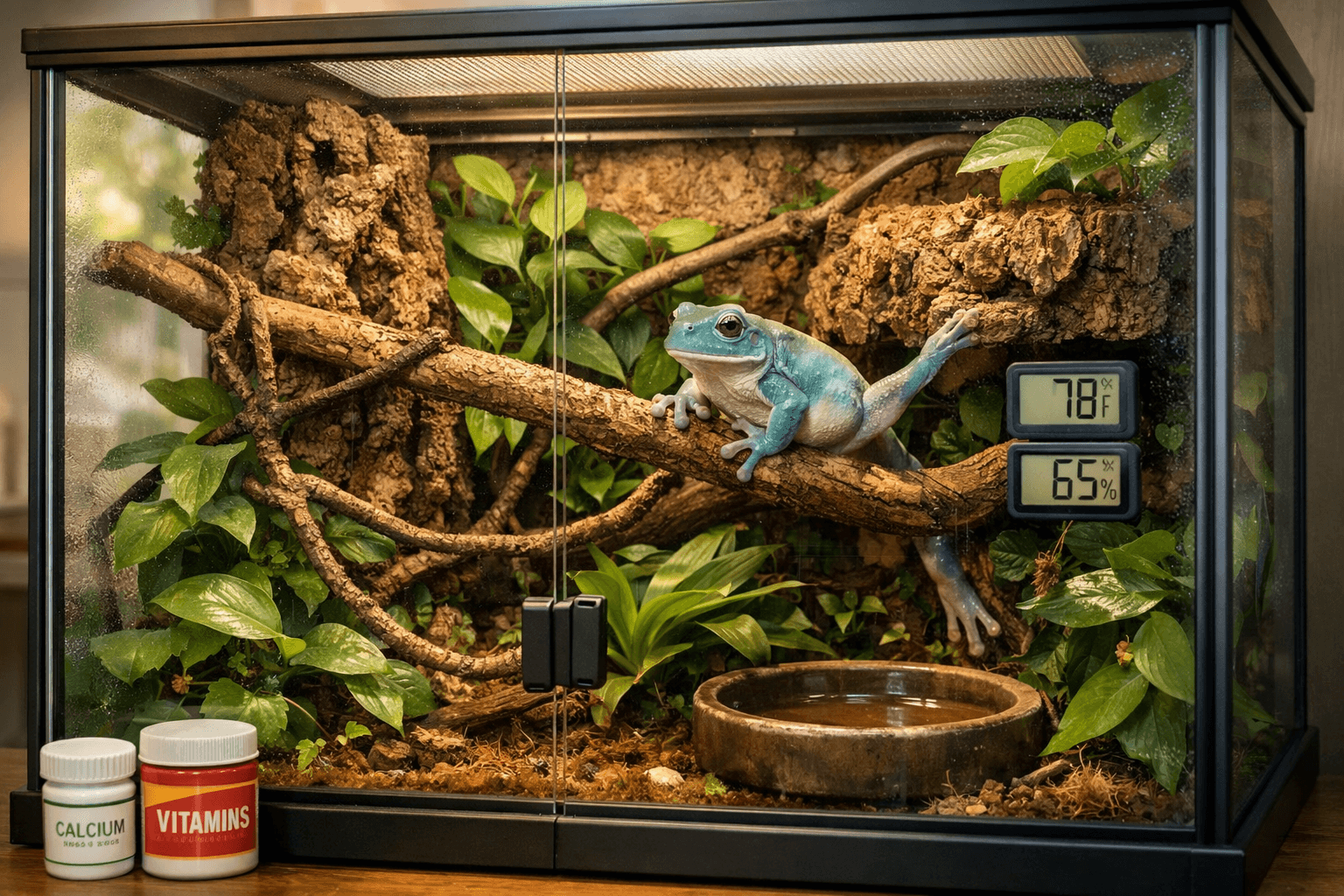
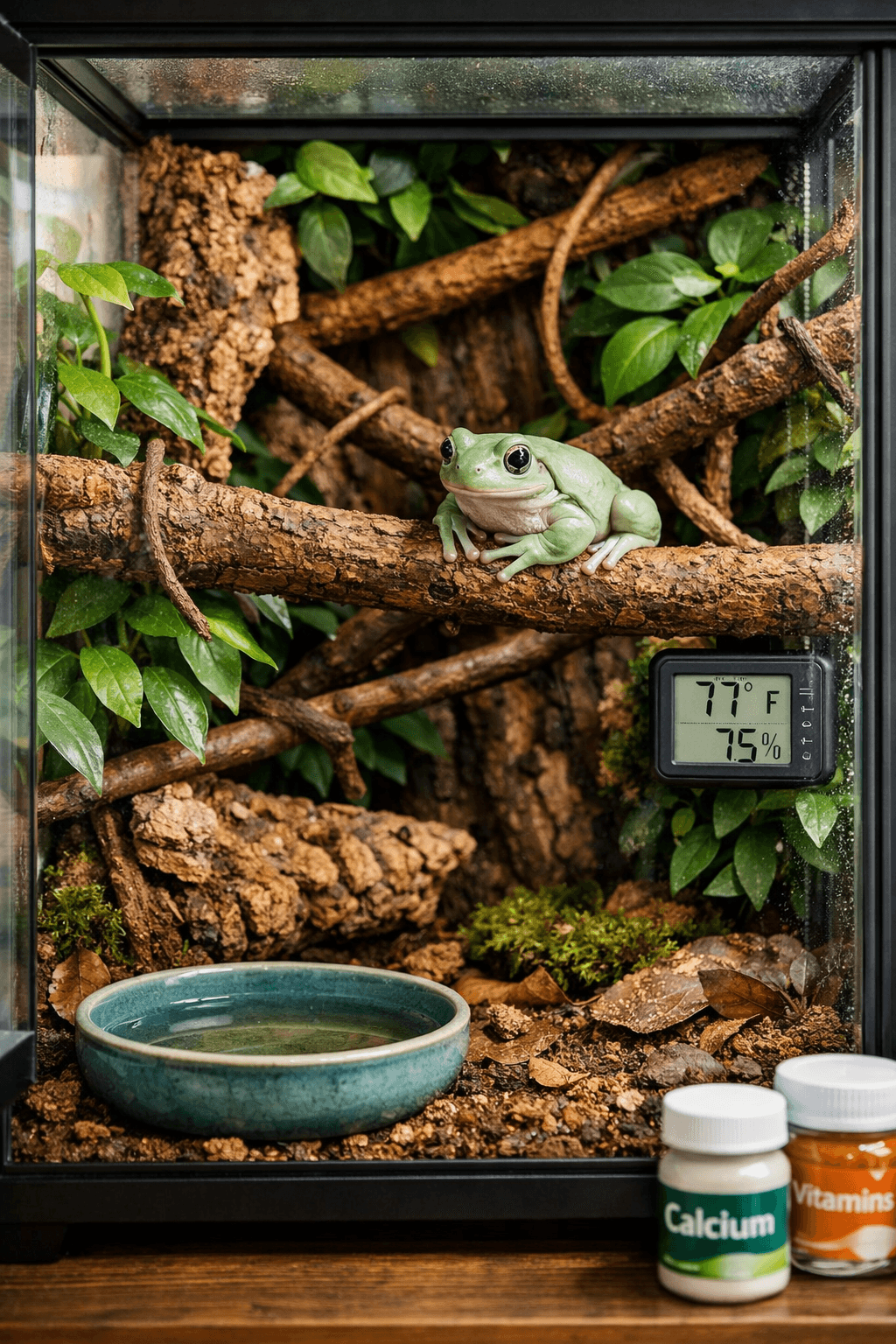
A fat, sleepy frog in a small glass box is not a happy White’s tree frog, it’s a bored one. Litoria caerulea is famous for being an easygoing pet, but that easy reputation is exactly why so many end up overweight and understimulated. The real design job here isn’t chasing perfect humidity, it’s building a terrarium roomy enough that your frog actually has a reason to move around.
Tank Size and Shape: Go Vertical, Not Wide
White’s tree frogs are arboreal, meaning they live up in branches and leaves, not down on the ground. A tall, vertical enclosure suits them far better than the wide, flat tanks a lot of beginners grab off the shelf.
For one adult frog, aim for a minimum of 18x18x24 inches, and bigger is always better if your budget allows. A 20-gallon “tall” style tank works fine for a single frog, but I’d push toward a 36x18x24 inch enclosure if you’re housing two or want real climbing room. The vertical space is what gets an overfed frog moving again — more height means more branches, more climbing routes, and more reasons to explore instead of just sitting on the same leaf all day.
Glass front-opening terrariums or PVC enclosures both work well. PVC holds heat and humidity a bit more evenly, while glass lets you see your frog easily and tends to cost less. Either way, don’t downsize just because your frog looks lazy — a bigger space is part of the fix, not a luxury.
Climbing Structure and Enrichment: The Missing Piece Most Owners Skip
The obesity problem in captive White’s tree frogs almost never comes down to diet alone. It’s a lack of things to climb, explore, and interact with, paired with feeding schedules that assume the frog needs food every single day.
Branches, Vines, and Layout
Fill the enclosure with sturdy branches (grapevine or manzanita both hold up well), plastic or silk vines, and a few horizontal perches at different heights. Cork bark rounds propped diagonally give your frog multiple paths to climb instead of one straight shot to the top. Rearranging the layout every couple of months keeps a smart, curious frog actually curious.
Feeding Schedule That Fights Obesity
Juveniles (under 4 inches): feed appropriately-sized crickets or roaches every day, small portions.
Adults: feed 2-3 times per week, not daily — this is the single biggest fix for obesity.
Offer 3-5 prey items per feeding for an average adult, adjusted to body condition.
Dust prey with a calcium supplement most feedings, and a vitamin D3/multivitamin powder once or twice a week.
Skip a feeding entirely if your frog’s sides look rounded or its “waistline” has disappeared.
A frog that has to climb down, cross a branch, and hunt for its roaches burns more energy than one that just opens its mouth under a food dish. That’s the whole game.
Humidity, Heat, and Light: They’re More Forgiving Than You Think
White’s tree frogs don’t need rainforest-level humidity like a poison dart frog or a red-eyed tree frog does. They come from semi-arid parts of Australia and Indonesia, and they tolerate drier conditions surprisingly well — running your tank too wet, too often, is a bigger risk than running it slightly dry.
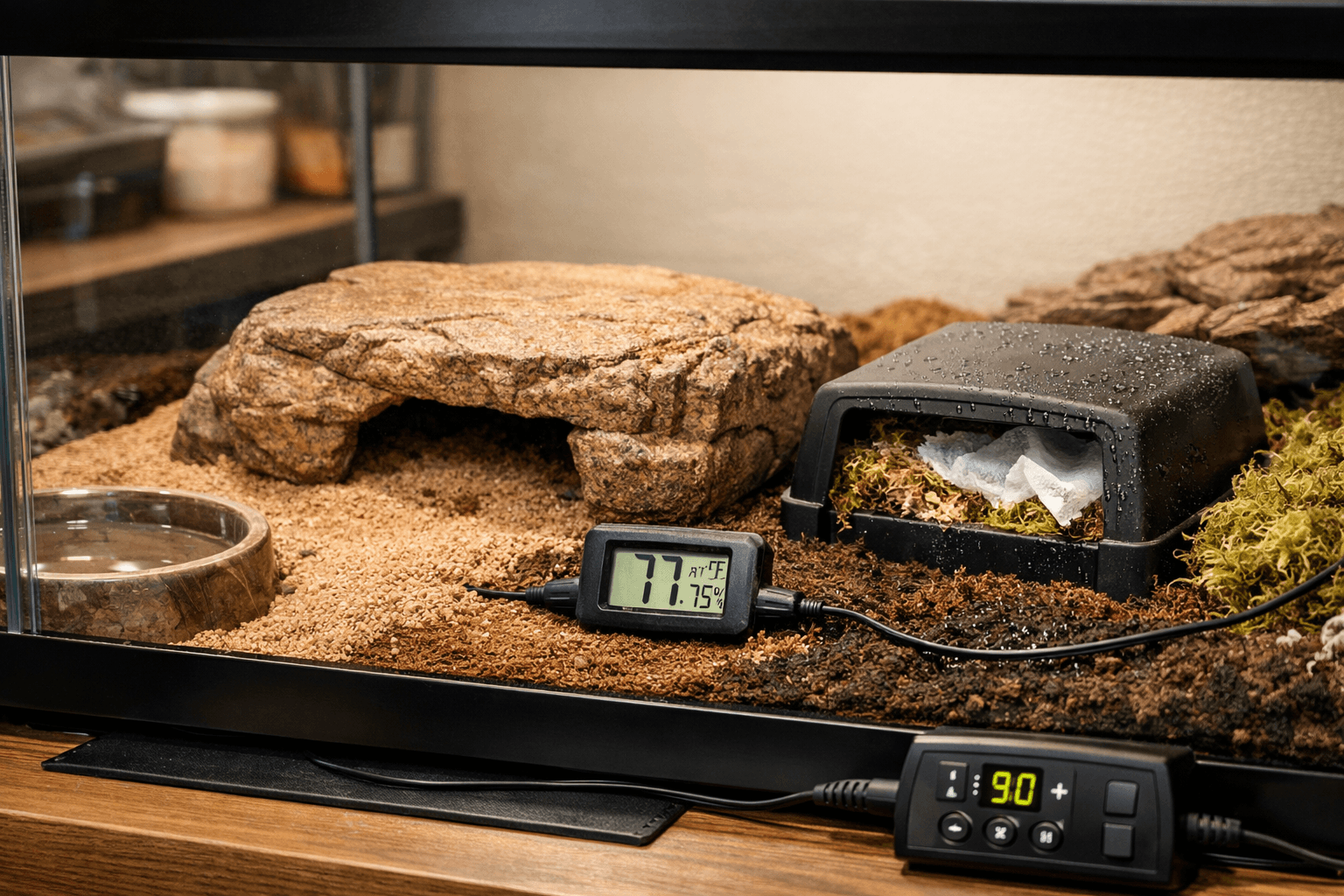
Keep humidity around 40-60%, misting once or twice daily with a hand sprayer or an automatic mister to bring it up briefly rather than keeping it constantly soaked. Daytime temperatures should sit between 75-85°F, with a basking spot near 85-90°F provided by a low-wattage basking bulb on one side of the enclosure. Night temps can drop into the low 70s without any issue.
Here’s where a lot of care sheets get it wrong: skipping UVB because the frog is nocturnal. UVB lighting still matters for long-term bone health and calcium metabolism, even in a frog that mostly sleeps through the day. A low-output UVB tube (around 5-6% UVB) running 10-12 hours a day, positioned so the frog can get within 12 inches of it when it chooses to bask, supports proper development over the years — not just the first few months.
Enclosure Element
Recommended Range
Notes
Tank size (1 adult)
18x18x24 in minimum
Bigger encourages movement
Humidity
40-60%
Drier than rainforest frog species
Daytime temperature
75-85°F
Basking spot 85-90°F
Nighttime temperature
Low 70s°F
Drop is fine, don’t force it
UVB output
5-6% UVB tube
10-12 hours/day
Feeding (adult)
2-3x per week
Daily feeding drives obesity
Substrate, Plants, and Water Setup
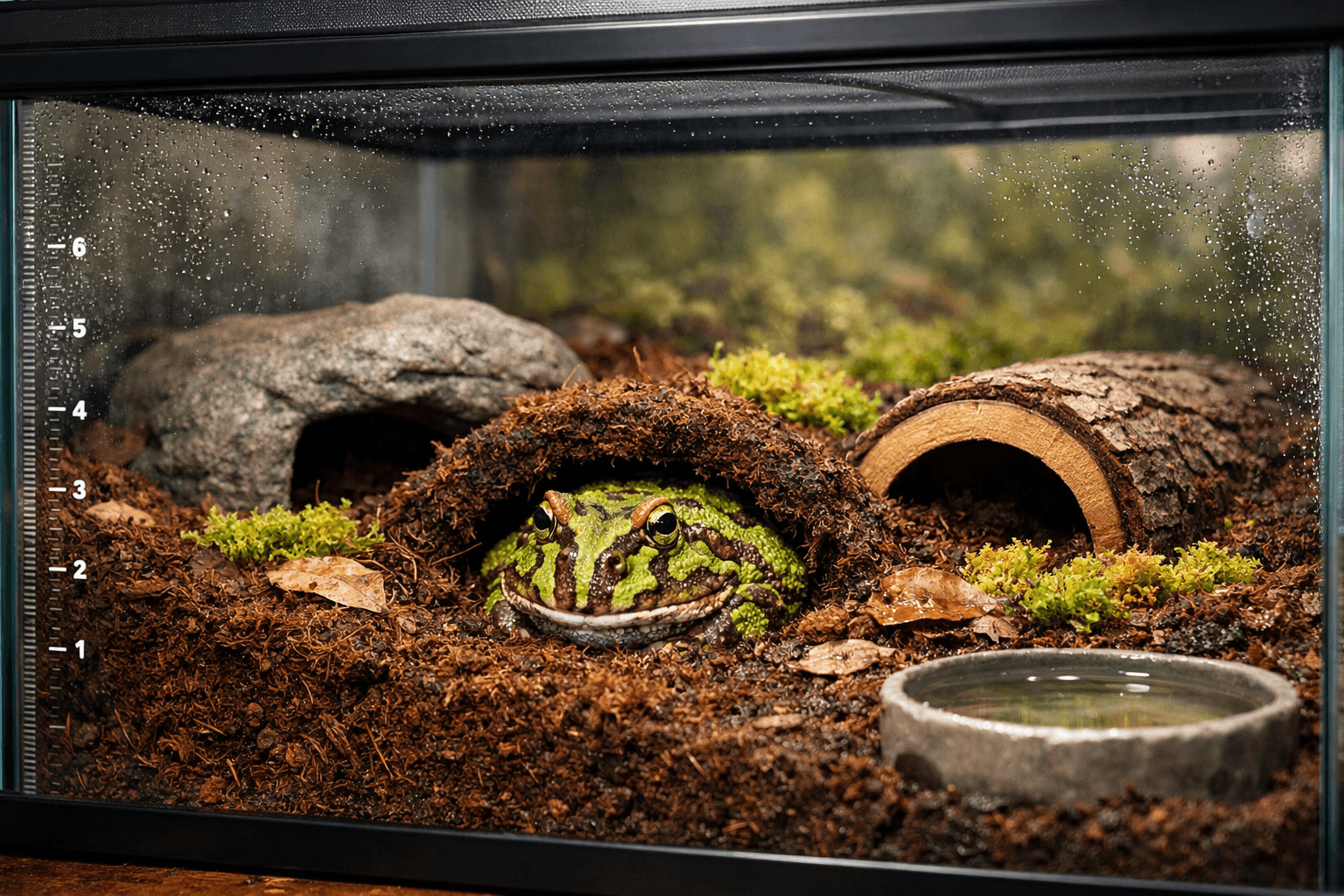
Substrate choice affects both humidity retention and cleanliness, and it’s one of the easier decisions in this whole setup. A mix of coconut fiber and organic topsoil, or a bioactive blend with leaf litter, holds moisture without staying soggy. Avoid pure sand or gravel, which can trap bacteria and won’t hold humidity evenly.
Live plants like pothos, philodendron, and bromeliads do double duty: they raise humidity slightly through transpiration and give your frog more surfaces to climb and hide in. Artificial plants are a fine substitute if you don’t want to deal with plant care, but they don’t help humidity at all and offer less enrichment value since frogs can’t tear leaves or dig around real root systems.
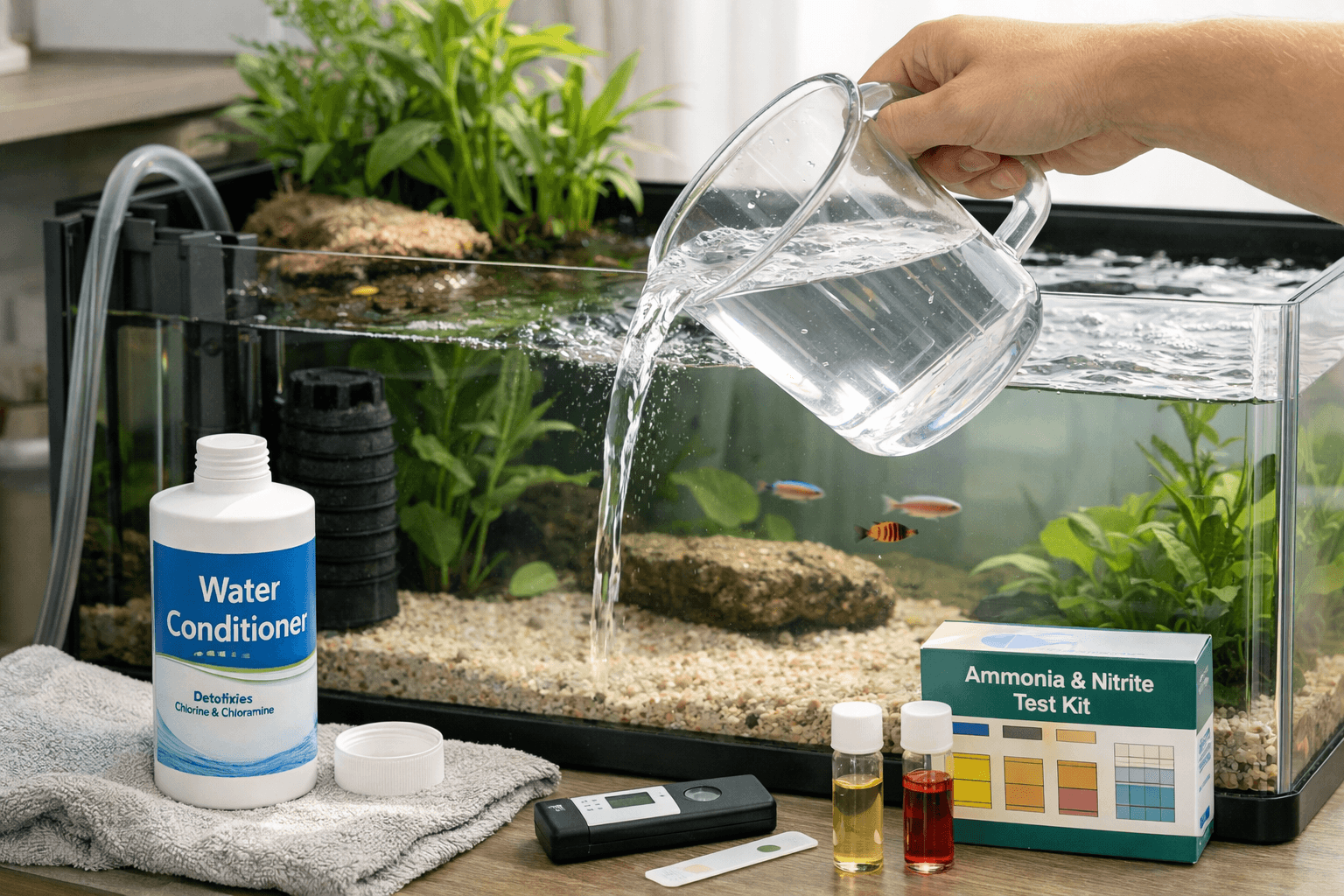
A shallow water dish, wide enough for the frog to soak but shallow enough it can’t drown, needs dechlorinated water changed every 1-2 days. Chlorine and chloramine in tap water can irritate a frog’s skin, so a reptile-safe water conditioner is a small cost worth paying every time you refill it.
Ventilation matters just as much as humidity control. A screen top or mesh side panels let stale, overly damp air escape, which cuts down on mold and skin infections. If you’re still mapping out your whole build, petterrarium.com keeps a library of species-specific habitat guides that’s worth a look before you buy glass or wood.
Frequently Asked Questions
How big of a tank does one White’s tree frog actually need?
An 18x18x24 inch vertical enclosure is the minimum for one adult, but 20-gallon tall tanks or larger work better long term. More height, not floor space, is what matters most for this arboreal species.
Do White’s tree frogs really need UVB if they’re nocturnal?
Yes. A low-output 5-6% UVB tube run 10-12 hours daily supports calcium metabolism and bone health over years, even though the frog is mostly active at dusk and night.
Why does my White’s tree frog look overweight?
Overfeeding combined with a low-enrichment tank is almost always the cause. Cut adult feeding to 2-3 times weekly and add more climbing branches to encourage natural movement.