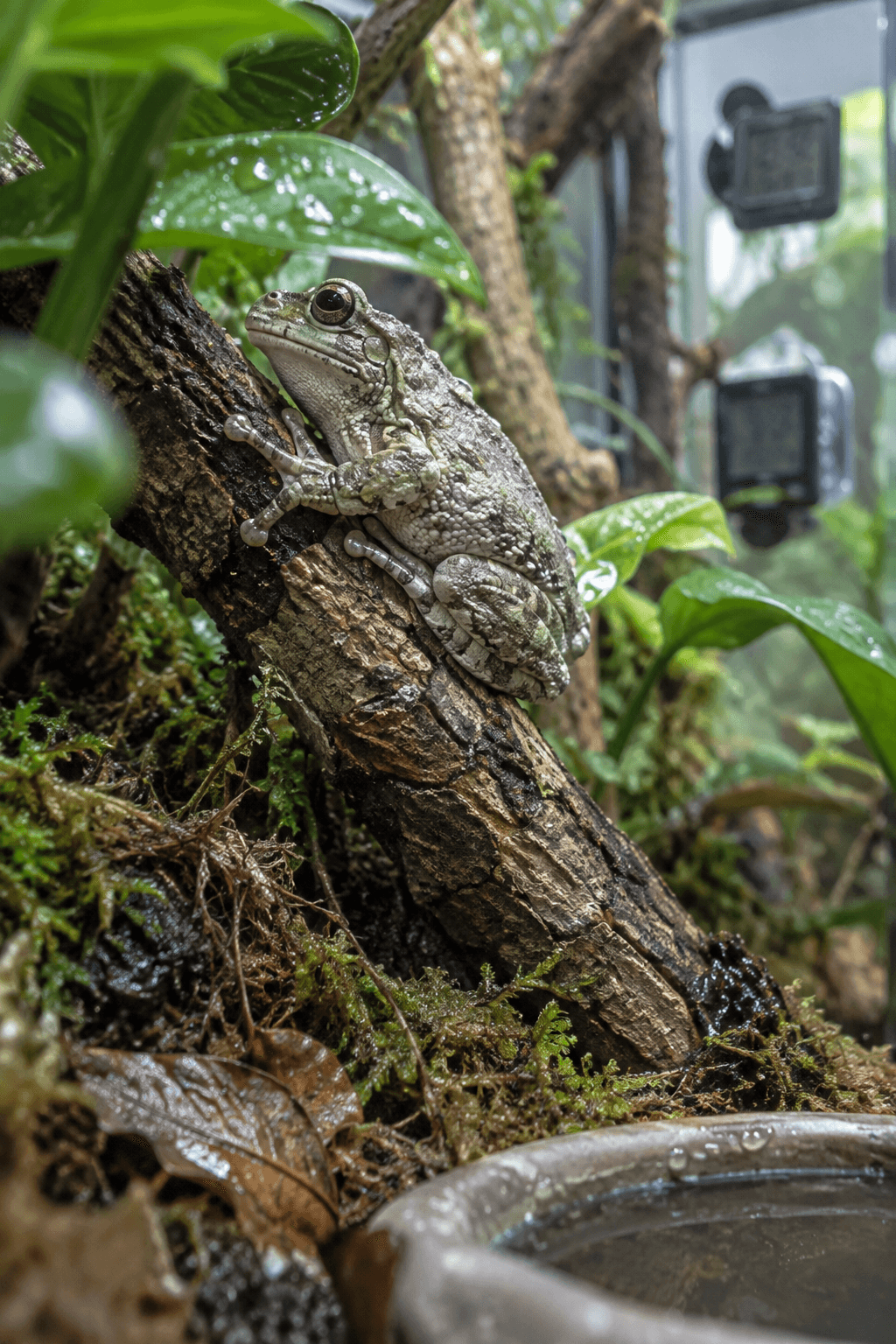
A pacman frog does not want a big yard to run around in. It wants a deep, damp burrow to sit in and wait for dinner to walk by. That single fact changes almost everything about how you should build its enclosure, and it’s the piece most generic frog-care guides skip entirely.
Get the substrate depth, humidity, and hide setup right, and this frog will thrive in a tank far smaller than most beginners assume they need. Get it wrong — dry, shallow, over-decorated — and you’ll see a stressed, dehydrated frog that never acts like itself.
Tank Size: Why a 10-Gallon Beats a 40-Gallon for One Adult
A single adult pacman frog does fine in a 10 to 20-gallon tank, and bigger is not automatically better for this species. These frogs are sit-and-wait ambush predators; they can go weeks barely moving more than a few inches. A juvenile can start in a 5 to 10-gallon setup and graduate up as it grows, usually reaching full size around 12 to 18 months.
Oversized tanks actually create problems. A frog roaming a 40-gallon floor plan with no cover feels exposed, and exposed frogs stress out, refuse food, or dig frantically trying to find safety. If you already own a larger tank, that’s fine, just fill more of it with deep substrate and hides rather than open floor space.
Length matters less than depth here. A 20-gallon “long” tank gives you more surface area but less soil to burrow into, so a standard 20-gallon “high” or a similarly proportioned tub often works better for burrowing behavior.
Juvenile vs. Adult Sizing
Juveniles under 2 inches can live comfortably in a 5-gallon critter keeper style enclosure while they grow, and moving them too early to a big tank can make feeding harder to monitor. Adults, which can reach 4 to 6 inches, need the 10 to 20-gallon range described above but rarely need more than that.
Substrate Depth Is the Whole Game
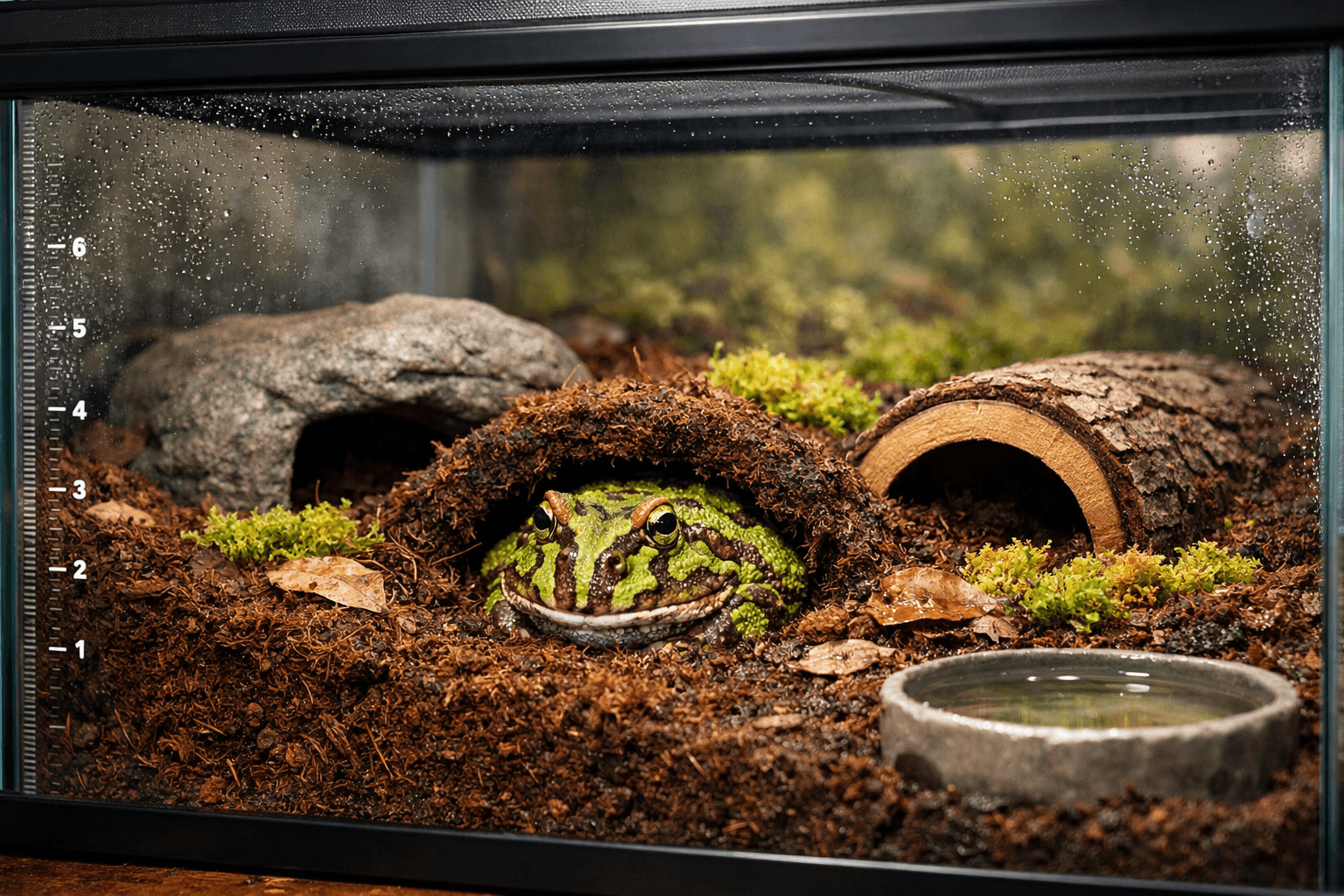
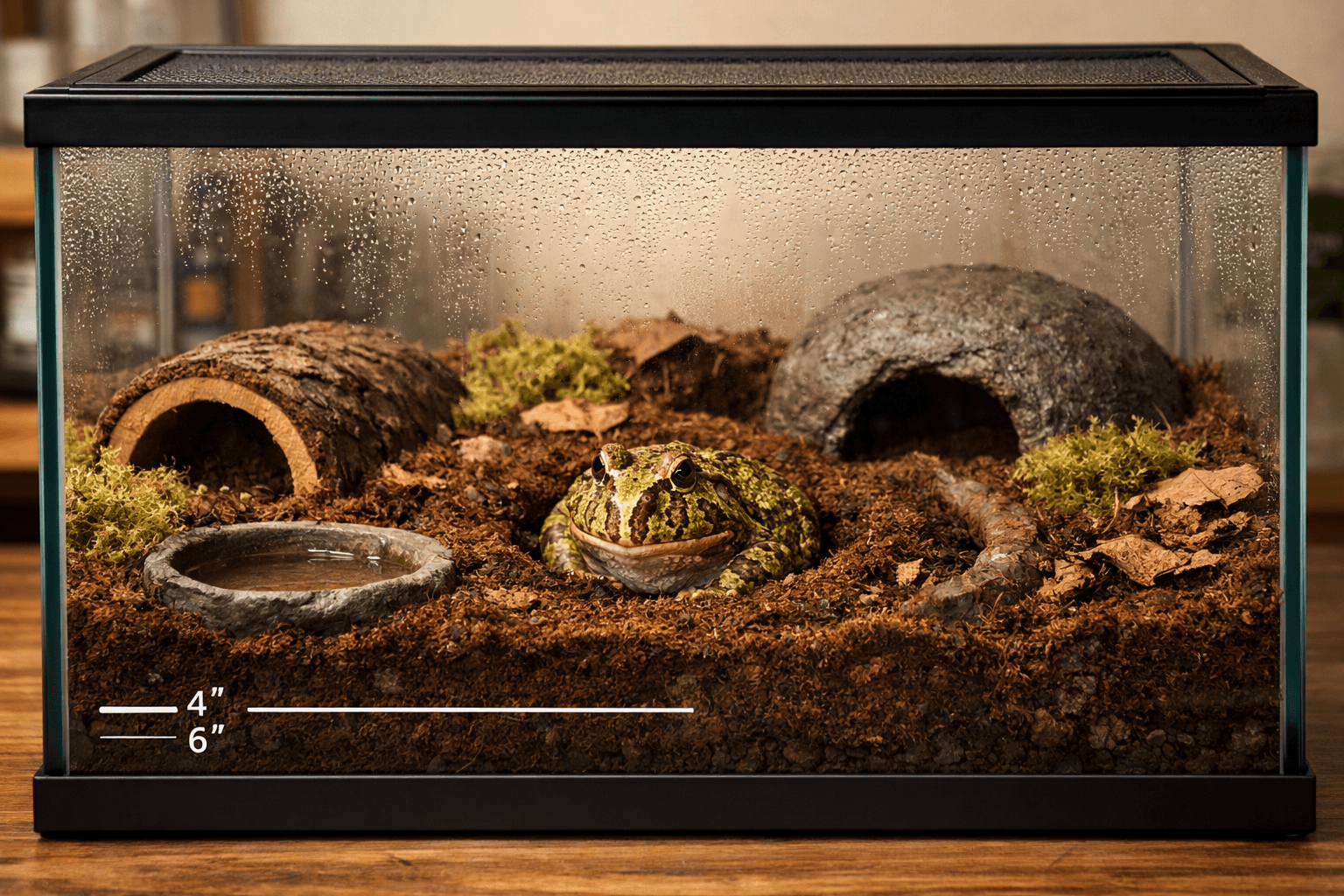
The substrate is not decoration, it’s the feature your pacman frog interacts with the most. You want a 4 to 6-inch layer of moisture-holding material the frog can dig into and disappear inside, which is deeper than most beginner setups start with.
Coconut coir (coco fiber) is the standard choice, and it’s cheap, widely sold in compressed bricks for around $5 to $8, and holds humidity well once rehydrated. Many keepers mix it with sphagnum moss or an ABG-style mix (a blend of coco fiber, orchid bark, and peat originally developed for poison dart frog vivariums) for better texture and drainage.
Dry or shallow substrate is one of the most common mistakes new owners make. If the frog can’t burrow, it can’t perform its most natural behavior, and you’ll often see it pacing the glass or sitting in its water dish trying to cool off and rehydrate instead.
Building the Substrate Layer
Layer it like this for a tank that actually holds moisture:
Add a drainage layer of hydroballs or coarse gravel, about 1 inch deep.
Place a mesh or screen barrier over the drainage layer so substrate doesn’t fall through.
Add 4 to 6 inches of moistened coco fiber or ABG mix on top.
Press a shallow depression into the surface so the frog can settle in easily.
Mist the top layer daily to keep it damp, not soggy.
Picking Between Coco Fiber and ABG Mix
Coco fiber alone is easier for beginners and cheaper to replace. ABG mix drains better long-term and supports live plants, but it costs more and takes more effort to build. Either works, so pick based on whether you want a planted, semi-bioactive setup or a simple, easy-clean one.
Humidity and Temperature: The Numbers That Actually Matter
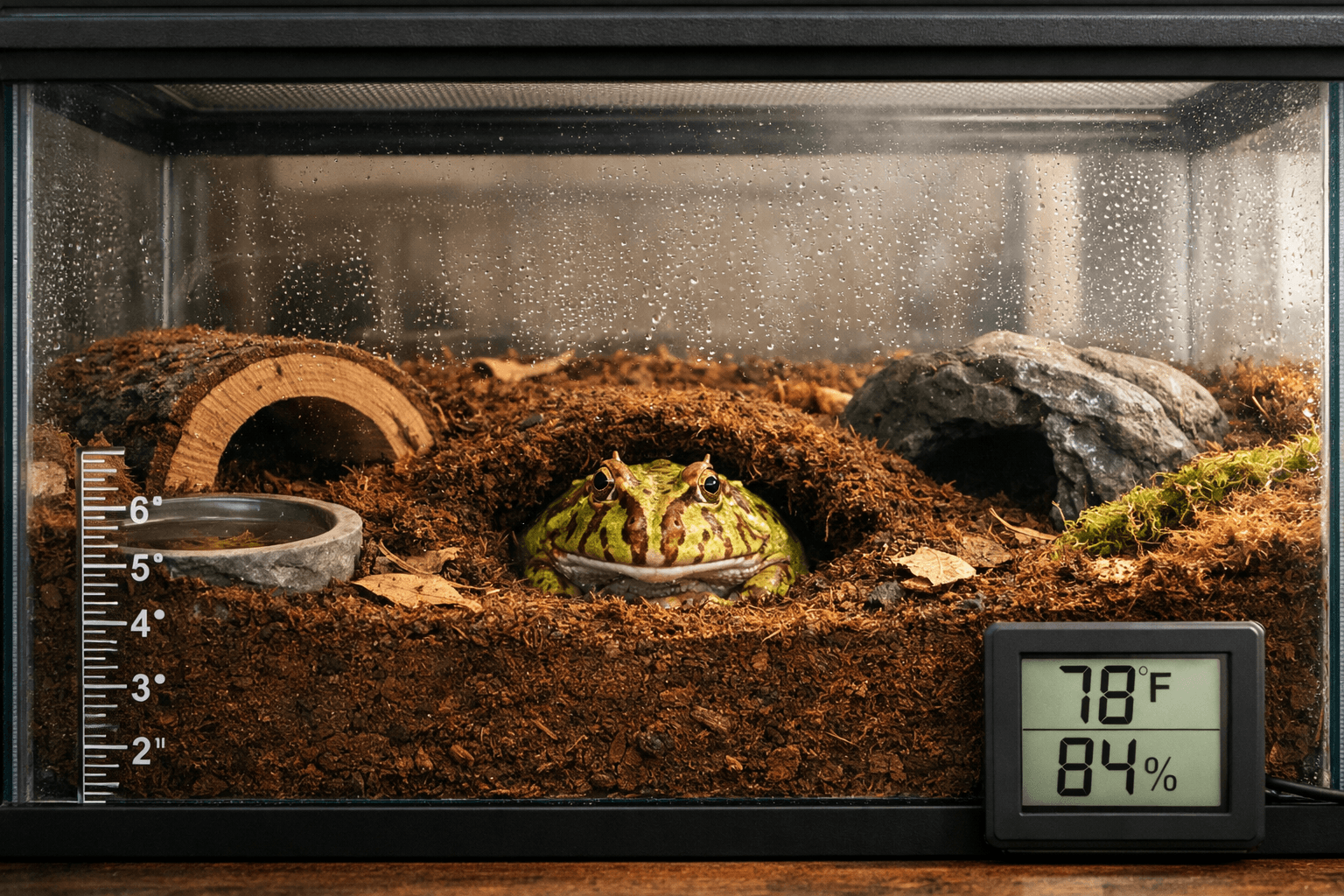
Pacman frogs need humidity between 60 and 80 percent and a warm side around 80°F with a cooler side near 72 to 75°F. A digital hygrometer and thermometer combo (the kind that costs under $15 at most pet stores) is worth buying on day one, not later.
Skipping humidity monitoring is one of the fastest ways to end up with a dehydrated frog with dry, flaky skin. These frogs absorb water partly through their skin and their “belly patch,” so a dry substrate or low-humidity air dries them out from multiple directions at once.
A basic under-tank heat mat on one side of the enclosure, controlled by a thermostat, handles temperature without drying the air the way overhead heat lamps can. Daily misting, plus a full water bowl big enough for the frog to soak in, keeps humidity stable between mistings.
Factor
Target Range
How to Achieve It
Humidity
60-80%
Daily misting, damp substrate, partial lid cover
Warm side temp
80°F
Under-tank heat mat + thermostat
Cool side temp
72-75°F
Natural ambient room temp
Substrate moisture
Damp, not soaked
Mist daily, check with finger test
Lighting, Lid, and Décor: Less Is More Here
Pacman frogs don’t need UVB the way many lizards do, though a low-output UVB bulb (5.0 or lower) for a few hours a day doesn’t hurt and may support long-term health. Bright, intense lighting isn’t necessary and can stress an animal that spends most of its life buried and in shade.
A secure lid matters more than lighting. These frogs are strong for their size and surprisingly good at pushing against loose screen tops, so a locking lid or a tank with a properly weighted screen top prevents escapes. Ventilation is still needed, just balanced against humidity retention.
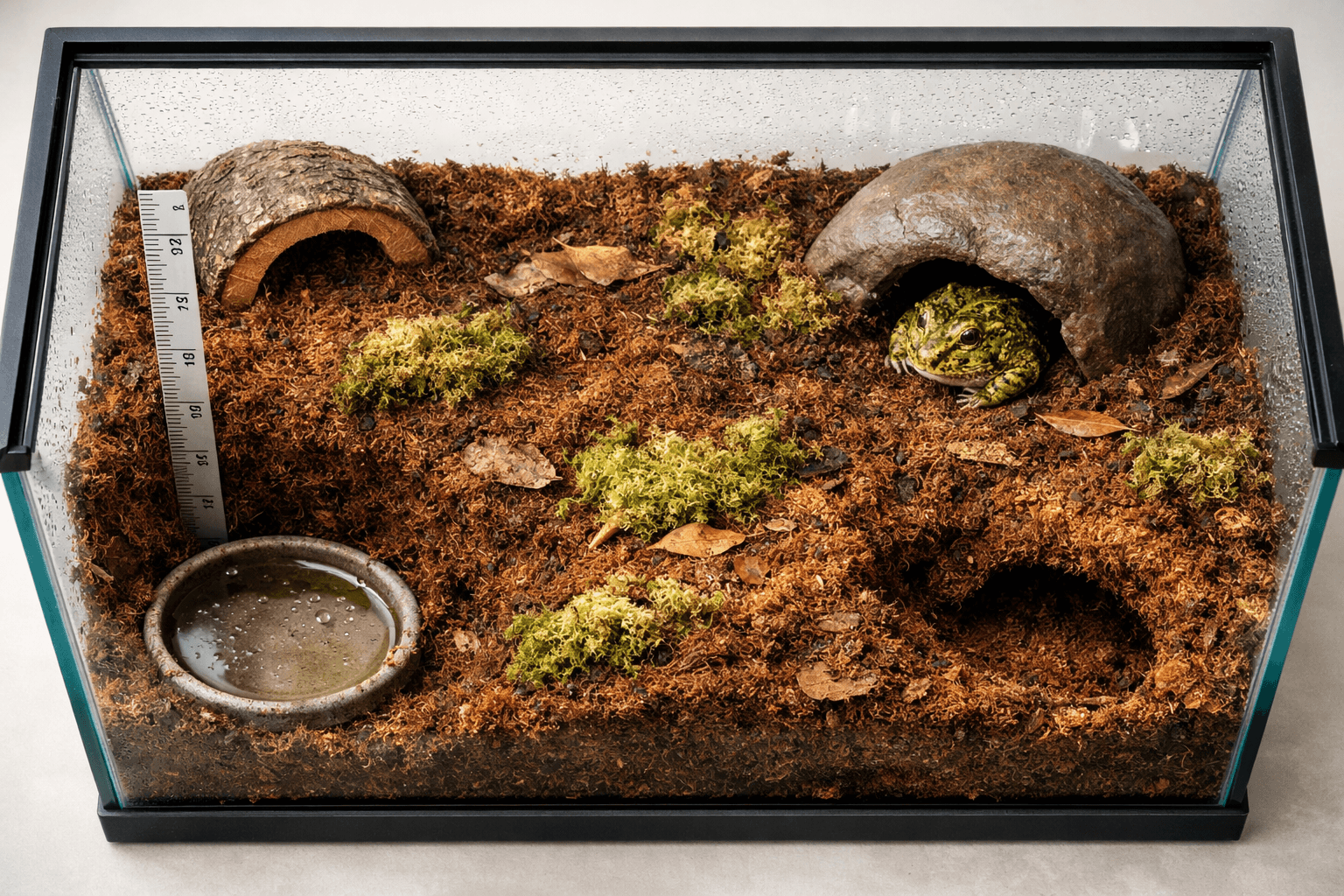
On décor: resist the urge to overdecorate. One or two low hides, a piece of curved bark, maybe a low, sturdy plastic or silk plant, is enough. This species doesn’t climb, so tall branches and dense foliage just take up space that should be soil. Overcrowding the tank with décor can also stress a frog that relies on open burrowing space to feel secure.
For more general planted-terrarium building techniques that apply well beyond frogs, petterrarium.com has broader setup guides worth cross-referencing when you’re ready to add live plants to a bioactive build.
Feeding, Handling, and Cleaning Without Causing Stress
Cleaning a pacman frog tank is light work: spot-clean waste every few days, do a partial substrate refresh every 4 to 6 weeks, and a full substrate swap every 2 to 3 months depending on odor and mold. Overhandling is a real risk with this species, since their skin is delicate and frequent handling can cause abrasions or stress-related illness.
These frogs should also always be housed alone. Housing multiple pacman frogs together risks cannibalism, especially since they strike at anything that moves and can’t reliably tell a tankmate from prey. One frog, one enclosure, no exceptions.
Feeding is simple but worth doing right: crickets, roaches, or the occasional pinky mouse for adults, offered with tongs so you’re not reaching into the burrow and startling the frog. Limit handling to tank maintenance and health checks, not casual play, since minimal contact keeps stress low and skin healthy.
Frequently Asked Questions
How big does a pacman frog enclosure really need to be?
A 10 to 20-gallon tank is enough for one adult. Floor space matters less than substrate depth, since these frogs barely move and spend most of their time buried rather than exploring open ground.
Do pacman frogs need special UVB lighting?
Not strictly, though a low-level UVB bulb (5.0 or under) for a few hours daily can support bone and skin health. High-intensity lighting isn’t necessary and can add unwanted stress for an animal that prefers dim, shaded conditions.
Why does my pacman frog keep trying to bury itself constantly?
That’s normal behavior, not a problem, as long as the substrate is deep enough (4 to 6 inches) and damp. If it’s burrowing frantically or won’t settle, check humidity levels first, since dry substrate often triggers restless digging.