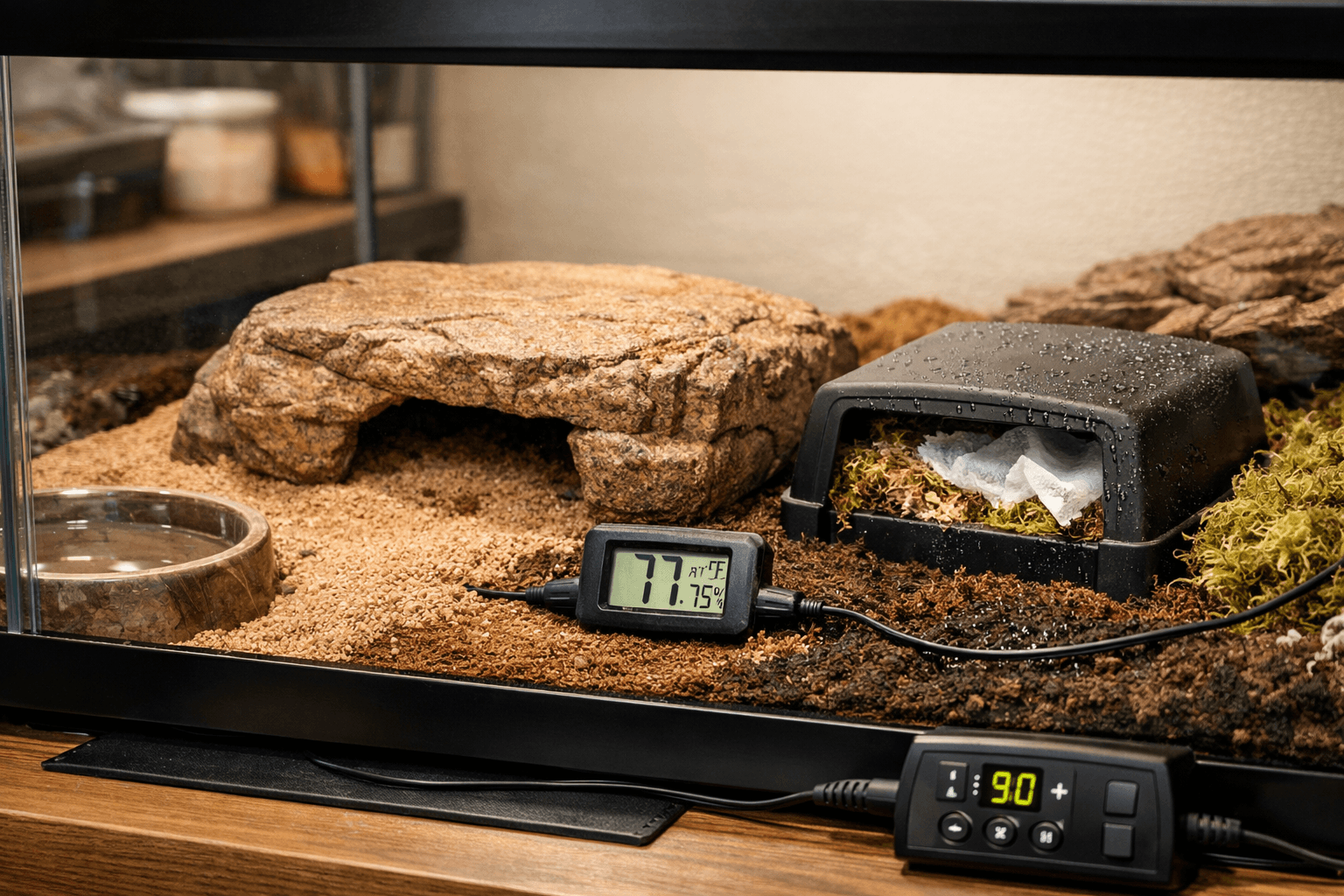
A reptile shop owner I heard about once got a call from a customer whose axolotl had stopped eating and developed white fuzzy patches on its gills. The owner had set the tank up exactly like his bearded dragon terrarium, complete with a heat lamp aimed at the water. That single mistake, warming the tank into the mid-70s, was slowly cooking his axolotl’s immune system. Axolotls as pets look simple on paper, but they’re a cold-water specialty animal, not a beginner fish-tank filler, and the habits that work for reptiles will actively hurt them.
That mix-up happens constantly, and it’s not the new owner’s fault. Most pet store advice treats axolotls like an easy aquatic starter pet. The truth is the real challenge isn’t tank size, it’s water chemistry and temperature control.
Tank Size and Setup: Bigger Than You Think
A single adult axolotl needs a minimum of 20 gallons, though I’d push new owners toward a 29-40 gallon long tank right from the start. Axolotls don’t swim much, but they’re messy eaters and produce a surprising amount of waste for their size, so extra water volume buys you a real safety cushion.
Shape Matters More Than Height
Go long and low rather than tall. Axolotls are bottom-dwellers that occasionally paddle to the surface for air, and a wide footprint gives them room to move without needing to climb glass. A 36-inch long tank beats a 20-inch tall one every time for this species.
Skip the Heat Lamp Entirely
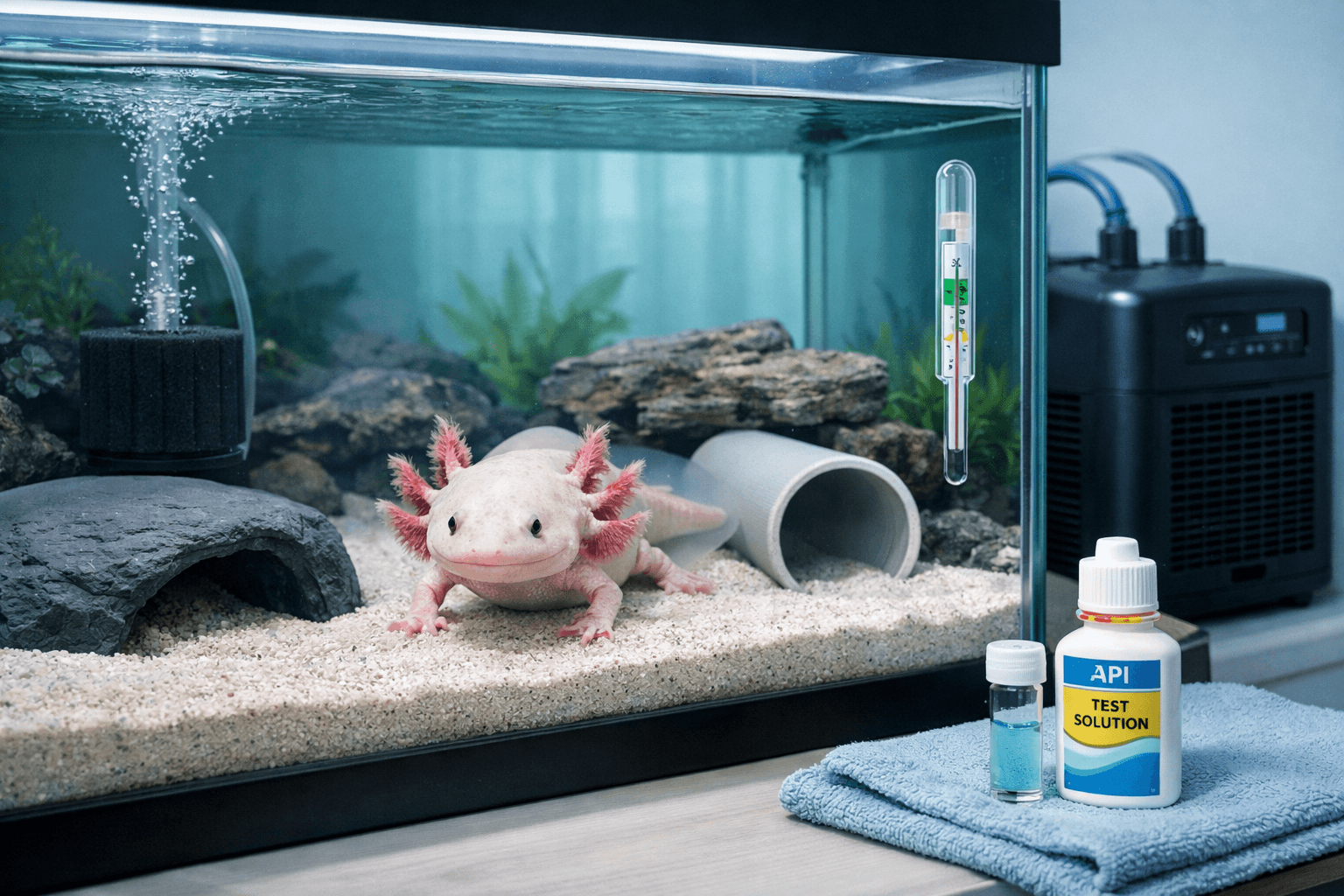
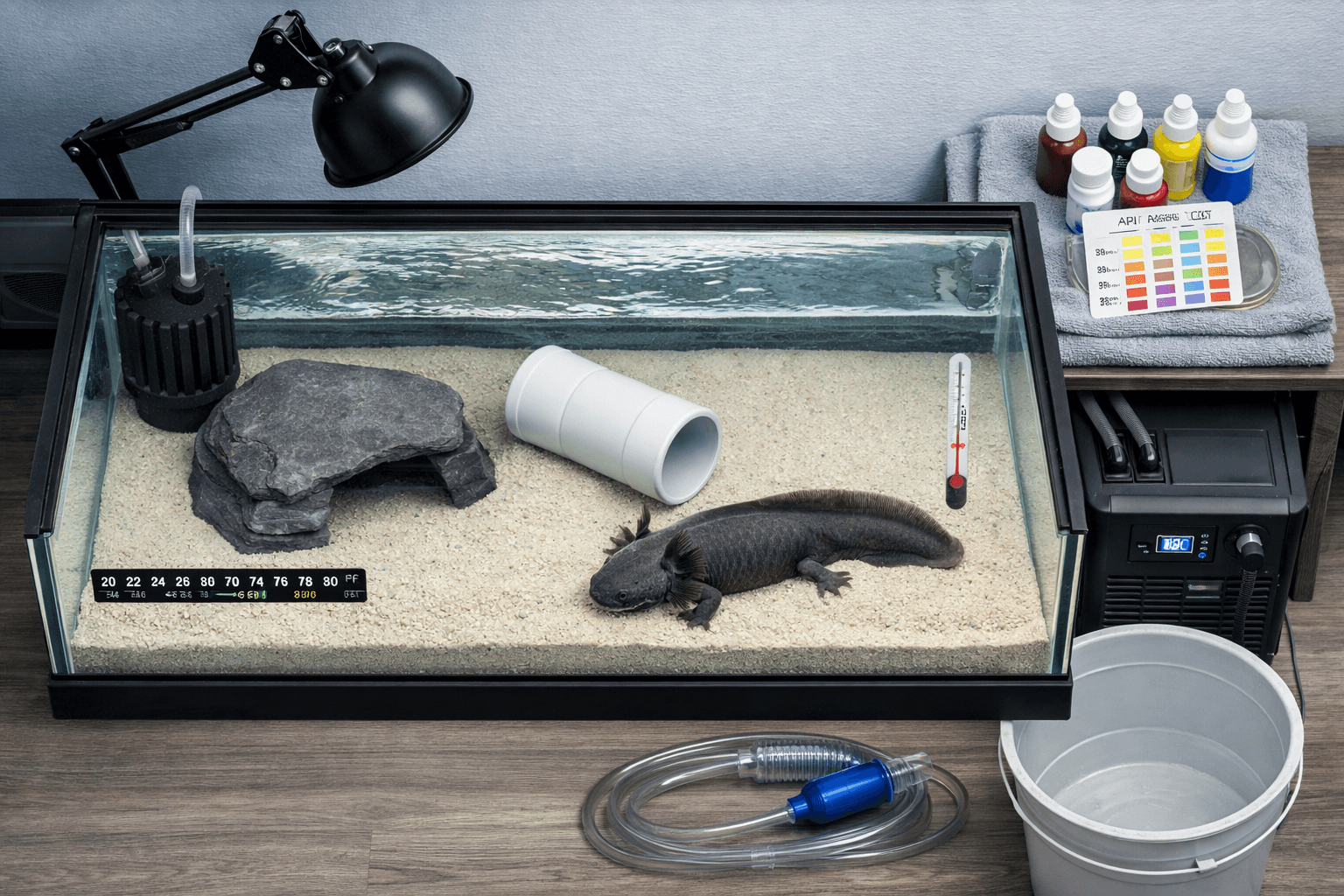
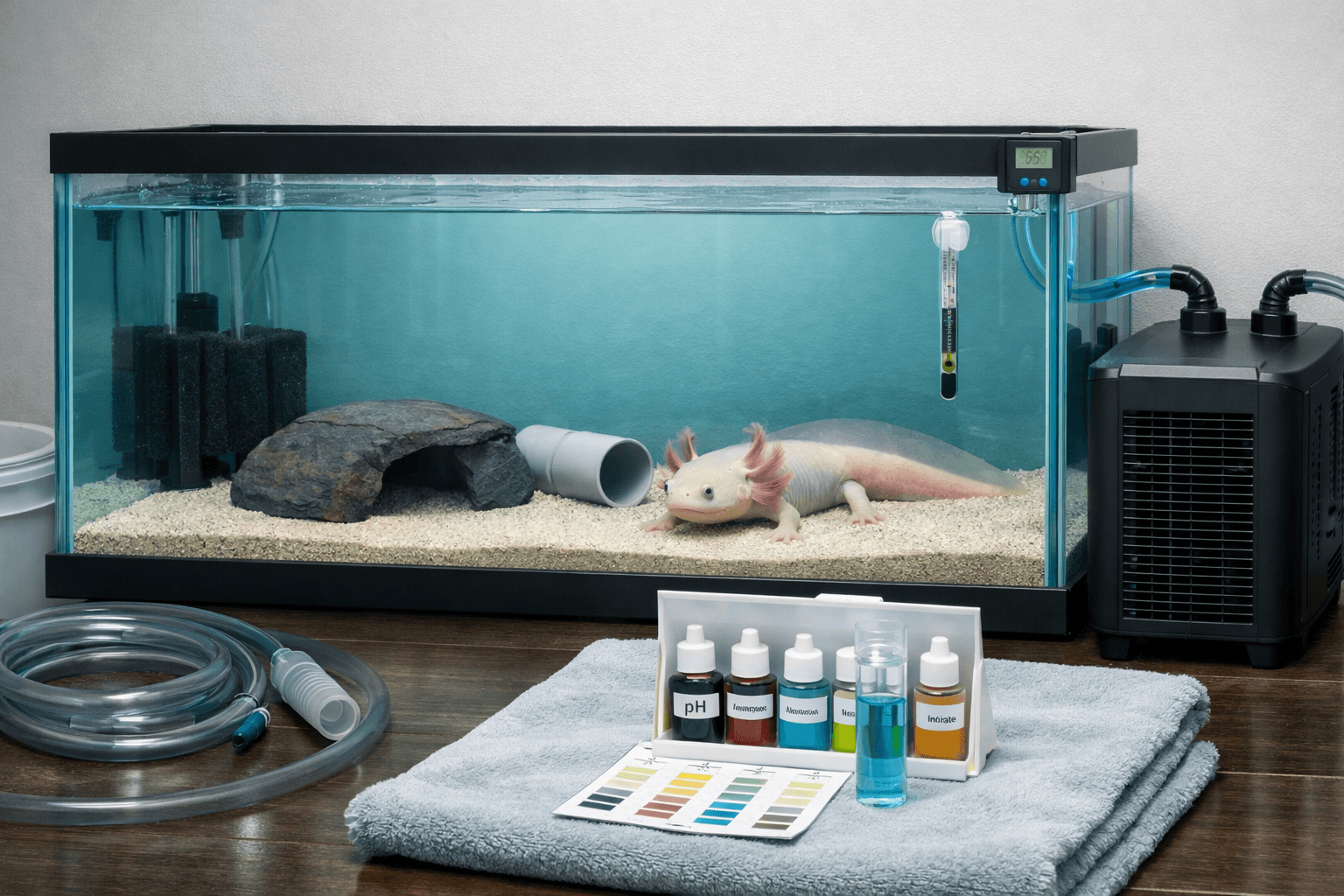
This is the single biggest correction reptile hobbyists need to make. Axolotls need cool water, generally 65-68°F, with anything above 74°F becoming dangerous within days. No basking spot, no heat lamp, no UVB bulb blasting warmth into the water. In warm climates, that means budgeting for an aquarium chiller, which typically runs $150-$300 depending on tank size, plus the electricity to run it. If your house stays under 72°F year-round you might skate by with fans and frozen water bottles, but don’t count on it through a summer heat wave.
Water Quality: The Part That Actually Determines Success
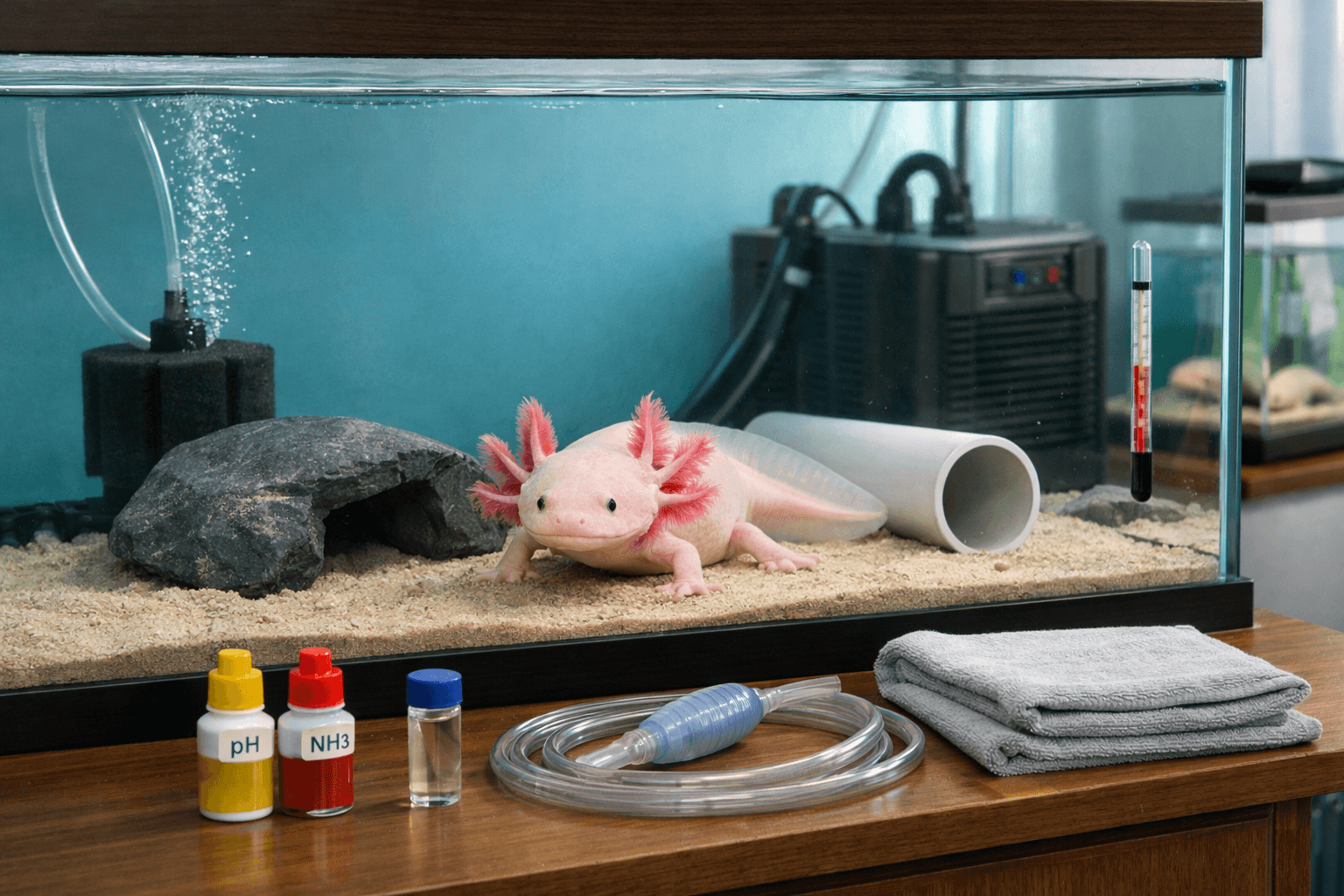
Water chemistry, not tank size, is what makes or breaks axolotl keeping. Ammonia and nitrite need to read zero at all times, and nitrates should stay under 40 ppm with regular water changes.
Cycling Before You Buy the Animal
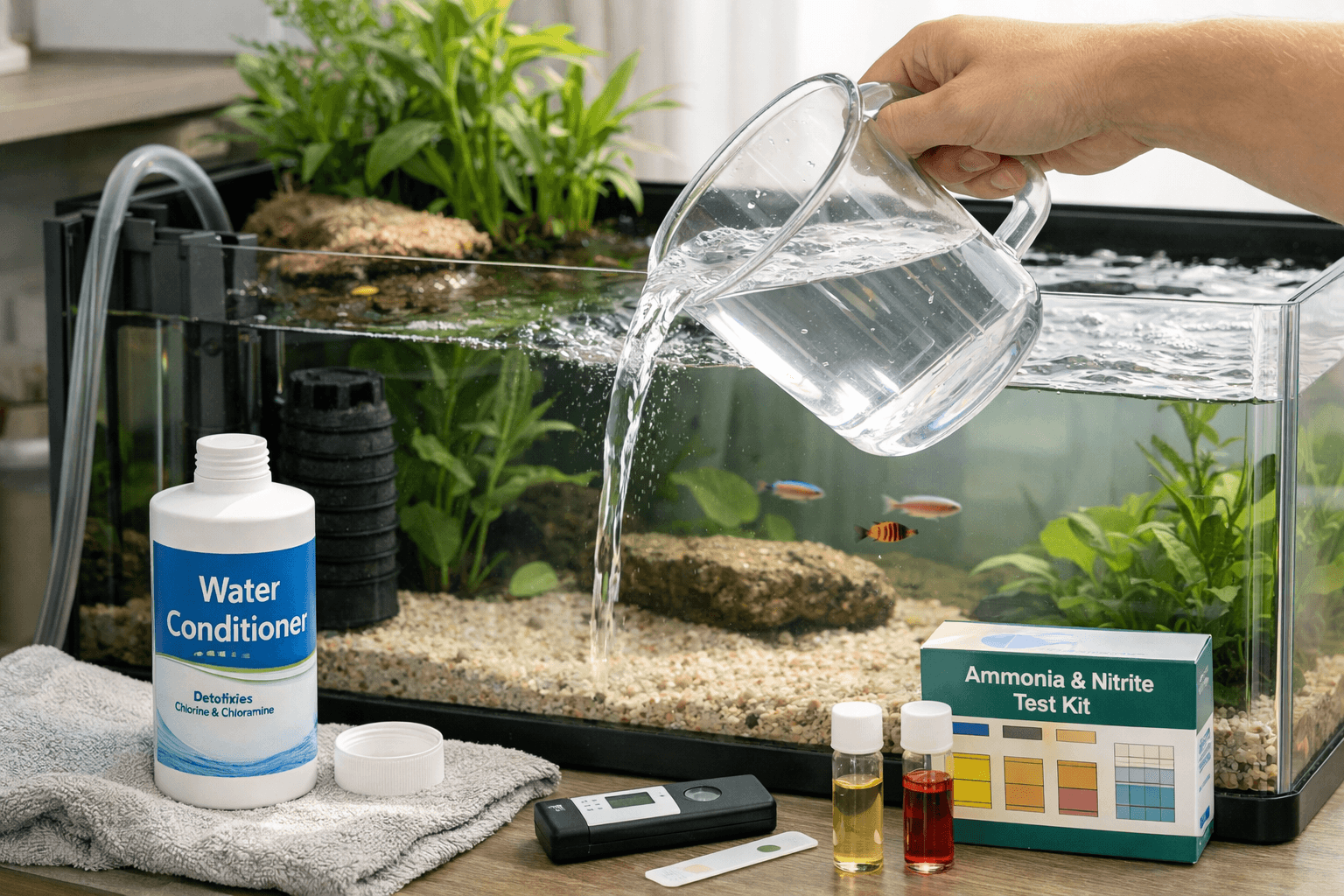
Run a fishless cycle for 4-6 weeks before your axolotl ever touches the water. Test with an API liquid test kit rather than strips, since strips are notoriously inaccurate at low concentrations where axolotls are most sensitive.
Filtration Without the Current
Axolotls hate strong water flow, it stresses their gills and can even flip them over. A sponge filter is the go-to choice because it filters gently while still handling bioload. Canister filters work too, but you’ll need to baffle the output with a spray bar or foam attachment to cut the current down.
Weekly water changes of 20-25% keep nitrates in check between full tests. If you want a deeper walkthrough on dialing in conditioners and chiller setups for cold-water species, petterrarium.com has a full water conditioning guide worth bookmarking before setup day.
Substrate: Why Gravel Is a Trip to the Vet Waiting to Happen
Skip gravel completely. Axolotls are suction feeders that inhale food off the bottom, and loose gravel gets sucked in right along with it, causing impaction that can require surgery or kill the animal outright.
Bare-bottom tanks are the safest option and the easiest to keep clean, though some owners don’t love the look. Fine sand, the kind sold specifically as pool filter sand or axolotl-safe sand, is the better aesthetic middle ground since grains under 1mm pass through the gut harmlessly if swallowed. Never use anything labeled aquarium gravel or pebbles, no matter how attractive the bag looks at the pet store.
Diet, Tankmates, and Growth: What Changes as They Age
Axolotls eat a carnivorous diet of earthworms, bloodworms, and sinking pellets, fed daily as juveniles and 2-3 times a week as adults. Overfeeding is common and leads to obesity, so resist the urge to feed every day once they’re grown.
Here’s a rough timeline for what to expect:
Hatchling (0-3 months): fed baby brine shrimp daily, extremely fragile, best kept solo
Juvenile (3-8 months): 4-6 inches, switch to chopped worms, still grows fast
Sub-adult (8-18 months): reaches sexual maturity, 8-10 inches, feeding drops to every other day
Adult (18+ months): 9-12 inches typical, fed 2-3 times weekly
Full lifespan: 10-15 years with stable cold water and clean tanks
Tankmates are where a lot of new owners go wrong, usually because they’re used to community reptile enclosures or mixed fish tanks. Axolotls should live alone or only with other axolotls of similar size. Fish nip at their feathery gills, compete for food, and can introduce parasites, so goldfish, guppies, and plecos are all off the table despite what a well-meaning store clerk might suggest.
Setup Element
Reptile Habit (Wrong)
Correct Axolotl Approach
Heating
Heat lamp / basking spot
Chiller or cool room, 65-68°F
Substrate
Gravel or sand mix
Bare-bottom or fine sand under 1mm
Filtration
Strong current filter
Sponge filter or baffled canister
Tankmates
Mixed community species
Axolotls only, or solo
Frequently Asked Questions
Do axolotls need a heater like other aquarium pets?
No, axolotls need the opposite: cool, stable water between 65-68°F. A heater will push temperatures into dangerous territory fast, so most keepers in warm climates need a chiller instead.
How often should I feed an adult axolotl?
Adults eat 2-3 times a week, with earthworms and sinking pellets as staples. Juveniles under 8 months need daily feedings since they’re growing much faster.
Can axolotls live with fish?
It’s not recommended. Fish nip at axolotl gills, compete for food, and can carry parasites, so the safest setup keeps axolotls alone or with other axolotls of similar size only.