A guy at a reptile expo in Ohio once told me he lost his first ball python because he kept the humidity at 30% for six months, thinking “dry is safer than wet.” The snake stopped eating, then had a shed so bad it lost a toe cap trying to strip old skin off on its own. That single mistake sums up most of what goes wrong with this species. Learning to care for ball python snakes isn’t hard, but it does mean paying attention to details that look small and aren’t.
Ball pythons get called “beginner-friendly” so often that people stop reading the fine print. They’re calm, they don’t get huge, and they’re not venomous. But their bodies are tuned to a narrow humidity and temperature window, and they’ll shut down and stop eating if something feels off. Good care means watching behavior, not just checking boxes on a chart.
Enclosure Size: Why Bigger Isn’t Always Better for Babies
A hatchling ball python needs a small space, something around a 10-20 gallon tank or a plastic tub roughly 12x12x8 inches, while an adult does best in a 40-gallon-equivalent enclosure or larger, often 36x18x12 inches or bigger. Dropping a baby snake into a huge adult-sized tank is one of the most common mistakes new owners make.
Here’s why size matters so much early on. A baby ball python that can’t find its hide because the enclosure is too open will often refuse food and hide in a water bowl instead. It’s not being dramatic — it’s stressed, and stress in this species shows up fast as a fasting response.
Sizing Up as Your Snake Grows
You don’t need five different tanks. Plan on two or three enclosure upgrades over the snake’s life: a starter tub for hatchlings, a mid-size tank around 20-30 gallons for juveniles, and the adult setup once your snake hits 3-4 feet, usually by year two or three.
Bin-style setups (often called tub racks) are popular with breeders and shop owners because they’re cheap, stack well, and hold humidity better than glass. A basic 6-quart tub might cost $8-15, while a nice front-opening 40-gallon glass terrarium with a screen top can run $150-250.
Ground Space Matters More Than Height
Ball pythons are ground-dwelling, not climbers like a green tree python. Floor space matters more than height. A wide, low enclosure beats a tall, narrow one every time, and it makes heat and humidity way easier to control since you’re not fighting a big empty air column above the substrate.
Temperature Gradient: Setting Up a Hot Side and Cool Side That Actually Work
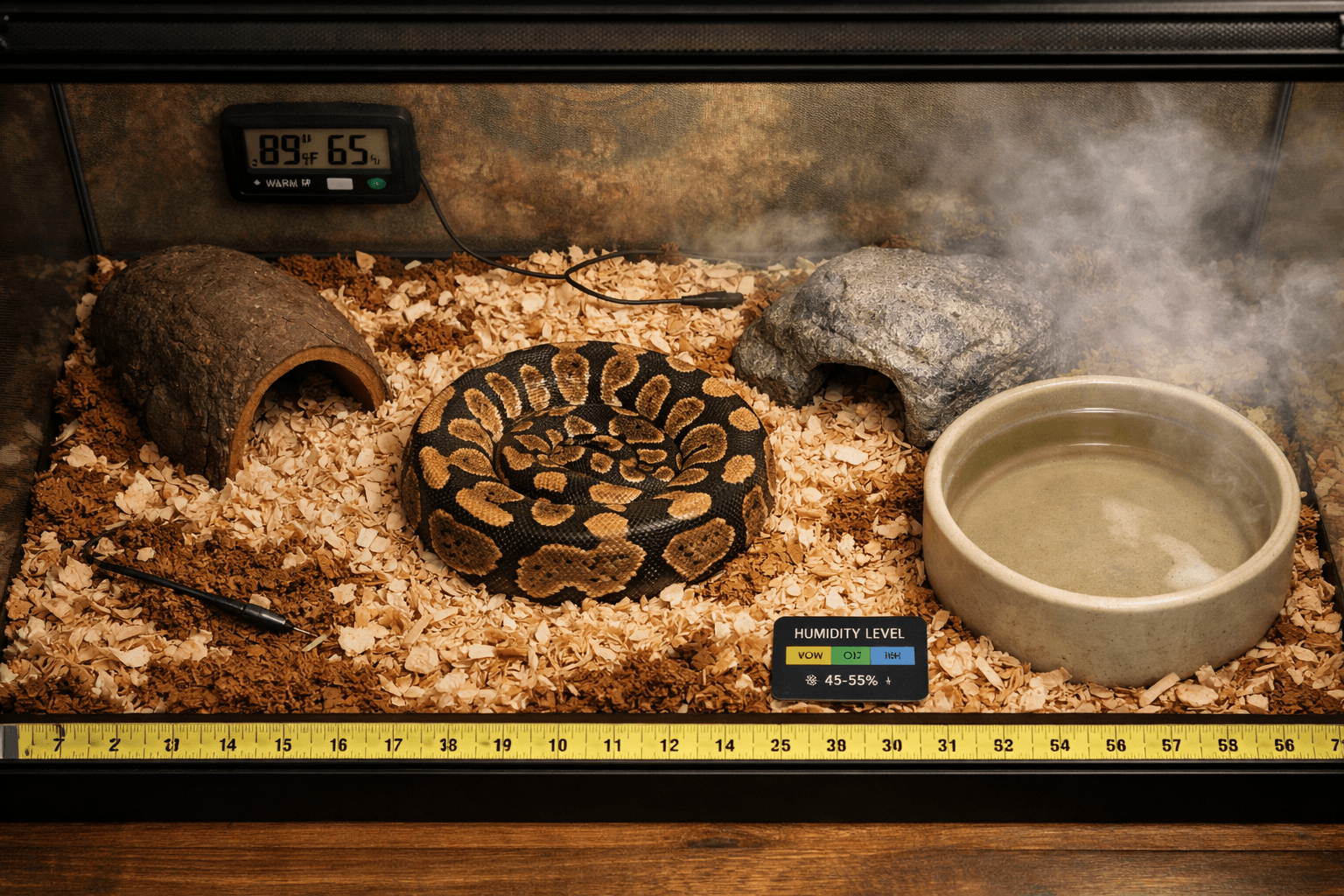
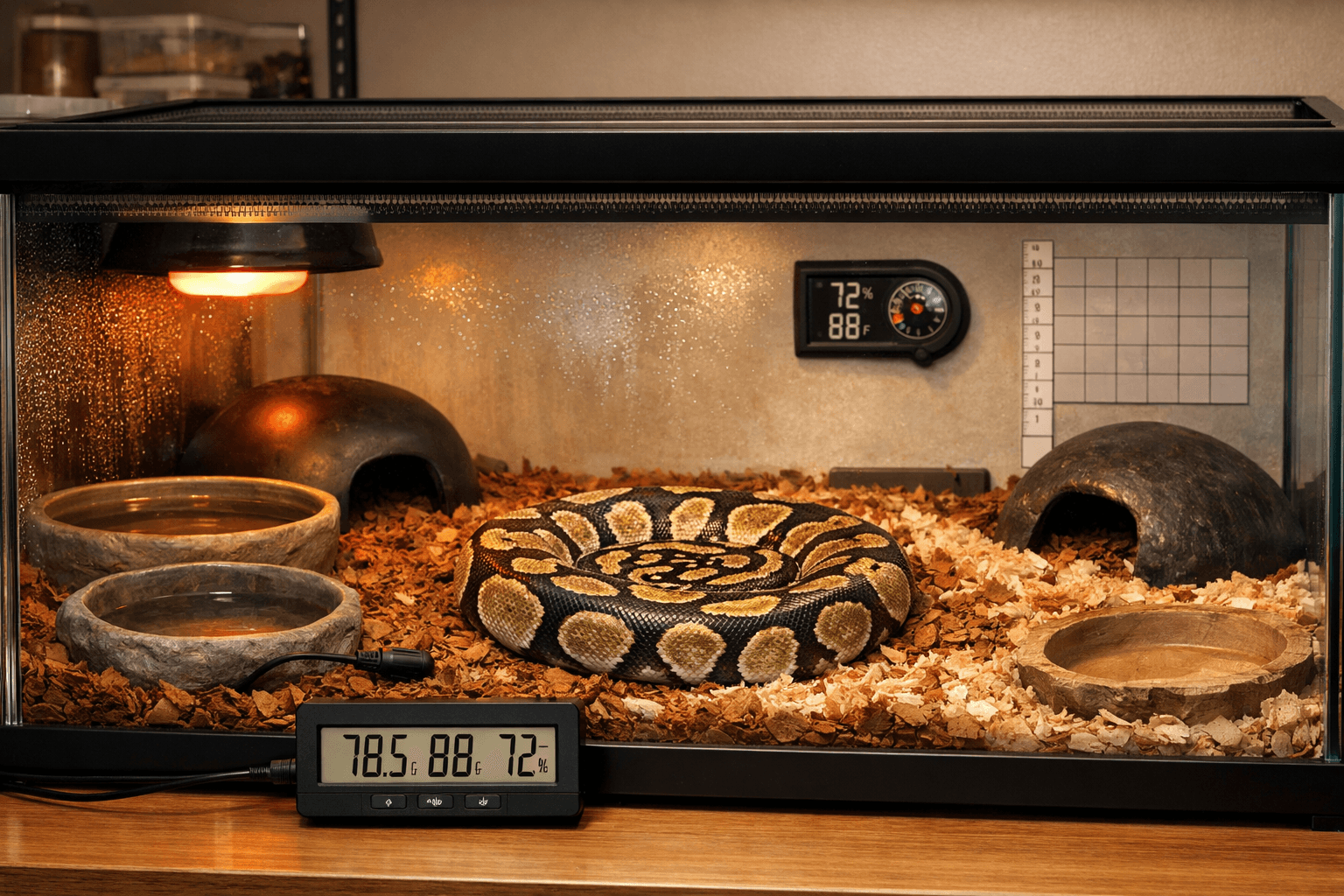
A proper ball python setup needs a warm side around 88-92°F on the surface (measured with a temp gun, not the dial on the heat mat box) and a cool side around 78-80°F, with ambient air temps in the mid-to-upper 70s. Get this gradient wrong and you’ll see a snake that won’t eat, won’t move, or presses against the glass constantly.
The single best tool here is an under-tank heater paired with a thermostat, not a heat lamp alone. Heat lamps dry out the air too much for this species unless you’re also running a deep humid hide. Most experienced keepers run a heat mat under one-third of the tank floor, controlled by a thermostat set around 90°F, checked daily with an infrared thermometer.
Why a Thermostat Isn’t Optional
A heat mat plugged straight into the wall with no thermostat can climb past 100°F on the glass, which is hot enough to cause a thermal burn. Thermostats cost $20-40 and pay for themselves the first time they stop a mat from overheating. I’d treat this as non-negotiable gear, not an upgrade.
Reading the Cool Side Correctly
If your cool side sits below 75°F for extended periods, digestion slows down and you risk regurgitated meals. Aim to keep the whole enclosure, warm side and cool side both, within a livable range so the snake can thermoregulate by moving between zones instead of being stuck picking between “too hot” and “too cold.”
Humidity and Shedding: The Detail Most Guides Get Wrong
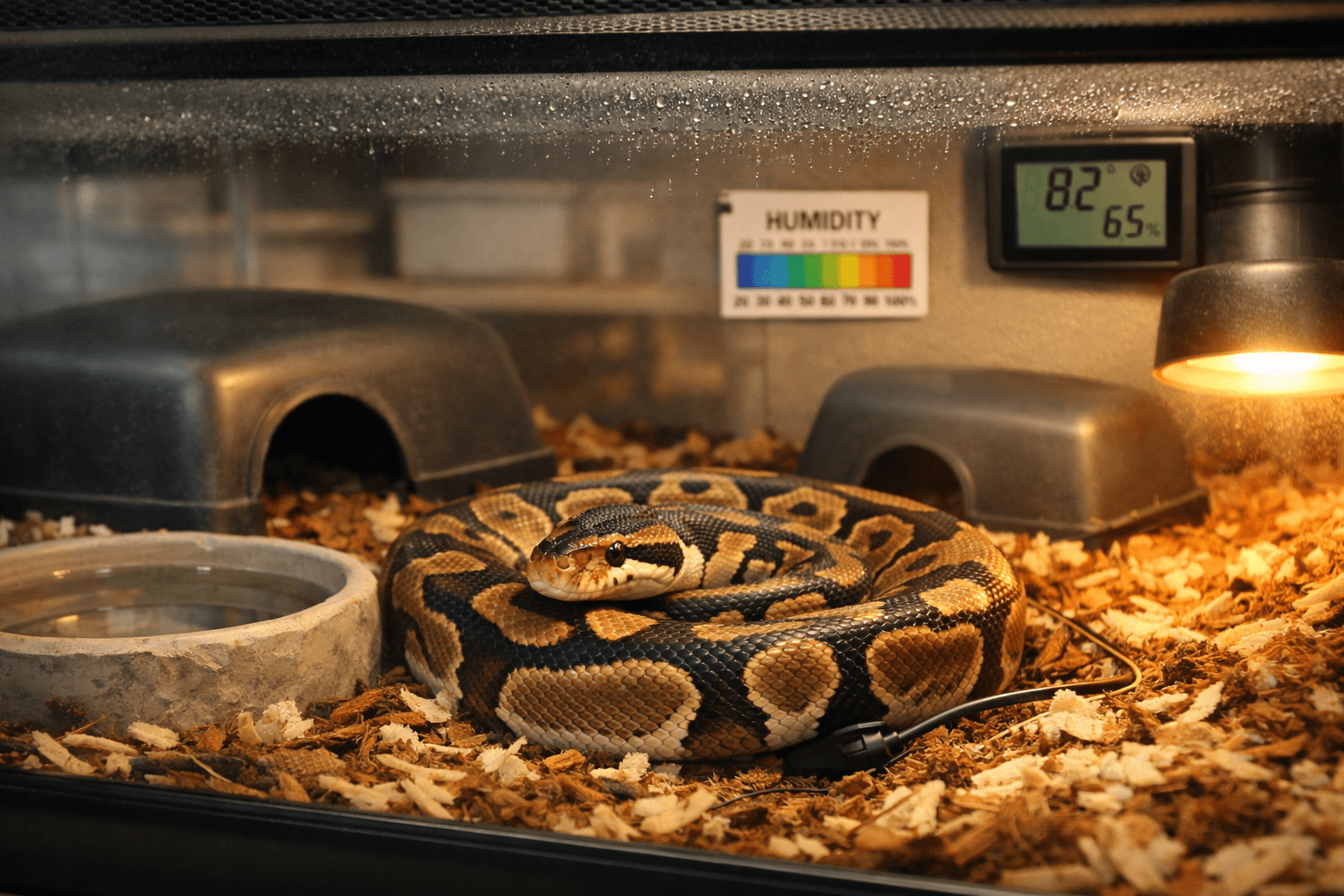
Ball pythons need humidity around 50-60% most of the time, rising to 60-70% during shedding cycles, and this is where more pet ball pythons run into trouble than almost anywhere else. Low humidity doesn’t kill a snake outright, but it causes bad sheds, retained eye caps, and stuck skin on the tail tip that can cut off circulation if it’s not removed.
Most guides treat humidity as a static number to hit and forget. In practice, it’s the thing you adjust the most, week to week, based on what your snake’s skin and behavior are telling you.
Signs of a Bad Shed Before It Happens
Watch for dulling skin color a few days before a shed. That’s your cue to bump humidity up, not wait until after the shed to check for problems. A humid hide (a hide box packed with damp sphagnum moss) gives the snake somewhere to go when it needs extra moisture, and it’s one of the cheapest fixes in the hobby, usually under $10 for the moss and a plastic hide.
Fixing a Setup That Runs Too Dry
If your house runs dry heat in winter, a screen top alone won’t hold humidity no matter how much you mist. Switch to a tank with a mostly-solid lid, or cover part of the screen with plastic wrap or a purpose-made cover panel. A digital hygrometer, not the cheap analog dial kind, is worth the $10-15 upgrade because the dial versions are often off by 10-15 percentage points.
What Retained Shed Actually Looks Like
Look for gray, papery patches still stuck to the tail or dull rings around the eyes after a shed. If you see stuck eye caps, don’t try to peel them off with tweezers. Soak the snake in shallow lukewarm water for 10-15 minutes and let a warm, damp towel do the work, or have a reptile vet handle it if it doesn’t come free easily.
Feeding Schedule and Prey Size: Matching Meals to Snake Size
Feed hatchlings and young juveniles one appropriately-sized mouse or small rat every 5-7 days, then shift to every 7-10 days as they grow, and drop to every 2-3 weeks once they’re adults over 3-4 years old. Prey width should roughly match the thickest part of the snake’s body — not longer than that, just similar in diameter.
Frozen-thawed rodents are the standard in the hobby now, both for convenience and because live prey carries a small but real risk of biting or scratching the snake during feeding. A dozen frozen mice or small rats typically runs $15-25 depending on your region and supplier.
Building a Feeding Routine
Thaw the rodent fully in warm water, never a microwave, until it’s warm to the touch all the way through.
Offer it in the evening using tongs, since ball pythons are naturally more active after dark.
Leave the snake undisturbed in its enclosure, not in a separate feeding tub, to reduce feeding-related stress.
Wait at least 48 hours before any handling to prevent regurgitation.
Remove any uneaten prey after a few hours so it doesn’t sit and mold.
Log the feeding date somewhere simple, even just a wall calendar, so you notice patterns in appetite.
When a Skipped Meal Isn’t a Crisis
Adult ball pythons, especially males, commonly skip meals for weeks or even a couple months during cooler seasons, a behavior tied to natural brumation cycles even in captivity with stable temps. This is one of the most misread signals in the hobby. Owners panic and try to force-feed, which can cause far more harm (including injury to the snake’s esophagus) than a skipped meal ever would.
A healthy snake that’s fasting will still have good weight, clear eyes, and normal muscle tone. If it’s also losing visible body mass, acting lethargic beyond normal cool-weather sluggishness, or showing labored breathing, that’s a different situation and worth a vet visit.
Substrate, Hides, and Enclosure Furniture
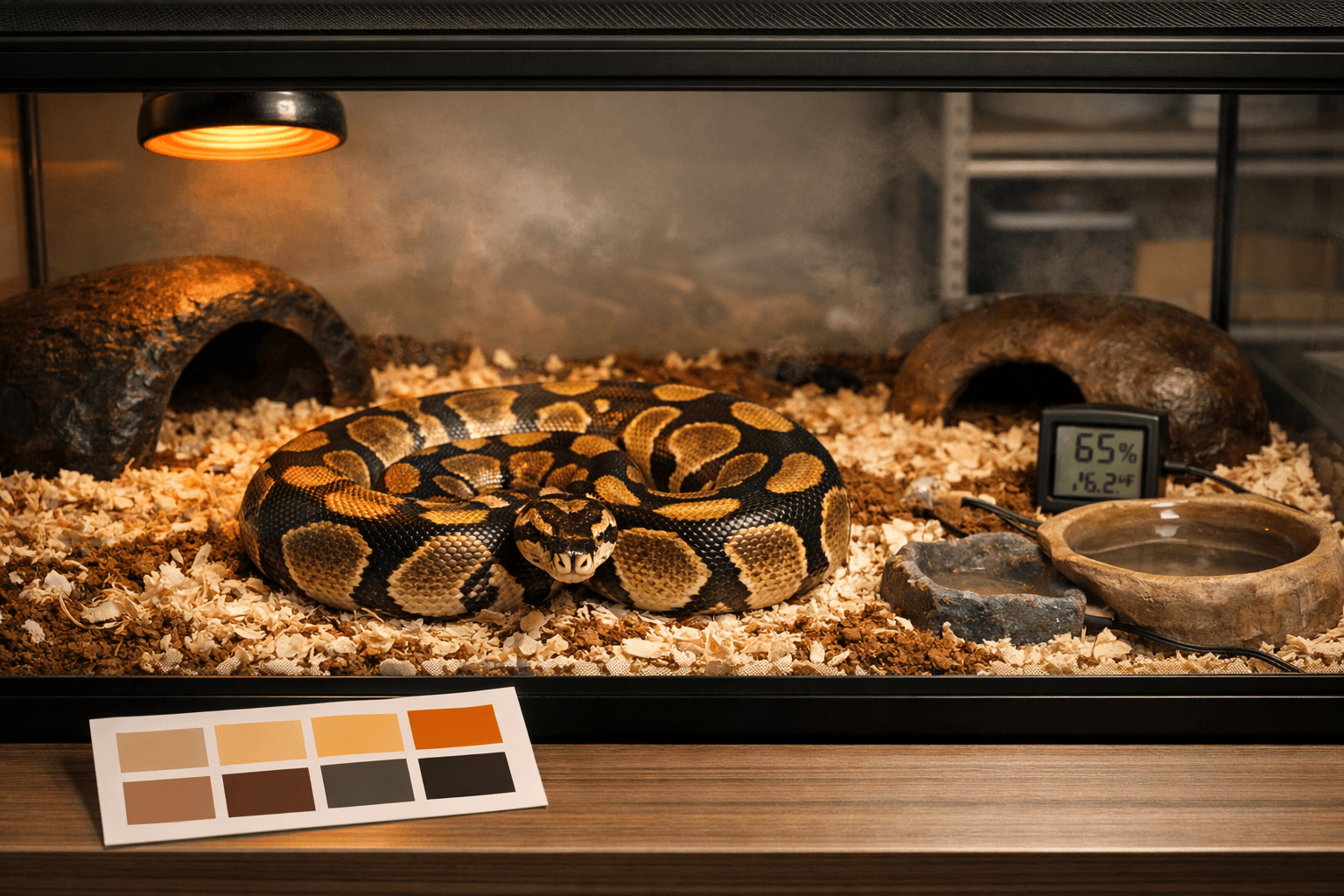
Good substrate options include coco fiber (sold as bricks that expand with water), cypress mulch, or a mix of both, at a depth of 2-3 inches so the snake can burrow. Avoid pine or cedar shavings entirely — the oils in those woods are genuinely harmful to reptile respiratory systems.
Every enclosure needs at least two hides, one on the warm side and one on the cool side, so the snake never has to choose between feeling secure and being at the right temperature. A simple half-log or plastic hide costs $5-12 each, and it’s money that pays off immediately in a calmer snake.
Furniture That Actually Gets Used
Ball pythons aren’t big climbers, but a low branch or half-buried hide adds enrichment and gives them texture to rub against during shedding. A shallow water dish big enough to soak in, changed every 2-3 days, does double duty as a humidity boost.
Substrate Depth and Cleaning Habits
Spot-clean waste daily and do a full substrate change every 4-6 weeks for coco fiber-based setups, sooner if you notice mold or a strong ammonia smell. A loose, slightly damp substrate holds humidity far better than a bone-dry one, which ties directly back into shed quality.
Health Watch: Respiratory Infections, Mites, and Scale Rot
The three health problems that show up most in pet ball pythons are respiratory infection, mites, and scale rot, and all three are tied closely to humidity, temperature, or cleanliness. Catching them early, usually within the first few days of symptoms, makes treatment far easier and cheaper than waiting.
Respiratory infections show up as open-mouth breathing, wheezing or clicking sounds, and mucus around the nostrils. This usually comes from a cool side that’s too cold or humidity that’s swinging wildly. A vet visit typically runs $50-100 for a consult, plus antibiotics if needed, and most cases clear up fully with correct husbandry fixes alongside medication.
Mites look like tiny black or red dots moving around the eyes or under scales, and they often hitch a ride in on new plants, feeder rodents, or secondhand décor. A reptile-safe mite spray plus a full enclosure deep-clean handles most infestations within two to three weeks.
Scale rot (a bacterial infection, usually on the belly) comes from prolonged contact with wet, dirty substrate. It shows up as discolored, blistered, or foul-smelling scales along the underside. It’s treatable with vet-prescribed topical antibiotics, but it’s also almost entirely preventable by keeping substrate clean and never letting standing water sit in the enclosure.
Health Issue
Main Cause
Early Sign
Typical Fix
Respiratory infection
Cool side too cold, humidity swings
Wheezing, open-mouth breathing
Vet visit, temp/humidity correction
Mites
New décor, feeders, other reptiles
Tiny dots near eyes/scales
Reptile-safe mite spray, deep clean
Scale rot
Wet, dirty substrate
Discolored belly scales
Topical antibiotic, substrate cleanup
Stuck shed
Low humidity during shed cycle
Retained eye caps, tail skin
Warm soak, humid hide, gentle removal
Handling, Quarantine, and Bringing Home a New Snake
Handle a healthy adult ball python 2-3 times a week for 10-20 minutes at a time, but never within 48 hours of a meal, since handling too soon after feeding is a leading cause of regurgitation. Babies and juveniles do best with lighter handling until they settle into a steady feeding pattern.
Bringing a new snake home, whether from a breeder, a reptile shop, or an expo table, calls for a quarantine period of at least 30 days in a separate room from any other reptiles. This protects your existing collection from mites or infections the new snake might be carrying without obvious symptoms yet.
A Practical Quarantine Setup
You don’t need anything fancy for quarantine, just a simple tub setup with its own hide, water dish, and heat source, kept away from shared air space if possible. Wash your hands between handling the quarantine snake and any other reptiles, and use separate tools (water dishes, hides, cleaning supplies) for that enclosure during the 30 days.
Reading Stress Signals During Handling
A ball python that hisses, musks (releases a foul-smelling defensive fluid), or balls up tightly is telling you it’s overwhelmed, not being aggressive. Back off, give it a day or two, and try shorter sessions next time. Most ball pythons, even nervous ones, calm down significantly within the first few weeks in a new home once their routine feels predictable.
If you’re building a full custom setup for a new arrival, checking build guides on a site like petterrarium.com before your snake even gets home can save you from having to redo wiring or substrate choices later.
Morphs and Genetics: What the Color Pattern Actually Tells You
Ball python morphs (color and pattern variations bred through selective genetics) don’t change basic care needs, but a few morphs carry documented health quirks worth knowing before you buy. The spider morph, for example, is linked to a neurological wobble affecting head movement and balance in many individuals.
This matters at the buying stage more than the care stage. A spider morph with a mild wobble can still live a full, comfortable life with a well-set-up enclosure (extra-secure footing, no tall climbing risks), but it’s a genuine consideration, not a guarantee of problems.
Common Morphs and What to Expect
Pastel, banana, pied, and clown morphs are widely available and generally don’t carry known neurological issues, though pairing certain genes together in breeding projects can sometimes stack risks. If you’re buying your first snake purely as a pet rather than for breeding, a normal (wild-type pattern) or a simple single-gene morph like a pastel is a solid, budget-friendly choice, often $50-100 from a reputable breeder.
Price Isn’t a Health Guarantee
A rare, expensive morph selling for $500 or more isn’t automatically healthier or hardier than a $60 normal. Genetics affect appearance far more than temperament or care difficulty, so choose based on your budget and what draws you in visually, not the assumption that pricier means easier.
Frequently Asked Questions
How long can a ball python go without eating before I should worry?
Adult ball pythons can safely fast for 4-8 weeks, sometimes longer during brumation, without medical concern, as long as body weight and activity stay normal. Worry if fasting passes 3 months alongside visible weight loss or lethargy.
What’s the ideal enclosure temperature and humidity at a glance?
Keep the warm side at 88-92°F, the cool side at 78-80°F, and humidity between 50-60% normally, rising to 60-70% during sheds. A digital thermometer and hygrometer combo, not analog dials, keeps these numbers accurate.
Is it normal for a ball python to refuse food after a move or new enclosure?
Yes, refusing food for 1-3 weeks after a move or rehoming is common and usually stress-related, not illness. Keep temps and humidity stable, offer food weekly, and avoid unnecessary handling during that settling period.
Can I use tap water for the water dish and misting?
Most tap water is fine for ball pythons in the US, though letting it sit out 24 hours or using a reptile-safe water conditioner removes chlorine if your tap water smells strong. Change the water dish every 2-3 days regardless.