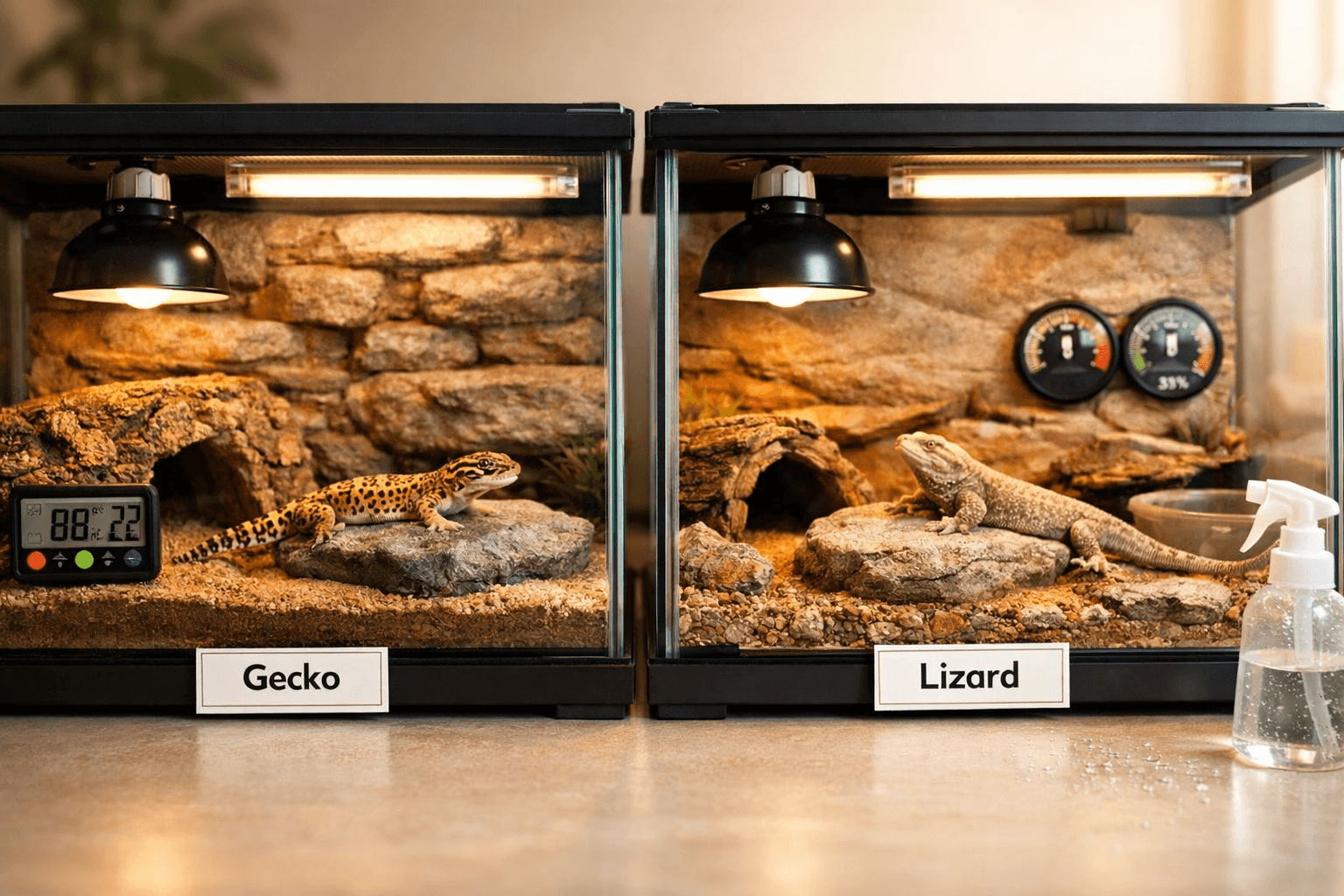
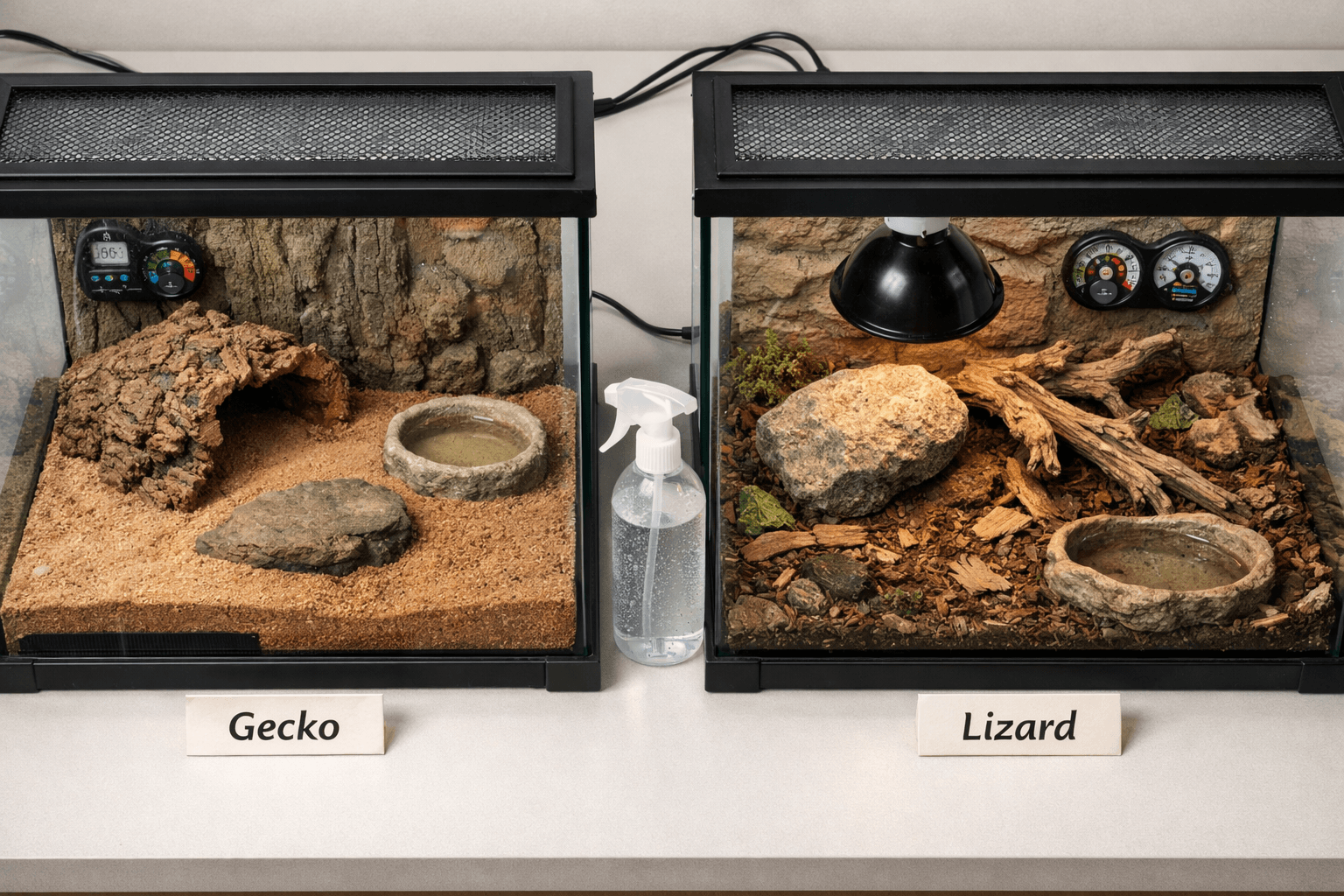
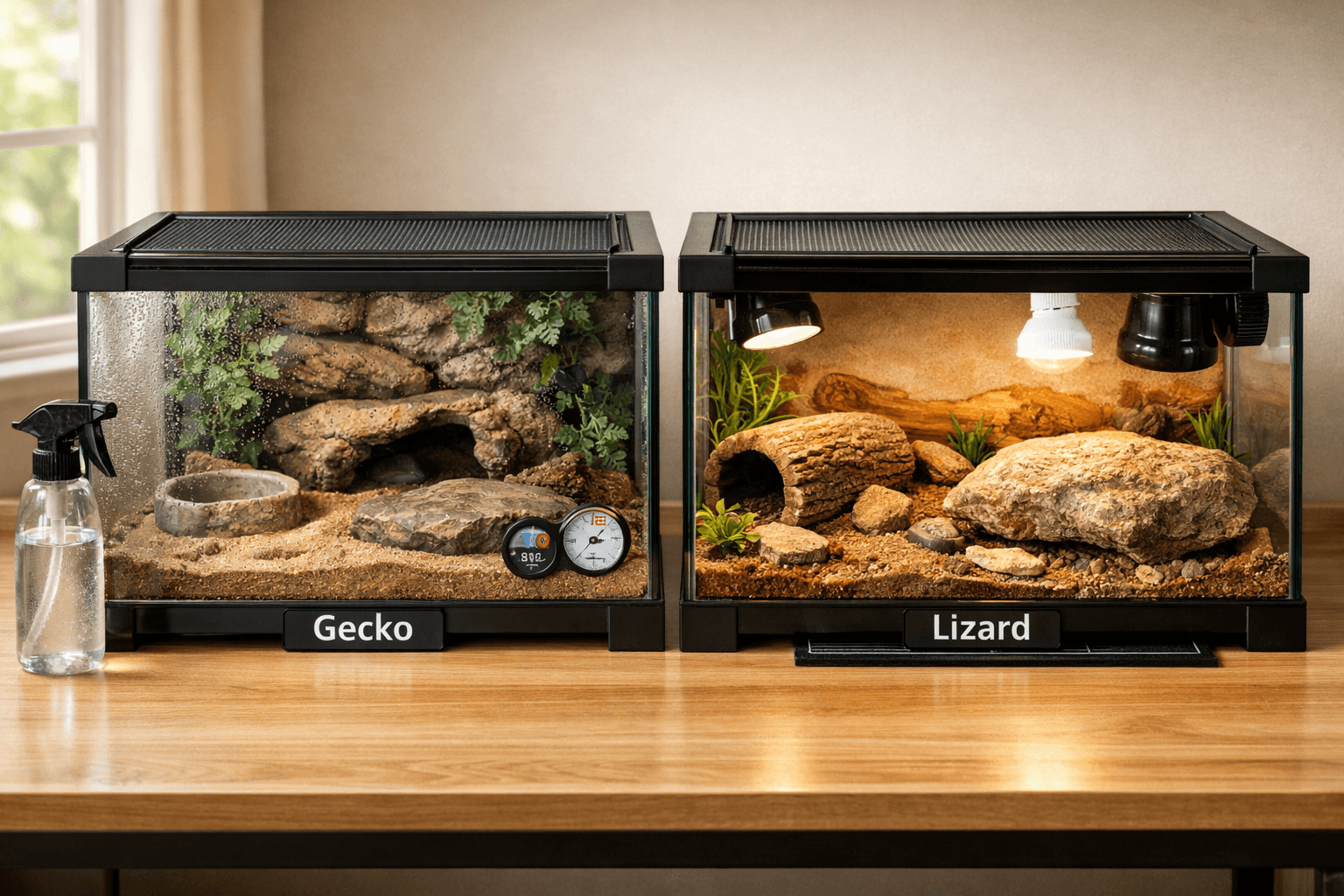
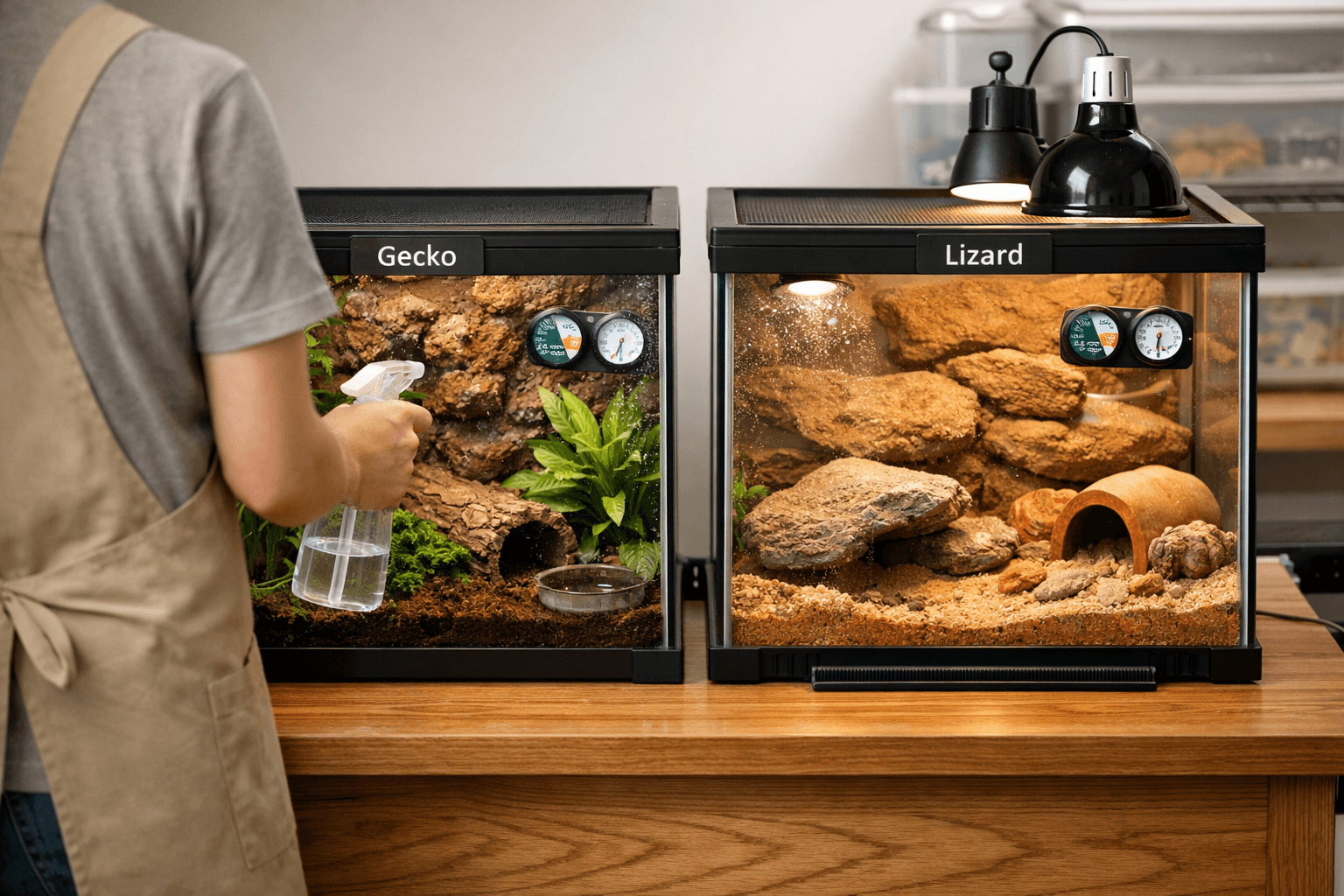
A reptile shop regular once brought back a leopard gecko and a bearded dragon he’d been keeping in the same 40-gallon tank for three months. He couldn’t figure out why his gecko had stopped eating and looked thin. The bearded dragon was fine, active, basking like a champ. The gecko was stressed out of its mind, getting outcompeted for heat and probably bullied at night when the dragon should’ve been asleep and wasn’t bothered by the gecko moving around. That’s the thing about gecko and lizard care: they look like they’d fit the same formula, but they really don’t.
If you’re setting up housing for more than one reptile, the question isn’t “what’s the one setup that works for both.” It’s “how do I build two habitats that don’t fight each other for space, money, or your attention.”
Why Geckos and Lizards Aren’t Interchangeable Pets
Geckos and lizards get lumped together because they’re both scaly, small-to-medium, and terrarium-friendly. But their biology splits hard on activity patterns, humidity needs, and temperament, and that split is why a shared setup usually causes problems. Treating them the same is the single biggest mistake new keepers make.
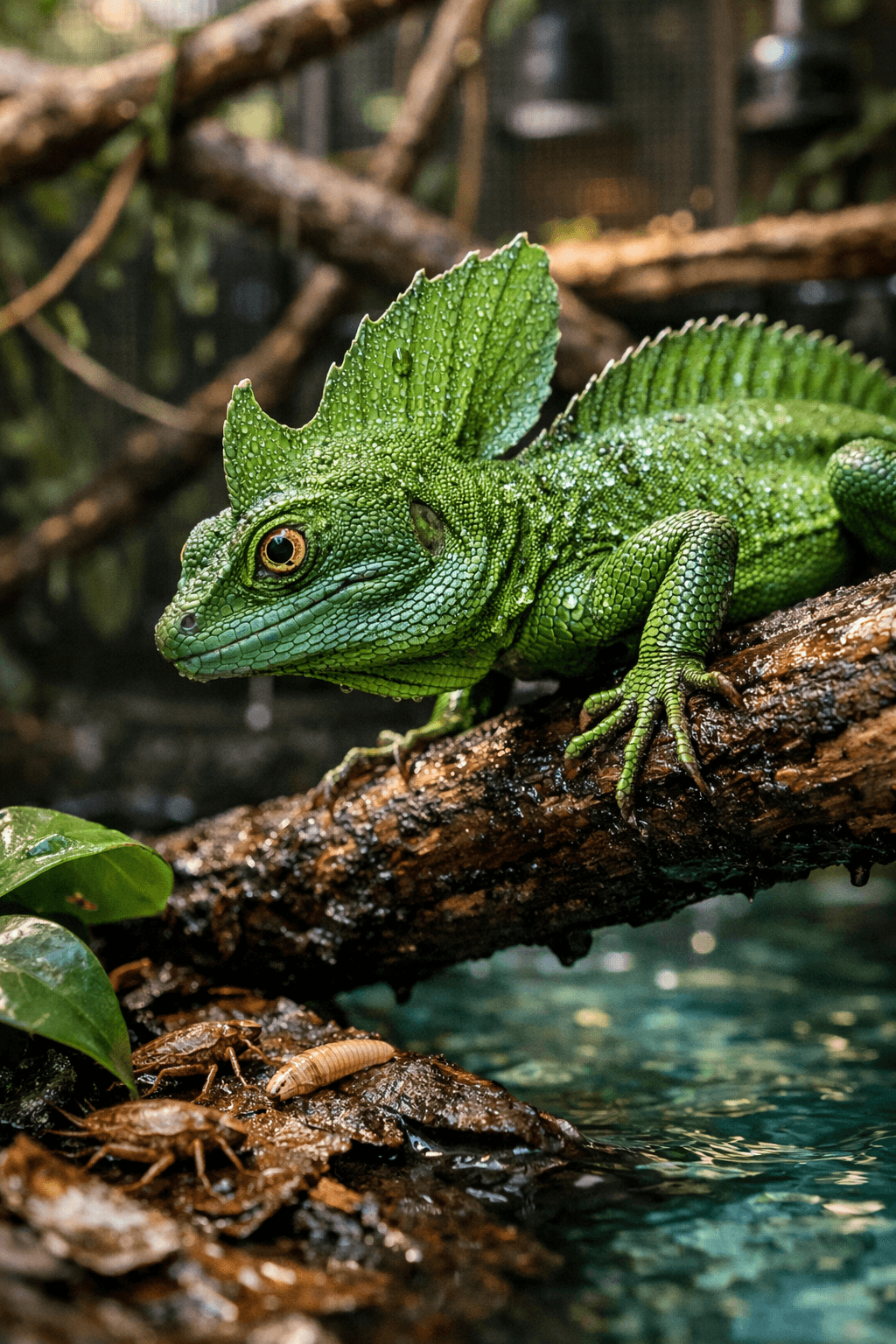
Most popular geckos, like the leopard gecko or crested gecko, are nocturnal or crepuscular. They’re active at dusk and through the night, hide during the day, and don’t need intense UVB to thrive (though a low-level UVB bulb is still good practice for bone health). Most popular lizards kept as pets, like the bearded dragon or various Uromastyx species, are diurnal baskers. They need strong daytime UVB, high heat, and open space to sprawl under a light.
Activity Clash Creates Real Stress
When a nocturnal gecko shares space with a diurnal lizard, the lizard is up and moving during the day, taking the best basking real estate, while the gecko wants to be tucked away. At night, roles reverse, but by then the gecko might already be food-stressed or the dominant animal might disturb its rest anyway. This isn’t a personality quirk. It’s a mismatch baked into their daily rhythm.
Humidity Needs Don’t Overlap Well Either
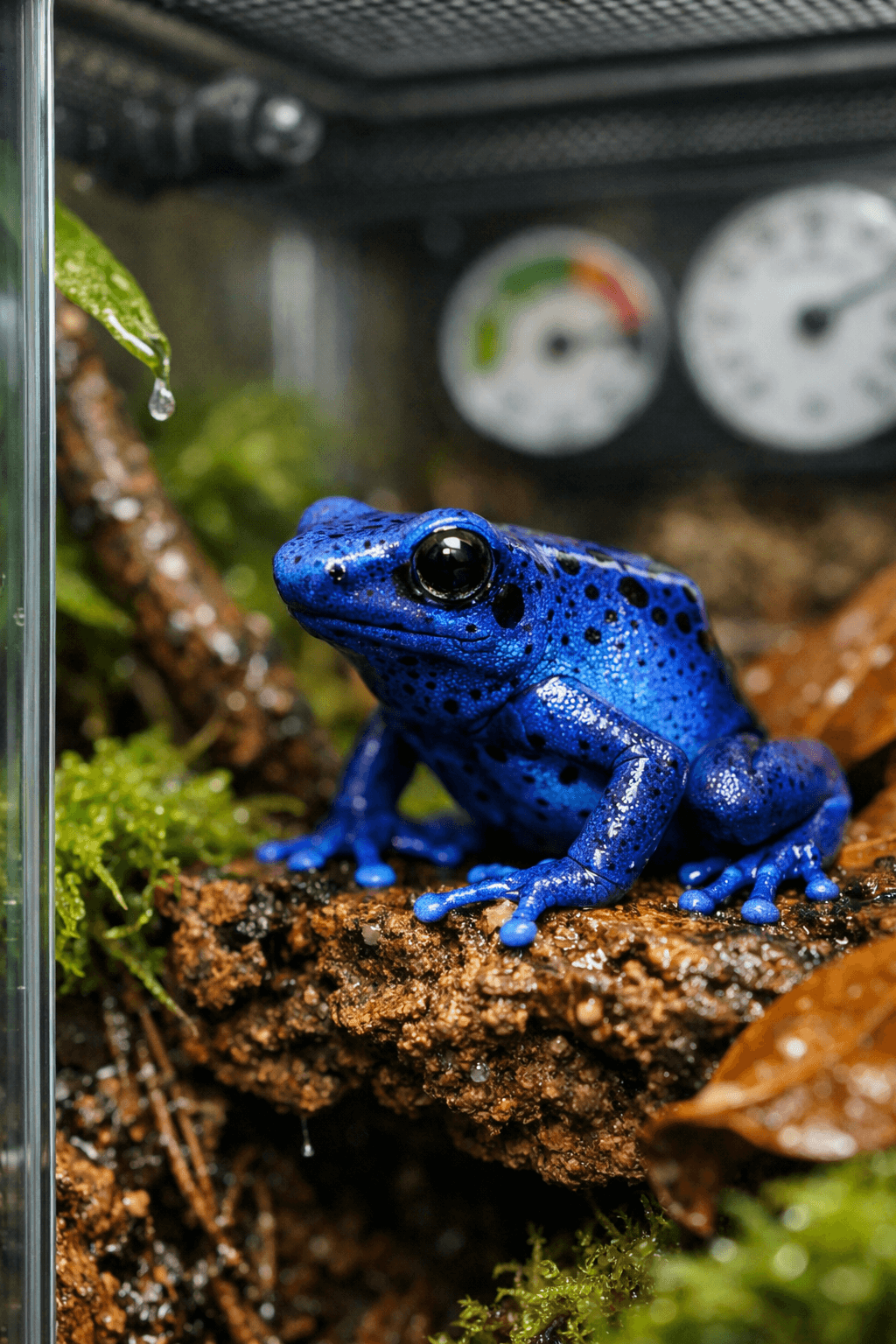
Crested geckos and other arboreal gecko species often want humidity in the 60-80% range with regular misting. Bearded dragons and many desert lizards need it dry, often below 40%, or they risk respiratory infections. Try to average those two needs in one tank and you’ll under-serve both animals every single day.
Size and Temperament Differences Matter Too
Geckos tend to be smaller and more delicate. Lizards like bearded dragons grow fast and get bold about defending territory. Put a 6-inch gecko in with a 16-inch adult dragon and you’ve got a size mismatch that can turn dangerous, even without obvious aggression. Sometimes it’s just a lizard stepping on a gecko while moving toward its food dish.
Terrarium Size and Dimensions for Each Species
Size requirements aren’t one-size-fits-all, and they shouldn’t be treated that way. A single adult leopard gecko does fine in a 20-gallon long tank, roughly 30 by 12 inches of floor space, while an adult bearded dragon needs at least a 40-gallon breeder, and honestly does better in a 4-foot enclosure once fully grown.
The difference comes down to how each animal moves. Geckos are ground-huggers or climbers depending on species, and they don’t need huge horizontal runs. Bearded dragons, on the other hand, are active, walk around a lot, and want room to get away from the heat when they’ve had enough basking.
Floor Space vs. Vertical Space
Ground-dwelling geckos like leopard geckos want floor space and hiding structure more than height. Arboreal species like crested geckos flip that completely and need vertical climbing room, sometimes more height than floor area. Bearded dragons want a mix, but heavily favor a long, open floor with a elevated basking platform.
A Quick Sizing Reference
Here’s how minimum tank sizes typically shake out for some common species people ask about:
Species
Life Stage
Minimum Tank Size
Orientation
Leopard gecko
Adult
20-gallon long
Horizontal
Crested gecko
Adult
18x18x24 inch terrarium
Vertical
Bearded dragon
Adult
40-gallon breeder (48x24x18 inch min)
Horizontal
Blue-tongue skink
Adult
40-gallon breeder or larger
Horizontal
These are minimums, not ideals. If you’ve got the budget and space, going bigger almost never hurts, and for bearded dragons especially, bigger tends to mean healthier because they get more room to thermoregulate properly.
Substrate Choices: What’s Safe and What Causes Impaction
Sand is the substrate mistake that sends the most reptiles to the vet. Loose calcium sand and play sand can cause impaction when accidentally swallowed during feeding, and it’s a real risk for both geckos and juvenile lizards with developing digestive systems.
For leopard geckos, a solid choice is fine soil-based substrate, like a mix of organic topsoil and coconut fiber, or a reptile-safe paper substrate for juveniles who are still learning to hunt without gulping bedding. Crested geckos do well on coconut fiber-based substrates (something like ecoearth) that also help hold humidity.
Bearded dragons are a different story entirely. Adult beardies can sometimes handle a well-monitored bioactive substrate mix with clean-up crew insects, but sand should never be the go-to for juveniles, and even adults do better on reptile carpet, tile, or a packed clay-based substrate that doesn’t loosen into individual grains they can accidentally ingest.
Here’s a simple rule I’d give any new keeper: if the substrate looks like something that could get scooped up mid-lunge at a cricket, don’t use it for a young or small reptile. Tile and paper towel are boring, sure, but they’re never going to cause a $600 emergency vet bill for a blockage.
Cleaning schedules depend on substrate type too. Loose organic substrates in bioactive setups can go weeks between full changes if you’re spot-cleaning waste daily. Paper towel or tile setups need spot-cleaning daily and a full wipe-down weekly, which is honestly less work than people expect once it becomes routine.
UVB and Heat Lighting: The Gap Most Owners Underestimate
Diurnal lizards need way more UVB intensity than most nocturnal geckos, and underestimating that gap is one of the most common and most fixable mistakes in reptile care. A bearded dragon needs a strong T5 HO UVB bulb, positioned so the basking lizard gets a UV Index in the 3.0-6.0 range at basking distance. A leopard gecko needs far less, often just a low-output UVB tube running the length of the enclosure, mostly for supplemental vitamin D synthesis rather than intense exposure.
Get this wrong in either direction and you’ll see it eventually. Too little UVB for a bearded dragon over months can contribute to metabolic bone disease, which shows up as soft jaw bones, lethargy, or leg tremors. Too much intense UVB crammed into a small gecko enclosure with no shaded retreat can cause eye irritation and stress, since geckos are built to avoid bright light, not bask in it.
Basking Temps Differ by a Lot
Bearded dragons want a basking spot around 95-105°F, with a cool side down around 75-85°F. Leopard geckos want a much gentler gradient: a warm side around 88-92°F (often via an under-tank heat mat, since they don’t bask overhead the way dragons do) and a cool side in the mid-70s.
Fixtures That Actually Work for Each Setup
For a bearded dragon tank, pair a T5 HO UVB fixture running the full length of the enclosure with a separate basking bulb over a platform, both on a thermostat. For a leopard gecko tank, skip the intense basking bulb entirely, use a low-UVB tube for ambient exposure, and rely on a thermostat-controlled heat mat for the actual warmth. Running lizard-strength lighting over a gecko tank isn’t just wasteful, it can genuinely stress the animal.
Timers matter here too. Both species need a day/night cycle, typically 12 hours on and 12 off, adjusted slightly by season if you want to get fancy about it. Consistency matters more than precision, so don’t stress over exact sunrise times.
Humidity Gradients and Why Shedding Problems Start Here
Humidity mismatches are the quiet cause behind most bad sheds, and they’re completely preventable once you know the target range for your species. Crested geckos want humidity spikes to 70-80% after evening misting, dropping back to 50-60% between mistings. Bearded dragons want to stay drier overall, generally 30-40%, with brief humidity bumps only during shedding periods.
Leopard geckos sit in the middle. They come from arid regions but still need a humid hide, a small enclosed space with damp moss, kept around 70-80% humidity even while the rest of the tank stays dry in the 30-40% range. Skip the humid hide and you’ll see retained shed on their toes, which can cut off circulation over time if it’s not addressed.
Signs Your Humidity Is Off
Stuck shed around the toes, tail tip, or eye caps is the clearest red flag, and it shows up within days of a humidity problem, not weeks. Cloudy or wrinkled skin that doesn’t shed clean on schedule is another sign, especially for crested geckos who shed in one piece when conditions are right.
Fixing It Without Overcorrecting
A digital hygrometer, not the cheap analog dial kind, is worth the roughly $10-15 it costs, because guessing at humidity is how most gradient problems start. Add a humid hide for geckos, mist on a schedule rather than randomly, and resist the urge to mist a bearded dragon’s whole tank just because you’re worried about its shed. Spot-treating a beardie’s shed with a damp cloth beats raising the whole enclosure’s humidity and risking a respiratory infection instead.
Hides, Decor, and Enclosure Material: Glass vs. Mesh
Glass terrariums hold humidity well and suit geckos, especially the humidity-loving species like crested geckos. Mesh or screen-topped enclosures ventilate better and suit heat-loving, drier species like bearded dragons, since airflow keeps things from getting stuffy under an intense basking bulb.
Using a glass, low-ventilation tank for a bearded dragon can trap heat and humidity together in a way that promotes bacterial growth and respiratory issues. Using a mesh-heavy enclosure for a crested gecko can tank the humidity no matter how often you mist, since the moisture just evaporates straight out.
What Each Species Actually Wants for Hides
Leopard geckos want two solid hides minimum, one on the warm side and one on the cool side, plus that humid hide mentioned earlier. Bearded dragons want fewer enclosed hides and more open climbing structures, branches, and a basking platform, since they’re more about visibility and territory than hiding.
Decor Choices That Double as Enrichment
Cork bark, safe leaf litter, and a few sturdy branches give geckos climbing options and cover. Flat rocks and thick branches for bearded dragons double as basking platforms and help file down nails naturally. For anyone building a first custom setup, petterrarium.com has species-specific layout guides that walk through exactly how to place hides and basking spots so the heat gradient actually works instead of just looking good.
Feeding, Water, and Daily Maintenance Routines
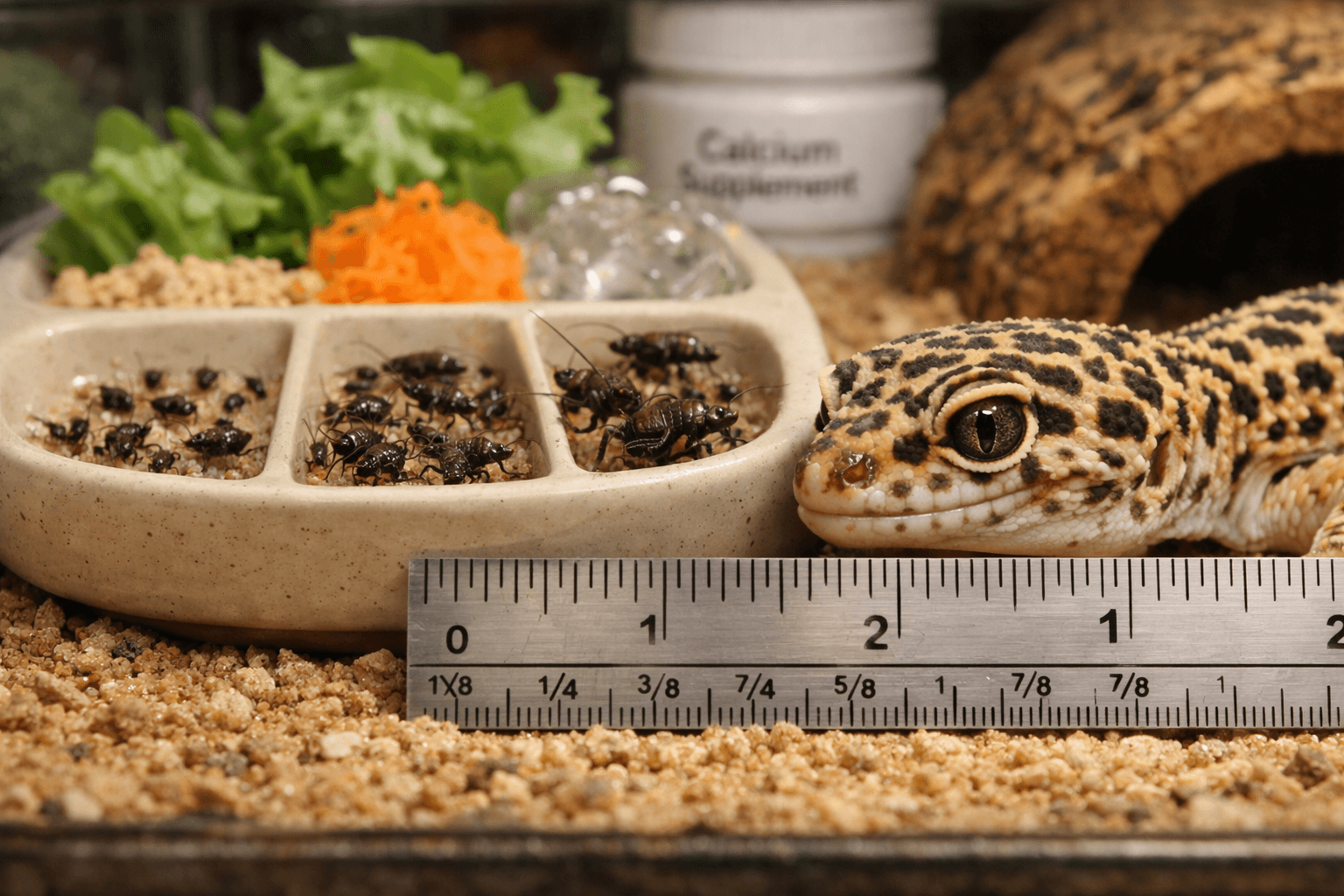
Feeding schedules and water setups differ enough between geckos and lizards that copying one routine for both animals shortchanges somebody. Leopard geckos are insectivores eating gut-loaded crickets or mealworms 3-4 times a week as adults. Bearded dragons are omnivores, eating a mix of leafy greens daily plus insects, with the plant-to-insect ratio shifting toward more greens as they mature.
Water delivery matters too. Crested geckos often drink from misted droplets on leaves rather than a still water dish, so misting schedule doubles as their hydration plan. Leopard geckos and bearded dragons both do fine with a shallow water dish, refreshed daily, though bearded dragons sometimes need the dish placed away from the basking zone so it doesn’t evaporate before they use it.
Here’s a simple weekly maintenance sequence that works across most gecko and lizard setups, adjusted for species specifics:
Check and log temperatures on both the warm and cool sides every morning, adjusting the thermostat if either drifts outside range.
Refresh water dishes daily and mist humidity-dependent species on schedule, typically once or twice a day.
Spot-clean waste and shed skin daily rather than letting it build up.
Feed according to species schedule, gut-loading insects 12-24 hours before offering them.
Do a full substrate check or partial change weekly, more often for loose organic substrates in bioactive tanks.
Wipe down glass and check UVB bulb output monthly, since UVB tubes lose effective output well before they visibly dim, often needing replacement every 6-12 months depending on the brand.
Deep-clean the whole enclosure, including decor and hides, roughly once a month.
Skipping the UVB bulb replacement schedule is a sneaky problem because the bulb still lights up fine even after its actual UVB output has dropped off. That’s an easy thing to overlook until a bearded dragon starts showing bone density issues that trace back to months of basically decorative lighting.
Cohabitation Risks and Why Separate Setups Usually Win
Cohabitating different gecko and lizard species is usually a bad idea, and the shop story earlier isn’t rare. Stress, resource competition, and size mismatches cause slow, hard-to-notice harm rather than dramatic fights, which is actually what makes it more dangerous. You don’t always get an obvious warning sign before one animal is in real trouble.
Even same-species cohabitation gets tricky. Male bearded dragons will fight over territory. Male leopard geckos do the same. Female-only groups sometimes work with enough space and hides, but even that setup needs close monitoring for one animal dominating food access.
The Real Skill Isn’t One Tank, It’s Shared Systems
The better approach, and the one that actually saves money and effort long-term, is running two separate enclosures that share equipment logic. Same brand of thermostat, same style of hygrometer, same feeding schedule structure, just tuned differently for each species’ targets. That’s a repeatable system, not a compromise tank that half-serves two animals.
When Multi-Species Setups Actually Can Work
Multi-species terrariums aren’t impossible everywhere, they just work best with genuinely compatible species, usually similar-sized animals from the same general habitat type with matched activity cycles, like certain day gecko species sharing a large, humid vertical enclosure. Even then, a backup enclosure on hand is smart in case one animal needs to be pulled out for health reasons or unexpected aggression.
Frequently Asked Questions
Can a leopard gecko and a bearded dragon live in the same tank?
No, and it’s one of the more common mistakes new owners make. Their opposite activity cycles, different humidity needs, and size gap create ongoing stress even without visible fighting, so keep them in separate enclosures.
What’s the minimum tank size for one adult gecko or lizard?
A 20-gallon long tank works for one adult leopard gecko, while an adult bearded dragon needs at least a 40-gallon breeder, ideally a 4-foot enclosure. Crested geckos need vertical space more than floor space, around 18x18x24 inches minimum.
Why does my gecko’s shed keep getting stuck on its toes?
Stuck shed almost always traces back to low humidity, especially missing a humid hide. Add an enclosed hide with damp moss kept around 70-80% humidity, and check with a digital hygrometer rather than guessing.
Do all lizards need strong UVB lighting?
No, it depends on activity pattern. Diurnal baskers like bearded dragons need strong T5 HO UVB output, while nocturnal geckos like leopard geckos need only low-level supplemental UVB, since they don’t bask directly under intense light.