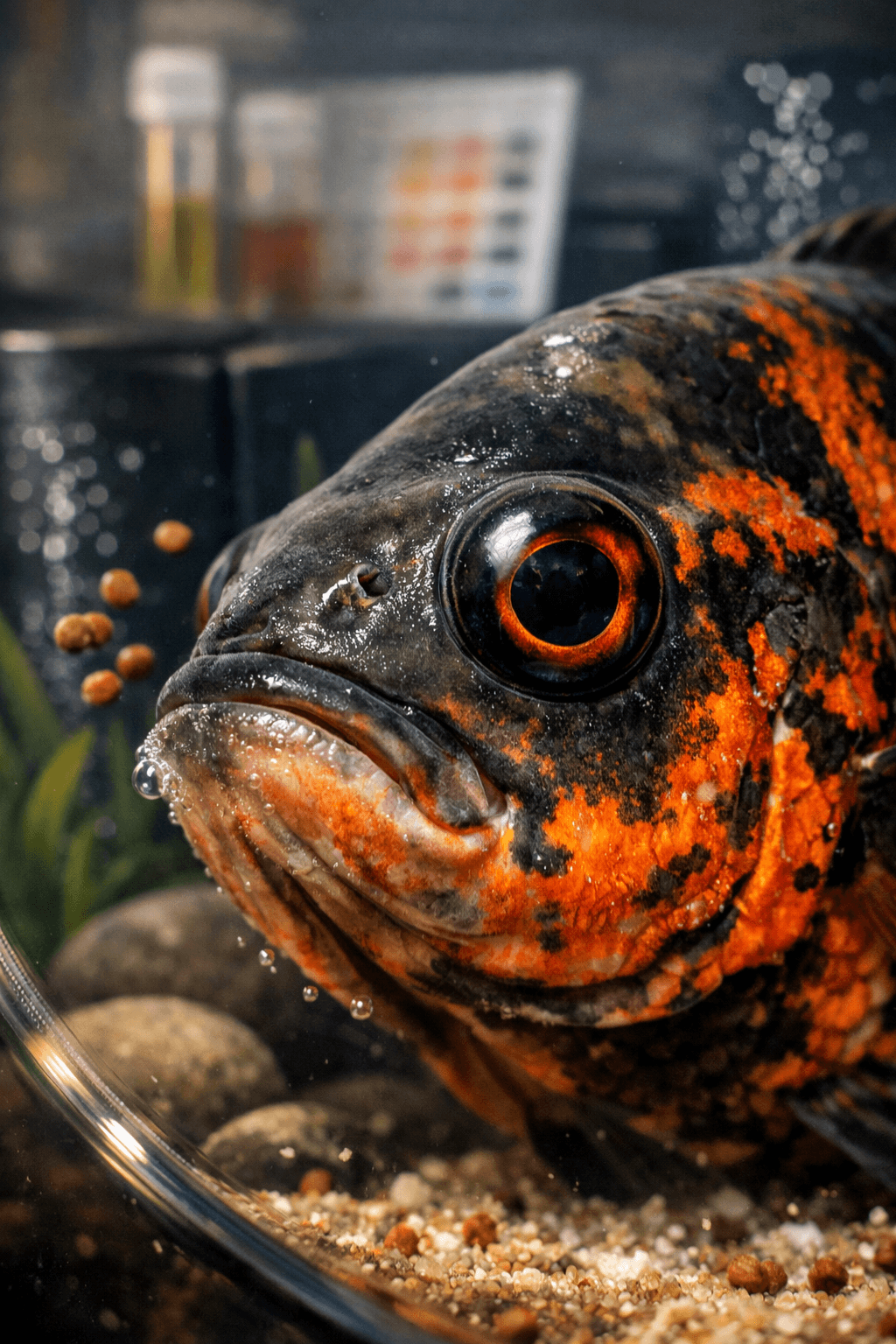
You’re standing at the fish store staring at a tank full of tiger oscar cichlids, watching one of them shove a rock across the bottom like it owns the place. That attitude is exactly why these fish have such a devoted following. Astronotus ocellatus (the oscar cichlid) brings a level of personality that most aquarium fish simply don’t have.
If you’ve kept reptiles or built terrariums before, you already think in terms of habitat design. That background is a real advantage here. Setting up a tiger oscar tank rewards the same mindset: deliberate layout, anchored hardscape, and parameters you actually monitor.
Tiger Oscar Cichlids: What Makes This Fish Worth the Setup
Tiger oscar cichlids are one of the few freshwater fish that interact with you. They learn feeding routines, respond to movement outside the tank, and will absolutely redecorate their space if they don’t like your layout. The tiger pattern (orange and red markings on a dark base) is one of the most recognizable color morphs in the hobby.
What separates oscars from most other cichlids is their combination of size, intelligence, and bioload. A single adult reaches 10 to 12 inches and produces waste like a fish three times its apparent size. That means the setup has to be built for the fish’s actual needs, not just its looks.
A 55-Gallon Minimum Is Just the Starting Point
A 55-gallon tank is the floor, not the goal. One adult tiger oscar cichlid needs at least 55 gallons, but a 75-gallon tank gives you noticeably better outcomes: more stable water chemistry, more room for the fish to establish territory, and fewer aggression spikes. If you’re keeping two oscars together, start at 125 gallons.
Why Tank Size Directly Affects Color and Behavior
Oscars kept in undersized tanks show duller coloration and higher stress aggression. The tiger pattern (those bold orange markings) stays vivid when the fish isn’t chronically stressed. Cramped conditions directly suppress color expression, and you’ll also see more fin damage as the fish turns around repeatedly in tight spaces.
A stressed oscar also eats erratically and becomes harder to read behaviorally. Since oscars communicate a lot through posture and movement, a tank that’s too small essentially mutes that personality you paid for.
Choosing a Tank Shape That Works With Oscar Cichlid Movement
Go with a standard rectangular tank rather than a tall or bowfront style. Oscars are mid-to-bottom swimmers that move horizontally. A 75-gallon tall tank (typically 21 inches deep) gives you less usable swimming length than a standard 75-gallon at 48 inches long, and length is what matters for a fish this size.
Avoid rimless tanks with thin glass panels if you’re housing one oscar long-term. Oscars hit the glass, move décor, and create turbulence from filtration. A tank with a solid frame and at least 10mm glass handles that wear better. Brands like Aqueon and Marineland both make standard rectangular tanks in the 75-gallon range that hold up well to this kind of use.
Water Parameters That Keep Tiger Oscar Cichlids Healthy
Tiger oscar cichlids are hardy, but “hardy” doesn’t mean “tolerant of neglect.” They come from warm, soft-to-moderately-hard South American rivers, and keeping parameters stable (not just within range) is what prevents most health problems.
Temperature, pH, and Hardness Targets
Parameter
Target Range
Notes
Temperature
74°F – 81°F
77°F is a reliable midpoint
pH
6.5 – 7.5
Avoid swings over 0.3 in 24 hours
GH (General Hardness)
5 – 20 dGH
Soft to moderately hard
KH (Carbonate Hardness)
3 – 8 dKH
Buffers pH stability
Ammonia / Nitrite
0 ppm
Non-negotiable at all times
Nitrate
Under 40 ppm
Weekly water changes keep this manageable
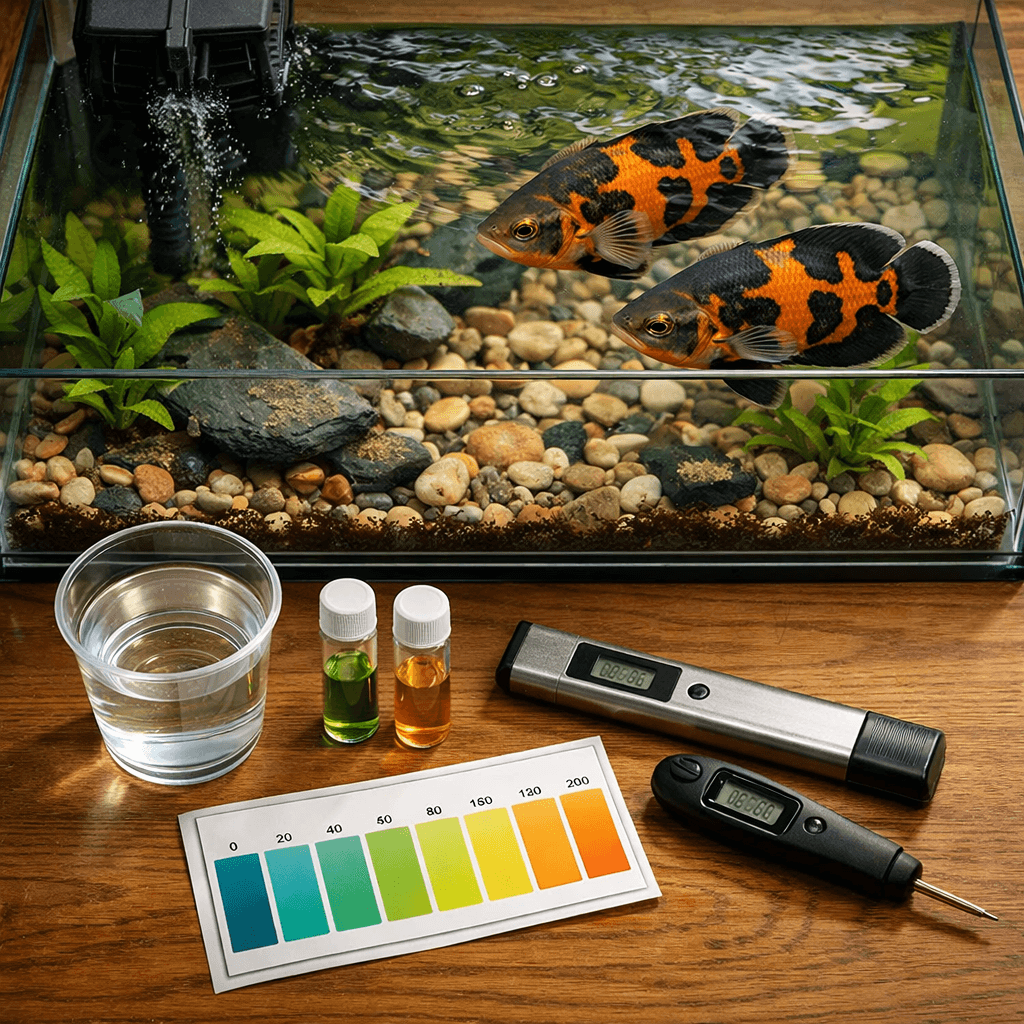
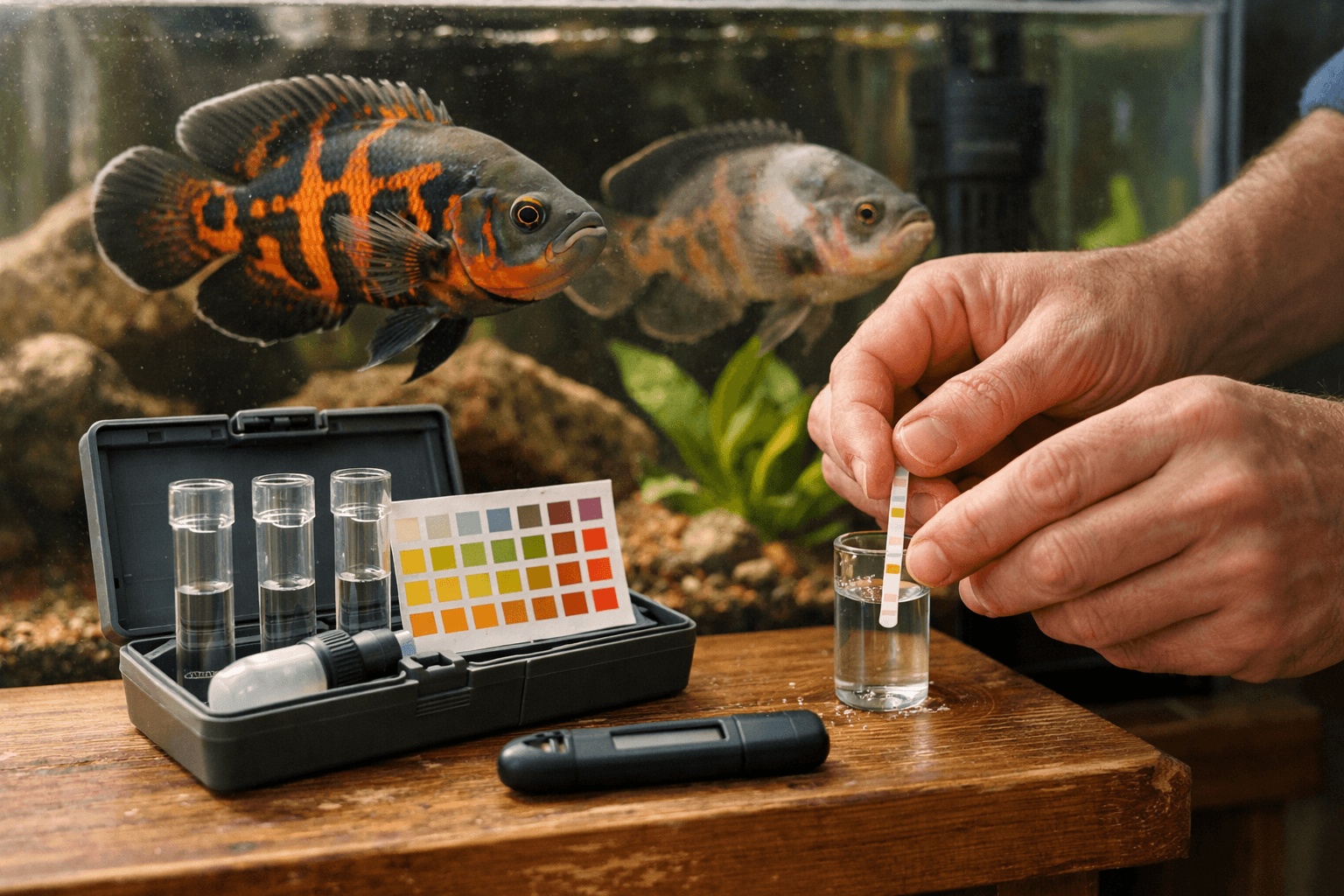
A reliable aquarium thermometer and an API Master Test Kit give you everything you need to track these without guessing.
Filtration Load: Why Oscars Need More Than a Standard Filter
Oscars produce roughly twice the waste of a similarly-sized community fish. A single adult needs filtration rated for at least double the tank volume, so a 75-gallon tank needs a filter rated for 150 gallons or more. A canister filter like the Fluval FX4 handles this load well and gives you the media capacity to run both mechanical and biological filtration simultaneously.
A hang-on-back filter alone won’t cut it. Ammonia spikes are the most common cause of oscar illness, and they happen fast with inadequate filtration. Running two filters on one oscar tank is a practical approach many experienced keepers use.
Building the Hardscape: Substrate, Anchored Décor, and Layout
Designing an oscar tank hardscape is closer to building a reptile enclosure than setting up a typical community fish tank. The fish will move things. Plan for that from the start, and you’ll spend a lot less time fishing decorations off the bottom.
Here’s a practical build order that keeps the layout stable:
Add your substrate layer first, at least 2 inches deep across the full bottom.
Place your largest anchor rocks directly on the bare glass before adding substrate around them.
Position driftwood pieces and wedge them against the rocks or the tank walls.
Fill in substrate around the hardscape to lock pieces in place.
Add any secondary décor only after the main structure is set.
Fill the tank slowly to avoid disturbing the layout during the initial fill.
Substrate Choices That Survive an Oscar’s Rearranging Habit
Use a coarse sand or fine gravel in the 2-3mm range — something like pool filter sand or a natural river gravel. Oscars dig constantly, and fine sand clouds less than you’d expect once it’s settled. Avoid small polished pebbles; oscars swallow them accidentally during feeding, which causes real digestive problems.
Aragonite sand is popular in cichlid tanks because it gently buffers KH upward, which helps stabilize pH. It runs about $15 to $20 for a 20-pound bag and works well in oscar setups where you want a little extra buffering without dosing chemicals.
Anchoring Rocks and Wood So They Stay Put
Place flat slate or smooth river rocks directly on the glass bottom before adding any substrate. This prevents an oscar from digging underneath and toppling a stack onto the glass — or worse, onto itself. Use aquarium-safe silicone to bond stacked rocks together if your layout goes more than two layers high.
For driftwood, Malaysian driftwood is dense enough to sink without weights and wedges firmly between rocks. Pieces that are too light will float or shift. Soak new driftwood for at least a week before adding it, or it’ll leach tannins heavily and drop your pH faster than you want.
What Tiger Oscar Cichlids Eat (and What to Stop Feeding Them)
The core of an oscar’s diet should be a high-quality pellet food, not feeder fish. Brands like Hikari Cichlid Gold or New Life Spectrum Cichlid Formula give you a nutritionally complete base. Feed adult oscars once or twice a day, with portions they finish in about 2 minutes.
Supplement pellets with frozen or thawed foods: bloodworms, krill, and silversides all work well. These add variety without the disease risk that live feeder fish carry.
Stop feeding feeder goldfish and feeder minnows. They’re a common disease vector. Ich and internal parasites transfer easily this way, and feeder fish are nutritionally poor on top of that. Oscars fed a heavy feeder-fish diet often develop Hole-in-the-Head disease over time, which is linked to nutritional deficiency and poor water quality together.
Treats like earthworms and crickets are fine occasionally. Keep them as extras, not staples.
Tank Mates That Actually Survive With Tiger Oscar Cichlids
Most small fish won’t last a week with a tiger oscar cichlid. Anything under 4 inches is a snack. Stick to fish that are large enough to hold their own and fast enough to avoid a territorial oscar.
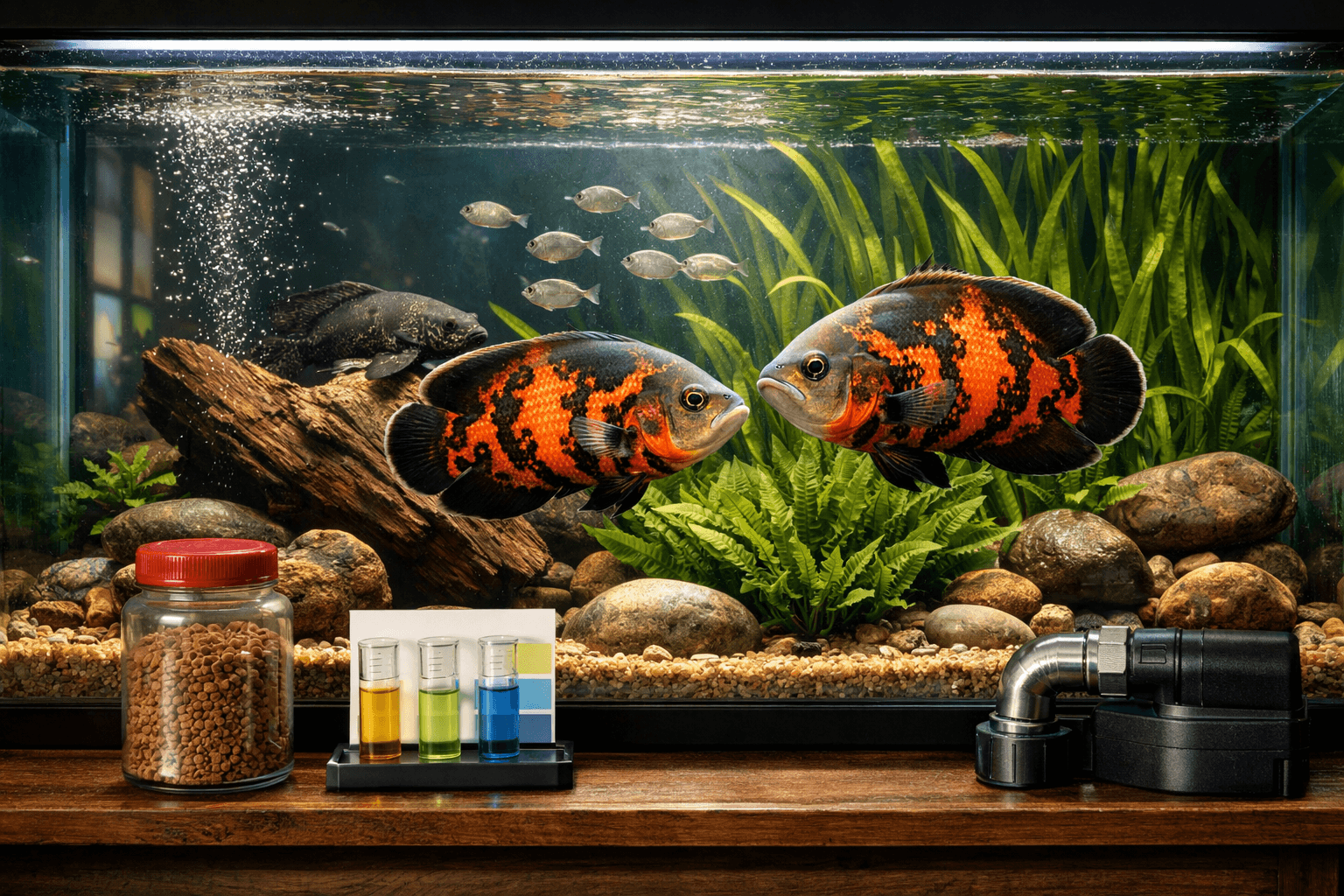
Good options include Jaguar cichlids, large plecos (a common bristlenose won’t cut it; go with a Sailfin pleco or a Rhino pleco at 10+ inches), and Silver Dollars. Silver Dollars are peaceful schooling fish that are quick and large enough to coexist without becoming targets.
Avoid any cichlid species with a similar coloring or territory pattern to oscars. Two visually similar fish in the same space increases aggression significantly. Jack Dempseys can work in a large enough tank (125 gallons minimum) but watch them closely during the first two weeks.
Never add shrimp, small tetras, or any fish marketed as “peaceful community” fish. They won’t survive the introduction.
Oscar Cichlid Behavior: Aggression, Personality, and Territory
Tiger oscar cichlids are one of the most personality-driven fish you can keep. They recognize their owners, react to movement outside the tank, and develop distinct individual habits. That’s part of what makes them so rewarding — but it also means their behavior tells you a lot about their health and stress level.
Aggression spikes most during feeding and when territory feels threatened. An oscar will charge the glass, flare its fins, and mouth-wrestle tank mates to establish dominance. This is normal cichlid behavior, not a sign something is wrong. What you do need to watch is sustained chasing — if one fish can’t escape and rest, it’ll weaken fast.
Territory is spatial. Oscars claim a section of the tank and defend it. In a 75-gallon setup with one oscar, this usually isn’t a problem. Add a second fish and the dynamics shift immediately. Rearranging the hardscape when you introduce a new tank mate resets territorial claims and reduces initial aggression noticeably.
Oscars also sulk. A fish that hides for a day after a water change or a new addition is usually just recalibrating, not sick.
Spotting Health Problems Before They Get Serious
Catch problems early and most oscar health issues are fixable. Wait until the fish stops eating or develops visible lesions, and you’re already behind. The earliest signs are behavioral, not physical.
Color Loss and Lethargy as Early Warning Signs
A tiger oscar cichlid that suddenly looks washed out is telling you something is wrong. Color fading — especially the orange-red patterning going dull — often happens 24 to 48 hours before other symptoms appear. Pair that with reduced activity or a fish hovering near the surface, and test your water immediately. Ammonia above 0.25 ppm causes this response fast.
Lethargy without color change can point to ich (Ichthyophthirius multifiliis), especially if you spot tiny white specks on the fins. Raise the temperature to 82°F and treat with a malachite green-based medication like Kordon Rid-Ich Plus at the first sign.
Hole-in-the-Head Disease and How to Prevent It
Hole-in-the-Head disease (Hexamita infection) shows up as small pits or erosions around the head and lateral line. It’s common in oscars fed poor diets or kept in water with chronically high nitrates. Prevention is straightforward: keep nitrates under 40 ppm and feed a varied, pellet-based diet. Metronidazole is the standard treatment if you catch it early.
Frequently Asked Questions
How long do tiger oscar cichlids live?
With good water quality and a solid diet, oscars commonly live 10 to 12 years in captivity. Some reach 15 years. The biggest factor is consistent tank maintenance — chronic poor water quality shortens lifespan faster than almost anything else.
Can I keep two tiger oscar cichlids together?
Yes, but the tank needs to be at least 125 gallons for a pair. Two oscars in a 75-gallon setup will fight constantly once they reach adult size. Introduce both fish at the same time and at similar sizes to reduce dominance problems.
Do tiger oscar cichlids need a heater year-round?
Yes. They need water between 74°F and 81°F consistently. Room temperature in most homes drops below that range in winter, so a reliable submersible heater rated for your tank size is non-negotiable. A 300-watt heater covers a 75-gallon tank in most indoor environments.
How often should I do water changes on an oscar tank?
Plan on changing 25% to 30% of the water every week. Oscars produce a lot of waste, and weekly changes are what keep nitrates under 40 ppm between filter cleanings. Skipping even two weeks in a row can push nitrates high enough to cause color fading and stress.