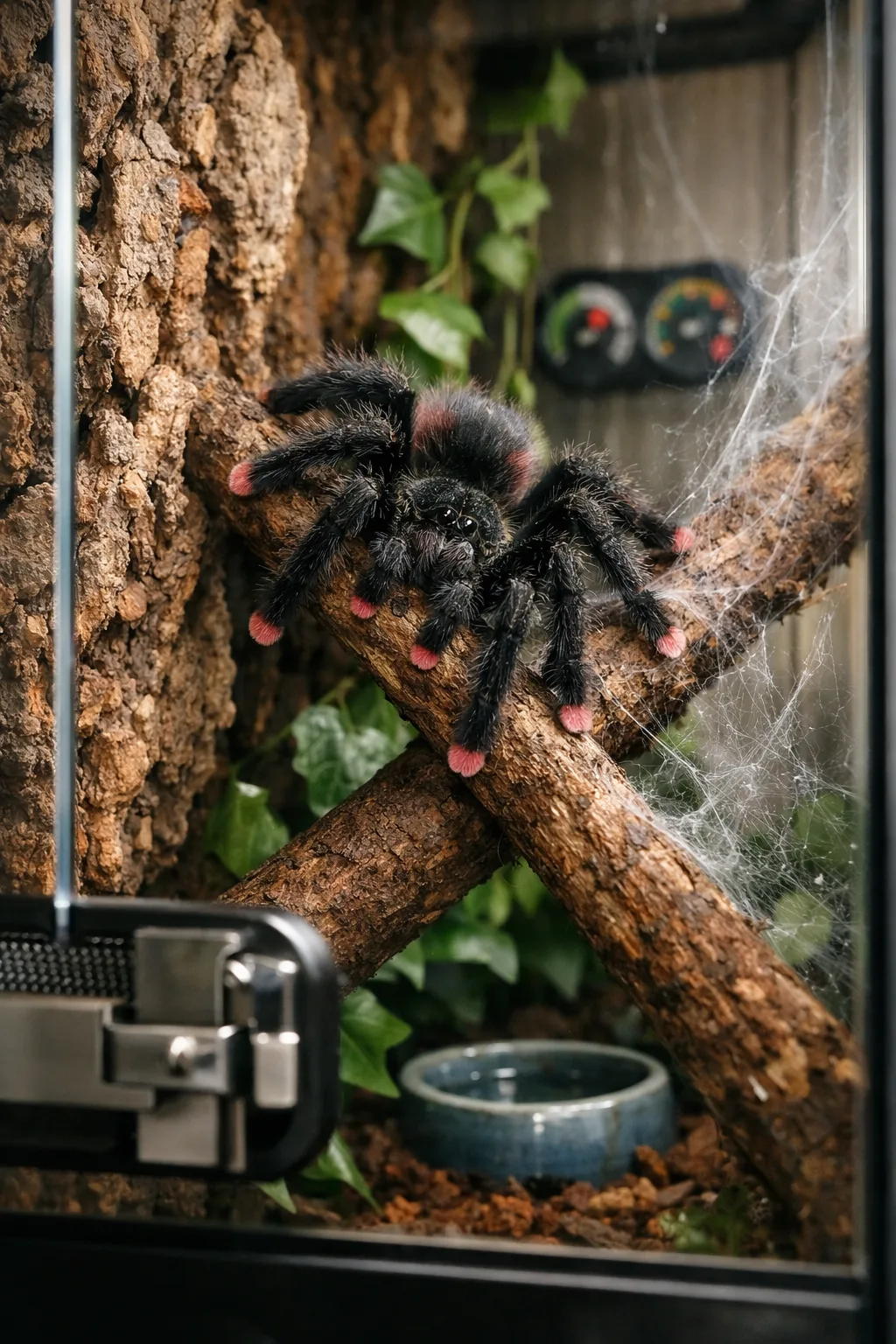
Fast. That’s the first thing you notice about a pink toed tarantula the moment it isn’t where you left it. This species, Avicularia avicularia, doesn’t sit still like a ground-dwelling terrestrial tarantula. It climbs, it webs, and it bolts when startled, which changes everything about how you should build its home.
Most care sheets just copy generic tarantula advice and call it a day. That’s a mistake here. Pink toes need vertical space, tight but breathable ventilation, and webbing room all balanced at once, or you’ll end up chasing a spider around your living room.
Enclosure Size and Shape: Why Height Beats Floor Space
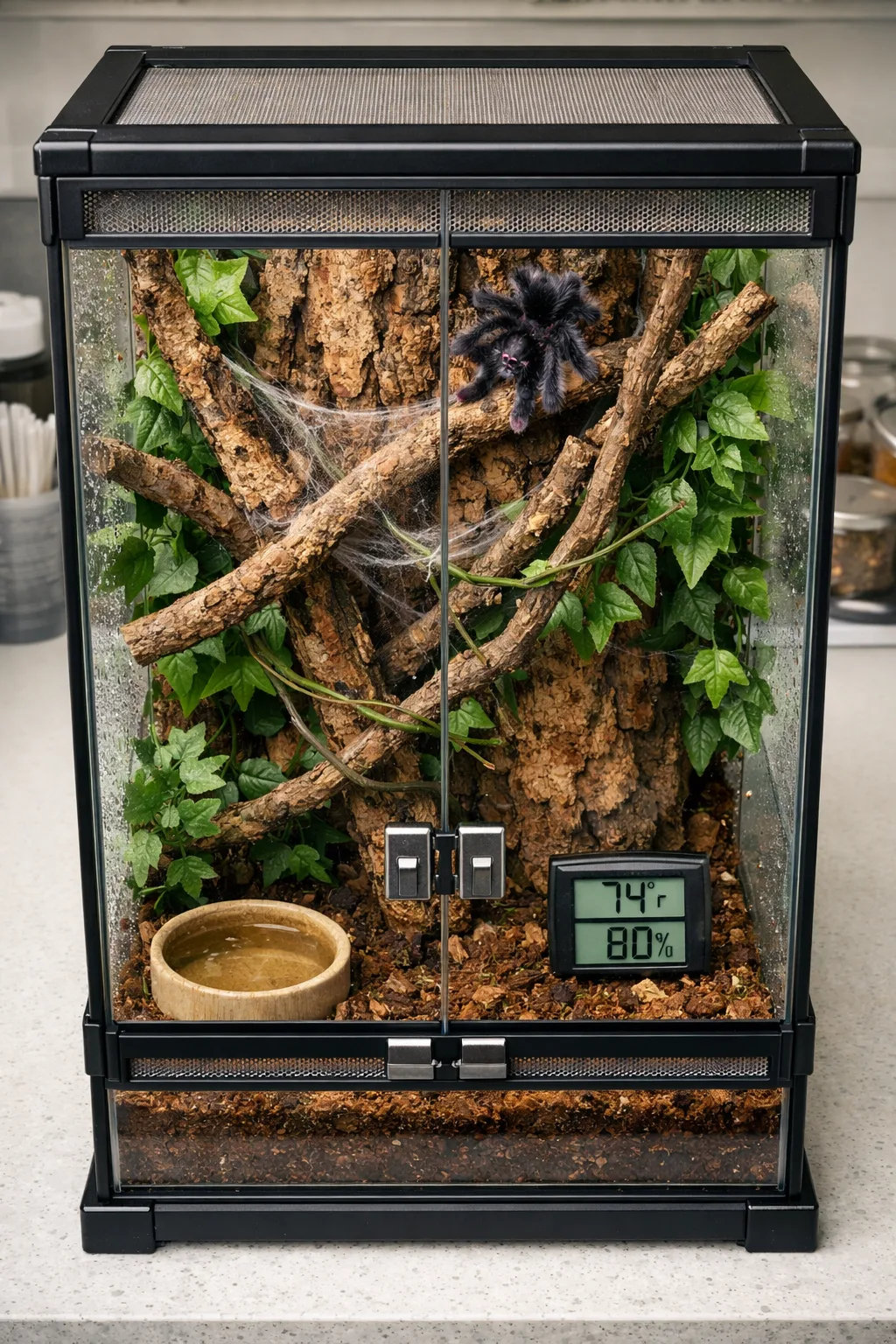
A pink toed tarantula needs a tall enclosure, not a wide one. Aim for a minimum of 12 inches tall for an adult, with floor space taking a back seat to vertical climbing room.
This is one of the most common mistakes I see in reptile shops and beginner setups: someone grabs a wide, flat terrarium built for a ground species like a Chilean rose hair, and drops a pink toe in it. The spider has no climbing structure, gets stressed, and spends its time pacing the glass looking for a way up.
What Size Actually Works
For a juvenile, a small container around 5-6 inches tall is fine short term, almost like a deli cup with sticks. For an adult, go with something in the 12x12x18 inch range or taller. Front-opening enclosures matter a lot here too, since a top-opening lid means reaching down past a fast spider that’s sitting near the top, which is exactly the setup where escapes happen.
Juvenile vs Adult Setups
Juveniles do better in smaller, more enclosed spaces at first. A tiny sling in a giant tank can actually struggle to find food and feel exposed. As it grows, you’ll size up two or three times over its life, each time adding more height and more branches.
Ventilation and Escape-Proofing Without Losing Humidity
You don’t have to choose between good airflow and good humidity. That’s the myth that trips up a lot of new keepers. Fine mesh screening on the upper two-thirds of the enclosure, paired with a mostly enclosed lower section, gives you both.
Pink toed tarantulas are escape artists partly because they’re strong and partly because they’re fast. A loose screen top, a gap around a sliding door, or a cracked corner seam is all it takes. I’d recommend enclosures with locking latches or clip-secured lids rather than anything that just rests on top.
Cross-ventilation matters more than one big vent. Small mesh panels on two or more sides let air move through without drying the whole enclosure out. If you’re shopping for pre-made arboreal enclosures, sites like petterrarium.com run through specific product options built for exactly this kind of cross-ventilated, front-opening design, which saves you from guessing.
Never use loose window screen with big gaps. Slings can and do squeeze through openings that look impossibly small to us.
Humidity, Substrate, and Water: Getting the Balance Right
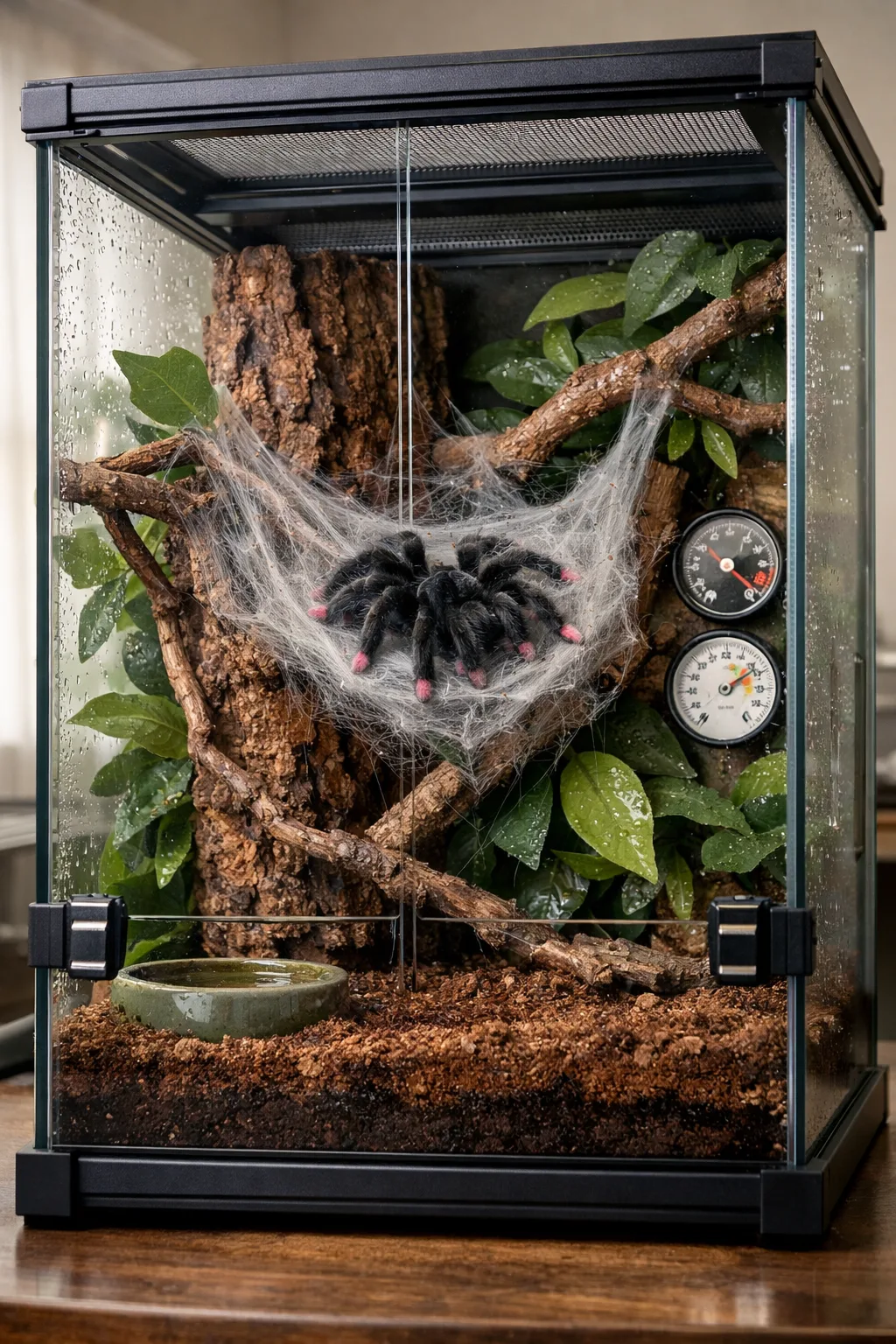
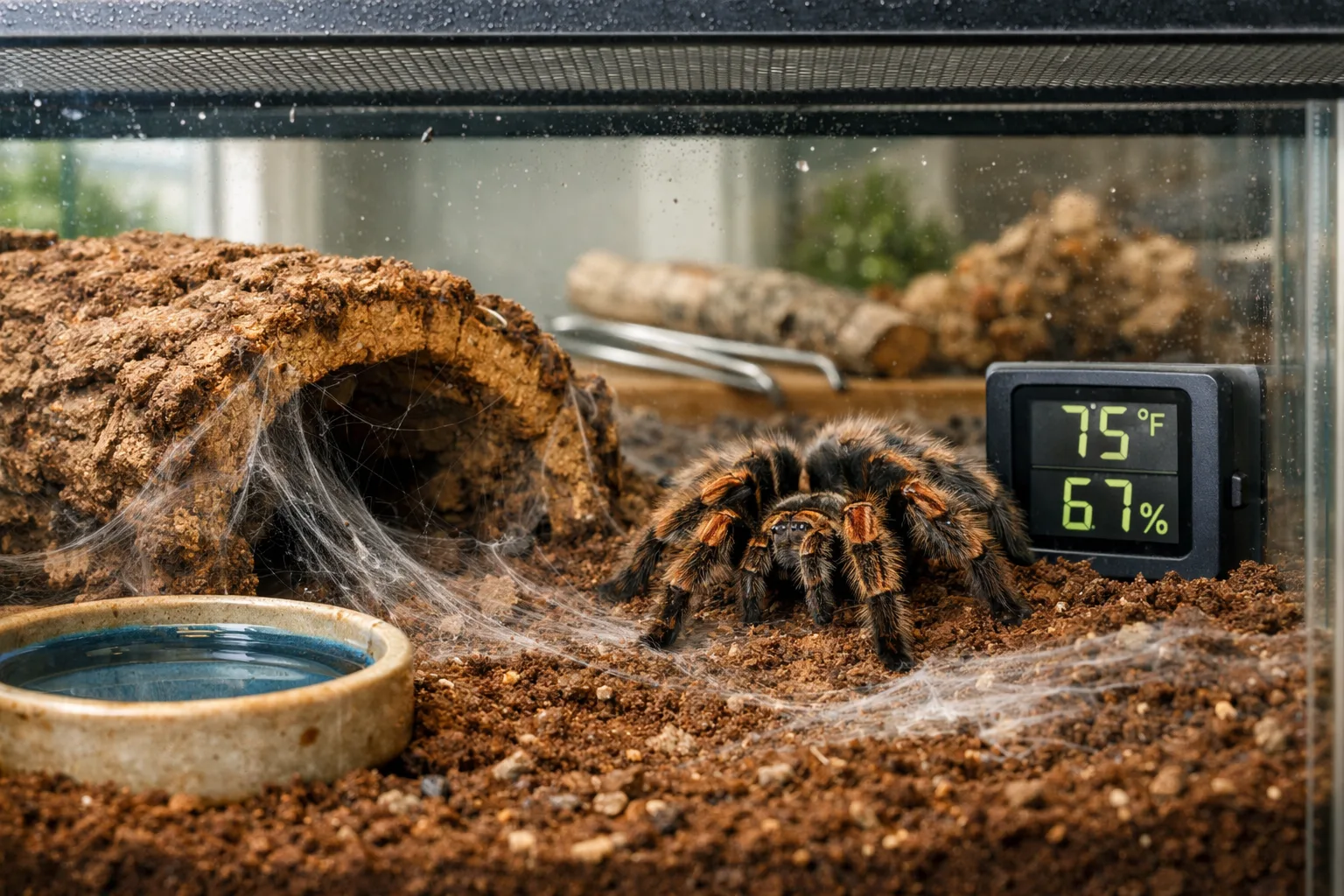
Keep humidity around 70-80% for most of the year, dropping slightly for adults. The real skill isn’t hitting a number on a gauge, it’s getting there without soaking the enclosure.
Substrate Choices for an Arboreal Setup
Since pink toes live up in branches, not on the ground, substrate depth matters less than it does for burrowing species. A 2-3 inch layer of coco fiber or a coco fiber and peat mix holds moisture well and supports some live plants if you want a natural look.
Misting Without Creating a Mold Problem
Mist one side of the enclosure every 2-3 days rather than soaking the whole thing daily. Constant dampness everywhere is how you end up with mold on the cork bark and stressed-out spider instead of a healthy one. Let it dry out a bit between mistings, and keep the water dish (yes, they do use one) shallow and clean, changed every few days.
Molting and Moisture Needs
Before a molt, a pink toe often stops eating and gets duller in color. Bump humidity slightly during this stretch and skip handling completely. A tarantula mid-molt is soft and defenseless, and even gentle disturbance can be fatal.
Climbing Structure, Webbing, and Temperature
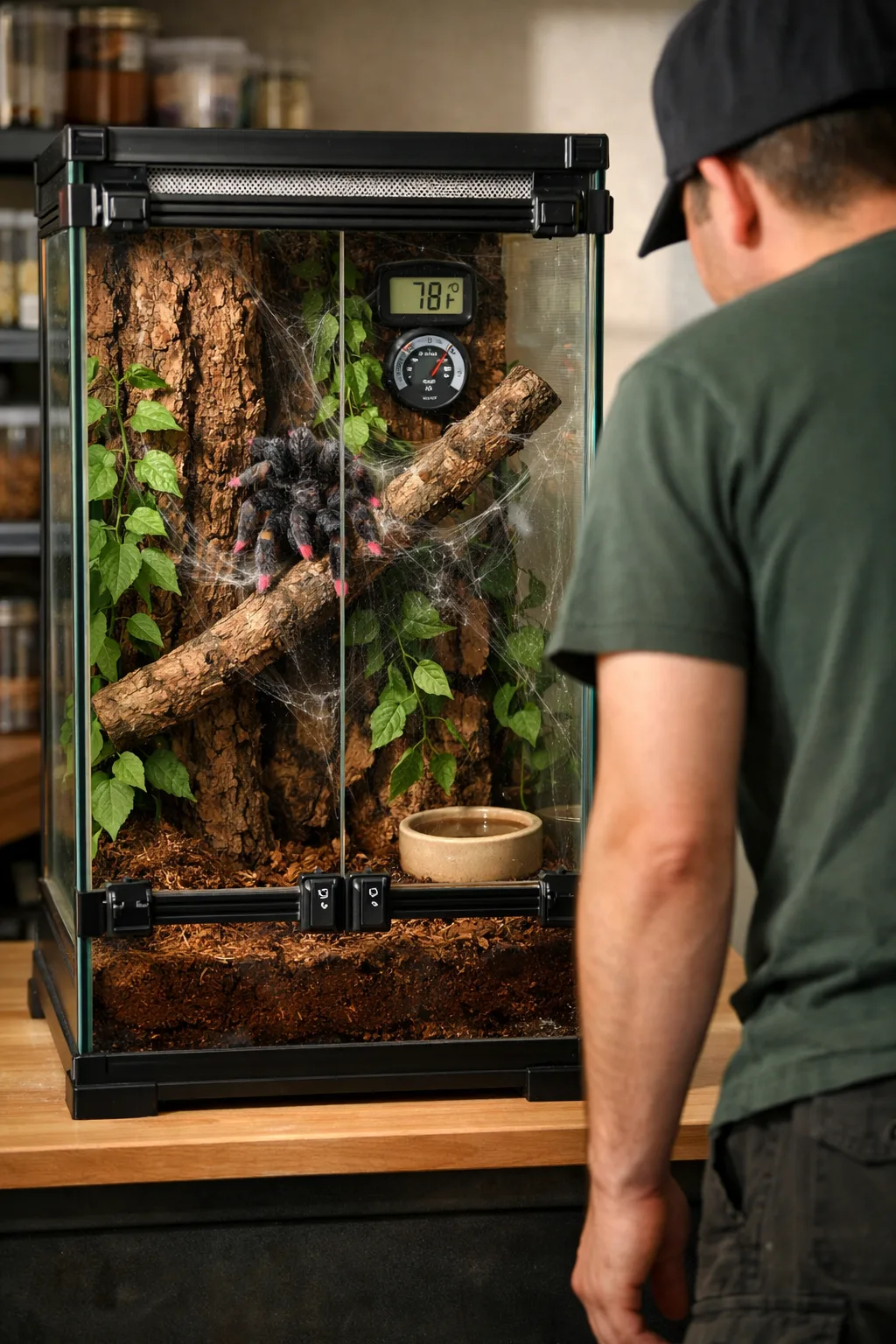
Fill the enclosure vertically with cork bark tubes, natural branches, and artificial or live plants angled upward. This is where pink toes spend basically their whole lives, so skimping on branches is the biggest missed opportunity in most builds.
Expect webbing everywhere within the first week or two. Pink toes build silk tube retreats and sheet webs between branches, and that’s completely normal, not a sign anything’s wrong. Place decor before the spider goes in, because rearranging a heavily webbed enclosure later stresses the animal and destroys work it won’t rebuild the same way twice.
Temperature should stay between 75-80°F during the day, dropping a few degrees at night. A low-wattage heat mat on the side of the enclosure, never the bottom, works better than overhead heat lamps, which dry out that upper webbing zone too fast.
Life Stage
Enclosure Height
Humidity Target
Misting Frequency
Sling (juvenile)
5-6 inches
75-85%
Every 1-2 days, light mist
Sub-adult
8-10 inches
70-80%
Every 2-3 days
Adult
12-18 inches
65-75%
Every 3-4 days
Here’s a quick sequence for setting up a new adult enclosure from scratch:
Add 2-3 inches of coco fiber substrate to the base.
Mist the substrate lightly until damp, not soggy.
Install cork bark and branches vertically, leaning corner to corner.
Add a shallow water dish at a mid-level branch or the floor.
Attach a side-mounted heat mat set to maintain 75-80°F.
Test the lid and latches before introducing the spider.
Add the tarantula last, during a calm, low-light time of day.
Handling, Temperament, and Everyday Care Realities
Pink toed tarantulas are not a handling species, even though they’re often marketed as beginner-friendly. They’re fast, prone to fleeing rather than defending, and a fall from even a short height can rupture their abdomen and kill them.
Overhandling is one of the most avoidable mistakes reptile shop owners and new keepers make with this species. It’s tempting because pink toes look calm and colorful, almost gentle. But speed, not aggression, is the real risk, since a startled pink toe can launch itself off your hand in a split second.
Daily care is honestly low-effort once the enclosure is dialed in. Feed appropriately sized crickets or roaches once or twice a week for adults, more often for slings, and check the water dish and humidity every couple of days. Most of your ongoing work is just watching, not intervening.
Frequently Asked Questions
Can pink toed tarantulas live together in one enclosure?
No, keep them separate. Pink toes are not communal and will cannibalize each other, especially once they reach sub-adult size and start competing for food and territory.
How do I know if my pink toed tarantula’s enclosure is too dry?
Watch the spider’s behavior, not just a hygrometer. Frequent time near the water dish, a shriveled or dull abdomen, or reluctance to move can signal low humidity even if your gauge reads close to 70%.
Is glass or PVC better for a pink toed tarantula enclosure?
PVC generally holds humidity more evenly and insulates heat better, while glass shows off the webbing display more clearly. Either works if ventilation and a secure, latch-style lid are set up correctly.