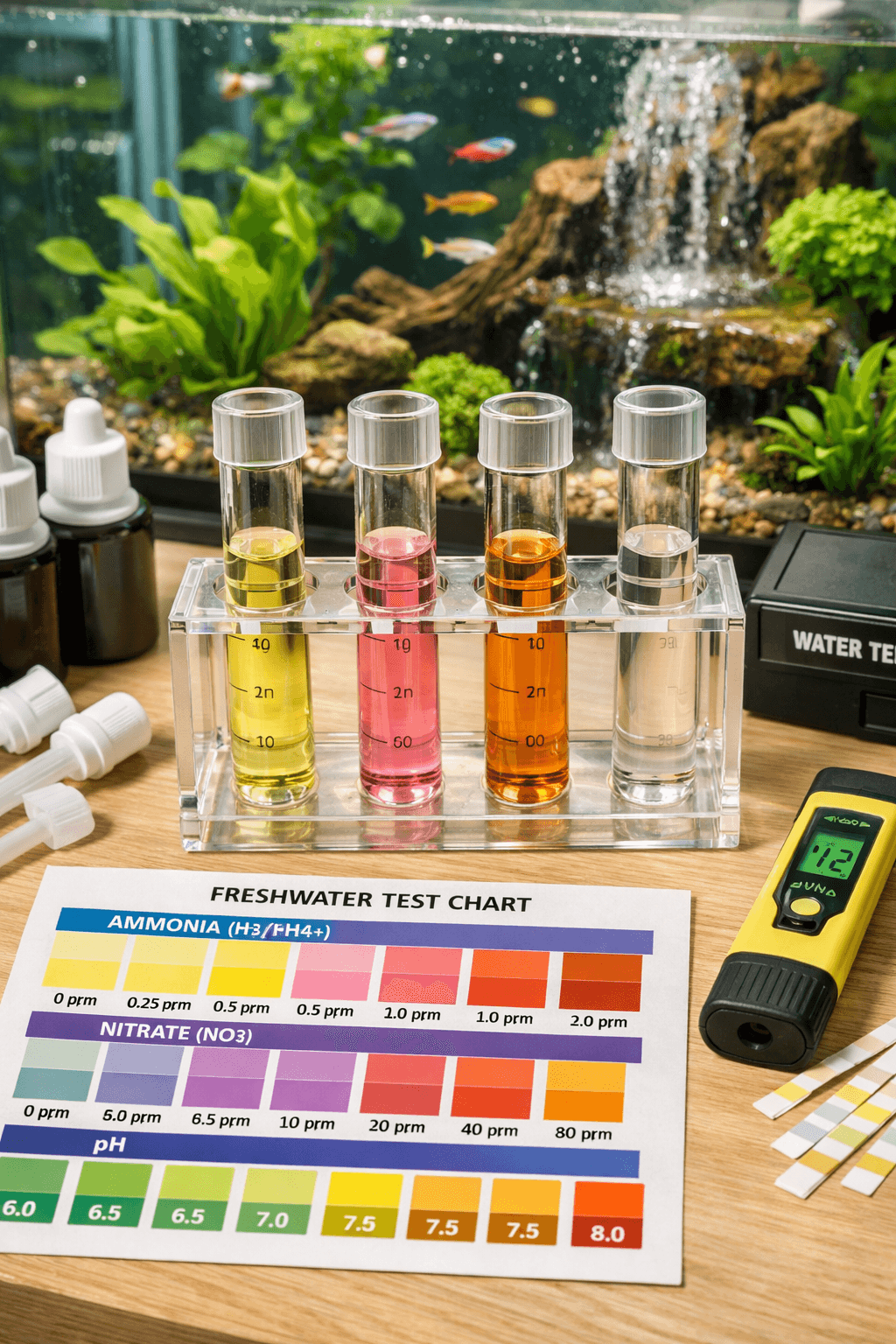
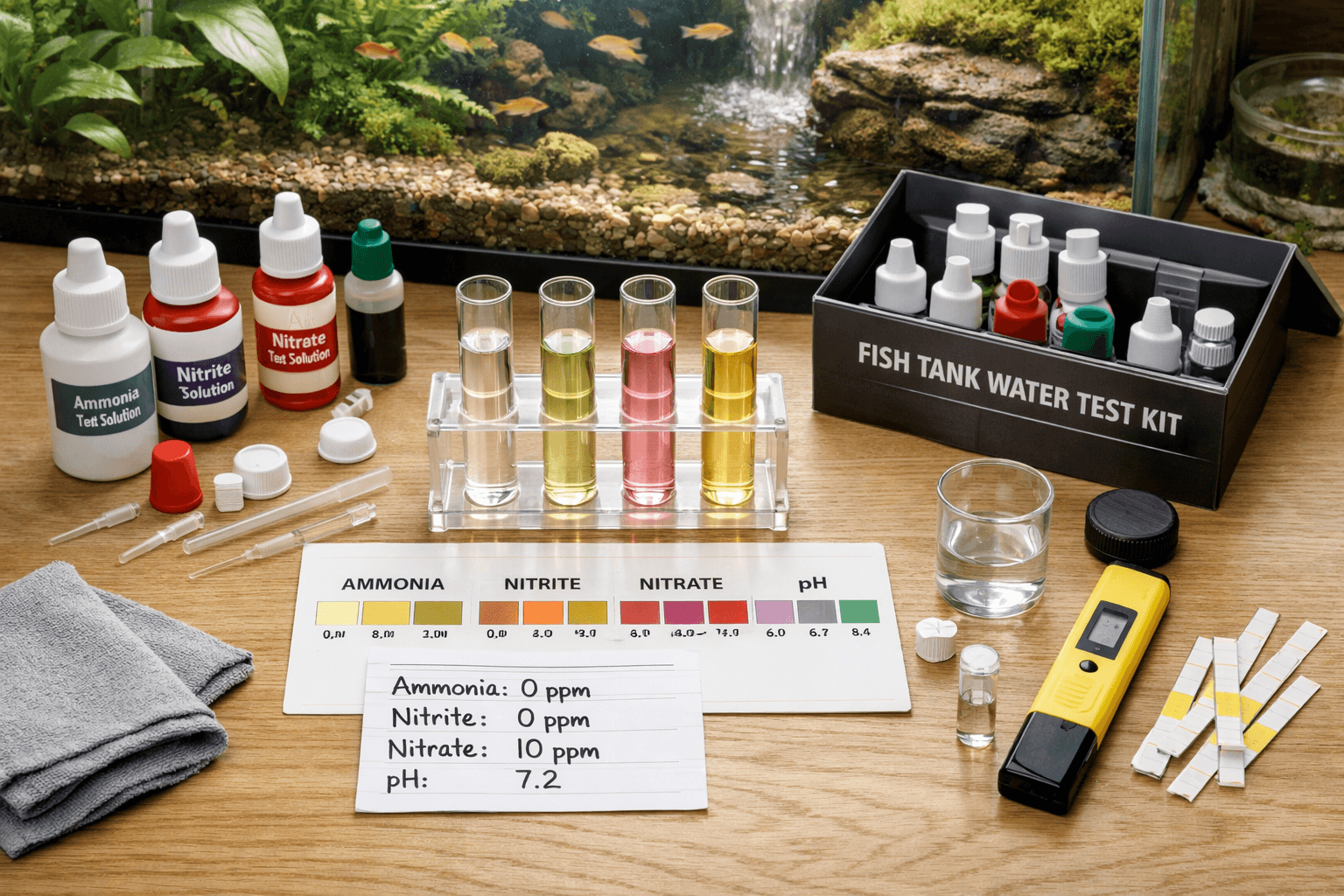
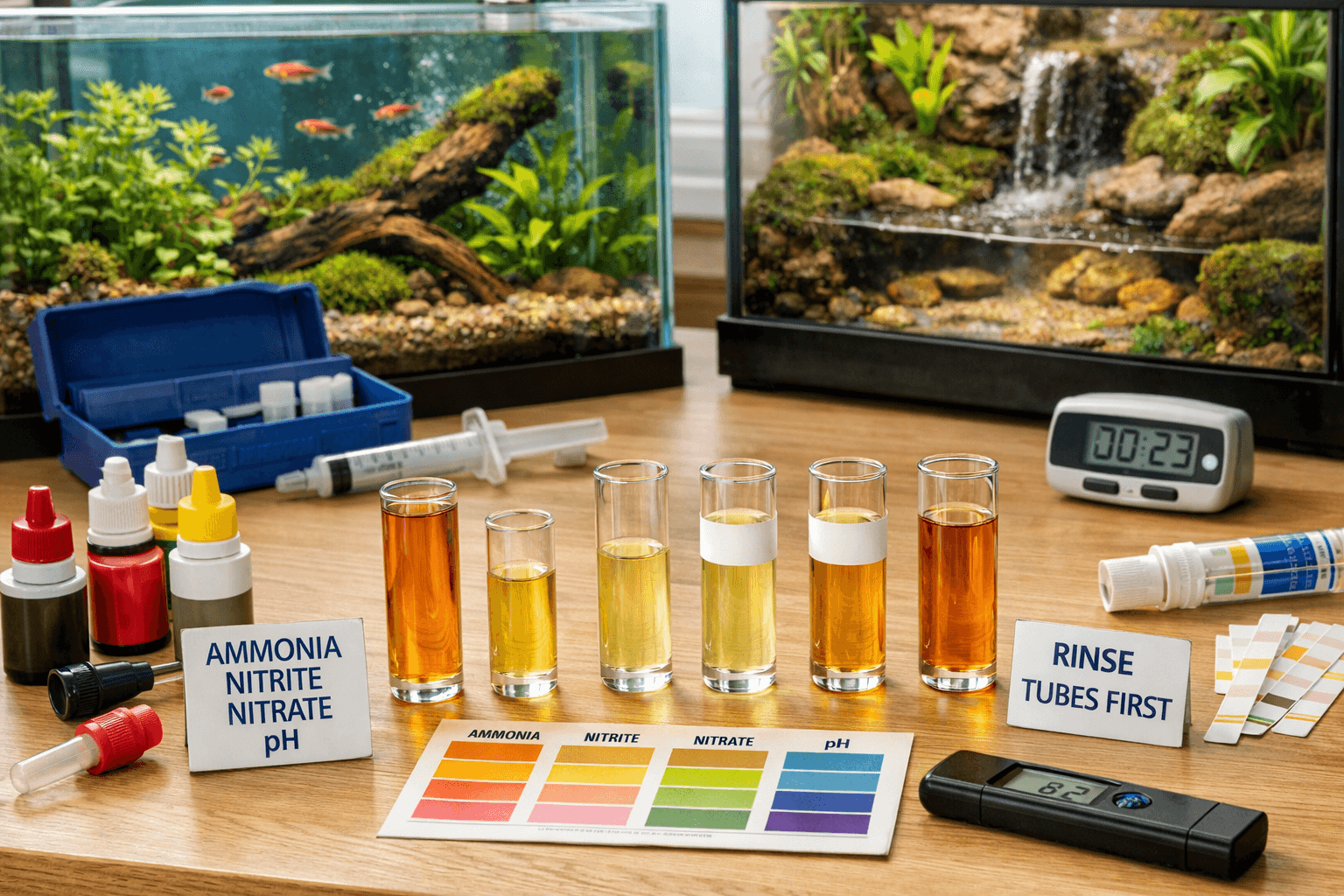
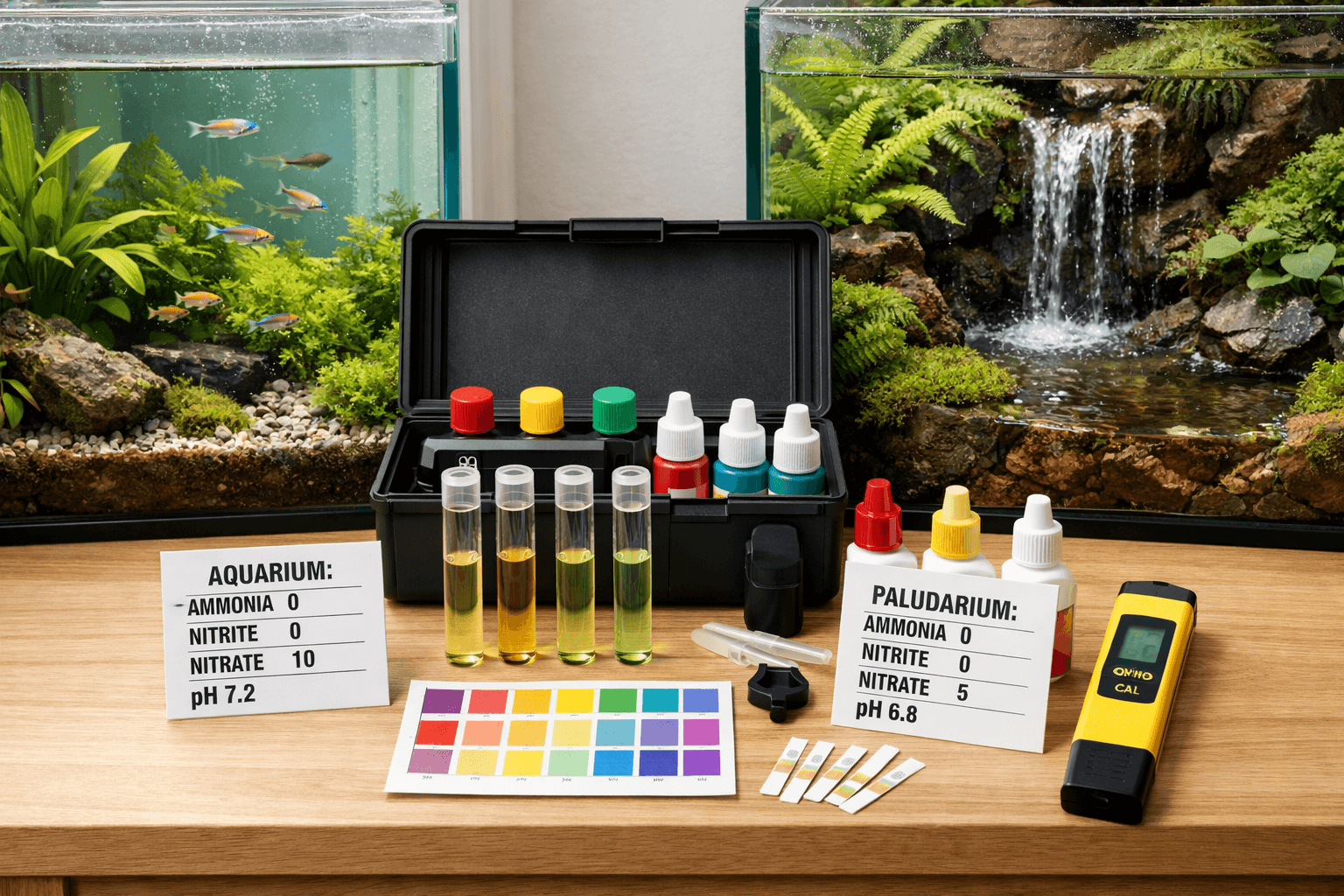
Your fish gasping at the surface, cloudy water, or a sick frog in your paludarium usually traces back to one thing: nobody caught a bad reading in time. A fish tank water test kit is the only real way to know what’s happening in your water before it shows up as a dead fish or a stressed reptile. Guessing by how “clean” the water looks just doesn’t cut it, since the most dangerous stuff, like ammonia, is completely invisible.
If you’re coming from the reptile or frog side of the hobby, this applies to you too. Any enclosure with standing water, whether it’s a turtle tank, a paludarium waterfall pool, or a dart frog’s water feature, runs on the same chemistry as a fish tank.
Why One Kit Type Beats the Other
Liquid reagent kits beat test strips for accuracy, and it’s not close. If you only buy one water testing tool this year, make it a liquid kit, not a box of strips.
Test Strips: Fast But Fuzzy
Strips are quick. Dip, wait 60 seconds, compare color. But the color bands on strips are wide, so a strip might show “safe” when your ammonia is actually creeping toward dangerous. They’re fine as a rough early-warning check between real tests, especially if you’re testing five tanks a week and need speed.
Liquid Reagent Kits: Slower But Trustworthy
Liquid kits use drops of chemical reagent mixed into a water sample, then you match the color against a printed chart. The API Master Test Kit is the one most hobbyists end up with, and it covers ammonia, nitrite, nitrate, and pH in one box for around $30 to $35. It takes 5 to 10 minutes per full test, but the color ranges are tighter and more reliable, which matters a lot when you’re trying to catch a nitrite spike before it hurts anything.
Digital water testers exist too, mostly for pH and TDS (total dissolved solids), and they’re handy for a fast daily pH check. But they don’t replace the reagent kit for ammonia and nitrite, since most consumer digital meters simply don’t test for those.
The Nitrogen Cycle Is What You’re Actually Testing For
Every new tank goes through a nitrogen cycle, and your test kit is how you watch it happen. Fish waste and leftover food break down into ammonia, beneficial bacteria convert that ammonia into nitrite, and a second type of bacteria converts nitrite into nitrate. This whole process usually takes 4 to 6 weeks in a brand-new setup.
During that cycling window, testing only pH and calling it good is one of the biggest mistakes new keepers make. pH tells you almost nothing about whether ammonia is building up to lethal levels. You need all three: ammonia, nitrite, and nitrate, checked together, especially in the first month.
Here’s roughly what you’re watching for at each stage:
Parameter
Safe Range (Established Tank)
Danger Sign During Cycling
Ammonia
0 ppm
Any reading above 0.25 ppm
Nitrite
0 ppm
Any reading above 0 ppm
Nitrate
Under 20-40 ppm
Rising fast with no water changes
pH
6.5-7.5 (species dependent)
Sudden swing of 0.5 or more in a day
Once a tank is fully cycled, ammonia and nitrite should sit flat at zero. If either one ever pops back up, something changed. Overfeeding, a dead snail you missed, or a filter that got cleaned too aggressively are the usual culprits.
GH and KH: The Numbers Most Beginners Skip
GH (general hardness) and KH (carbonate hardness) measure the minerals in your water, and skipping them is a mistake that catches up with you later. GH affects whether your fish or amphibians are getting the calcium and magnesium they need, and KH controls how much your pH swings around.
Low KH is the quiet cause behind a lot of “my pH keeps crashing overnight” posts in fish forums. Without enough carbonate buffering, pH can drop hard between water changes, stressing out sensitive species like discus or certain dart frogs kept in humid paludariums with a water feature. Testing GH and KH monthly, or whenever you notice pH acting unstable, catches this before it becomes a pattern.
Most full liquid kits, including combo boxes sold alongside the API line, include GH and KH tests as an add-on. It’s worth the extra $10 to $15 if your main kit doesn’t already have it.
Getting Accurate Readings: The Mistakes That Wreck Your Results
A test kit is only as good as how you use it, and this is where most bad readings actually come from. Bad technique produces false numbers just as often as a bad kit does.
Shake the reagent bottles hard, 10 to 15 seconds, every single time. Skipping this is probably the single biggest cause of skewed readings.
Use the exact drop count and timing printed on the box. Five drops instead of four, or reading the color two minutes early, throws off the whole result.
Check expiration dates before testing. Reagents older than 12 to 18 months, especially ammonia and nitrite bottles, start giving false negatives.
Read color charts in natural daylight, not under a yellow bulb or tinted aquarium light, since bad lighting shifts how colors look.
Hold the test tube directly against the white background on the chart, not off to the side, for the truest color match.
Test at the same time of day and before doing any water changes, so your readings stay comparable week to week.
Retest anything that looks off instead of assuming it was a one-time glitch.
Believing one test is enough is another trap. Water chemistry drifts. A tank that tested perfect last month can shift after adding new fish, a bigger feeding schedule, or a dead plant rotting in a back corner.
Same Kit, Every Enclosure With Water
Here’s the part most fishkeeping guides never mention: you don’t need a separate kit for every tank type. The exact same liquid reagent chemistry that works on a goldfish tank works on a turtle tank, a paludarium waterfall pool, or a frog enclosure’s water dish.
If you’re running a bioactive paludarium with a standing water section for your frogs or newts, that water builds up ammonia from waste exactly like a fish tank does. Testing it with the same API-style kit you’d use for fish gives you a real answer instead of a guess.
A lot of terrarium keepers end up buying three or four “specialty” kits before realizing one good liquid reagent kit covers all of it. For water conditioning specifics tied to paludarium builds, checking a dedicated terrarium resource like petterrarium.com’s water conditioning guides can help you match the right dechlorinator and testing routine to your particular setup. Keeping one master kit on the shelf, restocking reagents every 6 to 12 months, is the simplest habit that pays off across every water-holding enclosure in the house.
Frequently Asked Questions
How often should I test my fish tank water?
Test ammonia, nitrite, and nitrate weekly during a new tank’s first 4 to 6 weeks of cycling, then every 2 weeks once it’s stable. Test right away if fish act sick or the water looks off.
Do test strips work well enough for a beginner tank?
They work for quick spot-checks, but not as your main tool. Strips read in wide color bands, so a liquid reagent kit like the API Master Test Kit gives a more precise picture, especially during cycling.
Can I use a fish tank test kit on my turtle or frog tank water?
Yes. The same ammonia, nitrite, nitrate, and pH chemistry applies to turtle tanks, paludarium pools, and frog water dishes. One liquid reagent kit covers all of them, no separate product needed.