Watch one video of a basilisk sprinting across a pond and you’ll understand the hype instantly. That “Jesus lizard” trick is real, but it’s also the reason so many people buy one without knowing what the care actually involves. A basilisks lizard is not a calm, easy-handling starter reptile, and the sooner you know that, the better your setup and your lizard will turn out.
That doesn’t mean you should skip this species. It means you go in with a real plan for size, water, and stress management, and you’ll end up with a genuinely thriving animal instead of a stressed one hiding in the corner.
What Exactly Is a Basilisks Lizard?
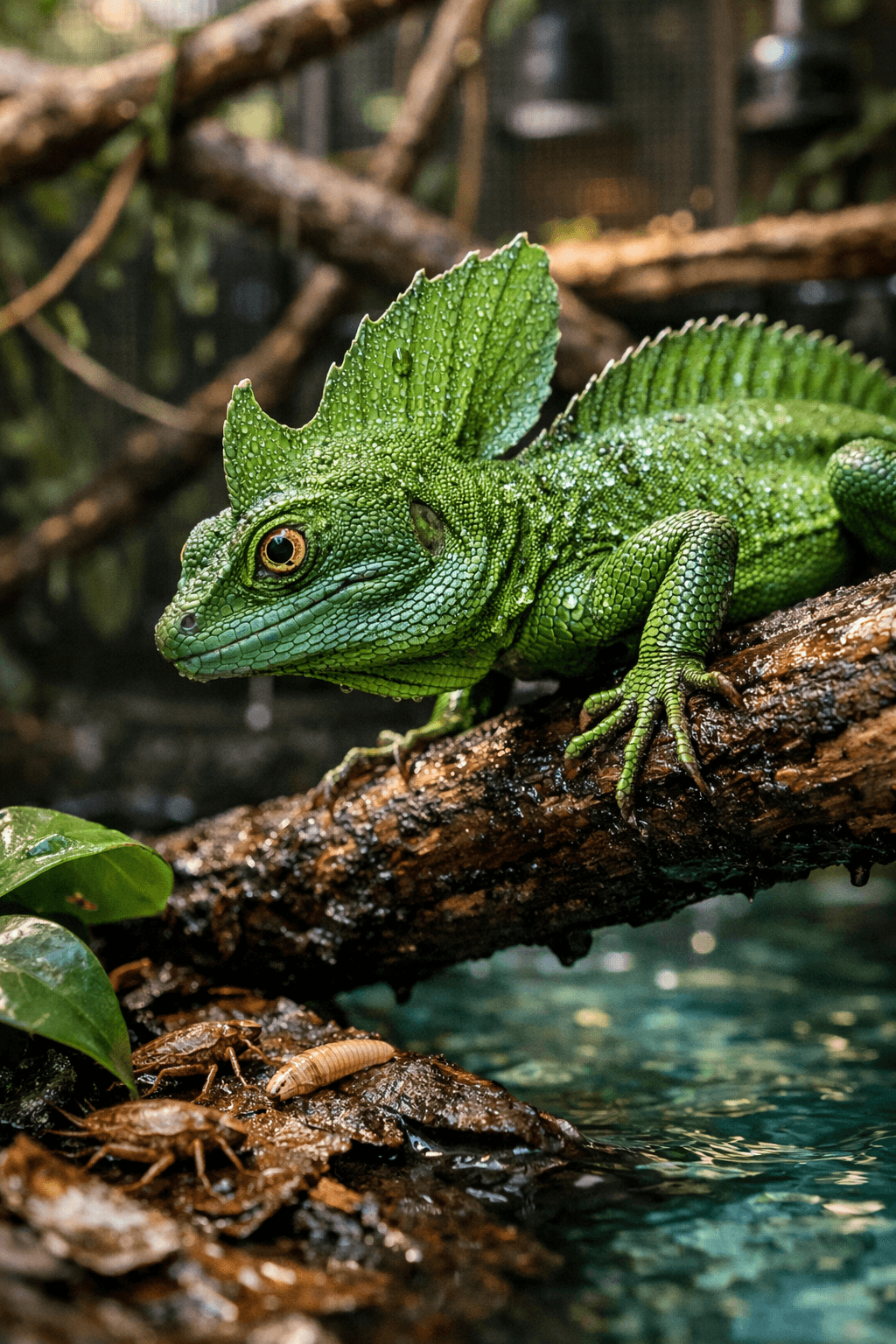
Basilisks are fast, tall-bodied lizards from Central and South America, and the green basilisk (also called the plumed basilisk) is the one you see running on water in most viral clips. Brown, striped, and red-headed basilisks are the other common species in the hobby, and they range from about 18 inches to over 2 feet long depending on species and sex.
Males often grow a tall head crest and a body crest running down their spine, which is part of why they photograph so well. Females are smaller and plainer, which matters if you’re picking one out at a reptile shop and want to know what you’re actually getting.
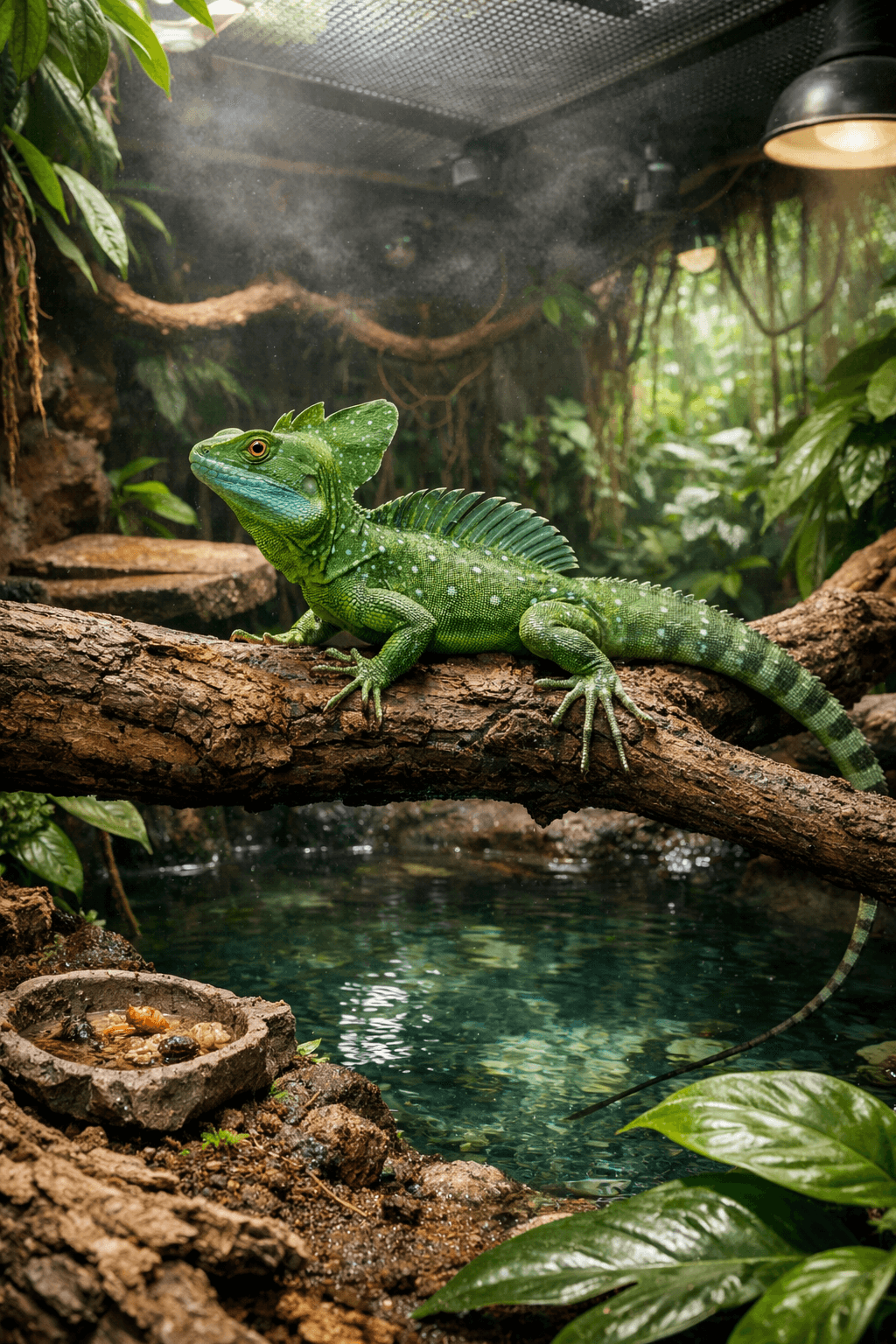
They’re semi-aquatic and arboreal at once — they live in trees near water and drop in when startled or hunting. That combo is exactly what makes their care demanding: you’re not building a simple ground terrarium, you’re building a small rainforest riverbank.
Habitat Setup: Why a “Simple Tank” Doesn’t Work Here
A basilisks lizard needs a tall, spacious enclosure with a real water basin, not a standard glass tank with a shallow water dish tossed in. Undersizing the habitat is the single biggest reason pet basilisks stay stressed and injured for their whole lives.
Tank Size and Shape
For one adult green basilisk, aim for an enclosure at least 4 feet tall, 3 feet wide, and 2 feet deep — bigger is always better with this species. Juveniles can start smaller, around 2 feet tall by 18 inches wide, but they outgrow that fast, often within their first year. Buying the adult-size enclosure from the start saves you money and a stressful mid-year move.
The Water Feature Isn’t Decoration
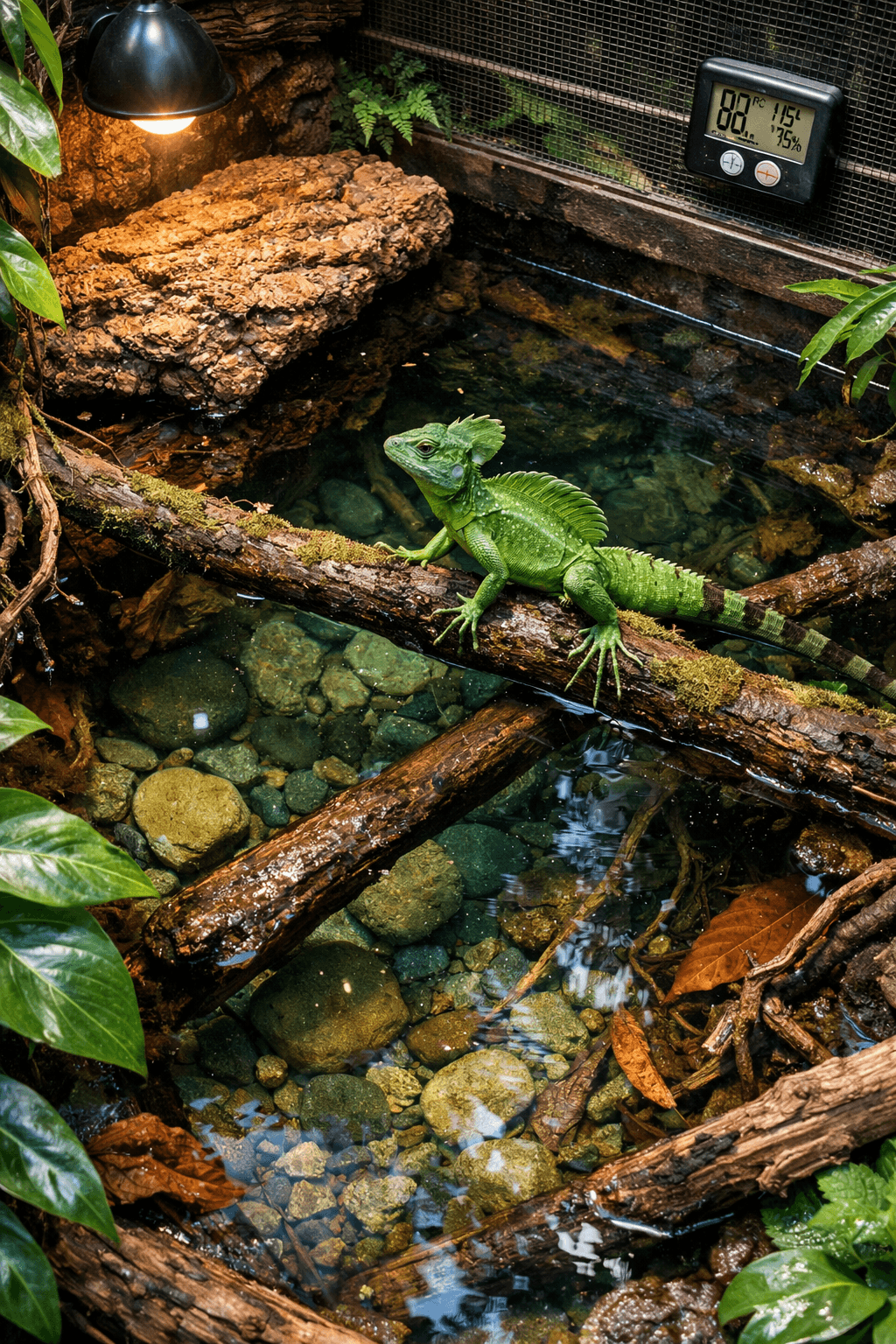
The water basin is a functional part of the habitat, not a design choice. It needs to be deep enough for full submersion (at least 8-12 inches) and wide enough for the lizard to actually run across the surface when startled, which is instinctive behavior, not a party trick. Skip this and you get a bored, anxious lizard that has nowhere to release its natural flight response.
Substrate, Plants, and Climbing Structures
Use a moisture-holding substrate like coconut fiber mixed with organic topsoil, kept a few inches deep so it holds humidity without turning to mud. Add sturdy branches at multiple heights, since basilisks spend a lot of time perched above their water source watching for danger. Live plants (pothos, ficus, bromeliads) help humidity stay stable and give the lizard visual cover, which cuts down on stress pacing against the glass. If you want a full build walkout for a rainforest-style enclosure like this, petterrarium.com has step-by-step tutorials that cover drainage layers and misting systems in more detail.
Temperature, Humidity, and Lighting: Getting the Numbers Right
Basilisks need a warm basking spot, a cooler side, and humidity that stays high most of the day, and getting any one of these wrong shows up fast as lethargy or skin issues. This is one of the make-or-break parts of keeping this species alive long-term.
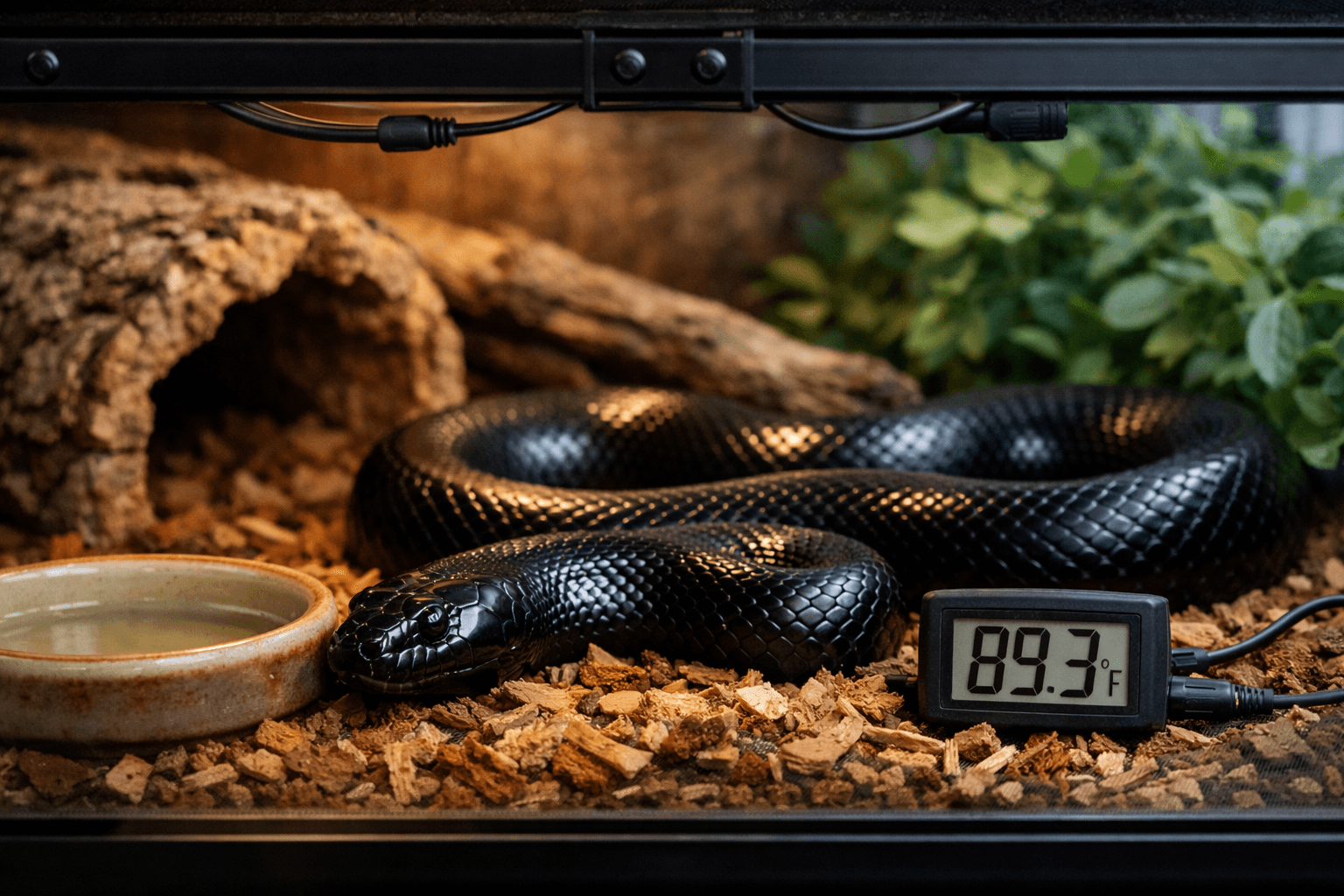
Basking surface temps should sit around 90-95°F, with the ambient side of the enclosure in the mid-70s to low 80s at night. Humidity needs to stay between 70-80%, which means daily misting or an automatic mister, plus that big water basin doing double duty as a humidity source.
UVB lighting is non-negotiable for this species — use a T5 HO UVB bulb across the top of the enclosure, replaced roughly every 6-12 months even if it still lights up, since UVB output drops well before the bulb burns out. Skipping UVB is one of the fastest ways to end up with metabolic bone disease in a lizard that’s otherwise being fed and housed well.
Requirement
Juvenile
Adult
Enclosure height
2 ft
4+ ft
Basking temp
88-92°F
90-95°F
Humidity
70-80%
70-80%
UVB bulb
T5 HO, required
T5 HO, required
Diet: Insects First, Rodents as a Rare Extra
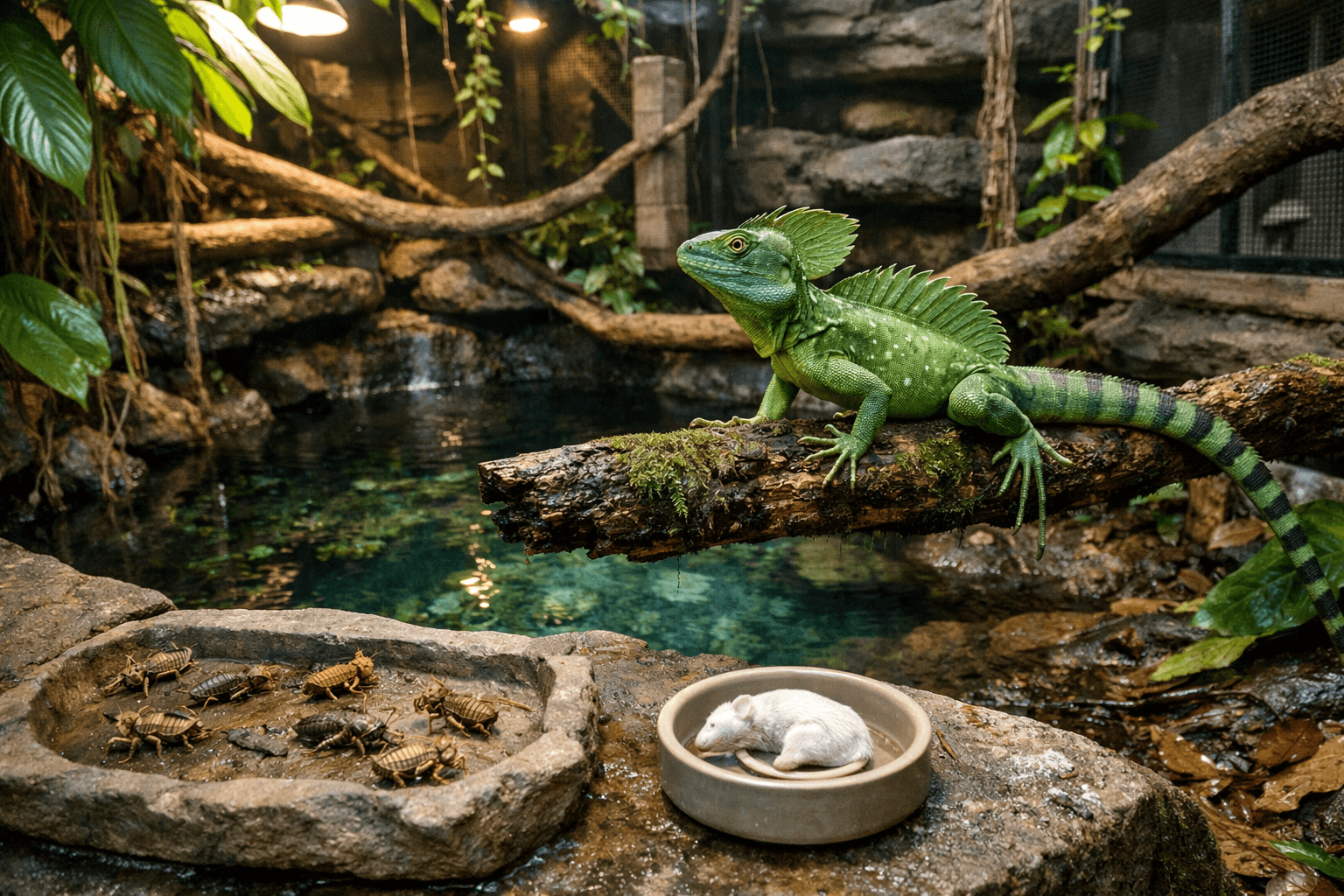
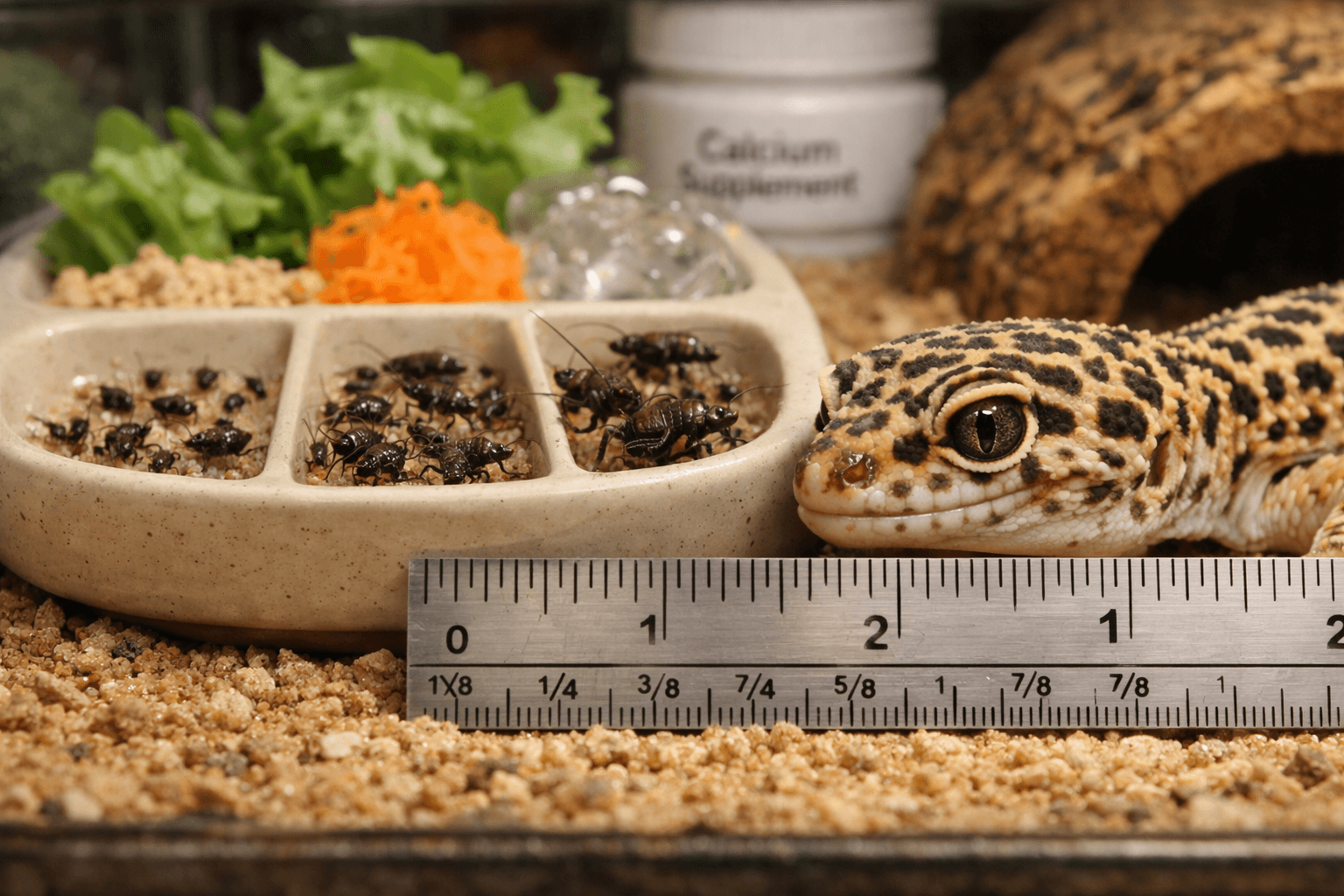
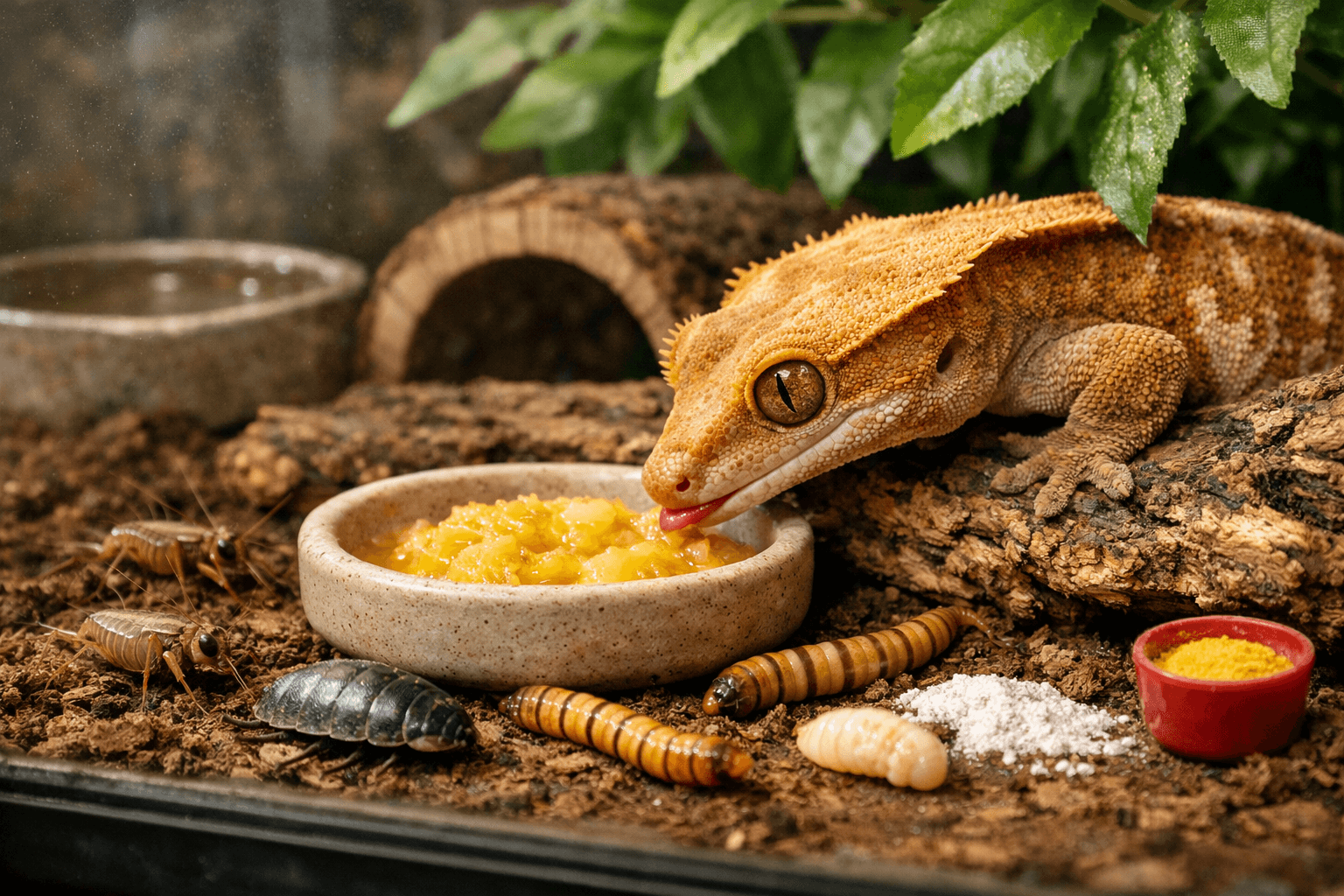
Basilisks are insectivores as juveniles and become more omnivorous as adults, so a diet that’s rodent-heavy is a mistake a lot of new owners make. Crickets, dubia roaches, and occasional silkworms should make up the bulk of the diet, especially for animals under a year old.
Feed juveniles gut-loaded insects daily, dusted with calcium powder at most feedings.
Add a calcium-with-D3 dusting two to three times a week if UVB exposure is limited.
Introduce small amounts of chopped fruit and leafy greens as the lizard matures past 8-10 months.
Offer an occasional pinky mouse or small feeder fish to adults, no more than once every week or two.
Always provide fresh water in the basin, since basilisks drink from moving or standing water constantly.
Adults can handle a little more variety, but rodents should stay an occasional treat, not a staple. Overfeeding fatty prey items is a fast way to end up with an overweight basilisk that stops climbing and basking the way it should.
Handling, Temperament, and the Injury Risk Nobody Mentions
Basilisks are skittish by nature, and that’s not something training fixes — it’s baked into the species. Most bolt at sudden movement, and that bolting is exactly what causes the most common health problem in captive basilisks: rostral injuries from repeatedly running into glass.
Why They’re Not a Beginner Handling Pet
Frequent handling stresses them out, and a stressed basilisk in a glass enclosure often responds by sprinting straight at the nearest wall. Over weeks, that shows up as a scraped or swollen nose, sometimes bad enough to need a vet visit. If you want a lizard you can handle daily, a bearded dragon is a far better fit; save the basilisk for someone comfortable with a mostly hands-off, observation-based relationship.
Reducing Stress and Injury Long-Term
Dense planting, sight barriers, and a large enough footprint all reduce the glass-running behavior significantly. Approach the enclosure slowly, avoid quick hand movement near the glass, and limit handling to short, calm sessions once the lizard is well established, usually after 4-6 weeks of settling in. With lifespans of 7-10 years in captivity and steady breeding success once pairs are conditioned properly, a well-set-up basilisk can genuinely be a rewarding, decades-spanning hobby project — just not a lizard you casually pick up on your first day home.
Frequently Asked Questions
Are basilisks good pets for beginners?
Not really. They’re skittish, prone to rostral injuries from glass-running, and need a large water-inclusive enclosure from day one, which makes them a better second or third reptile than a first one.
How big does a basilisk tank need to be?
Adults need at least 4 feet tall, 3 feet wide, and 2 feet deep, with a deep water basin (8-12 inches) included, not a simple ground-level tank with a water dish.
What do basilisks eat most of the time?
Mostly insects like crickets and dubia roaches, especially as juveniles, with fruit and greens added as they mature. Rodents should stay occasional treats, not a regular part of the diet.