Grab the wrong size cricket and you’ve got a real problem on your hands: impaction, a spooked lizard, or a feeder bug that just hides in the substrate for three days. Crickets for lizards aren’t one-size-fits-all, and the size you pick depends on your lizard’s age, species, and even the width between its eyes. Get this part right and feeding time stops being a guessing game.
Most people search this topic wanting a fast size chart. But the bigger risk hobbyists miss isn’t sizing at all — it’s what happens to leftover crickets after lights-out, and whether those bugs were fed anything worth passing on nutritionally.
How Big Should Crickets Be for Your Lizard?
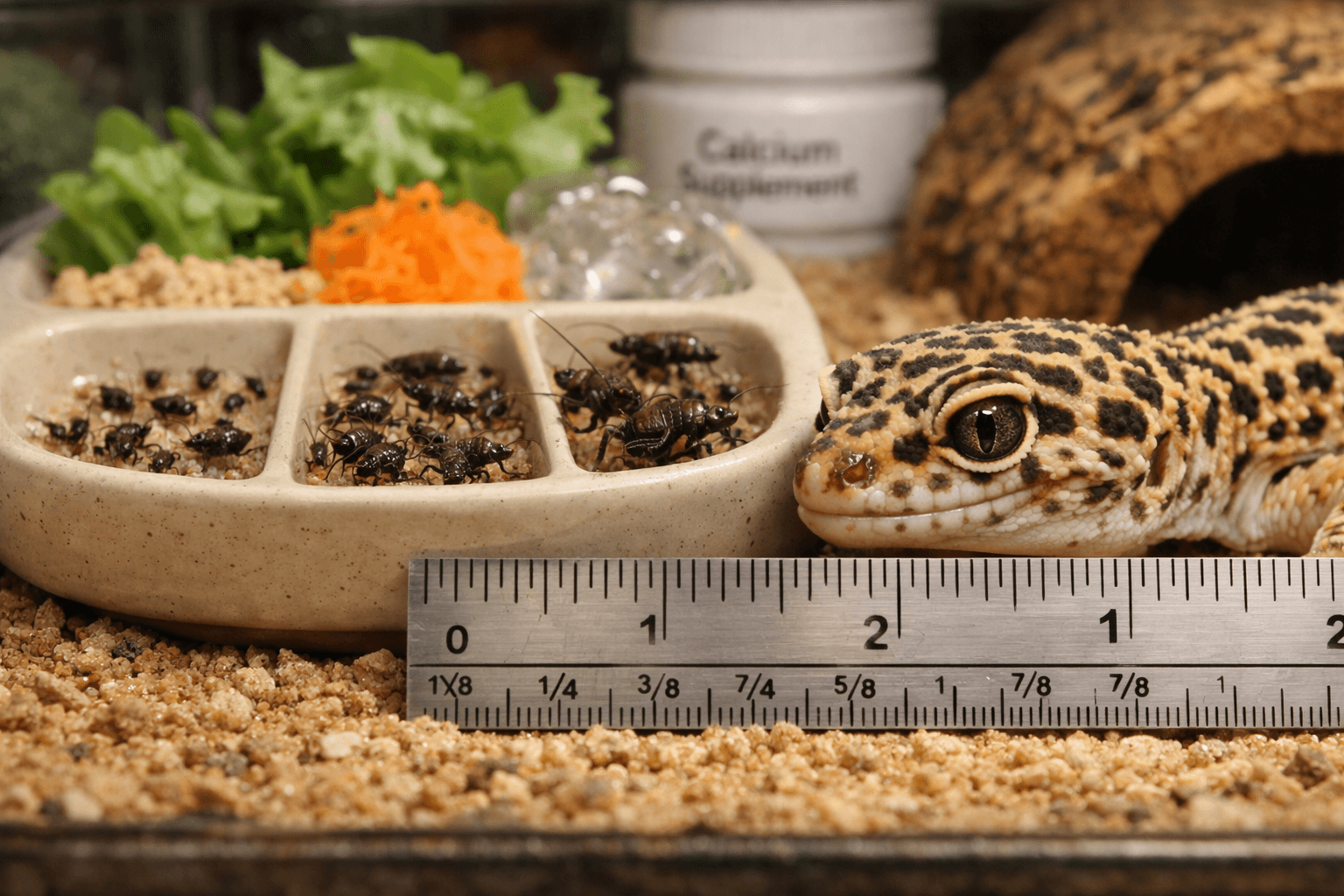
The safest rule is the eye-spacing rule: a cricket’s body should be no longer than the space between your lizard’s eyes. Go bigger than that, and you’re raising the odds of impaction, especially in young or smaller-bodied species.
This isn’t just a rough guideline — it’s the single biggest impaction-prevention habit you can build into feeding time. A lot of new keepers assume “small crickets for babies, big crickets for adults” is close enough, but that ignores skull width differences between species. A leopard gecko and a bearded dragon of similar length don’t have the same jaw capacity.
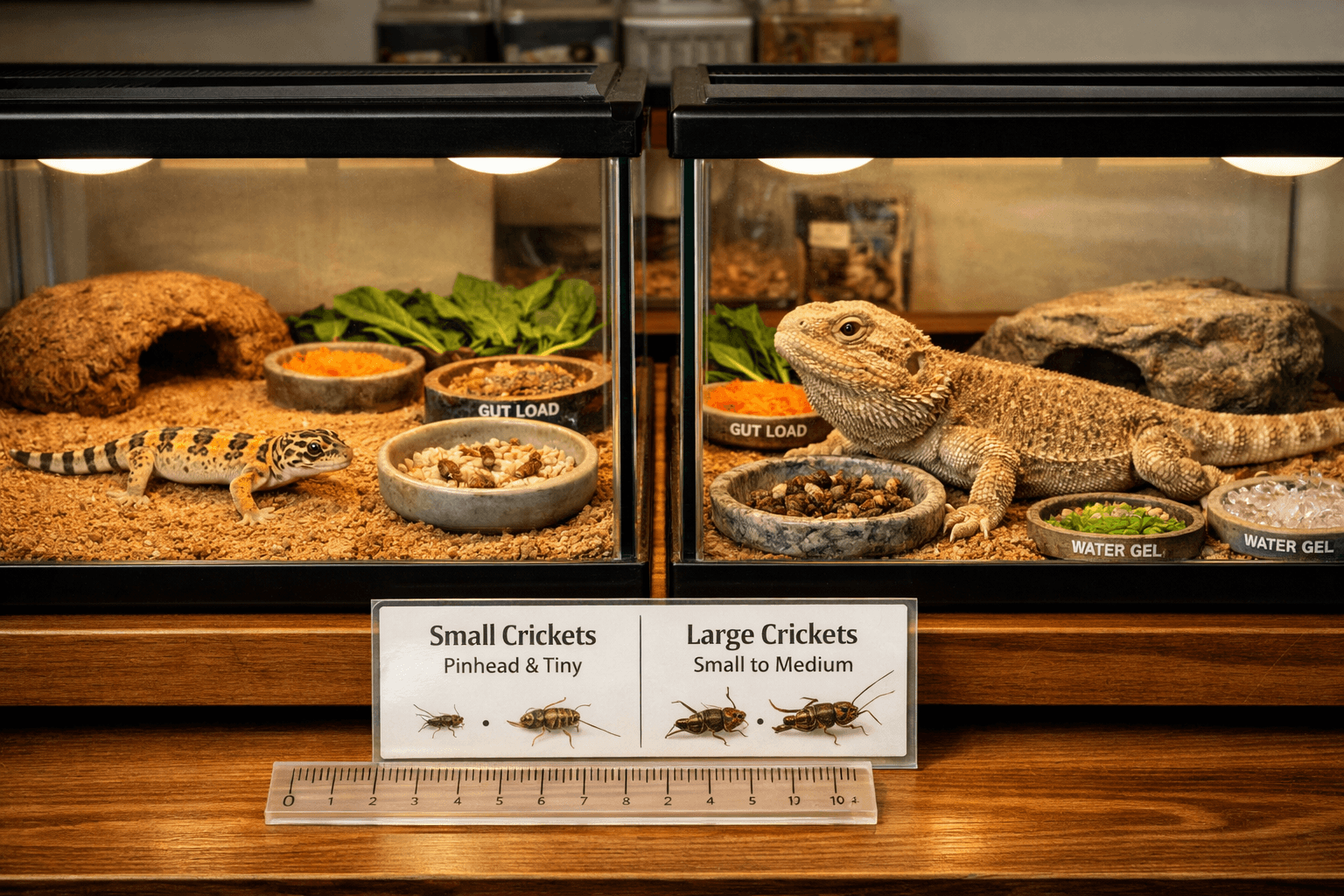
Here’s a general breakdown by lizard age and species, using standard cricket sizing labels (pinhead, small/3-week, medium/adult):
Lizard Type & Age
Recommended Cricket Size
Notes
Baby leopard gecko (0-3 months)
Pinhead to 1/4 inch
Feed daily, small portions
Juvenile leopard gecko (3-12 months)
1/4 to 3/8 inch
Every other day
Adult leopard gecko
1/2 to 5/8 inch
2-3 times per week
Baby bearded dragon (0-3 months)
Pinhead to 1/4 inch
Feed daily, multiple times
Juvenile bearded dragon (3-12 months)
1/4 to 1/2 inch
Daily, smaller portions
Adult bearded dragon
1/2 to 3/4 inch
Crickets 2-3x/week alongside greens
If your gecko or dragon is on the small end of its age bracket, size down. It’s always safer to underestimate.
Gut Loading Is the Step That Actually Feeds Your Lizard
Gut loading isn’t optional — it’s the difference between a cricket that’s basically an empty shell and one that’s a real meal. A cricket fed nothing but its store bin for a week has almost no nutritional value left in its gut, no matter how big it is.
What to Feed Crickets Before They Feed Your Lizard
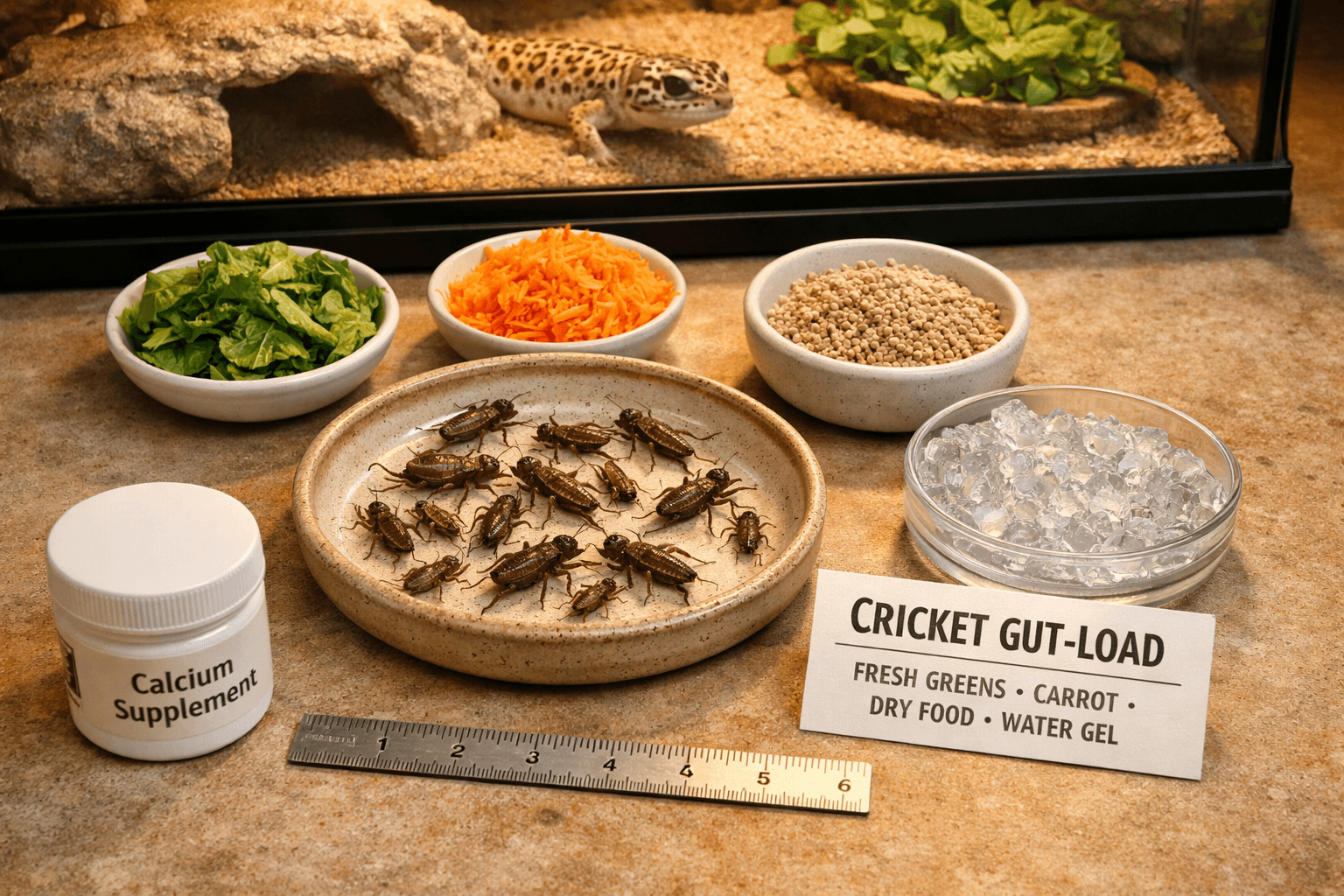
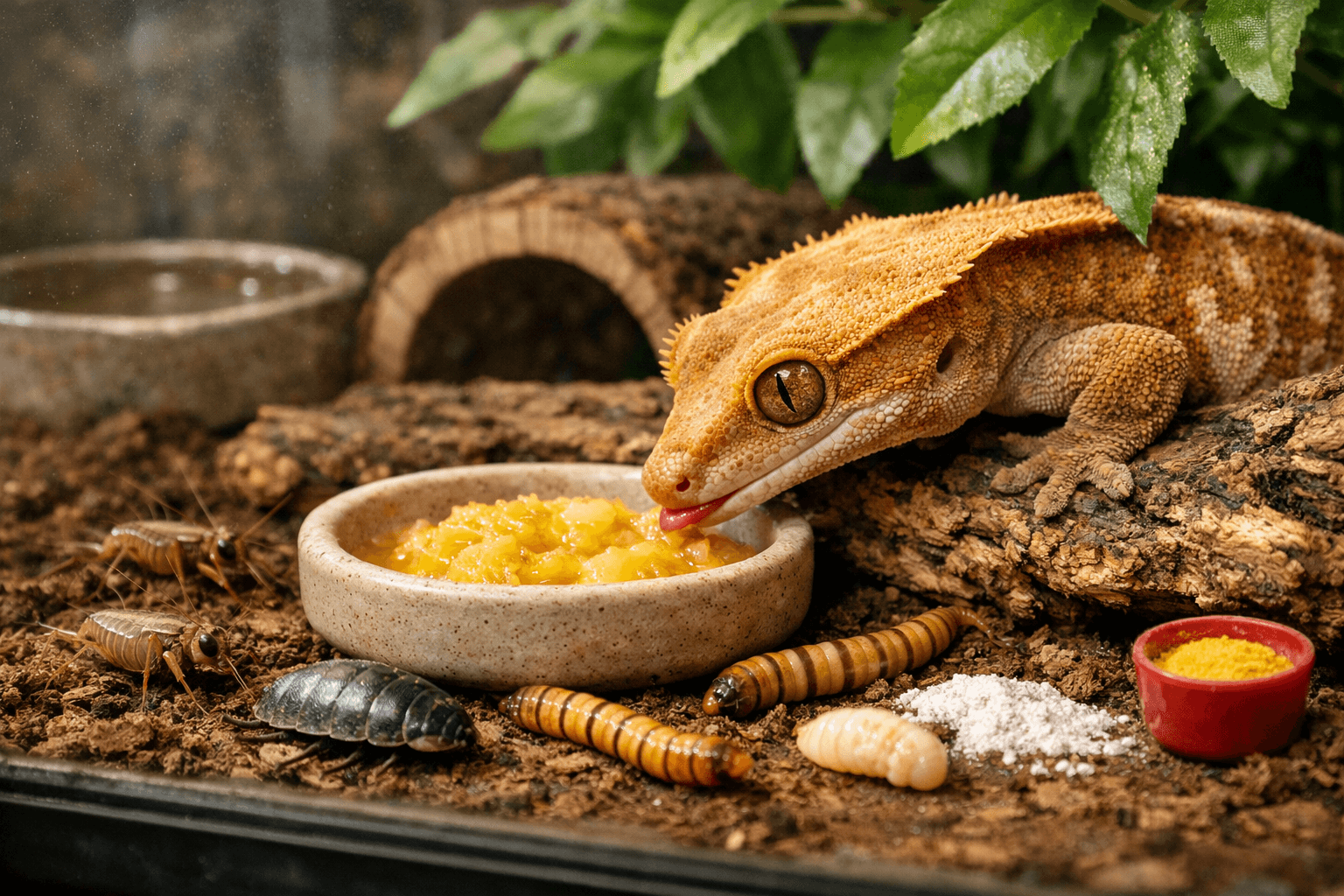
Give crickets a mix of leafy greens (collard, mustard, dandelion), grated carrot, and a commercial cricket gut-load or cricket feed at least 24 hours before offering them. Some keepers do this 48 hours out for extra insurance. This step is where most of the actual nutrition in your lizard’s diet comes from — not from the cricket itself, but from what it ate right before becoming dinner.
Dusting: Calcium and Vitamins Still Matter
Even a well gut-loaded cricket needs a light dusting of calcium powder before feeding, and a vitamin D3/multivitamin dust 2-3 times a week depending on your UVB setup. Drop the crickets in a small deli cup, add a pinch of powder, swirl gently, and feed right away before they groom it off. Skipping dusting because “the crickets were gut-loaded” is a common shortcut that leaves lizards short on calcium over time.
Feeding Frequency: Juveniles vs. Adults
Juvenile lizards need to eat far more often than adults, because they’re putting on bone and muscle fast. A baby bearded dragon might eat crickets daily, sometimes twice a day, while a full-grown adult only needs feeder insects two to three times a week.
This is where a lot of well-meaning owners overfeed. An adult leopard gecko or bearded dragon getting crickets every single day, on top of regular portions, tends to pack on extra weight and can get picky about greens or other food. Adults just don’t burn through calories the way a growing juvenile does.
A simple weekly rhythm works well for most adult lizards:
Feed crickets Monday, Wednesday, and Friday (adjust to your lizard’s appetite).
Offer only what your lizard will finish in 10-15 minutes.
Remove any leftover crickets immediately after that window.
Rotate in salad or greens on off-days for omnivorous species like bearded dragons.
Check body condition weekly — a beardie with a sagging belly or thick tail base is a sign to cut back.
The Overnight Leftover Problem Nobody Warns You About
Uneaten crickets left in the enclosure overnight aren’t harmless — they can bite a sleeping lizard’s toes, tail, or eyelids, and a lizard that’s shed recently or resting can get genuinely stressed by bugs crawling on it in the dark. This is the part most feeding guides skip completely.
Crickets are more active at night than during the day, which makes this worse, not better. A lizard that’s digesting a meal and settling down for sleep can end up with small nips near the mouth or feet from crickets that never got eaten. It looks minor at first, but repeated nips can lead to minor infections or a lizard that’s jumpy at feeding time going forward.
Live vs. Frozen and Storage Basics
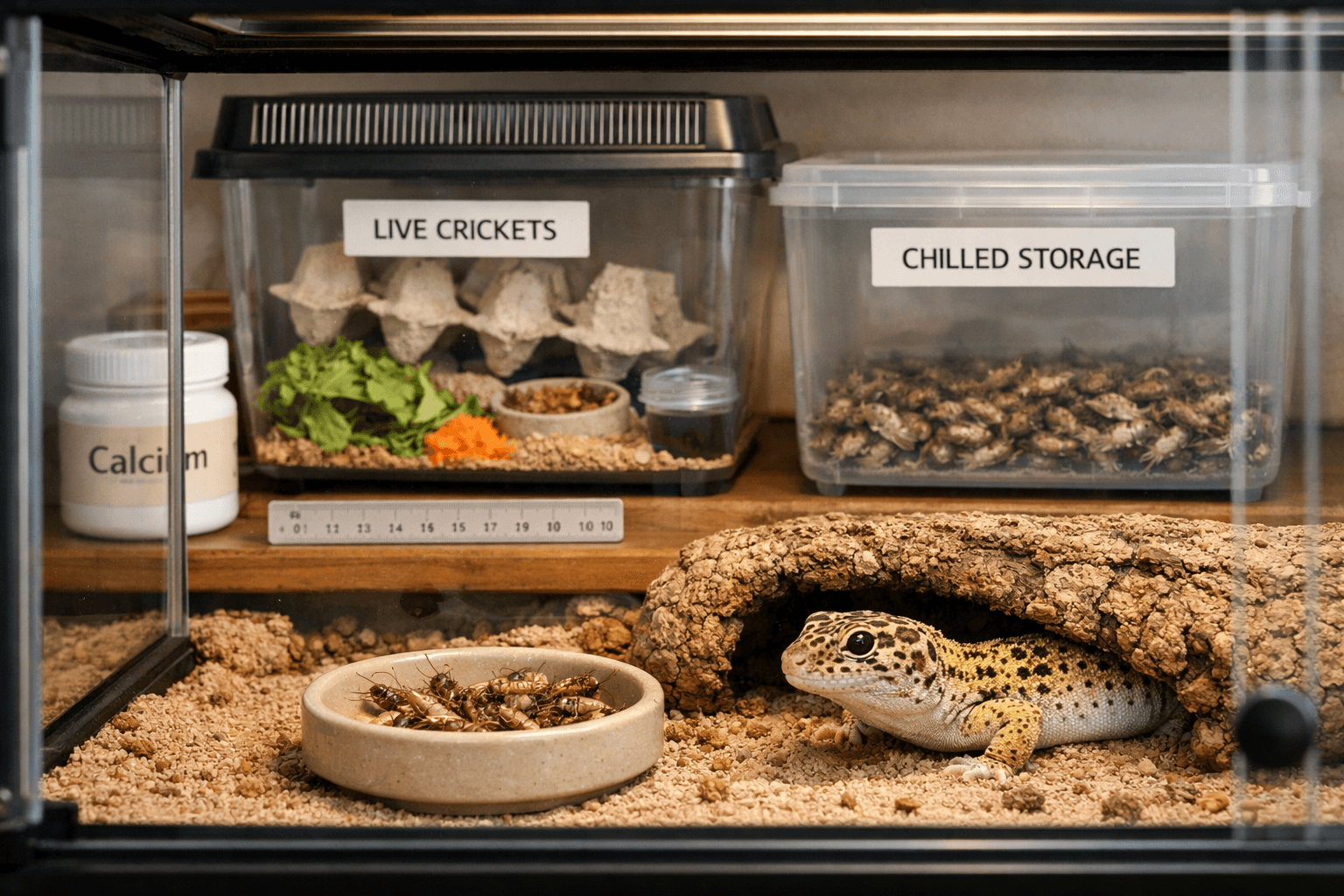
Live crickets for lizards work better than frozen ones for most reptiles, since motion triggers a feeding response — frozen feeder insects are mostly used for fish, amphibians, or as a backup, not typical lizard diets. Keep your live cricket keeper stocked with egg crate for hiding spots, a shallow water gel or damp sponge, and store it somewhere around 75-80°F to keep them active without dying off too fast.
If you’d rather sidestep the overnight-bite issue entirely, dubia roaches and mealworms are solid alternative feeder insects — dubias in particular don’t jump, don’t smell as strong, and are slower-moving, which some keepers find easier to manage in an enclosure overnight. Whatever you feed, pull leftovers out before you turn the lights off. A lot of terrarium setup guides, including build-outs on sites like petterrarium.com, treat feeder cleanup as part of the enclosure’s nightly routine, right alongside checking heat and humidity.
Frequently Asked Questions
How many crickets should I feed my lizard at once?
For juveniles, offer as many appropriately-sized crickets as they’ll eat in 10-15 minutes, often 5-10 small crickets daily. Adults typically need 5-8 crickets per feeding, 2-3 times a week, adjusted to body size and appetite.
Can crickets hurt my lizard if left in the tank overnight?
Yes — uneaten crickets can bite a sleeping lizard’s toes, tail, or eyelids, and the crawling can stress an animal that’s trying to rest. Always remove leftovers within 15-20 minutes of feeding, no exceptions.
Do I really need to gut load crickets, or is dusting enough?
Gut loading matters more than dusting alone, because it builds real nutrition into the cricket’s body before your lizard eats it. Dust with calcium too, but a well-fed cricket beats a dusted, empty one every time.